





Expandable motorhome energy: modular power for off-grid UK travel
Learn how expandable, modular energy systems with LiFePO4 batteries and Victron components give UK motorhome owners true off-grid independence in any season.
TL;DR:
- Modular, expandable energy systems allow motorhomes to grow capacity over time matching changing needs.
- LiFePO4 batteries offer high capacity, long cycle life, and weight advantages, ideal for UK conditions.
- Fixed modular systems are more efficient and suitable for full-time users, while portable units are easier for temporary setups.
Many UK motorhome owners assume that true off-grid travel means constant battery anxiety, rationing appliances, and cutting trips short. That assumption is now outdated. Modular, expandable energy systems let you start small, add capacity as your needs grow, and build a setup that genuinely matches your travel style. This guide covers what expandable systems are, the core components involved, how fixed and portable options compare, what UK safety rules apply, and how to size and upgrade your system over time. Whether you are a weekend explorer or a full-time traveller, the principles here apply directly to your build.
Table of Contents
- What are expandable energy systems for motorhomes?
- Key components: Modular batteries, solar, and charging controllers
- Comparing fixed modular vs portable expandable systems
- Installation, safety, and legal considerations in the UK
- Sizing and upgrading your system: Real UK scenarios
- Our perspective: Why expandability is the future for UK motorhome power
- Expand your motorhome’s power with Skyenergi solutions
- Frequently asked questions
Key Takeaways
| Point | Details |
|---|---|
| Modular design is key | Expandable systems let you add batteries or solar as your motorhome needs grow. |
| Lithium leads for expansion | LiFePO4 batteries give better capacity, longer life, and easier upgrades than AGM models. |
| Solar plus alternator charging | Reliable off-grid power in the UK means combining solar panels with DC-DC alternator charging. |
| Legal safety matters | Proper fusing, quality cables, and certified installation are essential for safety and insurance. |
| Choose size for your travel style | Size your system for at least 1.5 days’ autonomy and plan upgrades for changing needs. |
What are expandable energy systems for motorhomes?
An expandable energy system is one you can grow over time. Rather than buying a fixed, all-in-one unit and living with its limitations, you start with a core setup and add batteries, solar panels, or upgraded components as your usage increases. This approach suits UK motorhome owners well because travel demands change with the seasons, the destination, and the appliances you add to your vehicle.
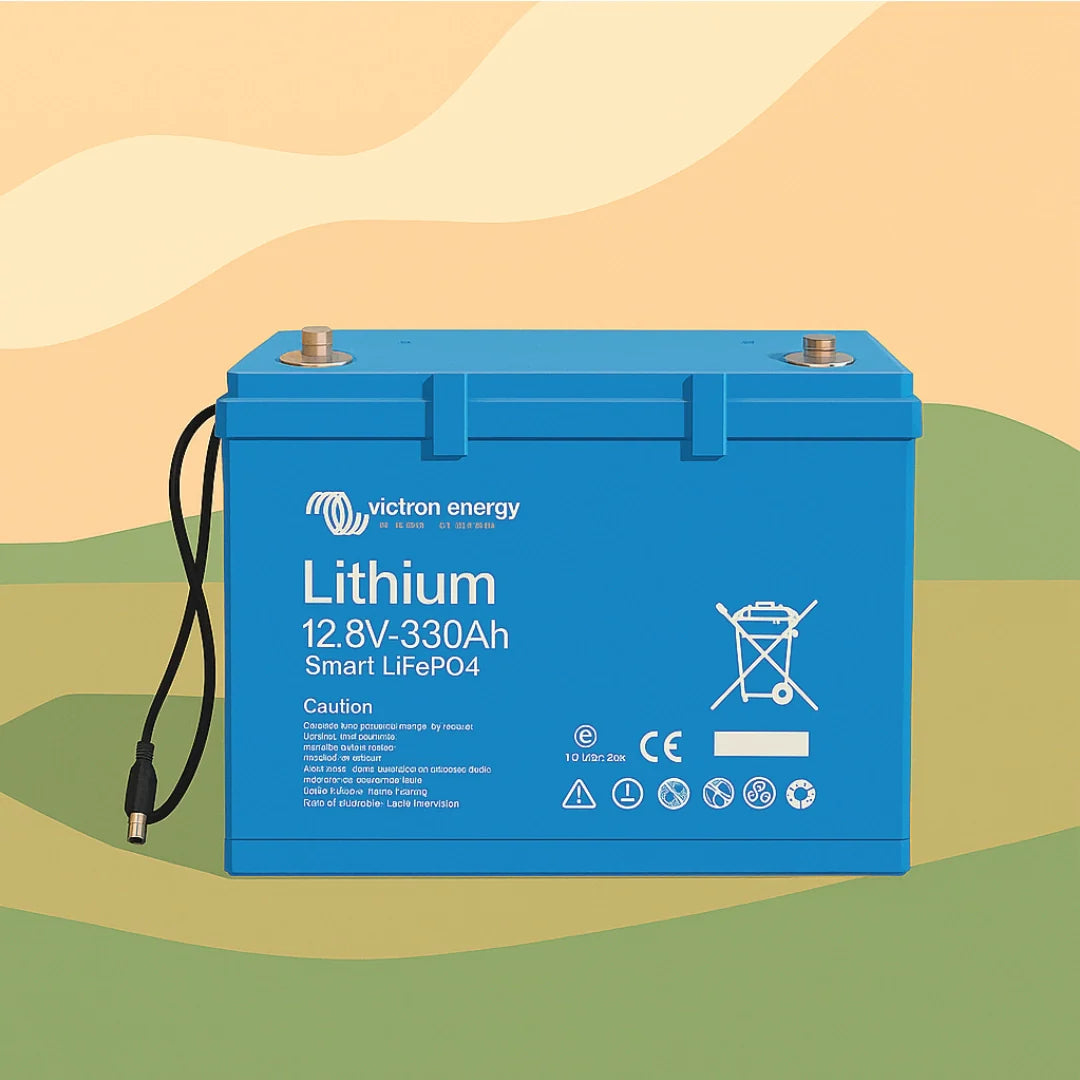
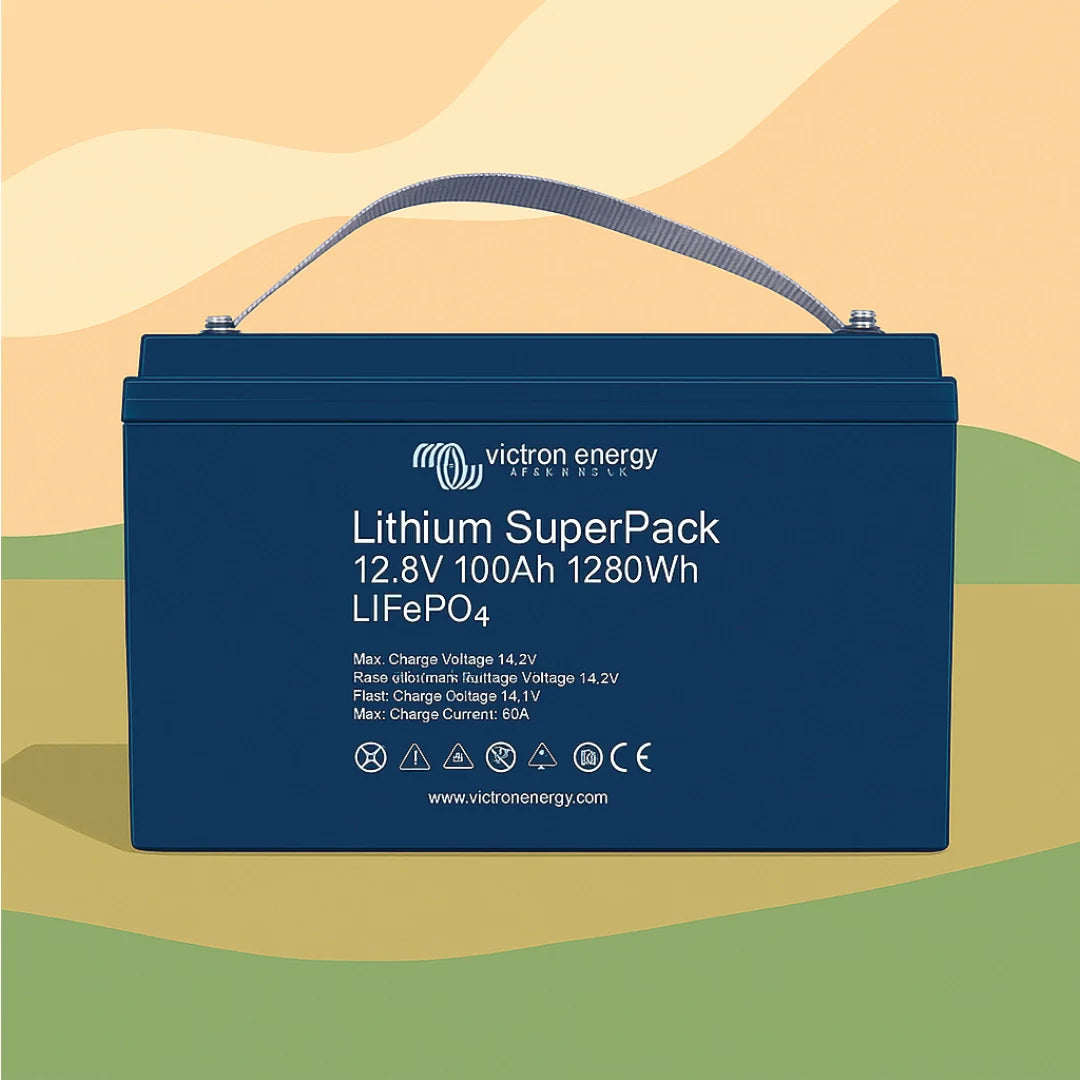
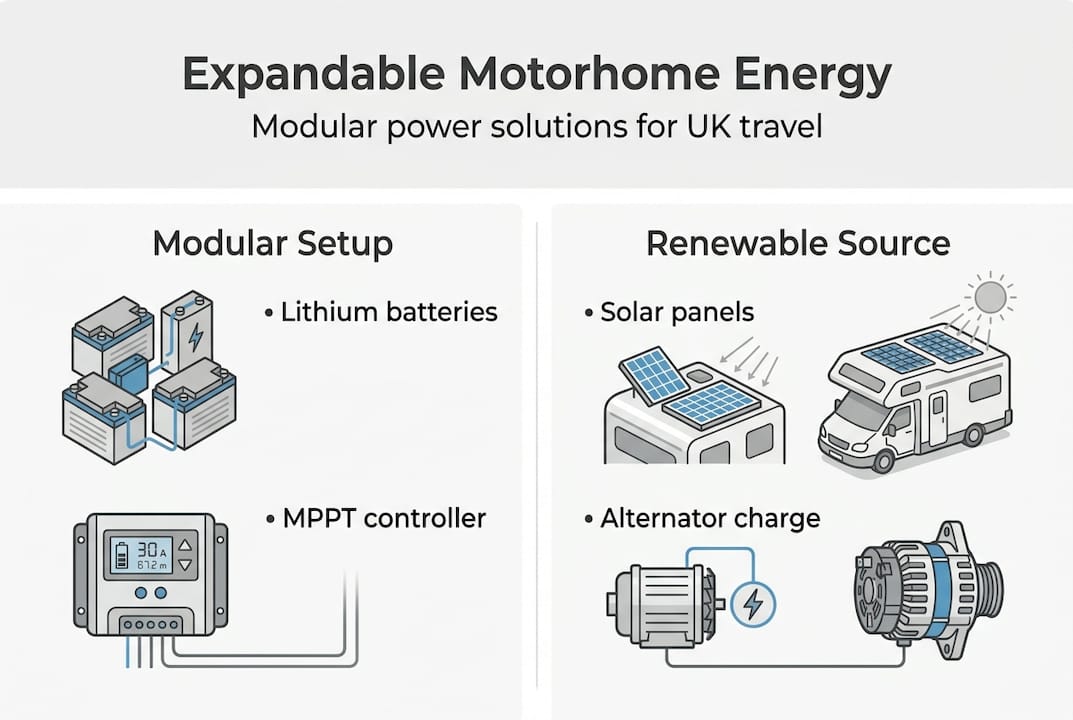
A typical starting point is a 100Ah LiFePO4 (lithium iron phosphate) battery paired with a Victron MPPT solar charge controller, a DC-DC charger for alternator input, a small inverter for 230V appliances, and a Bluetooth monitoring app. As described in expandable system setups, this foundation is designed from the outset to accept additional batteries and panels without rewiring the whole vehicle.
The key components of a modular setup include:
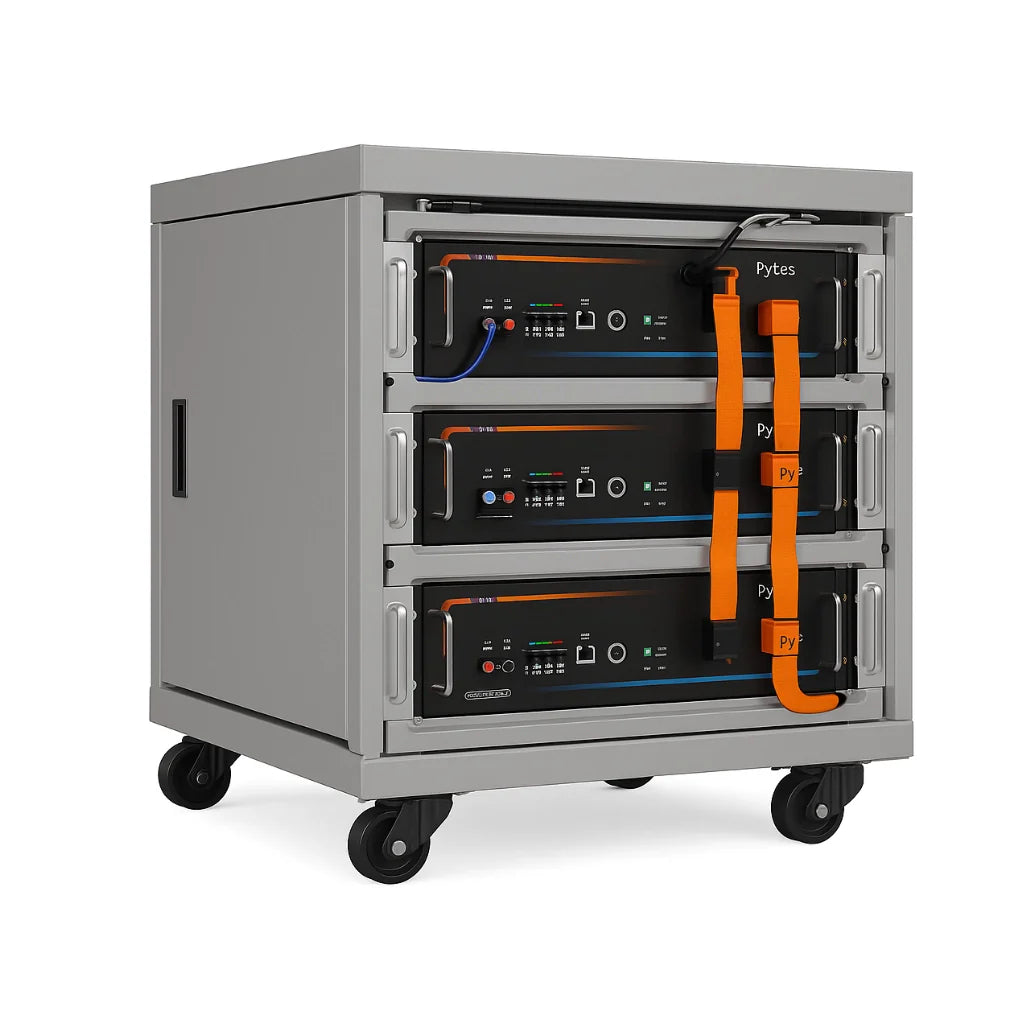
- LiFePO4 battery bank (parallelable modules for easy expansion)
- MPPT solar charge controller (scales with added panels)
- DC-DC charger (charges leisure battery from the vehicle alternator)
- Inverter or inverter-charger (converts 12V DC to 230V AC)
- Bluetooth battery management system (BMS) (real-time monitoring via smartphone)
As detailed in expandable energy systems, these modular lithium battery banks paired with Victron MPPT controllers, DC-DC chargers, inverters, and Bluetooth monitoring allow easy addition of batteries and panels as your needs evolve.
For UK conditions specifically, this matters. Grey skies reduce solar yield in winter, meaning alternator charging becomes critical. Space inside a motorhome is limited, so a lightweight, compact modular bank is far more practical than bulky lead-acid alternatives. Understanding the lithium installation workflow before you buy helps you plan expansion points from day one. For a broader view of battery bank strategies suited to UK motorhomes, it is worth reviewing your options before committing to a specific layout.
Pro Tip: Plan your cable routing and fusing positions for a 200Ah or 400Ah bank even if you start with 100Ah. This avoids costly rewiring later.
Key components: Modular batteries, solar, and charging controllers
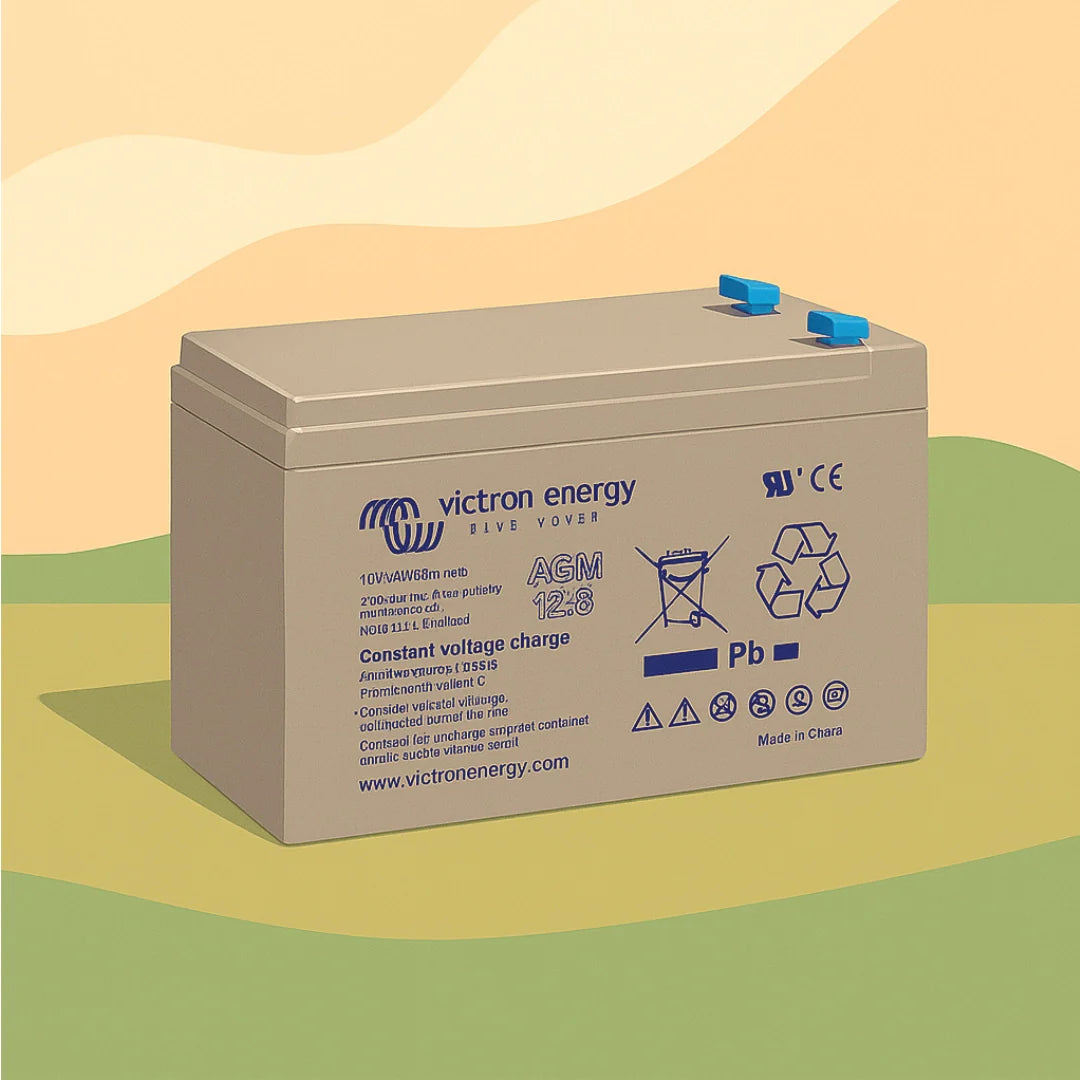
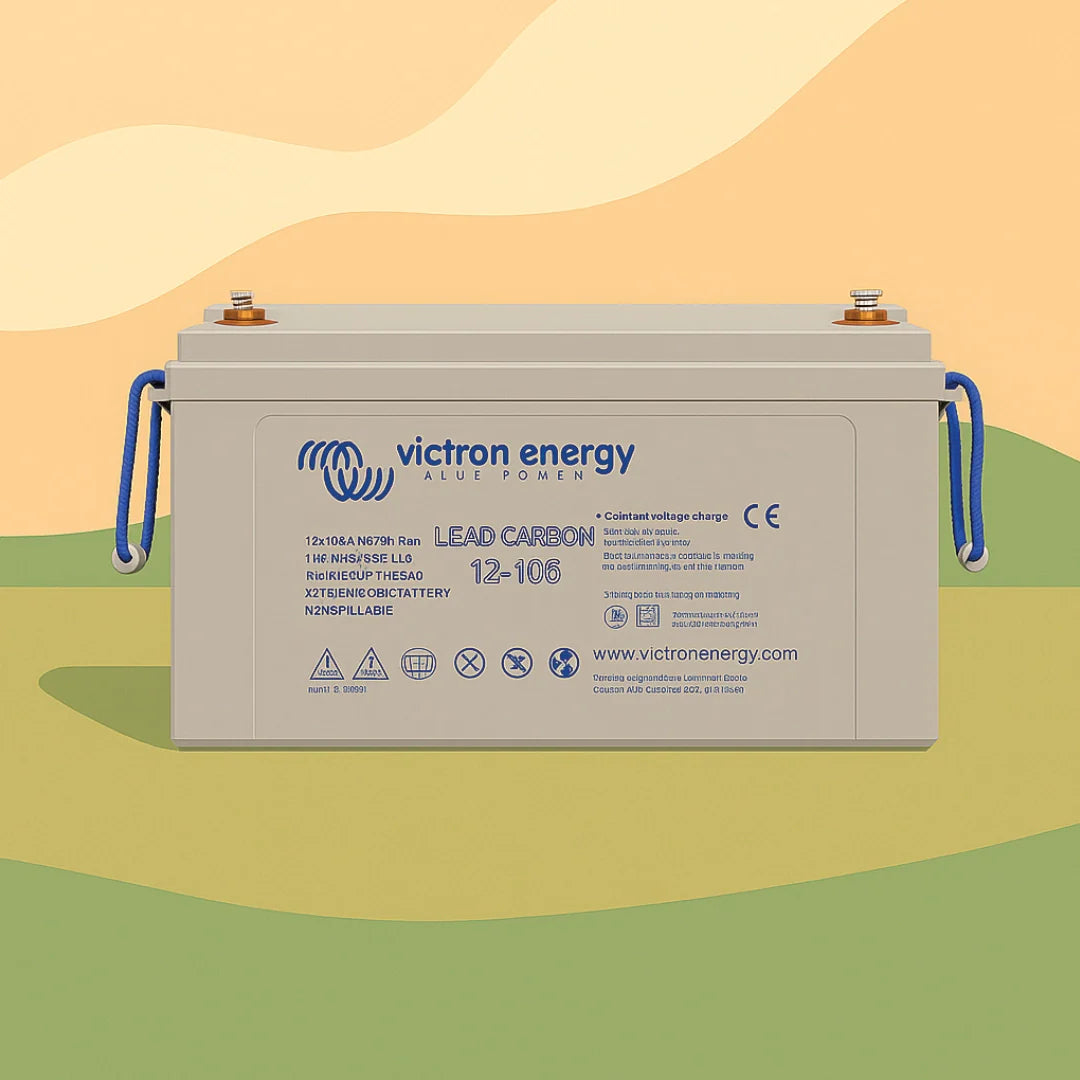
The battery is the foundation of any expandable system. LiFePO4 lithium batteries offer 80-100% usable capacity compared to just 50% for AGM or lead-acid, last 2,000 to 5,000 cycles versus 300 to 500 for AGM, and save roughly 50% in weight. For a motorhome where payload matters, that weight saving is significant.
| Battery type | Usable capacity | Cycle life | Weight (100Ah) |
|---|---|---|---|
| LiFePO4 | 80-100% | 2,000-5,000 | ~12-13 kg |
| AGM | 50% | 300-500 | ~28-30 kg |
| Lead-acid (flooded) | 40-50% | 200-400 | ~28-32 kg |
Solar panels connect to the battery bank via an MPPT (Maximum Power Point Tracking) charge controller. MPPT controllers extract more energy from panels than older PWM types, particularly in low-light UK conditions. The Victron SmartSolar controller supports panel arrays up to 440W on a single unit and integrates directly with the Victron app ecosystem for remote monitoring.
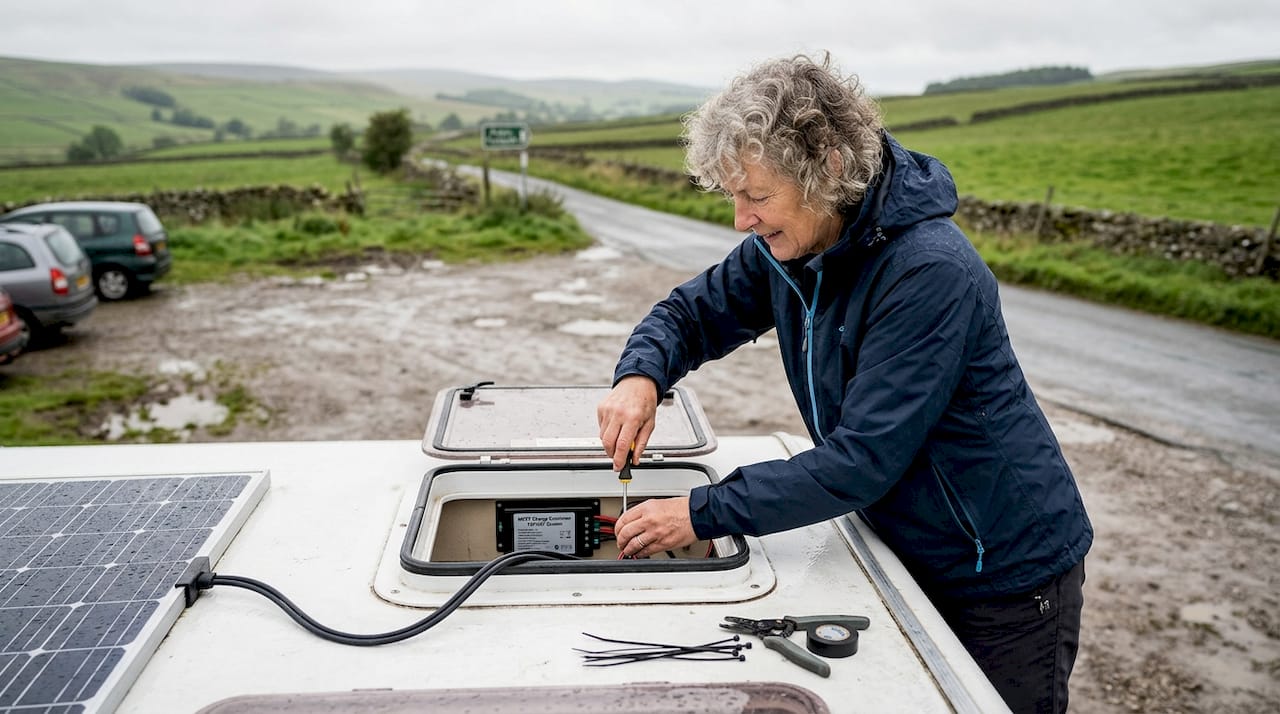
A DC-DC charger (also called a battery-to-battery charger) is essential for motorhomes. It takes power from the vehicle’s starter battery while driving and charges the leisure bank safely, without risking damage to the vehicle’s alternator or the new lithium battery’s BMS. This is particularly important in winter when solar yield drops significantly.
Key points when selecting components:
- Choose an MPPT controller rated for your maximum planned panel wattage, not just your starting array
- Select a DC-DC charger with a current rating that suits your alternator output
- Use an inverter-charger if you want to accept mains hook-up as well as generate 230V off-grid
- Ensure the BMS in your lithium battery supports low-temperature cut-off for cold UK winters
The UK battery setup guide covers compatible component combinations in detail. For a thorough review of lithium battery advantages in off-grid motorhome use, the comparison with legacy battery types is clear.
Pro Tip: Size your MPPT controller for 1.5 times your current panel wattage. Adding panels later is straightforward; replacing an undersized controller is not.
Comparing fixed modular vs portable expandable systems
With the components in mind, the next decision is whether to go with a fixed modular installation or a portable plug-and-play power station. Both are marketed as expandable, but they behave very differently in practice.
Portable stations such as the EcoFlow DELTA Pro (3,600Wh base, expandable to 25kWh) and Jackery Explorer units are popular for their simplicity. You plug them in, charge them from solar or mains, and use them anywhere. No wiring, no installation, no specialist knowledge required. For renters, those trialling van life, or non-permanent builds, this is a practical entry point.
Fixed modular systems, however, are more efficient. Portable stations experience 10-20% higher energy losses due to multiple internal conversion stages compared to direct DC systems. A fixed LiFePO4 bank wired directly to an MPPT controller and DC-DC charger loses far less energy in the charging and discharging cycle.
| Feature | Fixed modular | Portable station |
|---|---|---|
| Installation complexity | High (requires wiring) | None (plug and play) |
| Energy efficiency | Higher (fewer conversions) | Lower (10-20% more losses) |
| Expandability | Excellent (parallel batteries) | Limited by product range |
| Weight for same usable energy | Lower | Higher |
| Best for | Full-time or serious users | Renters, trial builds |
For full-time motorhome users or those with high energy demands (induction cooking, CPAP machines, laptops, refrigeration), a fixed modular system is the better long-term investment. The step by step installation process is well-documented, and Victron compatibility tips make it straightforward to plan a scalable build. For reference on fixed modular setups, real-world build examples are available.
Installation, safety, and legal considerations in the UK
Choosing a system is only part of the process. Installing it correctly and legally is equally important for reliability and insurance purposes.
UK motorhome electrical systems must comply with BS 7671 (IET Wiring Regulations) for mains circuits and EN 1648 for leisure vehicle low-voltage systems. As confirmed in installation safety advice, proper fusing, grounding, and cable sizing to a maximum 3% voltage drop (typically requiring 16mm² cable for main runs) are mandatory. Victron systems are designed to comply with both standards.
A safe installation follows this sequence:
- Plan your layout before drilling or routing cables. Identify battery location, solar entry points, and inverter position.
- Size your cables for the full planned capacity, not just the starting setup.
- Fuse every positive feed as close to the battery as possible.
- Install an RCD and MCB on all 230V circuits.
- Document expansion points clearly so future upgrades are straightforward.
- Have all 230V wiring checked by a qualified electrician before use.
Common mistakes include under-sizing cables for future expansion, skipping fuses on secondary circuits, and failing to earth the chassis correctly. These errors cause fires, void insurance, and create unreliable systems.
The installation workflow and installation process guide both provide step-by-step detail for UK-compliant builds.
Pro Tip: Use a dedicated battery isolator switch on the main positive cable. It costs very little and makes maintenance and emergency disconnection safe and fast.
Sizing and upgrading your system: Real UK scenarios
Once safety is addressed, the practical question is: how much capacity do you actually need? The answer depends on your daily energy consumption, how many days you want to run without external charging, and the season.
A useful framework:
- Estimate daily use in Wh (watt-hours): add up the wattage of each appliance multiplied by hours of use per day
- Multiply by desired autonomy (typically 1.5 to 2 days for UK conditions)
- Divide by usable battery percentage (80% for LiFePO4)
As noted in off-grid sizing advice, cold UK winters require a low-temperature BMS or battery heating, and alternator charging becomes essential when solar input is minimal. Sizing for 1.5 to 2 days of autonomy is the standard recommendation for UK motorhome use.
| Appliance | Typical wattage | Daily use (hrs) | Daily Wh |
|---|---|---|---|
| 12V compressor fridge | 45W average | 24 | 1,080 |
| LED lighting | 20W | 5 | 100 |
| Laptop | 65W | 3 | 195 |
| Toaster | 900W | 0.1 | 90 |
| Induction hob | 1,800W | 0.25 | 450 |
For weekend use, a 200Ah LiFePO4 bank with 200-300W of solar is generally sufficient. For full-time travel, 400Ah with 400W+ solar and a DC-DC charger is a more realistic baseline. The battery upgrade steps guide covers how to add capacity to an existing system without starting from scratch.
Our perspective: Why expandability is the future for UK motorhome power
Most new motorhome owners underestimate their energy demand. They start with a single 100Ah battery, assume it will be enough, and within six months are running out of power by mid-afternoon. The instinct at that point is to buy a much larger system. But that is rarely the right move either.
Expandability is not about buying the biggest system you can afford at the start. It is about building a system that grows with you. Your usage will change. New appliances, longer trips, and different seasons all shift the equation. A modular setup built around Victron compatibility insights means your investment in controllers, cabling, and inverters remains valid as you add battery modules or swap panels for higher-output versions.
The contrarian view worth considering: over-building at the start wastes money and adds unnecessary weight. A well-planned 200Ah expandable system will serve most users better than a poorly planned 400Ah fixed system. The key is designing for expansion from day one, not buying capacity you do not yet need.
Modular setups also outlast technology cycles. When better battery chemistry or more efficient panels arrive, you replace modules, not the entire system.
Expand your motorhome’s power with Skyenergi solutions
If you are ready to build or upgrade an expandable energy system, Skyenergi supplies the components and complete kits to make it straightforward. Our range is sourced directly from manufacturers, keeping costs competitive without compromising on quality.
The expandable solar & electrics kit includes a 3kVA inverter-charger, battery-to-battery charger, and monitoring, covering the core of a scalable fixed system. For solar input, the Victron solar panel bundle pairs 610W of panels with a Victron Smart MPPT controller, cabling, and mounting hardware. Browse the full product range to find compatible batteries, Victron accessories, and SRNE turnkey solutions for your specific build.
Frequently asked questions
How do I expand my motorhome’s battery system in stages?
Most systems use parallelable lithium batteries, allowing you to add more modules as needed. Follow the manufacturer’s wiring and BMS guidelines to ensure safe and compatible expansion.
Can I install an expandable system myself, or do I need a professional?
Basic 12V components can be installed carefully by a competent DIYer, but 230V mains wiring and compliance checks must always be completed by a qualified installer to meet safety and insurance requirements.
How much solar do I need for off-grid use in the UK?
Aim for at least 300-400W of solar panels for reliable summer off-grid stays. UK solar benchmarks show 300-400W panels yield 900-1,200Wh per day in summer, dropping to 150-300Wh in winter, so alternator or mains charging is essential in colder months.
What makes lithium batteries better for expandable systems than AGM?
LiFePO4 batteries offer 80-100% usable capacity, 2,000 to 5,000 cycles, and roughly 50% weight savings compared to AGM. They are also easier to expand in modular configurations without the voltage-matching issues common with lead-acid banks.
Recommended
Prev post

How battery monitoring works: accurate power management
Updated on 09 April 2026
Next post

Battery cycle life: campervan power that lasts longer
Updated on 07 April 2026


