







Step by Step Lithium Battery Installation for Campervans
Discover step by step lithium battery installation in your campervan with this clear guide. Achieve reliable off-grid power and energy independence with ease.
Most british campervan owners discover that nearly half of standard leisure batteries struggle to deliver consistent power on off-grid trips. Reliable energy independence matters more than ever if you want to camp freely across the United Kingdom without worrying about fridge failures or dim lighting. This guide gives you practical steps to assess your current electrical setup, avoid costly mistakes, and lay the groundwork for a safe and efficient lithium battery installation.
Table of Contents
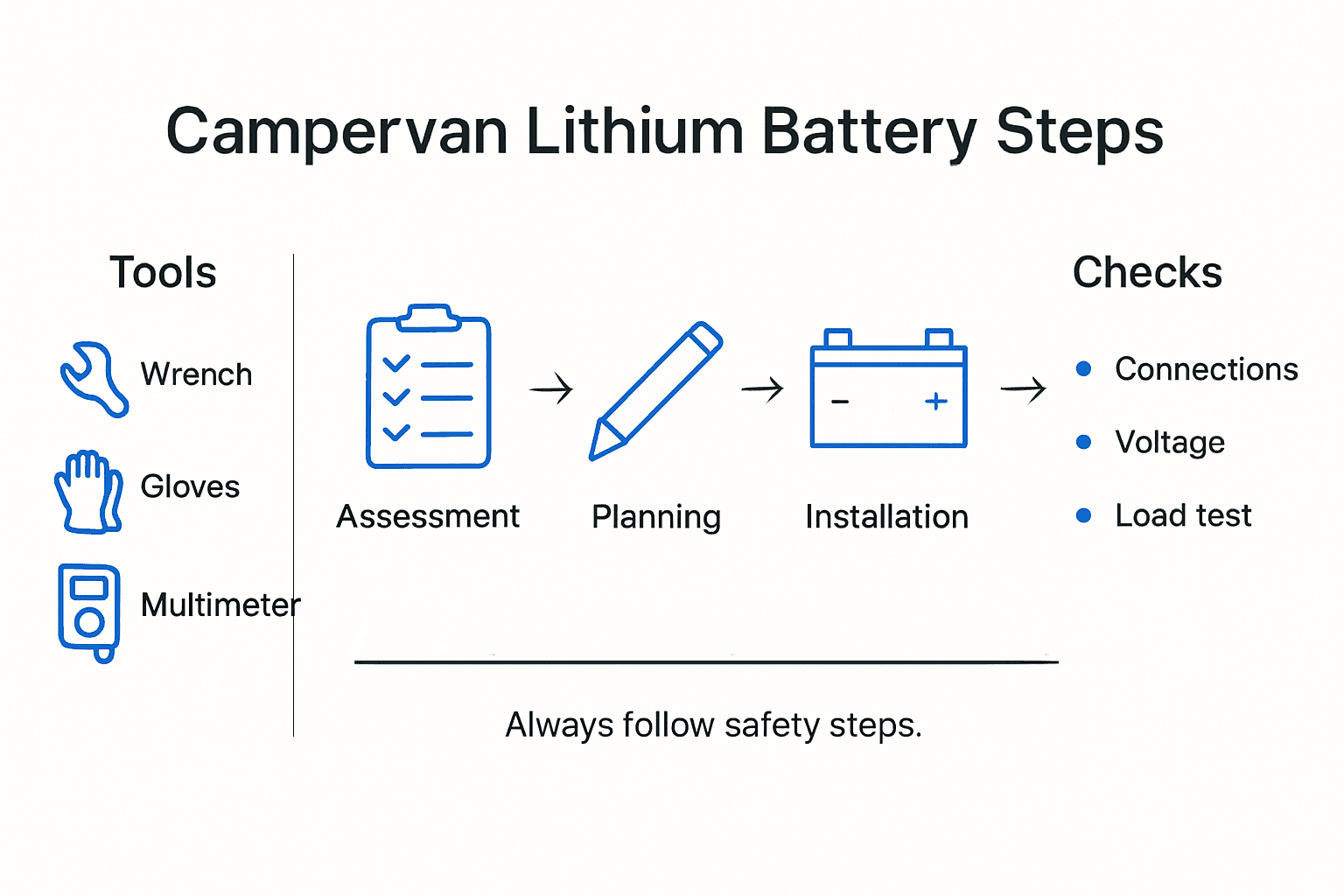
- Step 1: Assess Existing Electrical System And Requirements
- Step 2: Prepare Tools, Safety Gear And Installation Area
- Step 3: Mount Lithium Battery Securely And Connect Main Cables
- Step 4: Integrate Smart Management System And Monitoring
- Step 5: Test Connections And Verify Battery Operation
Quick Summary
| Key Point | Explanation |
|---|---|
| 1. Assess your electrical system first | Evaluate your campervan’s existing electrical configuration to ensure compatibility with lithium batteries before proceeding with installation. |
| 2. Prepare tools and safety gear | Gather essential tools and ensure your workspace is safe to prevent accidents during the installation of the lithium battery. |
| 3. Securely mount the lithium battery | Properly position and anchor the lithium battery using robust mounts to prevent movement and damage during travel. |
| 4. Integrate a battery management system | Install a compatible battery management system to monitor battery health and enhance performance through smart technology. |
| 5. Test battery operations thoroughly | Conduct visual inspections and load tests to verify the correct functioning of the battery system before use in your campervan. |
Step 1: Assess existing electrical system and requirements
Before diving into lithium battery installation for your campervan, you must thoroughly evaluate your current electrical setup. This crucial first step determines the compatibility and requirements for your new power system. Understanding your existing configuration helps prevent expensive mistakes and ensures smooth integration.
Start by comprehensively mapping out your current electrical components. Evaluate your campervan’s electrical system by checking voltage ratings, existing battery type, current capacity, and power consumption patterns. Measure the wattage of all onboard appliances including refrigerator, lighting, water pumps, and entertainment systems. Calculate your daily energy consumption by tracking usage over several trips or using a power monitoring device. Pay special attention to peak power demands and consider any future additional electrical equipment you might install.
Your assessment should include measuring available space for battery installation, checking existing wiring condition, and verifying compatibility with lithium battery technology. Inspect cable sizes, connection points, and current charge controllers to determine what modifications might be necessary. If your current system uses lead-acid batteries, you will likely need to upgrade several components to support lithium battery charging and management.
Expert advice: Always take precise measurements and photograph your existing electrical setup before beginning any modifications to help track changes and provide reference points during installation.
Here is a summary of common electrical system upgrades needed when switching from lead-acid to lithium batteries:
| Upgrade Area | Lead-Acid System Common Issue | Lithium System Requirement | Key Benefit Achieved |
|---|---|---|---|
| Battery Charger | Not optimised for lithium | Lithium-specific charging profile | Extends battery lifespan |
| Wiring/Cable Size | Sometimes undersized | Larger gauge to handle higher loads | Reduces heat and losses |
| Battery Management | Often basic or non-existent | Advanced Battery Management System | Improved safety and control |
| Mounting Hardware | May not be vibration resistant | Secure, vibration-absorbing supports | Prevents damage while driving |
Step 2: Prepare tools, safety gear and installation area
Before beginning your lithium battery installation, you must meticulously gather all necessary tools and create a safe working environment. Proper preparation prevents potential accidents and ensures a smooth installation process. This step requires careful planning and attention to detail.
Start by collecting your essential tools. You will need an adjustable spanner, wire strippers, multimeter, torque wrench, insulated gloves, safety goggles, and electrical tape. Include specialised equipment like battery terminal cleaning tools and a voltage tester. Ensure all tools are in good condition and appropriate for electrical work. Your workspace should be well-ventilated, clean, dry, and away from potential sources of moisture or flammable materials. Lay out a protective work surface such as a rubber mat or clean plywood to prevent accidental short circuits or damage to your campervan’s interior.

Carefully review your safety equipment. This includes wearing protective rubber gloves rated for electrical work, safety glasses to protect against potential sparks, and non conductive footwear. Keep a fire extinguisher nearby specifically rated for electrical fires. Ensure your workspace has adequate lighting and remove any unnecessary metal objects that could cause accidental contact between electrical components.
Expert advice: Always keep a fully charged mobile telephone within reach and inform someone about your installation work in case of emergencies.
Step 3: Mount lithium battery securely and connect main cables
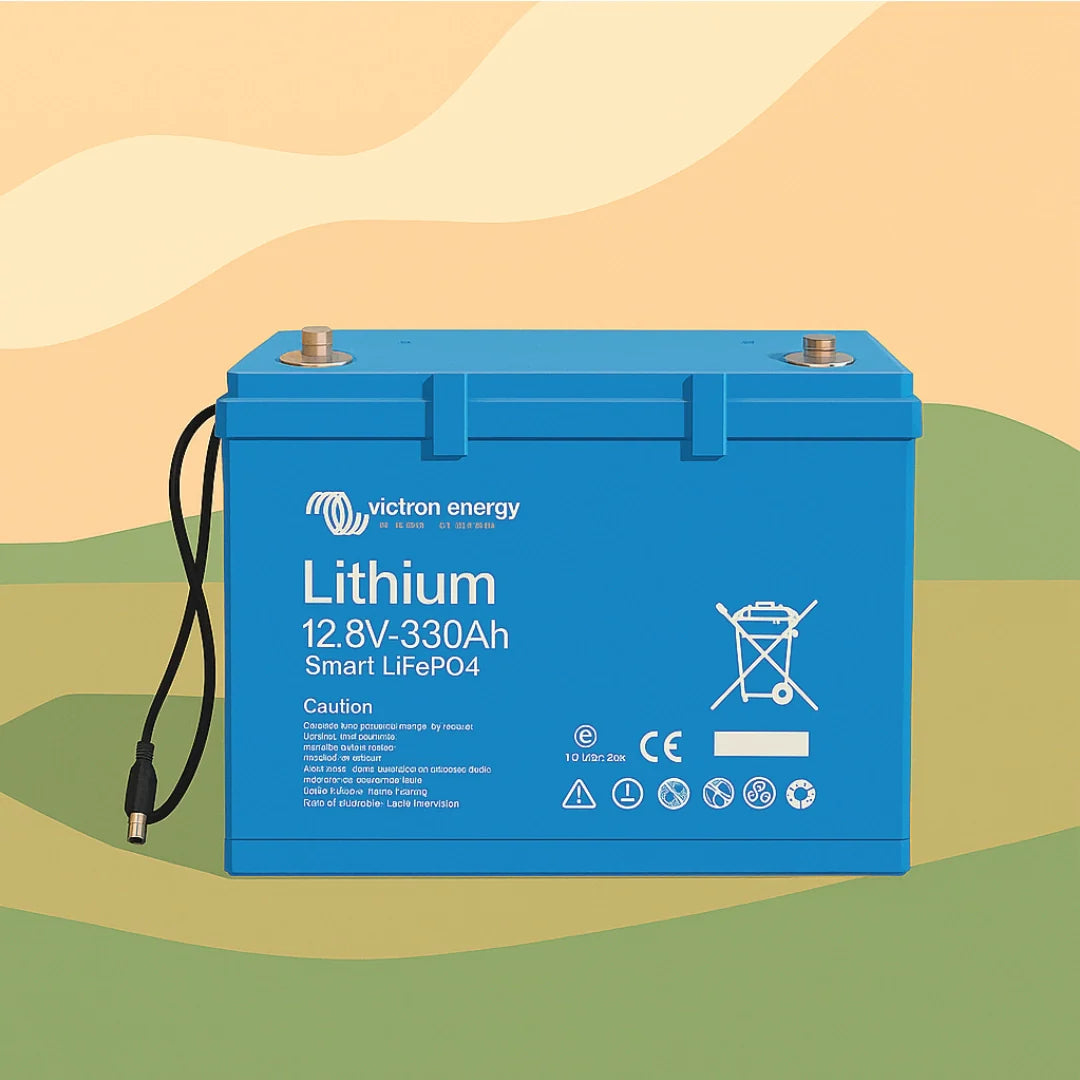
Mounting your lithium battery correctly is critical for safety and optimal performance in your campervan electrical system. You will need to create a stable, vibration resistant installation that protects the battery while ensuring proper electrical connectivity.
Secure battery mounting techniques require careful positioning and robust fastening methods. Choose a location that is well ventilated, away from direct heat sources, and protected from potential moisture. Use robust mounting brackets or purpose designed battery trays that can withstand vehicle movement. Ensure the battery sits level and is firmly anchored using corrosion resistant stainless steel bolts or specialised battery mounting hardware. Incorporate vibration absorbing materials like rubber padding or specialised mounting gaskets to minimise mechanical stress during travel.
Connecting main cables demands precision and adherence to safety protocols. Select high quality copper cables with appropriate cross sectional area to handle expected current loads. Begin by checking cable terminal connections for cleanliness and applying a thin layer of electrical contact grease to prevent corrosion. Connect positive and negative terminals carefully ensuring correct polarity and using appropriately sized terminal connectors. Tighten connection bolts to manufacturer specified torque settings using a calibrated torque wrench to prevent loose connections that could generate excess heat.
Expert advice: Always double check cable connections and use a torque wrench to ensure consistent and secure electrical terminals.
Step 4: Integrate smart management system and monitoring
Integrating a smart battery management system transforms your campervan’s electrical setup from basic power storage to an intelligent energy ecosystem. This critical step allows you to monitor battery performance, protect your investment, and maximise the longevity of your lithium battery installation.
Begin by selecting a battery management system compatible with your specific lithium battery configuration. Most modern systems offer Bluetooth connectivity, enabling real time monitoring through smartphone applications. Install the battery management system control unit close to the battery, ensuring secure mounting and minimal cable length. Connect the system’s monitoring sensors to individual battery cells or battery pack terminals, following manufacturer instructions precisely. These sensors will track crucial parameters including voltage, temperature, state of charge, and potential fault conditions.
Configuring the monitoring software requires careful attention to detail. Download the manufacturer’s dedicated mobile application and pair it with your battery management system. Set up custom alerts for critical conditions such as low voltage, overheating, or unusual discharge rates. Configure your preferred display settings to show key performance metrics like remaining capacity, charging status, and estimated range. Some advanced systems allow you to set automatic load shedding or charging protocols to prevent battery damage and optimise overall system performance.
Expert advice: Regularly update your battery management system firmware to ensure you have the latest performance monitoring and protection features.
The following table highlights the functions of a Battery Management System (BMS) and their practical impact for campervan users:
| BMS Function | What It Does | Benefit for Campervan Owners |
|---|---|---|
| Cell Balancing | Maintains equal voltage | Maximises battery lifespan |
| Overcharge Protection | Prevents excess voltage | Reduces risk of battery damage |
| Temperature Monitoring | Tracks cell temperature | Minimises fire and overheating risks |
| State of Charge | Displays remaining capacity | Helps plan energy usage efficiently |
Step 5: Test connections and verify battery operation
Testing and verifying your newly installed lithium battery system is a critical final step that ensures safety, performance, and reliability of your campervan’s electrical setup. This comprehensive verification process will help you identify any potential issues before embarking on your adventures.
Begin with a thorough visual inspection of all electrical connections. Use a high quality multimeter to check voltage levels at each terminal, confirming they match manufacturer specifications. Perform a continuity test to verify there are no unexpected resistances or loose connections. Slowly activate each electrical circuit, monitoring the battery management system for any anomalous readings or warning signals. Pay close attention to initial charging behaviour, ensuring the battery accepts charge smoothly and reaches full capacity without overheating or showing signs of stress.
Conduct a systematic load test by connecting various onboard electrical components and monitoring battery performance. Start with low draw devices like LED lighting, then progressively increase load to include more power intensive equipment such as refrigerators or entertainment systems. Observe how the battery management system responds to changing electrical demands, checking that voltage remains stable and the system successfully manages power distribution. Record initial performance metrics to establish a baseline for future comparisons and to help you understand your battery system’s real world capabilities.
Expert advice: Keep a detailed log of your initial battery performance tests, including voltage readings, charging times, and load test results, to help diagnose any future operational issues.
Upgrade Your Campervan with Skyenergi’s Intelligent Lithium Battery Solutions
Installing a lithium battery in your campervan is a detailed process that demands precision and the right components. From assessing your current electrical setup to integrating smart management systems, every step plays a part in achieving a reliable and safe power supply. If you want to avoid common pitfalls like undervoltage damage, wiring issues, or poor battery management, choosing high-quality equipment designed for campervan use is essential.

Skyenergi specialises in premium lithium batteries and off-grid energy systems tailored for campervans and motorhomes. Our products come with intelligent battery management systems featuring Bluetooth monitoring so you can track your performance and protect your investment in real time. Visit Skyenergi today to explore our range and benefit from expertly engineered solutions that make installation straightforward and energy independence effortless. Don’t wait until your next trip to upgrade your power system. Start now and experience campervan freedom like never before with Skyenergi’s lithium leisure batteries.
Begin your journey towards a safer, smarter campervan electrical system with Skyenergi and take control of your energy needs today.
Frequently Asked Questions
How do I assess my existing electrical system before installing a lithium battery in my campervan?
Start by mapping out your current electrical components, including checking voltage ratings, battery type, and power consumption patterns. Measure the wattage of all appliances and calculate your daily energy usage to ensure compatibility with your new lithium system.
What tools do I need for the lithium battery installation in my campervan?
You will need tools such as an adjustable spanner, wire strippers, multimeter, torque wrench, insulated gloves, safety goggles, and electrical tape. Gather these tools before starting your installation to ensure a safe and efficient process.
How do I securely mount the lithium battery in my campervan?
Select a well-ventilated location and use robust mounting brackets or battery trays that can withstand vibration. Ensure the battery is level and securely fastened with corrosion-resistant bolts for optimal safety during travel.
What should I check after connecting the lithium battery to ensure it operates correctly?
Perform a visual inspection of all connections and test voltage levels using a multimeter. Activate each electrical circuit slowly and monitor the battery management system for any warning signals to confirm everything is functioning as expected.
How can I integrate a battery management system for my lithium battery?
Choose a compatible battery management system and mount it near the battery, following manufacturer instructions for connections. Configure the monitoring software to set alerts for critical conditions, ensuring you maximise battery longevity and safety.
What initial tests should I conduct after the lithium battery installation?
Conduct a load test by gradually connecting your campervan’s electrical components, starting with low-draw devices and progressing to high-draw appliances. Monitor the battery performance metrics to establish a baseline for future comparisons.
Recommended
Prev post

Best 4 srne saa Benefits – Expert Comparison 2026
Updated on 04 January 2026
Next post

Marine Battery Systems Explained: Powering Off-Grid Adventures
Updated on 02 January 2026


