





Dual battery system setup for leisure vehicles
Discover the benefits of a dual battery system setup for leisure vehicles. Ensure reliable off-grid power with the right components and LiFePO4 batteries.
A dual battery system setup in a leisure vehicle is the arrangement of two separate batteries: one dedicated to engine starting and one to powering onboard electrical loads. This separation prevents your starter battery from being drained by appliances like lighting, fridges, or USB charging. Getting the setup right is the single most important step for reliable off-grid power. Modern builds increasingly rely on LiFePO4 lithium batteries, which offer 2,000–5,000 charge cycles and 80–90% usable capacity compared to AGM’s 300–500 cycles and 50% capacity. Correct component selection, cable sizing, and fusing standards determine whether your system is safe and effective.
What components are essential in a dual battery system setup for leisure vehicles?
Every reliable leisure vehicle battery setup starts with the right components. Choosing the wrong battery chemistry or charger type is the most common reason systems underperform.
Battery types: AGM, lead-acid, and LiFePO4
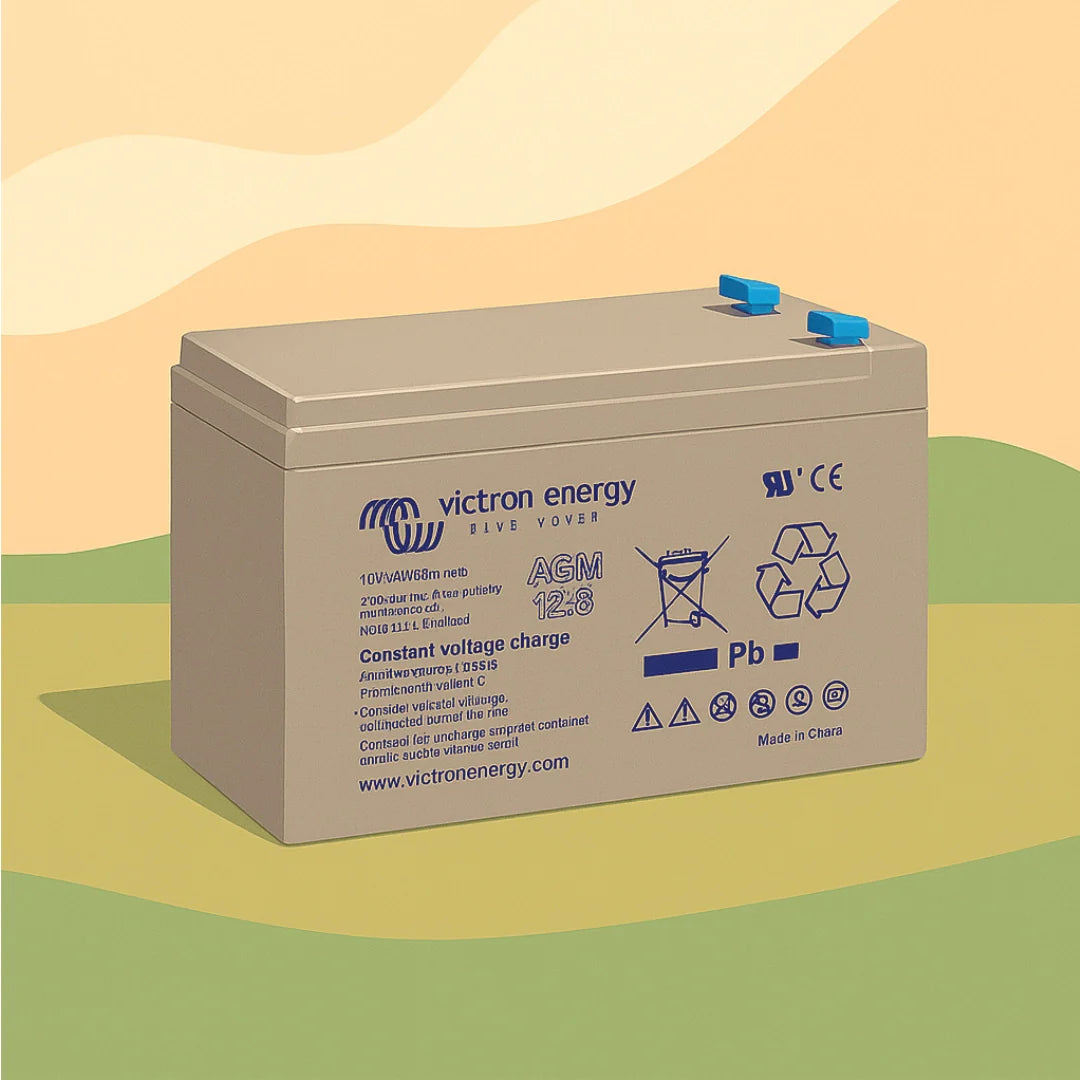
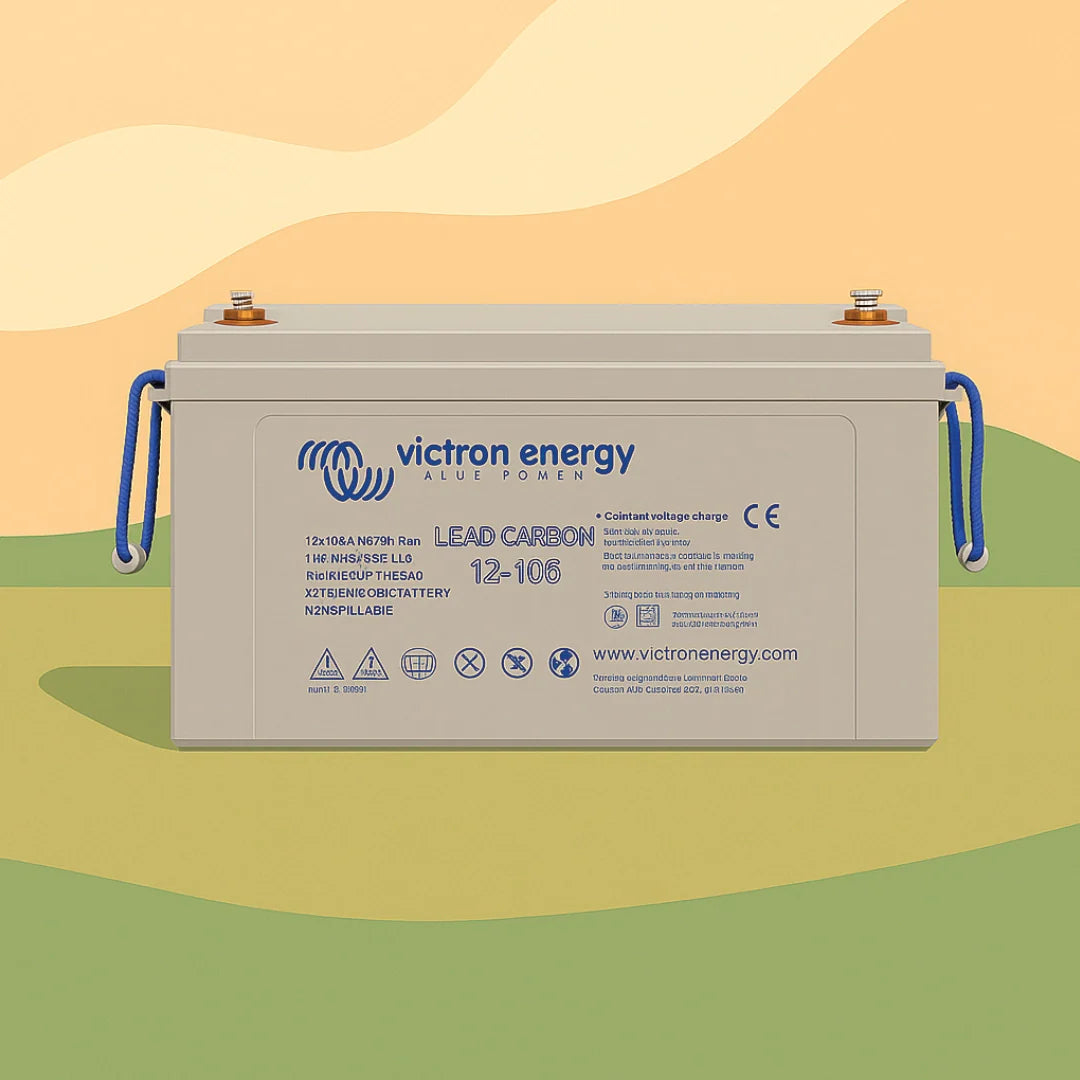
Lead-acid batteries are the oldest option and the cheapest upfront. They discharge poorly below 50% capacity, which limits their practical use in off-grid builds. AGM (Absorbent Glass Mat) batteries improve on this with sealed construction and better vibration resistance, but still deliver only around 50% usable capacity.
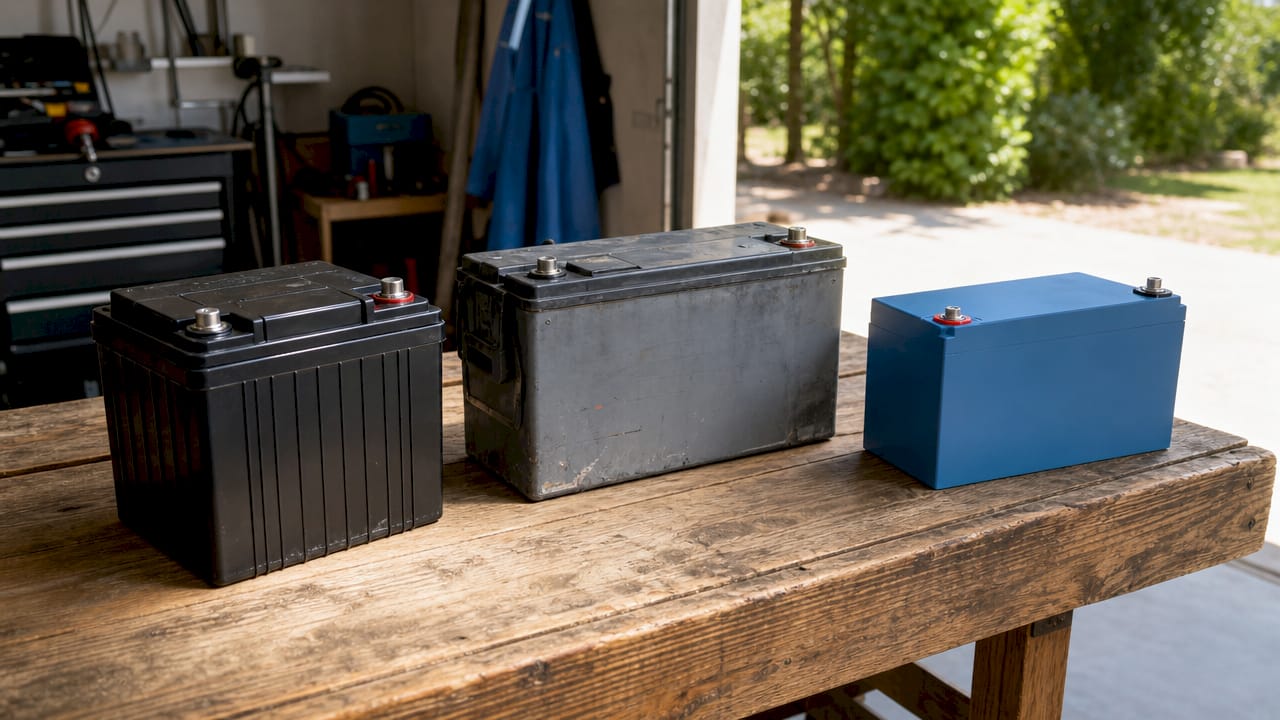
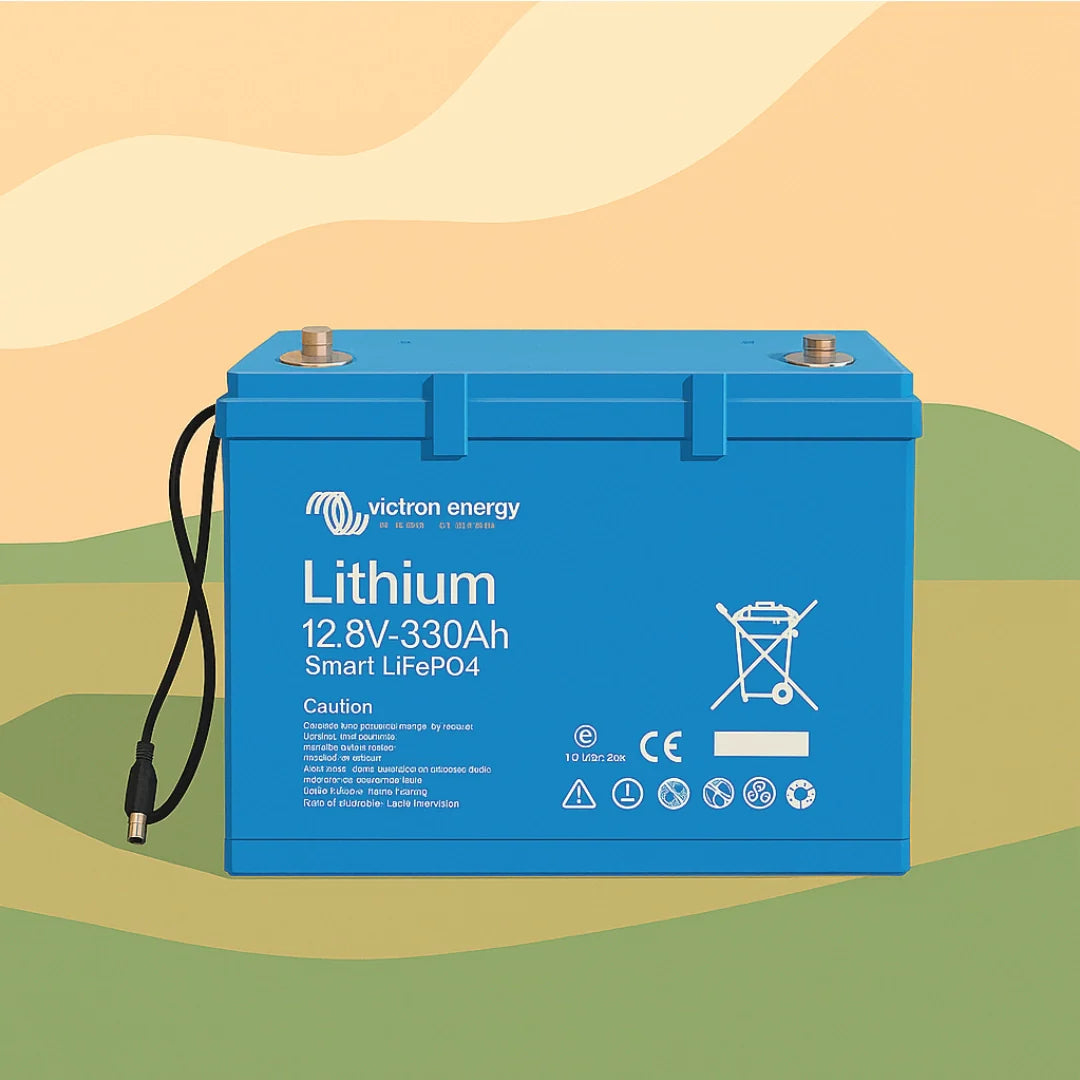
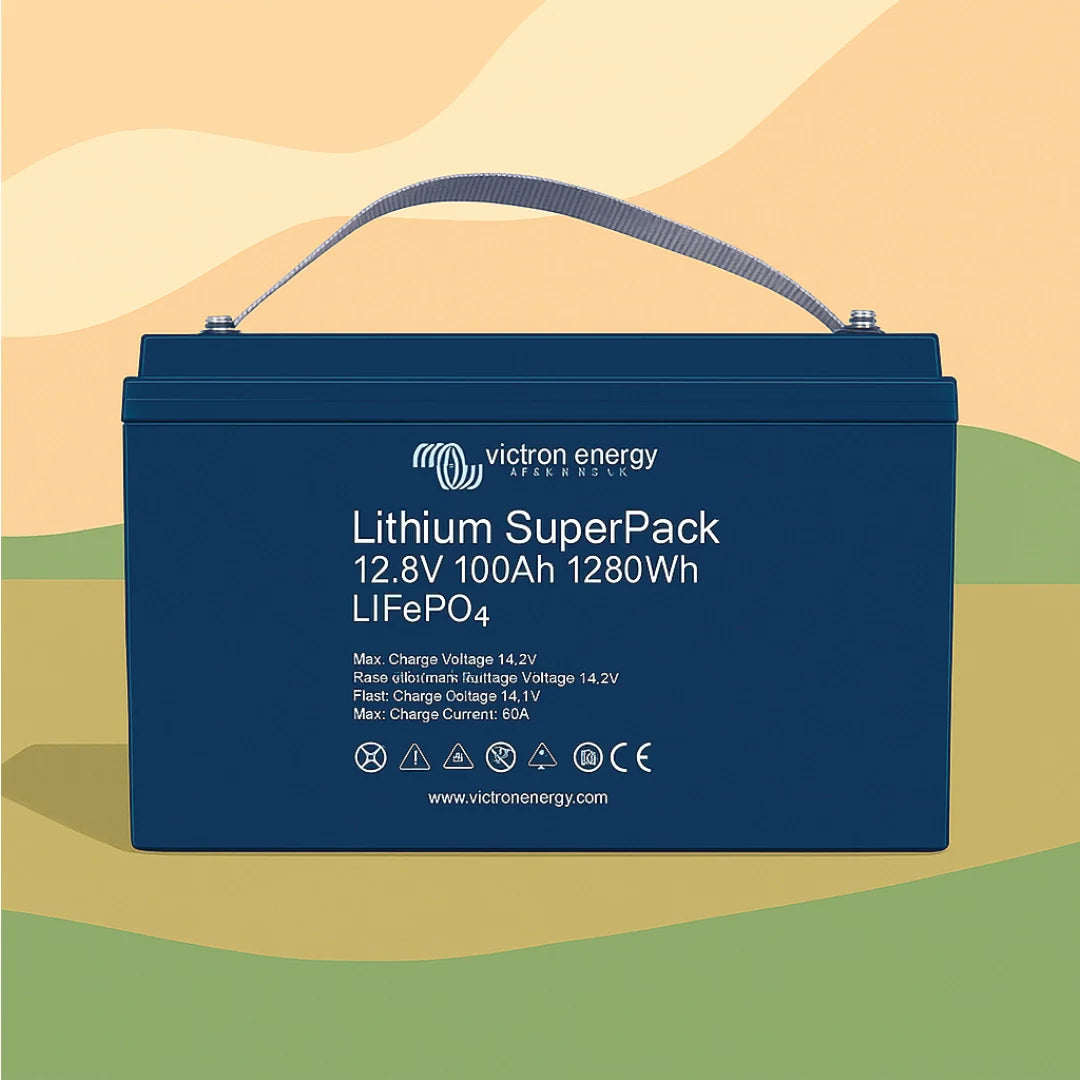
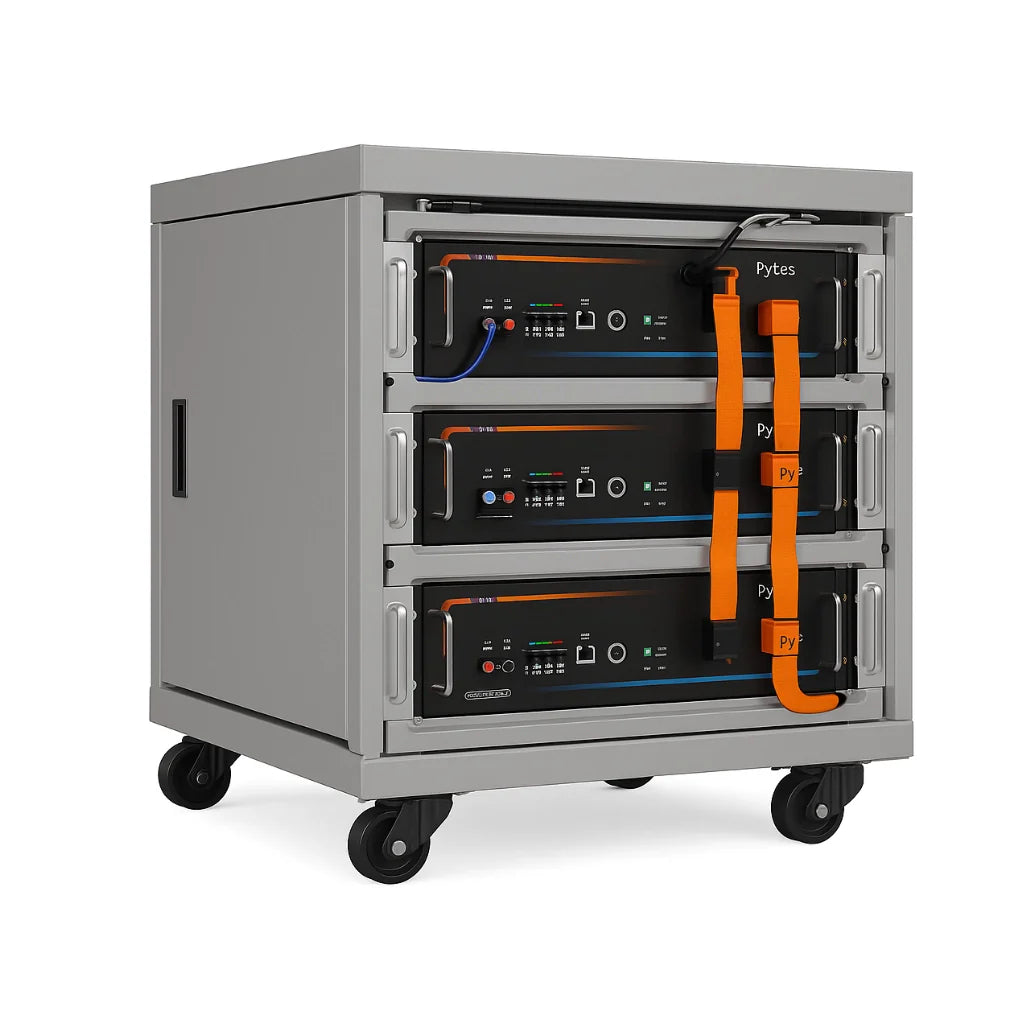
LiFePO4 batteries are now the standard choice for serious off-grid builds. They weigh approximately 50% less than equivalent lead-acid batteries and deliver 80–90% usable capacity. That means a 100Ah LiFePO4 battery gives you roughly 80–90Ah of usable power, versus 50Ah from an AGM of the same rating.
Charger: split charge relay vs DC-DC charger
A split charge relay connects the starter and leisure batteries when the engine runs. It works on older vehicles with simple alternators. Modern vehicles use smart alternators that vary voltage output, which confuses a relay and results in poor charging.
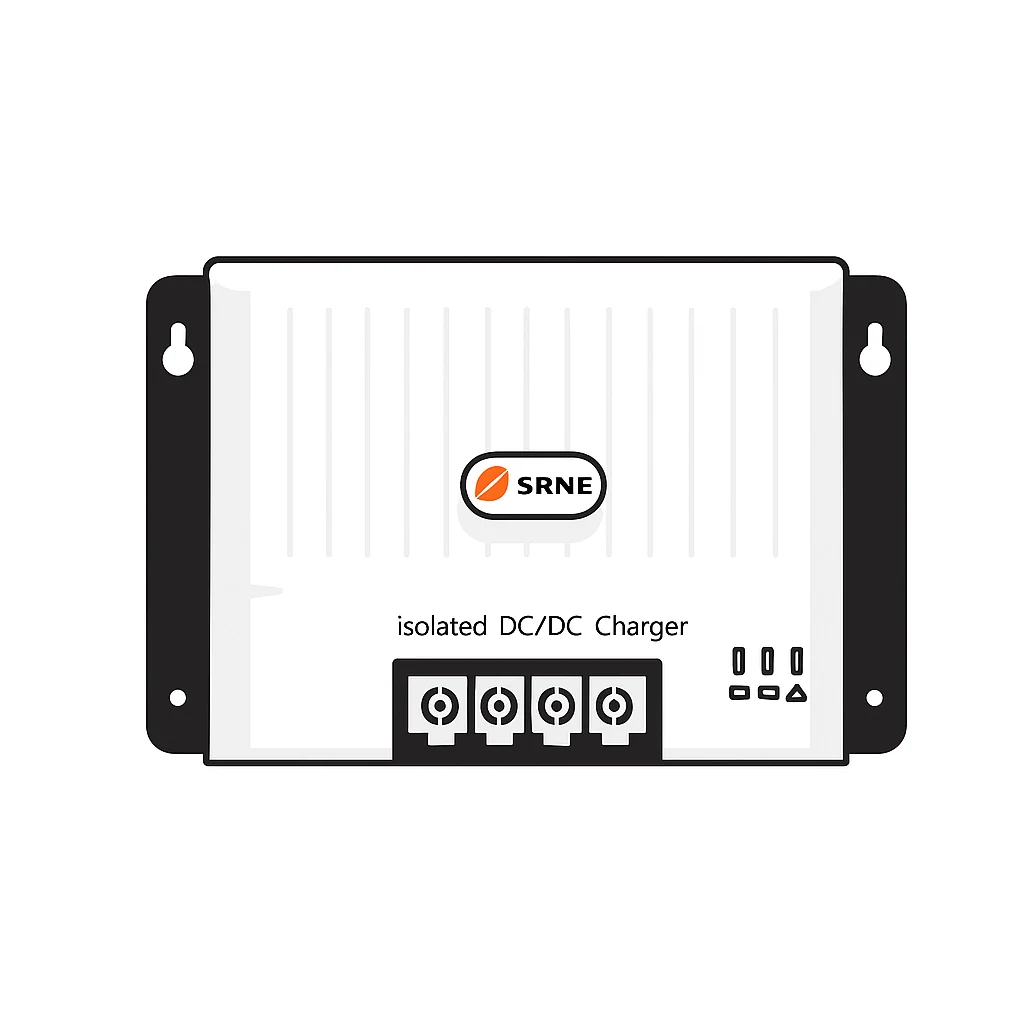
DC-DC chargers regulate the charging current and voltage precisely, making them the correct choice for any vehicle built in the last decade and for all lithium battery systems. They also protect the alternator from overload.
Other core components
- Fuse and cable sizing: Cable must be rated above the maximum current it will carry. A main fuse placed close to the leisure battery positive terminal protects the cable from overheating and fire risk.
- Battery isolation switch: Allows you to disconnect the leisure battery entirely during storage or maintenance.
- Distribution fuse box: Distributes power to individual circuits, each with its own fuse rating.
- Solar charge controller (MPPT): Manages solar panel input and maximises charge efficiency.
- Inverter: Converts 12V DC to 230V AC for mains-style appliances.
Pro Tip: Always size your main fuse to the cable rating, not the load. A 25mm² cable rated to 50A needs a 50A fuse, regardless of what your appliances draw.
How do you safely install and wire the dual battery system?
Safe installation follows a logical sequence. Skipping steps or improvising cable routes creates fire and reliability risks.
Step-by-step installation process
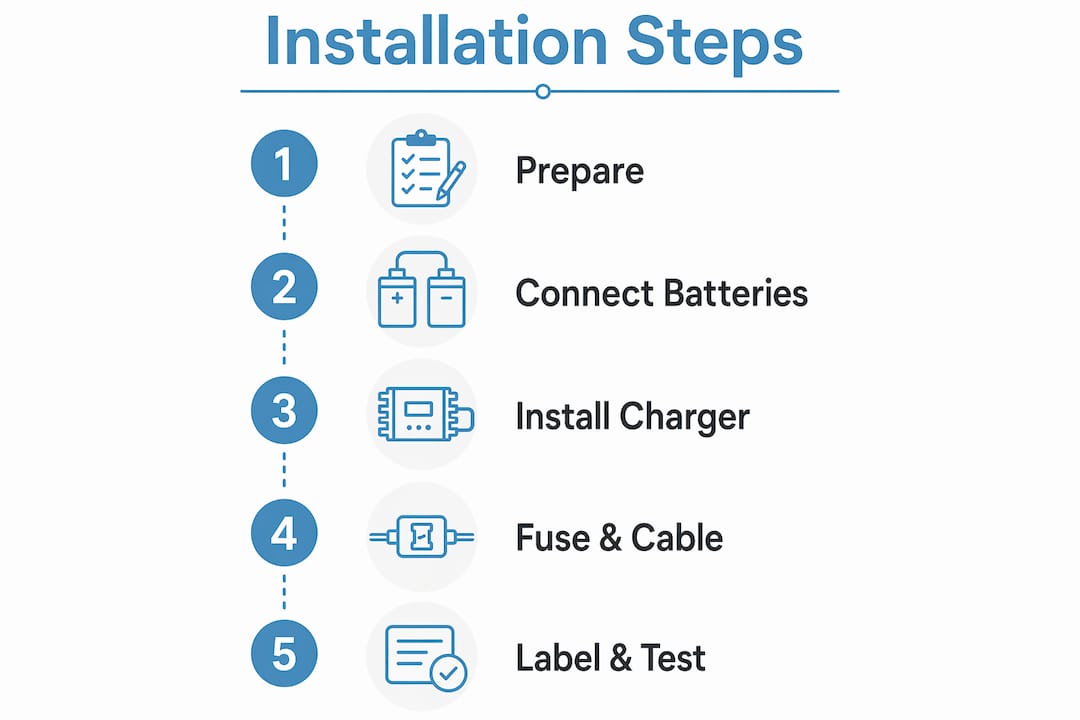
- Mount the leisure battery securely. Use a dedicated battery box or tray bolted to the vehicle floor. The battery must not move during driving. Lithium batteries do not require ventilation, but AGM batteries produce hydrogen gas and need airflow.
- Plan and route your cables. Run positive and negative cables through grommeted holes to avoid chafing on metal edges. Keep cable runs as short as practical to reduce voltage drop.
- Size your cables correctly. Use 16mm² cable for runs up to 30A and 25mm² for runs up to 50A. Inverters drawing high current require larger gauge cable, often 35mm² or above.
- Fit the main fuse first. Place a fuse within 300mm of the leisure battery positive terminal before any other connection. This is the most critical safety step in the entire installation.
- Connect the DC-DC charger. Wire the input to the starter battery via a fused cable and the output to the leisure battery. Follow the manufacturer’s polarity markings exactly.
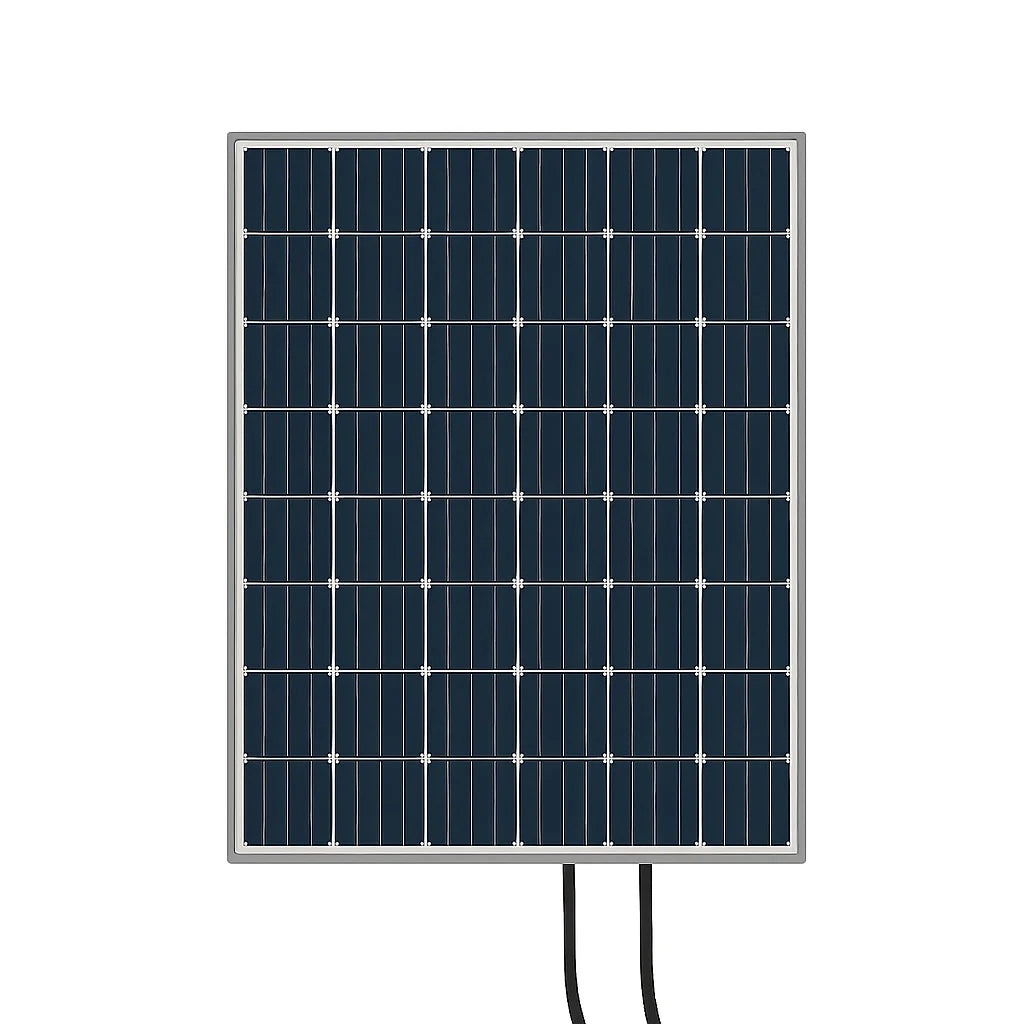
- Integrate solar panels. Run the solar panel cables to an MPPT controller, then from the controller to the leisure battery. A 200W solar panel system with an MPPT controller maintains a 100Ah–200Ah battery bank effectively in UK summer conditions.
- Connect a mains charger. Wire a 230V charger to the leisure battery for use on site hookups. Select a charger with a lithium-compatible charging profile if your battery is LiFePO4.
- Test all connections. Use a multimeter to verify voltage at the leisure battery terminals. Check that the DC-DC charger activates when the engine runs and that the solar controller shows input from the panels.
Pro Tip: Label every cable at both ends before routing. A simple label maker saves hours of fault-finding later.
The energy storage system workflow for a leisure vehicle works best when all three charging sources are connected and tested before the vehicle goes into regular use.
What are the best charging strategies for maintaining dual batteries off-grid?
The most effective approach to off-grid charging combines three sources: the alternator via a DC-DC charger while driving, solar panels when stationary, and a mains charger on site. Each source covers the gaps left by the others.
DC-DC charging while driving
Smart alternators require DC-DC chargers to charge leisure batteries correctly. A DC-DC charger takes the variable alternator output and converts it to a stable, chemistry-appropriate charge voltage. For LiFePO4 batteries, this means a precise absorption voltage of around 14.4–14.6V. Without a DC-DC charger, a smart alternator may deliver insufficient charge or cut out entirely.
Solar charging when stationary
A 200W solar panel paired with an MPPT controller delivers consistent charge during daylight hours. MPPT controllers extract up to 30% more energy from panels than older PWM controllers. For UK conditions, a 200W system is a practical minimum for a 100Ah leisure battery. Larger battery banks benefit from 300W or more.
Mains hookup charging
A mains charger provides the fastest and most complete charge cycle. Select a unit with multiple charging profiles, including a dedicated lithium programme. Multi-stage chargers apply bulk, absorption, and float stages correctly, extending battery life.
Temperature and monitoring considerations
- Charging LiFePO4 batteries below 0°C risks cell damage. Many quality LiFePO4 batteries include a built-in low-temperature cut-off or heating element.
- Voltage readings alone do not accurately reflect the state of charge of a lithium battery. LiFePO4 has a very flat discharge curve, meaning voltage stays near 13.2V from 90% down to 20% charge.
- A shunt-based battery monitor measures actual current in and out of the battery, giving a true state of charge reading. This is the only reliable method for lithium systems.
Pro Tip: Set your battery monitor’s capacity to the actual usable capacity of your battery, not the rated capacity. For a 100Ah LiFePO4, enter 90Ah to get accurate percentage readings.
What common mistakes should leisure vehicle owners avoid?
Most dual battery system failures trace back to a small number of installation errors. Knowing them in advance prevents costly repairs and safety hazards.
Undersized cables and missing fuses are the two most common causes of electrical fires in leisure vehicle conversions. A cable that overheats does not always trip a breaker. It melts insulation silently until it ignites.
The most frequent mistakes include:
- Undersized cables: Using 6mm² cable for a 30A circuit causes voltage drop and heat build-up. Match cable size to the current and run length using a standard cable sizing chart.
- Incorrect fuse placement: A fuse at the distribution box does not protect the cable between the battery and the box. The main fuse must sit within 300mm of the battery positive terminal.
- Wrong charger profile: Charging a LiFePO4 battery on an AGM profile undercharges it and reduces cycle life. Always set the charger to the correct chemistry profile.
- No battery monitoring: Guessing state of charge by voltage leads to over-discharge, which permanently damages lithium cells.
- Poor connections: Loose terminals cause resistance, heat, and voltage drop. Torque all terminals to the manufacturer’s specification and use anti-corrosion compound on exposed copper.
High-current systems, particularly those including inverters above 1,000W, should be verified against BS 7671 UK electrical standards by a qualified professional. DIY installation is common and achievable, but professional sign-off on high-current work reduces risk and may be required for insurance purposes.
Pro Tip: After installation, run the system for 48 hours and check every terminal for warmth. A warm terminal under normal load indicates a poor connection that needs attention.
Key takeaways
A properly configured dual battery system separates starter and leisure battery roles, uses a DC-DC charger for modern vehicles, and relies on a shunt-based monitor for accurate state of charge management.
| Point | Details |
|---|---|
| Choose LiFePO4 for off-grid builds | LiFePO4 delivers 80–90% usable capacity and 2,000–5,000 cycles, far exceeding AGM performance. |
| Use a DC-DC charger, not a relay | Modern smart alternators require a DC-DC charger to charge leisure batteries correctly and safely. |
| Fuse within 300mm of the battery | The main fuse must sit close to the leisure battery positive terminal to protect cables from fire risk. |
| Combine three charging sources | DC-DC while driving, solar when stationary, and mains on site gives the most reliable charge coverage. |
| Monitor state of charge accurately | Voltage alone is unreliable for lithium batteries; use a shunt-based monitor for accurate readings. |
Why I think most dual battery builds get the fundamentals wrong
Most people building a leisure vehicle electrical system spend hours researching battery brands and almost no time on cable sizing or fuse placement. That is the wrong priority. I have seen beautifully specified lithium battery systems connected with undersized cable and no main fuse, which is genuinely dangerous regardless of how good the battery is.
The second thing people consistently underestimate is monitoring. Voltage guessing on a LiFePO4 battery is nearly useless. The discharge curve is so flat that a voltage reading of 13.1V could mean 80% charge or 25% charge depending on load conditions. A shunt-based monitor costs relatively little and removes all the guesswork. Without one, you are flying blind.
The third mistake is treating the DC-DC charger as optional. If your vehicle was built after around 2014, it almost certainly has a smart alternator. Connecting a split charge relay to a smart alternator gives you unpredictable charging at best and alternator damage at worst. A DC-DC charger is not an upgrade. It is a requirement.
Get the fundamentals right: correct cable sizing, a fuse within 300mm of the battery, a DC-DC charger matched to your battery chemistry, and a proper monitor. Everything else is secondary.
— John
Skyenergi’s complete systems for leisure vehicle power
Skyenergi supplies matched component sets designed specifically for leisure vehicle dual battery builds, removing the guesswork from component selection.

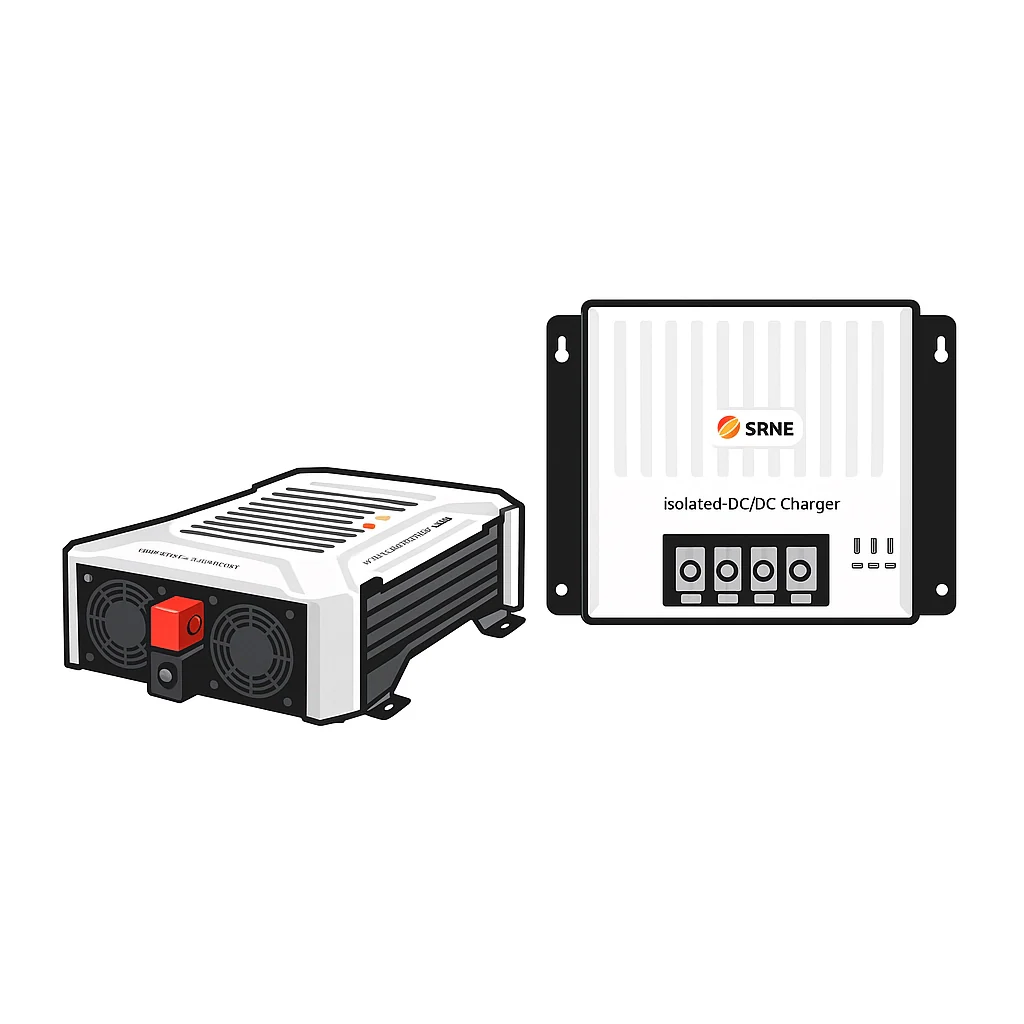
The 3kVa inverter/charger system combines a battery-to-battery charger, mains inverter/charger, and monitoring in a single matched package. For builds requiring integrated DC-DC and solar control, the SRNE MD1250 with 370W Victron panels delivers dual-source charging from one compact unit. The complete solar power system covers the full installation from alternator charging through to mains hookup and real-time monitoring. All Skyenergi systems are sourced directly from manufacturers and are compatible with LiFePO4 battery chemistry.
FAQ
What is the difference between a split charge relay and a DC-DC charger?
A split charge relay connects both batteries when the engine runs, passing alternator voltage directly. A DC-DC charger regulates the output to match the leisure battery’s chemistry, which is necessary for smart alternators and all lithium battery systems.
Can I use AGM and LiFePO4 batteries together in a dual battery setup?
Mixing chemistries in a dual battery system is not recommended. Each chemistry requires a different charge voltage and profile. Using a DC-DC charger between them mitigates some risk, but a matched pair of the same chemistry gives better performance and simpler management.
How do I know what size cable to use for my leisure battery?
Use 16mm² cable for circuits up to 30A and 25mm² for circuits up to 50A. Inverter circuits drawing high current require 35mm² or larger. Always account for cable run length, as longer runs increase resistance and require a larger gauge.
Do I need a professional to install a dual battery system?
Basic installations are achievable as DIY projects. High-current systems, particularly those including large inverters, should be verified against BS 7671 UK electrical standards by a qualified professional to meet safety and insurance requirements.
Why does my lithium battery voltage not change much during use?
LiFePO4 batteries have a flat discharge curve. Voltage remains near 13.2V across most of the usable capacity range. A shunt-based battery monitor measuring actual current flow is the only reliable way to track state of charge accurately.
Recommended
Prev post

The Ultimate Guide to Off-Grid Living: Everything You Need to Succeed
Updated on 17 July 2026
Next post

7 Mistakes You're Making with Your Lithium Battery Install (and How to Fix Them)
Updated on 16 July 2026


