





Battery cycle life: campervan power that lasts longer
Understand battery cycle life for campervans. Compare LiFePO4, AGM, and lead-acid, learn what causes degradation, and get practical tips to extend battery life.
TL;DR:
- Battery cycle life depends on depth of discharge and usage habits, affecting longevity.
- LiFePO4 batteries offer the longest lifespan and highest number of cycles for campervans.
- Proper system setup, temperature management, and regular monitoring are key to maximizing battery life.
Most campervan owners discover the hard way that battery life rarely matches the numbers on the box. You invest in a new battery, head off on a trip, and find yourself running low on power far sooner than expected. The root cause is almost always a misunderstanding of battery cycle life, the single most important metric for predicting how long your battery will actually last. This article breaks down what cycle life really means, compares common battery technologies side by side, explains what causes degradation, and gives you practical steps to get the most from your energy storage in campervans.
Table of Contents
- What is battery cycle life?
- Comparing battery types: cycle life side by side
- What really causes battery wear and degradation?
- How to maximise battery cycle life in your campervan
- Our take: why most campervan battery problems are avoidable
- Ready to get more from your campervan batteries?
- Frequently asked questions
Key Takeaways
| Point | Details |
|---|---|
| Cycle life explained | The number of charge/discharge cycles a battery can handle is the best indicator of real-world lifespan. |
| LiFePO4 outperforms | LiFePO4 lithium batteries offer 10-15 years of use and thousands more cycles than lead-acid in campervans. |
| Degradation is manageable | Most battery wear comes from avoidable issues like deep discharging and poor thermal management. |
| Smart habits extend life | Simple maintenance, monitoring, and choosing the right setup can dramatically improve battery performance. |
What is battery cycle life?
A battery cycle is one complete discharge followed by a full recharge. It is not the same as one day of use or one trip away. If you use half your battery capacity one day and recharge it, that counts as half a cycle. Use it fully and recharge, that is one full cycle. Over time, every cycle causes a small amount of chemical wear inside the battery, gradually reducing the total capacity it can hold.
The key variable here is depth of discharge (DoD), which refers to how much of the battery’s total capacity you use before recharging. A battery discharged to 80% DoD (meaning 80% of its capacity is used) will wear out faster than one only discharged to 50% DoD. Most manufacturers quote cycle life at a specific DoD, so always check the small print.
Think of it like a petrol tank. If you always run it down to nearly empty before filling up, the fuel pump works harder and wears sooner than if you topped up more regularly. Batteries behave similarly. Shallow, frequent charges are generally gentler than deep, infrequent ones.
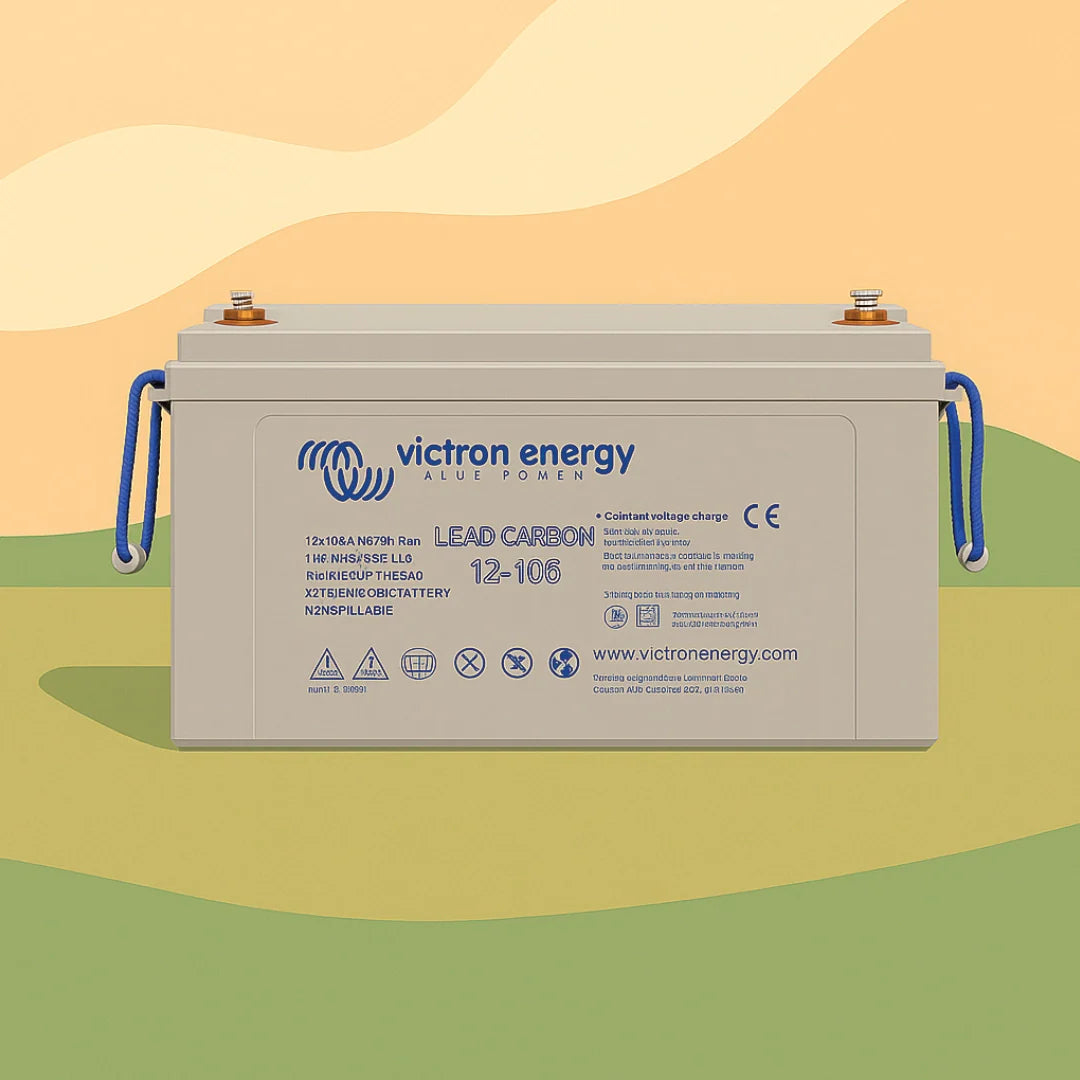
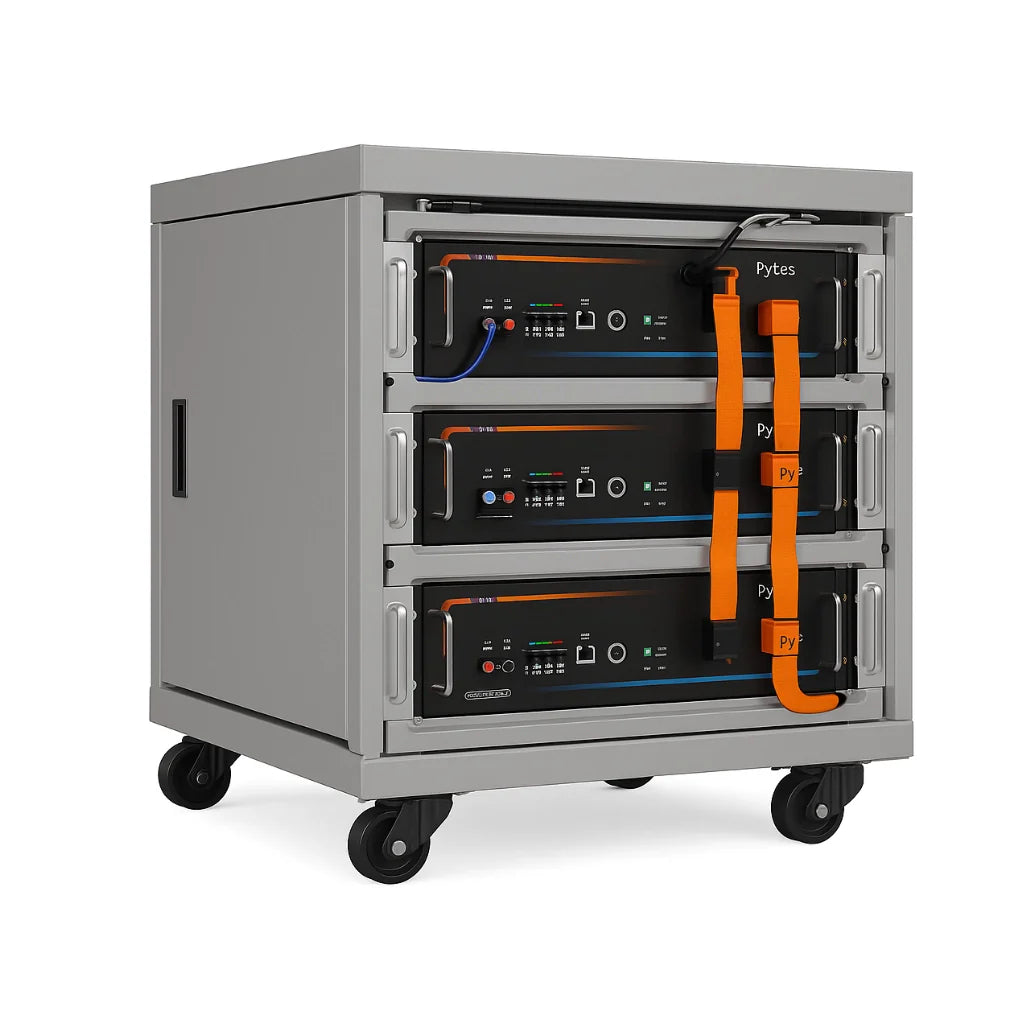
For off-grid campervan use, cycle life is the most reliable indicator of long-term battery value. A battery with a high cycle count at a usable DoD will outlast a cheaper option with a low cycle count, even if the upfront price is higher. Understanding the types of lithium batteries available helps you match the right chemistry to your travel style.
Here is a quick overview of typical cycle life figures by chemistry:
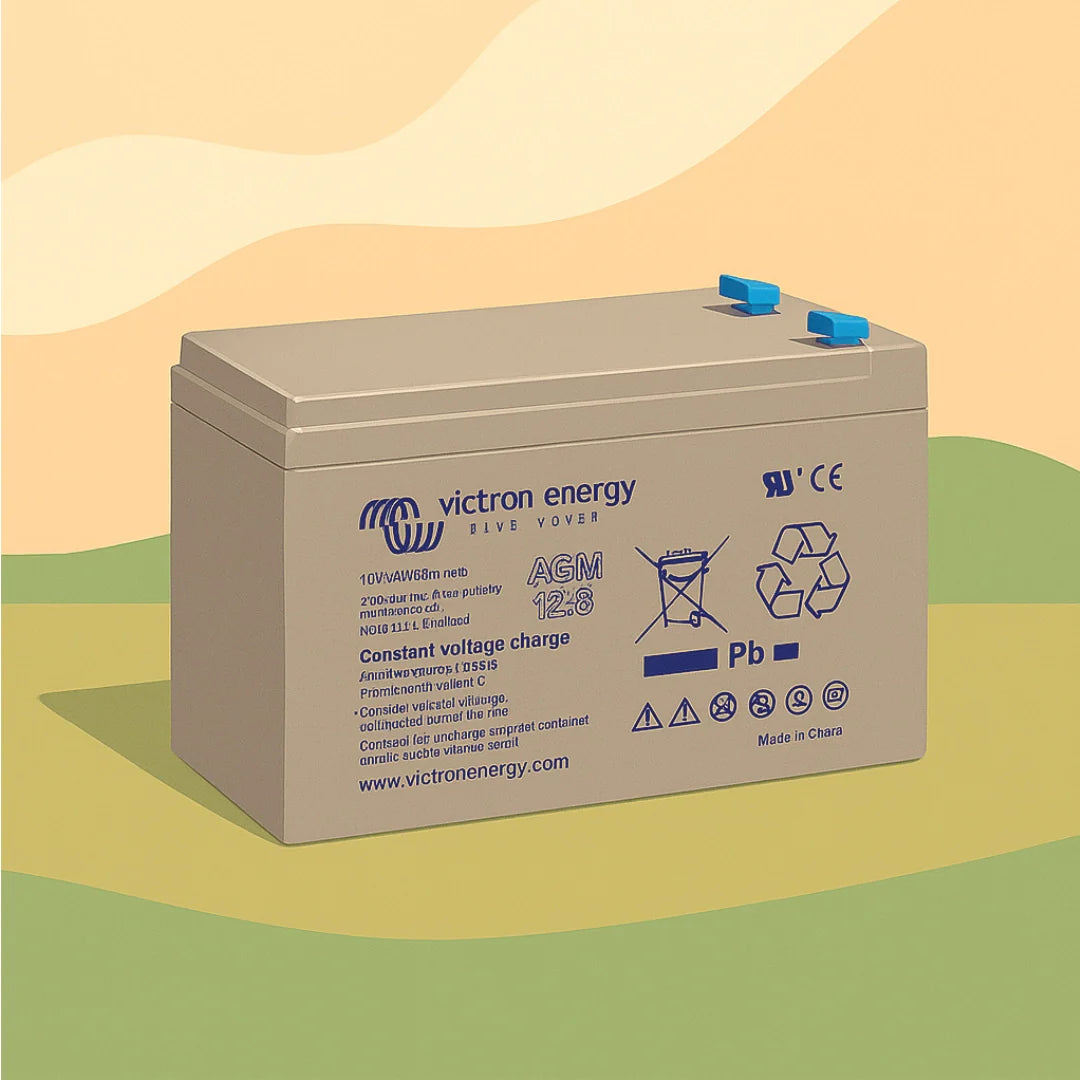
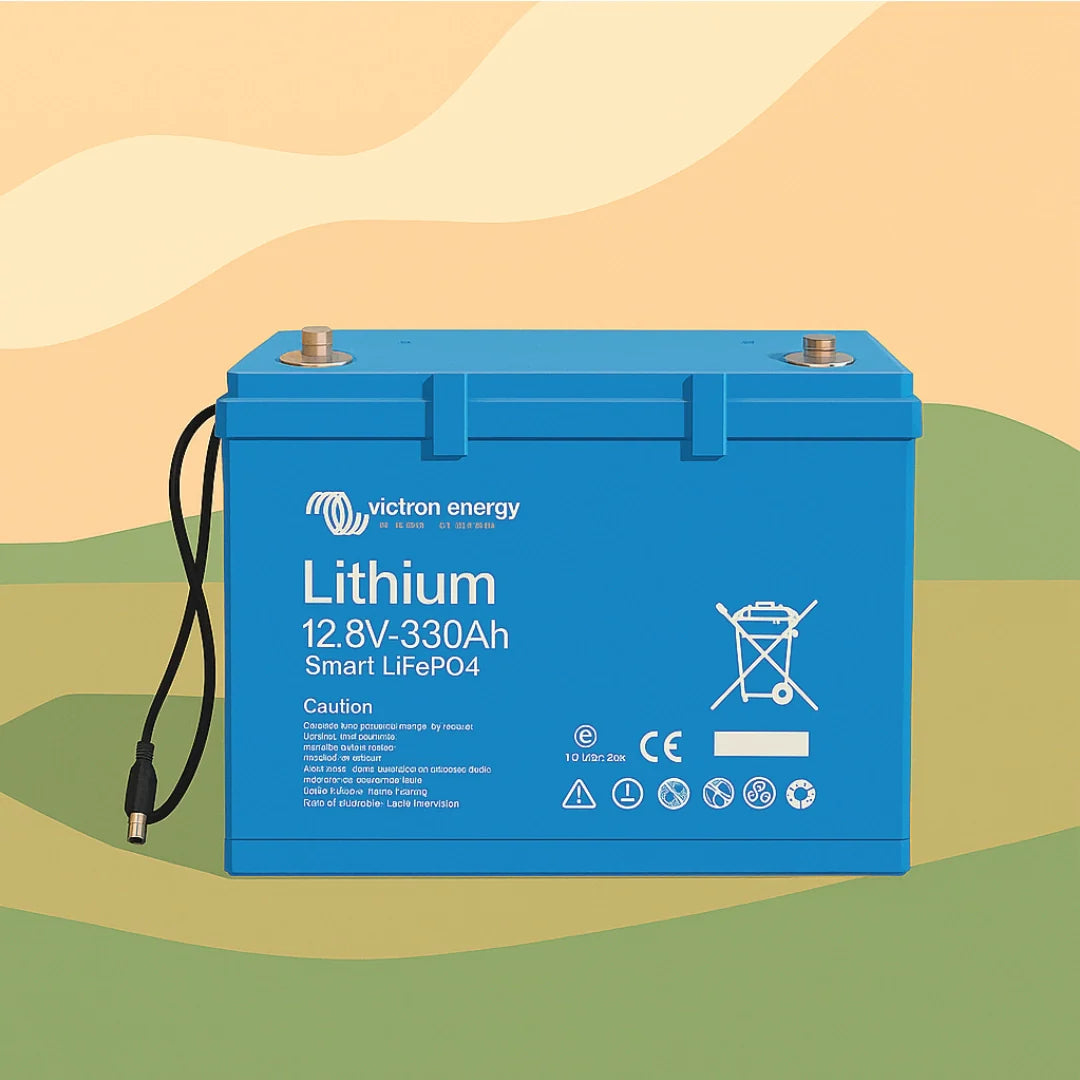
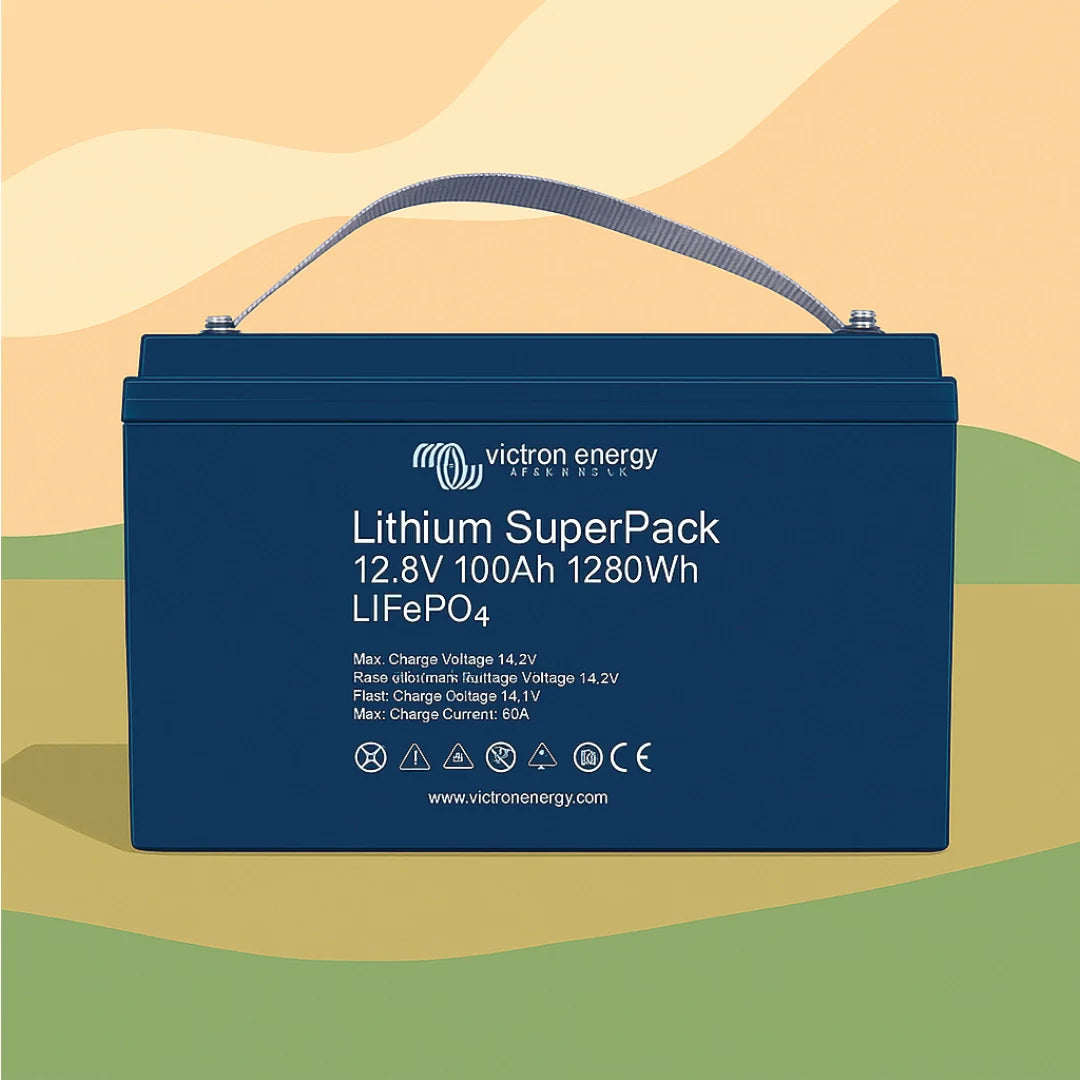
- LiFePO4 (lithium iron phosphate): 3,000 to 5,000 cycles at 80% DoD, lasting 10 to 15 years
- NMC (lithium nickel manganese cobalt): 1,000 to 2,000 cycles at 80% DoD
- AGM (absorbed glass mat lead-acid): 400 to 700 cycles at 50% DoD
- Standard flooded lead-acid: 300 to 500 cycles at 50% DoD
These figures make it clear why chemistry choice matters so much for long-term reliability.
Comparing battery types: cycle life side by side
Having covered the core concept, let us compare the actual lifespans of battery types commonly used in motorhomes. The table below summarises real-world performance under typical UK campervan conditions.
| Battery type | Typical cycle life | Usable DoD | Estimated lifespan |
|---|---|---|---|
| LiFePO4 | 3,000 to 5,000 | 80% | 10 to 15+ years |
| NMC lithium | 1,000 to 2,000 | 80% | 5 to 8 years |
| AGM lead-acid | 400 to 700 | 50% | 3 to 5 years |
| Flooded lead-acid | 300 to 500 | 50% | 2 to 4 years |
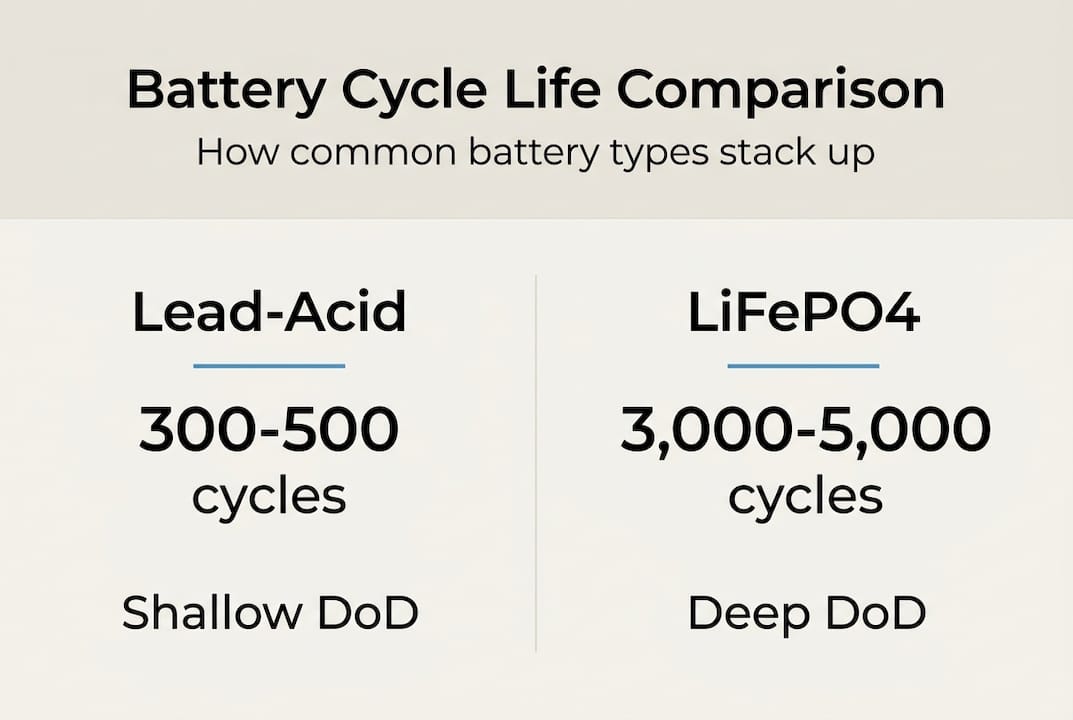
LiFePO4 stands out clearly. It offers more usable capacity per cycle, a higher cycle count, and better thermal stability than any other chemistry commonly used in leisure vehicles. LiFePO4 is superior to NMC for RV and campervan applications due to its safety profile and resistance to thermal runaway, with empirical data showing 10 to 15 or more years of service life when used correctly.
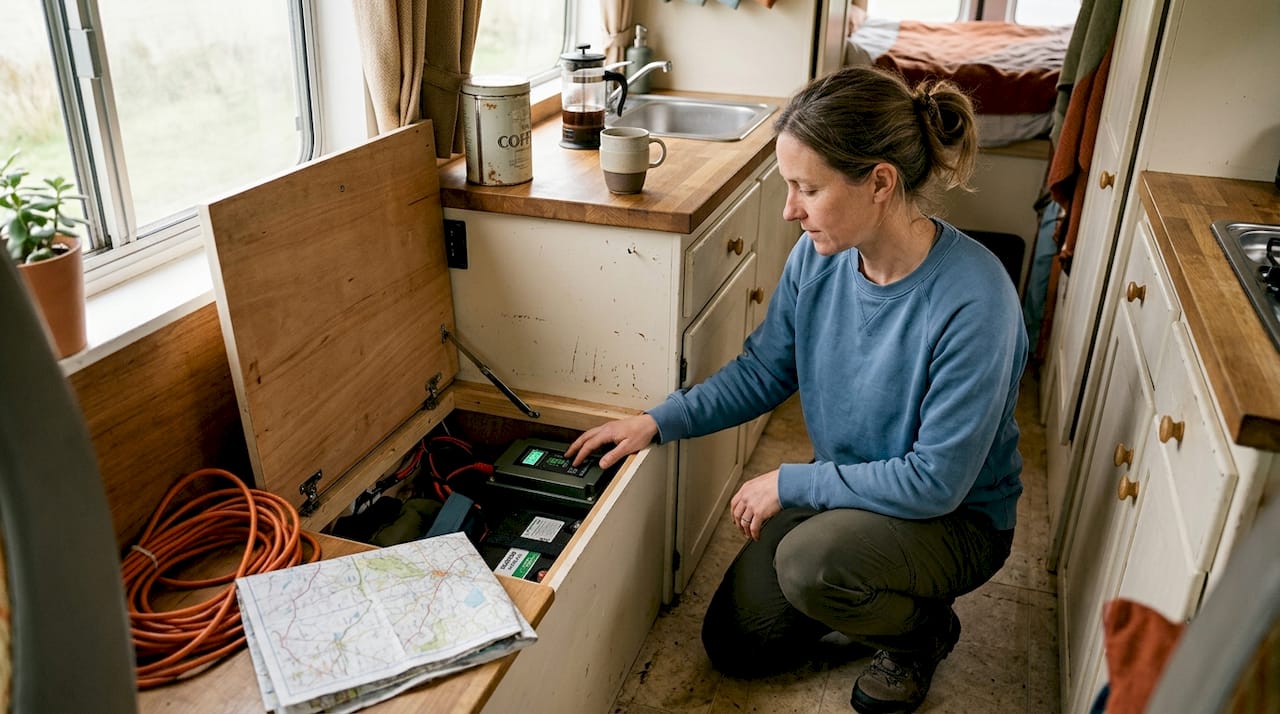
NMC batteries are found in many consumer electronics and some EV applications, but their lower cycle count and higher sensitivity to heat make them a less practical choice for campervans. AGM batteries remain popular due to their lower upfront cost, but the reduced DoD and shorter lifespan mean they often cost more over time when you factor in replacements. For a detailed breakdown, see our guide on lithium vs AGM batteries.
Pro Tip: When comparing batteries, divide the purchase price by the total cycle count at your typical DoD. This gives you a cost-per-cycle figure that reveals the true long-term value, not just the sticker price.
To assess what cycle life figure means for your specific needs, follow these steps:
- Estimate your average daily energy use in amp-hours or watt-hours.
- Identify your typical DoD based on how you travel (weekend trips vs. full-time living).
- Cross-reference the manufacturer’s cycle life at that DoD, not just the headline figure.
- Calculate how many years the battery should last at your usage rate.
- Compare total cost of ownership across battery types before purchasing.
For further guidance, our UK lithium battery guide covers sizing and selection in detail.
What really causes battery wear and degradation?
Beyond cycle count, understanding what actually wears a battery out is critical for effective long-term use. Batteries do not simply run out of cycles like a countdown timer. Several interconnected processes cause capacity to fade over time, and some are within your control.
The main degradation mechanisms in lithium batteries include:
- SEI layer growth: A solid electrolyte interphase forms on the anode over time, consuming lithium ions and reducing usable capacity.
- Lithium plating: Occurs at low temperatures or high charge rates, depositing metallic lithium on the anode rather than intercalating it properly.
- Electrolyte oxidation: Heat accelerates chemical breakdown of the electrolyte, reducing ion conductivity.
- Electrode cracking: Repeated expansion and contraction of electrode materials causes microscopic fractures, increasing internal resistance.
Research confirms that high temperatures accelerate side reactions including SEI growth and electrolyte oxidation, while low temperatures promote lithium plating during charging. Both extremes shorten battery life significantly.
The table below summarises the impact of common misuse scenarios:
| Misuse scenario | Primary degradation effect | Severity |
|---|---|---|
| Charging in sub-zero temperatures | Lithium plating on anode | High |
| Storing at full charge long-term | Electrolyte stress, SEI growth | Medium |
| Repeated deep discharges below 10% | Electrode cracking, capacity loss | High |
| Sustained high ambient temperatures | Accelerated side reactions | High |
| Overcharging above rated voltage | Electrolyte oxidation, gas generation | Very high |
Thermal stability is one of the most underappreciated factors in campervan battery performance. LiFePO4 chemistry has a significantly higher thermal runaway threshold than NMC, making it far safer and more durable in the variable temperatures typical of UK van life, from cold winter storage to hot summer festivals.
Factors you can control include charge rate, temperature management, and avoiding extreme DoD. Factors that are inevitable include baseline SEI growth over time and normal electrode wear. Reviewing your battery upgrade steps before installation helps you set up a system that minimises avoidable wear from day one. Proper solar system calculations also help ensure your charging input is correctly sized, reducing the risk of overcharging.
How to maximise battery cycle life in your campervan
With a grasp of why batteries wear out, it is time to focus on easy wins for keeping your battery performing year after year. Most of the best practices are straightforward habits rather than expensive upgrades.
- Avoid discharging below 20% regularly. Even though LiFePO4 is rated to 80% DoD, staying above 20% state of charge as a routine habit extends cycle life noticeably.
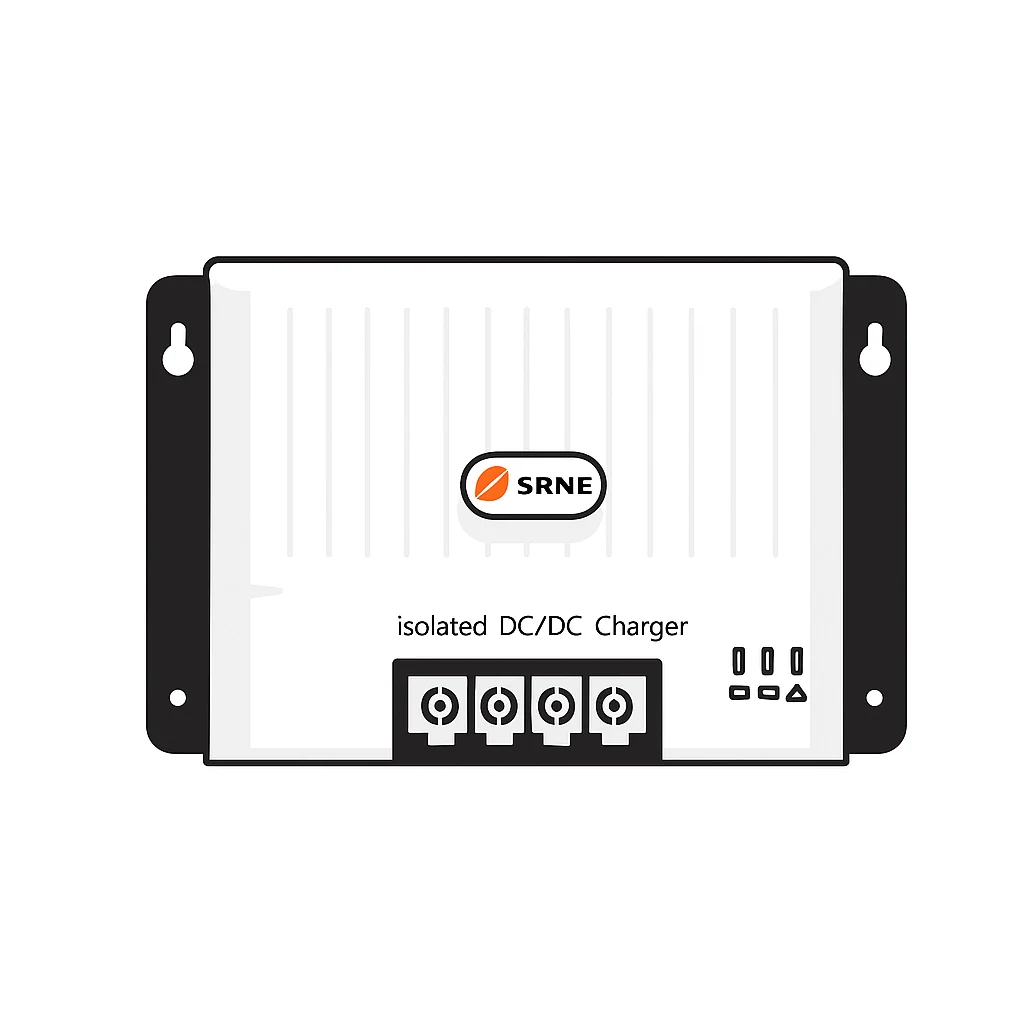
- Never charge below 5 degrees Celsius. Lithium plating is a real risk in UK winters. Use a charger with a low-temperature cut-off or a DC-to-DC charger with temperature sensing.
- Use a quality multi-stage charger. Bulk, absorption, and float stages protect the battery from overcharging and ensure full, balanced charging every time.
- Monitor your system regularly. Bluetooth battery management systems (BMS) allow you to track state of charge, temperature, and cell balance in real time from your phone.
- Store at 50 to 60% charge for extended periods. If the van is parked up for winter, avoid leaving the battery at 100% or near empty.
- Keep the battery ventilated and away from heat sources. Mounting near the engine bay or in direct sun exposure shortens life faster than almost any other factor.
- Review your system annually. Check connections, terminal corrosion, and BMS readings to catch issues early.
LiFePO4 delivers 10 to 15+ years of service life in RV applications when these habits are followed consistently. Our lithium battery setup tips and solar battery systems guides cover installation best practices in detail.
Pro Tip: Investing in a quality MPPT solar charge controller with temperature compensation is one of the most cost-effective ways to protect your battery. It adjusts the charge voltage based on ambient temperature, reducing stress in both summer and winter conditions.
If your battery capacity has dropped noticeably below 80% of its original rating despite good maintenance, it is worth considering replacement. At that point, the battery is working harder to deliver the same output, which accelerates further degradation.
Our take: why most campervan battery problems are avoidable
After working with campervan and motorhome owners across the UK, the pattern is consistent. Batteries fail early not because the technology is flawed, but because the system around the battery is poorly set up. An expensive LiFePO4 battery installed without a proper BMS, connected to an incompatible charger, and left in a poorly ventilated locker will underperform every time.
Cycle life figures matter, but a well-configured system with a mid-range battery will almost always outperform a premium battery in a poorly designed setup. The basics, correct sizing, proper charge control, and regular monitoring, deliver more real-world value than chemistry alone. Understanding matching battery capacity to your actual energy needs is where most owners should start, before worrying about which brand to buy. Education and consistent habits are the real path to energy independence on the road.
Ready to get more from your campervan batteries?
Putting this knowledge into practice is straightforward with the right products and guidance. Skyenergi supplies complete battery and monitoring solutions designed specifically for campervans and motorhomes, sourced directly from manufacturers to keep costs competitive.
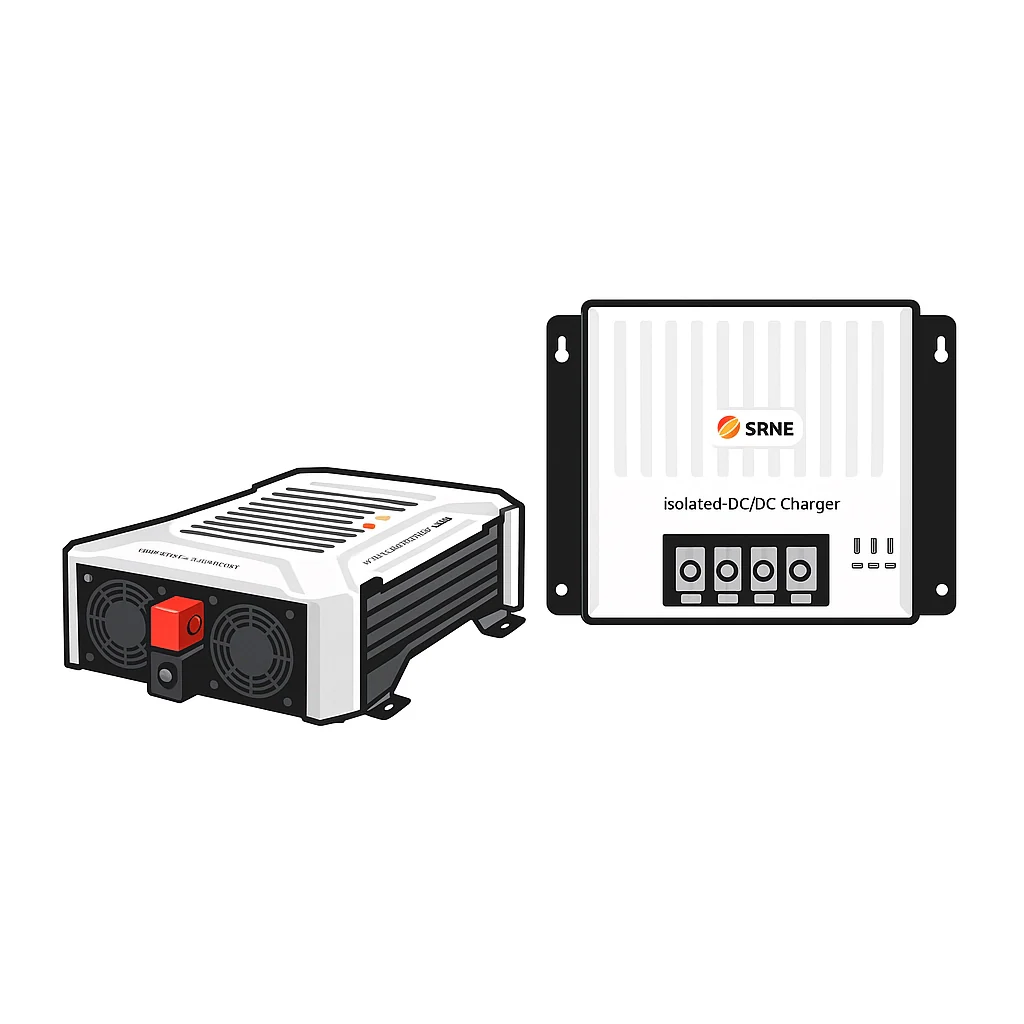
For a complete power upgrade, the solar inverter and charger system from SRNE combines inverter charging, DC-to-DC charging, and monitoring in a single turnkey package. If solar is your priority, the Victron solar upgrade kit pairs a 610-watt panel with a Victron Smart MPPT controller for reliable, temperature-compensated charging. Browse the full range of expert battery solutions to find the right fit for your setup and travel style.
Frequently asked questions
What does ‘one battery cycle’ mean for a campervan battery?
One battery cycle is a complete discharge followed by a full recharge. Using half your battery capacity and topping up counts as half a cycle, not a full one.
How many cycles do LiFePO4 batteries last in real campervan use?
LiFePO4 delivers 3,000 to 5,000 cycles at 80% depth of discharge, which translates to 10 to 15 years of service life for most UK campervan owners.
Can I extend my lithium battery’s cycle life, and how?
Yes. Avoiding deep discharges, keeping the battery within safe temperature ranges, and using a quality multi-stage charger all reduce the key degradation mechanisms that shorten battery life.
Why does temperature matter so much for battery life?
High temperatures accelerate electrolyte breakdown and SEI growth, while low temperatures cause lithium plating on the anode, both of which permanently reduce capacity and cycle life.
Recommended
- Battery Capacity vs Energy Needs for Campervans – Skyenergi
- Energy Storage for Campervans: 80% More Usable Lithium Power – Skyenergi
- Role of Lithium Batteries in Campervans: Powering UK Adventures – Skyenergi
- 7 Types of Lithium Batteries for Campervan Power – Skyenergi
- What is battery cycling? Energy storage guide for 2026
Prev post

Expandable motorhome energy: modular power for off-grid UK travel
Updated on 08 April 2026
Next post

Upgrade energy storage in leisure vehicles: a practical guide
Updated on 06 April 2026


