







What is battery management system: 70% longer lithium battery life
Discover what a battery management system does for lithium leisure batteries. Learn how BMS protects against damage, extends lifespan 70%, and optimises UK off-grid energy independence.
Managing a lithium battery in your UK campervan or motorhome without a proper battery management system is like driving without a dashboard. You’re unaware of critical parameters until something fails. A battery management system continuously monitors cell voltages, current, temperature, and state of charge to prevent unsafe operating conditions in lithium leisure batteries, extending lifespan and protecting your investment. This guide explains what a BMS does, how it safeguards your off-grid energy, and which features matter most for UK leisure vehicle owners.
Table of Contents
- What Is A Battery Management System (BMS)? Core Functions Explained
- How Does A BMS Protect And Extend Battery Life In Off-Grid Use?
- Advanced BMS Features: Bluetooth Monitoring And System Integration
- Common Misconceptions About Battery Management Systems
- Selecting And Using A BMS For Your UK Leisure Vehicle: Practical Tips
- Conclusion: Enhancing Off-Grid Energy Independence With Smart Battery Management
- Explore Skyenergi’s Lithium Battery And BMS Solutions
Key takeaways
| Point | Details |
|---|---|
| BMS monitors critical parameters | Continuously tracks voltage, current, temperature, and state of charge to prevent damage. |
| Protects and extends battery life | Prevents unsafe conditions, extending lithium battery lifespan to 2000+ charge cycles. |
| Bluetooth monitoring enables proactive management | Real-time smartphone alerts and diagnostics help catch issues early. |
| Climate-specific features are essential | Cold-temperature protection is vital for reliable UK off-grid performance. |
| System integration optimises efficiency | Compatibility with solar chargers and inverters maximises energy independence. |
What is a battery management system (BMS)? Core functions explained
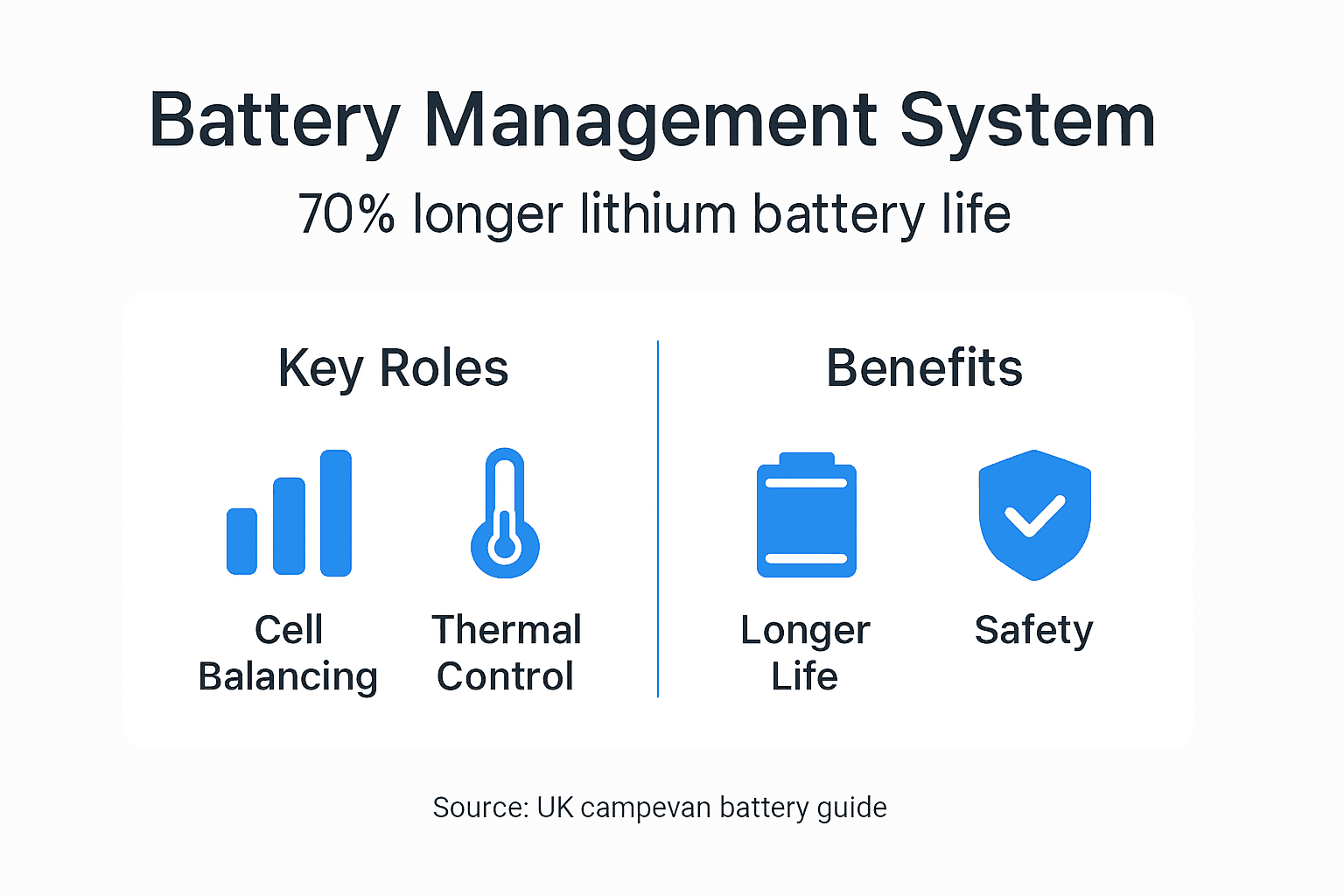
A battery management system is the control centre for your lithium leisure battery. It monitors voltage, current, temperature, and state of charge in real time, acting as the nervous system that senses conditions, processes data, and communicates status. Without a BMS, your battery operates blind, vulnerable to damage from overcharge, over-discharge, or thermal stress.
The core functions include:
- Overcharge protection: Prevents cell voltage from exceeding safe limits, avoiding thermal runaway and fire risk.
- Over-discharge protection: Stops discharge before cells drop too low, preserving capacity and preventing permanent damage.
- Cell balancing: Equalises voltage across individual cells, maintaining uniform capacity and maximising usable energy.
- Temperature monitoring: Tracks operating temperature to prevent thermal damage and trigger protective shutdowns when needed.
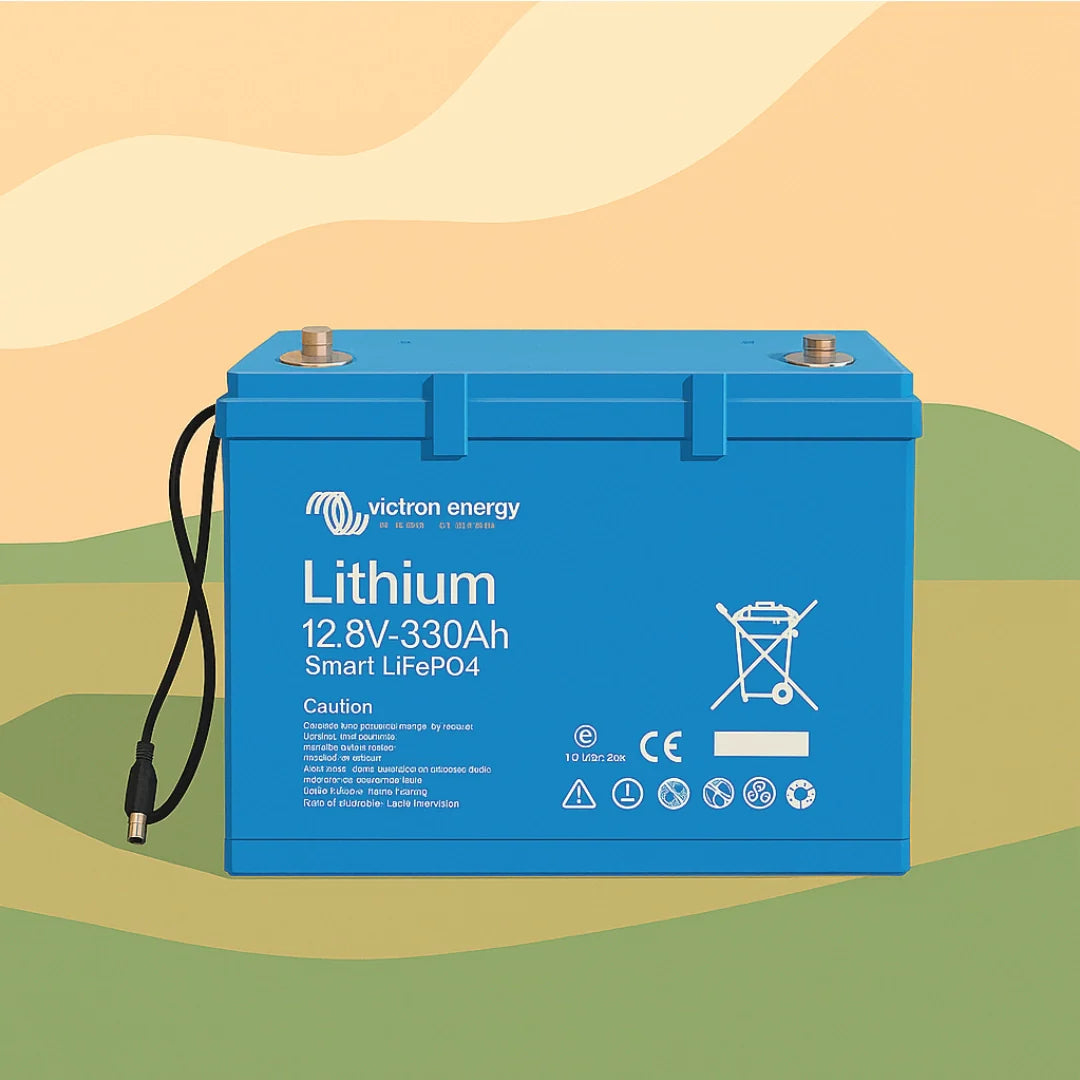
For lithium iron phosphate batteries common in UK campervan leisure batteries, a BMS is not optional. Lithium chemistry demands precise control. The BMS ensures each cell operates within safe parameters, communicating with your charging sources and loads to coordinate safe energy flow. Think of it as the conductor of an orchestra, keeping every component in harmony to deliver reliable, efficient power for your off-grid adventures.
How does a BMS protect and extend battery life in off-grid use?
Protection starts with preventing damage before it occurs. BMS features help achieve 2000+ charge cycles typical of lithium leisure batteries by protecting against unsafe voltage, current and temperature ranges. Every time your BMS stops an overcharge event or prevents discharge below safe levels, it preserves battery health and extends functional lifespan. Over thousands of cycles, these interventions translate into years of reliable service.
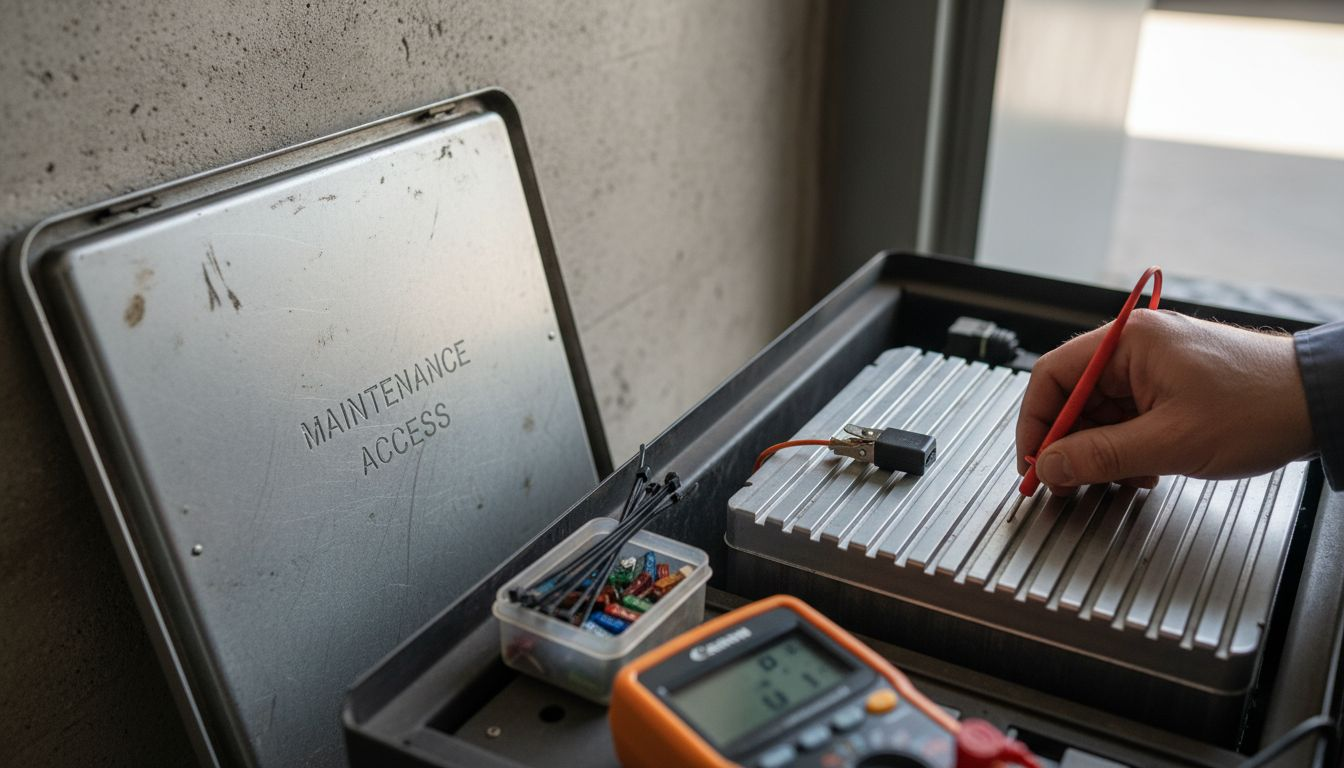
Thermal management is particularly critical in UK climates. Cold winter mornings can drop battery temperatures below safe charging thresholds, risking lithium plating and permanent capacity loss. A quality BMS monitors temperature continuously and disables charging when cells are too cold, protecting your investment. Conversely, during summer heatwaves or when parked in full sun, the BMS prevents overheating by limiting charge current or triggering shutdown if temperatures climb dangerously high.
Key protection mechanisms include:
- Voltage cutoffs: Disconnects charging or discharging when cell voltage reaches preset limits.
- Current limiting: Reduces or halts current flow to prevent overload damage to cells.
- Thermal shutdown: Disables the battery entirely if temperature exceeds safe operating range.
- Cell balancing cycles: Redistributes charge during rest periods to equalise cell voltages.
Pro Tip: Prioritise BMS units with robust thermal management features and always heed temperature warnings. Ignoring cold-weather alerts can permanently damage lithium leisure batteries UK systems, reducing capacity by 20% or more.
Advanced BMS features: Bluetooth monitoring and system integration
Smart BMS units with Bluetooth connectivity transform battery management from reactive to proactive. Instead of discovering problems after damage occurs, you receive real-time alerts and diagnostic data directly to your smartphone. Bluetooth-enabled BMS reduces failures by enabling remote diagnostics and real-time state-of-charge monitoring, giving you visibility into battery health wherever you roam.
Bluetooth monitoring delivers:
- Real-time state of charge: Accurate percentage readings, not guesswork from voltage alone.
- Cell voltage visibility: Spot imbalances or weak cells before they cause system failure.
- Temperature tracking: Monitor thermal conditions and receive alerts before protective shutdown.
- Historical data logging: Review charge/discharge patterns to optimise solar input and load management.
- Alert notifications: Instant warnings for overcharge, over-discharge, or thermal events.
Beyond monitoring, advanced BMS units integrate seamlessly with popular leisure vehicle accessories. Victron compatibility for UK off-grid systems ensures your BMS communicates with solar charge controllers and inverters, coordinating charge rates and load management for maximum efficiency. This integration prevents conflicts between components and optimises energy flow across your entire system.
| Feature | Standard BMS | Bluetooth BMS | Modular BMS |
|---|---|---|---|
| Overcharge/discharge protection | ✓ | ✓ | ✓ |
| Cell balancing | ✓ | ✓ | ✓ |
| Temperature monitoring | ✓ | ✓ | ✓ |
| Smartphone app connectivity | ✗ | ✓ | ✓ |
| Real-time alerts | ✗ | ✓ | ✓ |
| Historical data logging | ✗ | ✓ | ✓ |
| Victron integration | ✗ | Limited | ✓ |
| Expandable for battery banks | ✗ | ✗ | ✓ |
Pro Tip: Use Bluetooth monitoring as a preventive maintenance tool, checking battery health weekly during active use. However, don’t rely on it as a complete fail-safe. Physical inspection and proper charging practices remain essential for long-term battery health.
Common misconceptions about battery management systems
Many UK leisure vehicle owners assume a quality BMS makes batteries entirely maintenance-free. This is false. While a BMS dramatically reduces risk and alerts you to problems, it cannot compensate for poor charging practices, extreme temperature exposure, or physical damage. You still need to follow manufacturer guidelines, maintain proper ventilation, and respond promptly to alerts.
Another misconception is that Bluetooth monitoring prevents all failures. Connectivity provides visibility, not invincibility. If you ignore low-temperature warnings and charge anyway, or consistently discharge to cutoff levels, your battery will degrade regardless of monitoring capability. The BMS protects against immediate catastrophic failure but cannot override physics or compensate for user negligence.
Key misunderstandings include:
- All BMS units are interchangeable: Battery chemistry, voltage, and capacity determine BMS requirements. A unit designed for lithium cobalt oxide will not work safely with lithium iron phosphate.
- BMS eliminates need for proper configuration: Incorrect voltage or current settings can disable protection features or trigger false shutdowns.
- Higher price always means better protection: Cost often reflects connectivity features, not core protection capability. A budget BMS with proper specifications may outperform an expensive unit with incompatible settings.
- BMS prevents all degradation: Normal ageing, calendar life limits, and cycle count remain factors regardless of protection quality.
Understanding these limitations helps you use your BMS effectively. It’s a critical safety and longevity tool, but not a substitute for informed battery management. Engage with your system, monitor trends, and maintain best practices to maximise battery safety explained principles.
Selecting and using a BMS for your UK leisure vehicle: practical tips
Choosing the right BMS starts with matching specifications to your battery chemistry and system design. Follow these steps:
- Verify chemistry compatibility: Confirm the BMS is designed for lithium iron phosphate if that’s your battery type. Voltage cutoffs and balancing algorithms differ across lithium chemistries.
- Match system voltage: A 12V battery requires a 12V BMS. Using mismatched voltage ratings disables protection or triggers constant shutdowns.
- Calculate current capacity: Your BMS must handle peak discharge current from your inverter plus a safety margin. Undersized units will trip during high loads.
- Assess temperature range: UK winters demand low-temperature charging cutoffs. Verify the BMS can disable charging below 0°C to prevent lithium plating damage.
- Evaluate connectivity needs: Bluetooth monitoring adds cost but delivers real-time visibility. Decide if remote monitoring justifies the investment for your usage pattern.
- Consider expandability: Modular BMS units allow adding batteries to your bank without replacing the entire management system.
Once installed, prioritise compatibility checks:
- Solar charge controller communication: Ensure your BMS can signal the controller to reduce or halt charging when needed.
- Inverter shutdown coordination: Verify the BMS can trigger inverter disconnect at low voltage to prevent over-discharge.
- Monitoring system integration: Confirm dashboard displays or apps can read BMS data for accurate state-of-charge reporting.
Pro Tip: Regularly update BMS firmware if your unit supports it, and check companion apps for new features. Manufacturers often release improvements to balancing algorithms or temperature thresholds that enhance protection.
For optimal integration with solar battery connection steps UK campervans, follow manufacturer wiring diagrams precisely. Incorrect connections can bypass BMS protection or create ground loops that interfere with monitoring. Engage with solar charge control campervans settings to ensure your controller respects BMS voltage limits, and review solar charging setups UK campervans examples to understand how successful systems coordinate components.
Conclusion: Enhancing off-grid energy independence with smart battery management
A battery management system is the foundation of safe, long-lasting lithium battery performance in UK leisure vehicles. It protects your investment from damage, extends usable lifespan to thousands of cycles, and provides the visibility needed for confident off-grid energy management. Smart monitoring features transform battery management from guesswork to data-driven decision making, helping you optimise solar input, manage loads efficiently, and catch potential issues before they become failures. Investing in a quality BMS matched to your battery chemistry, climate, and system design is essential for achieving true energy independence on the road.
Explore Skyenergi’s lithium battery and BMS solutions
Skyenergi specialises in lithium battery systems and intelligent BMS technology for UK leisure vehicles. Our product range includes Bluetooth-enabled batteries, Victron-compatible components, and complete off-grid power solutions engineered for reliable performance in British climates.

Whether you’re upgrading an existing campervan electrical system or building a new installation, we offer detailed lithium battery maintenance workflow guides, step-by-step instructions to install lithium batteries safely UK standards, and comprehensive off-grid power systems UK design resources. Our direct manufacturer relationships deliver quality battery management solutions at competitive prices, backed by expert support to help you achieve maximum energy independence.
Frequently asked questions
What is a battery management system and why is it important for lithium leisure batteries?
A BMS monitors cell voltage, current, temperature, and state of charge continuously to prevent unsafe conditions that damage lithium batteries. It extends lifespan by protecting against overcharge, over-discharge, and thermal stress. Without a BMS, lithium batteries in leisure vehicles risk permanent capacity loss, safety hazards, and premature failure.
Can a battery management system eliminate all battery maintenance needs?
No, a BMS reduces risks and provides alerts but does not eliminate maintenance requirements. You still need proper charging practices, temperature management, and periodic inspections. Following lithium battery maintenance guide principles alongside BMS protection ensures optimal longevity and performance.
How does Bluetooth monitoring improve battery management?
Bluetooth connectivity enables real-time smartphone monitoring of state of charge, cell voltages, temperature, and system alerts. This visibility helps you catch imbalances or thermal issues early, optimising charging patterns and preventing damage. However, monitoring does not guarantee failure prevention. You must respond to alerts and maintain proper battery care practices.
What should I consider when selecting a BMS for my UK leisure vehicle?
Prioritise chemistry compatibility with lithium iron phosphate, adequate current capacity for your loads, and low-temperature charging protection for UK winters. Evaluate Bluetooth connectivity for monitoring needs and ensure compatibility with your solar charge controller and inverter. Modular systems offer expandability if you plan to increase battery capacity later.
Recommended
Prev post

Energy storage installation workflow UK campervans 2026
Updated on 06 March 2026
Next post

7 Off-Grid Power Solutions for UK Campervans with 50% Weight Savings
Updated on 04 March 2026


