




9 Reasons Solar Panel Cleaning Pays Off for UK Homes
Solar panel cleaning can recover lost output from dirt and debris. Learn how it protects your system and which Skyenergi cleaning-safe accessories help.
Last Updated: November 4, 2026
Quick Summary
Solar panel cleaning removes dust, pollen, bird droppings and road grime that block light from reaching the cells. Soiling can cut output by 5 to 25 percent depending on the region, so regular cleaning helps your system keep producing power.
- Soiling losses range from 5 to 25 percent depending on the region.
- Clean panels can produce up to 30 percent more energy in severe soiling cases.
- Robotic and electrostatic cleaning can restore efficiency to 95 to 98 percent of original.
- Uneven shading from dirt can cause hot spots that shorten module working life.
- Hard water and harsh detergents can damage coatings, so cheap cleaning may cost more output.
Table of Contents
- How Dirt and Debris Reduce Solar Output
- Measuring the Efficiency Gain From Cleaning
- Protecting Your System From Hot Spots and Long-Term Damage
- How Often Solar Panels Should Be Cleaned
- Cleaning Safely: DIY Risks and How to Do It Right
- Professional Cleaning Versus DIY: Weighing the Trade-offs
- Keeping Your Panels Performing With the Right Components
- Frequently Asked Questions
How Dirt and Debris Reduce Solar Output
Dirt is one of the quietest drains on a solar array, and regular solar panel cleaning helps prevent it. Dust, pollen, bird droppings and road grime build up on the glass and cut the amount of light reaching the cells, so the system produces less power without any obvious fault. Industry researchers call this soiling, and the losses can be substantial. NREL soiling data on environmental accumulation and efficiency loss

The size of the loss depends heavily on where the panels sit. Soiling losses on solar panels range from 5 to 25 percent depending on the region, according to Energy Solutions 2026 soiling analysis. A roof in a dusty or heavily wooded area will typically lose more than one in a cleaner setting.
Debris does more than block light. Bird droppings create concentrated shadows, and a single dark patch can drag down the output of a whole string of cells. Over time, that uneven shading is also what leads to the hot spots covered later in this guide.
The article lists the main ways dirt and debris cut solar output, along with the typical size of each loss.
| Factor | Effect | Stated figure |
|---|---|---|
| Soiling (dust, pollen, grime) | Blocks light reaching cells | 5 to 25 percent loss, varies by region |
| Bird droppings | Creates concentrated shadows | One dark patch can drag down a string |
| Uneven shading | Leads to hot spots over time | Shortens module working life |
| Hard water or harsh detergents | Mineral deposits and coating damage | Can cost more output than cleaning saves |
Measuring the Efficiency Gain From Cleaning
The most useful way to judge cleaning is to compare output before and after, but the headline figures need context. Clean panels can produce up to 30 percent more energy than dirty ones in severe soiling cases, based on field results reported by Exterior Express cleaning and maintenance case study. Most households will see a smaller gain, and the figure varies with how dirty the array had become.
Research published in ScienceDirect in 2025 found that robotic and electrostatic cleaning methods can restore panel efficiency to 95 to 98 percent of its original level, according to ScienceDirect performance analysis of solar cleaning technologies. The same work notes that these systems draw 0.5 to 2 percent of the array's output while running, which is worth factoring into any comparison.
To decide whether professional solar panel cleaning pays, build a simple cost-benefit check. First, estimate your array's daily generation from your inverter app over a clean period. Second, estimate the soiling loss as a percentage, 5 to 25 percent is the range cited by Energy Solutions 2026 soiling analysis, with lower figures in clean areas and higher figures near dust, trees, or roads. Third, multiply your daily generation by the loss percentage to get the lost kilowatt-hours. Fourth, multiply by your electricity tariff to get the daily cost of soiling. Compare that daily cost with the price of a professional clean and the interval between cleans. If the lost value over the interval exceeds the cleaning cost, professional cleaning is justified on economics alone; if not, DIY or a longer interval may be sensible.

A simple way to check your own gain is to note your monthly generation from your inverter app for a few weeks, clean the panels, then compare the same period in the following month. Weather will skew the result, so treat the first comparison as a rough guide rather than a precise measurement. For a more reliable signal, compare the same month year on year after cleaning.
Watch out: hard water and harsh detergents can leave mineral deposits or damage anti-reflective coatings, so a cheap clean that scratches the glass can cost more in lost output than it saves.
Protecting Your System From Hot Spots and Long-Term Damage
Uneven soiling does more harm than a simple loss of output. When one section of a panel is shaded by dirt or a bird dropping, the shaded cells can overheat and form hot spots. Over months and years, that heat accelerates degradation and can shorten the working life of the module.
This is why cleaning belongs in preventative maintenance rather than being treated as cosmetic. Manufacturers and service providers increasingly point to cleaning as a way to prevent hot spots and premature system degradation, as noted in Nexamp 2026 guidance on preventative solar maintenance. Keeping records of cleaning and inspection dates also helps if a warranty claim ever needs to be made.
Check your inverter and monitoring data for sudden drops in output on sunny days. A panel that consistently underperforms its neighbours is often the first sign of a shading or hot spot problem.
How Often Solar Panels Should Be Cleaned
There is no single correct schedule, but you can replace guesswork with a simple monitoring routine. Most inverter apps and monitoring portals log daily and monthly generation, so you can watch for the gradual drop-off that signals soiling rather than a fault. A common pattern is a slow decline of a few percent over several weeks on sunny days, followed by a step change after cleaning. If you see that pattern, your roof is telling you it needs attention.
Start by recording a baseline. Note your monthly generation for a few weeks in dry weather, then clean the panels and compare the same period in the following month. Weather will skew the result, so treat the first comparison as a rough guide. Over a year, the record will show how quickly your particular roof gets dirty and whether your schedule is right.
Skyenergi Solar Panel Entry Gland →
Local conditions matter more than any generic calendar. Panels in rural areas, under trees, or near busy roads may need attention several times a year, while sheltered roofs in cleaner areas may only need a clean once or twice. Heavy pollen seasons, building work nearby, and long dry spells can all justify an extra clean. Rain does clear some dirt, but it rarely removes everything, and it can leave streaks where grime has dried on the glass.
A practical starting point for most homes is to inspect twice a year and clean when visible dirt or droppings appear. If you use monitoring, set a reminder to review your generation data monthly and compare it with the same month last year. That comparison filters out seasonal weather and highlights soiling trends.
Watch out: a sudden drop in output on a sunny day is more likely to be a fault than soiling, so check the inverter for error codes before assuming the panels need cleaning.
Cleaning Safely: DIY Risks and How to Do It Right
DIY cleaning saves money, but it carries real risks. Roof work is the main hazard, and a fall causes far more harm than a dirty panel ever will. Where possible, clean from the ground using a long-handled soft brush and clean water. Only go on the roof if you have the right access equipment and are confident working at height.
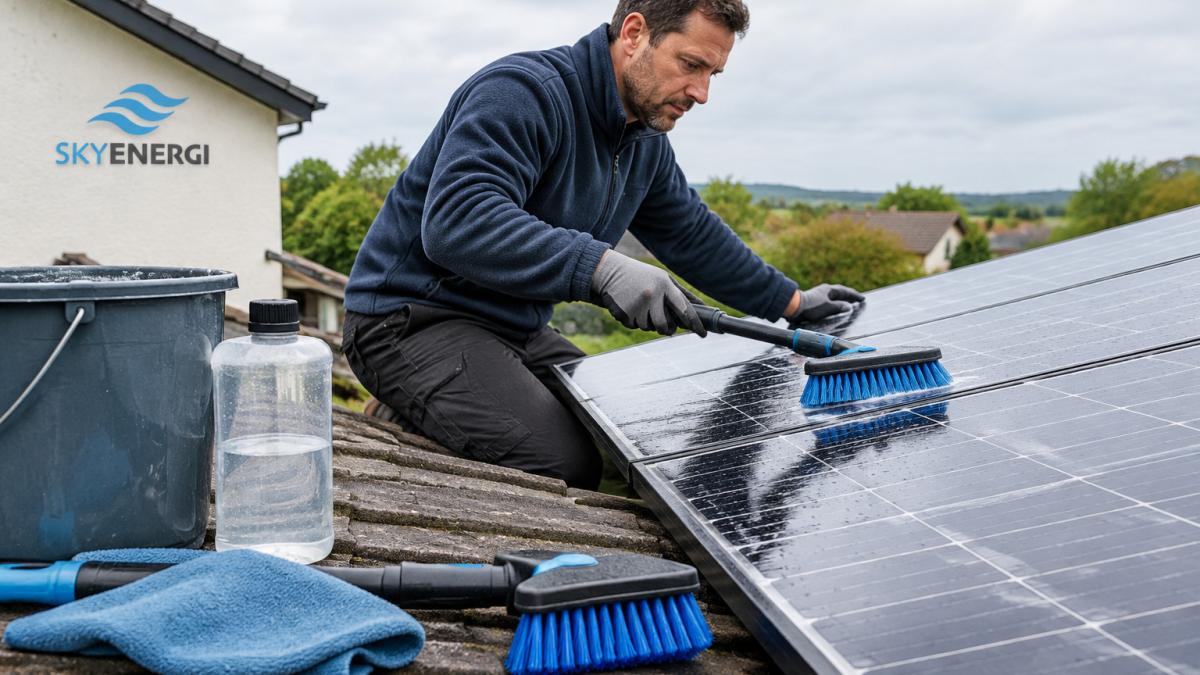
Equipment choice matters as well. Abrasive brushes, pressure washers held too close, and harsh household chemicals can scratch the anti-reflective coating or damage seals. Clean in the cooler parts of the day, never on hot glass, to avoid thermal shock.
Electrical safety also deserves attention. Do not spray water near junction boxes, cable entries or connectors, and do not touch wiring while the system is live. If you notice cracked glass, burnt connectors or damaged cabling, stop and get the system inspected before cleaning.
Where you do use DIY methods, a sealed cable entry and secure mounting make a difference to how the system handles moisture. The Skyenergi Solar Panel Entry Gland is a double cable entry gland for 3 to 7mm cables and is priced at £4.75.
Professional Cleaning Versus DIY: Weighing the Trade-offs
Professional cleaning costs more per visit but removes the roof-access risk and usually includes a proper inspection. A professional will also spot loose mounts, damaged connectors and early signs of hot spots that a homeowner might miss from the ground. For arrays that are hard to reach or on steep roofs, the safety case for a professional is strong. The same care around safe access and early fault detection matters when maintaining the roof itself, where professional roof washing can help protect the surface without relying on risky DIY methods.
DIY makes sense for ground-accessible installations, smaller systems, and owners who clean regularly and carefully. The trade-off is that you carry the risk and the responsibility for any damage. Some owners combine the two, paying for a professional inspection once a year and cleaning the glass themselves in between.
Whichever route you choose, keep the mounting hardware in good condition. The Skyenergi 7 pieces ABS Solar Panel Mounting Kit is a drill-free corner bracket set for rigid-framed panels, priced at £18.99, and the Z Bracket Set provides 2mm aluminium brackets with stainless fixings for £9.95.

Keeping Your Panels Performing With the Right Components
A clean array only performs well if the electrical connections behind it are sound. Connectors and cabling that corrode or loosen reduce output as surely as dirt does. Using quality MC4 connectors matters here, and the MC4 Solar Panel Cable Connector Pair is supplied in a pack of five pairs for £2.99.
For longer runs, the Skyenergi Solarcable 10m 6mm² MC4 cable costs £19.50, and the Skyenergi 2m version is £9.50. If you are building or extending an array, you can browse the full range of solar panels, solar panel kits and solar panel accessories on the Skyenergi site to match components to your setup.
Frequently Asked Questions
Do solar panels really need to be cleaned?
Not always, but dirt and debris do reduce output. Soiling losses vary with the region and the local environment. Rain washes away some dust, yet bird droppings, pollen and grime can stick to the glass and block light. Panels on a shaded or low-pitched roof tend to hold more dirt. A visual check every few months, combined with a look at your generation figures, will show whether cleaning is worth booking.
How much does solar panel cleaning improve efficiency?
Results vary with local conditions, so compare readings before and after a clean.
Can I clean my own solar panels or should I hire a professional?
You can clean panels yourself if they are reachable from the ground or a secure, stable platform. Use deionised or soft water, a soft brush and no abrasive tools. Roof work is where DIY goes wrong: falls, slipping on wet glass and damaged cells are common risks. Professional cleaning costs more but includes access equipment, insurance and experience with fragile, high-value arrays. Many owners clean the lower panels themselves and book a professional for roof-level work.
What are the risks of cleaning solar panels yourself?
The main risks are falls from height, electric shock if the system is live, and surface damage from scouring pads, pressure washers or harsh detergents. Ordinary tap water can leave mineral deposits, so deionised water is preferred. Scratches on anti-reflective coatings reduce light absorption. Always isolate the system before touching wiring, and check that any connectors or cable runs are undamaged, using suitable replacement connectors when repairs are needed.

Prev post

Preventing Solar Charge Controller Overheating in Van Systems
Updated on 05 November 2026
Next post

Essential Tools for Campervan Electrical Installation
Updated on 04 November 2026


