





System integration guide for UK off-grid leisure vehicles
Learn how system integration works in UK off-grid leisure vehicles. Compare DC vs AC-coupled setups, core components, and UK-specific optimisation strategies.
TL;DR:
- Proper system integration ensures all components work together for reliable off-grid power.
- DC-coupled systems offer higher efficiency and simpler installation for UK leisure vehicles.
- Addressing UK-specific factors like low winter sunlight and environmental stresses is essential for system reliability.
Many UK leisure vehicle owners assume that fitting a new battery or adding a solar panel is enough to achieve reliable off-grid power. It rarely is. True energy independence depends on how well every component in your system works together. System integration connects and coordinates all power system components for reliable off-grid performance. This guide explains what integration means in practice, covers the core components, compares wiring architectures, and highlights the pitfalls specific to UK camping and marine environments so you can build a setup that genuinely works.
Table of Contents
- What does system integration mean in off-grid setups?
- Core components and how they work together
- Key integration methods: DC-coupled vs AC-coupled systems
- Integration challenges and how to optimise for UK camping and marine use
- A practical perspective: integration that just works on the road or water
- Explore effortless system integration with Skyenergi kits
- Frequently asked questions
Key Takeaways
| Point | Details |
|---|---|
| Integration maximises reliability | System integration connects all components to deliver truly dependable off-grid power for UK leisure vehicles. |
| Component choice matters | Selecting the right lithium batteries, solar panels, and monitoring systems directly impacts autonomy and safety. |
| DC vs AC coupling trade-offs | DC-coupling yields higher efficiency for new builds; AC-coupling supports easier retrofits. |
| Mitigate UK-specific risks | Oversize solar arrays, use marine-grade wiring, and implement backup charging for winter and marine adventure resilience. |
| Prioritise modularity and monitoring | Bluetooth-ready systems and plug-and-play kits simplify diagnostics, upgrades, and maintenance on the go. |
What does system integration mean in off-grid setups?
System integration is not simply about buying quality parts. It is about ensuring every component communicates and operates as a single, coordinated unit. A mismatched charge controller can undercharge your lithium battery. An incorrectly sized inverter can trip breakers at the worst moment. Poor wiring can create voltage drop that wastes the energy your panels produce.
Designing off-grid hybrid solar systems requires connecting and coordinating all power system components so each one performs within its rated parameters and supports the others. When integration is done correctly, the result is a system that is safer, more efficient, and far easier to manage.
The practical benefits of proper integration include:
- Maximised efficiency: Energy flows through the shortest, most direct path with minimal conversion losses.
- Longer battery life: A correctly configured BMS and charge controller prevent overcharge, over-discharge, and thermal stress.
- Simplified monitoring: Integrated systems allow a single app or display to show solar input, battery state of charge, and load consumption simultaneously.
- Fewer faults: Matched components reduce the likelihood of nuisance tripping, error codes, and unexplained power loss.
- Easier troubleshooting: When components share a communication protocol, fault diagnosis takes minutes rather than hours.
“Integration is not an add-on. It is the foundation that determines whether an off-grid system delivers on its promise or becomes a source of constant frustration.”
Common pain points that poor integration creates include mismatched voltage profiles between chargers and batteries, solar arrays that never reach peak output because the MPPT controller is undersized, and battery banks that age prematurely because the BMS has no way to communicate cell-level data to the charger. Understanding BMS for energy independence is a practical starting point for avoiding these issues in your own setup.
Core components and how they work together
A well-integrated leisure vehicle power system typically includes the following building blocks, each with a defined role:
| Component | Function | Typical UK spec |
|---|---|---|
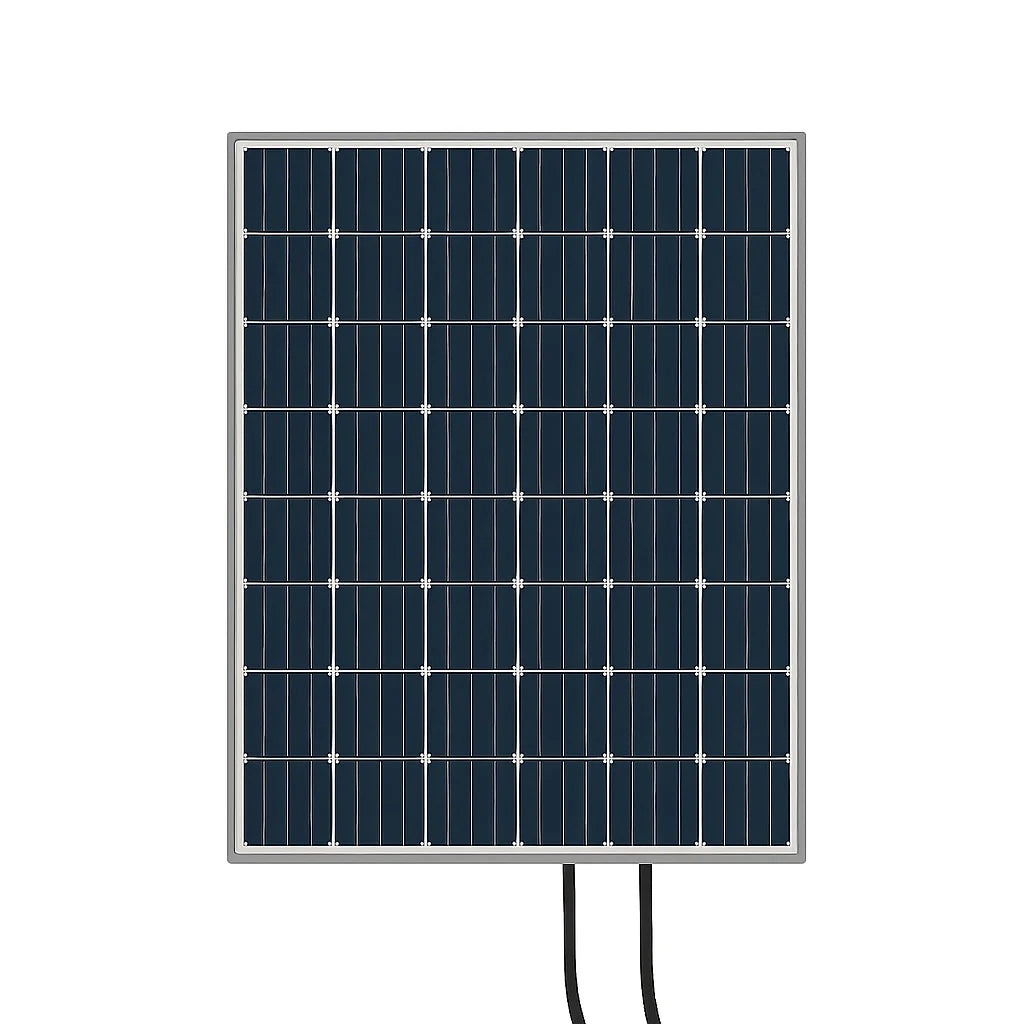
| Solar panels | Convert sunlight to DC electricity | 200W to 400W per panel |
| MPPT charge controller | Regulates solar input to battery | 20A to 40A, 12V/24V |
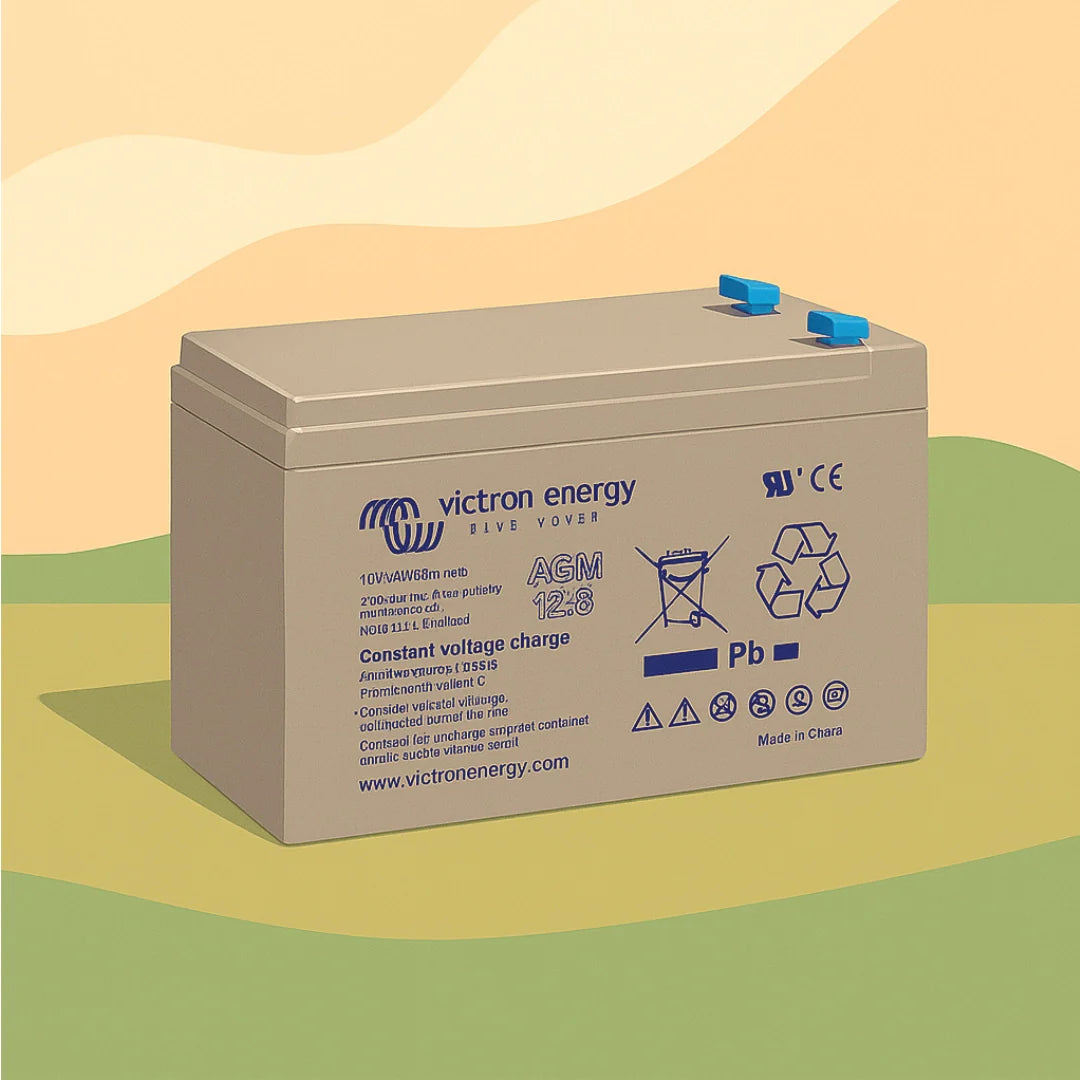
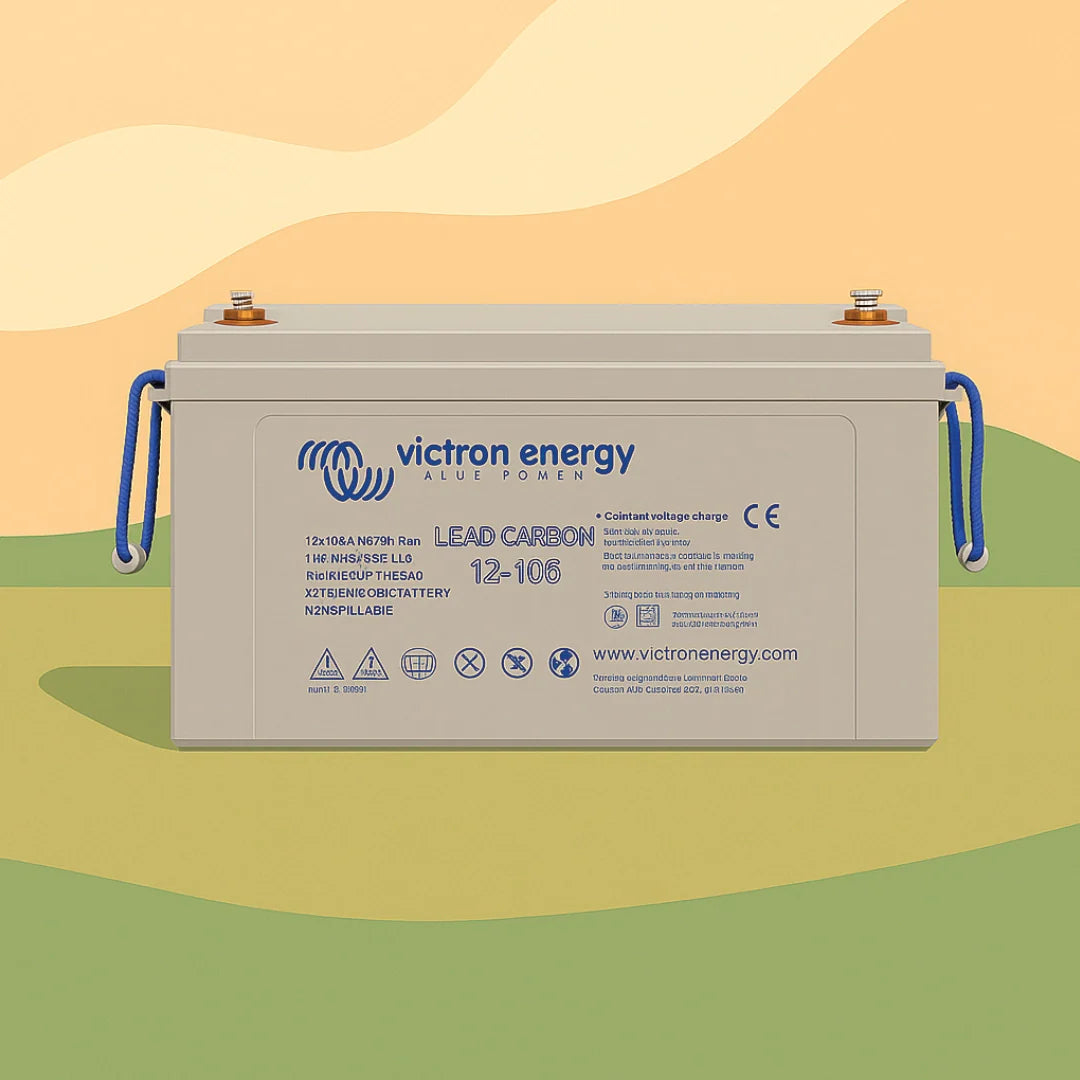
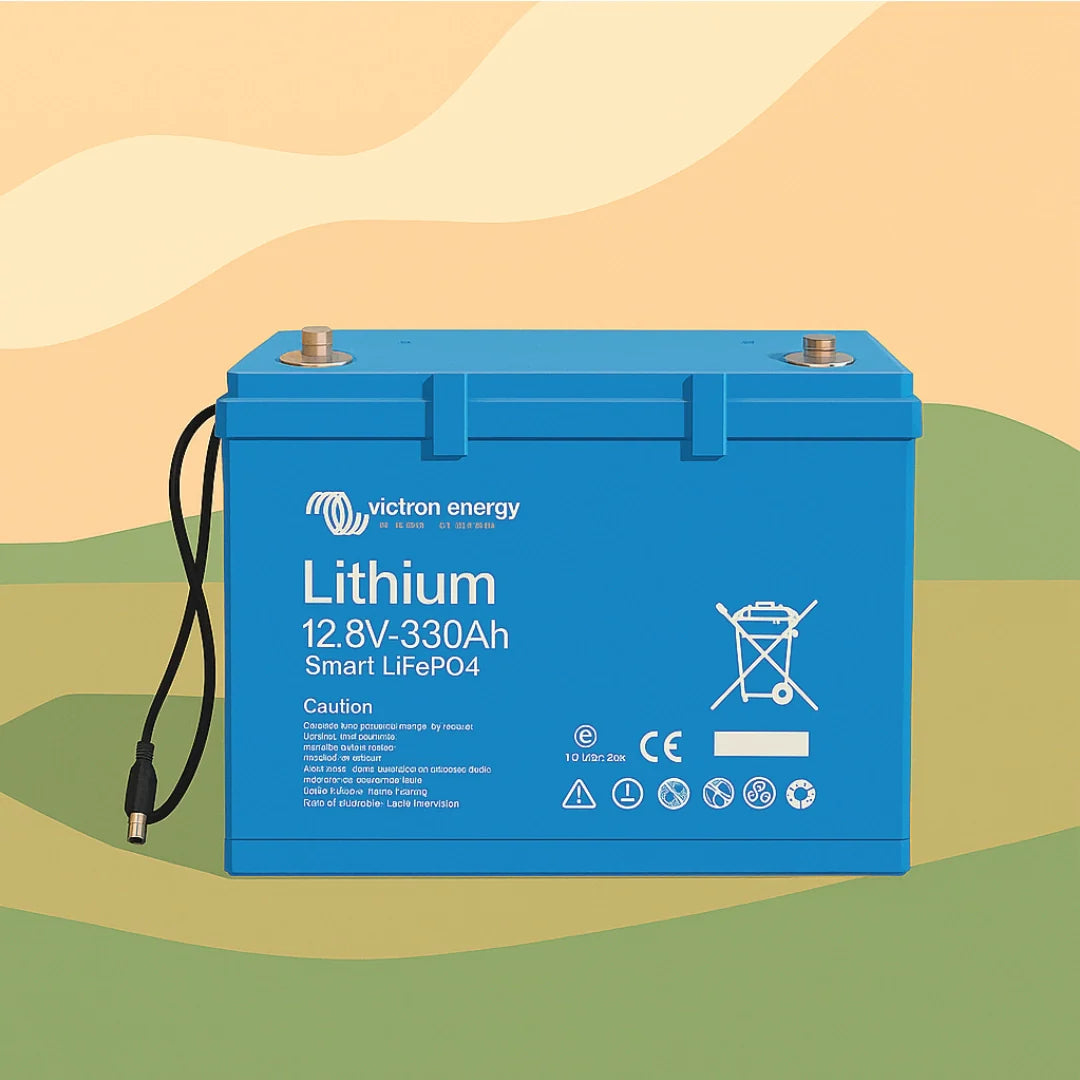
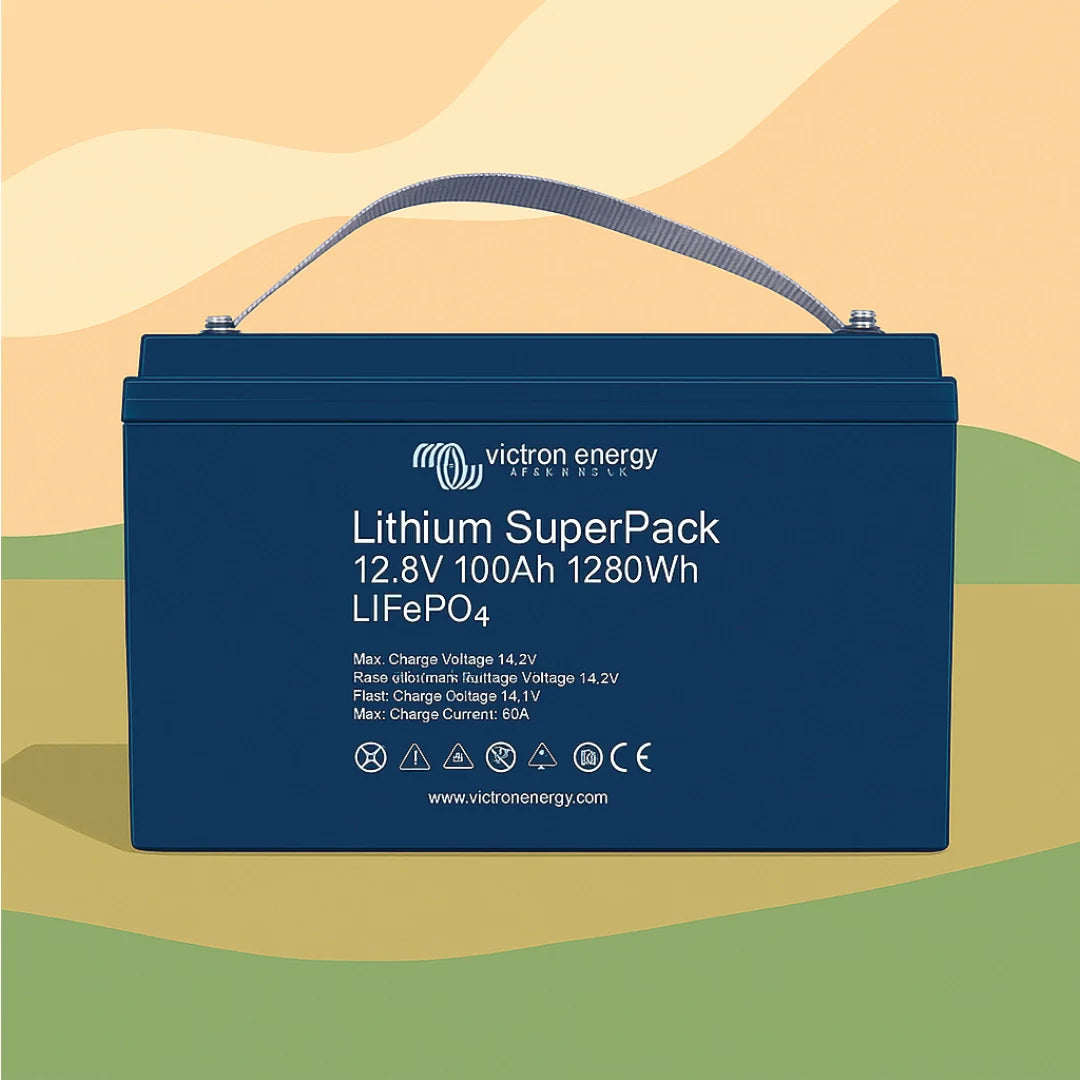
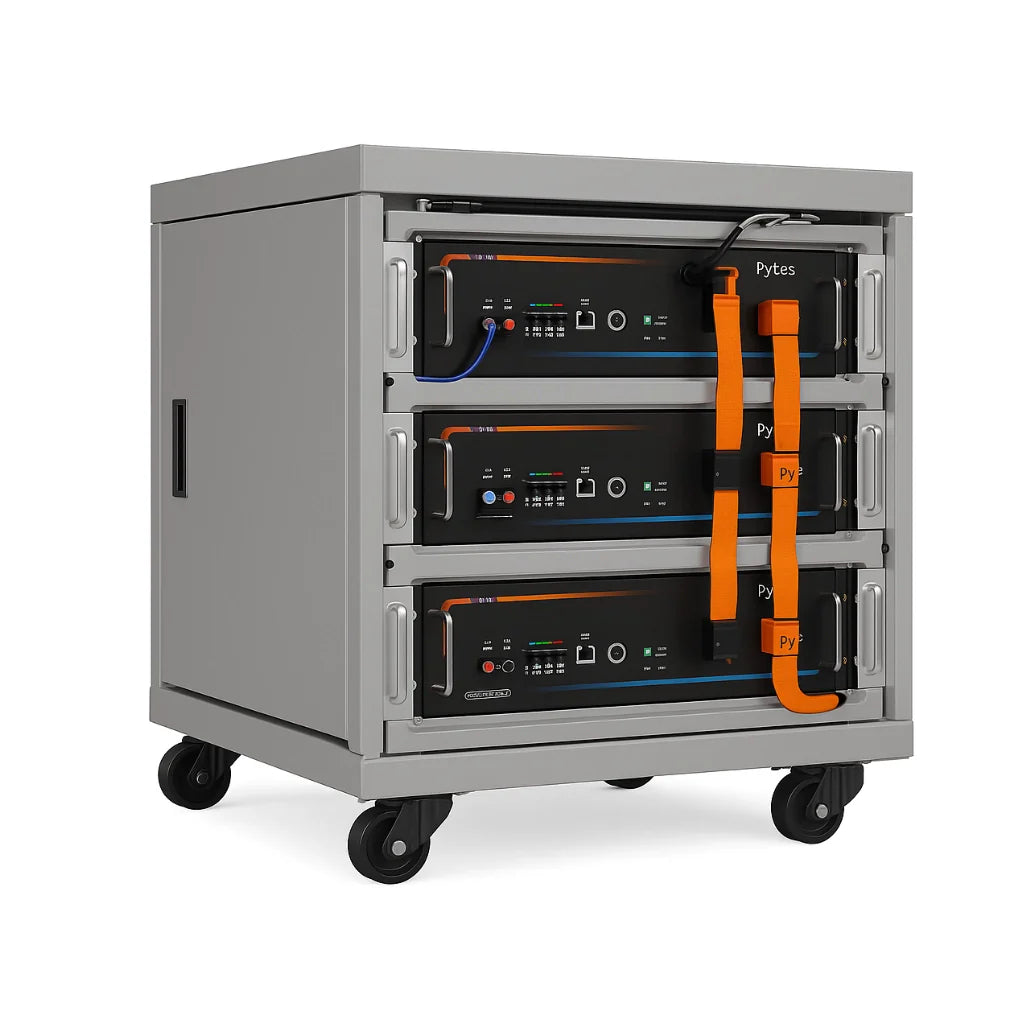
| LiFePO4 battery bank | Stores usable energy | 100Ah to 300Ah at 12V |
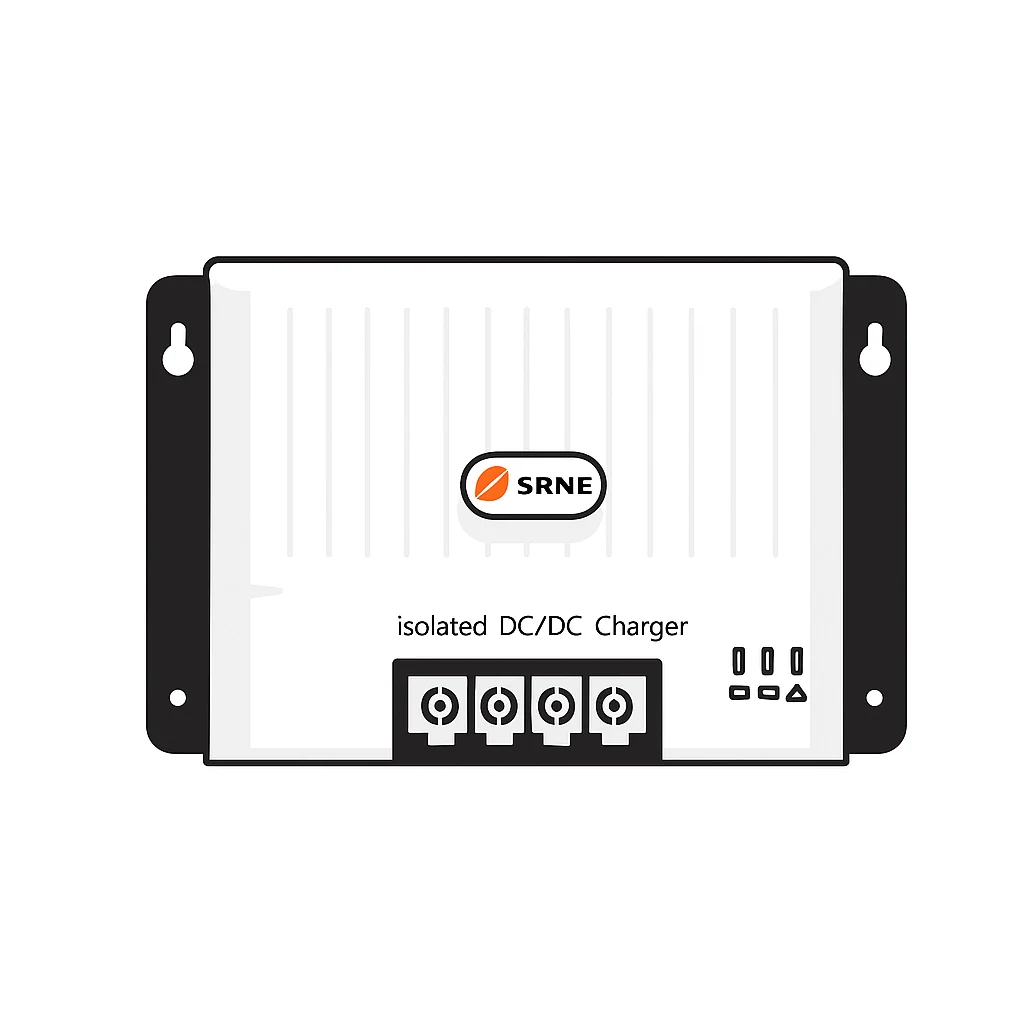
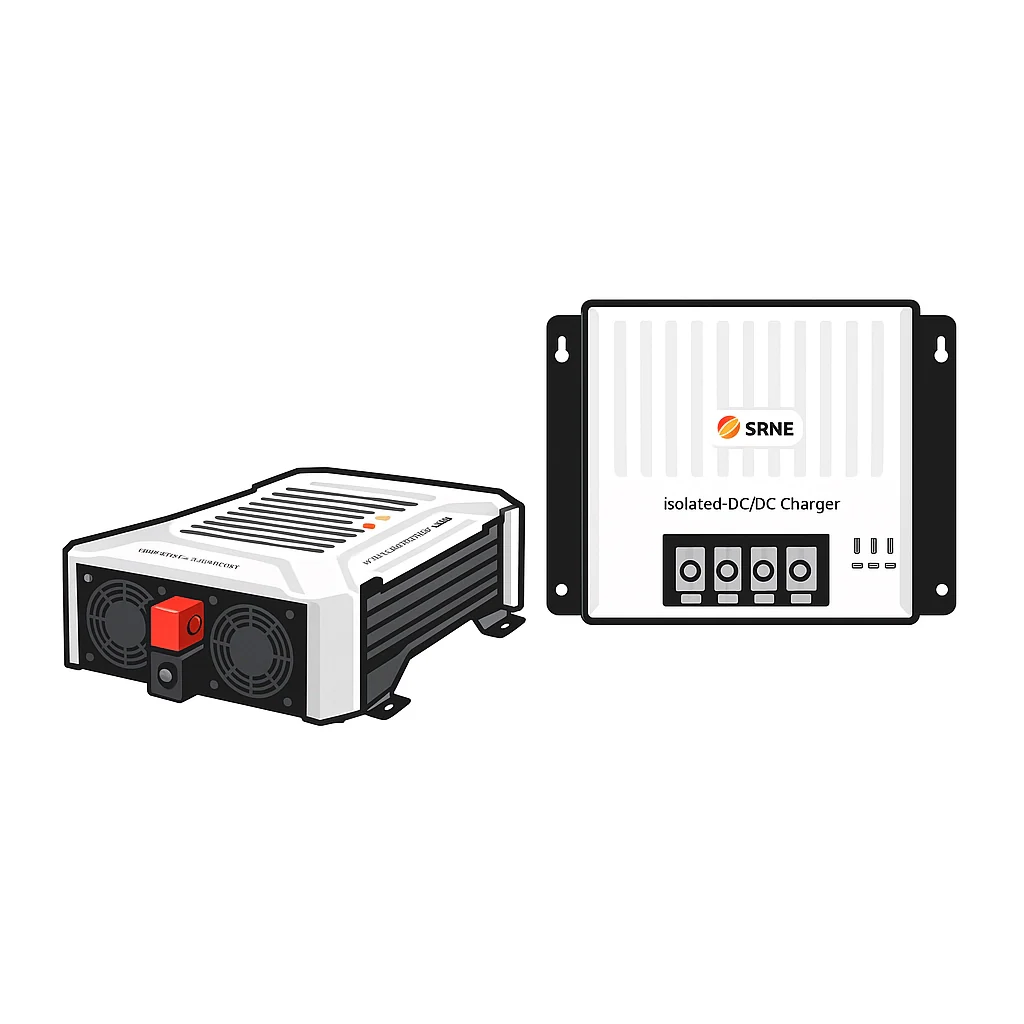
| DC/DC converter (B2B charger) | Charges battery from alternator | 20A to 40A |
| Inverter/charger | Converts DC to AC, charges from shore | 1000W to 3000W |
| BMS | Protects and balances battery cells | Built-in or external |
| Fusing and wiring | Safety and current management | Marine-grade, correctly rated |
The sequence of energy flow matters. Solar panels feed the MPPT controller, which converts variable panel voltage into the correct charge profile for the battery. The battery supplies the inverter for AC loads and directly powers 12V DC loads. The BMS monitors every cell, cutting power if voltage, current, or temperature exceeds safe limits.
A numbered overview of how these components interact:
- Solar panels generate DC power, which varies with sunlight intensity.
- The MPPT controller tracks the panel’s maximum power point and converts this to the battery’s charge voltage.
- The BMS monitors cell voltages and temperatures, communicating with the charger to adjust charge current.
- The battery bank stores energy and supplies both DC loads and the inverter.
- The inverter converts stored DC power to 230V AC for appliances.
- The DC/DC converter provides supplementary charging from the vehicle alternator when solar is insufficient.
As covered in off-grid power solutions for UK campervans, leisure setups require solar panels, MPPT charge controllers, modern LiFePO4 batteries, inverters, wiring, breakers, and monitoring to function reliably. You can also review off-grid checklist and battery setup examples for practical configuration references.
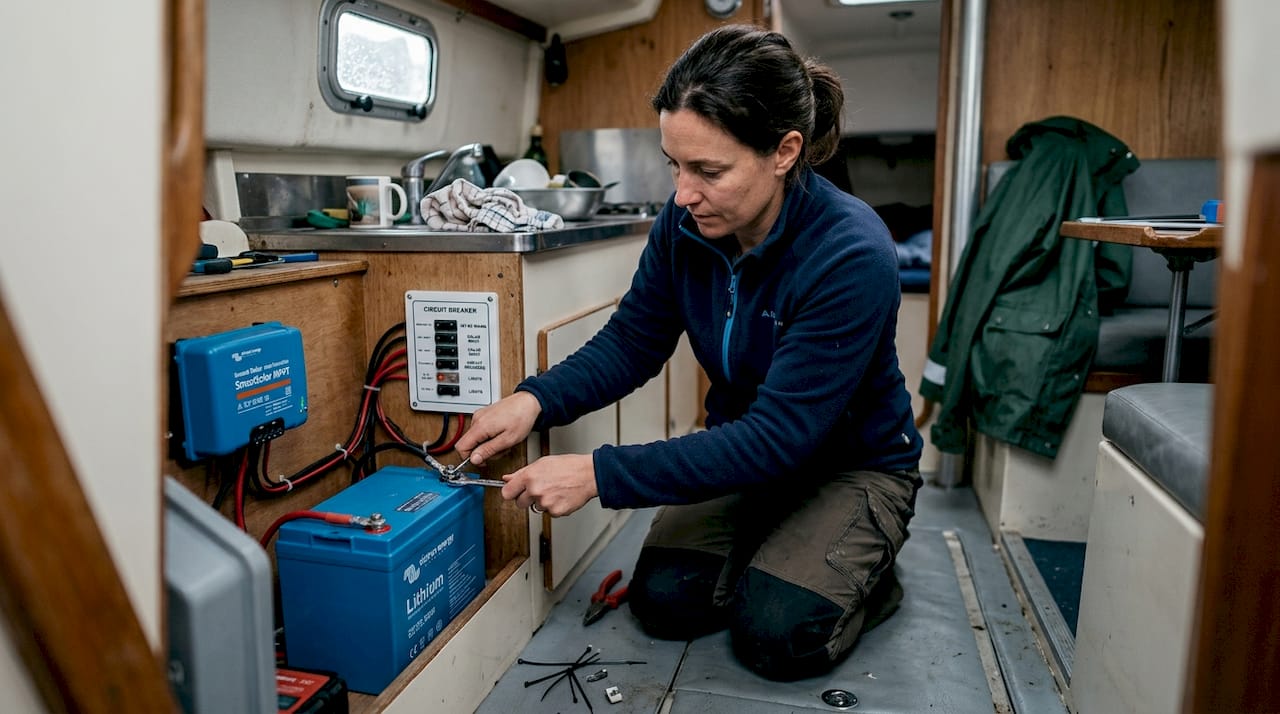
Pro Tip: Choose a LiFePO4 battery with built-in Bluetooth BMS. Being able to check cell voltages, state of charge, and charge current from your phone eliminates guesswork and catches problems before they escalate.
Key integration methods: DC-coupled vs AC-coupled systems
Once you understand the components, the next decision is how to wire them together. Two primary architectures exist: DC-coupled and AC-coupled.
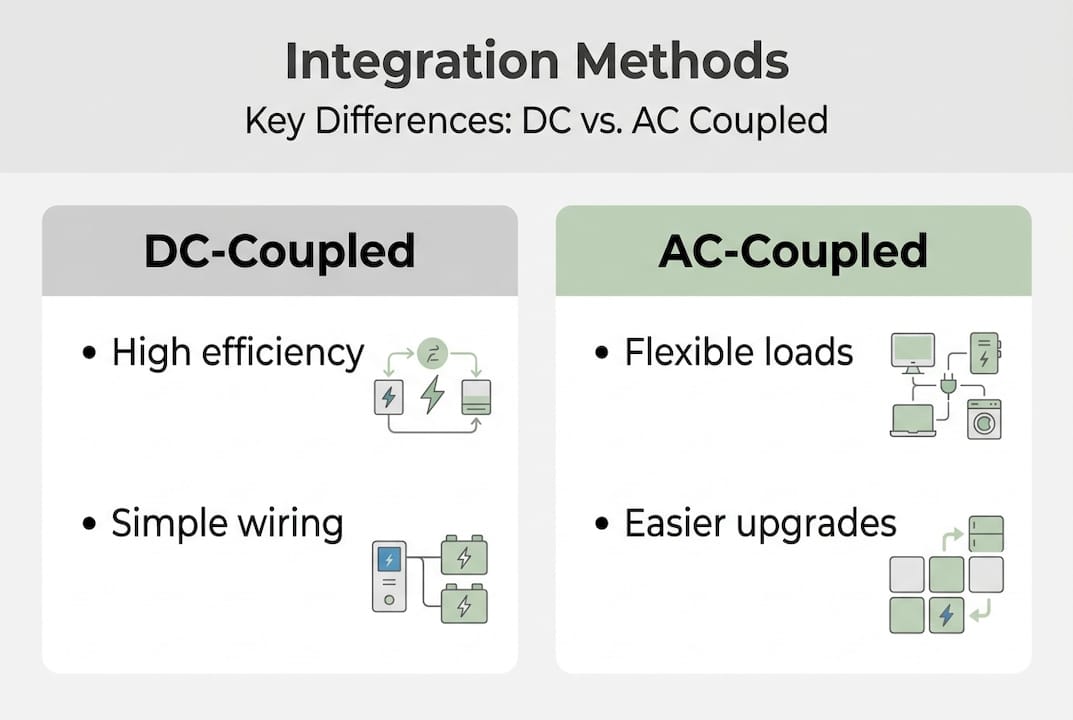
DC-coupled systems route solar power directly from the MPPT controller to the battery bank in DC form. The inverter only operates when AC power is needed. This is the dominant choice for UK leisure vehicles because it is simpler to install, requires fewer conversion stages, and delivers higher round-trip efficiency.
AC-coupled systems convert solar output to AC at the panel level using a string or micro-inverter, then feed that AC power into the system. A battery inverter/charger then converts it back to DC for storage. This adds a conversion step but can be useful when retrofitting solar to an existing AC-centric setup or in larger marine installations.
| Feature | DC-coupled | AC-coupled |
|---|---|---|
| Round-trip efficiency | 95 to 98% | 90 to 94% |
| Installation complexity | Lower | Higher |
| Best use case | New builds, campervans | Retrofits, large boats |
| Alternator charging compatibility | Direct via B2B charger | Requires additional hardware |
| Expandability | Straightforward | More flexible at scale |
DC-coupling achieves 95 to 98% efficiency; AC-coupling achieves 90 to 94%. For a 300W solar array producing 1.5kWh on a good UK summer day, that efficiency gap translates to a measurable difference in usable energy by evening.
Key considerations when choosing your architecture:
- DC-coupling suits most campervans, motorhomes, and smaller boats where simplicity and efficiency are priorities.
- AC-coupling suits larger vessels or vehicles where an AC generator or shore power is already the primary source and solar is being added later.
- Both architectures benefit from a robust BMS and quality MPPT controller for stable, long-term operation.
For a deeper look at how these choices affect daily use, the energy independence guide and system workflow guide provide practical context.
Integration challenges and how to optimise for UK camping and marine use
Selecting a system is just the start. Keeping it running reliably across the British seasons requires attention to several UK-specific factors.
The most significant constraint is solar yield. UK winter delivers only 1 to 2 sun hours per day, meaning a 100W panel produces as little as 100 to 200Wh. Marine and camping environments add vibration, salt air, and temperature extremes that stress connectors, wiring, and battery cells. A BMS is critical for LiFePO4 safety and performance under these conditions.
Common UK-specific integration challenges:
- Low winter solar yield: Requires backup charging via DC/DC converter from the alternator or a portable generator.
- Limited roof space: Restricts panel count, making high-efficiency monocrystalline panels essential.
- Vibration and movement: Demands secure panel mounting, vibration-resistant connectors, and robust cable management.
- Saltwater exposure: Marine setups need IP-rated enclosures, tinned marine-grade wiring, and corrosion-resistant terminals.
- Temperature variation: LiFePO4 cells require low-temperature cut-off protection below 0°C to prevent charging damage.
Oversizing your solar array by 20 to 30% beyond your calculated daily consumption is a straightforward way to build resilience into a UK system. If your loads require 300W, fit 390W of panels. The extra capacity compensates for cloud cover, panel soiling, and suboptimal angle.
“In the UK, a system designed for average conditions will underperform for half the year. Design for poor conditions and you will rarely be caught short.”
Pro Tip: Never rely on a single charging source. A system with solar, a DC/DC alternator charger, and shore power compatibility has three independent paths to a full battery. Remove any one of them and the others keep you powered.
Modular systems with Bluetooth-equipped BMS units make upgrades straightforward. Adding a second battery, swapping a charge controller, or integrating a new panel takes minutes when components are designed to communicate. Understanding BMS in off-grid use and following a structured battery maintenance guide will extend your system’s service life significantly.
A practical perspective: integration that just works on the road or water
The technical side of integration is well-documented. What gets less attention is what separates setups that perform reliably for years from those that cause repeated problems.
Conventional advice focuses on component specifications. Wattage, amp-hours, and efficiency ratings matter, but they do not tell the full story. The real differentiator is whether every critical component in your system can communicate with the others. A BMS that cannot signal the charger to reduce current during a high-temperature event is a liability, not a safety feature.
Plug-and-play kits and Bluetooth app interfaces solve the majority of troubleshooting challenges before they become serious. When your phone shows real-time cell voltages, charge current, and state of charge, you identify problems in minutes rather than discovering them when the battery is flat at midnight.
Modular design matters just as much. A system built with expansion in mind means you can add capacity, upgrade a controller, or integrate a new charging source without rewiring from scratch. The power solutions in practice examples show how this plays out in real UK leisure vehicle builds.
Ultimately, integration is not just about avoiding failure. It is about confidence. A properly integrated system lets you extend your trips, explore more remote locations, and focus on the journey rather than the power budget.
Explore effortless system integration with Skyenergi kits
If you are ready to move from planning to building, Skyenergi offers complete, modular integration kits designed specifically for UK leisure vehicles and marine applications. Each kit pairs high-efficiency solar panels with LiFePO4 batteries, Victron or SRNE MPPT controllers, and Bluetooth-ready BMS units for real-time monitoring from your smartphone.
Whether you are starting from scratch or upgrading an existing setup, the range covers both entry-level and high-capacity configurations. The Victron solar and MPPT kit delivers proven performance for campervans and motorhomes, while the Solar power and inverter kits provide a full turnkey solution with inverter/charger and DC/DC charging included. Browse the full range or contact the Skyenergi team for tailored system advice.
Frequently asked questions
What is the difference between DC-coupled and AC-coupled integration?
DC-coupled systems send solar power directly to batteries for higher efficiency, while AC-coupled setups convert solar to AC then back to DC. DC-coupling achieves 95 to 98% efficiency; AC-coupling achieves 90 to 94%, offering slightly more redundancy in larger or retrofit installations.
Why are lithium batteries and BMS important for off-grid integration?
Lithium batteries offer higher usable capacity and longer cycle life than lead-acid alternatives, with LiFePO4 delivering 6000+ cycles at 90% depth of discharge. The BMS protects cells from overcharge, over-discharge, and temperature extremes that would otherwise shorten battery life.
How much solar power is recommended for UK campervans in summer?
A 300W solar array enables 3 to 5 off-grid days for typical UK van loads including a fridge, lighting, and device charging when paired with a 200Ah to 300Ah LiFePO4 battery bank.
How do UK winter conditions affect off-grid solar integration?
With only 1 to 2 sun hours per day in winter, solar alone is rarely sufficient. Backup alternator or generator charging is essential, and LiFePO4 batteries require low-temperature cut-off protection below 0°C to avoid cell damage during charging.
What UK-specific challenges should campers consider in system integration?
Vibration, saltwater exposure, and limited winter sun require marine-grade wiring, oversized solar capacity, redundant charging sources, and a robust BMS integration to maintain reliable performance across all UK seasons and environments.
Recommended
- Off-grid solar installation guide for UK leisure vehicles – Skyenergi
- Off-grid power solutions checklist for UK leisure vehicles – Skyenergi
- Essential solar installation checklist for UK leisure vehicles 2026 – Skyenergi
- Solar setup tips 2026: maximise UK leisure vehicle power – Skyenergi
- How to secure your motorhome | Beepings
Prev post

Upgrade energy storage in leisure vehicles: a practical guide
Updated on 06 April 2026
Next post

Energy storage checklist for UK leisure vehicles 2026
Updated on 04 April 2026


