





Campervan Off Grid Power Solutions: 2026 Guide
Campervan off grid power solutions explained: LiFePO4 batteries, solar sizing, DC-DC chargers and energy budgets. Find the right system for your van.
Table of Contents
- Choosing the Right Off Grid Power System for Your Campervan
- LiFePO4 vs AGM Batteries for Campervans: Which Is Worth It?
- Campervan Battery Capacity Calculator: Sizing Your Battery Bank
- Campervan Solar Panel Sizing Guide: From Roof Space to Watt-Hours
- DC-DC Charger Installation in the UK: What You Need to Know
- Inverters, Shore Power and Complete Off Grid Power System Integration
- Energy Efficiency Tips to Maximise Your Off-Grid Autonomy
- Conclusion
Last Updated: August 9, 2026
Choosing the Right Off Grid Power System for Your Campervan
Modern campervan conversions demand reliable, high-capacity energy systems that can run a compressor fridge, charge laptops, power lighting, and keep a 4G router online for days without hook-up. The single biggest mistake is choosing a system architecture before understanding load requirements. Your first decision is between a portable power station or a permanently installed 12V system, get this wrong and you'll either overspend on unused capacity or ration power by day two of a wild camp.
Portable Power Stations vs. Built-In 12V Systems
Portable power stations like the Jackery Explorer 1000 v2 (1,070Wh, £899) combine a lithium battery, BMS, inverter, and charging circuitry in one box. They require zero wiring but you pay a premium for integrated packaging. Capacity above 2kWh becomes expensive quickly.
A built-in 12V system using a dedicated battery bank, solar charge controller, and DC-DC charger costs less per usable amp-hour at larger capacities, integrates with the vehicle's alternator, and scales to 400Ah or beyond. For anyone spending more than a few nights per month off-grid, a built-in system delivers better value and greater autonomy.
| Feature | Portable Power Station | Built-In 12V System |
|---|---|---|
| Installation | None required | Moderate to complex |
| Scalability | Limited (add-on packs) | Highly scalable |
| Cost per usable Wh | Higher | Lower at larger capacity |
| Integration with solar | Via external controller | Native |
| Alternator charging | Via 12V car port only | DC-DC charger |
| Best for | Occasional use, multi-vehicle | Full-time or frequent off-grid |
Weight, Payload and Space Constraints
Every UK campervan operates under a Maximum Authorised Mass limit, and electrical components add up fast. A 200Ah AGM battery weighs roughly 60kg; the LiFePO4 equivalent delivers the same usable capacity at around 25kg. On a Ford Transit or Volkswagen Crafter with a payload margin of 200-300kg after fitout, that 35kg saving is significant. Roof-mounted solar panels add further load: a pair of 200W rigid panels weighs approximately 20-24kg combined. Account for this in your payload calculation before specifying battery capacity. The DVSA guidance on vehicle weights and loading sets out the legal obligations for staying within plated limits.
LiFePO4 vs AGM Batteries for Campervans: Which Is Worth It?
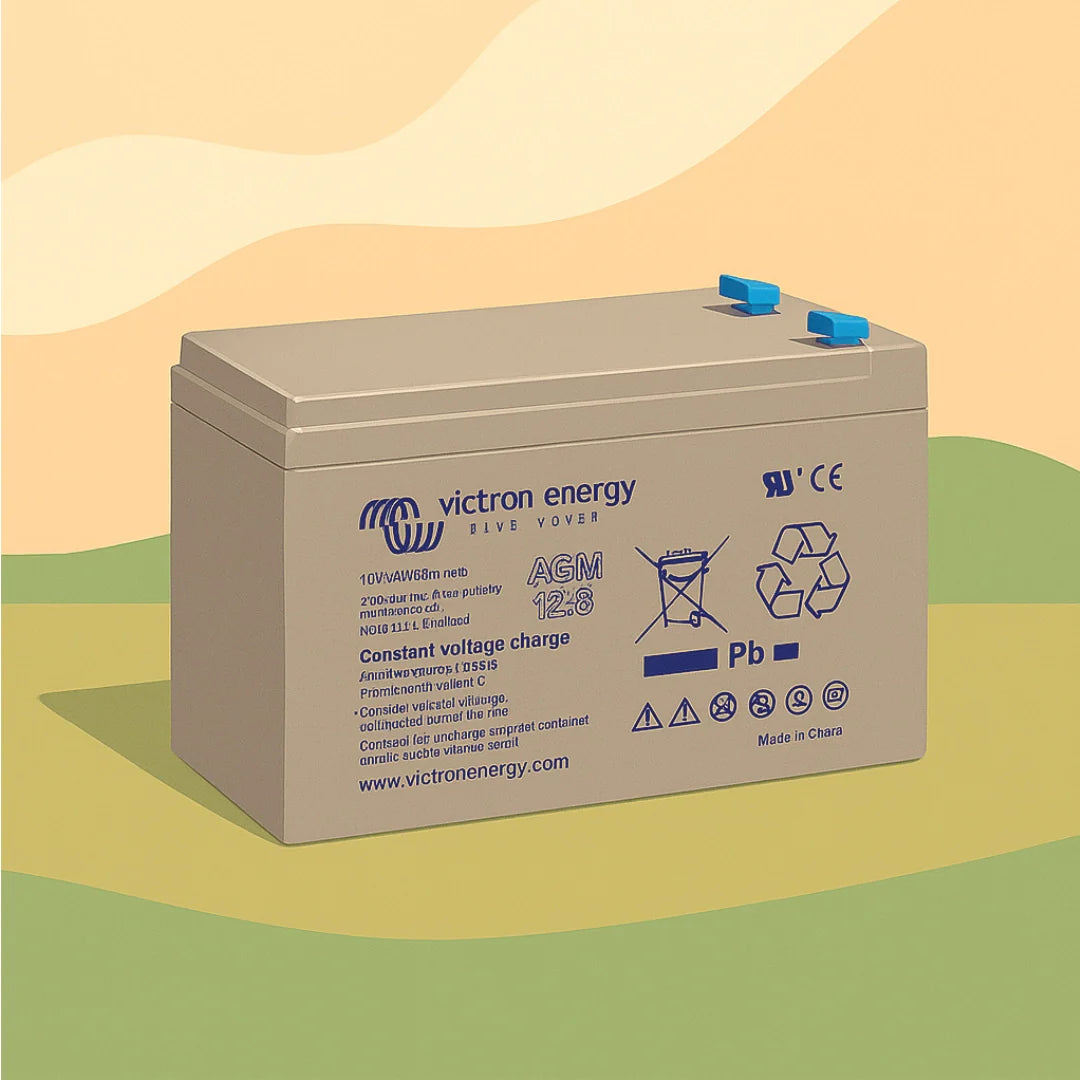
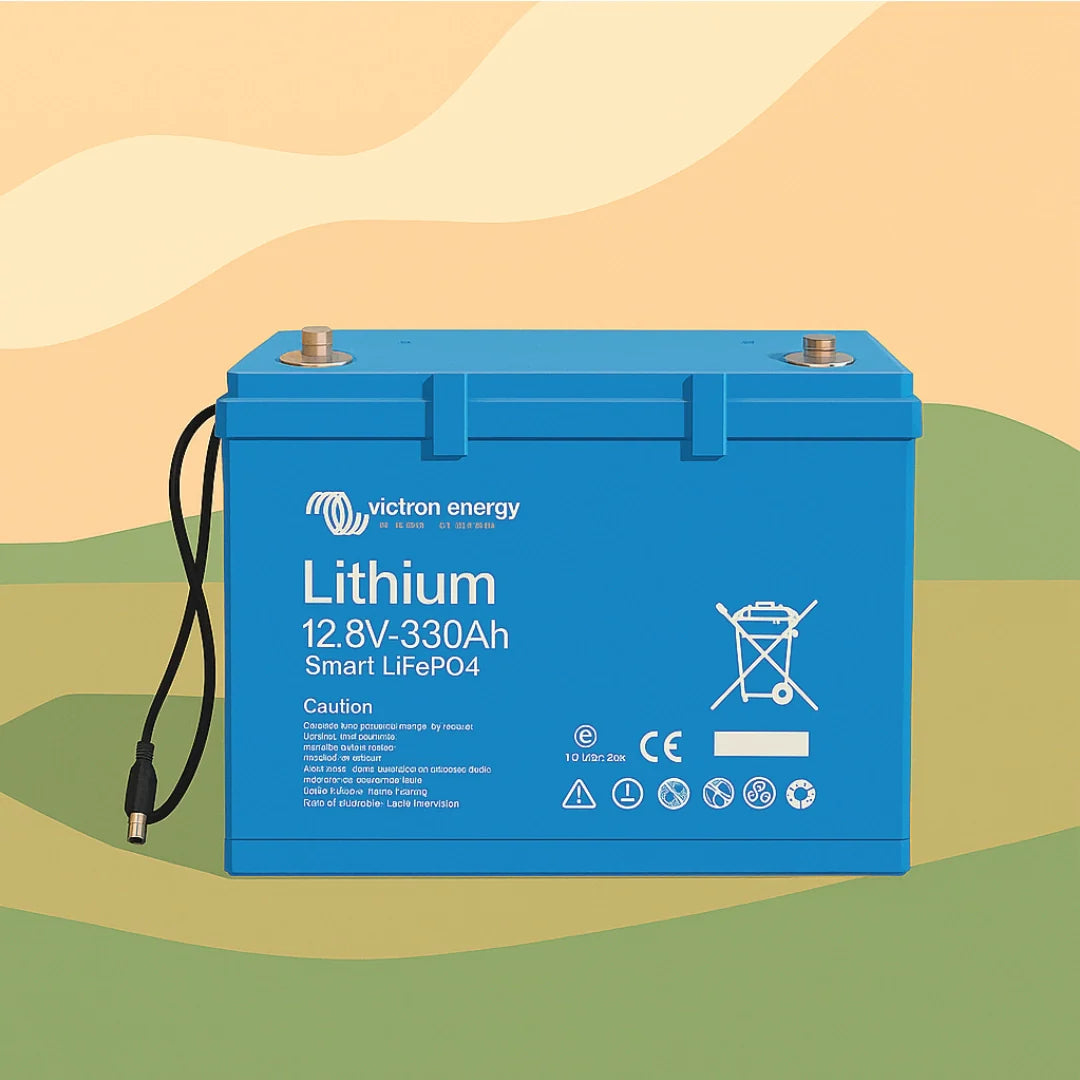
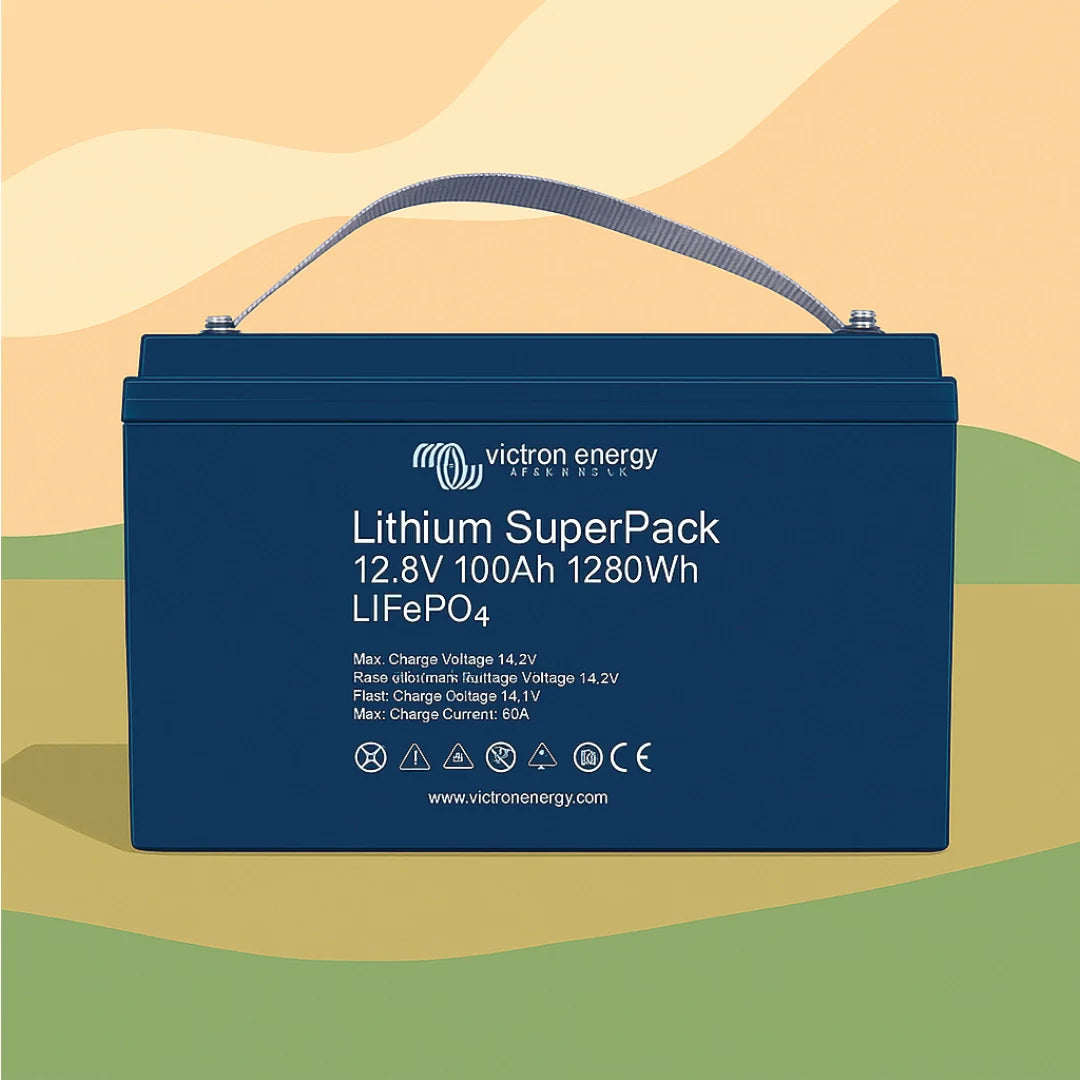
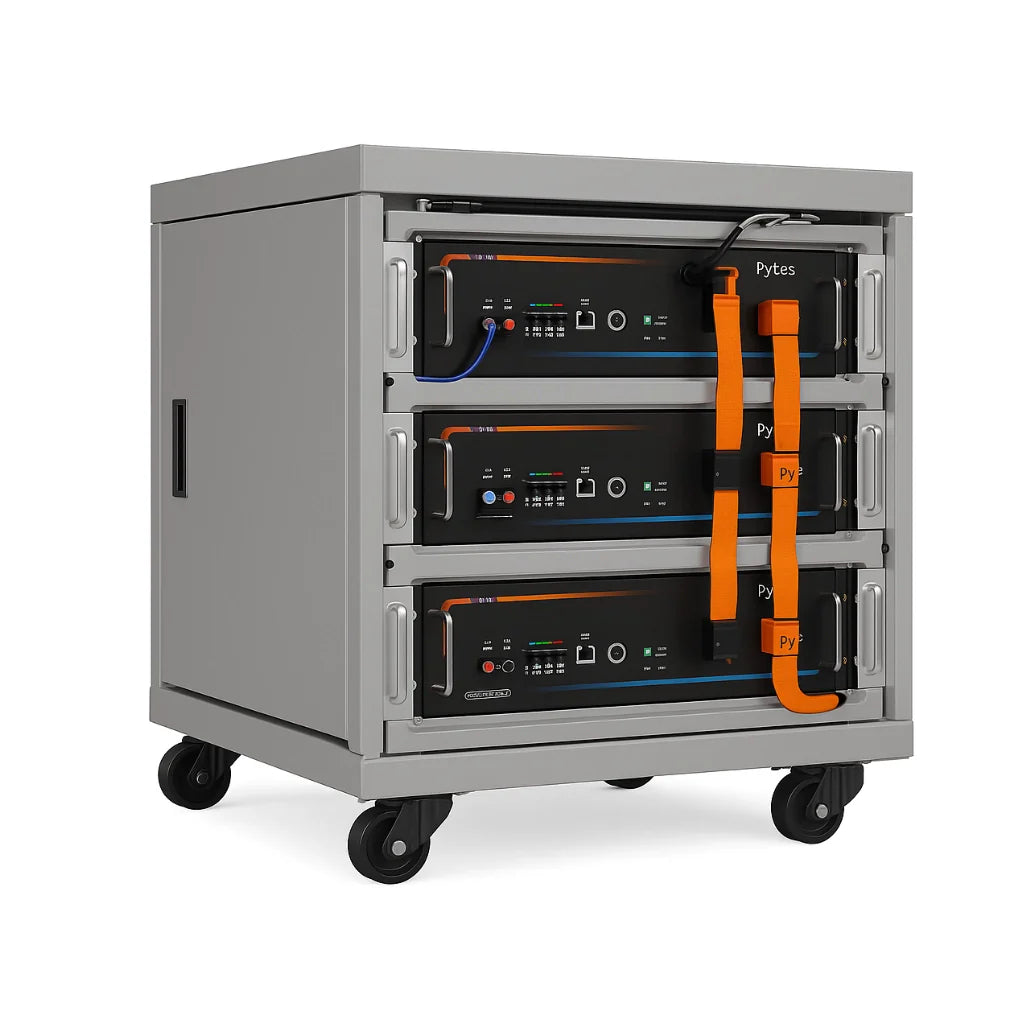
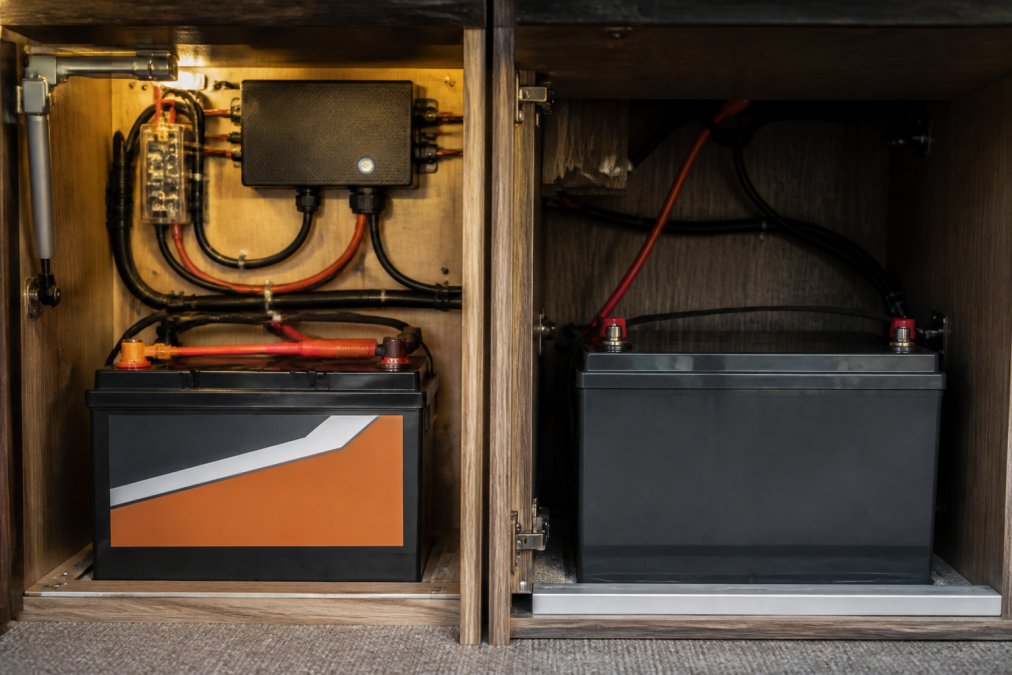
LiFePO4 (lithium iron phosphate) is the correct chemistry for a campervan battery bank when you compare the numbers honestly against AGM deep cycle batteries.
Usable Capacity, Cycle Life and Real-World Cost Comparison
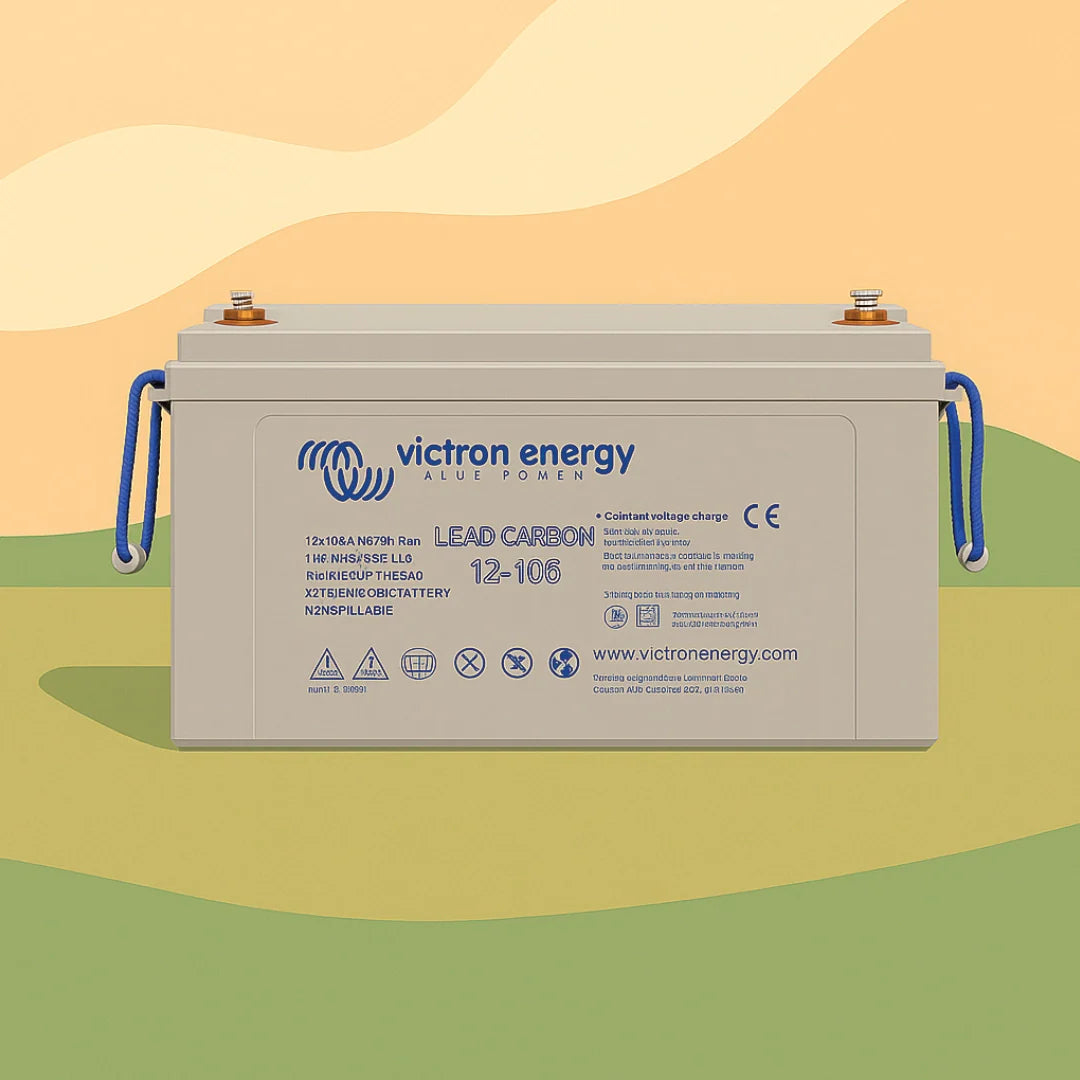
An AGM battery should not be discharged below 50% state of charge without shortening its life significantly. A 100Ah AGM therefore delivers 50Ah of usable capacity. A 100Ah LiFePO4 can be discharged to 20% safely, delivering 80Ah of usable capacity. You need 60% more AGM capacity to match a LiFePO4 bank, meaning more weight, space, and upfront cost.
Quality LiFePO4 cells typically deliver 2,000-4,000 cycles to 80% capacity. AGM deep cycle batteries manage 300-500 cycles under similar conditions. For a van used every weekend, a LiFePO4 bank will outlast two or three AGM replacements over the same ownership period. The higher upfront cost becomes the cheaper option over any realistic horizon.
Battery Management Systems and Charging Profiles
Every LiFePO4 battery bank requires a Battery Management System to protect cells from overcharge, over-discharge, excess current, and thermal extremes. Most quality lithium leisure batteries include an integrated BMS.
LiFePO4 charges at constant current to approximately 14.2-14.6V, then transitions to absorption briefly before cutting off. It does not require a float stage. Many older solar charge controllers and vehicle alternators use AGM profiles that hold a float voltage damaging to lithium cells over time. Verify that every charging source supports a LiFePO4 profile.
Campervan Battery Capacity Calculator: Sizing Your Battery Bank
Sizing your battery bank correctly is the foundation of any reliable off grid power system.
Step-by-Step Daily Load Calculation
- List every 12V and 240V load in the van: fridge, lighting, phone/laptop charging, water pump, fan, heating controller, router.
- Estimate daily hours of use for each load.
- Multiply watts by hours to get watt-hours (Wh) per day per appliance.
- Sum all watt-hours for your total daily consumption.
- Divide by system voltage (12V) to convert to amp-hours: Wh ÷ 12 = Ah.
- Apply a usable depth factor: divide by 0.8 for LiFePO4 (20% reserve), or 0.5 for AGM.
- Add an autonomy multiplier: multiply by the number of days you need without charging input.
Example calculation:
| Appliance | Watts | Hours/day | Wh/day |
|---|---|---|---|
| 12V compressor fridge | 45W avg | 24h | 45Wh |
| LED lighting | 20W | 4h | 80Wh |
| Laptop charging | 65W | 3h | 195Wh |
| Water pump | 60W | 0.5h | 30Wh |
| 4G router | 10W | 12h | 120Wh |
| Total | 470Wh/day |
470Wh ÷ 12V = 39.2Ah per day. For two days' autonomy with LiFePO4: 39.2 × 2 ÷ 0.8 = 98Ah nominal battery capacity minimum. Most builders round up to 100-200Ah to accommodate variable usage.
Winter vs. Summer Off-Grid Performance
LiFePO4 batteries lose charging acceptance below 5°C. Most quality BMS units suspend charging when cell temperature drops below 0°C to prevent lithium plating, which permanently damages cells. In a UK winter, a van parked overnight in sub-zero temperatures may wake to a battery that won't accept charge from solar until the cells warm up.
Practical mitigations include insulating the battery compartment, locating the bank inside the living space rather than under the floor, and choosing batteries with a low-temperature charging cutoff clearly specified in the datasheet. Solar yield in December in the UK is also dramatically lower than in July: a panel producing 4-5 peak sun hours per day in summer may average under 1.5 hours in winter. Size your battery bank for winter conditions if you plan to travel year-round.
Campervan Solar Panel Sizing Guide: From Roof Space to Watt-Hours
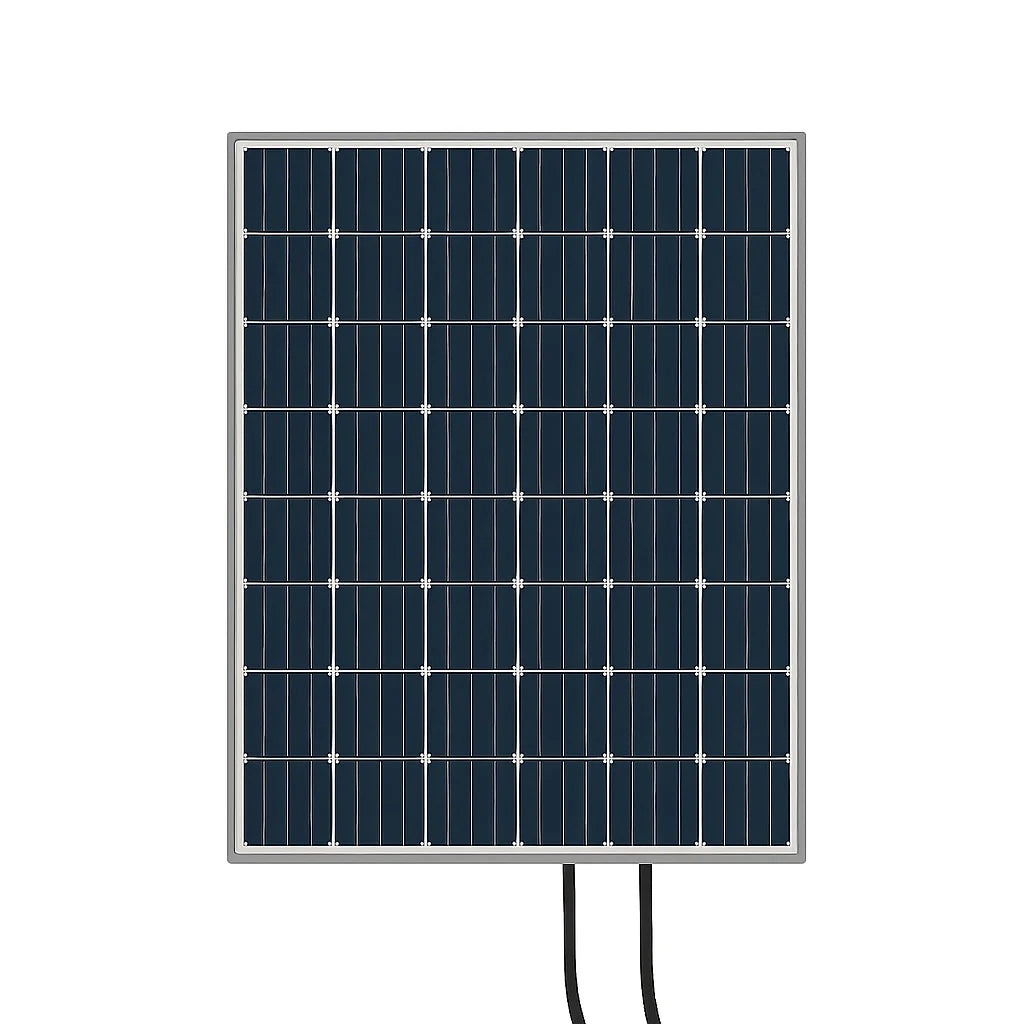
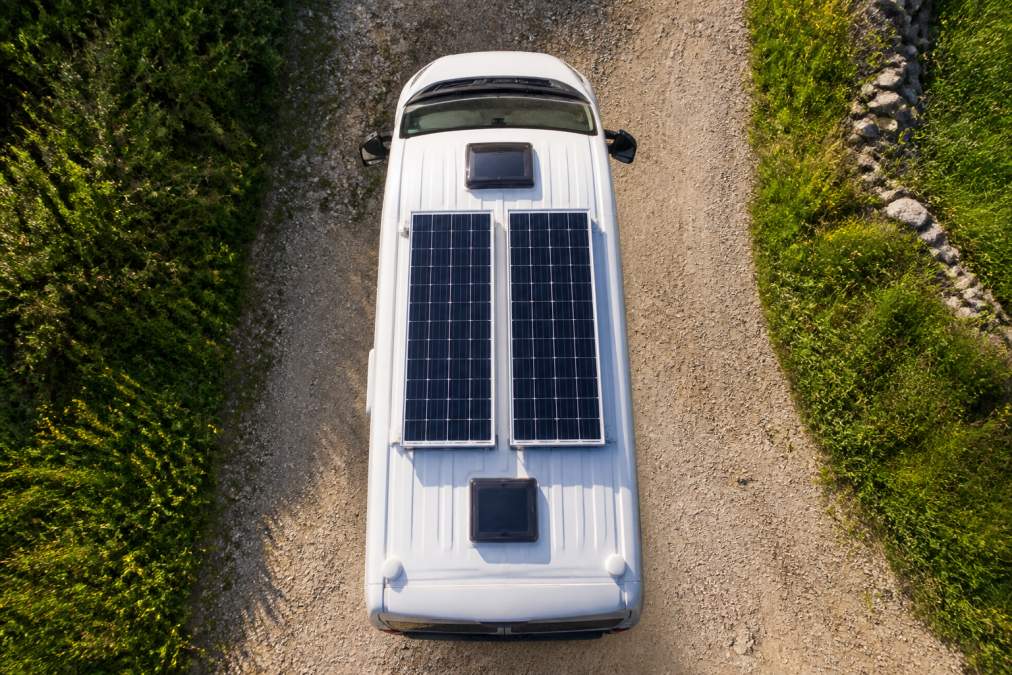
Solar is the primary charging source for most off-grid campervan builds. Divide your daily Wh consumption by the expected peak sun hours for your location and season. In the UK, plan for 2.5-3 peak sun hours per day as a conservative annual average. A 470Wh daily load requires 470 ÷ 2.5 = 188W of solar panel minimum for a balanced system. Most builders fit 200-400W to build in headroom and account for panel shading, angle losses, and controller efficiency.
MPPT vs. PWM Solar Charge Controllers
The solar charge controller sits between your panels and your battery bank. PWM (Pulse Width Modulation) controllers are simpler and cheaper but pull panel voltage down to battery voltage, losing power as heat. MPPT (Maximum Power Point Tracking) controllers continuously find the panel's optimal operating voltage and convert excess voltage into additional current. MPPT technology can deliver up to 30% more power from the same panels compared to PWM controllers, particularly in low-light or cold conditions.
For any LiFePO4 system, MPPT is the correct choice. The efficiency gain pays back the cost difference quickly, and MPPT controllers handle the higher open-circuit voltages of series-wired panel strings that PWM controllers cannot.
Rigid, Semi-Flexible and Portable Solar Panels
Rigid monocrystalline panels offer the best efficiency per pound and the longest lifespan (typically 25+ years). They suit flat or near-flat roofs and are the default choice for most permanent installations.
Semi-flexible panels conform to curved roof profiles up to a specified radius. They're lighter than rigid panels and more aerodynamic, but generate more heat during operation, which reduces efficiency slightly over time.
Portable folding panels are useful as a supplement to a fixed array, particularly for positioning to catch direct sun when the van is parked at an angle.
DC-DC Charger Installation in the UK: What You Need to Know
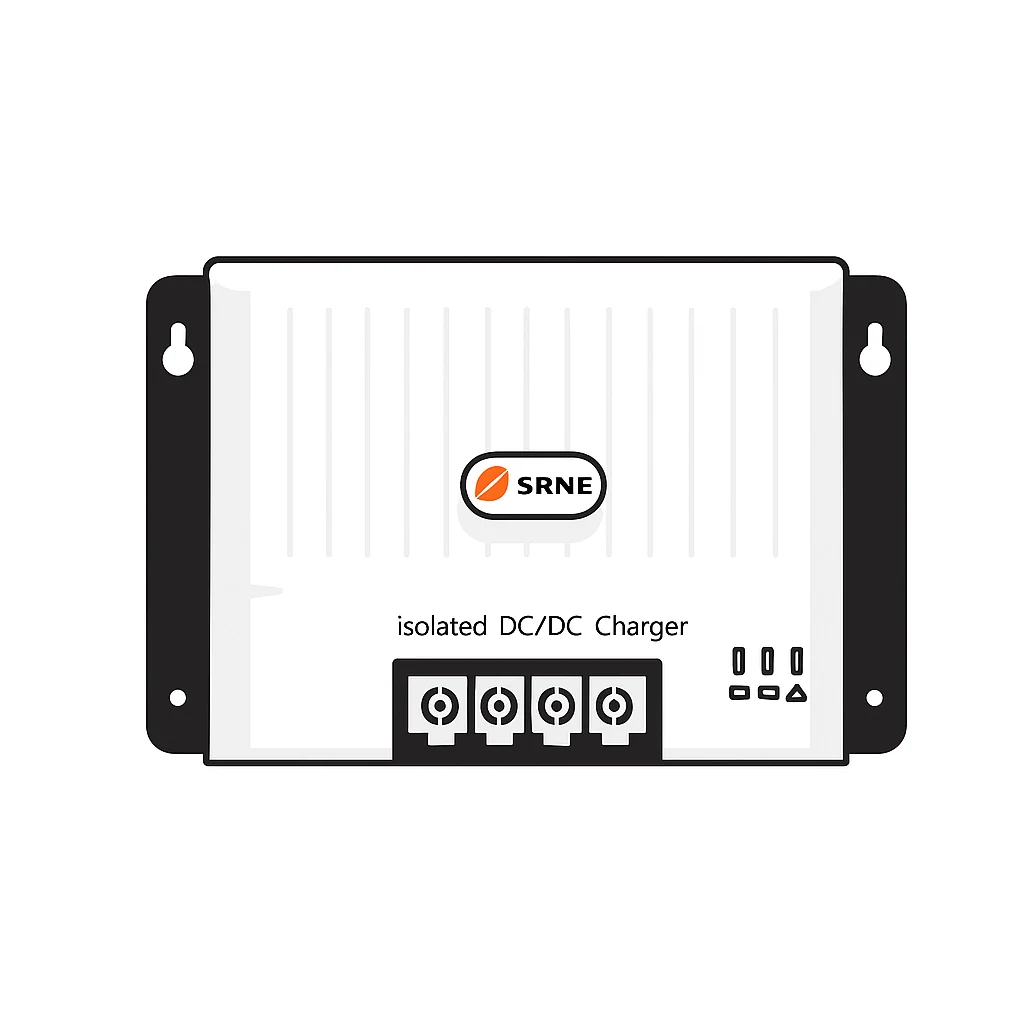
A DC-DC charger (also called a battery-to-battery or B2B charger) charges your leisure battery bank from the vehicle's starter battery while the engine runs. It is an essential component in any modern campervan electrical system.
Smart Alternators and Why a Split-Charge Relay Is No Longer Enough
Most vehicles manufactured after approximately 2014 use a smart alternator that regulates output voltage dynamically, prioritising starter battery charging and fuel efficiency. They frequently drop output voltage below the threshold needed to charge a leisure battery properly, and some actively suppress output when the starter battery reaches full charge.
A traditional split-charge relay simply connects the two batteries when alternator voltage rises above a threshold. With a smart alternator, that threshold may never be reached consistently, or the relay may connect and disconnect repeatedly. The result is an auxiliary battery that charges poorly or not at all while driving.
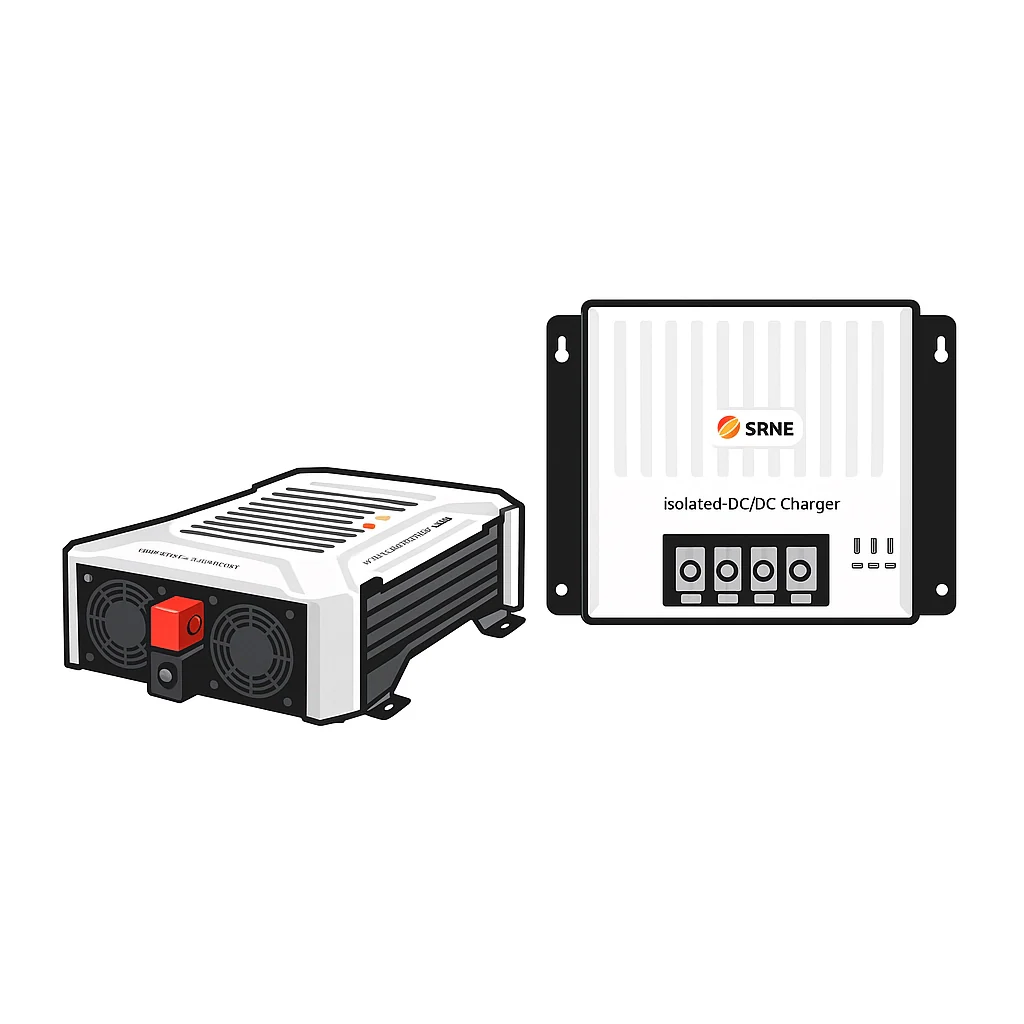
A DC-DC charger isolates the leisure battery from the starter battery electrically and draws a controlled current regardless of alternator output fluctuations. It applies a proper multi-stage LiFePO4 charging profile, which a direct relay connection cannot do. The IET Wiring Regulations (BS 7671) guidance on vehicle electrical systems provides the framework that professional installers work within for safe DC system design.
DIY vs. Professional Installation: Risks and Regulations
DC-DC charger installation involves high-current DC wiring, correct fusing, and proper cable sizing. Critical requirements are:
- Correct cable gauge for the run length and current (a 30A charger on a 3-metre run requires at minimum 6mm² cable)
- Fusing within 300mm of each battery positive terminal
- Secure, vibration-resistant connections throughout
- Correct charging profile programmed for LiFePO4
Professional installation by a qualified auto-electrician provides assurance and a paper trail. For builds requiring a habitation certificate, professional sign-off is advisable. The NICEIC guidance on electrical installation safety covers competency standards relevant to UK electrical work.
Inverters, Shore Power and Complete Off Grid Power System Integration
A complete off grid power system ties together the battery bank, solar input, alternator charging, and, where needed, 240V AC output from an inverter or connection to shore power.
Selecting the Right Inverter or Inverter-Charger
A pure sine wave inverter converts 12V DC to 240V AC and is the correct type for sensitive electronics, motor-driven appliances, and anything with a switch-mode power supply. Modified sine wave inverters are cheaper but incompatible with many modern devices and should be avoided.
An inverter-charger combines a pure sine wave inverter with a mains battery charger in one unit. When connected to shore power (campsite hook-up), it charges the battery bank and passes 240V through to onboard sockets. When disconnected, it inverts from the battery. Size your inverter to handle your highest single AC load plus a margin for surge current. A 1,000W inverter running a 900W kettle has no headroom. A 2,000W unit handles the same load comfortably and copes with the startup surge of motor-driven appliances.
Wiring Gauge, Fuse Blocks and Voltage Drop
Voltage drop is the hidden performance killer in 12V systems. Because 12V systems operate at low voltage, even small resistance in wiring causes significant power loss. Keep total voltage drop below 3% (0.36V) on any circuit. This means:
- Use 70mm² or larger cable for the battery-to-inverter connection on systems above 1,500W
- Use a proper fuse block or busbar for distribution rather than daisy-chaining connections
- Fit an appropriately rated fuse or breaker within 300mm of every positive terminal
- Use marine-grade tinned copper cable in damp environments
The BSS (Boat Safety Scheme) electrical guidance, which shares principles with leisure vehicle DC systems provides useful reference material for DC system best practice.
Energy Efficiency Tips to Maximise Your Off-Grid Autonomy
The cheapest watt-hour is the one you don't consume. Before adding more panels or battery capacity, audit your existing loads.
Fridge efficiency is the biggest variable. A compressor fridge set to 4°C in a well-insulated van draws far less than the same fridge set to 2°C in a poorly insulated van. Pre-cool food before loading and keep the fridge full; thermal mass reduces compressor cycling.
Lighting is an easy win. Modern 12V LED strips draw 1-3W per metre compared to 10-15W for older fluorescent fittings. Replacing lighting across a full van conversion saves 20-40Wh per day.
Inverter standby draw is often overlooked. A 2,000W inverter sitting idle draws 10-20W continuously. Fit a manual isolation switch and turn the inverter off when not in use. Over 12 hours, that's 120-240Wh saved.
System monitoring transforms how you manage energy. A battery monitor displaying state of charge, current in and out, and remaining capacity removes the guesswork. Charge laptops and devices during peak solar hours rather than from battery overnight.
| Load | Typical Draw | Easy Reduction |
|---|---|---|
| Compressor fridge | 30-60W avg | Insulate van, set 4°C not 2°C |
| LED lighting | 5-30W | Already efficient; dim where possible |
| Inverter standby | 10-20W | Isolate when not in use |
| 4G router | 8-15W | Power off overnight |
| Phone/laptop charging | 20-65W | Charge during peak solar |
Designing a reliable campervan off grid power system requires matching battery capacity to real load calculations, choosing the right chemistry, and integrating every charging source correctly. Many builders underestimate how much the details matter: a mismatched charging profile, undersized cable, or ignored smart alternator can undermine an otherwise well-specified system. Skyenergi supplies complete 12V electrical solutions including Edge and Elite LiFePO4 batteries, MPPT solar charge controllers, DC-DC chargers, inverter-chargers, and SRNE monitoring systems, all with fast UK delivery and specialist support. Get in touch with the Skyenergi team to specify the right system for your build.
Frequently Asked Questions
How much solar power does an off-grid campervan actually need?
Most campervans with a fridge, lighting, phone charging and a laptop require between 100Ah and 200Ah of battery capacity per day. To keep that battery bank topped up through solar alone, a 200W to 400W solar array is a practical starting point for UK conditions. In summer, a 200W panel can generate 600-800Wh on a good day; in winter that figure drops to 100-200Wh. Pairing solar with a DC-DC charger from your alternator gives reliable off grid power year-round.
What are the main differences between AGM and LiFePO4 batteries for campervans?
LiFePO4 batteries offer around 80-100% usable capacity versus 50% for AGM, meaning a 100Ah lithium battery delivers roughly twice the usable energy of an equivalent AGM. LiFePO4 cells also handle 2,000-4,000 charge cycles compared to 300-500 for AGM, and they charge significantly faster. AGM batteries cost less upfront but typically need replacing far sooner, making LiFePO4 the more cost-effective choice for regular campervan off grid power use over a three-to-five year period.
Do I need a DC-DC charger or will a split-charge relay work for my campervan?
Most vehicles built after 2014 use Euro 5 or Euro 6 compliant smart alternators that vary their output voltage to save fuel. A traditional split-charge relay cannot charge a leisure battery effectively from these alternators and can damage LiFePO4 cells. A DC-DC charger (also called a battery-to-battery charger) regulates the voltage correctly, applies a proper multi-stage charging profile, and works safely with both smart alternators and lithium batteries. For any modern van conversion in the UK, a DC-DC charger is the correct solution.
How do I calculate how much battery capacity I need for my campervan?
List every 12V appliance you plan to run, note its wattage, and estimate daily hours of use. Divide watts by 12 to get amps, then multiply by hours to get amp-hours (Ah). Add all appliances together for your daily Ah figure. For LiFePO4, size your battery bank to 1.0-1.2 times that daily figure. For AGM, double it to account for the 50% depth-of-discharge limit. A fridge drawing 4A for 12 hours uses 48Ah; add lighting, a laptop and phone charging and most builds land between 80Ah and 150Ah per day.
Can I install a campervan electrical system myself, or do I need a professional?
DC 12V wiring is not regulated in the same way as domestic mains work, so there is no legal requirement in England, Scotland or Wales to use a certified electrician for 12V systems. However, poor wiring causes fires: correct fuse sizing, appropriate cable gauge to prevent voltage drop, and secure connections are essential. Any work involving 230V AC components inside a campervan should be carried out or inspected by a qualified electrician. For complex lithium systems, professional installation reduces risk and ensures your setup is covered by your vehicle insurance.
How does off-grid performance differ between summer and winter in the UK?
UK solar irradiance drops sharply from autumn through spring. A 200W panel producing 800Wh on a July day may generate under 200Wh in December. LiFePO4 batteries also lose charge acceptance below 0°C, so a battery with a built-in BMS heater is worth specifying for winter use. To maintain off grid power through winter, plan your solar array for winter output, not peak summer figures, and ensure your DC-DC charger provides sufficient alternator charging to cover the solar shortfall on short driving days.
This article was written using GrandRanker
Prev post

Buy 12V Lithium Leisure Battery UK: 2026 Guide
Updated on 10 August 2026
Next post

The Blueprint for Off-Grid Independence: Pairing SkyEnergi Core with SRNE RV Systems
Updated on 09 August 2026


