





SRNE RV Solar Systems: The Complete UK Guide
SRNE RV solar systems explained for UK motorhome owners. MPPT controllers, inverter-chargers, sizing and installation tips. Find the right setup today.
Table of Contents
- What Is SRNE and Why It Matters for RV Off-Grid Power
- SRNE MPPT Charge Controller Review: Performance and Compatibility
- Best Motorhome Solar Inverter: Choosing the Right SRNE RV Unit
- Installing Solar Panels on a Motorhome UK: Wiring and Safety
- Campervan Off-Grid Power System Design with SRNE Components
- Troubleshooting Common SRNE RV Power Faults
- Long-Term Maintenance and Firmware Updates for SRNE Systems
- Conclusion
Last Updated: August 9, 2026
What Is SRNE and Why It Matters for RV Off-Grid Power
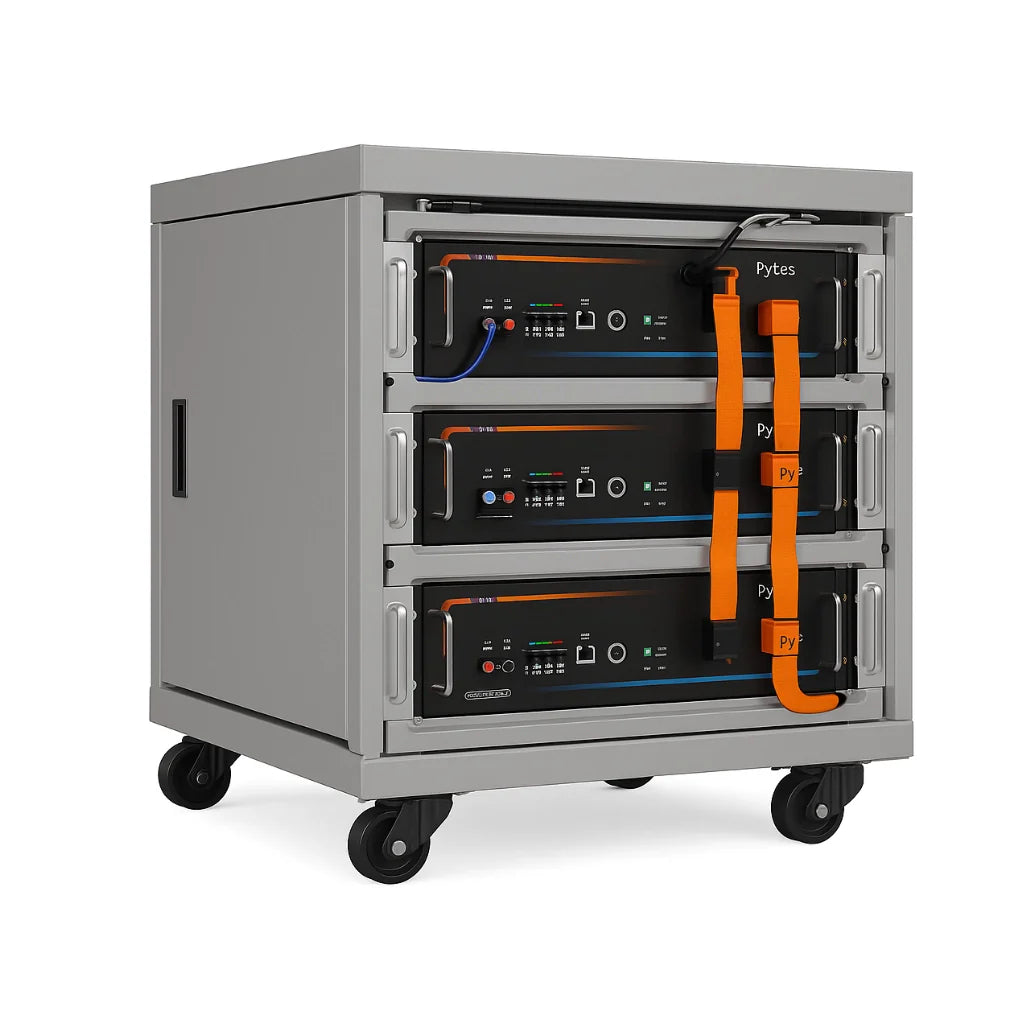
SRNE is a Chinese power electronics manufacturer widely used in the UK campervan and motorhome conversion market. At Skyenergi, we stock SRNE systems because they offer integration that standalone components cannot match: multi-function inverter-chargers, MPPT solar charge controllers, and DC-DC chargers designed to work together as a complete system.
An SRNE RV power system combines solar charging, battery management, AC mains charging, and inverter functionality in a coordinated architecture. Buying separate components from different manufacturers creates compatibility headaches, voltage regulation conflicts, misaligned charging profiles, and battery banks that are either chronically undercharged or pushed beyond safe limits. SRNE eliminates most of that friction by design.
According to the National Caravan Council's industry data, demand for capable off-grid electrical systems has risen sharply as more people shift to full-time living. SRNE's product range sits in a sweet spot: more capable than budget solar controllers, more affordable than premium European alternatives.
SRNE MPPT Charge Controller Review: Performance and Compatibility
The SRNE MPPT charge controller range is where most UK buyers start. MPPT technology extracts significantly more energy from solar arrays than older PWM controllers, particularly during partial shading or low-light conditions common in the UK.
SRNE's MPPT controllers support multiple battery chemistry profiles, including sealed lead-acid, gel, AGM, and lithium iron phosphate. Using the correct profile is essential, the wrong one damages cells over time.
How MPPT Voltage Regulation Protects Your Battery Bank
MPPT voltage regulation continuously tracks the maximum power point of the solar array and converts excess voltage into additional charging current. Your battery bank receives consistent, correctly profiled charge regardless of panel output.
SRNE controllers implement a three-stage charging cycle: bulk, absorption, and float. For lithium batteries, the float stage is typically disabled to prevent overcharging. The controller's voltage regulation buffers against voltage spikes from the solar array, protecting sensitive battery management systems. Most SRNE MPPT units include thermal protection, cutting back charging current when internal temperatures rise, particularly relevant for confined installations.
Lithium Battery Compatibility and DC-DC Charging Integration
SRNE MPPT controllers are compatible with lithium battery banks, but correct configuration is essential. The controller must use the lithium charging profile with appropriate charge and float voltages for your specific cells.
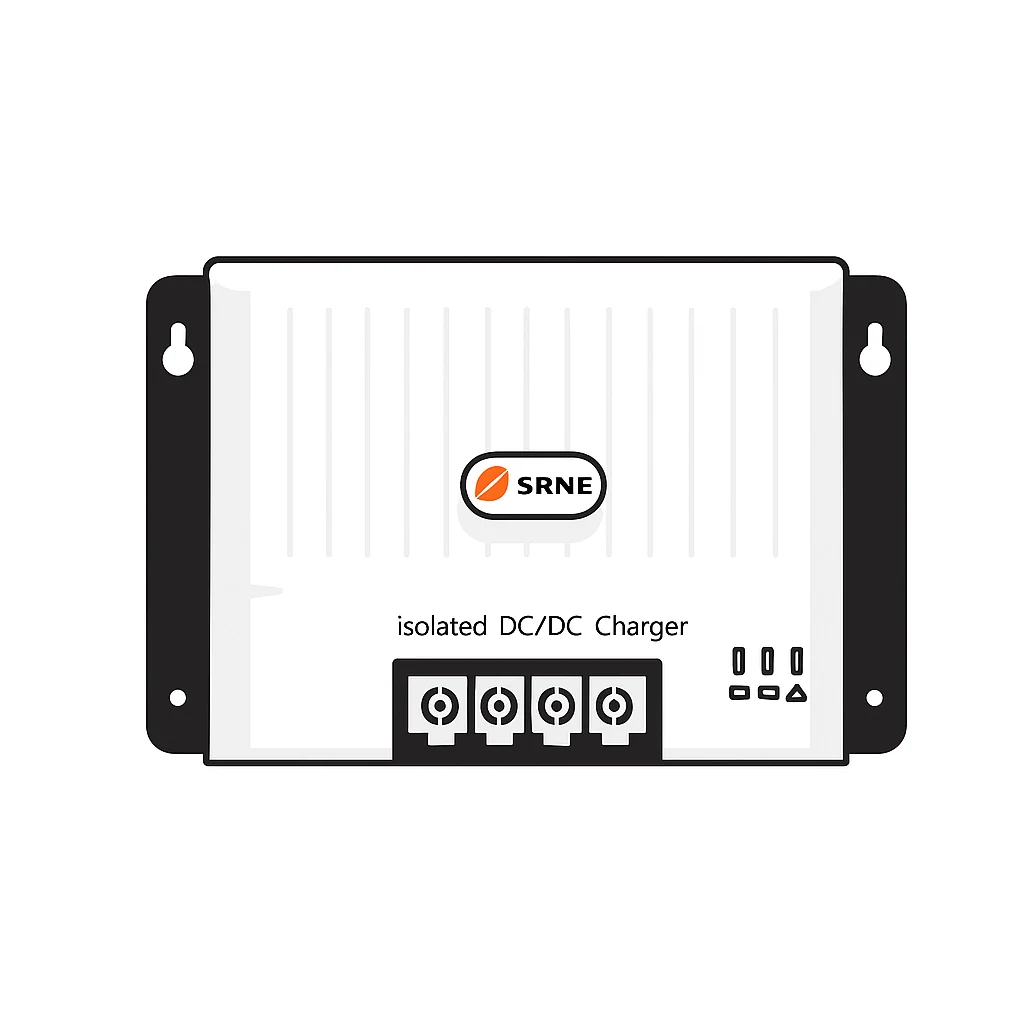
DC-DC charging integration is critical. When driving, a DC-DC charger converts alternator voltage to correctly charge the leisure battery bank without drawing excessive current that could damage modern smart alternators. This is essential for newer Euro 6 vehicles with variable-voltage alternators.

Best Motorhome Solar Inverter: Choosing the Right SRNE RV Unit
Choosing the best motorhome solar inverter comes down to continuous output wattage and peak power capacity. Get these wrong and you either have an undersized unit that trips under load or an oversized unit consuming unnecessary standby power.
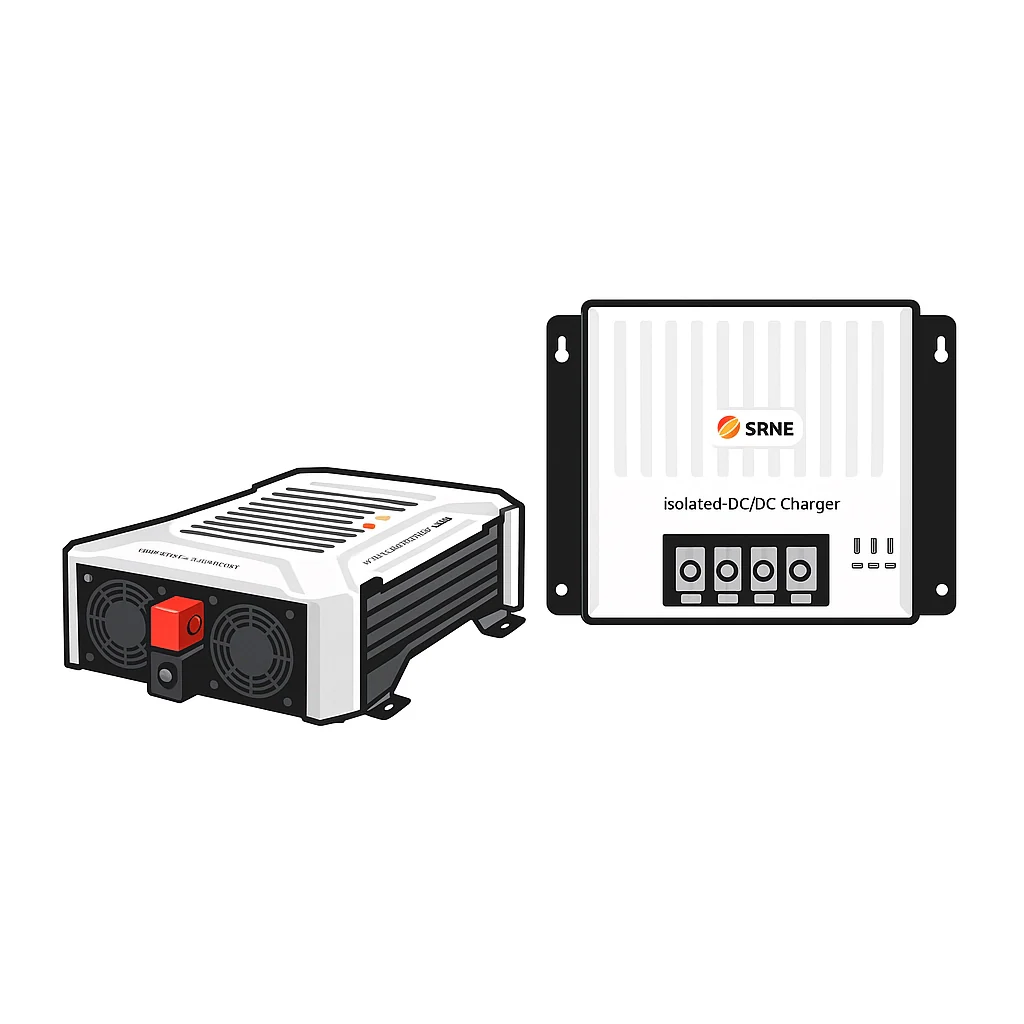
SRNE produces hybrid inverter-chargers combining the inverter, AC mains charger, and transfer switch in a single unit. For most UK motorhome applications, a unit rated between 1,000W and 3,000W continuous output covers realistic loads: compressor fridge, lighting, laptop charging, and small appliances.
Pure Sine Wave Output and Continuous Wattage Capacity
Pure sine wave output is non-negotiable for a motorhome inverter. Modified sine wave units cause problems with sensitive electronics and motor-driven appliances. A pure sine wave inverter produces AC power with the same waveform quality as grid electricity.
Continuous wattage capacity is the sustained output the inverter maintains indefinitely. Peak power is the short burst capacity for starting motor loads. A fridge compressor may draw three times its running current for a fraction of a second. If the inverter's peak power rating cannot absorb that spike, the unit shuts down on overload protection.
| Application | Typical Running Watts | Peak Start Watts |
|---|---|---|
| Compressor fridge | 40-80W | 150-250W |
| LED lighting (full van) | 20-40W | 20-40W |
| Laptop and phone charging | 60-120W | 60-120W |
| Coffee machine | 800-1,200W | 800-1,200W |
| Hair dryer | 1,200-2,000W | 1,200-2,000W |
| Total typical load | 1,100-1,600W | 1,300-1,900W |
This illustrates why a 2,000W continuous / 4,000W peak SRNE unit is the most common choice for well-equipped motorhomes.
AC Mains Charging, Transfer Switch and Grid Integration
The transfer switch function in an SRNE inverter-charger automatically routes AC power to onboard loads and simultaneously charges the battery bank when connected to a campsite hook-up. When mains power disconnects, the unit switches to inverter mode within milliseconds with no interruption to appliances.
AC mains charging is configurable for input current limit, preventing circuit breaker trips when the battery bank is deeply discharged. Setting this correctly is essential for UK campsites, where 10A or 16A hook-up is standard.
Installing Solar Panels on a Motorhome UK: Wiring and Safety
Installing solar panels on a motorhome in the UK requires attention to physical mounting and electrical installation. The electrical work must comply with BS 7671, the UK wiring regulations standard published by the IET. For installations connected to mains supply, a Part P notification may be required.
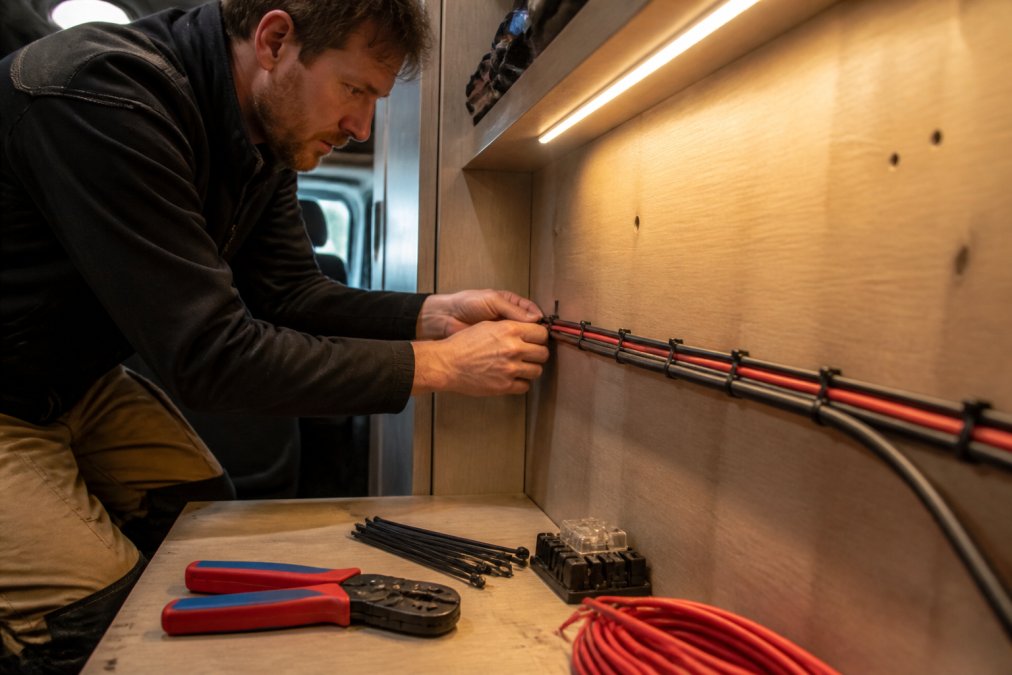
Roof panels require appropriate sealant and mounting hardware rated for outdoor exposure. Penetrations through the vehicle roof must be sealed against water ingress, the most common cause of long-term structural damage in motorhome conversions. Cable entry glands should be UV-resistant and rated for the cable diameter used.
Grounding, Cable Sizing and UK Installation Safety Standards
Grounding in a 12V DC system means connecting the negative terminal of the battery bank to the vehicle chassis at a single point. Multiple grounding points create ground loops causing electrical noise, inaccurate battery monitoring, and accelerated corrosion.
Cable sizing is critical. Undersized cables create voltage drop, reducing charging efficiency and generating heat, a fire risk. Size cables for maximum continuous current with no more than 3% voltage drop over the run length. For a 12V system, a 40A MPPT controller output run over 2 metres requires minimum 10mm² cable; longer runs need 16mm² or larger.
According to the IET Wiring Regulations BS 7671 guidance, all DC wiring in leisure vehicles should be protected by appropriately rated fuses or circuit breakers positioned within 300mm of the battery positive terminal.
Wiring Diagram Overview: Solar Array to Battery Bank
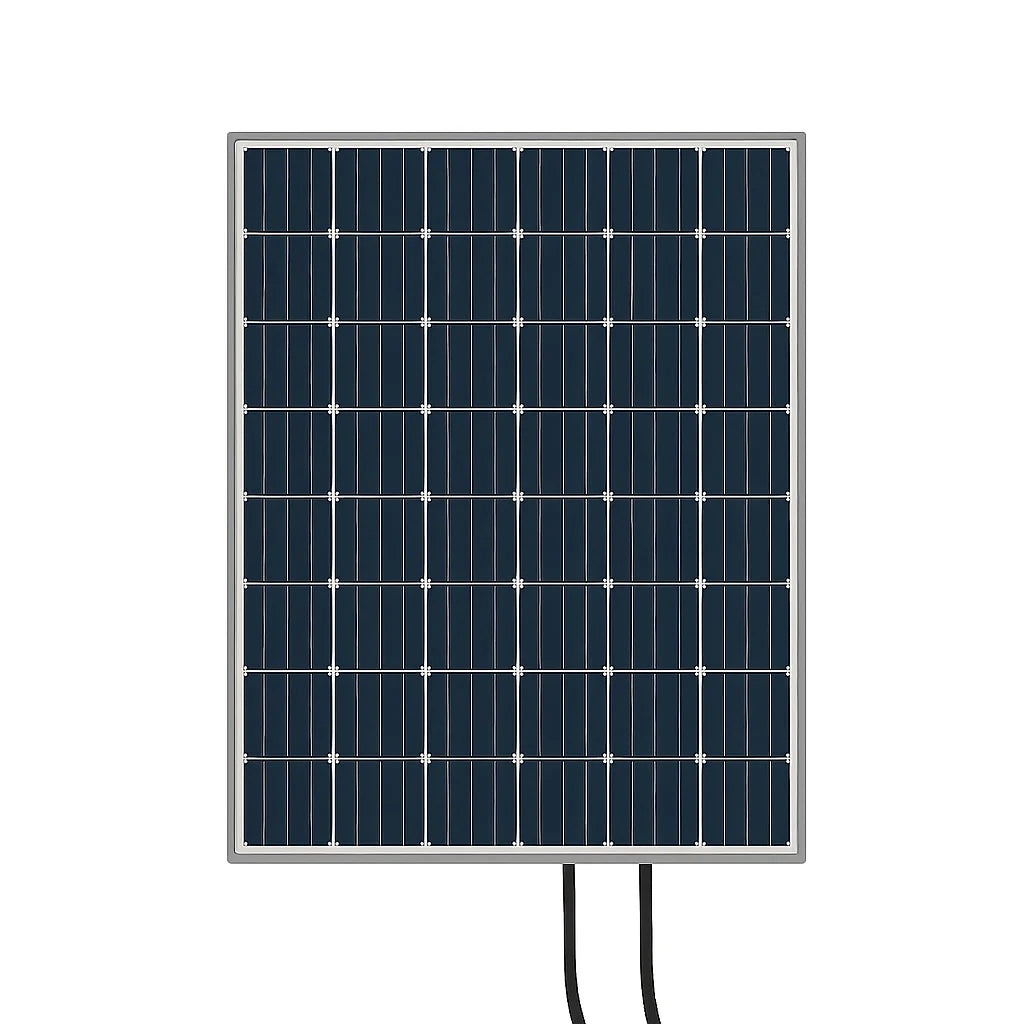
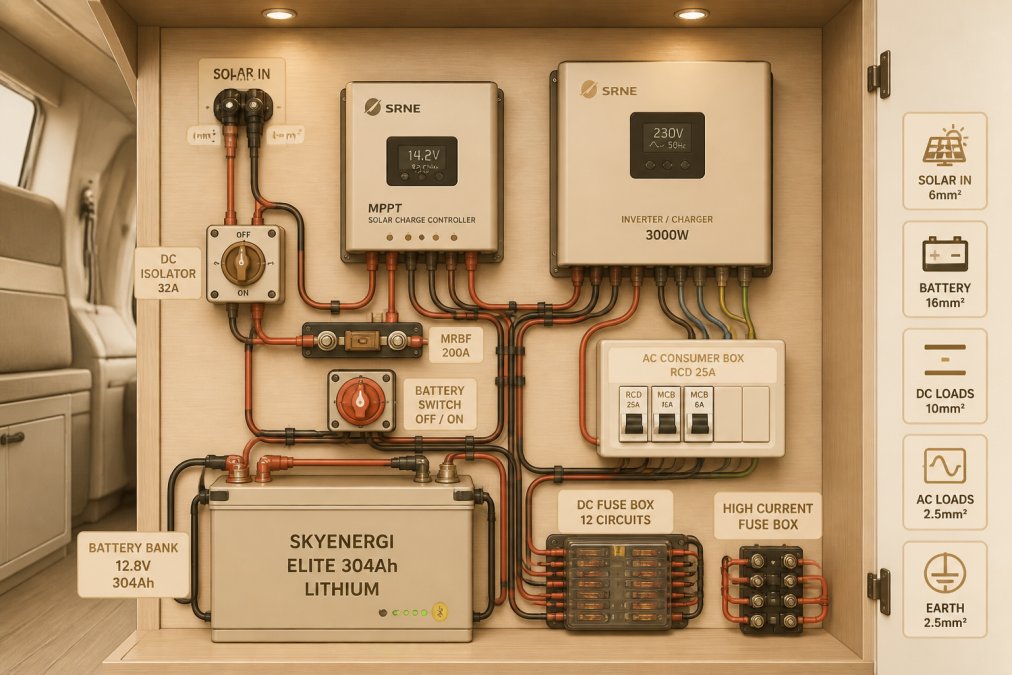
A correctly wired SRNE RV system follows this sequence: solar panels connect to the MPPT controller's PV input, the controller's battery terminals connect to the battery bank via fused cable, and the battery bank feeds the inverter-charger and 12V distribution board.
Key wiring principles:
- Solar array positive and negative to MPPT PV input (observe polarity)
- MPPT battery output to battery bank via inline fuse
- Battery bank positive to inverter-charger via appropriately sized fuse and isolator switch
- Inverter-charger AC output to onboard consumer unit
- DC-DC charger between vehicle starter battery and leisure battery bank, with fuses on both input and output
- Battery monitor shunt in the negative return path between battery bank and all loads
Every connection should use appropriately rated terminals, not twisted wire junctions. Tinned copper connectors and heat-shrink solder terminals are correct for durable installations.
Campervan Off-Grid Power System Design with SRNE Components
A well-designed campervan off-grid power system matches capacity to realistic consumption with enough margin for two or three poor weather days without running flat.
Start with a load audit: list every appliance, its wattage, and daily hours of use. Your battery bank should hold at least twice that figure to avoid deep discharging lithium cells below their recommended minimum state of charge.
Load Management and Sizing Your Battery Bank
Load management means understanding which loads are essential and which are discretionary. A compressor fridge runs continuously. Lighting, device charging, and water pump use are variable and can be reduced if the battery bank is low.
For a typical two-person motorhome with compressor fridge, LED lighting, device charging, and occasional inverter use, daily consumption commonly falls between 60Ah and 120Ah at 12V. A 200Ah lithium battery bank provides approximately 180Ah of usable capacity, covering a single poor day. A 280Ah battery provides more comfortable headroom.
The Skyenergi Edge 280Ah Lithium Leisure Battery at £445 is a practical starting point. For larger motorhomes or longer off-grid periods, the Skyenergi Core 460Ah Lithium Leisure Battery with Bluetooth and Heat-Pad at £889 provides substantially greater capacity with Bluetooth monitoring and built-in heat pad for cold-weather charging.
Weight, Space Optimisation and Component Placement
Weight and space optimisation is a genuine constraint in motorhome and van conversion builds. Lithium batteries offer significant advantages over lead-acid: a 100Ah lithium cell typically weighs around 12-13kg compared to 25-30kg for equivalent lead-acid.

Component placement follows practical rules. The battery bank should be as close to the inverter-charger as possible to minimise high-current cable runs. The MPPT controller should be mounted in a ventilated location away from direct heat sources. Vertical mounting is preferred for most SRNE units to allow natural convective cooling.
For tight installations, the Skyenergi Edge 100Ah Lithium Leisure Battery at £219 offers a compact form factor. Two units in parallel deliver 200Ah of usable capacity while remaining manageable for a single installer.
Troubleshooting Common SRNE RV Power Faults
Most SRNE RV faults fall into a small number of categories and can be diagnosed without specialist equipment.
Inverter shuts down under load. This is almost always an overload or low battery voltage condition. Check the load against the inverter's continuous rating and verify battery bank voltage under load. If voltage drops below the inverter's low-voltage cutoff during appliance startup, the battery bank is either too small, too discharged, or has a faulty cell.
MPPT controller showing zero output despite sunlight. Check the PV open-circuit voltage at the controller terminals. If voltage is present but charging current is zero, the controller may be in battery full mode or the battery voltage is above the absorption threshold. If PV voltage is absent, check panel connections and any inline fuse in the PV circuit.
Battery monitor showing incorrect state of charge. This is usually a calibration issue. The monitor must be configured with the correct battery capacity in amp-hours. If the shunt is not installed in the correct position, readings will drift.
DC-DC charger not charging from alternator. Most DC-DC chargers require the ignition circuit to be active before charging begins. Verify the ignition sense wire is connected correctly and that the vehicle's smart alternator is producing expected voltage under load.
According to the RECC consumer guidance on electrical system faults in leisure vehicles, the most common cause of persistent electrical faults in motorhome conversions is incorrect initial installation rather than component failure.
Remote monitoring not connecting. SRNE's monitoring systems use RS485 communication or Bluetooth depending on the model. If the monitoring display or app is not connecting, check communication cable connections at both the controller and display unit.
Long-Term Maintenance and Firmware Updates for SRNE Systems
Long-term reliability comes from periodic physical inspection and keeping firmware current.
Physical inspection should happen at least twice a year. Check all cable terminations for corrosion or loosening, particularly at battery terminals and inverter connections where vibration gradually works connections loose. Inspect the MPPT controller and inverter-charger for dust accumulation on ventilation slots. Blocked ventilation causes thermal throttling that reduces charging efficiency.
Firmware updates for SRNE components address communication bugs, improve charging algorithm accuracy, and add compatibility for newer battery BMS protocols. Updates are applied via the RS485 port or USB connection. This requires the SRNE PC software tool and a USB-RS485 adapter.
Battery BMS firmware is separate from MPPT and inverter firmware. If using a Skyenergi Elite 304Ah Smart Lithium Battery with Victron CAN-Bus integration, the BMS communicates directly with compatible chargers to dynamically adjust charging parameters.
The Battery Vehicle Society technical guidance on leisure vehicle electrical maintenance recommends annual professional inspection of any leisure vehicle electrical installation that includes lithium cells.
Energy harvesting efficiency degrades if solar panels are not cleaned. In the UK, panel surfaces accumulate road grime, tree sap, and bird contamination that can reduce output noticeably over a season. Clean panels with warm water and a soft cloth; avoid abrasive materials that scratch the anti-reflective coating.
Remote monitoring via SRNE's display units or compatible third-party systems allows you to track energy harvesting, battery state of charge, and charging current trends. A gradual decline in peak solar input on clear days indicates panel degradation or partial shading.
Managing off-grid power in a motorhome or campervan is genuinely complex when you factor in solar variability, alternator charging, mains integration, and the specific demands of lithium battery management. Skyenergi supplies complete SRNE RV system components alongside the Skyenergi Edge and Elite lithium battery range, with fast UK delivery and practical technical support for both DIY builders and professional installers. Get started with Skyenergi and build a system that delivers reliable, efficient power wherever you travel.
Frequently Asked Questions
Is SRNE a reliable brand for motorhome solar systems?
SRNE is a well-established Chinese manufacturer specialising in solar charge controllers, inverter-chargers and energy management systems. Their products are widely used in RV, campervan and off-grid applications across Europe. SRNE units are produced in China and are designed to meet international electrical standards. For UK motorhome owners, the key is pairing SRNE components with correctly rated lithium batteries and ensuring installation complies with BS 7671 wiring regulations.
How does an SRNE MPPT controller improve battery life in a campervan?
An SRNE MPPT charge controller tracks the maximum power point of your solar array and converts excess voltage into additional charging current rather than wasting it as heat. Compared to PWM controllers, MPPT units typically deliver 20-30% more energy into your battery bank under real-world UK conditions. This more precise voltage regulation reduces stress on deep cycle and lithium cells, which extends overall battery lifespan and keeps your campervan off-grid power system running efficiently through lower-light months.
What size SRNE inverter do I need for my motorhome?
Start by adding up the wattage of every appliance you plan to run simultaneously, fridge, lighting, laptop, phone chargers and any heating controls. Add roughly 20% headroom for peak power surges, particularly from compressor fridges. A 1000W pure sine wave inverter-charger suits most weekend van conversions, while full-time off-grid motorhomes typically need 2000-3000W continuous output. Pair the inverter with a lithium battery bank sized to cover at least two days of consumption without solar input.
Do I need an electrician to install solar panels on a motorhome in the UK?
There is no legal requirement in the UK to use a qualified electrician for 12V leisure vehicle solar installations, but it is strongly advisable. Work on the 230V AC side of an inverter-charger, including mains connection and transfer switch wiring, should be carried out by a competent person familiar with BS 7671. Incorrect grounding or undersized cabling creates fire and shock risks. Many professional campervan converters hold relevant City and Guilds or EAL qualifications and can certify the completed installation.
This article was written using GrandRanker
Prev post

Lead Acid Battery Disadvantages for Campervans
Updated on 11 August 2026
Next post

Buy 12V Lithium Leisure Battery UK: 2026 Guide
Updated on 10 August 2026


