







Why battery monitoring matters for reliable off-grid power
Learn how battery monitoring extends lithium battery life up to 5000 cycles in off-grid and leisure vehicle setups. Practical tips, comparisons, and expert advice.
TL;DR:
- Proper monitoring significantly extends lithium battery lifespan and performance in off-grid setups.
- Battery management systems prevent damage by tracking voltage, temperature, and SoC, enabling proactive maintenance.
- Active monitoring is crucial for avoiding early failures, maximizing capacity, and ensuring system reliability.
Lithium battery systems with proper monitoring can last up to 10 times longer than traditional lead-acid equivalents, yet many leisure vehicle owners still treat batteries as fit-and-forget components. That assumption is costly. Whether you run a campervan, motorhome, or off-grid residential setup, the difference between a battery that lasts two seasons and one that delivers a decade of service often comes down to how well it is monitored and managed. LiFePO4 with BMS achieves 3000 to 5000 cycles compared to just 300 to 500 for lead-acid. This article covers what monitoring actually does, why it matters, and how to avoid the mistakes that shorten battery life.
Table of Contents
- How battery monitoring extends battery life
- Key benefits of battery monitoring for off-grid power
- Modern methods: how battery monitoring works today
- Common pitfalls and expert tips for battery monitoring
- Our perspective: why battery monitoring is the invisible hero of reliable off-grid living
- Take control of your off-grid power with the right monitoring solutions
- Frequently asked questions
Key Takeaways
| Point | Details |
|---|---|
| Dramatic cycle boost | Proper monitoring can provide up to 10 times the lifespan compared to unmanaged batteries. |
| Prevents costly failures | Monitoring alerts you to issues before they result in expensive breakdowns or replacements. |
| Optimised power use | Tracking battery status ensures you always get the maximum energy and reliability from your system. |
| Smart tech integration | App-based dashboards and alerts offer peace of mind and convenient control for off-grid owners. |
How battery monitoring extends battery life
Without monitoring, leisure vehicle batteries operate blind. Voltage spikes go undetected. Cells drift out of balance. Temperatures exceed safe limits during fast charging or in summer heat. Each of these events quietly erodes capacity, and by the time you notice a problem, significant damage has already occurred.
A battery management system, or BMS, is the core technology that prevents this. It continuously tracks voltage, current, temperature, and state of charge (SoC) across every cell in the pack. When any parameter moves outside a safe range, the BMS acts: it can reduce charge current, disconnect the load, or trigger an alert. Understanding battery management system basics is the starting point for any serious off-grid build.
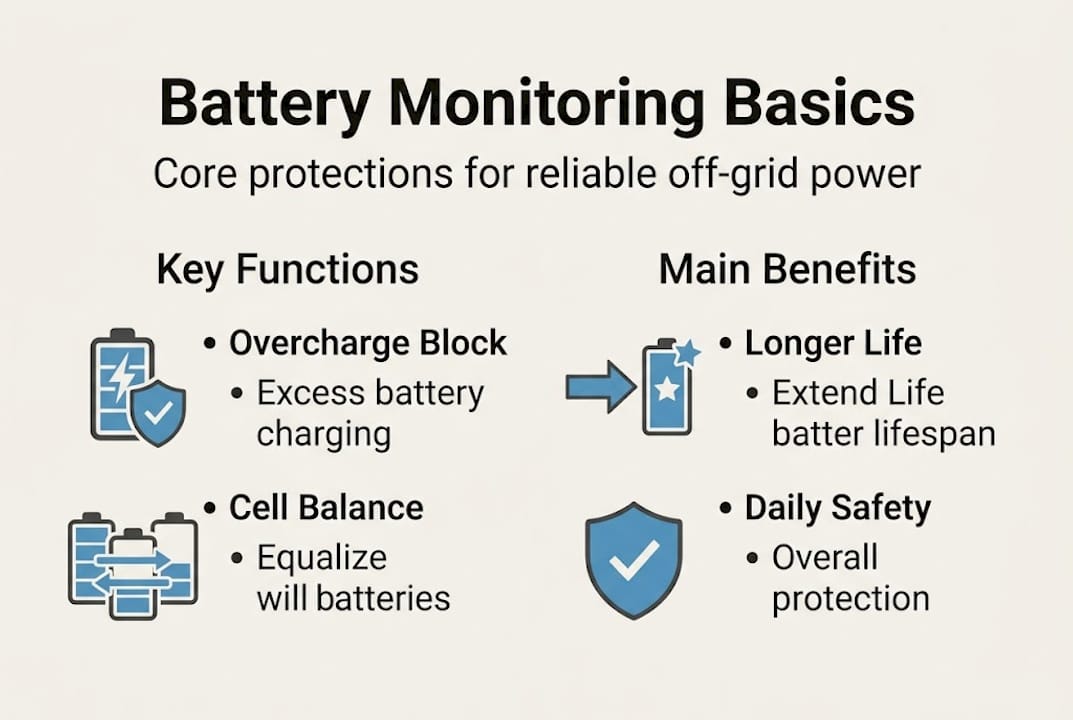
Battery monitoring via BMS prevents overcharge, over-discharge, overheating, and cell imbalance in lithium leisure batteries, extending lifespan to 2000 or more cycles for off-grid use in UK vehicles. That figure is not marketing language. It reflects real-world outcomes when systems are properly configured and regularly checked.
Lithium vs lead-acid: a direct comparison
| Feature | LiFePO4 with BMS | Lead-acid |
|---|---|---|
| Cycle life | 2000 to 5000 cycles | 300 to 500 cycles |
| Usable capacity | Up to 95% | 50% |
| Weight (100Ah) | ~12 kg | ~25 kg |
| Monitoring requirement | BMS integrated | Manual or basic |
| Self-discharge per month | ~2% | ~5 to 10% |
The practical benefits of battery management systems for off-grid go beyond raw cycle counts. A well-monitored lithium pack delivers consistent output throughout its discharge curve, meaning your inverter, lighting, and appliances perform reliably rather than fading as the battery depletes.
Key functions a BMS performs automatically:
- Cell balancing: Redistributes charge across cells to prevent one weak cell from limiting the whole pack
- Overcharge protection: Cuts charge input when cells reach maximum voltage
- Over-discharge protection: Disconnects loads before voltage drops to damaging levels
- Thermal management: Reduces charging rate or shuts down in extreme temperatures
- Short-circuit protection: Responds in milliseconds to fault conditions
For UK users pursuing off-grid energy independence, a BMS is not optional. It is the foundation of a reliable system.
Key benefits of battery monitoring for off-grid power
Understanding how monitoring adds life is useful, but what concrete benefits does it deliver day to day?
The most immediate advantage is early fault detection. Real-time monitoring of voltage, current, temperature, and SoC enables proactive maintenance, avoiding premature failure and optimising performance in leisure vehicles. Spotting a cell drifting 50mV out of balance is far cheaper than replacing a pack that has failed mid-trip in Scotland.
What monitoring delivers in practice:
- Accurate state of charge readings: Know exactly how much usable energy remains, not a rough estimate based on voltage alone
- Solar harvest visibility: See how much energy your panels are generating and whether your MPPT controller is performing correctly
- Load tracking: Identify which appliances are drawing the most power and adjust usage accordingly
- Historical data logging: Review charge and discharge cycles to spot degradation trends before they become failures
- Remote alerts: Receive notifications if temperature, voltage, or SoC moves outside set thresholds
For battery monitoring for leisure vehicles, the peace of mind factor is significant. On a two-week off-grid trip, knowing your system is healthy removes a constant source of uncertainty.
Pro Tip: Set up low SoC alerts at 20% and high temperature alerts at 45°C. These two thresholds catch the majority of real-world issues before they cause damage.
Monitoring performance metrics at a glance:
| Metric | Why it matters | Ideal range |
|---|---|---|
| State of charge | Prevents over-discharge | 20% to 100% |
| Cell voltage delta | Detects imbalance | Under 50mV |
| Battery temperature | Prevents thermal damage | 0°C to 45°C |
| Charge current | Confirms MPPT output | Per system spec |
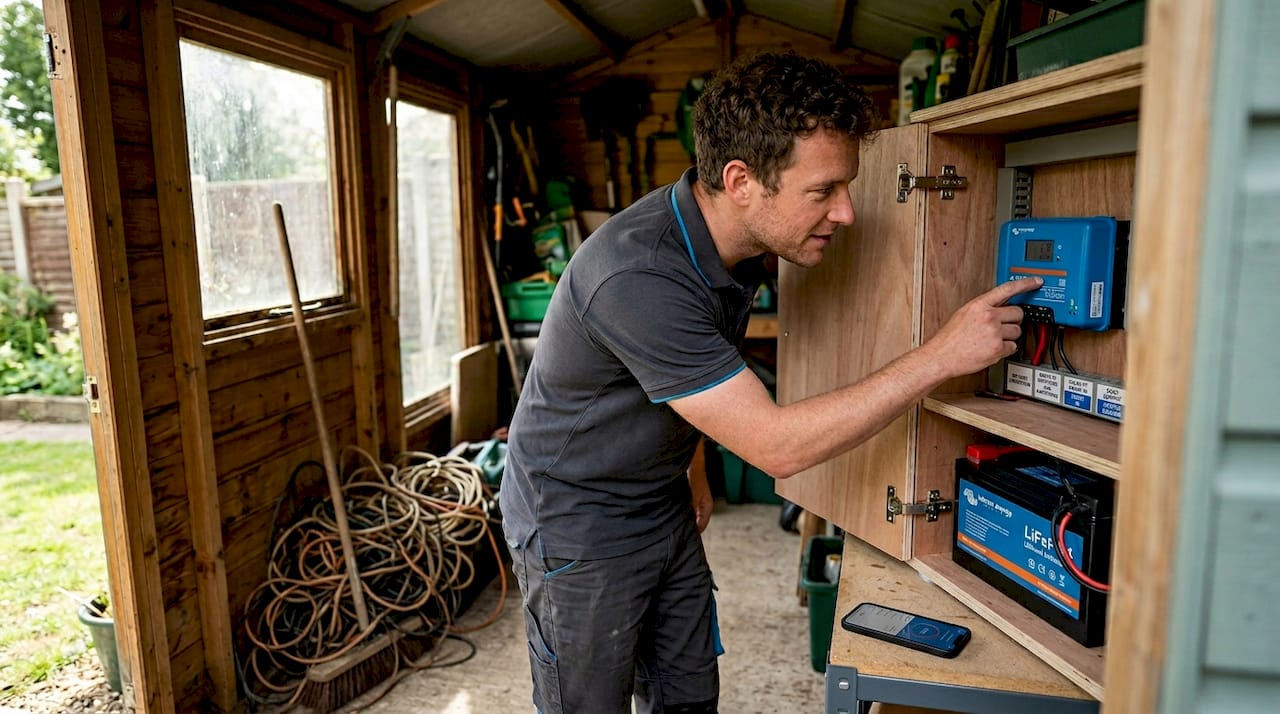
The BMS for energy storage also improves solar efficiency. When the BMS communicates with your charge controller, it can accept maximum charge current safely, shortening the time needed to top up from panels on a cloudy UK day.
Modern methods: how battery monitoring works today
To apply these benefits, a closer look at how the technology works will help you make informed choices.
Modern BMS units use one of three approaches to track battery state. Data-driven methods analyse real-time inputs such as voltage and current to estimate SoC and state of health (SoH). Model-based methods use mathematical representations of electrochemical behaviour to calculate internal conditions. Hybrid systems combine both.
Data-driven BMS methods offer flexibility for dynamic loads in renewables versus model-based approaches suited to precision applications. Hybrid methods perform best in edge cases such as variable solar input, which is exactly the scenario most UK off-grid users face. Understanding the battery monitoring process helps you select a system that suits your specific load profile.
What you actually see on a monitoring interface:
- Pack voltage and individual cell voltages
- Current flow (charge or discharge, in amps)
- State of charge as a percentage
- Temperature readings from multiple sensors
- Cycle count and estimated remaining capacity
- Active protection events (e.g., over-temperature warning)
“The shift to app-connected BMS units means off-grid users can now access the same level of battery insight that was previously only available in industrial energy storage installations.”
Understanding what a battery BMS does at the firmware level also matters. Better BMS units update their SoC estimates using coulomb counting combined with voltage correction at rest, which is far more accurate than voltage-only readings.
Pro Tip: Choose a monitor with Bluetooth or Wi-Fi app integration. Being able to check your battery status from inside the van, without opening a hatch, saves time and gives you data you will actually use.
Common pitfalls and expert tips for battery monitoring
Theory is useful, but let’s clarify how to avoid mistakes and get the most from your battery system in practice.
The most common errors among UK leisure vehicle owners fall into three categories: charging in cold conditions, ignoring SoC drift, and skipping periodic manual checks.
Top mistakes and how to avoid them:
- Charging below 0°C: Lithium cells must not be charged below freezing. Cold charging pulses can cause reversible lithium plating that turns irreversible over time, permanently reducing capacity. Use a BMS with low-temperature charge cutoff.
- Ignoring SoC drift: If your BMS shows 80% but the battery behaves like it is at 50%, the SoC calibration has drifted. Run a full charge to 100% followed by a controlled discharge to reset the reference point.
- Skipping manual voltage checks: App dashboards are convenient but not infallible. A monthly manual check with a calibrated multimeter confirms your BMS readings are accurate.
- Overlooking rest voltage plateaus: After a discharge, let the battery rest for two hours and check the open-circuit voltage. Unexpected plateaus or drops at specific voltage points indicate cell-level issues that normal cycling data can miss.
“Monitor rest voltage plateaus for early detection of hidden cell degradation. This single practice identifies problems months before they cause visible capacity loss.”
For a structured approach, follow a lithium battery maintenance workflow that includes monthly visual inspections, quarterly BMS log reviews, and annual capacity tests.
Pro Tip: Run a full charge-discharge cycle every three months to recalibrate your BMS. This keeps SoC readings accurate and gives you a reliable capacity benchmark over the life of the battery.
The benefits of lithium batteries for off-grid living are only fully realised when monitoring is treated as an active task, not a passive feature. If you are new to the technology, reviewing solar battery terminology will help you interpret what your BMS is reporting.
Our perspective: why battery monitoring is the invisible hero of reliable off-grid living
Most discussions about off-grid power focus on battery capacity: how many kilowatt-hours, how many cells, which chemistry. Monitoring rarely gets the same attention. That is a mistake.
From supporting real off-grid users across the UK, the pattern is consistent. When systems underperform or fail early, the root cause is almost never a low-quality battery. It is inadequate monitoring. Solving 90% of reported error codes and premature failures comes down to improving how the system is watched, not replacing the hardware.
DIY builds without a robust BMS tend to fail within two seasons. The battery may be perfectly specified, but without active protection and accurate SoC tracking, it gets pushed beyond safe limits repeatedly. Each event is small. The cumulative effect is not.
Investing in quality monitoring also delivers better return on investment than simply oversizing your battery bank. A 100Ah lithium pack that is properly monitored and maintained will outlast a 200Ah pack that is not. The maths are straightforward. Monitoring is not a luxury feature. It is the most cost-effective decision in any off-grid build. Explore real-world monitoring solutions to see what a well-configured system looks like in practice.
Take control of your off-grid power with the right monitoring solutions
If you are ready to move beyond guesswork and build a system you can trust, the right monitoring tools make all the difference.

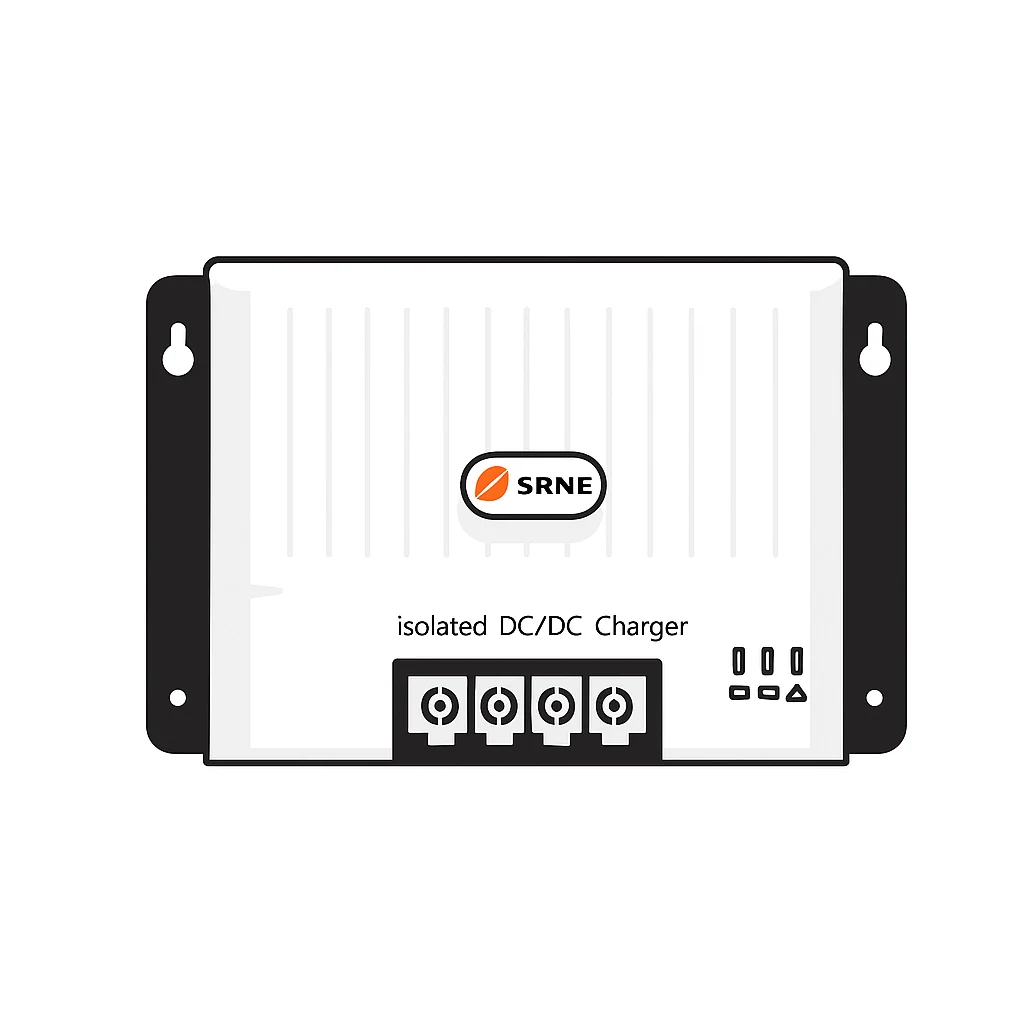
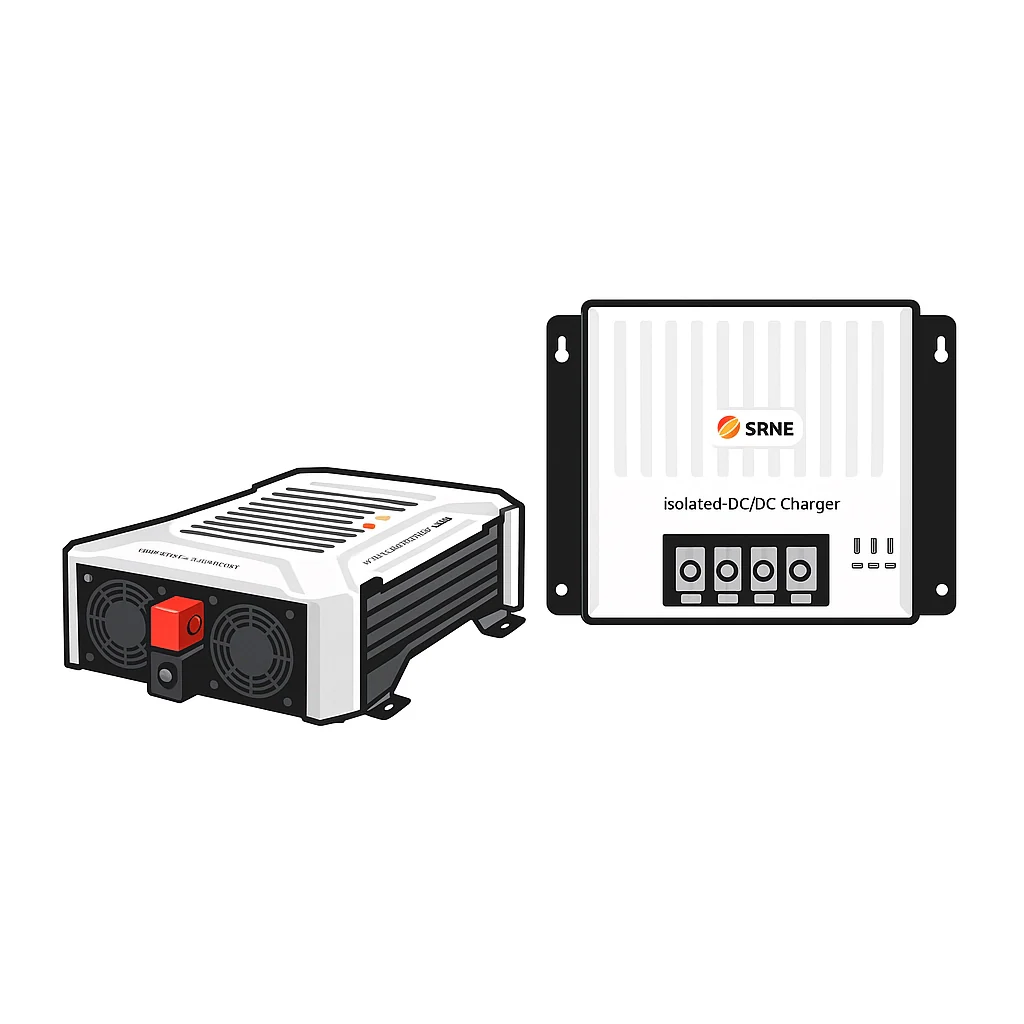
Skyenergi supplies monitoring-ready components designed for seamless integration into campervan, motorhome, and off-grid residential setups. The Victron VE.Direct interface connects your Victron components to external monitoring systems with precision. For a complete solution, the solar and battery charger system includes a 3kVA inverter charger, battery-to-battery charger, and built-in monitoring in a single turnkey package. Browse the full range or contact our team to discuss the right configuration for your setup.
Frequently asked questions
What does a battery management system (BMS) do in a leisure vehicle?
A BMS safeguards batteries by preventing overcharge, over-discharge, and temperature damage, ensuring longer lifespan and reliable off-grid use. BMS protection functions extend lithium battery life to 2000 or more cycles under typical off-grid conditions.
How does battery monitoring save money for off-grid power users?
Real-time monitoring spots issues early, preventing costly failures and letting you extract maximum usable energy from your batteries. Proactive monitoring avoids premature failure and optimises performance across the system.
What is the difference between monitoring lithium and lead-acid batteries?
Lithium batteries with BMS provide 6 to 10 times longer cycle life and over 95% usable capacity, significantly outperforming lead-acid when properly monitored. LiFePO4 cycle life reaches 3000 to 5000 cycles versus 300 to 500 for lead-acid.
Can I monitor my battery remotely via smartphone?
Yes, many modern BMS units and monitoring systems support Bluetooth or Wi-Fi connectivity, allowing you to check status and receive alerts via a dedicated app on your phone.
Recommended
Prev post

Off-grid energy trends for UK leisure vehicles: 2026 guide
Updated on 13 April 2026
Next post

Achieve campervan energy independence: Expert UK guide
Updated on 11 April 2026


