






Troubleshooting Battery Systems for Off-Grid Performance
Master troubleshooting battery systems with step-by-step checks for UK campervans. Ensure reliable off-grid power and restore battery performance confidently.
Nothing ruins the peace of a scenic getaway quite like discovering your lithium battery system is on the blink. For UK campervan owners committed to true off-grid independence, efficient troubleshooting skills mean more than just convenience—they help protect your investment and keep your adventures stress-free. In this guide, you will find practical tools and step-by-step checks designed to pinpoint issues and boost the reliability of your battery system.
Table of Contents
- Step 1: Prepare Essential Tools And Safety Equipment
- Step 2: Identify Battery Symptoms And Warning Signs
- Step 3: Test Battery Voltage And Monitor System Data
- Step 4: Inspect Connections And Key System Components
- Step 5: Verify Resolution With Real-Time Performance Checks
Quick Summary
| Key Point | Explanation |
|---|---|
| 1. Prioritise safety equipment | Safety gear is crucial for protecting yourself during maintenance and troubleshooting of your battery system. Always don insulated gloves, goggles, and have a fire extinguisher nearby. |
| 2. Monitor warning signs regularly | Recognizing symptoms like rapid charge loss or physical damage allows you to address issues before they escalate, maintaining system reliability. |
| 3. Conduct systematic voltage testing | Regularly use a multimeter to check battery voltage, ensuring readings align with manufacturer specifications to catch potential degradation early. |
| 4. Inspect connections and components | Regular inspection of battery terminals, wiring, and charge controllers prevents failures and extends the lifespan of your power system. |
| 5. Verify performance after troubleshooting | Implement checks on voltage stability and charge performance post-repair to ensure your battery system is operating effectively and efficiently. |
Step 1: Prepare essential tools and safety equipment
Preparing the right tools and safety equipment is crucial for maintaining your off-grid battery system. This step ensures you can diagnose issues, perform maintenance, and protect yourself during battery system troubleshooting.
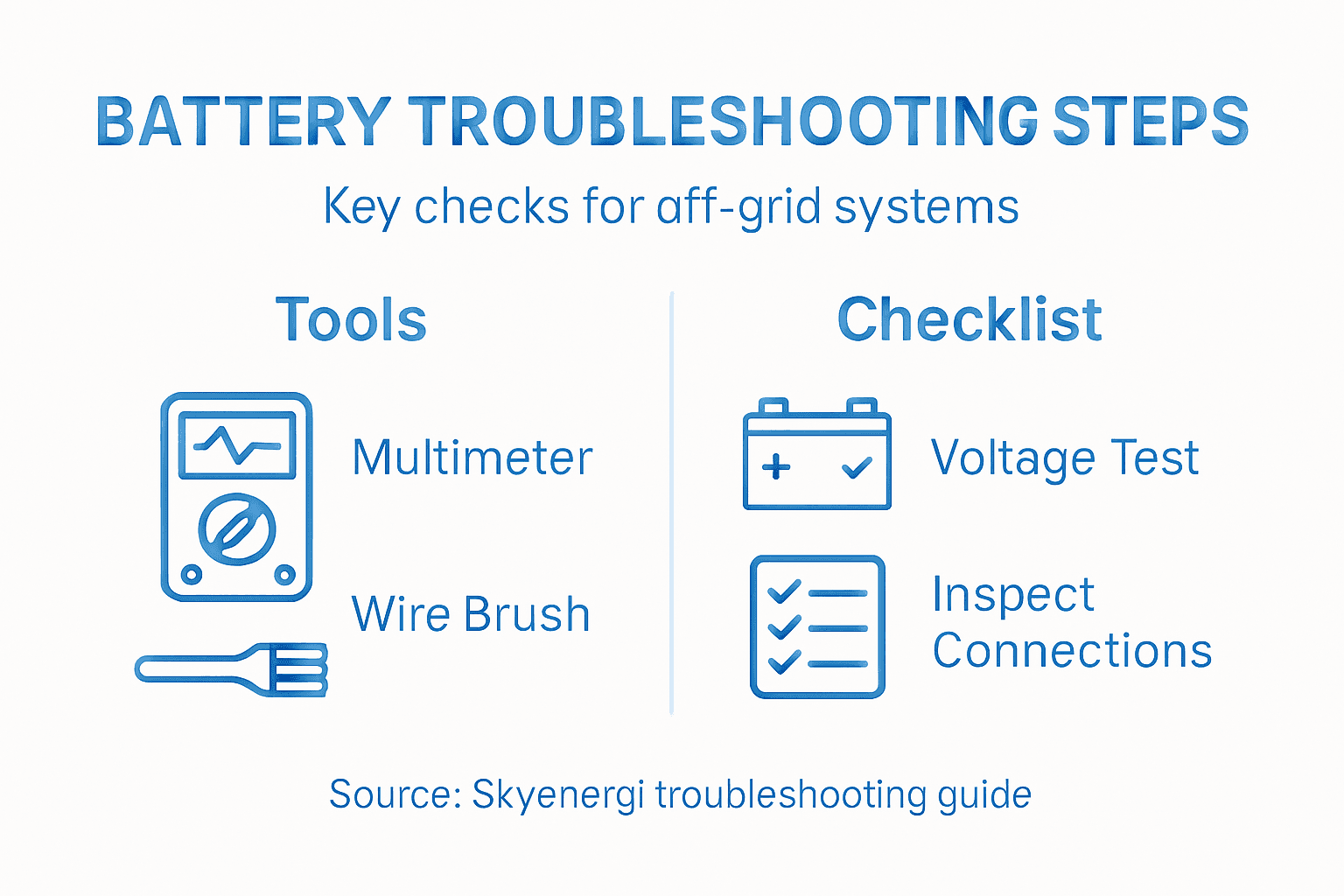
Your toolkit should include several key components to support effective battery system management. Essential diagnostic tools are fundamental for campervan owners seeking reliable energy solutions. Here’s what you’ll need:
- Multimeter: For precise voltage and current measurements
- Digital battery monitor: Tracks system performance in real-time
- Wire strippers and crimpers: Essential for electrical connections
- Insulated safety gloves: Protect against electrical hazards
- Safety goggles: Shield eyes during technical work
- Battery terminal cleaning brush: Maintains connection integrity
Before starting any battery system work, always prioritise personal safety. Ensure you have a clear, well-ventilated workspace and wear appropriate personal protective equipment. Disconnect power sources before performing any diagnostic or maintenance tasks.
Safety first: Never work on battery systems without proper protective gear and a thorough understanding of electrical systems.
Pro tip: Always keep a fire extinguisher rated for electrical fires nearby when working with battery systems, and maintain a basic first aid kit in your workspace.
Step 2: Identify battery symptoms and warning signs
Knowing how to recognise early warning signs of battery system failure is crucial for maintaining your campervan’s off-grid power reliability. Understanding these symptoms can help you prevent unexpected power disruptions and costly replacements.
Your battery system communicates potential issues through several key indicators. Deep-cycle battery failure signs reveal critical health markers that every off-grid enthusiast should monitor carefully. Watch for these primary warning signals:
- Rapid charge loss: Battery unable to hold charge for expected duration
- Slow recharge times: Significantly longer charging periods than normal
- Reduced runtime: Decreased operational time between charges
- Physical damage: Visible swelling, cracks, or battery case deformation
- Voltage instability: Inconsistent voltage readings during measurement
To diagnose potential battery issues, perform systematic checks using a reliable multimeter. Measure the battery’s resting voltage and conduct load testing to assess overall system health. Consistent voltage below manufacturer specifications typically indicates declining battery performance.

Here is a comparison of common battery faults and their likely causes:
| Warning Sign | Probable Cause | Suggested Action |
|---|---|---|
| Rapid charge loss | Battery cell degradation | Schedule battery testing |
| Physical case deformation | Overcharging or overheating | Inspect charger settings |
| Voltage instability | Loose wiring or corrosion | Clean and retighten |
| Reduced runtime | Age-related wear | Plan for replacement |
Warning: Battery system degradation can happen rapidly, so regular monitoring is essential for preventing complete system failure.
Pro tip: Keep a detailed log of battery performance metrics, tracking voltage, charge times, and runtime to establish a baseline for early problem detection.
Step 3: Test battery voltage and monitor system data
Understanding how to accurately test and monitor your campervan’s battery system is critical for maintaining optimal off-grid performance. This step will help you develop a systematic approach to tracking your battery’s health and detecting potential issues before they become serious problems.
Battery monitoring solutions provide crucial insights into your system’s real-time performance. When testing battery voltage, follow these essential steps:
- Use a digital multimeter: Measure voltage at battery terminals
- Check resting voltage: Test when no loads are connected
- Perform load testing: Simulate real-world power draw conditions
- Record consistent measurements: Track voltage over time
- Compare against manufacturer specifications: Identify potential degradation
To conduct a comprehensive voltage test, start by ensuring your battery has been at rest for at least six hours. Connect your multimeter to the battery terminals, observing correct polarity. A fully charged lithium battery typically shows a voltage between 13.2 and 13.6 volts. Any reading consistently below 12.8 volts indicates potential battery health issues that require further investigation.
Consistent monitoring prevents unexpected power failures and extends battery system lifespan.
Pro tip: Invest in a Bluetooth-enabled battery monitor that allows real-time tracking and historical data logging directly from your smartphone.
Step 4: Inspect connections and key system components
Ensuring the integrity of your battery system’s connections and components is vital for maintaining reliable off-grid power in your campervan. A thorough inspection can prevent potential system failures and extend the overall lifespan of your electrical setup.
Off-grid power system maintenance requires a systematic approach to checking critical electrical components. Pay close attention to these key areas during your inspection:
- Battery terminals: Check for corrosion and secure connections
- Wiring harnesses: Inspect for signs of wear, fraying, or damage
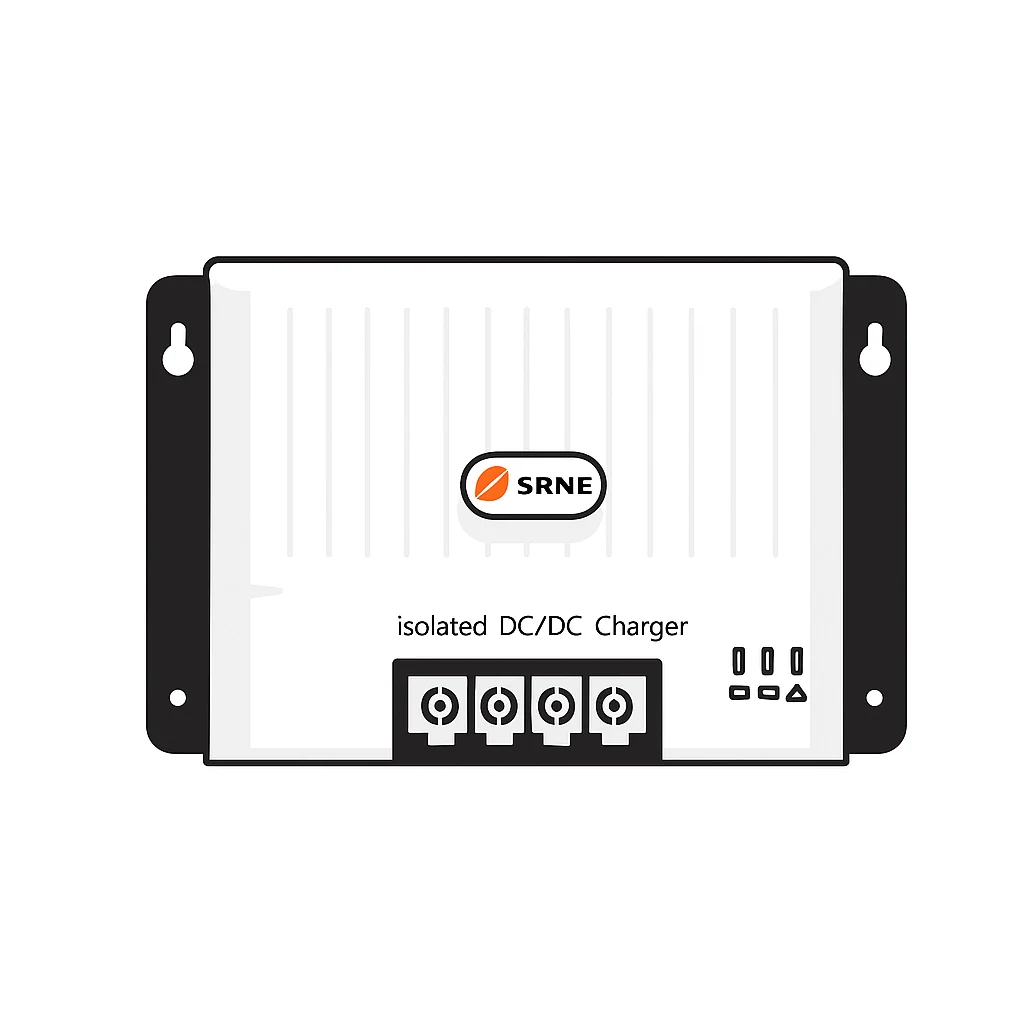
- Charge controller: Verify clean contacts and proper mounting
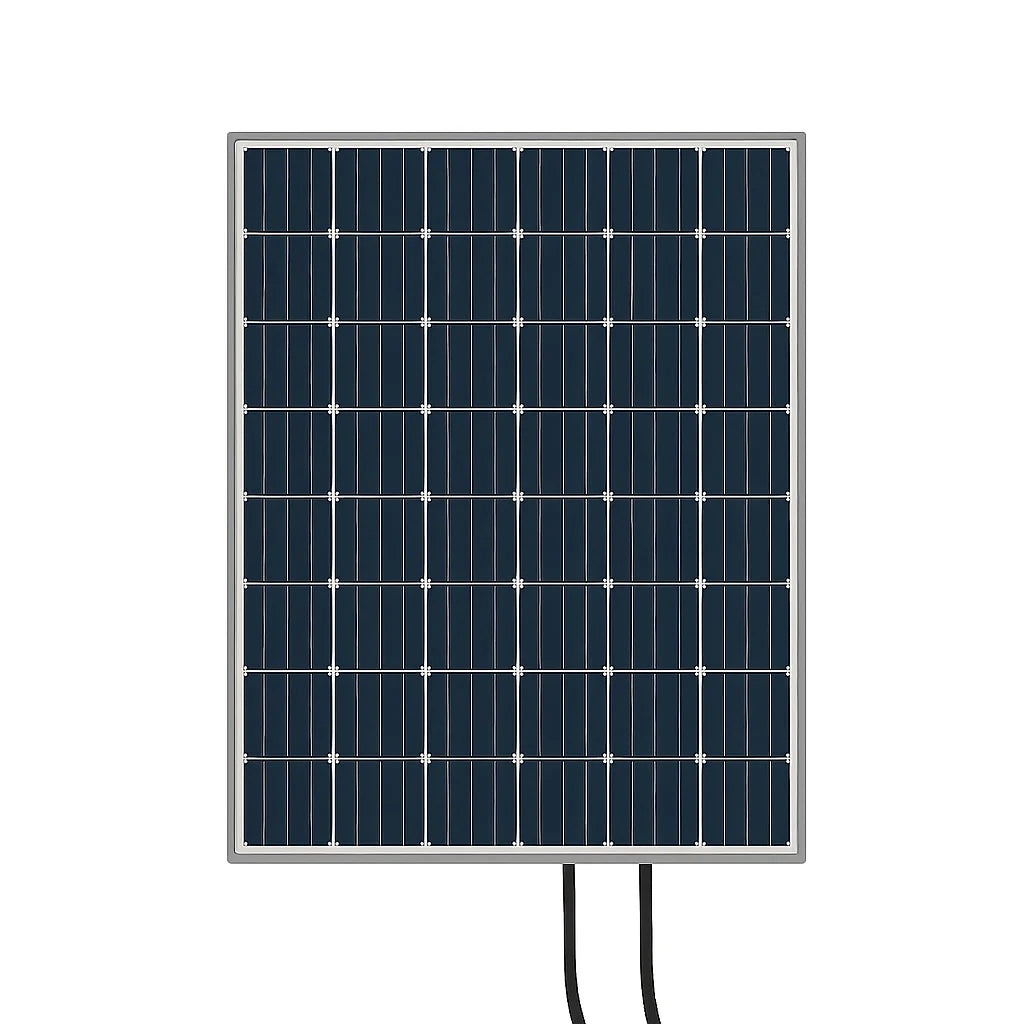
- Solar panel connections: Examine for loose or oxidised terminals
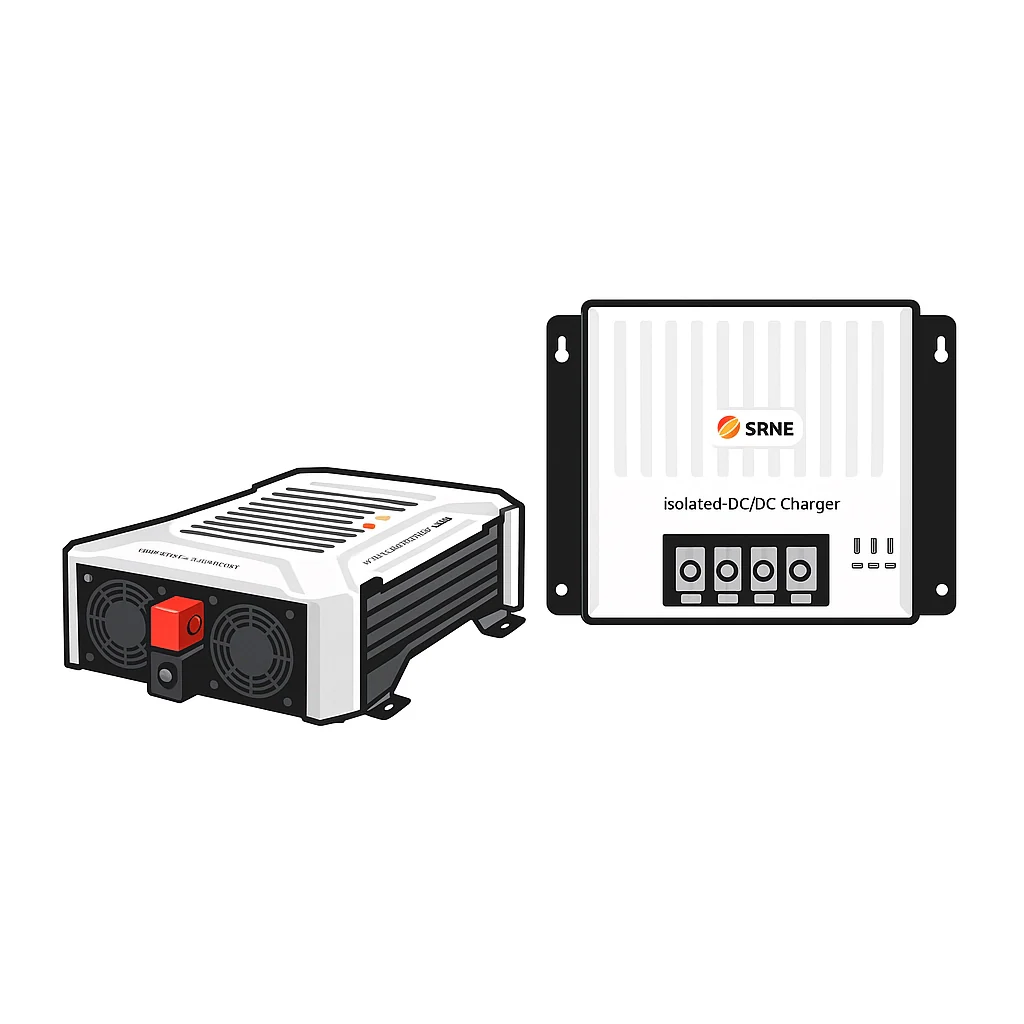
- Inverter: Look for any physical damage or overheating signs
Begin your inspection by disconnecting power sources and using a bright torch to illuminate each connection point. Look for telltale signs of wear such as green or white powdery corrosion on battery terminals, which indicates oxidation. Tighten any loose connections using appropriate tools, ensuring a clean and secure electrical pathway.
Systematic component inspection is your first line of defence against unexpected power system failures.
Pro tip: Keep a set of dielectric grease on hand to protect electrical connections from moisture and prevent future corrosion.
Step 5: Verify resolution with real-time performance checks
After addressing potential battery system issues, conducting comprehensive real-time performance checks is essential to confirm your troubleshooting efforts have successfully resolved the initial problems. This final verification step ensures your campervan’s electrical system operates at optimal efficiency.
To thoroughly validate system performance, implement a systematic approach of monitoring and cross-referencing multiple data points. Focus on these key verification metrics:
- Voltage stability: Check consistent voltage levels under different load conditions
- Charge cycle performance: Monitor complete charge and discharge cycles
- Temperature readings: Observe battery temperature during charging and discharging
- Energy transfer efficiency: Track power input and output rates
- System response time: Assess how quickly the battery system recovers from load changes
Utilise a Bluetooth-enabled battery monitoring device to track these parameters in real-time. Compare current performance against baseline measurements taken before your troubleshooting interventions. Look for improvements in voltage consistency, reduced temperature fluctuations, and more stable energy transfer.
The following table summarises key metrics for verifying off-grid battery system health:
| Metric | Why It Matters | Ideal Outcome |
|---|---|---|
| Voltage stability | Ensures reliable power delivery | Consistent within set range |
| Charge cycle efficiency | Indicates battery lifespan | High efficiency, minimal losses |
| Temperature behaviour | Prevents risk of overheating or damage | Moderate temperature fluctuations |
| Response to load change | Signals system responsiveness | Quick, stable voltage recovery |
Rigorous performance verification transforms troubleshooting from a reactive to a proactive maintenance strategy.
Pro tip: Create a digital log of performance checks, allowing you to track system health trends and identify potential future issues before they escalate.
Achieve Reliable Off-Grid Power with Skyenergi’s Expert Solutions
Troubleshooting battery systems effectively requires reliable, high-quality components and intelligent monitoring tools. If you often face challenges like rapid charge loss, voltage instability, or complex real-time performance checks, Skyenergi specialises in delivering advanced lithium battery systems crafted to enhance your off-grid experience. With integrated Bluetooth monitoring and robust battery management systems, our solutions help you detect and prevent issues before they impact your campervan or home energy setup.

Take control of your off-grid power today by exploring our range of lithium leisure batteries and smart charging accessories. Designed for seamless integration with your existing systems, our products ensure safety, reliability, and expandability. Discover how you can maintain optimal battery health and enjoy uninterrupted energy independence by visiting Skyenergi now.
Frequently Asked Questions
How can I identify if my off-grid battery system is failing?
To identify a failing off-grid battery system, look for symptoms such as rapid charge loss, slow recharge times, and reduced runtime. Regularly test your battery’s voltage and document any noticeable trends over time, aiming to identify potential issues early.
What tools should I use to troubleshoot my campervan battery system?
Essential tools for troubleshooting include a multimeter, digital battery monitor, and wire strippers and crimpers. Compile this toolkit to effectively diagnose and perform maintenance on your battery system.
How often should I test the voltage of my battery system?
You should test the voltage of your battery system at least once a month or when you notice any performance issues. Measure the resting voltage after the battery has been idle for six hours to get an accurate reading of its health.
What common issues should I inspect in my battery connections?
Inspect for corrosion at battery terminals, loose wiring, and signs of wear in charge controllers and inverter connections. Regularly clean terminals and secure connections to maintain optimal system performance and prevent unexpected failures.
How can I verify that my troubleshooting steps have worked?
To verify your troubleshooting effectiveness, monitor key metrics such as voltage stability and charge cycle performance over several days. Record these measurements and compare them against previous data to confirm improvement and ensure system reliability.
Recommended
Prev post

Expandable Energy Storage Systems: Off-Grid Power Made Simple
Updated on 31 January 2026
Next post

Bluetooth Battery Monitoring: Smarter Power On The Road
Updated on 29 January 2026


