





Top reasons to choose lithium for leisure vehicles
Discover the top reasons to choose lithium systems for your leisure vehicles. Unleash maximum power and reliability for your adventures!
TL;DR:
- Lithium systems provide 80 to 100% usable capacity, significantly higher than lead-acid batteries, enabling longer off-grid stays. They maintain stable voltage under heavy loads, protecting sensitive appliances and improving performance. With advanced BMS and built-in safety features, lithium batteries are increasingly the ideal choice for reliable, long-lasting off-grid power solutions.
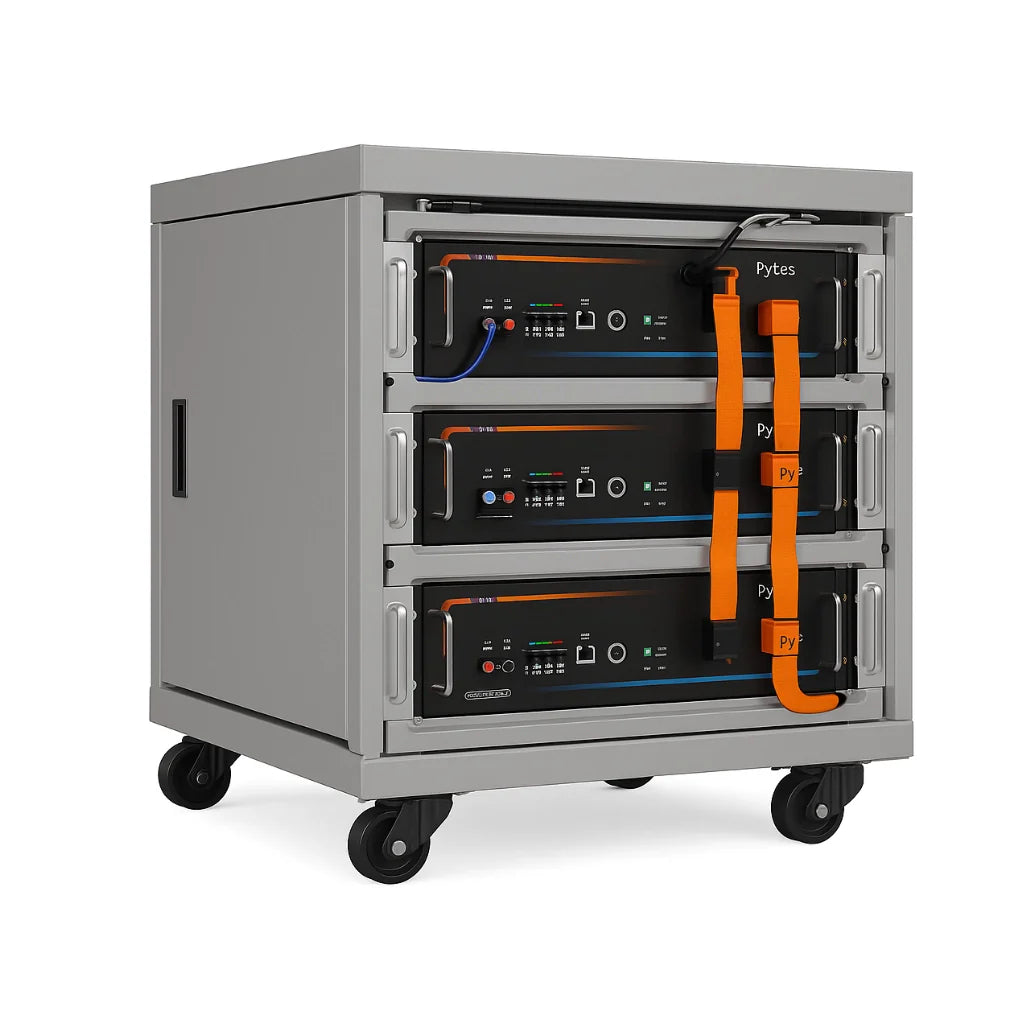
Running a motorhome, campervan, or boat on modern comforts demands serious power. Fridges, induction hobs, CPAP machines, laptops, heating systems, and EV-style USB charging all place significant loads on your leisure battery bank. Traditional lead-acid and AGM batteries, which once served these applications adequately, are increasingly exposed as the weak link in any off-grid setup. Lithium systems, particularly those using LiFePO4 chemistry, now offer a technically superior alternative that is reshaping how UK travellers approach energy independence.
Table of Contents
- Maximum usable power compared to traditional batteries
- Stable performance under heavy loads
- Built-in safety: Modern lithium chemistries and management
- Cold weather resilience and system innovations
- Lifespan and value: Making the investment pay off
- Our take: Why lithium is transforming off-grid leisure
- Power your adventures with expert lithium solutions
- Frequently asked questions
Key Takeaways
| Point | Details |
|---|---|
| High usable capacity | Lithium systems provide up to twice the usable power of lead-acid, enabling longer off-grid stays. |
| Consistent voltage output | Appliances run safely and reliably thanks to lithium batteries maintaining steady voltage until nearly empty. |
| Superior safety features | Advanced lithium chemistries with integrated BMS drastically reduce safety risks. |
| Cold climate resilience | Modern lithium solutions handle winter conditions well, especially when equipped with heaters. |
| Long-term value | Though more costly upfront, lithium batteries last many times longer, saving money over their lifespan. |
Maximum usable power compared to traditional batteries
With reliability in mind, it is important to consider how much usable power you can actually get from your battery system. This is where lithium immediately separates itself from the competition.
Usable capacity for lithium is 80 to 100% of rated amp-hours, compared to just 50% for lead-acid and AGM batteries. In practical terms, a 100Ah lithium battery delivers around 80 to 100Ah of genuine, usable energy. A 100Ah AGM battery, by contrast, safely delivers only 50Ah before voltage drops far enough to risk damaging the cells and shortening lifespan. To match a single 100Ah lithium unit, you would need two 100Ah AGM batteries. That means double the weight, double the cost at replacement, and double the space consumed in your vehicle or boat.
Usable capacity comparison
| Battery type | Rated capacity | Usable capacity | Effective weight (per 100Ah usable) |
|---|---|---|---|
| Lead-acid | 100Ah | ~50Ah | Very high |
| AGM | 100Ah | ~50Ah | High |
| LiFePO4 lithium | 100Ah | 80 to 100Ah | Low |
The advantages for off-grid use are direct and measurable:
- Longer stays away from hook-up without needing to recharge
- More reliable operation of fridges, heaters, and entertainment systems
- Fewer charge cycles per trip, reducing wear on the battery
- Smaller, lighter battery bank for the same energy availability
When you are parked overnight in a remote spot in Scotland or anchored in a quiet estuary, this difference between 50Ah and 100Ah of usable power is the difference between running your fridge all night and waking to warm food. Understanding this gap is one of the primary reasons many vehicle owners researching choosing lithium over lead acid make the switch. A full lithium vs lead-acid comparison also reveals weight savings of up to 50%, which improves vehicle handling and fuel efficiency. Keeping an eye on lithium battery trends shows that costs continue to fall, making this a highly competitive option for 2026 builds.
Stable performance under heavy loads
Beyond sheer capacity, how the battery maintains its output also matters, especially when running multiple or power-hungry appliances simultaneously.
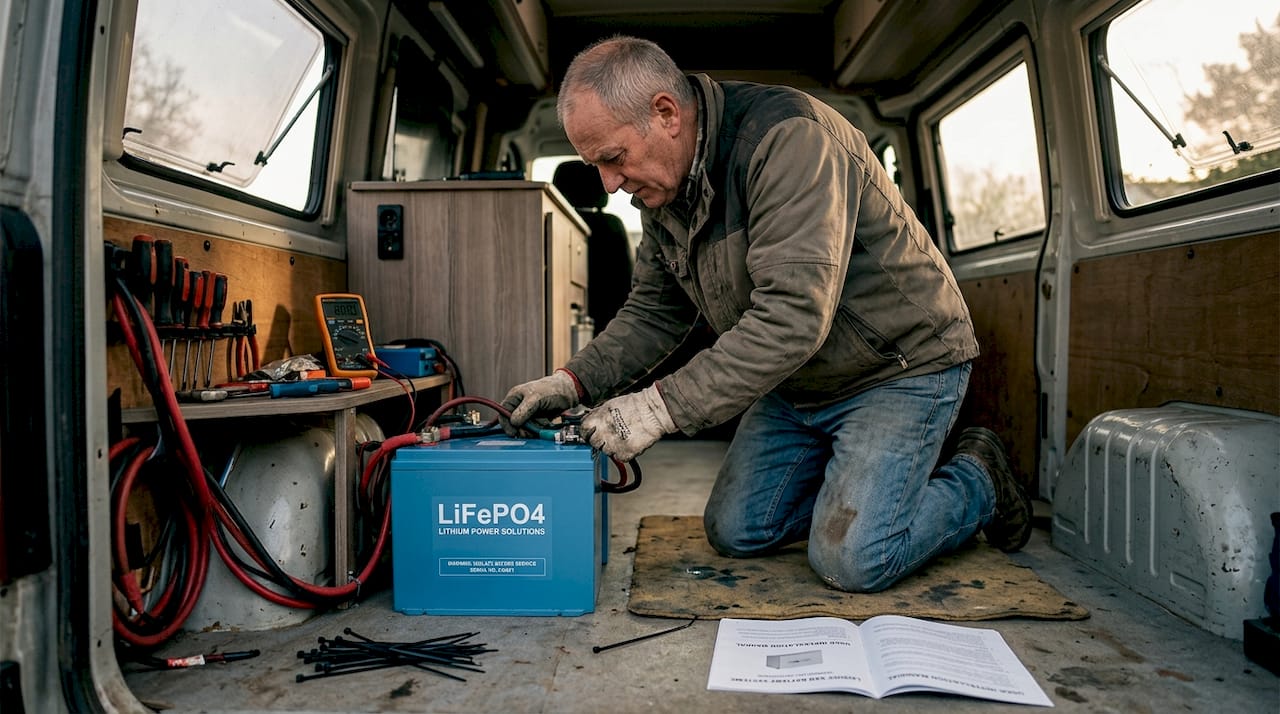
Lead-acid batteries exhibit a well-known behaviour called voltage sag. As the battery discharges or faces high current demand, the terminal voltage drops noticeably. This creates problems for sensitive electronics and appliances that require a stable input to operate correctly. A microwave running from a sagging battery may not reach full power. A fridge compressor struggling with low voltage draws excess current, generating heat and wearing out faster. The cumulative effect on your equipment can be significant over a season of use.
Lithium batteries behave very differently. Voltage stays stable under load until the battery is nearly fully depleted, making them far better for demanding appliances. This flat discharge curve is one of the defining lithium battery features that separates them from AGM and gel alternatives.
Key benefits of stable voltage delivery:
- Microwaves and kettles receive consistent power without performance loss
- Fridge compressors operate at rated efficiency, extending their service life
- Inverters produce cleaner AC output due to stable DC input
- Electronics and chargers are protected from harmful voltage fluctuations
- The overall battery bank can be sized more accurately without oversizing buffers
“A lithium battery will power your appliances at full efficiency right up to the point of discharge, whereas a lead-acid battery starts compromising performance well before it reaches its rated limit.”
Pro Tip: If you regularly run high-draw appliances like a 2kW fan heater or a coffee machine through an inverter, size your lithium bank to handle peak draw of at least 1C (equal to the rated Ah). Many 100Ah LiFePO4 units support continuous 100A discharge, which comfortably powers most inverters up to 1000W without stress.
Built-in safety: Modern lithium chemistries and management
Performance is important, but peace of mind comes from knowing your system is safe and protected against failures. Early concerns about lithium battery safety were largely based on older cobalt-based chemistries used in consumer electronics, not the LiFePO4 chemistry standard in leisure applications today.
LiFePO4 is specifically chosen for safety, offering no thermal runaway risk, with BMS technology preventing overcharge and overheating, and modern units directly addressing the fire safety concerns of earlier lithium types. LiFePO4 (lithium iron phosphate) has an inherently stable molecular structure that does not release oxygen when overheated, removing the primary trigger for battery fires. In real-world terms, this chemistry tolerates abuse far better than alternatives.
The Battery Management System, commonly called the BMS, adds another critical layer of protection. Understanding the role of the BMS in energy storage helps clarify why it is considered non-negotiable in any serious lithium installation.
A quality BMS monitors and controls:
- Overcharge protection: Disconnects charge input when cell voltage exceeds safe limits
- Over-discharge protection: Cuts load before cells are damaged by excessive depletion
- Overcurrent protection: Limits current to safe levels during high-demand events
- Temperature monitoring: Reads cell and battery temperature via integrated sensors
- Cell balancing: Keeps individual cells at equal voltage to maximise capacity and lifespan
- Auto-disconnect: Isolates the battery from both charge and load circuits under fault conditions
The practical outcome of understanding why battery management systems matter is simple: a well-specified BMS means the battery protects itself without requiring constant attention from the user. Many Skyenergi lithium products include Bluetooth-enabled BMS units, allowing you to monitor cell voltages, temperature, state of charge, and cycle count directly from a smartphone app. This transparency is valuable for diagnosing issues early and for understanding how your system performs across different conditions.
Pro Tip: Always verify that the BMS fitted to your lithium battery is rated for the maximum charge current your charger or MPPT controller can deliver. A mismatch here is one of the most common installation errors and can reduce battery lifespan even without causing an immediate failure. Exploring further into lithium battery life and BMS is worthwhile before specifying your system.
Cold weather resilience and system innovations
Safety and reliable power are not just about the battery chemistry, but also about handling the UK’s unpredictable weather. Winter camping, boat liveaboards, and autumn festivals all raise a specific challenge: cold temperatures.
Standard lithium batteries will power loads in sub-zero conditions without difficulty. However, charging is blocked below 0°C by the BMS in most standard units, with some premium models incorporating built-in heaters to allow safe cold-weather charging. Charging lithium cells below freezing causes lithium plating on the anode, a form of internal damage that permanently reduces capacity and raises safety risk. The BMS prevents this automatically, but it also means your solar panels or vehicle alternator will not top up the battery until temperatures rise.
Temperature performance comparison
| Condition | Lead-acid AGM | Standard LiFePO4 | Heated LiFePO4 |
|---|---|---|---|
| Discharging at 0°C | Reduced capacity | Full capacity | Full capacity |
| Charging at 0°C | Possible (slow) | Blocked by BMS | Allowed (heater active) |
| Charging at -10°C | Very slow | Blocked | Allowed (heater active) |
| Discharging at -20°C | Severely reduced | Slightly reduced | Slightly reduced |
Practical considerations for UK winter use:
- Park the vehicle where morning sun will warm the battery compartment before charging begins
- Use a DC-to-DC charger with a temperature sensor input to avoid sending charge when conditions are too cold
- Consider a heated LiFePO4 model if you regularly camp through October to March or if the battery is located in an exposed external locker
- MPPT solar charge controllers with temperature compensation will pause input charge automatically when paired with a BMS alert
Reviewing your lithium battery maintenance workflow before winter is a straightforward step that prevents the most common cold-weather issues. Selecting reliable lithium battery features from the outset, including built-in heating if appropriate, saves complications later.
Lifespan and value: Making the investment pay off
Getting the best technology is not just about better features today, but also about value that lasts into tomorrow.
Lithium leisure batteries typically deliver between 2,000 and 5,000 full charge cycles at 80% depth of discharge, depending on the specific chemistry and build quality. A standard lead-acid leisure battery provides roughly 300 to 500 full cycles before capacity degrades meaningfully. At typical usage rates for a motorhome or campervan, this translates to a lithium battery lasting seven to twelve years compared to two to three years for lead-acid alternatives. When you factor in replacement costs, the higher upfront price of lithium becomes a straightforward financial decision.
Consider this sequence of long-term value factors:
- Fewer replacements: One quality lithium unit may outlast three or four lead-acid batteries over the same period
- Reduced generator dependency: More usable capacity means less need to run a noisy, fuel-consuming generator to supplement power
- Lower weight: Lighter battery banks reduce fuel consumption over thousands of miles of travel
- Faster recharging: Lithium batteries accept higher charge currents and reach full capacity significantly faster than AGM, reducing time on hook-up
- Maintained capacity: Rated capacity being 80 to 100% usable throughout the battery’s life, rather than the shrinking usable capacity seen as lead-acid ages
Pro Tip: When calculating the total cost of ownership, include the cost of generator fuel across the lifetime of the battery. Many van lifers who switch to lithium find they eliminate generator use entirely during summer months and significantly reduce it in winter. This saving alone frequently justifies the upgrade within two to three years.
The wider benefits of lithium for off-grid living extend to improved quality of life on the road, from consistent heating to uninterrupted work and entertainment. Consulting an expert lithium battery comparison helps narrow down which specification suits your exact usage pattern.
Our take: Why lithium is transforming off-grid leisure
Having covered the concrete reasons, here is perspective shaped by years of supporting off-grid enthusiasts across the UK.
Conventional wisdom for a long time held that AGM batteries were good enough for most leisure vehicle applications. For infrequent weekenders with modest demands, that was arguably true. But the leisure vehicle landscape has changed substantially. People now work remotely from campervans for weeks at a time. Liveaboards run full domestic appliance setups from their boat banks. Motorhome travellers expect the same creature comforts they have at home, without needing a campsite hook-up to achieve them.
What we have found consistently is that the real-world performance gap between lithium and legacy batteries is larger than the specifications suggest. The numbers show double the usable capacity. The reality is that this capacity is available immediately on demand, without voltage sag, without degradation across the cycle, and without the careful management that AGM batteries require. Users who switch to lithium frequently report that their entire relationship with off-grid power changes. They stop rationing energy. They stop scheduling appliance use around state-of-charge anxiety.
Tracking energy independence trends across the UK market confirms this shift is accelerating. Lithium is not a premium add-on anymore. For anyone planning a serious off-grid setup, it is the logical starting point.
Power your adventures with expert lithium solutions
Ready to take the next step towards reliable off-grid comfort? Skyenergi supplies a carefully selected range of lithium systems designed specifically for UK leisure vehicles, from compact campervan setups to full marine installations.
For those building or upgrading a complete off-grid energy system, the solar panel and MPPT charge controller kit from Skyenergi pairs a high-performance solar panel with a Victron Smart MPPT controller for efficient, regulated charging in any UK weather conditions. For a fully integrated solution, the solar and inverter complete system kit combines a 3kVA inverter charger, battery-to-battery charger, and monitoring into a single turnkey package. Both options are designed for straightforward installation and long-term reliability, sourced directly from quality manufacturers to deliver excellent value.
Frequently asked questions
Can I replace lead-acid batteries with lithium in my motorhome without rewiring?
Most modern lithium leisure batteries are designed as direct drop-in replacements for lead-acid units, but you should always verify compatibility with your existing charger, split relay, and wiring gauge before switching.
How do lithium batteries handle winter camping in the UK?
Lithium batteries can power appliances effectively in freezing temperatures, but charging is blocked below 0°C by the BMS unless the battery includes a built-in heater designed for cold-weather charging.
Is a Battery Management System (BMS) necessary for lithium leisure batteries?
Yes, a BMS is essential. LiFePO4 with BMS protection actively prevents overcharge, over-discharge, and overheating, ensuring safe long-term operation across the battery’s full service life.
How long do lithium leisure batteries last compared to lead-acid?
Lithium batteries typically deliver 2,000 to 5,000 cycles reliably, with 80 to 100% usable capacity maintained throughout, substantially outlasting lead-acid alternatives which offer around 300 to 500 cycles before meaningful degradation.
Are lithium batteries safe to use inside a vehicle or boat?
Modern LiFePO4 lithium batteries are safe for enclosed installations. LiFePO4 chemistry with BMS safeguards eliminates thermal runaway risk and keeps fire risk far lower than older lithium chemistries or poorly managed setups.
Recommended
Prev post

BMS in campervans: your guide to energy independence
Updated on 12 May 2026
Next post

Marine energy storage explained: off-grid boating guide
Updated on 10 May 2026


