






Why Use Lithium Leisure Batteries in Campervans
Why use lithium leisure batteries for UK campervans? Discover benefits, real-world savings, system requirements and how they outperform lead-acid models.
Most British campervan owners face unpredictable power needs when venturing off the beaten track, and outdated battery technology only makes things tougher. Upgrading to a high-performance lithium leisure battery can mean the difference between constant worry and genuine off-grid freedom. With up to 60 percent less weight and triple the lifespan compared to traditional batteries, British travellers gain reliable energy management, safer journeys, and the confidence to explore further without compromise.
Table of Contents
- What Is A Lithium Leisure Battery?
- Different Battery Types For Campervans
- How Lithium Batteries Outperform Lead-Acid
- Weight, Capacity, And Cost Comparison
- Real Benefits For Uk Campervan Owners
- Installation, Compatibility, And Safety Tips
Key Takeaways
| Point | Details |
|---|---|
| Lithium Leisure Batteries are Superior | Lithium leisure batteries offer enhanced performance, durability, and significant weight reduction compared to lead-acid batteries. |
| Long-Term Investment | Despite a higher initial cost, lithium batteries provide longer lifespans and reduced maintenance costs, making them economically beneficial for campervan owners. |
| Installation Needs Caution | Proper installation is crucial for safety and compatibility; owners should consult professional services to ensure compliance with regulations. |
| Consider Power Requirements | Evaluate specific energy needs of your campervan before selecting a lithium battery to optimise performance and compatibility. |
What Is a Lithium Leisure Battery?
A lithium leisure battery is a specialised power storage device designed specifically for mobile applications like campervans, providing reliable and efficient electrical energy. Unlike traditional lead-acid batteries, these advanced power units use lithium-ion technology to deliver superior performance in recreational vehicles.
These batteries operate through an intricate electrochemical process where lithium ions shuttle between electrodes during charge and discharge cycles. They feature a carbon-based anode and a lithium metal oxide cathode with an organic electrolyte, enabling them to store substantial energy in an incredibly compact space. This unique construction allows campervan owners to access high-voltage and high-energy-density power sources that are significantly lighter and more efficient than conventional battery technologies.
Lithium leisure batteries are specifically classified and tested for motorhome and caravan applications in the United Kingdom. They come in various capacities and life cycle ratings, making them adaptable to different campervan usage scenarios. Whether you require consistent power for off-grid adventures or need reliable electrical support during travels, these batteries provide a robust solution for modern leisure vehicle enthusiasts.
Pro Tip: Always verify the specific power requirements of your campervan electrical systems before selecting a lithium leisure battery to ensure optimal compatibility and performance.
Different Battery Types for Campervans
Campervan battery technologies vary significantly, with two primary types dominating the market: lead-acid and lithium-based batteries. Understanding the nuanced differences between these battery types is crucial for making an informed decision about your leisure vehicle’s power system.
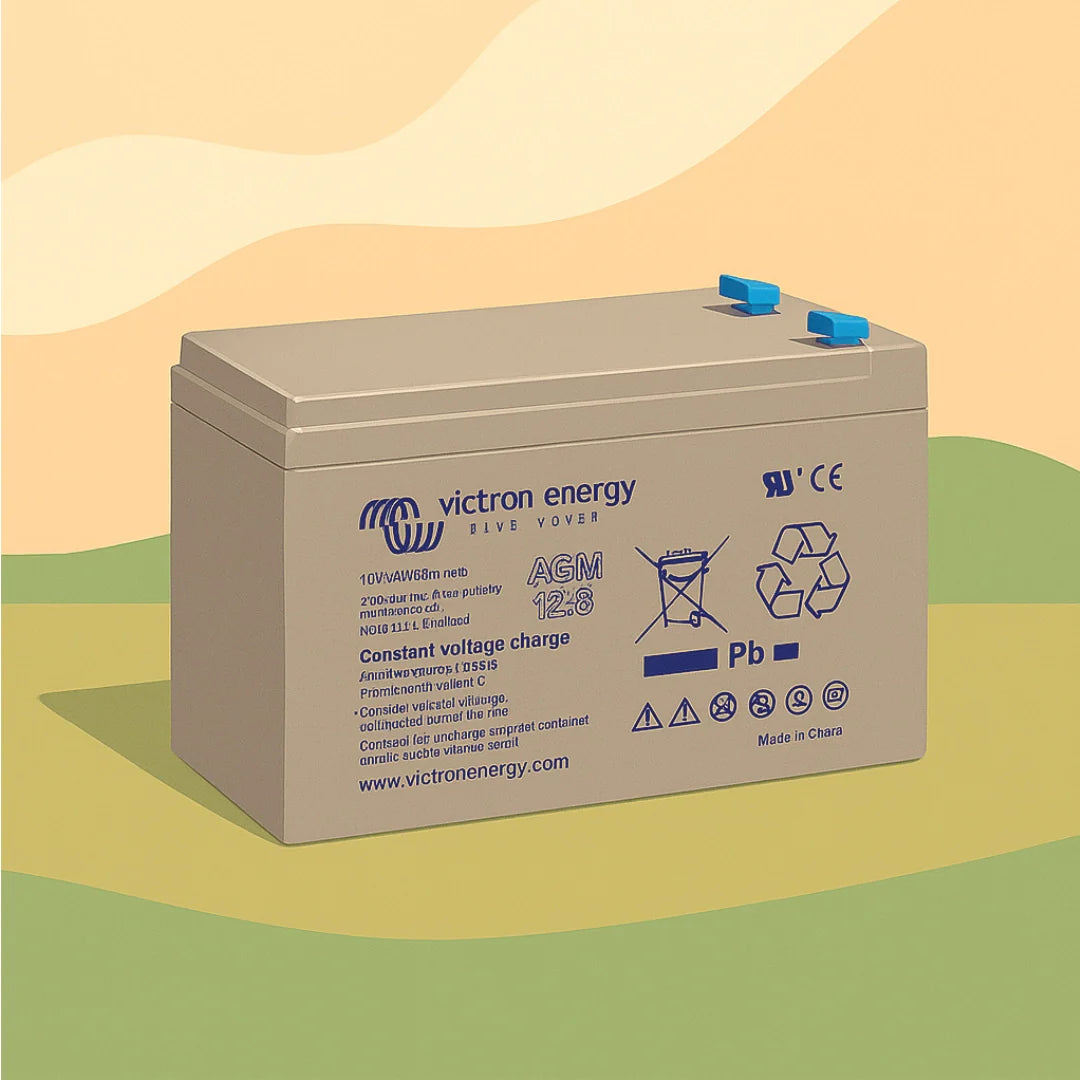
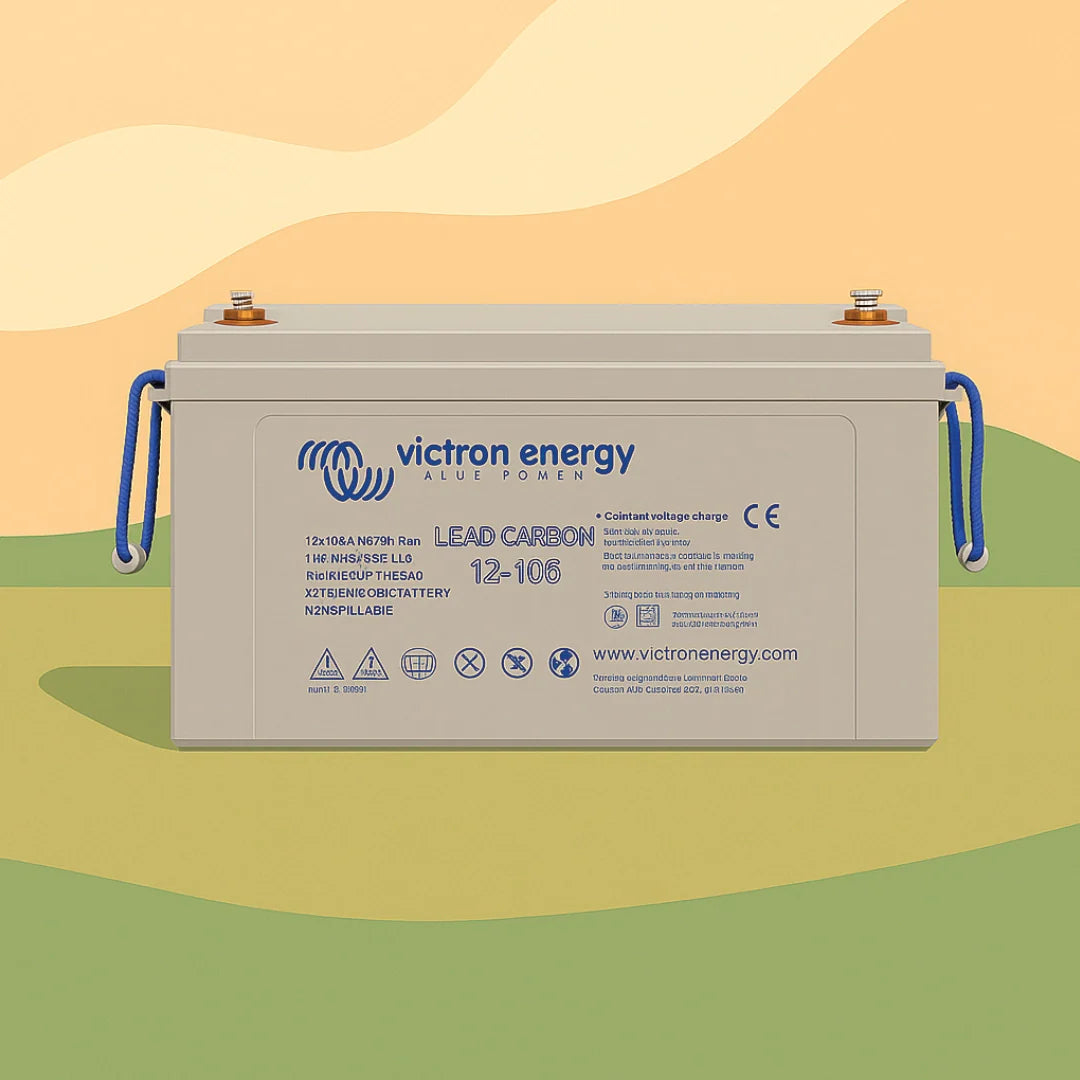
Traditional lead-acid batteries have been the standard for many years, offering a more affordable upfront cost. These batteries are heavier and provide lower usable capacity compared to modern alternatives. Campervans and motorhomes built to UK and European standards integrate these batteries according to strict manufacturing specifications, ensuring safety and compatibility with existing electrical systems.
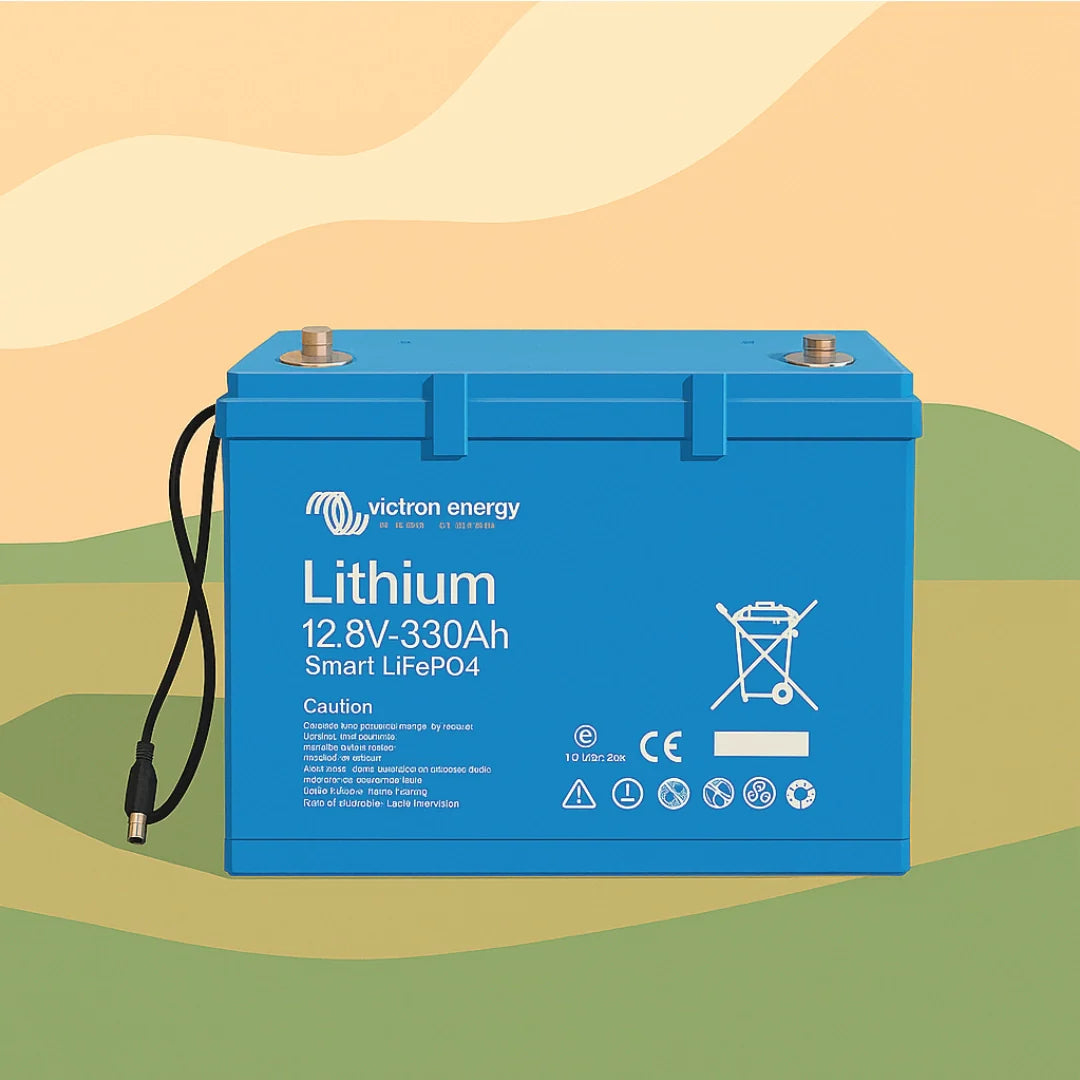
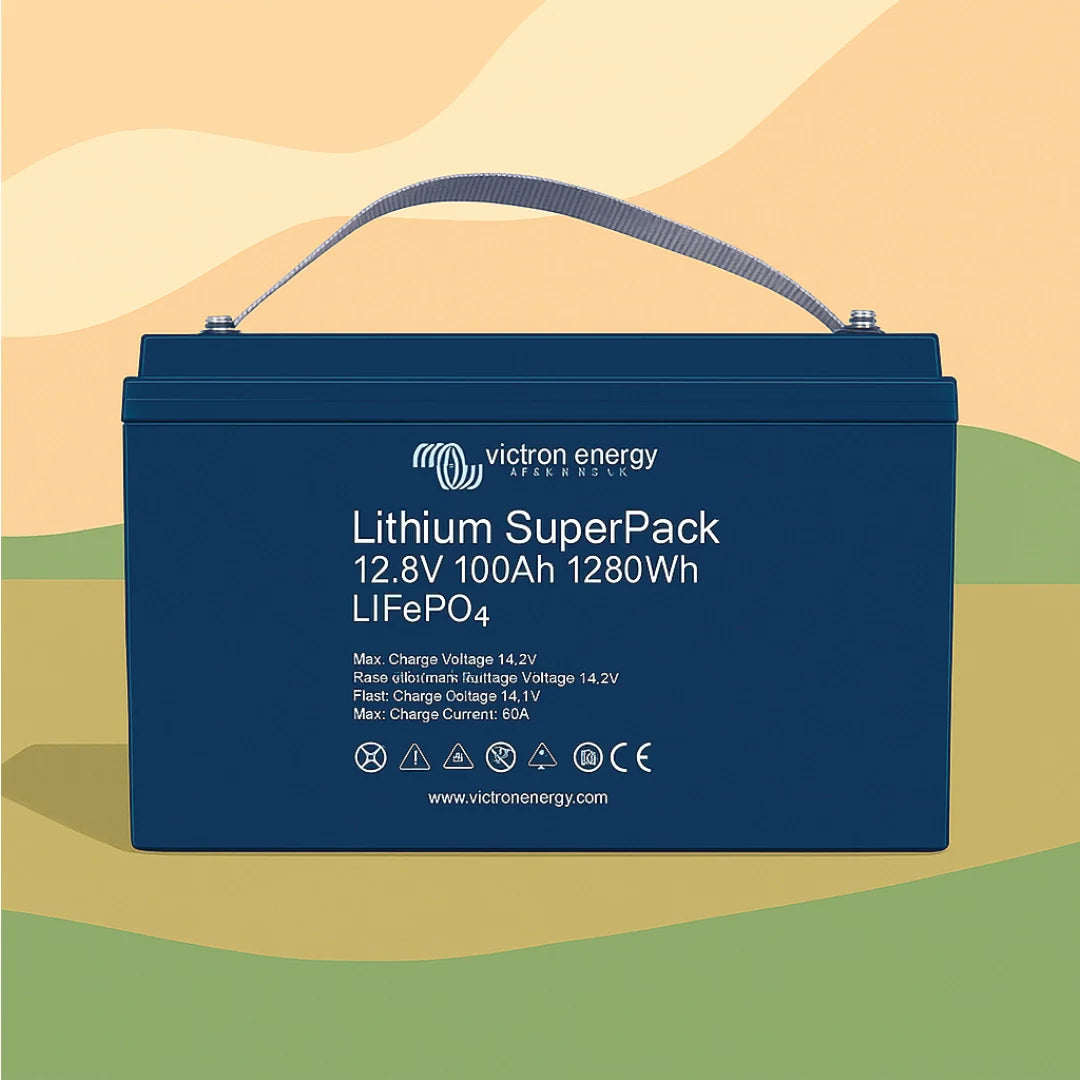
Lithium batteries, by contrast, represent a significant technological advancement in campervan power solutions. They offer superior energy density, dramatically reduced weight, faster charging times, and substantially longer operational lifecycles. While initially more expensive, these batteries provide remarkable benefits for serious campervan enthusiasts who prioritise performance and efficiency. Modern leisure vehicles increasingly favour lithium technology due to its ability to deliver consistent power output and support more sophisticated electrical requirements.
Comparing the two battery types reveals clear advantages and trade-offs. Lead-acid batteries remain budget-friendly but compromise on weight and performance, whereas lithium batteries deliver exceptional energy management at a higher initial investment. The choice ultimately depends on individual campervan usage patterns, budget constraints, and specific power requirements.
To help illustrate the practical differences, here is a concise comparison of lead-acid and lithium leisure batteries:
| Attribute | Lead-Acid Battery | Lithium Leisure Battery |
|---|---|---|
| Weight | Heavy, reduces payload | Lightweight, increases payload |
| Usable Capacity | About 50% of rated value | Up to 80% of rated value |
| Lifespan | 300–500 cycles | 2,000–3,000 cycles |
| Initial Cost | Relatively low | Higher upfront investment |
| Maintenance | Requires regular checks | Minimal, automated with BMS |
Pro Tip: Consider your typical campervan usage patterns and electrical demands carefully before selecting a battery type, as the right choice can significantly enhance your overall travel experience and vehicle performance.
How Lithium Batteries Outperform Lead-Acid
Lithium batteries represent a quantum leap in power storage technology for campervans, offering multiple critical advantages over traditional lead-acid alternatives. Advanced battery chemistry enables these power units to deliver superior performance across several key metrics, transforming the electrical capabilities of modern leisure vehicles.
The most significant performance differentiator is energy density. Lithium batteries can store substantially more power in a considerably lighter package, which means campervan owners gain extra usable capacity without adding excessive weight. Traditional lead-acid batteries suffer from significant mass and volume limitations, whereas lithium technologies leverage innovative intercalation electrodes that allow lithium ions to move more efficiently, resulting in enhanced charge retention and dramatically extended operational lifecycles.
Another crucial advantage lies in lithium batteries’ remarkable durability and consistent performance. Unlike lead-acid batteries, which experience rapid performance degradation and suffer from issues like sulfation, lithium variants maintain stable power output throughout their lifecycle. Specifically, lithium iron phosphate (LFP) cathode technologies provide enhanced safety profiles and substantially longer cycle lives, making them particularly attractive for discerning campervan enthusiasts who demand reliable, long-lasting power solutions.
The economic argument for lithium batteries becomes increasingly compelling when considering their extended lifespan and reduced maintenance requirements. While initial investment costs are higher, the long-term benefits of reduced replacements, superior energy efficiency, and enhanced performance make lithium batteries a smart choice for serious campervan owners seeking optimal electrical reliability.
Pro Tip: Invest in a battery management system to maximise the performance and longevity of your lithium leisure battery, ensuring you extract maximum value from your power investment.
Weight, Capacity, and Cost Comparison
Lithium leisure batteries present a transformative solution for campervan power systems, with remarkable advantages in weight, capacity, and long-term economic performance. Verified UK leisure battery data demonstrates significant performance differences between battery technologies, challenging traditional assumptions about power storage solutions.

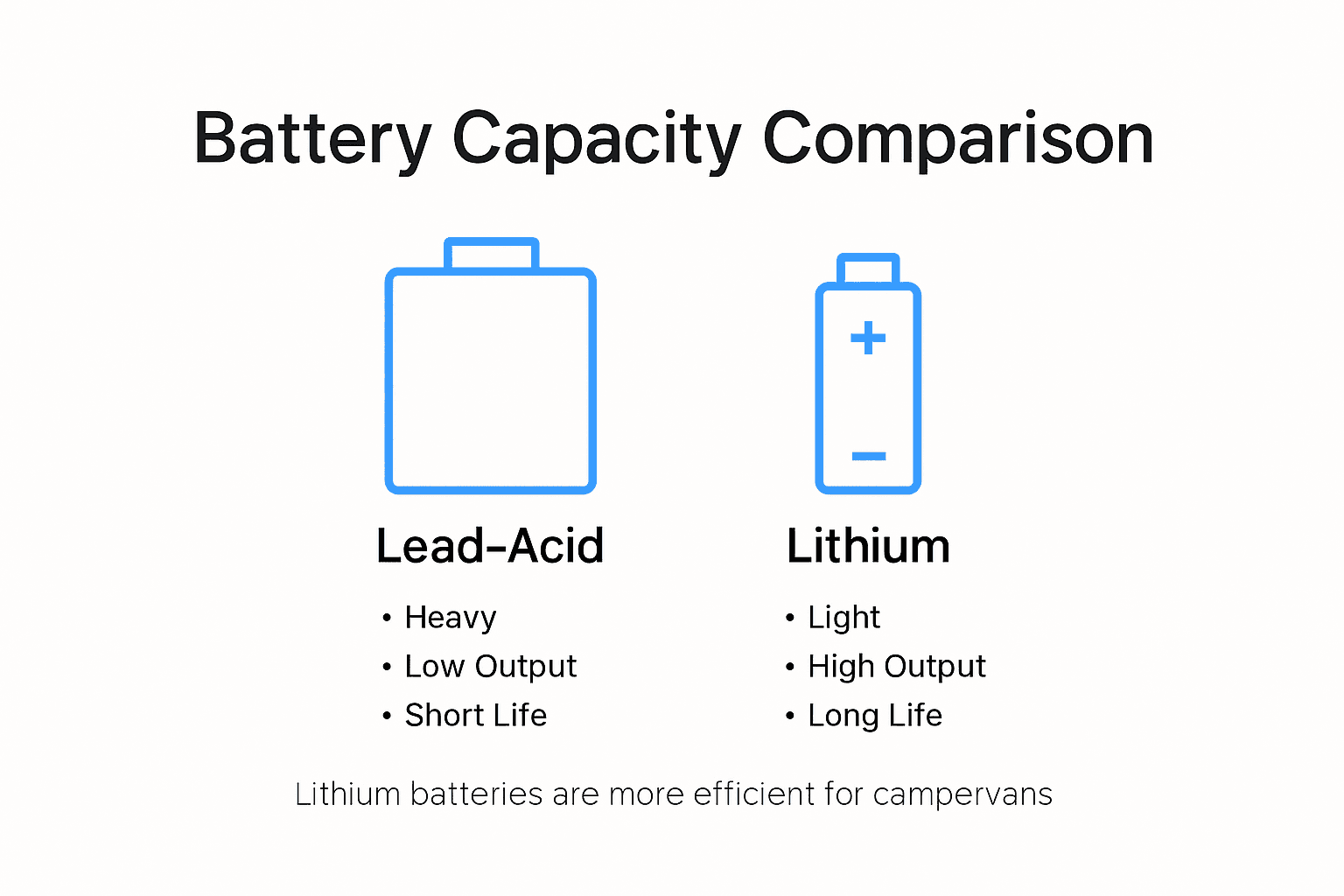
The weight advantage of lithium batteries is particularly striking. Due to lithium’s inherently low density, these batteries offer substantially lighter power solutions compared to lead-acid alternatives. A lithium battery can provide equivalent or superior power capacity while reducing overall vehicle weight by up to 60%, which translates directly into improved fuel efficiency and increased payload capacity for campervan owners. This weight reduction becomes critically important for travellers seeking to maximise their vehicle’s performance and range.
Capacity metrics further distinguish lithium batteries as a superior technology. Where traditional lead-acid batteries provide limited usable capacity and suffer rapid performance degradation, lithium variants maintain consistent power output throughout their lifecycle. Most lithium batteries can be discharged to 80% of their total capacity without compromising longevity, compared to lead-acid batteries which typically recommend only 50% discharge to prevent permanent damage. This effectively means campervan owners gain more reliable and extensive power resources with lithium technologies.
Initial cost remains the primary hesitation for many buyers, with lithium batteries demanding a higher upfront investment. However, the total cost of ownership tells a compelling alternative narrative. Lithium batteries typically offer three to five times longer operational lifecycles compared to lead-acid counterparts, meaning fewer replacements and reduced maintenance expenses over time. Technological advancements and increasing production scales are also progressively driving down lithium battery prices, making them an increasingly attractive long-term investment for discerning campervan enthusiasts.
Pro Tip: Calculate your specific energy requirements and compare total lifecycle costs, not just initial purchase price, when selecting a leisure battery for your campervan.
Real Benefits for UK Campervan Owners
Lithium leisure batteries offer transformative advantages specifically tailored to the unique needs of British campervan enthusiasts. UK-verified battery data demonstrates these technologies provide exceptional performance for recreational vehicle owners, addressing critical challenges faced during travel and off-grid adventures.
One primary benefit is enhanced reliability in challenging British weather conditions. Lithium batteries maintain consistent performance across temperature variations, crucial for campervan owners traversing unpredictable UK landscapes. Their superior energy density means travellers can sustain electrical systems during extended trips through remote countryside, national parks, and coastal regions without worrying about power interruptions. This reliability becomes paramount when exploring regions with limited electrical infrastructure or during extended wild camping experiences.
Safety represents another significant advantage for UK campervan owners. Modern lithium batteries incorporate advanced management systems that mitigate risks associated with overcharging, temperature fluctuations, and potential electrical failures. These integrated safety mechanisms provide peace of mind, particularly important given the UK’s stringent electrical safety regulations. The compact, lightweight nature of lithium batteries also contributes to improved vehicle handling and fuel efficiency, delivering practical benefits beyond mere power storage.
Economically, lithium batteries present a compelling long-term investment for British campervan owners. Despite higher initial costs, their extended lifecycle, reduced maintenance requirements, and superior performance translate into significant savings over time. UK travellers can expect fewer battery replacements, more dependable power systems, and greater flexibility in off-grid adventures, making lithium leisure batteries an increasingly attractive option for discerning recreational vehicle enthusiasts.
Pro Tip: Consult with a professional about your specific campervan electrical requirements to select the most appropriate lithium battery configuration for your travel needs.
Installation, Compatibility, and Safety Tips
Lithium leisure battery installation demands meticulous attention to ensure optimal performance and safety in campervans. Comprehensive safety protocols are essential when handling and integrating these advanced power storage systems, requiring careful consideration of multiple technical and environmental factors.
Compatibility represents a critical first step in lithium battery integration. Campervan owners must carefully assess their existing electrical infrastructure, ensuring the new battery system matches voltage requirements, charging protocols, and mounting configurations. This involves consulting manufacturer specifications, potentially upgrading existing converters or charging systems, and verifying that battery management systems are fully compatible with the campervan’s electrical architecture. Professional assessment can prevent potential electrical complications and ensure seamless system performance.
Safety considerations extend far beyond initial installation. Proper battery placement is paramount – batteries should be mounted in well-ventilated, non-combustible areas away from direct heat sources and potential physical impact zones. Electrical connections must be professionally secured, with robust protection against short-circuiting and potential moisture ingress. Regular maintenance involves monitoring battery temperature, checking connection integrity, and ensuring no physical damage occurs during travel. Owners should invest in robust battery management systems that provide real-time monitoring and early warning indicators for potential electrical irregularities.
Additionally, UK campervan owners must adhere to specific regulatory standards when installing lithium batteries. This includes using only certified components, following manufacturer guidelines precisely, and maintaining comprehensive documentation of installation processes. Understanding proper charging protocols, avoiding complete discharge, and using only manufacturer-approved charging equipment are crucial steps in maintaining battery longevity and safety.
The following table highlights key considerations for safe and compliant lithium leisure battery installation in UK campervans:
| Installation Factor | Why it Matters | Recommended Practice |
|---|---|---|
| Battery Placement | Safety and ventilation | Mount in cool, dry location |
| System Compatibility | Avoids faults or failures | Match voltage and charging systems |
| Regulatory Compliance | Legal and insurance requirements | Use certified components, keep records |
| Maintenance Approach | Ensures reliability | Monitor connections, protect from impact |
Pro Tip: Always have your lithium leisure battery installation professionally inspected and documented to ensure compliance with UK vehicle electrical safety regulations.
Unlock the Full Potential of Your Campervan with Lithium Leisure Batteries
If you are searching for dependable, lightweight power solutions to elevate your campervan experience, Skyenergi offers precisely what you need. The article highlights challenges such as weight limitations, limited usable capacity, and the need for advanced battery management systems. These are exactly the pain points Skyenergi addresses with its range of high-performance lithium leisure batteries engineered for reliable energy storage and long-lasting use.
Our products feature intelligent battery management systems with Bluetooth monitoring, allowing you to track energy performance and system health in real time. Whether you want to increase your off-grid independence or reduce maintenance worries, Skyenergi’s lithium solutions deliver outstanding energy density, extended lifecycles, and seamless compatibility with your existing campervan electrical systems.
Explore our complete selection of lithium leisure batteries and discover practical, high-quality energy storage options designed for UK campervan enthusiasts. Visit Skyenergi to access expert guidance and shop with confidence.
Ready to upgrade your campervan power system today and enjoy longer, worry-free adventures?
Experience the difference our lithium leisure batteries can make. Take the first step toward greater energy independence now at Skyenergi.
Frequently Asked Questions
What is a lithium leisure battery?
A lithium leisure battery is a power storage device designed for mobile applications like campervans, using lithium-ion technology to deliver efficient and reliable electrical energy.
How do lithium leisure batteries compare to lead-acid batteries?
Lithium leisure batteries offer lighter weight, higher usable capacity, longer lifespan, and faster charging times compared to traditional lead-acid batteries, making them a superior choice for many campervan owners.
What are the main benefits of using lithium leisure batteries in campervans?
The main benefits include enhanced energy density, improved durability and performance, extended lifecycle, reduced maintenance requirements, and consistent power output even in varying weather conditions.
What considerations should be made for the installation of lithium leisure batteries in campervans?
It is essential to assess system compatibility, ensure proper battery placement in well-ventilated areas, comply with regulatory standards, and invest in a robust battery management system for safety and efficiency.
Recommended
- Lithium vs AGM — What’s Best for Campervans? – Skyenergi
- What Is a Lithium Leisure Battery and Why It Matters – Skyenergi
- Advantages and Disadvantage of Lithium Batteries – Skyenergi
- The Advantages and Disadvantages of Van Life – Skyenergi
- 7 anschauliche Beispiele für Autobatterien erklärt - accu.blog
Prev post

How to Install Lithium Leisure Battery
Updated on 30 December 2025
Next post

Best Lithium Batteries 2025 – Expert Comparison 2026
Updated on 29 December 2025


