





Battery bank setups: a practical guide for 2026
Master the art of understanding battery bank setups for your off-grid needs. Ensure optimal power storage and safety with our 2026 guide!
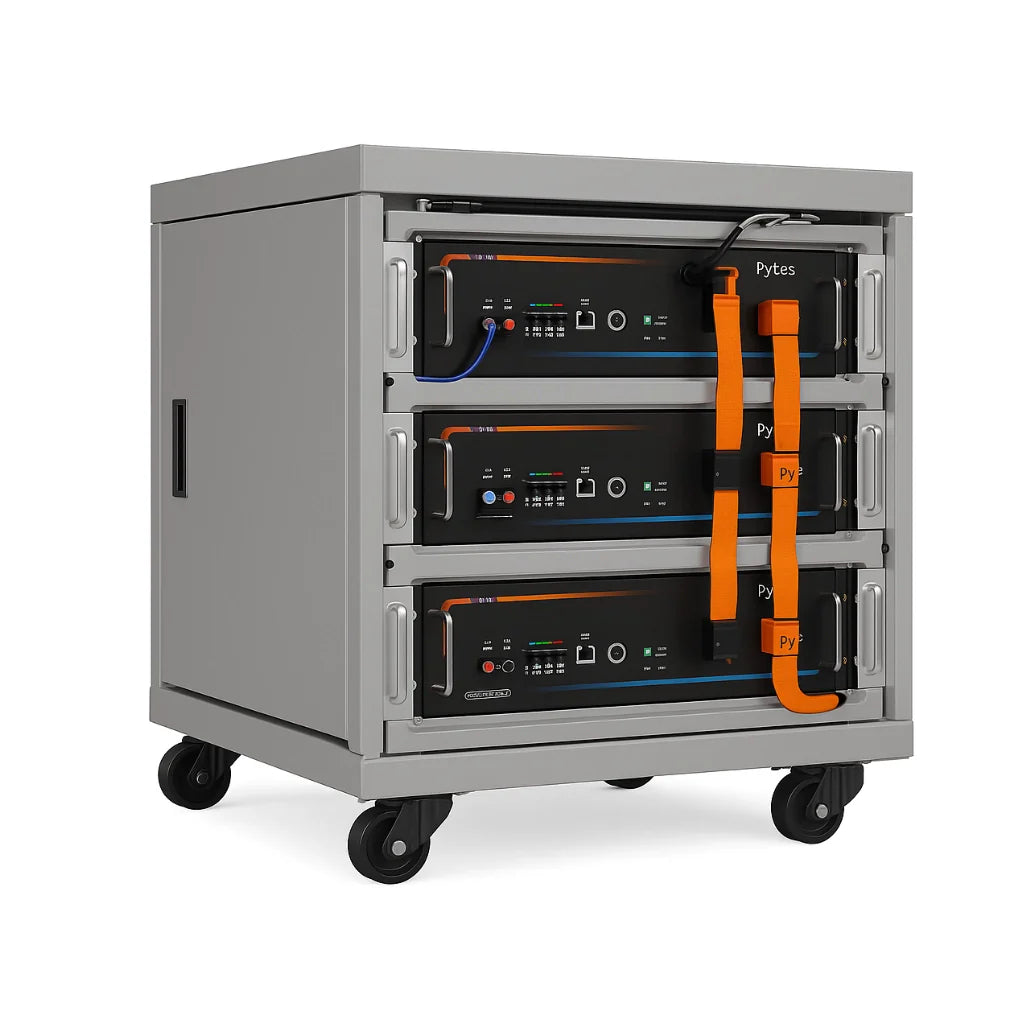
A battery bank is a configuration of multiple batteries wired together to achieve a specific voltage and capacity for off-grid or portable power systems. Understanding battery bank setups is the foundation of any reliable leisure vehicle, campervan, or renewable energy installation. Whether you are running a motorhome, a marine setup, or a residential off-grid system, the principles of battery bank configuration determine how much power you store, how safely you store it, and how long your batteries last. Victron Energy and LiFePO4 chemistry dominate hobbyist builds in 2026, and this guide covers everything from wiring topology to sizing and safety.
How does a battery bank configuration work?
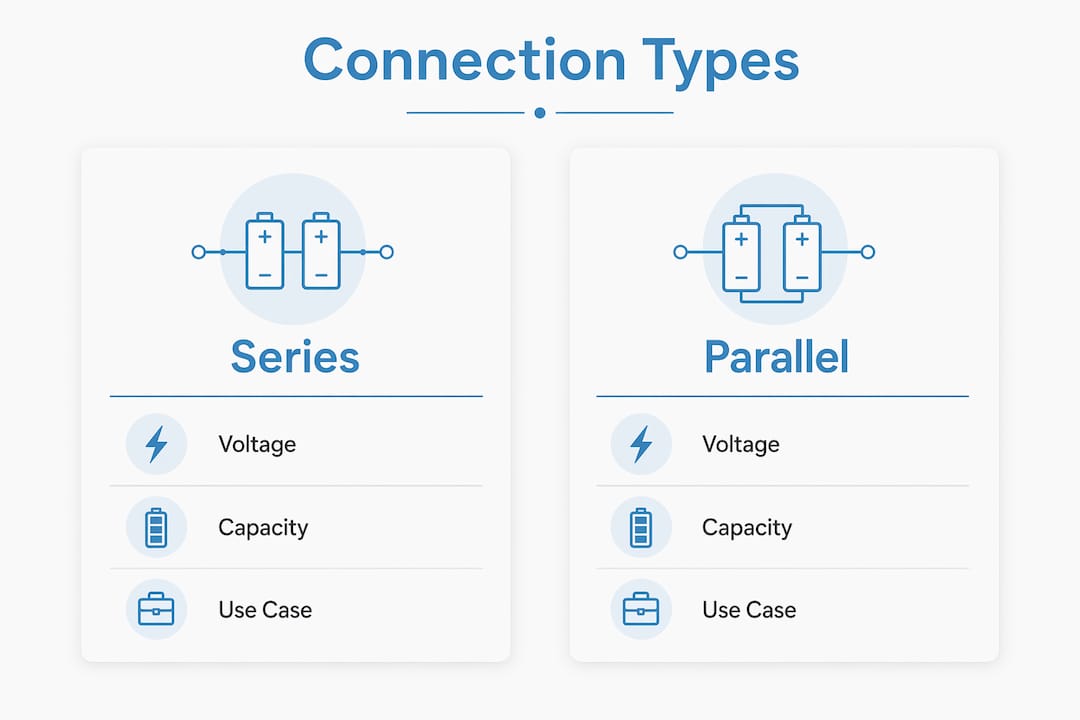
Series and parallel connections are the two fundamental building blocks of any battery bank. Understanding which to use, and when to combine them, gives you direct control over your system’s voltage and capacity.
Series connections increase voltage while keeping amp-hours constant. Connect four 3.2V LiFePO4 cells in series and you get a 12.8V battery. Connect eight and you get 25.6V. The amp-hour rating of each cell stays the same throughout.
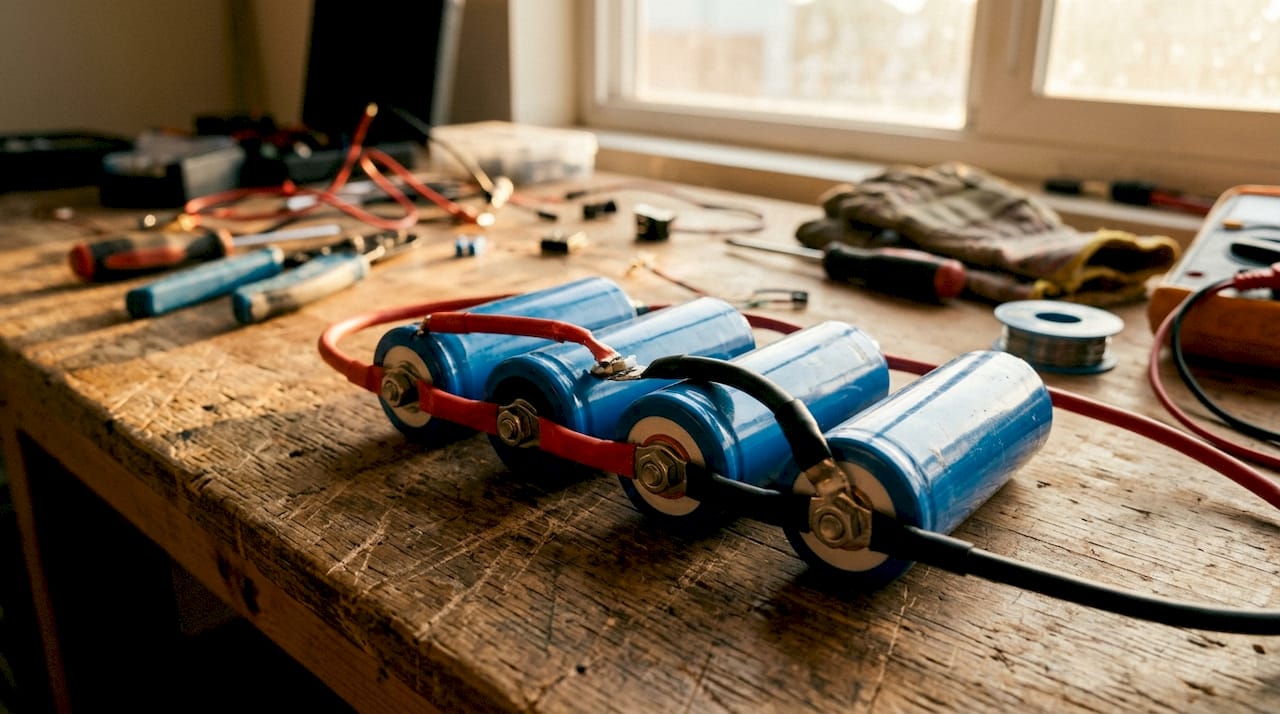
Parallel connections increase capacity while voltage stays constant. Connect two 100Ah batteries in parallel and you get 200Ah at the same voltage. This is the standard method for adding storage without changing system voltage.
Series-parallel combinations give you both. A 4S2P arrangement, for example, means four cells in series (for voltage) and two of those strings in parallel (for capacity). This notation is common in LiFePO4 pack design and DIY off-grid builds.
| Connection Type | Effect on Voltage | Effect on Amp-Hours |
|---|---|---|
| Series | Increases | No change |
| Parallel | No change | Increases |
| Series-Parallel | Increases | Increases |
Most leisure vehicle systems run at 12V, 24V, or 48V. Higher voltage banks reduce current for the same power output, which means thinner cables and lower losses. Systems above 2 kW generally benefit from a 24V or 48V bank for this reason.
Pro Tip: If you are planning a system above 2 kW, size for 48V from the start. Retrofitting a higher voltage bank later is far more costly than planning for it upfront.
What factors determine the right battery bank size?
Choosing battery bank size correctly requires four inputs: daily energy consumption, autonomy days, depth of discharge (DoD), and system voltage. Miss any one of these and your bank will either underperform or cost far more than necessary.
-
Calculate daily energy use. List every load in watts and estimate daily run time. A 12V compressor fridge drawing 50W for 12 hours uses 600Wh per day. Add lighting, USB charging, and any inverter loads to get your total daily figure in Wh or kWh. Skyenergi’s solar panel sizing guide walks through this calculation in detail.
-
Choose your autonomy days. This is the number of days you need to run without recharging. Two autonomy days at 1.5 kWh daily use means 3 kWh of usable energy required.
-
Apply the DoD factor. Battery bank sizing depends on DoD because you cannot safely use 100% of a battery’s rated capacity. LiFePO4 batteries support up to 80% DoD. Lead-acid batteries are typically limited to 50% DoD. The gross capacity formula is: required usable energy ÷ DoD = gross capacity needed.
-
Select system voltage. Higher voltages reduce cable losses and allow smaller conductors. This matters especially in leisure vehicles where cable runs can be long.
| Chemistry | Typical DoD | Gross Capacity for 15 kWh Usable |
|---|---|---|
| LiFePO4 | 80% | 18.75 kWh |
| Lead-Acid | 50% | 30 kWh |
The table above shows that LiFePO4 at 80% DoD requires roughly 37% less gross capacity than lead-acid for the same usable storage. That difference directly affects upfront cost and physical space. Battery sizing should prioritise usable energy, not gross capacity figures on a specification sheet.
Pro Tip: Use an online battery bank calculator such as the one at VoltCalcs to cross-check your manual sizing. Input your loads, autonomy days, and DoD to get a reliable gross capacity figure before purchasing.
Why does matching batteries matter so much?
Mixing battery chemistries, brands, ages, or capacities in one bank causes imbalance, premature failure, and safety risks. This is one of the most common and costly mistakes in DIY off-grid builds.
The core problem is that batteries with different internal resistances charge and discharge at different rates. In a series string, the weakest cell limits the entire string. In a parallel group, a lower-capacity battery draws excess current from its neighbours. Both scenarios accelerate degradation and can trigger cascade failure.
Key rules for a reliable battery bank:
- Use identical batteries: same chemistry, same brand, same capacity, same age.
- Never mix LiFePO4 with lead-acid, AGM, or gel batteries in the same bank.
- Avoid adding a new battery to an aged string or parallel group.
- Replace all batteries in a string simultaneously, not individually.
The battery management system (BMS) is your primary protection layer. A quality BMS monitors individual cell voltages, prevents overcharge and over-discharge, and balances cells during charging. Without a BMS, a mismatched lithium bank can fail silently until a cell reaches a dangerous state.
A BMS does not fix a mismatched bank. It slows the damage. The only real fix is using matched batteries from the outset.
Series-parallel banks often fail due to imbalance and poor electrical management rather than the connection geometry itself. The BMS and matched batteries work together. One without the other is insufficient for a long-lasting system.
What are the safety and wiring best practices for lithium banks?
Safe wiring is non-negotiable for lithium battery banks in leisure vehicles and off-grid systems. Lithium batteries store significant energy and can cause fires or serious injury if wired incorrectly.
Follow these wiring and protection requirements:
- Install DC-rated fuses or breakers sized at 125% of the maximum expected current. AC-rated breakers are not suitable for DC battery circuits.
- Use insulated tools when working near battery terminals. Remove rings, watches, and any metal jewellery before starting work.
- Torque battery terminals to manufacturer specifications. Re-check torque after the first service interval and annually thereafter. Loose terminals cause arcing, heat, and premature failure.
- Fit a BMS with cell balancing, overcharge protection, over-discharge protection, and temperature cutoff. Skyenergi’s guide on installing lithium batteries safely covers DC disconnect and BMS requirements in full.
- Keep battery enclosures above freezing point. Charging a lithium battery below 0°C causes lithium plating on the anode, which permanently reduces capacity.
- Avoid sustained storage at 100% state of charge (SOC). Long-term storage at full charge accelerates electrolyte degradation in LiFePO4 cells.
Pro Tip: Run your positive and negative cables from opposite ends of a parallel battery bank. This balances the current path across all batteries and reduces the risk of one battery carrying a disproportionate load.
For a step-by-step wiring approach specific to leisure vehicles, Skyenergi’s energy storage setup guide covers fusing, cable sizing, and fault reduction in practical detail.
How do temperature and usage habits affect battery life?
Premature battery failures are mainly caused by poor charging patterns, excessive DoD, or temperature extremes, not manufacturing defects. This means most battery longevity issues are within your control.
Practical steps to extend battery bank life:
- Store LiFePO4 batteries at 50–60% SOC if unused for extended periods. Full charge storage degrades cells faster than partial charge storage.
- Avoid repeated deep discharges below the recommended DoD threshold. Each cycle at excessive depth shortens total cycle life.
- Keep batteries within their rated temperature range during both charging and discharging. High ambient temperatures accelerate chemical degradation even without cycling.
- Equalise SOC before connecting parallel battery strings. Large differences in SOC between strings cause high circulating currents that stress cells and can trigger BMS overcurrent protection.
- Inspect terminal connections and cable insulation at least once per season. Thermal discolouration around terminals is an early warning sign of a loose or corroded connection.
- Follow a documented lithium battery maintenance workflow to catch issues before they become failures.
Temperature management and correct terminal torque often dictate real-world battery longevity more than chemistry advances alone. A well-maintained LiFePO4 bank in a controlled environment will consistently outlast a neglected one of superior specification.
Key takeaways
A correctly sized, matched, and maintained LiFePO4 battery bank with a quality BMS and proper wiring protection delivers the most reliable and cost-effective off-grid storage available in 2026.
| Point | Details |
|---|---|
| Series vs parallel wiring | Series increases voltage; parallel increases amp-hours. Combine both for custom voltage and capacity. |
| Size for usable energy | Divide required usable energy by DoD to get gross capacity. LiFePO4 at 80% DoD needs 37% less gross capacity than lead-acid. |
| Match batteries exactly | Use identical chemistry, brand, capacity, and age. Mixing causes imbalance and cascade failure. |
| Wiring and protection | Fuse at 125% of max current, torque terminals correctly, and fit a BMS with cell balancing and temperature cutoff. |
| Manage temperature and SOC | Store at 50–60% SOC long term and keep enclosures above freezing to maximise cycle life. |
What i have learned from real battery bank builds
After working through dozens of off-grid and leisure vehicle builds, the pattern I see most often is hobbyists focusing on capacity and ignoring everything else. They buy the largest battery they can afford, wire it up quickly, and wonder why it underperforms or fails within two years.
The uncomfortable truth is that oversizing a battery bank without matching it to your charge source is just as damaging as undersizing. A 300Ah LiFePO4 bank fed by a 20A charger will spend most of its life in a partial state of charge. That chronic undercharging shortens cycle life just as reliably as overcharging does.
The second mistake I see constantly is skipping SOC equalisation before paralleling batteries. Connecting two strings at different charge levels sends a surge of current between them that the BMS may not catch in time. It takes five minutes to check and equalise. It can save you a battery replacement.
Thermal management gets overlooked in motorhome builds more than anywhere else. People insulate their water pipes but leave their battery box exposed to a wheel arch that hits minus ten in January. Lithium batteries do not charge below freezing. A temperature sensor and a small heating pad cost very little compared to a replacement bank.
My honest recommendation: spend as much time planning your charge sources and wiring as you do choosing your batteries. The battery is only as good as the system around it.
— John
Build your battery bank with victron energy components from Skyenergi
Skyenergi stocks a full range of Victron Energy components designed to work together in off-grid and leisure vehicle battery bank setups.

From the Victron Solar Home System 200 MPPT for compact off-grid installations to the Victron 305W solar panel and Smart MPPT bundle for higher-output setups, every product is sourced directly from the manufacturer. Skyenergi also supplies the Victron Energy CANvu GX for real-time system monitoring and the Victron Energy Shunt for accurate battery current measurement. Browse the full range at Skyenergi to find the right components for your build.
FAQ
What is a battery bank in simple terms?
A battery bank is two or more batteries wired together to provide a specific voltage and storage capacity for an off-grid or portable power system. Series wiring increases voltage; parallel wiring increases amp-hours.
How do i calculate the size of battery bank i need?
Divide your total daily energy use in Wh by your battery’s depth of discharge rating to get gross capacity. For LiFePO4 at 80% DoD, a 1,200Wh daily load requires a minimum 1,500Wh gross bank capacity.
Can i mix old and new batteries in a bank?
Mixing batteries of different ages, brands, or capacities causes uneven charging and discharging, which leads to premature failure. Always use identical batteries throughout a bank.
Do i need a BMS for a lithium battery bank?
A BMS is required for any lithium battery bank. It monitors cell voltages, prevents overcharge and over-discharge, balances cells, and provides temperature protection that lithium chemistry cannot safely operate without.
What voltage should my battery bank run at?
Systems below 2 kW typically run at 12V. Systems above 2 kW benefit from 24V or 48V, which reduces current, allows smaller cables, and improves overall efficiency across the installation.
Recommended
Prev post

Step by step campervan electrics: 2026 UK guide
Updated on 15 June 2026
Next post

Battery bank design: a practical guide for DIY builds
Updated on 13 June 2026


