





How Long Do Lithium Batteries Last: A Guide
Discover how long lithium batteries last, what affects their lifespan, and proven strategies to extend battery life. Learn maintenance tips for maximum.
Table of Contents
- How Long Do Lithium Batteries Last: Real Lifespan Expectations
- Understanding Lithium Battery Cycle Life and Calendar Life
- Key Factors That Affect Lithium Battery Degradation
- How to Extend Lithium Battery Life: Practical Strategies
- SRNE Solar Controller Battery Settings for Maximum Lifespan
- Skyenergi Battery Maintenance Tips for Leisure and Off-Grid Systems
- Signs Your Lithium Battery Is Failing and What to Do
- Lithium-Ion vs. Lead-Acid: Lifespan Comparison
How Long Do Lithium Batteries Last: Real Lifespan Expectations
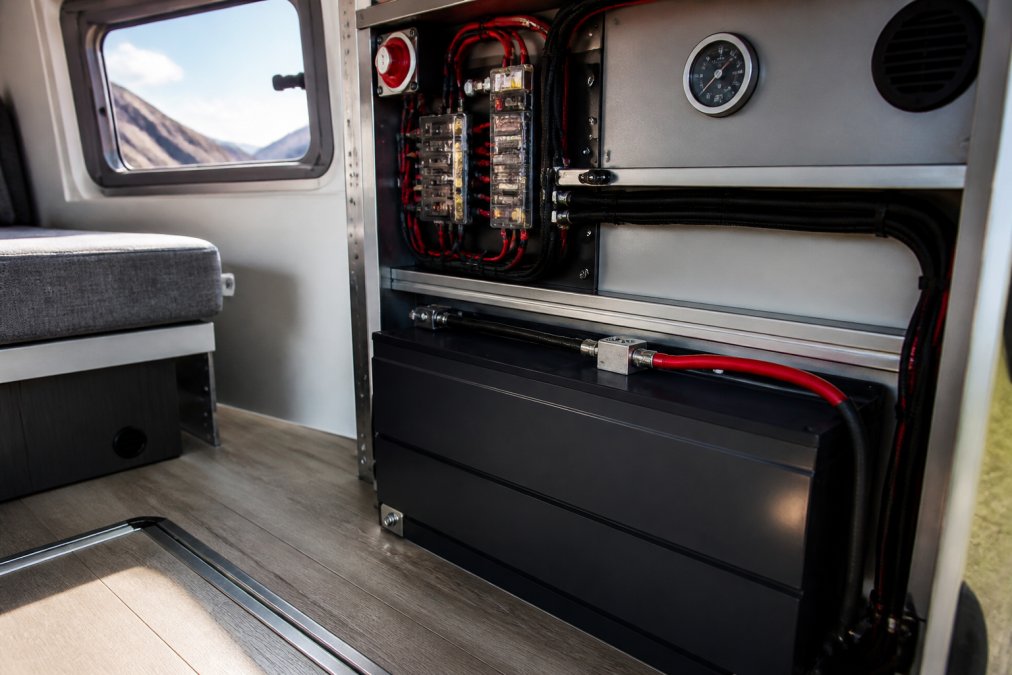
Most lithium leisure batteries deliver 10 to 15 years of reliable service under normal conditions. At Skyenergi, we've helped hundreds of campervan owners and off-grid enthusiasts understand what actually determines battery longevity. The lifespan of a lithium battery is shaped by chemistry, usage patterns, temperature exposure, and how intelligently you manage charge cycles. A battery sitting in a cool, climate-controlled space and cycled gently will outlast the same unit hammered hard in extreme heat.

Understanding Lithium Battery Cycle Life and Calendar Life
Lithium batteries age in two ways simultaneously: through use cycles and through time itself.
Cycle life is the number of charge-discharge cycles a battery can complete before its capacity drops below 80% of original capacity. A cycle doesn't mean a full 0% to 100% charge; it's measured in depth of discharge, so a partial charge counts as a fraction of a cycle.
Calendar life is how long the battery lasts simply sitting on a shelf, even unused. Lithium cells degrade electrochemically whether you're drawing power or not.
Cycle life versus calendar life
Most leisure batteries have a cycle life rating between 3,000 and 6,000 full cycles. If you cycle your battery once per day, 3,000 cycles equals roughly eight years of daily use. But calendar life might impose a hard limit sooner. Many lithium leisure batteries have a calendar life of 10 to 15 years regardless of cycle count.
The practical implication: a battery that survives 5,000 cycles might still fail at year 12 due to calendar ageing alone. Skyenergi's Edge and Elite lithium batteries are engineered to balance both factors, with cycle ratings that support 10+ years of typical leisure use whilst maintaining calendar lifespan that doesn't artificially expire the unit.

Depth of discharge and its impact
Depth of discharge (DoD) is the percentage of a battery's capacity you actually use before recharging. A battery cycled to 50% DoD can handle far more cycles than one regularly drained to 90% or 100%. A battery rated for 5,000 cycles at 100% DoD might deliver 10,000+ cycles if you never go below 50% DoD.
For leisure and off-grid applications, managing DoD is one of the most effective ways to extend battery life. Many users never need to discharge below 20%, which means the battery ages far more slowly than worst-case ratings suggest.
Key Factors That Affect Lithium Battery Degradation
Four primary factors control how fast your lithium battery ages: temperature, charge management, discharge rate, and cell chemistry.
Temperature and thermal stress
Temperature is the single largest accelerant of battery degradation. For every 10°C rise above the optimal operating range (typically 15-25°C), battery degradation roughly doubles. A battery stored in a hot environment loses capacity much faster than one kept cool. Extreme cold slows chemical reactions, reducing available power temporarily, but the power returns when the battery warms up.
The Skyenergi Core lithium battery includes an integrated heat pad, which maintains optimal operating temperature even in cold conditions and protects the battery during winter storage, a feature that directly extends lifespan in UK climates where temperature swings are common.
Overcharging and state of charge management
Overcharging pushes lithium-ion cells into a high-voltage state that accelerates degradation. Charging to 100% state of charge (SoC) regularly ages the battery faster than maintaining a maximum of 80-90% SoC.
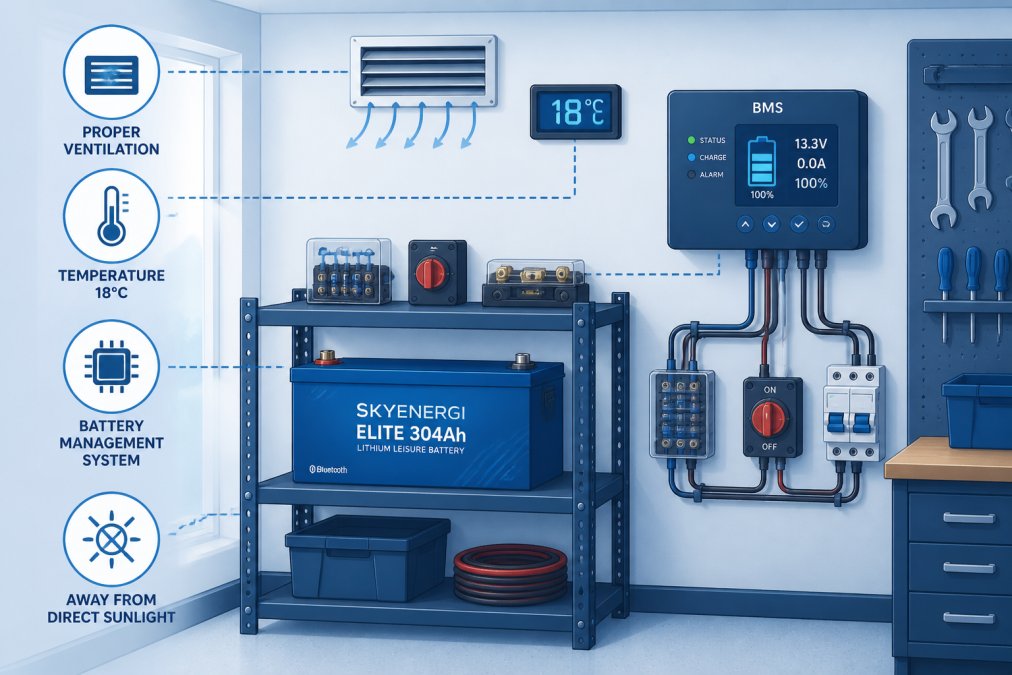
A smart battery management system (BMS) monitors voltage and temperature, cutting charge current when the battery reaches safe limits. SRNE solar charge controllers integrate sophisticated BMS logic, automatically adjusting charge profiles based on battery voltage, temperature, and load conditions. This intelligent management is a primary reason why systems using SRNE controllers see extended battery lifespans compared to simpler charging setups.
Ideally, lithium leisure batteries should be stored and rested between 20% and 80% SoC.
Discharge rate and power demands
Discharge rate, how fast you draw current from the battery, affects both immediate performance and long-term degradation. High discharge rates generate internal heat and stress the cell chemistry. Repeated high-discharge events degrade the cells over time.
Practical strategy: size your battery capacity so you rarely exceed 50% of the maximum discharge rating. A 280Ah battery like the Skyenergi Edge can safely handle the loads of a typical campervan without constant stress, which translates to longer real-world lifespan.
How to Extend Lithium Battery Life: Practical Strategies
You can't stop battery ageing, but you can slow it dramatically through proven strategies.
Optimal storage and temperature control
Store lithium batteries in a cool, dry environment at 15-20°C if possible. If storing over winter or during extended periods away, charge the battery to 50-60% SoC and leave it there. This state minimises both calendar and cycle degradation.
Ventilation matters. Ensure airflow around the battery, and consider insulation that stabilises temperature rather than allowing wild fluctuations. For campervan installations, position batteries away from engine heat sources and direct sunlight.
Charging best practices
Never charge a cold battery. Lithium cells are damaged by charging below 0°C. If your battery temperature drops below 5°C, wait for it to warm before connecting a charger.
Use a charger designed for lithium chemistry. SRNE solar controllers are specifically tuned for lithium batteries, adjusting voltage and current based on temperature and state of charge.
Avoid frequent full charges. Maintain a maximum SoC of 80-90% during regular use. Reserve 100% charging for when you genuinely need the extra capacity. This single practice can extend cycle life by 30% or more.
Managing discharge patterns
Avoid discharging below 10% SoC regularly. If your system design allows, configure your loads to cut off at 20% SoC, preserving the final 20% as a reserve.
For leisure applications, stagger high-power loads. Run the inverter for a few hours, let the battery rest, then use it again. This pattern reduces peak discharge rates and extends lifespan.
SRNE Solar Controller Battery Settings for Maximum Lifespan
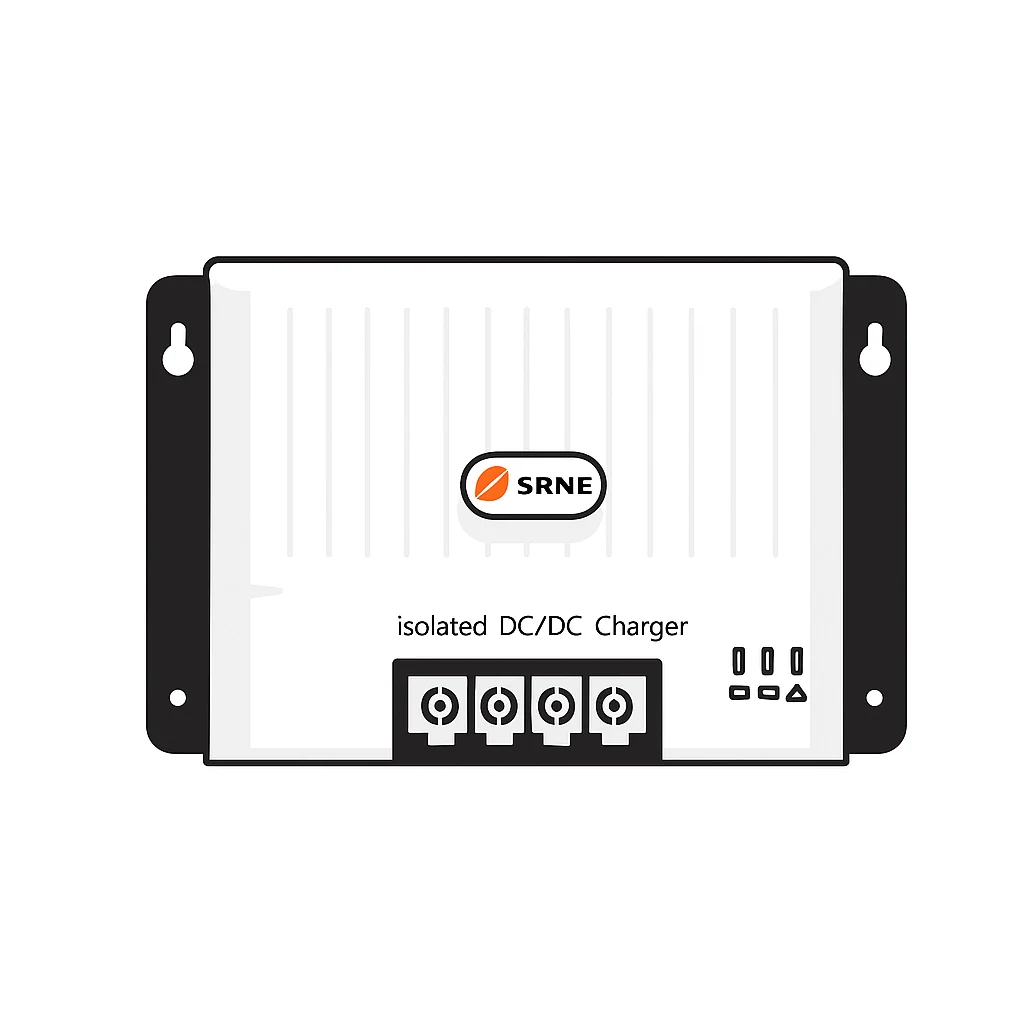
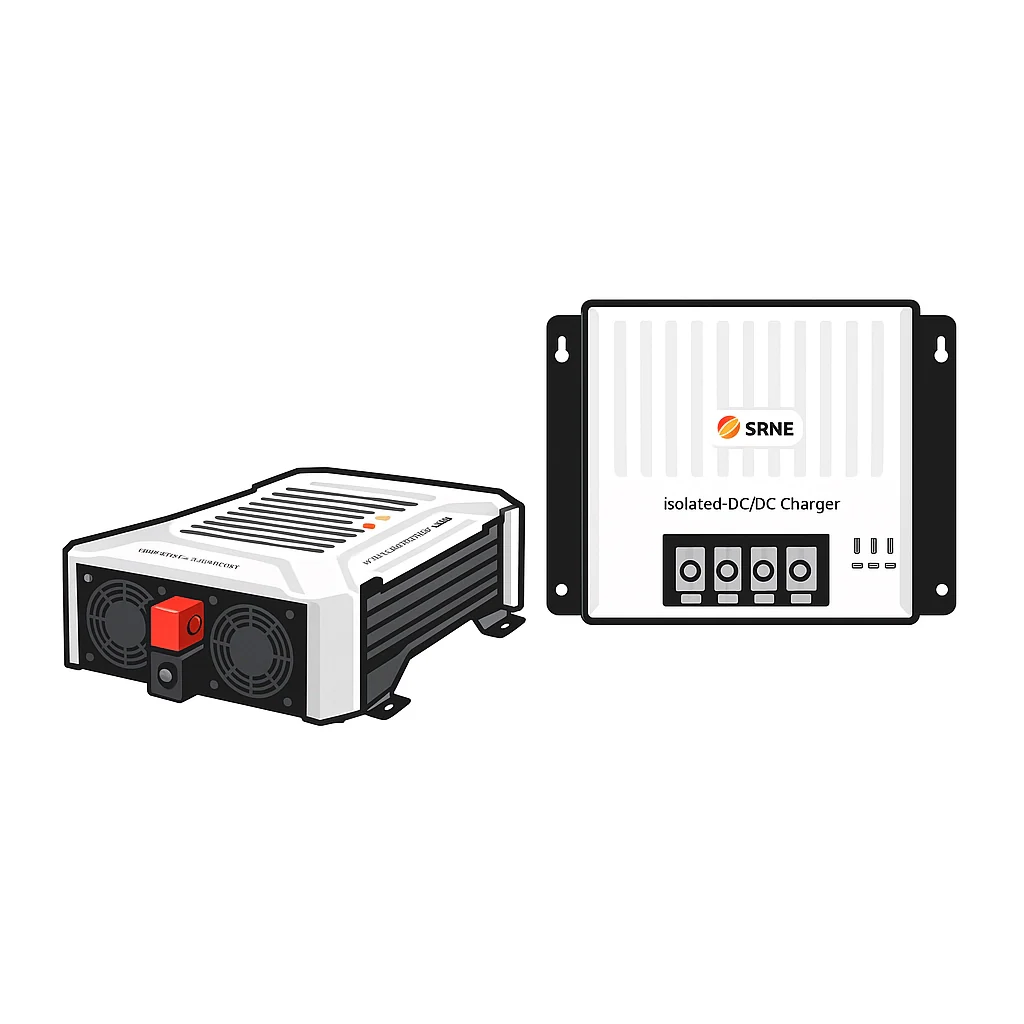
SRNE solar charge controllers are engineered specifically for lithium battery systems, offering sophisticated management that generic chargers cannot match. The controller's firmware monitors battery voltage, temperature, and state of charge, adjusting the charging algorithm in real time.

Key settings to optimise in your SRNE controller:
The absorption voltage should match your battery chemistry exactly. For most lithium leisure batteries, this is 3.65V per cell (approximately 14.6V for a 12V system).
The float voltage is where the battery rests after charging. Lithium batteries should float at a lower voltage than lead-acid, typically 13.6V for a 12V system. This reduces stress during the final charging phase.
The low-temperature charge cutoff prevents charging when the battery is cold. Set this to 5°C minimum.
The high-temperature charge reduction automatically lowers charging current if the battery exceeds 40°C. This protects the cells during hot weather or high-load conditions.
SRNE controllers also integrate with compatible battery management systems via CAN-bus communication, allowing the battery to directly signal the controller if conditions are unsafe for charging. Configuring these settings correctly can add years to your battery's service life.
Skyenergi Battery Maintenance Tips for Leisure and Off-Grid Systems
Lithium batteries require far less maintenance than lead-acid, but a few simple practices keep your system healthy.
Monitor state of charge monthly. Track SoC trends using the battery's built-in display or a separate monitoring system. If you notice capacity dropping faster than expected, investigate the cause.
Check physical connections quarterly. Corrosion on battery terminals increases resistance, forcing the battery to work harder and generating excess heat. Clean any deposits with a soft brush and apply dielectric grease.
Review temperature logs if your system records them. If the battery regularly exceeds 40°C, your installation may have inadequate ventilation or the battery is being discharged too hard.
Test the BMS annually. Most BMS units have a test mode. Run it to confirm the battery disconnects properly under load and that voltage readings are accurate.
Update SRNE controller firmware when released. Manufacturers occasionally release firmware updates that improve charging algorithms or fix edge-case bugs.
For Skyenergi Edge and Elite batteries, the Bluetooth monitoring feature provides real-time data on your phone. Watching your battery's voltage, temperature, and discharge rate in real time builds intuition about what stresses your system.
Signs Your Lithium Battery Is Failing and What to Do
Lithium batteries degrade gradually, and early warning signs give you time to plan a replacement.
Capacity loss is the primary indicator. Track this over months. A loss of 5-10% per year is normal ageing; 20%+ per year suggests a problem.
Voltage sag under load indicates internal resistance increase. If the battery voltage drops dramatically when you turn on high-power loads, the internal resistance is rising.
Inability to hold charge is a red flag. If the battery discharges noticeably overnight with no loads connected, the BMS or a cell is failing.
Temperature extremes during normal use suggest a failing cell or BMS fault. A battery that heats up excessively during charging or discharges very cold in normal conditions may have internal damage.
If you suspect your battery is failing, first check the BMS status. Contact Skyenergi support with your battery model number and symptoms; the team can often diagnose the issue remotely and advise whether repair, recalibration, or replacement is necessary.
Lithium-Ion vs. Lead-Acid: Lifespan Comparison
Lead-acid batteries typically last 3 to 5 years in leisure applications. They're sensitive to deep discharge, and regularly draining them below 50% cuts lifespan in half. They suffer in cold weather and require regular maintenance.
Lithium-ion batteries last 10 to 15 years under typical leisure use. They tolerate deeper discharge without damage, perform better in cold conditions, and require minimal maintenance.
For a campervan or off-grid system, the mathematics favour lithium. A campervan owner who replaces lead-acid batteries three times over a decade will have spent significantly more than investing once in a Skyenergi Edge 280Ah lithium battery (£445.00), plus you get three times the usable capacity, better cold-weather performance, and no maintenance burden.
Lithium's superior lifespan isn't marketing. It's electrochemistry. The cell chemistry is fundamentally more stable than lead-acid, and modern BMS technology protects that chemistry from the stresses that degrade traditional batteries.
Understanding how long lithium batteries last requires moving beyond manufacturer claims and grasping the actual factors that control degradation. Temperature, charge management, discharge depth, and time all play roles. The good news: you control most of these factors through installation choices and usage habits.
Skyenergi's Edge and Elite lithium batteries are built for the UK leisure and off-grid market, with features like integrated heat pads, Bluetooth monitoring, and compatibility with SRNE solar controllers that actively extend real-world lifespan. Investing in quality lithium hardware paired with intelligent charging management pays dividends for over a decade.
Frequently Asked Questions
How many charge cycles can a typical lithium battery handle?
Most lithium-ion batteries for leisure and off-grid applications handle between 3,000 and 5,000 full charge cycles before capacity drops to 80%. This translates to 10-15 years of typical use. A Skyenergi Edge or Elite lithium battery maintains excellent performance across thousands of cycles when managed properly, with depth of discharge and temperature playing significant roles in cycle count. Real-world lifespan often exceeds manufacturer estimates when you follow recommended maintenance practices.
Is it bad to keep lithium batteries fully charged at all times?
Yes, keeping lithium batteries at 100% state of charge continuously accelerates degradation. Storing at 80-90% charge extends lifespan significantly. For leisure systems like Skyenergi batteries, the battery management system (BMS) helps prevent overcharging, but avoiding constant full-charge storage, especially in warm conditions, reduces electrochemical stress and preserves capacity retention over years. This is why SRNE solar controller battery settings allow you to set upper charge limits below maximum.
What happens to a lithium battery when it dies?
As lithium batteries age, internal chemical reactions cause capacity loss and increased internal resistance. You'll notice voltage sag under load, reduced usable energy, and slower charging. The battery doesn't fail suddenly; instead, capacity retention drops gradually. Modern Skyenergi batteries include monitoring systems that alert you to degradation, allowing you to plan replacement before complete failure. End-of-life lithium batteries can be recycled through specialist schemes, recovering valuable materials for reuse.
How long will a lithium battery hold a charge when not in use?
Quality lithium batteries lose only 2-3% of charge per month during storage, far better than lead-acid alternatives. A Skyenergi lithium battery stored at cool temperatures and 50% state of charge can hold usable power for 6-12 months without significant loss. Self-discharge rates depend on battery chemistry, temperature, and internal resistance. For extended storage, keeping your battery in a cool location (10-20°C) and at moderate charge levels minimises degradation.
This article was written using GrandRanker
Prev post

Lithium vs Lead Acid Battery Campervan: A 2026 Guide
Updated on 13 August 2026
Next post

Lead Acid Battery Disadvantages for Campervans
Updated on 11 August 2026


