





Expandable battery system examples for DIY builds
Explore top expandable battery system examples for DIY builds! Make informed decisions with key tips on capacity, compatibility, and real-world setups.
TL;DR:
- Selecting the appropriate expandable battery system depends on the specific application, compatibility, and future scalability, with examples like Victron SuperPack and stackable LiFePO4 modules offering different advantages. Proper evaluation of energy versus power capacity, hardware compatibility, and BMS communication is essential to avoid early system degradation or limitations. Planning your system size based on current needs with built-in flexibility ensures reliable performance, rather than relying solely on future expansion possibilities.
Choosing the right expandable battery system examples is genuinely difficult when you are building out a campervan, motorhome, or off-grid cabin setup. The market offers modular lithium packs, stackable LiFePO4 units, and purpose-built vehicle batteries, each with different rules for how expansion actually works. Get it wrong and you end up with hardware that cannot grow with your needs, or worse, a system that degrades early because modules were mismatched. This article covers the key evaluation criteria and three concrete battery expansion examples to help you make an informed choice before spending.
Table of Contents
- Key takeaways
- 1. Key criteria for evaluating expandable battery systems
- 2. Motobatt MFLEX+ modular lithium batteries for vehicles
- 3. Victron Energy Lithium SuperPack series
- 4. Stackable LiFePO4 battery modules for off-grid storage
- 5. Comparative overview of expandable battery examples
- 6. My take on building expandable systems that actually work
- Expandable battery solutions from Skyenergi
- FAQ
Key takeaways
| Point | Details |
|---|---|
| Capacity vs power | Expanding kWh storage does not automatically increase peak kW output; plan for both separately. |
| Compatibility first | Hardware, BMS protocols, and inverter limits must be verified before committing to a modular system. |
| Real-world examples | Motobatt MFLEX+, Victron SuperPack, and stackable LiFePO4 modules each suit different DIY applications. |
| Size for now, plan for later | Size your system for current needs; treat expansion as a possibility, not a guarantee. |
| BMS communication is critical | Inter-module voltage variance and CAN/RS485 links are non-negotiable for safe modular stacking. |
1. Key criteria for evaluating expandable battery systems
Before looking at any specific expandable battery system examples, you need a clear framework for evaluation. The wrong criteria lead to expensive mistakes.
Energy capacity vs power capacity
Energy and power ratings are not the same thing, and this distinction matters more in expandable systems than in fixed ones. Energy capacity, measured in kilowatt-hours (kWh), determines how long your system can run loads. Power capacity, measured in kilowatts (kW), determines how much it can deliver at once. Adding expansion modules increases stored energy without necessarily improving peak output. If you are running high-draw appliances like induction hobs or compressor fridges, check the continuous discharge rate of every module before assuming expansion solves the problem.
Compatibility and hardware constraints
Expansion depends heavily on compatibility: inverter limits, communication protocols, and matched hardware. Most modular systems require all units to be from the same product generation. A battery added two years after the original purchase may have a different internal chemistry or firmware version that creates conflicts. Inverters also have fixed input ceilings, so adding more battery capacity than your inverter can handle wastes money without delivering usable power.
Key criteria to check before buying any modular system:
- BMS communication protocol: CAN bus, RS485, or proprietary link. Must match across all modules.
- Inverter compatibility: Confirm maximum charge and discharge current the inverter supports.
- Cell chemistry: LiFePO4 modules should not be mixed with NMC or other chemistries.
- Voltage matching: Modules must operate at the same nominal voltage before parallel or series connection.
- Product longevity: Module availability over time is a genuine risk; discontinued lines leave systems stranded.
Pro Tip: Size your initial system to cover your current daily consumption with 20% headroom, rather than buying minimal capacity and counting on future expansion. Expansion is a possibility, not a certainty.
2. Motobatt MFLEX+ modular lithium batteries for vehicles
The Motobatt MFLEX+ is one of the more interesting examples of modular batteries designed specifically for powersports and off-road vehicle applications. It uses a patented clickable modular design with two core models, the MFX2.5 and MFX5.0, that interconnect physically to create a range of capacity configurations.
This matters for motorcycles, ATVs, and UTVs where battery compartment space is irregular and weight distribution affects handling. Rather than sourcing a single large battery that may not fit the available cavity, you click together the modules needed to match both the physical space and the capacity requirement.
Key features and practical considerations:
- Two base modules: MFX2.5 (2.5Ah equivalent) and MFX5.0 (5.0Ah equivalent), combinable to suit specific vehicles.
- Flexible capacity scaling: Multiple units connect to reach the target output without wiring complexity.
- Weight distribution: Modules can be positioned to balance the vehicle rather than forcing a single heavy unit into one location.
- Suitability: Motorcycles, ATVs, UTVs, and custom vehicle builds with non-standard battery bays.
The main limitation here is that this system is built for starting and auxiliary power in vehicles, not for deep-cycle energy storage in off-grid settings. If you are fitting out a campervan or a cabin, MFLEX+ is not the right category. But for powersports and light vehicle applications, it demonstrates the expandable battery system benefits of modularity very clearly: fit what you need, where you need it.
3. Victron Energy Lithium SuperPack series
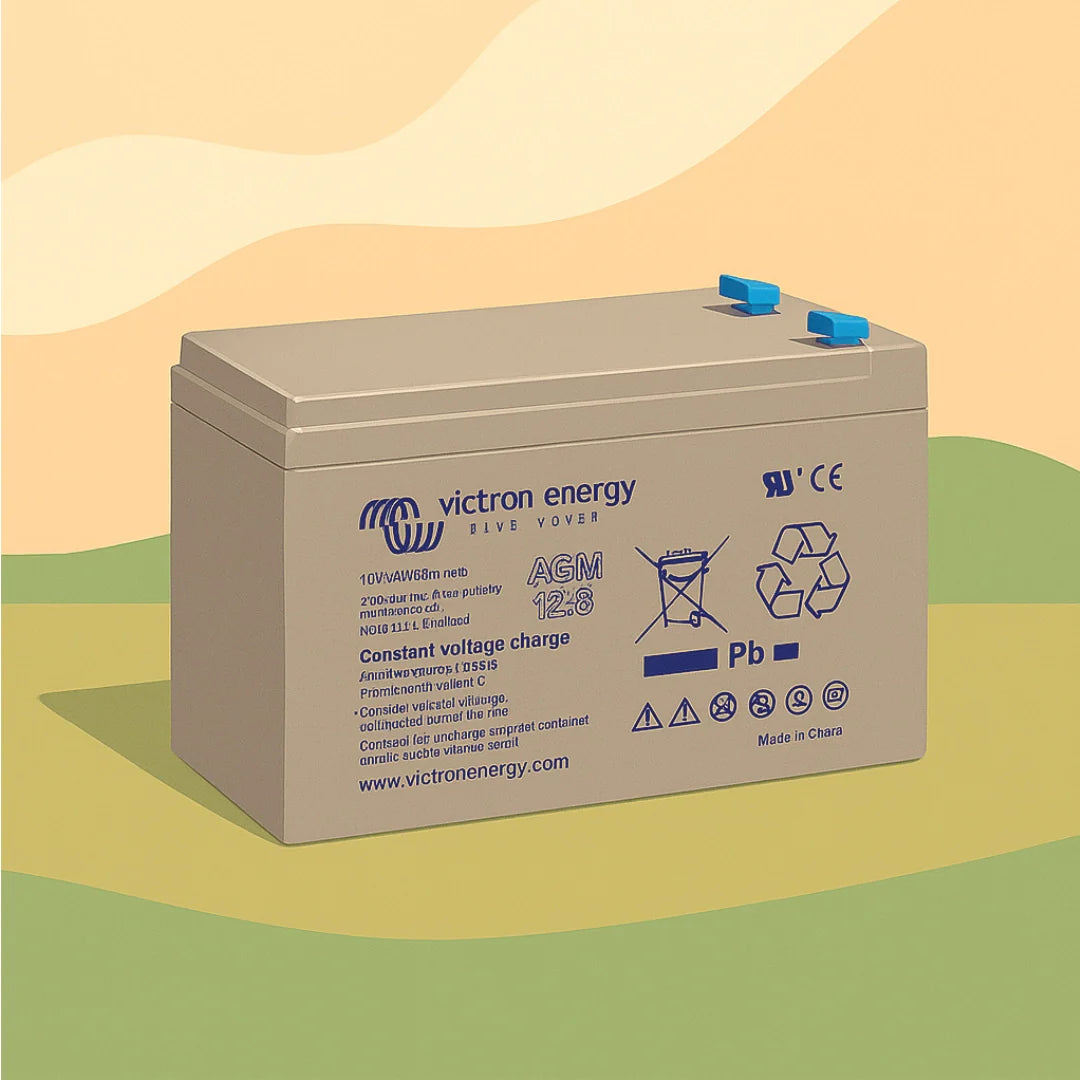
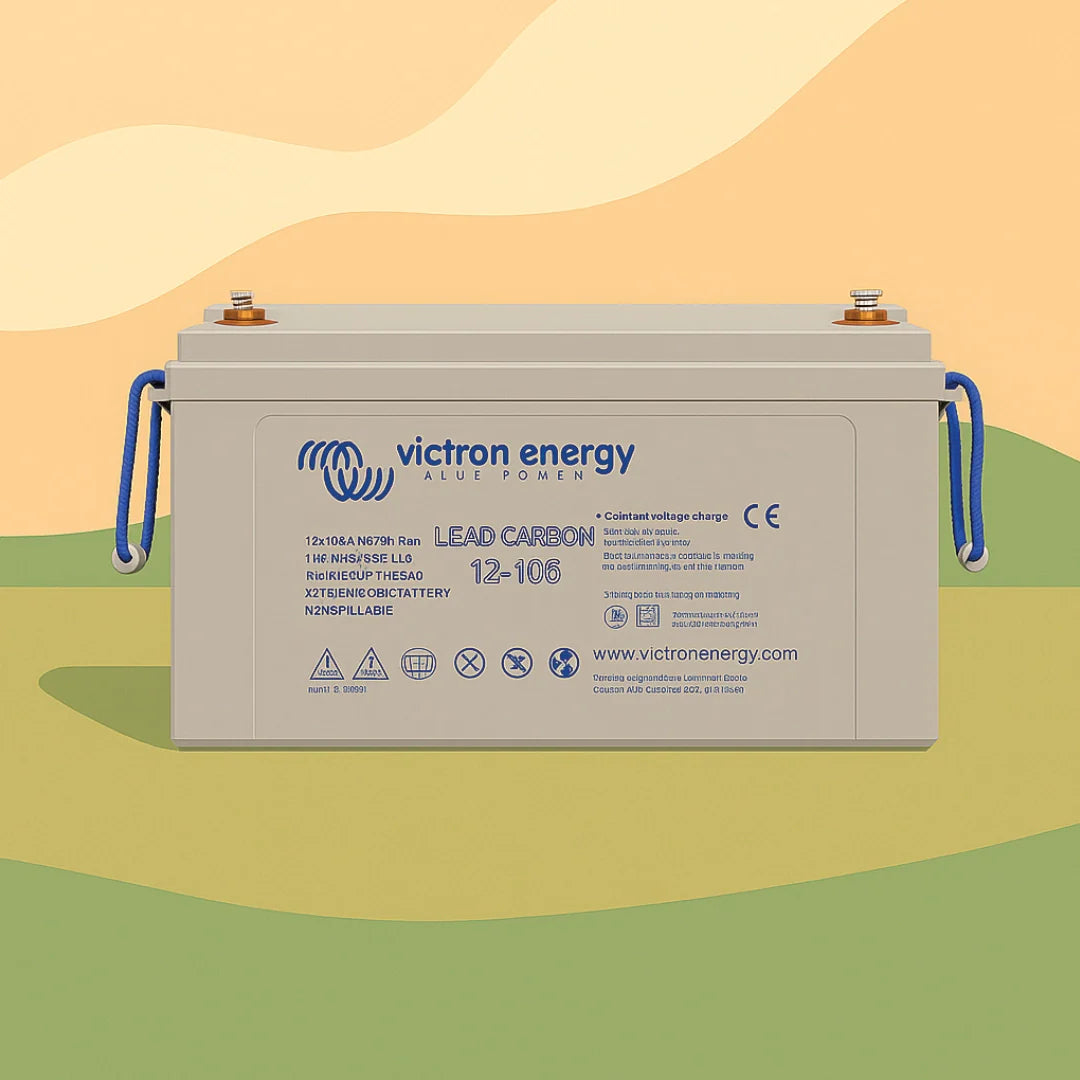
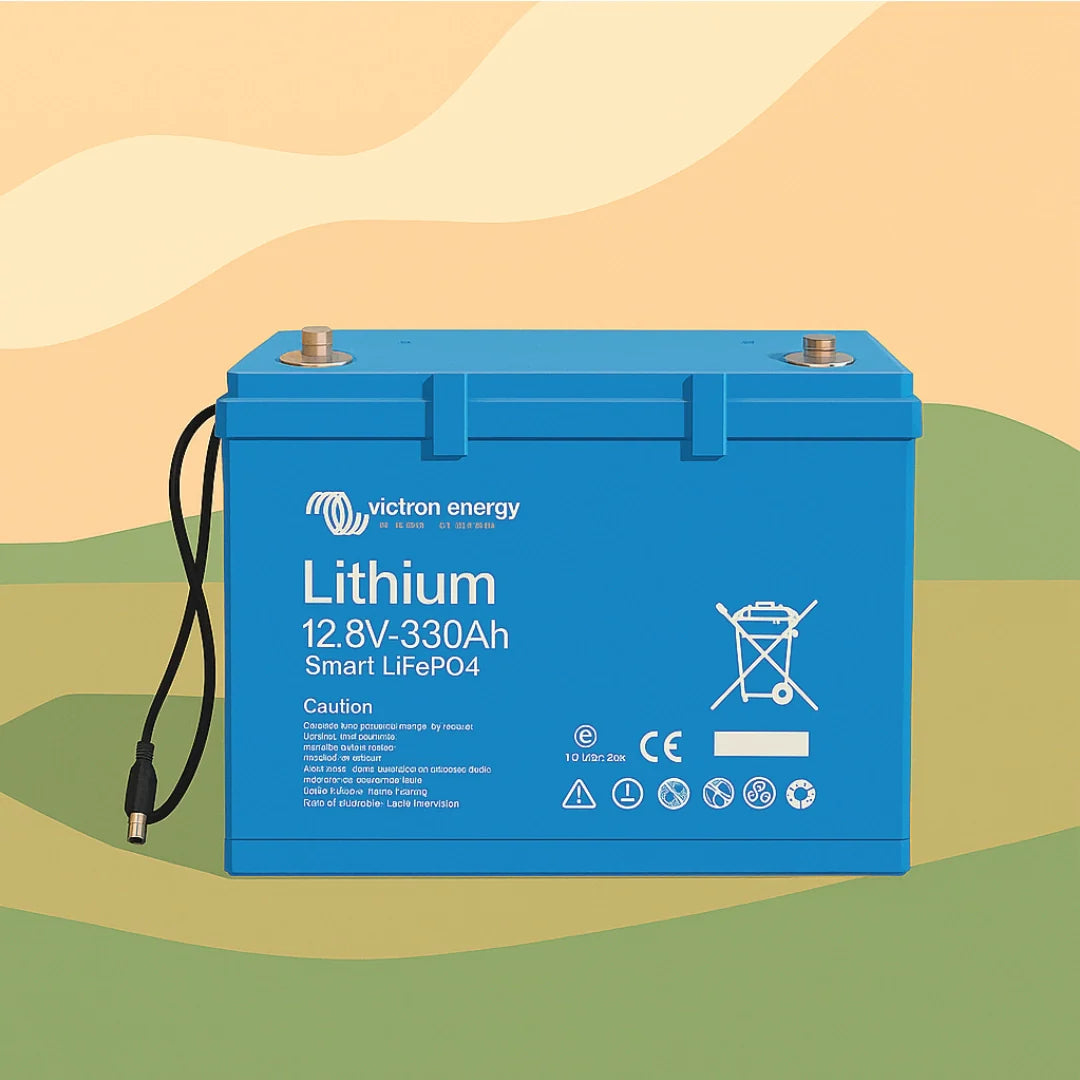
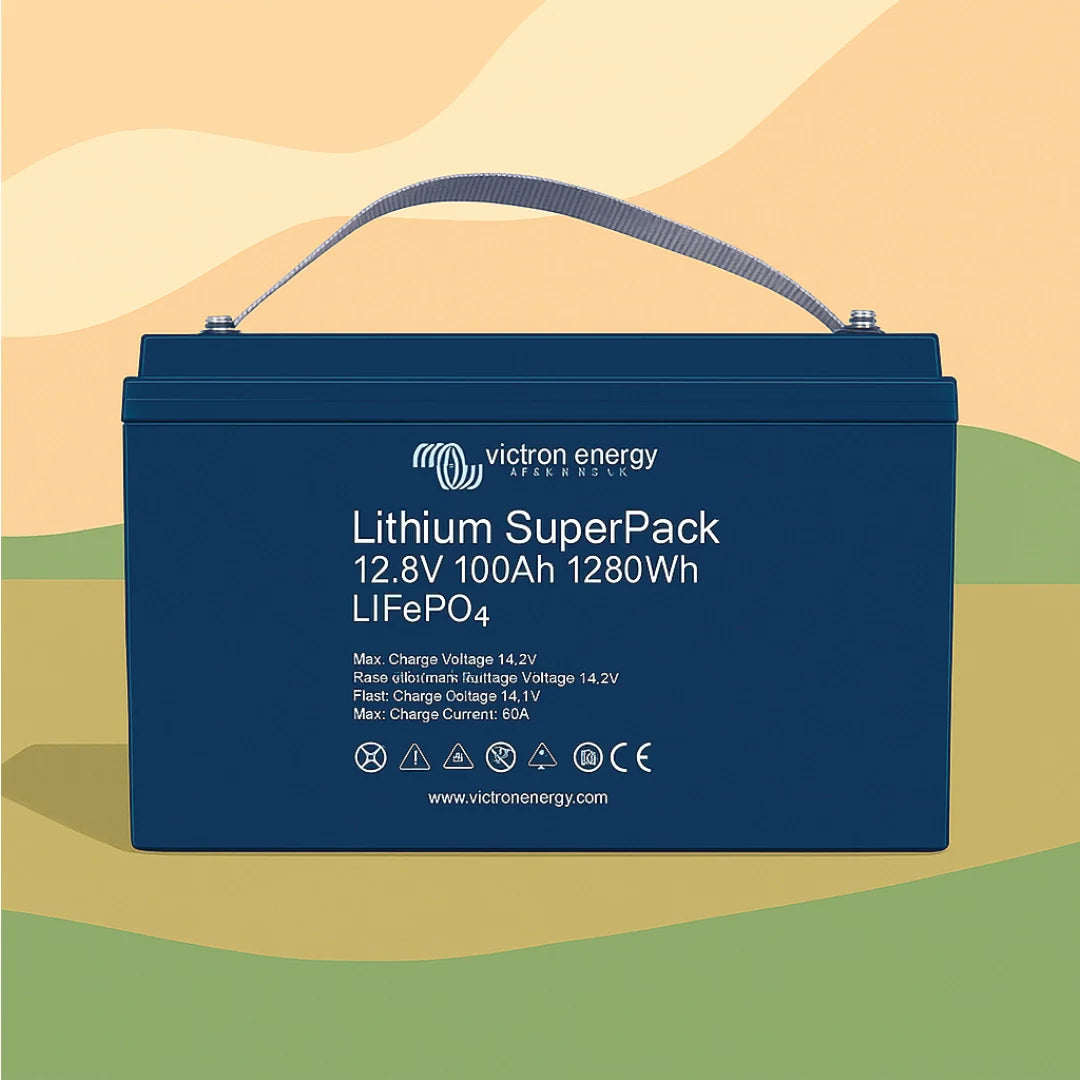
Victron Energy’s Lithium SuperPack range is one of the most practical flexible battery systems available for DIY campervan and off-grid builds. The series includes modules at 20Ah, 50Ah, 60Ah, 100Ah, and 200Ah capacities, and these can be connected in parallel to scale total storage to match your actual consumption.
The Victron SuperPack 200Ah unit, for example, is a common starting point for motorhome builds. Two units in parallel gives 400Ah, enough to run lighting, a 12V fridge, a phone and laptop charging setup, and a water pump for two or three days without solar input. The internal BMS in each SuperPack communicates with Victron charge controllers, MPPT solar regulators, and Victron inverter-chargers without additional configuration.
Practical notes for DIY assembly:
- Parallel connection: Use same-length cables and same-gauge wiring to each battery to balance current draw.
- BMS integration: SuperPack units have an integrated BMS that handles cell balancing and protection automatically.
- MPPT compatibility: Works directly with Victron SmartSolar and BlueSolar MPPT controllers.
- Inverter limits: Verify your inverter’s maximum continuous current against the combined discharge rating of your pack configuration.
- Scalable for campervans: Start with one or two units and add a third if your solar harvest and consumption data justify it after a season of use.
For anyone building a solar-powered campervan setup from scratch, the SuperPack series is a strong reference point for how advanced battery system designs can balance modularity with ease of integration.
4. Stackable LiFePO4 battery modules for off-grid storage
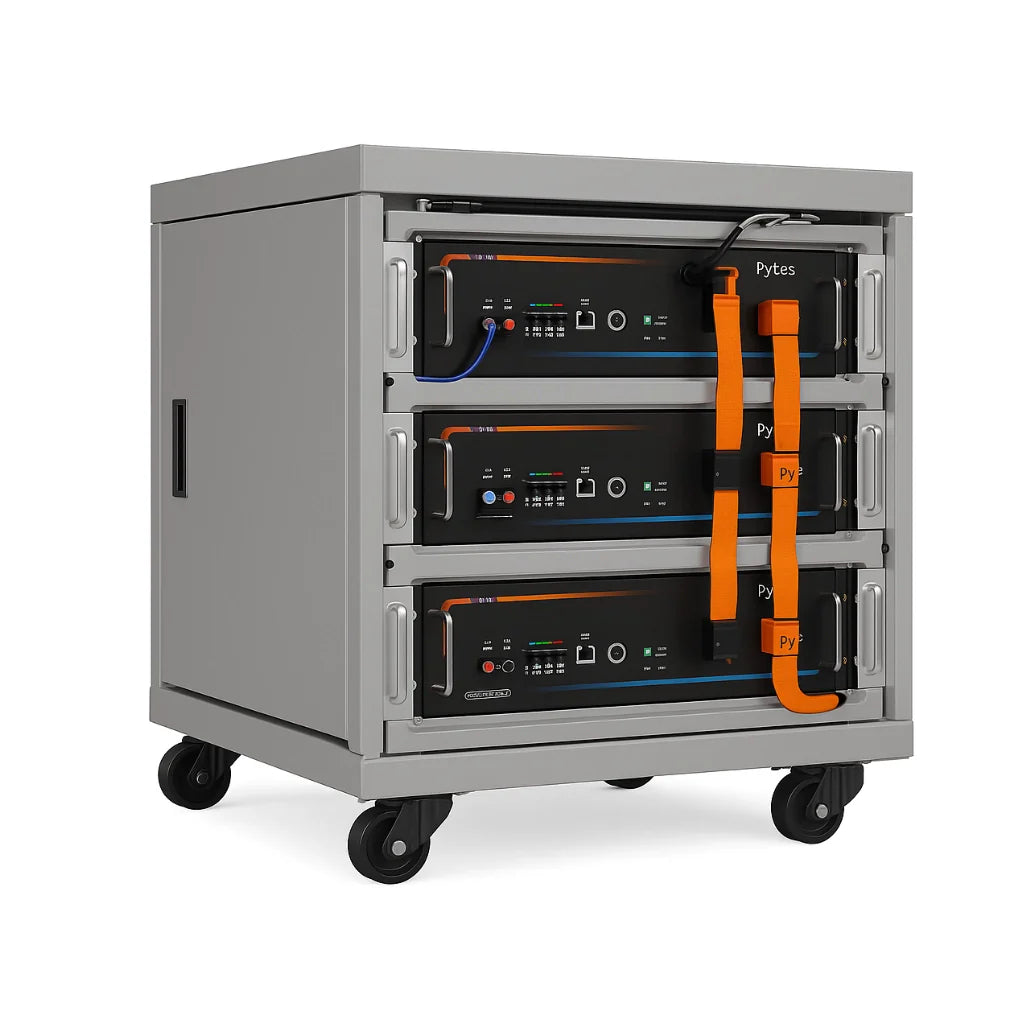
Stackable LiFePO4 modules represent a different class of expandable battery system, one designed for static off-grid installations rather than vehicle use. These are physically stacked in a rack or tower configuration, with each module connecting electrically and communicating via BMS protocol to the stack above and below it.
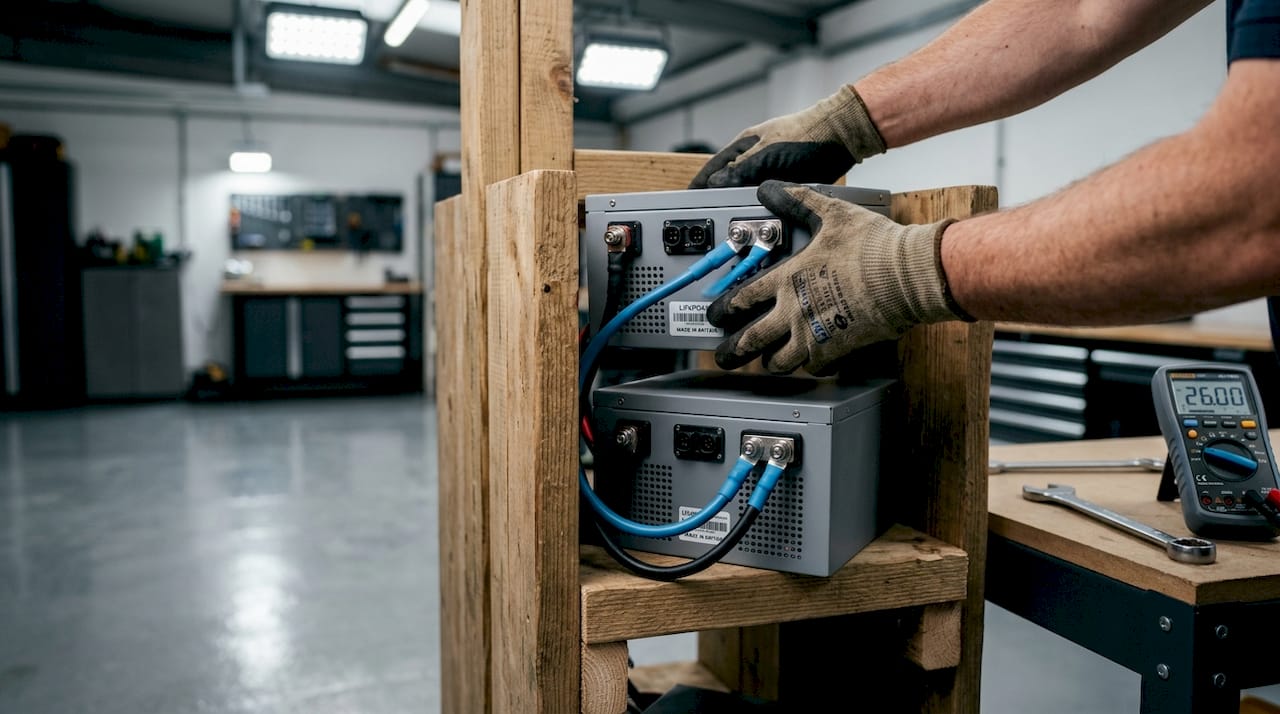
The engineering requirements are more demanding than they might appear. Modular stacking requires precise base alignment, correct mechanical fastening, and adequate ventilation between units. The installation standard calls for no more than 2mm per metre of horizontal deviation, M6 fastening bolts torqued to between 15 and 20 Newton-metres, and a minimum 5cm ventilation gap between stacked modules.
BMS communication and voltage matching
Inter-module voltage variance must stay at or below 0.05V across any modules connected in parallel. Exceed this and the BMS will either throttle output or shut down the stack to prevent damage. CAN bus or RS485 communication links must be physically secure and correctly terminated. A loose connector here does not just cause a warning. It can result in modules operating independently without protection coordination.
Installation best practices for DIY modular stacking
- Level the base platform before installation. Any tilt transfers stress unevenly across stacked modules as the stack grows taller.
- Check voltage on each module before connection. Units shipped from storage may drift; charge to matching voltage before parallel connection.
- Use the manufacturer’s cable kit where provided. Cable length and gauge are pre-calculated for balanced current sharing.
- Torque all fasteners correctly. Under-torqued connections cause resistance and heat; over-torqued bolts crack housing.
- Allow full ventilation clearance. Heat build-up in stacked configurations accelerates cell degradation significantly.
Pro Tip: When expanding a stackable system, never mix modules from different production batches unless the manufacturer explicitly confirms compatibility. New cells must match existing units in both capacity and voltage to avoid uneven discharge and pack damage.
| Factor | Requirement | Risk if ignored |
|---|---|---|
| Base alignment | ≤2mm/m horizontal error | Mechanical stress and housing damage |
| Fastener torque | 15–20 N·m on M6 bolts | Loose connections, heat generation |
| Ventilation gap | 5cm between modules | Overheating and accelerated degradation |
| Voltage variance | ≤0.05V between modules | BMS shutdown or unbalanced discharge |
| BMS link | CAN/RS485 correctly terminated | Loss of protection coordination |
5. Comparative overview of expandable battery examples
Choosing between these systems comes down to your application, your available space, and your technical confidence level.
| System | Capacity range | Best use case | Modularity type | Key limitation |
|---|---|---|---|---|
| Motobatt MFLEX+ | 2.5Ah to ~20Ah | Powersports, vehicles | Physical click modules | Not for deep-cycle storage |
| Victron SuperPack | 20Ah to 200Ah per unit | Campervans, motorhomes | Parallel electrical connection | Victron ecosystem required |
| Stackable LiFePO4 | 50Ah to 500Ah+ | Off-grid cabins, residential | Physical rack stacking | Strict installation tolerances |
Non-technical decision criteria worth considering:
- Budget: Victron SuperPack units carry a premium but integrate without configuration complexity. Stackable LiFePO4 modules from less well-known manufacturers can be cheaper upfront but require more installation rigour.
- Space constraints: Vehicle builds favour the SuperPack format. Static installations suit rack-stackable units.
- Technical confidence: If you are new to DIY electrical builds, the Victron ecosystem offers the most forgiving starting point because the BMS and monitoring are built in.
- Future expansion certainty: Understand that scalability can be limited by fixed hardware and changing product lines. Plan conservatively.
Common pitfalls to avoid:
- Buying the cheapest modular unit without confirming long-term module availability.
- Assuming parallel connection of batteries from different brands is safe without BMS coordination.
- Ignoring inverter input limits when calculating total pack capacity.
6. My take on building expandable systems that actually work
I have worked with enough DIY battery builds to know that the phrase “you can always expand it later” causes more problems than it solves. People buy a smaller system than they need, expecting a clean expansion path, and then discover the product line has changed, the inverter is already at its limit, or the new modules do not balance correctly with the old ones.
What I have learned is that the role of expandable battery banks is best understood as a safety margin, not a growth strategy. Size the system to meet your actual current demand. Then, if your situation changes and expansion is genuinely viable, treat it as a bonus rather than part of the original plan.
The trade-off between modularity and complexity is real. More modules mean more potential failure points, more cable runs, and more BMS coordination overhead. A single well-sized 200Ah LiFePO4 battery with a quality BMS is often more reliable over three years than a four-module stack assembled gradually over the same period.
For DIY users, Bluetooth monitoring changes the picture considerably. Being able to see individual module state of charge, cycle count, and temperature in real time means problems surface before they cause damage. If your chosen system does not offer this, factor in the cost of adding it externally.
The best expandable systems are the ones you barely need to expand. Get the initial sizing right, choose products from manufacturers with a demonstrated commitment to compatibility across generations, and keep the installation as simple as the application allows.
— John
Expandable battery solutions from Skyenergi
Skyenergi stocks a range of products suited to DIY builders looking at expandable off-grid power for leisure vehicles and static installations.
The Victron Energy Lithium SuperPack range is available directly through Skyenergi, with technical specifications and compatibility guidance for campervan, motorhome, and marine applications. Skyenergi also supplies solar charging accessories, MPPT controllers, and Victron-compatible components for full system integration. For those looking at residential or cabin-based storage, modular energy storage options are available with guidance on safe installation and expansion planning. Visit skyenergi.com to browse the full product range or get in touch for advice on sizing and system design. Skyenergi sources directly from manufacturers, keeping prices competitive without compromising on product quality or technical support availability.
FAQ
What are expandable battery system examples for campervans?
The Victron Energy Lithium SuperPack series and stackable LiFePO4 modules are two widely used examples. Both allow capacity to be increased by adding modules rather than replacing the entire system.
Can you mix different battery modules in one expandable system?
No. Mismatched modules cause uneven discharge and can damage cells. All modules in a parallel configuration must match in chemistry, voltage, and ideally production batch.
What limits future expansion in a modular battery system?
Inverter capacity limits, hardware compatibility, and product discontinuation are the primary constraints. Expansion is not guaranteed even when a system is marketed as expandable.
What is the difference between energy capacity and power capacity in batteries?
Energy capacity (kWh) determines how long a battery can run loads. Power capacity (kW) determines peak output. Adding expansion modules increases energy storage but does not automatically raise peak power delivery.
How important is BMS communication in modular battery stacks?
Critical. CAN/RS485 communication links between modules coordinate protection and balancing across the stack. A failed or loose connection can result in modules operating without safety coordination, risking damage or failure.
Recommended
Prev post

Lithium battery terminology explained: a clear guide
Updated on 23 May 2026
Next post

Top 4 vanjunkies.co.uk Alternatives in 2026
Updated on 21 May 2026


