





Lithium vs Lead Acid Battery Campervan: A 2026 Guide
Lithium vs lead acid battery: Compare lithium and lead-acid batteries for campervans. Explore cycle life, weight, charging, cost and performance.
Table of Contents
- Lithium vs Lead-Acid Batteries: Quick Comparison
- What Is a Lithium Battery?
- What Is a Lead-Acid Battery?
- Cycle Life and Depth of Discharge Comparison
- Weight, Size and Payload Impact
- Skyenergi Lithium Battery Performance and Integration
- Leisure Battery Charging Requirements and SRNE Compatibility
- Cold Weather Performance and System Reliability
Last Updated: August 13, 2026
Lithium vs Lead-Acid Batteries: Quick Comparison
When you're choosing a leisure battery for your campervan, the decision between lithium and lead-acid technology shapes everything that follows: your weight budget, charging speed, lifespan, and ultimately how long you can stay off-grid. This guide from Skyenergi covers the practical differences between these two battery chemistries so you can make an informed choice based on your specific setup and usage patterns.
The core tension is straightforward: lithium batteries cost significantly more upfront but deliver superior cycle life, lighter weight, and faster charging. Lead-acid batteries are cheaper to buy but demand more maintenance, weigh considerably more, and degrade faster under deep discharge conditions. Neither is universally "better", the right choice depends on your payload capacity, budget constraints, and how aggressively you'll use your power system.
Below, we'll walk through the technical differences, real-world performance implications, and how systems like Skyenergi's Edge and Core lithium batteries compare against traditional lead-acid options for campervan applications.
| Aspect | Lithium (LiFePO₄) | Lead-Acid (AGM/Gel) |
|---|---|---|
| Cycle Life (at 80% DoD) | 3,000-4,000+ cycles | 500-1,000 cycles |
| Depth of Discharge (DoD) | 80-100% usable | 50% safe maximum |
| Weight per kWh | ~7 kg | ~20-25 kg |
| Charge Time (0-80%) | 1-3 hours | 8-12 hours |
| Self-Discharge Rate | <2% per month | 2-3% per month |
| Temperature Range | -20°C to 60°C | 0°C to 40°C |
| Maintenance | None | Regular water/terminal checks |
| Cost per Cycle | Lower long-term | Higher long-term |
What Is a Lithium Battery?
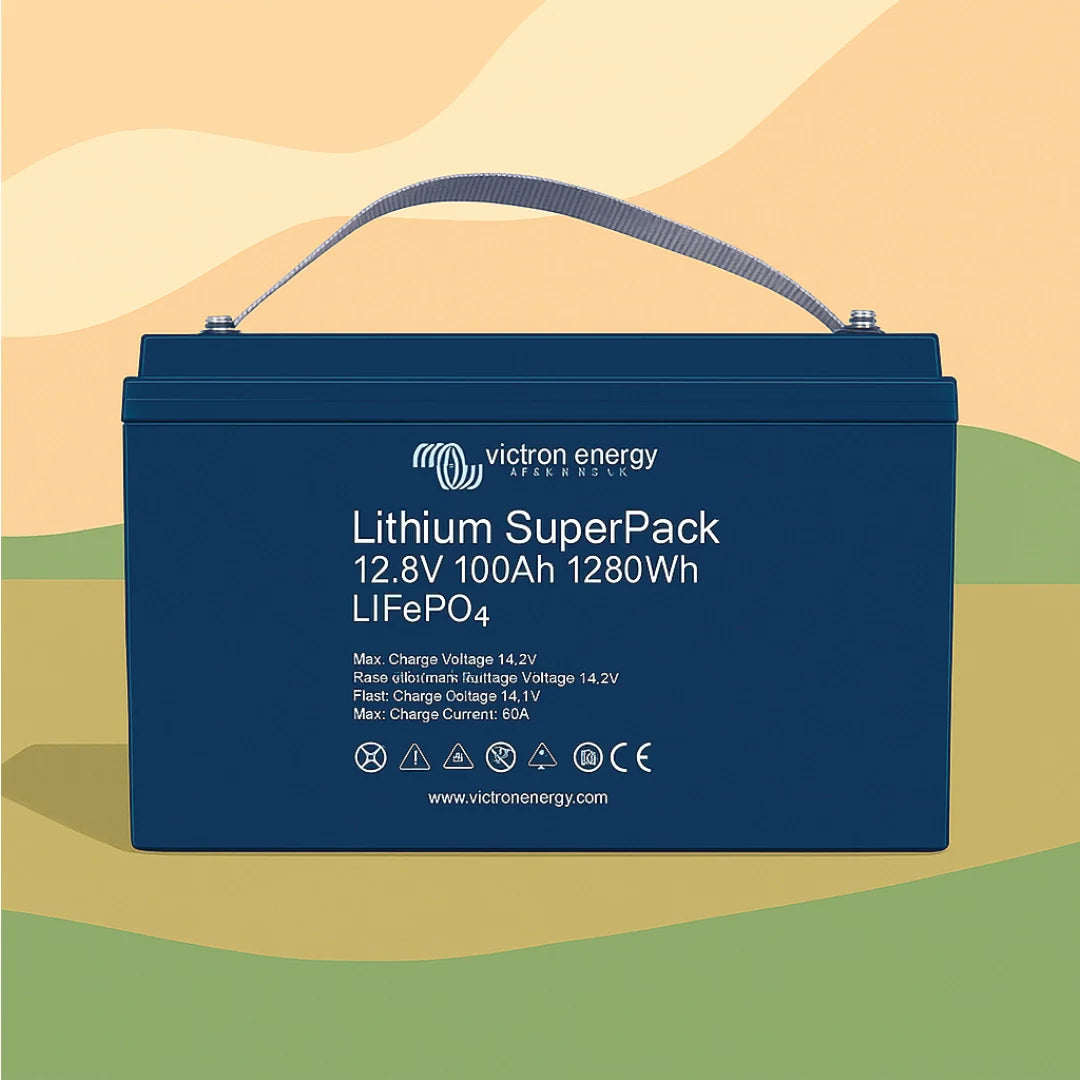
A lithium battery, specifically lithium iron phosphate (LiFePO₄), is an energy storage device using lithium-ion chemistry sealed in a protective enclosure with an integrated battery management system (BMS). The BMS continuously monitors cell voltage, temperature, and discharge current to prevent overcharge, over-discharge, and thermal runaway, the core safety concern with lithium technology.
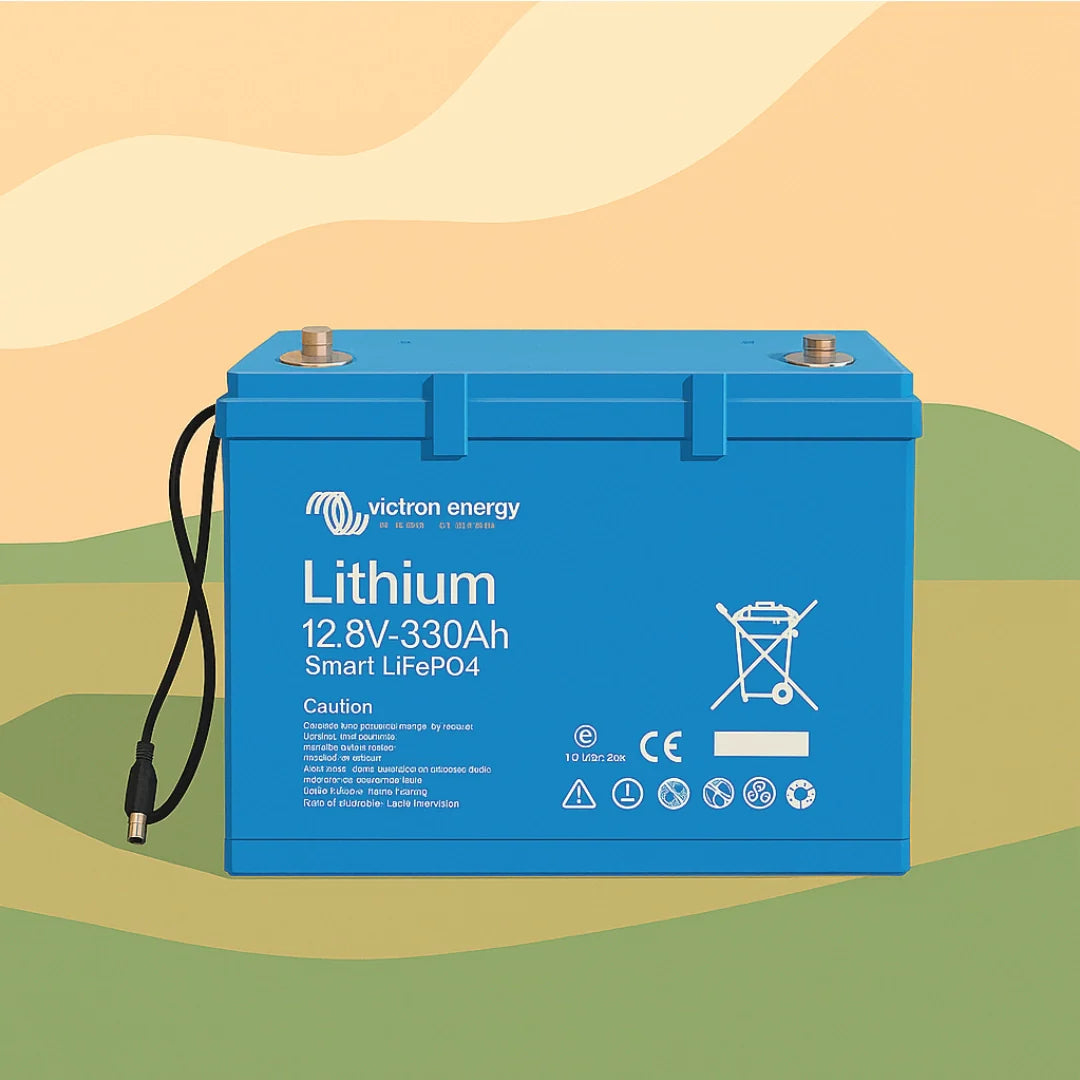
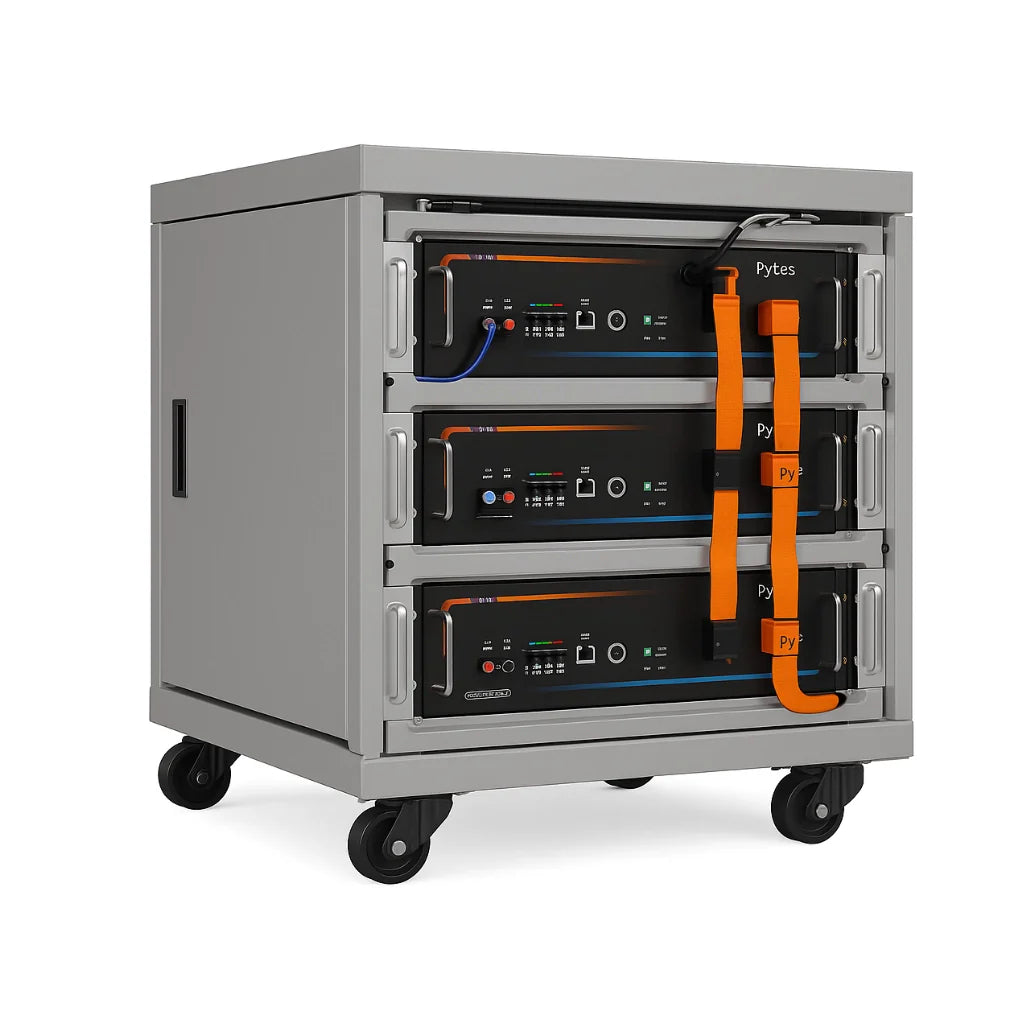
The Skyenergi Core 460Ah lithium battery exemplifies modern leisure battery design. It pairs Grade-A EVE LiFePO₄ cells with a 300A JBD BMS, integrated heat-pad technology for cold-weather operation, and Bluetooth connectivity for real-time monitoring via smartphone. This combination delivers up to 4,000 cycles at 80% depth of discharge, translating to over a decade of reliable service in typical campervan use.

What makes lithium fundamentally different is usable capacity. A 100Ah lithium battery can safely discharge to near-zero without damage, whereas lead-acid batteries degrade rapidly if discharged below 50% state of charge. This means a 100Ah lithium system provides roughly twice the usable energy of a 100Ah lead-acid system. For campervans running fridges, heating, and inverters continuously, this difference is material.
The Skyenergi Edge 100Ah lithium battery takes a stripped-down approach: same core technology, 100A JBD BMS, no Bluetooth or heat pad, but the same strong LiFePO₄ chemistry. It's designed for installers and users who prioritise reliability over monitoring features and want to reduce cost without sacrificing performance.
What Is a Lead-Acid Battery?
A lead-acid battery is a chemical energy storage device using lead dioxide plates, lead plates, and sulphuric acid electrolyte. The chemical reaction between these materials generates electrical current. Modern leisure batteries come in three variants: flooded (traditional, requiring water top-ups), AGM (absorbent glass mat, sealed), and gel (electrolyte suspended in silica gel, also sealed).
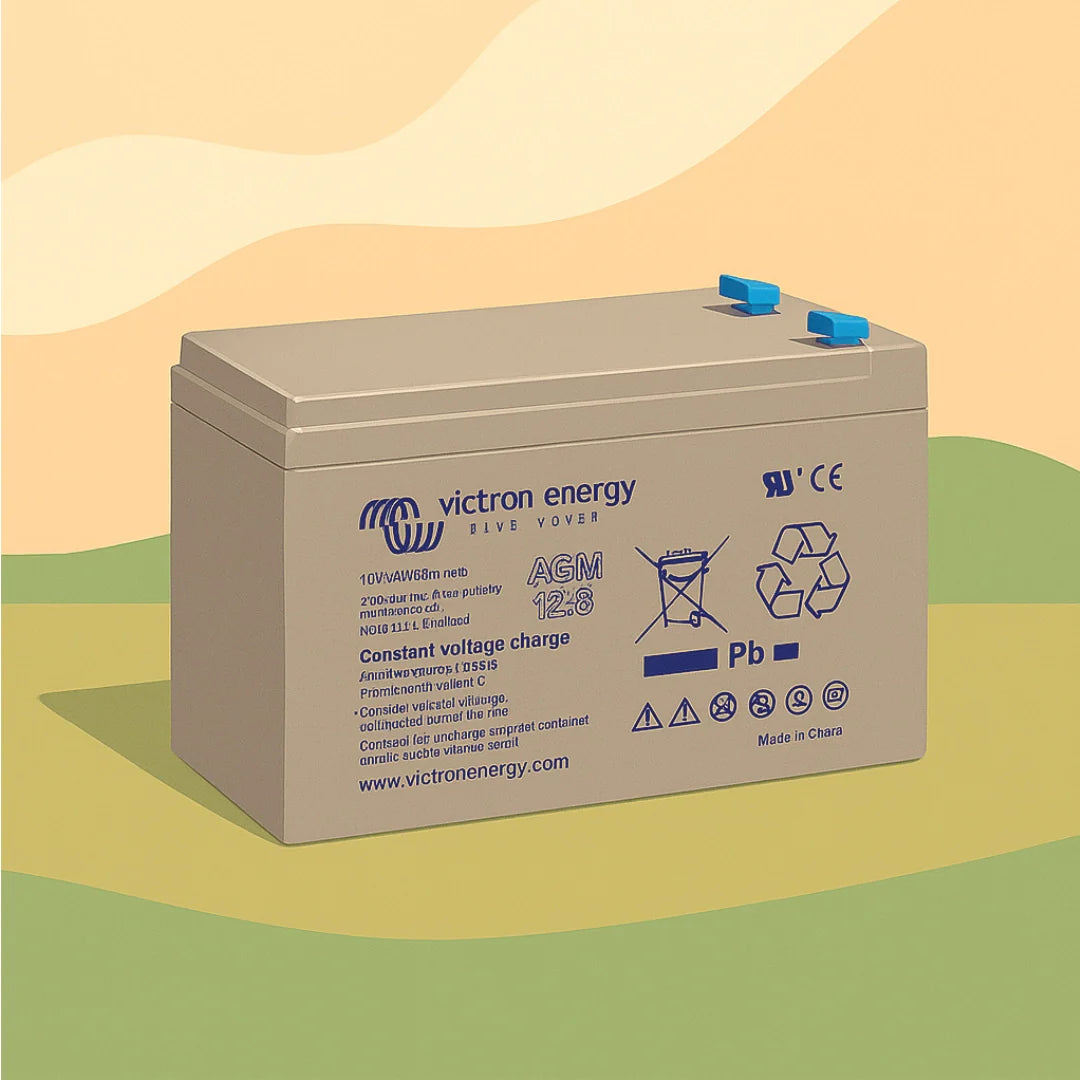
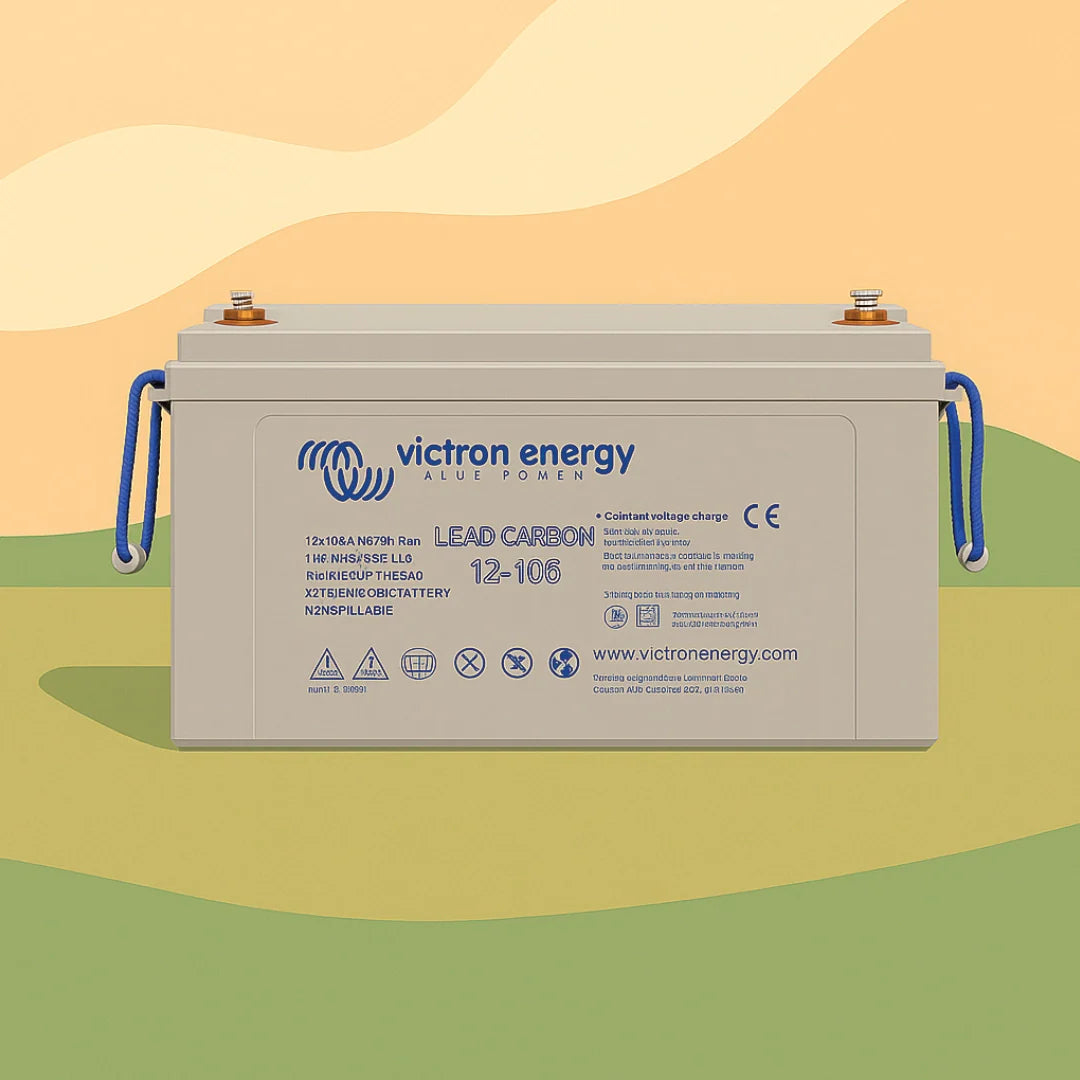
The Victron Energy AGM 12V 110Ah battery represents the standard for campervan applications. AGM batteries offer low internal resistance, making them suitable for high-current discharge applications like inverters. They're sealed, maintenance-free in normal use, and widely compatible with existing 12V systems. The Victron gel variant (12V 110Ah) provides slightly better deep-cycle durability through its gel electrolyte, which reduces acid stratification and extends cycle life by 10-15% compared to AGM.
Lead-acid chemistry has a critical weakness: sulphation. When a lead-acid battery remains partially discharged for extended periods, lead sulphate crystals form on the plates, permanently reducing capacity. A lithium battery has no sulphation mechanism, it simply doesn't degrade from partial discharge. For campervans left sitting between trips, this is a meaningful advantage.

The depth of discharge (DoD) limitation is equally important. Lead-acid batteries should not be discharged below 50% state of charge if you want them to last. Discharging to 20% state of charge repeatedly cuts lifespan by half. Lithium batteries tolerate 80-100% DoD without penalty, which means you're paying for capacity you can actually use.
Cycle Life and Depth of Discharge Comparison
Cycle life is where the economic case for lithium becomes compelling. A cycle is one complete charge-discharge event. A 100Ah lithium battery rated for 4,000 cycles at 80% DoD delivers approximately 320 kWh of total energy throughput before capacity drops to 80% of original.
Lead-acid batteries typically deliver 500-1,000 cycles, depending on depth of discharge. An AGM battery discharged to 50% DoD (its safe limit) might deliver 800 cycles before failure. That's roughly 40 kWh of total energy throughput. The lithium battery delivers 8 times more energy over its lifespan from the same nominal capacity.
The cost-per-cycle calculation is where lithium wins decisively. A Skyenergi Core 460Ah lithium battery costs £889 and delivers approximately 1,472 kWh over 4,000 cycles at 80% DoD. That's roughly £0.60 per kWh. A Victron AGM 110Ah costs £204.05 and delivers approximately 44 kWh over 800 cycles at 50% DoD. That's roughly £4.64 per kWh. Over the lifespan of your campervan, lithium is dramatically cheaper per unit of energy delivered.
Depth of discharge (DoD) is the percentage of battery capacity you can safely draw without damage. Lead-acid batteries have a hard ceiling at 50% DoD for leisure applications. Discharging to 30% state of charge (70% DoD) causes accelerated degradation. Lithium batteries tolerate 80-100% DoD without penalty, which means a 100Ah lithium battery gives you 80-100Ah of usable energy, while a 100Ah lead-acid battery gives you only 50Ah of usable energy.
For campervan owners, this translates to real-world implications. A 100Ah lithium system with solar can run a 50W fridge continuously for 16 hours before needing a charge. A 100Ah lead-acid system can run the same fridge for 8 hours before hitting the safe discharge limit. You're effectively getting twice the usable capacity from the same nominal battery size.
Weight, Size and Payload Impact
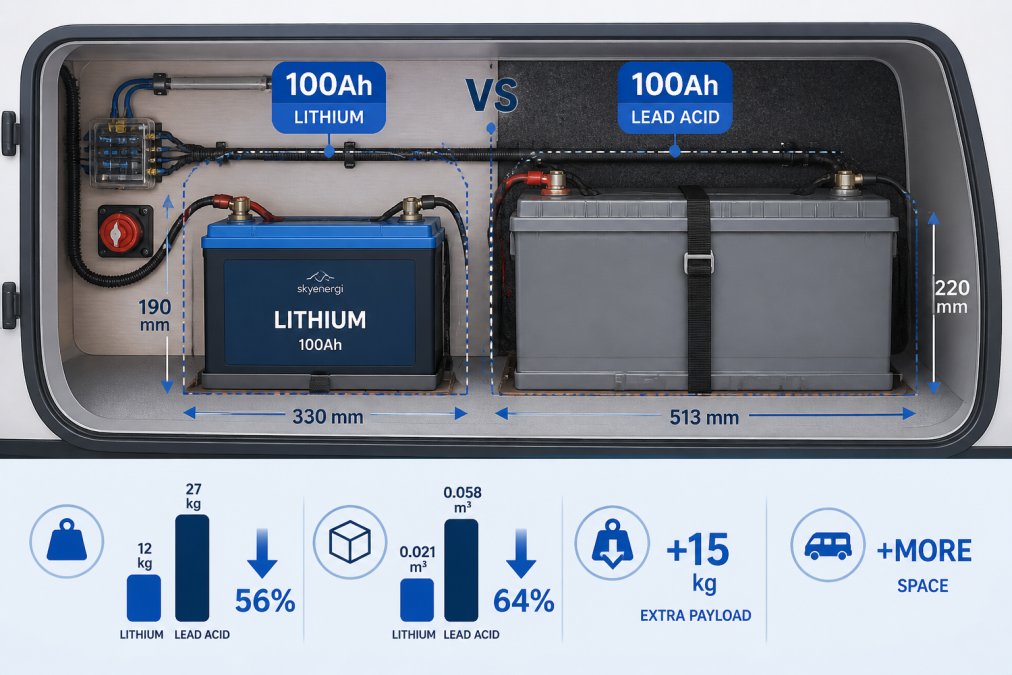
A 100Ah lithium battery weighs approximately 12-14 kg. A 100Ah lead-acid battery (AGM or gel) weighs 32-35 kg. That's a 20 kg difference in a single battery, equivalent to 4-5 additional jerry cans of fresh water or camping equipment.
Campervan payload capacity is fixed by the vehicle's maximum authorised mass (MAM) and kerb weight. Every kilogram of battery weight reduces the weight you can carry in water, fuel, food, and equipment. A conversion using four Skyenergi Edge 100Ah lithium batteries (total 56 kg) versus four Victron AGM 110Ah batteries (total 140 kg) frees up 84 kg of payload, often the difference between legal and illegal overloading.
Size is equally important in tight spaces. A lithium battery is roughly 45-50% smaller by volume than an equivalent lead-acid battery. The Skyenergi Core 460Ah is compact enough to fit under many campervan benches or in dedicated battery boxes. Lead-acid batteries of equivalent capacity require considerably more space, forcing compromises in layout or requiring external battery boxes that consume precious storage.
For professional campervan converters and DIY builders, this weight and space advantage is material. Lighter systems improve fuel economy, reduce tyre wear, and lower the risk of exceeding payload limits. Smaller batteries enable more flexible installation locations, improving weight distribution and freeing space for water tanks, cargo, or living amenities.
Skyenergi Lithium Battery Performance and Integration
Skyenergi's Edge and Core lithium batteries are designed specifically for UK campervan and off-grid applications. Both use JBD battery management systems (BMS), the Edge with a 100A BMS for smaller systems, the Core with a 300A BMS for high-current applications involving inverters or multiple loads.
The Core 460Ah represents the premium option. Its 300A BMS handles continuous discharge currents up to 300A, making it suitable for 3000W inverters and fast charging from solar or alternator sources. The integrated heat-pad technology is critical for UK winter conditions, it maintains safe charging temperatures even when ambient temperature drops below freezing, something lead-acid batteries cannot do reliably.
The Edge 100Ah is the practical choice for smaller systems or budget-conscious builds. It delivers the same LiFePO₄ chemistry and BMS protection as the Core, but without Bluetooth monitoring or heat-pad technology. For installers integrating with existing SRNE solar charge controllers, the Edge pairs seamlessly: the SRNE controller communicates directly with the battery's BMS via CAN-bus protocol, optimising charge profiles in real time.
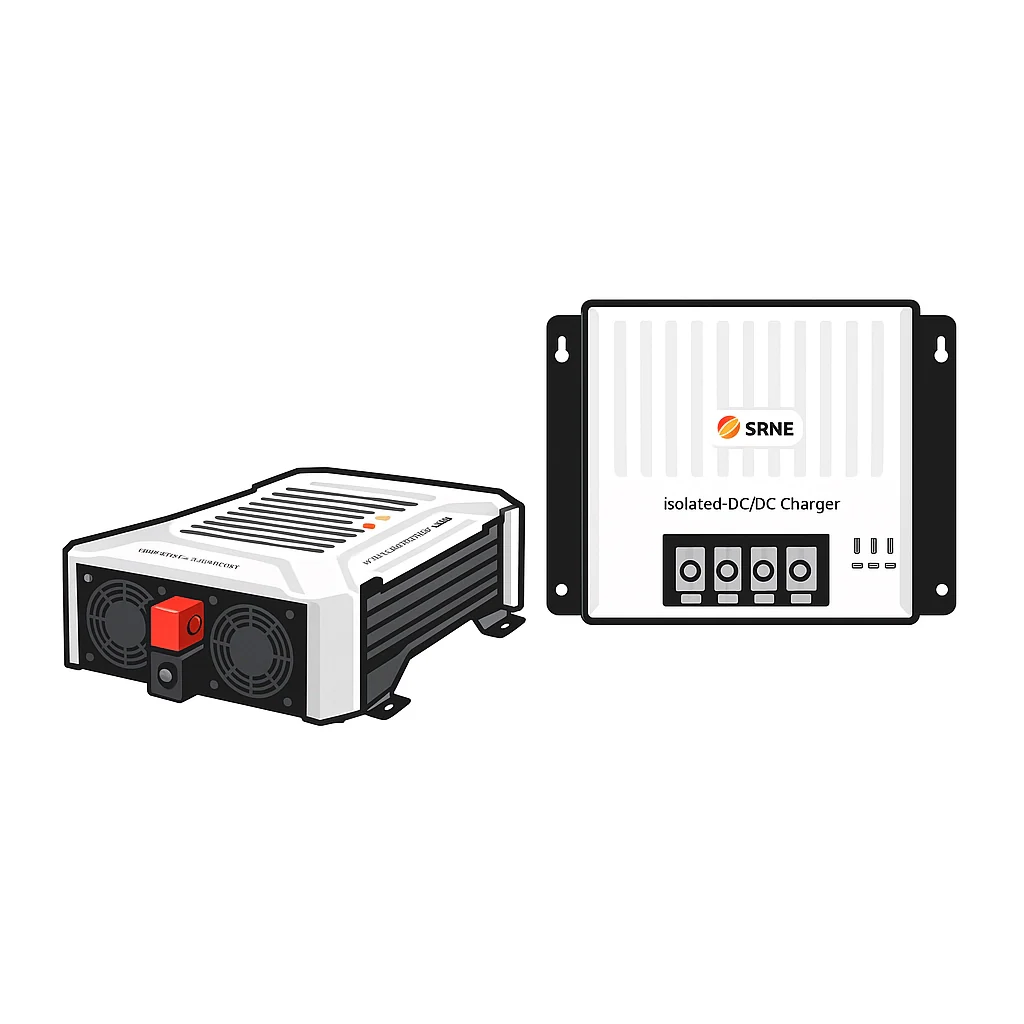
Both Skyenergi batteries are compatible with standard 12V leisure system components: MPPT solar charge controllers, DC-to-DC chargers, inverter-chargers, and power distribution equipment. The BMS integrates with SRNE charging systems, allowing the controller to adjust charging voltage and current based on battery temperature and state of charge, a feature that extends battery lifespan and improves reliability in variable weather conditions.
Leisure Battery Charging Requirements and SRNE Compatibility
Lead-acid batteries require a three-stage charging profile: bulk charge (constant current until 80% state of charge), absorption (constant voltage at 14.4-14.6V for AGM, 13.8-14.2V for gel), and float (13.2-13.8V for maintenance). The absorption stage is critical, it can take 4-8 hours to fully charge a lead-acid battery, even with a high-current charger.
Lithium batteries require a different approach. They accept constant current until 95-100% state of charge, then a brief constant-voltage stage at a lower voltage (typically 13.6V for LiFePO₄). This means lithium batteries charge in 1-3 hours from empty to full, compared to 8-12 hours for lead-acid.
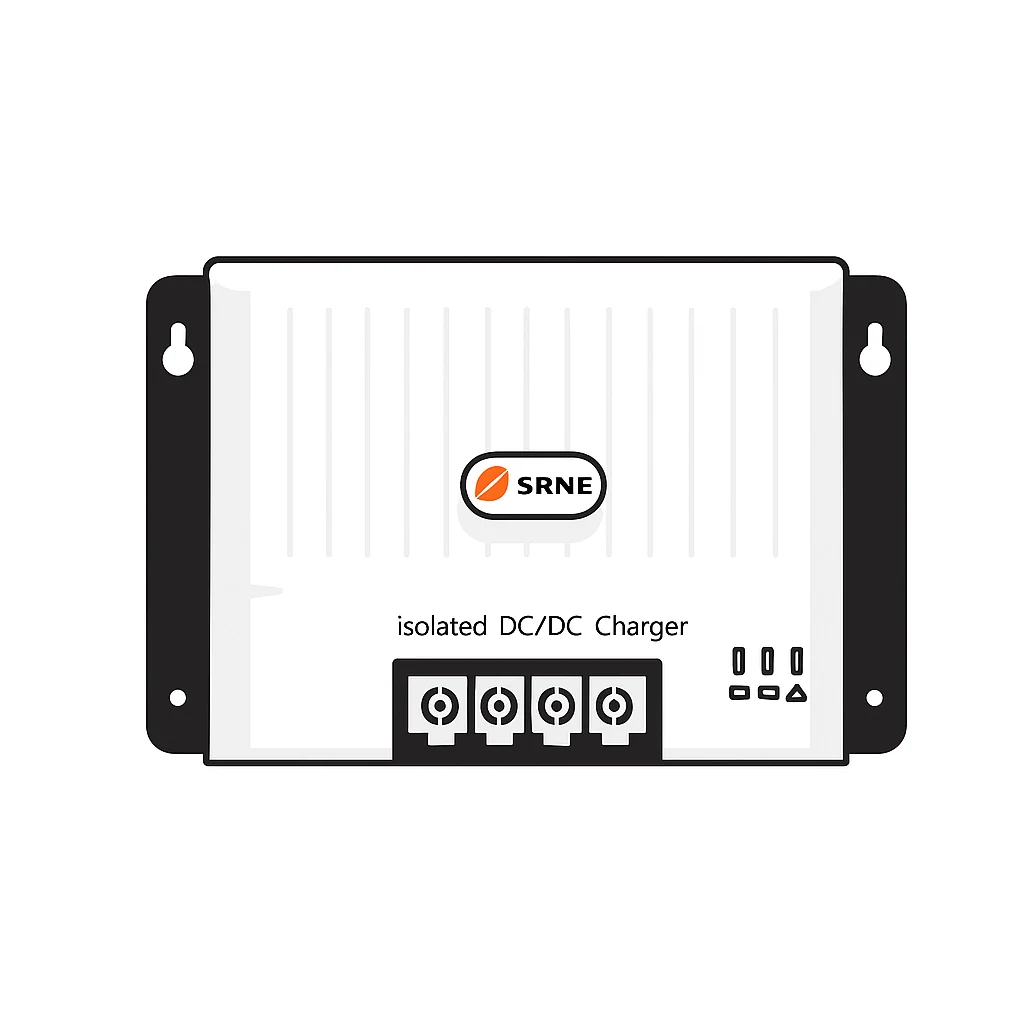
SRNE solar charge controllers are engineered for lithium compatibility. They detect the battery chemistry (via BMS communication on CAN-bus models) and automatically apply the correct charge profile. When charging a Skyenergi lithium battery with an SRNE controller, the system optimises voltage and current continuously, responding to temperature, cloud cover, and state of charge in real time.
For lead-acid systems, the charging process is less flexible. Standard SRNE controllers use fixed voltage setpoints, which can cause overcharging in lead-acid systems during low-load conditions. This is why many lead-acid campervan systems require more active management, particularly in variable weather or seasonal use patterns.
The practical outcome: a lithium system with SRNE charging requires minimal monitoring. The BMS and controller communicate continuously, adjusting charge rates automatically. A lead-acid system requires more active management, particularly in variable weather or seasonal use patterns.
Charging efficiency is another advantage. Lithium batteries accept charge at 95%+ efficiency across a wide current range. Lead-acid batteries become increasingly inefficient as they approach full charge, efficiency can drop to 50% or lower in the final 20% of the charge cycle. For solar systems where energy is limited, this efficiency difference means more usable energy from the same solar array.
Cold Weather Performance and System Reliability
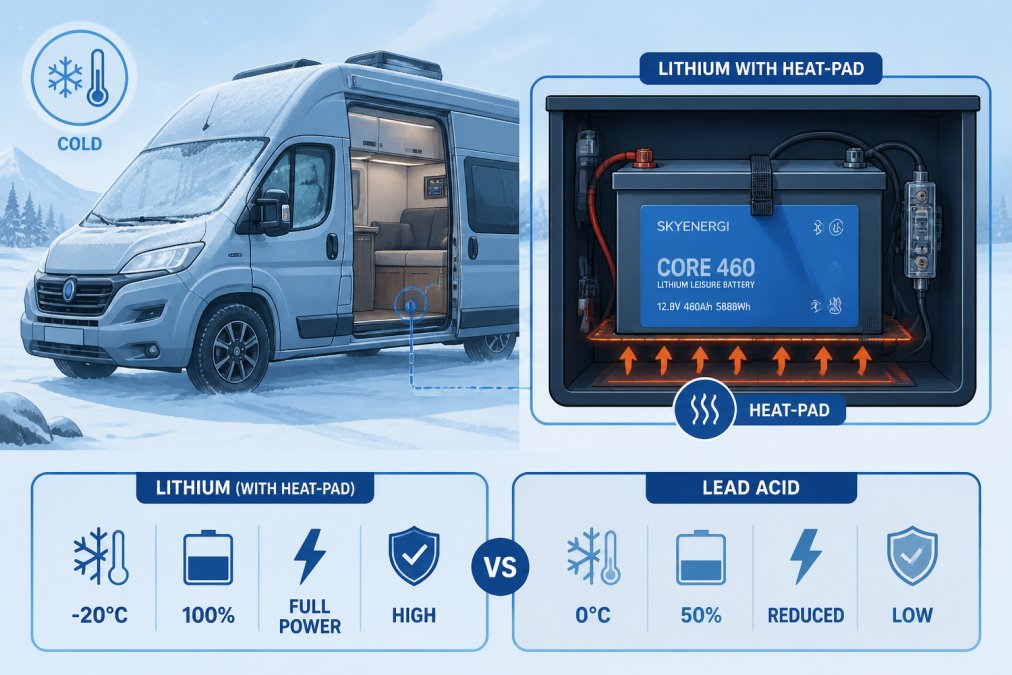
This is where lithium and lead-acid diverge most dramatically in UK conditions. Lead-acid battery capacity drops sharply in cold weather. At 0°C, a lead-acid battery delivers only 50% of its rated capacity. At -10°C, it's down to 30%. Below -20°C, a lead-acid battery is essentially non-functional.
Lithium batteries maintain capacity much better in cold conditions. A LiFePO₄ battery at 0°C delivers 80-85% of its rated capacity. The challenge isn't capacity loss, it's charging. Most lithium batteries cannot charge safely below 0°C because the internal chemistry becomes unstable, risking lithium plating and permanent damage.
The Skyenergi Core 460Ah solves this with integrated heat-pad technology. The heat pad warms the battery internally when ambient temperature drops below 5°C, enabling safe charging even in freezing conditions. This is essential for UK winter camping or permanent off-grid installations in northern regions.
Lead-acid batteries have no equivalent solution. You can insulate them or use external heating, but you cannot safely fast-charge a cold lead-acid battery. This means winter campers often need to wait for the battery to warm naturally before charging from solar or alternator, a significant limitation when daylight hours are short.
System reliability in cold weather also depends on voltage stability. Lead-acid batteries experience voltage sag under load when cold, a 50A discharge at -10°C can cause a 2-3V drop in output voltage. This can shut down sensitive equipment like water heaters or fridge compressors. Lithium batteries with a properly sized BMS maintain stable voltage across the full discharge curve, regardless of temperature.
Cost Analysis: Upfront vs. Long-Term Value
The initial purchase price gap is substantial. A Skyenergi Edge 100Ah lithium battery costs £219.00. A Victron AGM 110Ah costs £204.05. The lithium option is £14.95 more expensive, a negligible difference at this capacity level.
Scale that to a complete system. Four Edge 100Ah batteries (400Ah total) cost £876.00. Four Victron AGM 110Ah batteries (440Ah total) cost £816.20. The lithium system costs £59.80 more upfront but delivers twice the usable capacity (320Ah vs. 220Ah usable at safe discharge limits) and lasts 4-5 times longer.
Over a 10-year period, you'll likely replace the lead-acid system twice, purchasing 8 batteries total for £1,632.40. The lithium system requires one purchase of 4 batteries for £876.00. The lithium system is cheaper over time, even before accounting for the improved usable capacity and charging speed.
The Skyenergi Core 460Ah (£889.00) is a premium option, but it's designed for high-current applications. Compared to an equivalent lead-acid system (4x Victron AGM at £816.20), the Core costs £72.80 more but delivers 460Ah of usable capacity versus 220Ah usable from lead-acid. You're paying for capacity and reliability, not a luxury upgrade.
Other factors affect long-term cost:
- Charging equipment compatibility: Lithium systems work with simpler MPPT controllers because the BMS handles complex charging logic. Lead-acid systems often require more sophisticated charge controllers to prevent overcharging.
- Maintenance: Lead-acid batteries require periodic water top-ups, terminal cleaning, and equalisation cycles. Lithium batteries require none of this.
- System efficiency: Lithium systems lose less energy to charging inefficiency, meaning more usable energy from the same solar array. This reduces the size (and cost) of solar panels needed.
For a typical campervan, the total cost of ownership favours lithium over 5+ years, even accounting for the higher initial purchase price.
Choosing between lithium and lead-acid comes down to your priorities and constraints. If you're building a new system, prioritise off-grid independence, and have adequate payload capacity, lithium delivers superior reliability, faster charging, and lower long-term cost. If you're replacing a failed battery in an existing system with tight space and budget constraints, lead-acid is still a practical option, but expect shorter lifespan and more maintenance.
The Skyenergi team has designed both the Edge and Core lithium batteries to solve real problems UK campervan owners face: weight limits, tight installation spaces, cold weather reliability, and the need for fast charging during short daylight hours. With integrated BMS protection, SRNE solar charge controller compatibility, and fast UK delivery, Skyenergi provides a complete lithium power system without the complexity of sourcing components separately. Explore the Skyenergi Edge 100Ah Lithium Leisure Battery for straightforward performance, or step up to the Skyenergi Core 460Ah with heat-pad technology if you need maximum capacity and cold-weather charging capability.
Frequently Asked Questions
Are lithium batteries worth it for a motorhome or campervan?
Yes, for most campervan owners. Lithium batteries deliver 4,000+ cycles at 80% depth of discharge, roughly 10+ years of service. Lead-acid batteries typically manage 300-500 cycles. The upfront cost is higher, but the lifespan, weight savings, and charging efficiency mean you recoup the difference over time. Skyenergi lithium options like the Edge 100Ah (£219) or Core 460Ah (£889) are built for deep-cycle leisure use and integrate seamlessly with solar charge controllers and DC-to-DC chargers.
Can I replace a lead-acid battery with lithium without changing my charger?
Not always. Lead-acid chargers are designed for slower charging profiles and specific voltage curves. Lithium batteries, especially those with integrated battery management systems, require compatible charging equipment. Skyenergi lithium batteries work with most modern solar charge controllers and SRNE-compatible systems, but you may need to upgrade your alternator charging setup or add a dedicated lithium charger. Check your existing charger's specifications before switching.
How much lighter is a lithium battery compared to lead-acid?
Lithium batteries are roughly 60-70% lighter than equivalent lead-acid units. A 100Ah lithium battery weighs around 12-15 kg, while a 100Ah lead-acid battery weighs 30-35 kg. This weight reduction improves fuel economy, payload capacity, and handling in a campervan. The Skyenergi Edge 100Ah is compact and lightweight, making it ideal for retrofits where space and weight matter.
What is depth of discharge and why does it matter?
Depth of discharge (DoD) is the percentage of a battery's capacity you use before recharging. Lead-acid batteries should only be discharged to 50% DoD to avoid damage and premature failure. Lithium batteries tolerate 80-100% DoD safely, meaning you access far more usable energy from the same capacity. This is why a 100Ah lithium battery often outperforms a 200Ah lead-acid battery in real-world campervan use.
How do I know a lithium battery will work with my solar setup?
Check that your solar charge controller (such as SRNE models) supports lithium battery profiles or has adjustable charge voltage settings. Skyenergi lithium batteries are designed for compatibility with standard MPPT and PWM controllers. If your system uses an older lead-acid charger, you may need to reprogram it or upgrade to a lithium-compatible controller. Skyenergi can advise on system integration during the purchasing process.
This article was written using GrandRanker
Prev post

Best Solar Controller for Lithium: 2026 Guide
Updated on 15 August 2026
Next post

How Long Do Lithium Batteries Last: A Guide
Updated on 12 August 2026


