





What is lithium battery recycling: a clear guide
Discover what is lithium battery recycling and learn how to safely dispose of your batteries. Protect the environment and your future!
TL;DR:
- Proper recycling of lithium batteries reduces fire hazards and environmental damage caused by landfilling. Several methods, including pyrometallurgy, hydrometallurgy, and direct recycling, recover valuable materials while minimizing environmental impact. Responsible disposal involves using designated collection points, handling damaged batteries carefully, and considering second-life reuse to extend their value.
Most people who own a lithium battery in a campervan, motorhome, or home energy system have no idea what to do with it when it reaches end of life. That gap in knowledge is not just inconvenient. Lithium battery disposal done incorrectly is a genuine fire hazard, and the environmental impact of lithium batteries discarded into general waste is significant. Understanding what is lithium battery recycling, how the process works, and what your responsibilities are is the starting point for making genuinely responsible decisions about your energy equipment.
Table of Contents
- Key takeaways
- What lithium batteries contain and why recycling matters
- Lithium battery recycling methods explained
- Safety, regulations, and correct disposal
- Environmental and economic benefits of recycling
- How to recycle lithium batteries responsibly
- My perspective on where recycling falls short
- Skyenergi lithium battery and solar solutions
- FAQ
Key takeaways
| Point | Details |
|---|---|
| Recycling is not optional | Many regions now ban lithium batteries from landfill and general waste due to fire and toxic risks. |
| Multiple recycling methods exist | Pyrometallurgy, hydrometallurgy, and direct recycling each have different recovery rates and environmental profiles. |
| Environmental gains are substantial | Recycling lithium batteries cuts greenhouse gas emissions by up to 81% compared to mining new materials. |
| Safe handling matters before disposal | Damaged or swollen batteries require specialist handling and must never go into standard recycling bins. |
| Policy frameworks are tightening | Extended Producer Responsibility programmes are reshaping how manufacturers, retailers, and users handle battery waste. |
What lithium batteries contain and why recycling matters
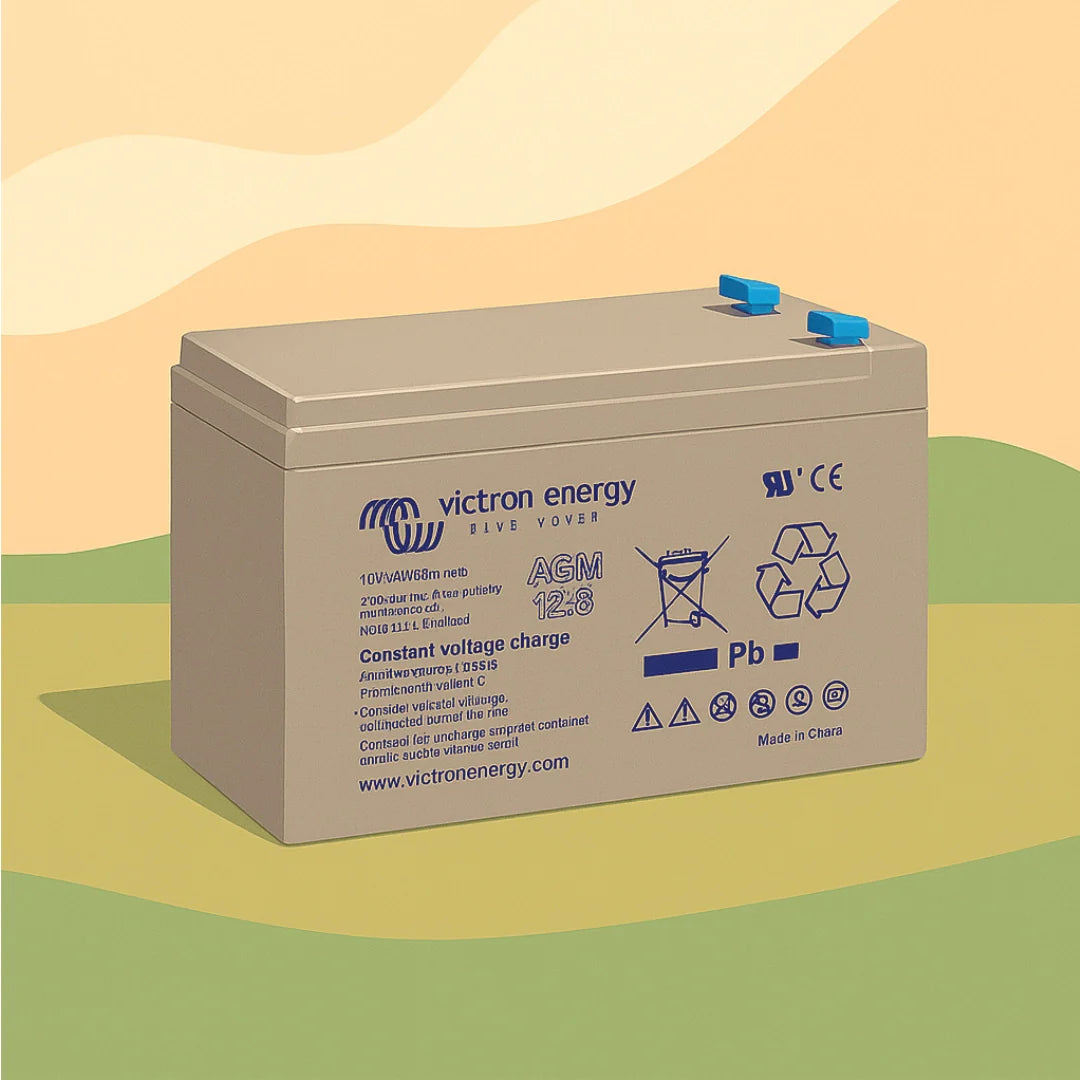
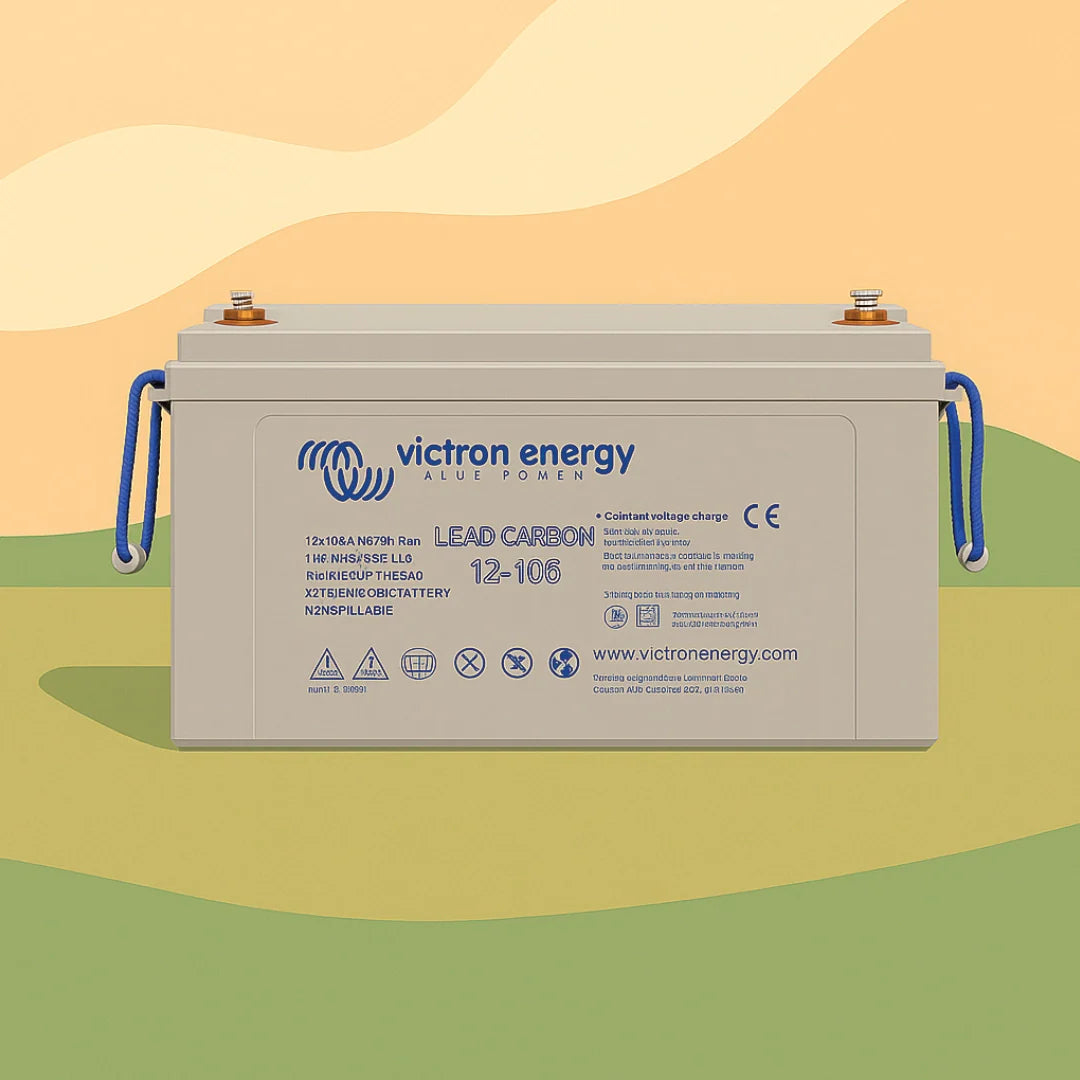
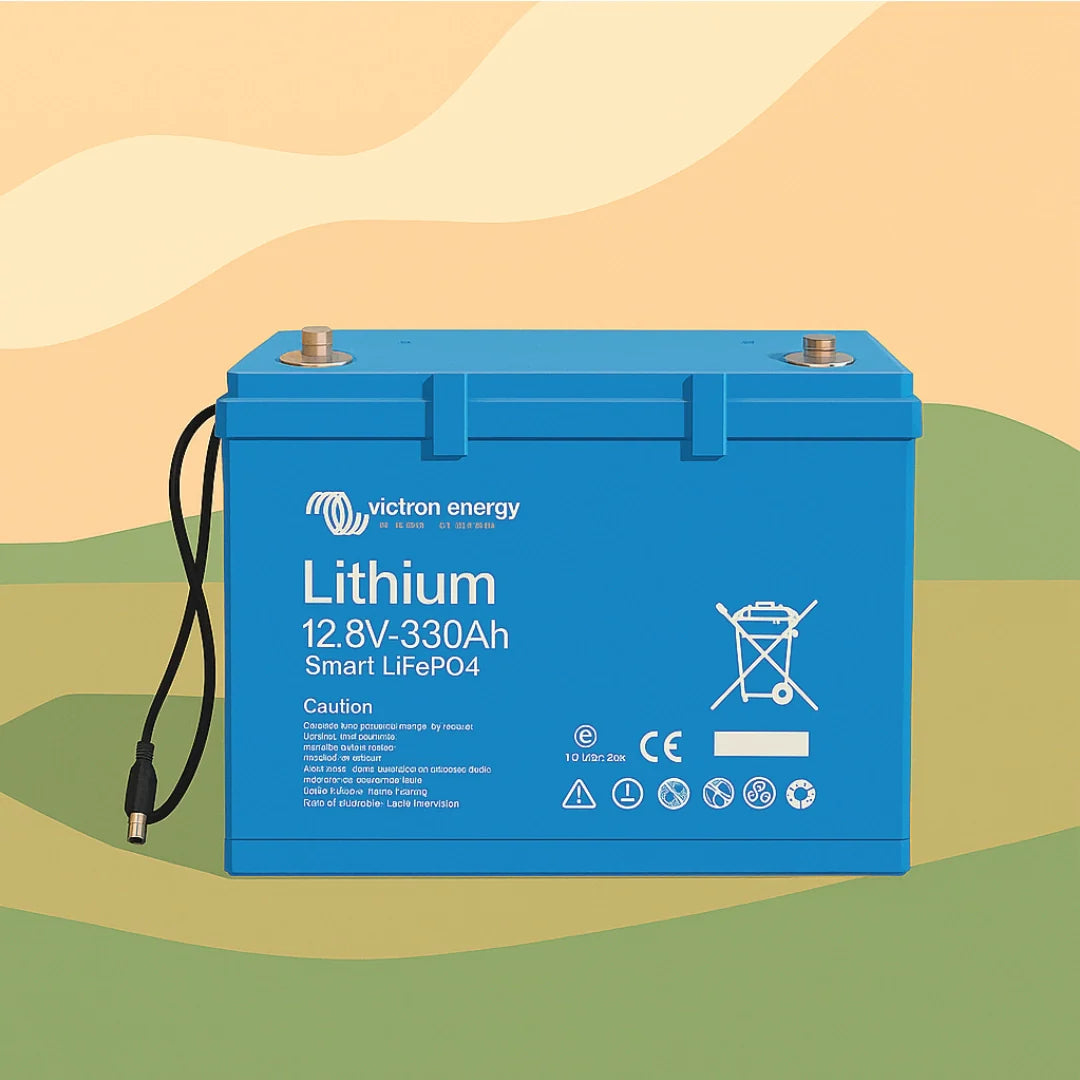
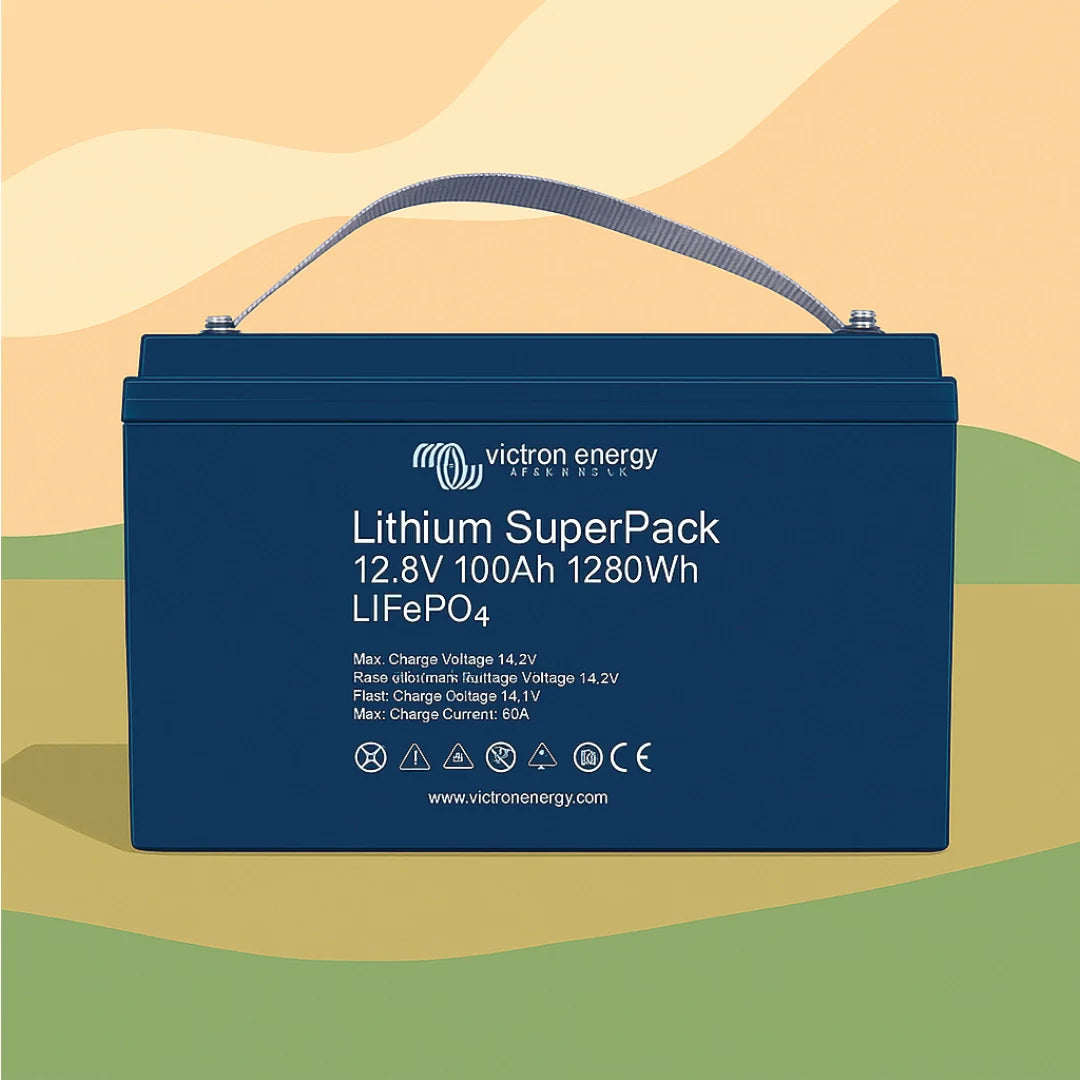
Lithium-ion batteries are not a single product. They span a wide range of chemistries and form factors, from the small cells in consumer electronics to the large lithium iron phosphate (LiFePO4) packs used in off-grid solar systems, campervans, and residential storage. What they share is a composition that includes lithium, cobalt, nickel, manganese, and graphite, along with electrolyte solvents and a polymer separator.
These materials are both valuable and hazardous. Cobalt and nickel in particular are expensive to mine and geopolitically concentrated, meaning recycling them back into the supply chain reduces dependency on single-source extraction. Battery recycling volume grew from 9 GWh globally in 2019 to 50 GWh in 2024, with projections exceeding 230 GWh by 2030, driven by both policy pressure and the sheer scale of batteries entering the waste stream.
The case for recycling comes down to four clear issues:
- Resource scarcity. Lithium, cobalt, and nickel are finite resources with complex and often damaging extraction processes.
- Toxic contamination. Electrolyte solvents and heavy metals leach into soil and groundwater when batteries are landfilled.
- Fire risk. Lithium-ion cells placed in general waste or crushed during sorting can trigger thermal runaway, causing fires that are difficult to extinguish.
- Supply chain resilience. Recovered materials reduce reliance on raw material imports, strengthening domestic manufacturing for battery producers.
Understanding lithium battery lifespan factors extends how long batteries stay in use, which delays but does not eliminate the need for proper end-of-life handling.
Lithium battery recycling methods explained
The lithium battery recovery process begins before any chemical treatment takes place. Pretreatment is the stage that makes safe recovery possible.
Pretreatment: the essential first step
Pretreatment involves sorting, discharging, disassembly, and crushing to prepare batteries for the recovery stage. Discharging is done using saline solutions that create a controlled short circuit, removing residual electrical energy before cells are opened. Skipping or rushing this stage is the primary cause of industrial accidents during recycling. Only after safe discharge can cells be mechanically shredded to produce what the industry calls “black mass,” a powder containing the active cathode and anode materials.
Three main recycling technologies
| Technology | Temperature | Recovery rate | Key advantage | Main drawback |
|---|---|---|---|---|
| Pyrometallurgy | Over 1,000°C | Moderate | Handles mixed battery types | High energy consumption |
| Hydrometallurgy | Below 200°C | Up to 93% for Li, Ni, Co | High purity material recovery | Significant wastewater output |
| Direct recycling | Ambient to low heat | Variable (developing) | Lowest cost potential | Still largely pilot-scale |
Pyrometallurgy operates at over 1,000°C with high energy consumption, while hydrometallurgy achieves recovery rates of up to 93% for lithium, nickel, and cobalt but produces considerable wastewater. The trade-off is clear. High recovery efficiency through hydrometallurgy comes at a cost in water treatment infrastructure. Pyrometallurgy is more tolerant of mixed battery inputs but burns through significant energy and loses some valuable materials in the slag.
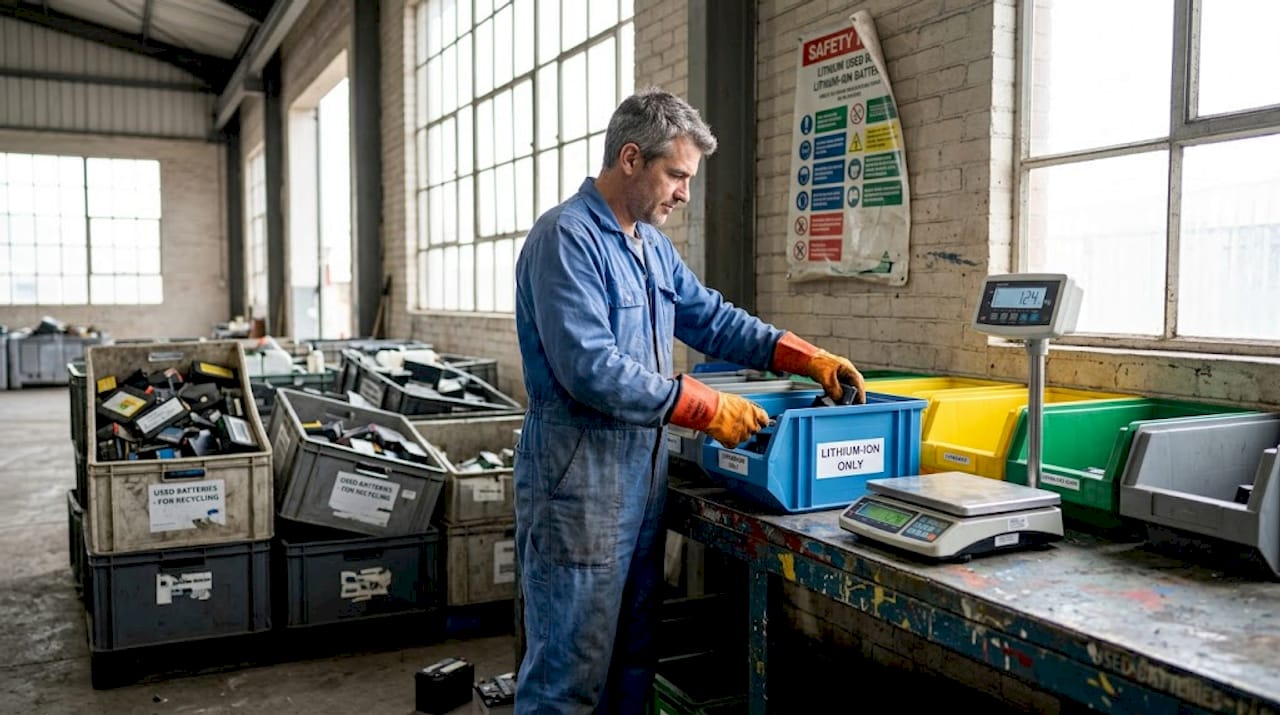
Direct recycling is the most promising emerging approach. Direct recycling methods aim to cut costs by up to 40% and reduce environmental impact by recovering cathode materials in their original structure rather than breaking them down completely. The process avoids the energy-heavy smelting of pyrometallurgy and the chemical-intensive leaching of hydrometallurgy. It is still developing at scale, but several facilities are running pilot programmes in the UK, US, and Asia.
Pro Tip: When evaluating a recycling provider for organisational battery disposal, ask specifically which process they use and what their recovery efficiency and wastewater treatment standards are. Recycling providers differ significantly in priorities: some focus on recovery efficiency, others on lower energy use or closed-loop cathode refinement. The answer will tell you how seriously they take their environmental reporting.
Safety, regulations, and correct disposal
Public understanding of lithium battery disposal lags dangerously behind the reality of the risk. The widespread assumption that lithium-ion batteries can go into a general recycling bin or household waste is, bluntly, wrong.
Thermal runaway can cause intense fires releasing toxic smoke that spread quickly through waste loads, putting waste haulers and facility workers at serious risk. Puncturing or crushing a lithium cell, which is exactly what happens in a standard refuse vehicle, is one of the most common triggers.
Regulations are catching up with the hazard. In the United States, New Hampshire banned lithium-ion batteries from landfill and incineration from July 2025, mandating separate specialist collection. Across the UK and EU, similar prohibitions have been building through waste electrical and electronic equipment (WEEE) regulations, with manufacturers and retailers increasingly obligated to provide take-back schemes.
Batteries containing lithium must be kept separate from general household waste and standard recyclables. Placing them in general bins is not only environmentally damaging; it is a fire hazard to the workers who handle that waste.
The EPA’s Extended Producer Responsibility framework is one of the more structured policy approaches being developed, covering recycling goals, collection models, cost structures, and product design requirements across all battery chemistries. The principle is straightforward: manufacturers bear responsibility for the end-of-life management of the batteries they sell.
Correct disposal steps for individuals and organisations:
- Never place batteries in general waste or kerbside recycling.
- Use designated battery collection points at retailers, councils, or specialist facilities.
- Handle swollen or damaged batteries with care. These must not be transported in standard packaging and require a specialist hazardous waste collection.
- Check the UK battery safety standards relevant to your battery type, particularly if you operate leisure vehicles or off-grid systems.
Environmental and economic benefits of recycling
The benefits of lithium recycling extend well beyond keeping materials out of landfill. A lifecycle analysis from Stanford University published in Nature Communications found that recycling lithium-ion batteries emits 58% to 81% less greenhouse gas, uses 72% to 88% less water, and requires 77% to 89% less energy compared to mining and processing new metals.
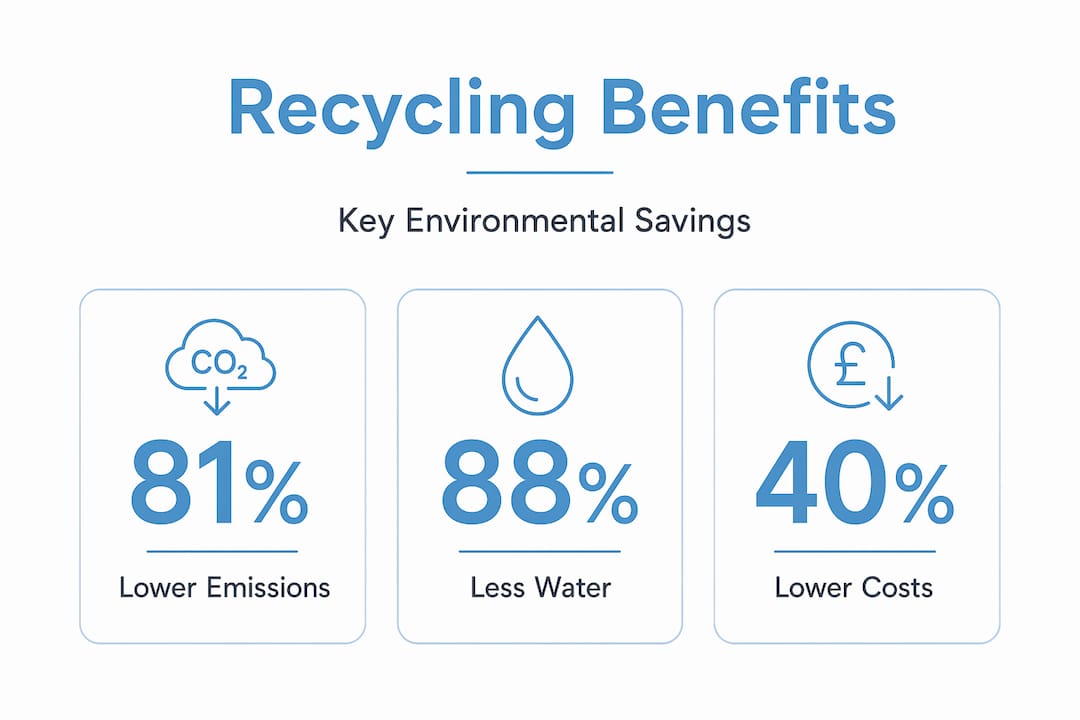
These figures translate directly into reduced pressure on extractive industries. Lithium mining in particular, concentrated in South America’s lithium triangle and parts of Australia, requires enormous volumes of water in arid regions and disrupts local ecosystems. Recovering lithium from spent batteries through hydrometallurgical or direct recycling processes is substantially cleaner per kilogram of material recovered.
| Metric | Saving from recycling vs. virgin mining |
|---|---|
| Greenhouse gas emissions | 58% to 81% reduction |
| Water consumption | 72% to 88% reduction |
| Energy use | 77% to 89% reduction |
The economic case is increasingly compelling. Cobalt prices are volatile, nickel is in demand from multiple sectors, and lithium supply chains are politically sensitive. Recovered materials from recycled batteries reduce exposure to these fluctuations. For manufacturers and fleet operators, integrating recycled material sourcing into procurement also supports sustainability reporting requirements that are becoming standard across UK and EU supply chains.
The circular economy argument is direct: every kilogram of lithium recovered from a recycled battery is a kilogram that does not need to be extracted, refined, and shipped from a mine on another continent.
How to recycle lithium batteries responsibly
Whether you are an individual with a single leisure battery or an organisation managing a fleet of vehicles with lithium energy systems, the process of arranging proper disposal follows a similar path.
- Identify the battery type and condition. LiFePO4, NMC, and other chemistries may be accepted by different facilities. Confirm before transporting.
- Check for damage before moving. Swollen, cracked, or leaking batteries need specialist handling. Contact a hazardous waste contractor rather than a standard recycling drop-off.
- Use a designated collection point. Most large DIY retailers, automotive shops, and council household waste recycling centres (HWRCs) in the UK accept lithium batteries.
- Contact your battery supplier or manufacturer. Many producers operate take-back schemes. Skyenergi recommends checking with your supplier directly for guidance on end-of-life returns.
- Document disposal for organisational records. If you are managing disposal at scale, request a waste transfer note from your recycling provider for compliance purposes.
Pro Tip: Tape over the terminals of any battery before transport. This prevents accidental short circuiting during handling. For safe off-grid battery maintenance, including storage and decommissioning, keeping terminals covered is one of the most straightforward precautions you can take.
Lithium ion battery reuse is also worth considering before recycling. Batteries that no longer meet the performance threshold for their original application (typically below 80% of rated capacity) may still function well in lower-demand second-life uses, such as stationary backup power or smaller off-grid installations. Reuse extends value and delays the recycling process until capacity drops further.
My perspective on where recycling falls short
I’ve spent a lot of time working with lithium battery systems in off-grid and leisure vehicle applications, and the honest reality is that recycling discussions in this space still feel largely theoretical to most end users. People think about battery capacity, charge cycles, and BMS settings. End-of-life management is not front of mind until a battery fails unexpectedly and needs to go somewhere.
What I’ve learned is that the infrastructure gap is real. Industrial recycling technology is advancing rapidly. Direct recycling innovation and high-recovery hydrometallurgical processes exist and are scaling. But for the individual with a 100Ah LiFePO4 battery in a campervan, the practical question of where it actually goes remains unclear. Most council HWRCs do not have clearly signed lithium battery collection points separate from general WEEE.
The piece most guides miss is this: the biggest leverage point is not at the recycling stage. It is at the design and purchase stage. Batteries built with recyclability in mind, using standardised cell formats and accessible enclosures, are dramatically easier and cheaper to process. That means asking your supplier whether the product you are buying has an end-of-life pathway built in, not just a warranty period. As UK energy independence trends evolve, buying with full lifecycle awareness is increasingly part of responsible ownership.
— John
Skyenergi lithium battery and solar solutions
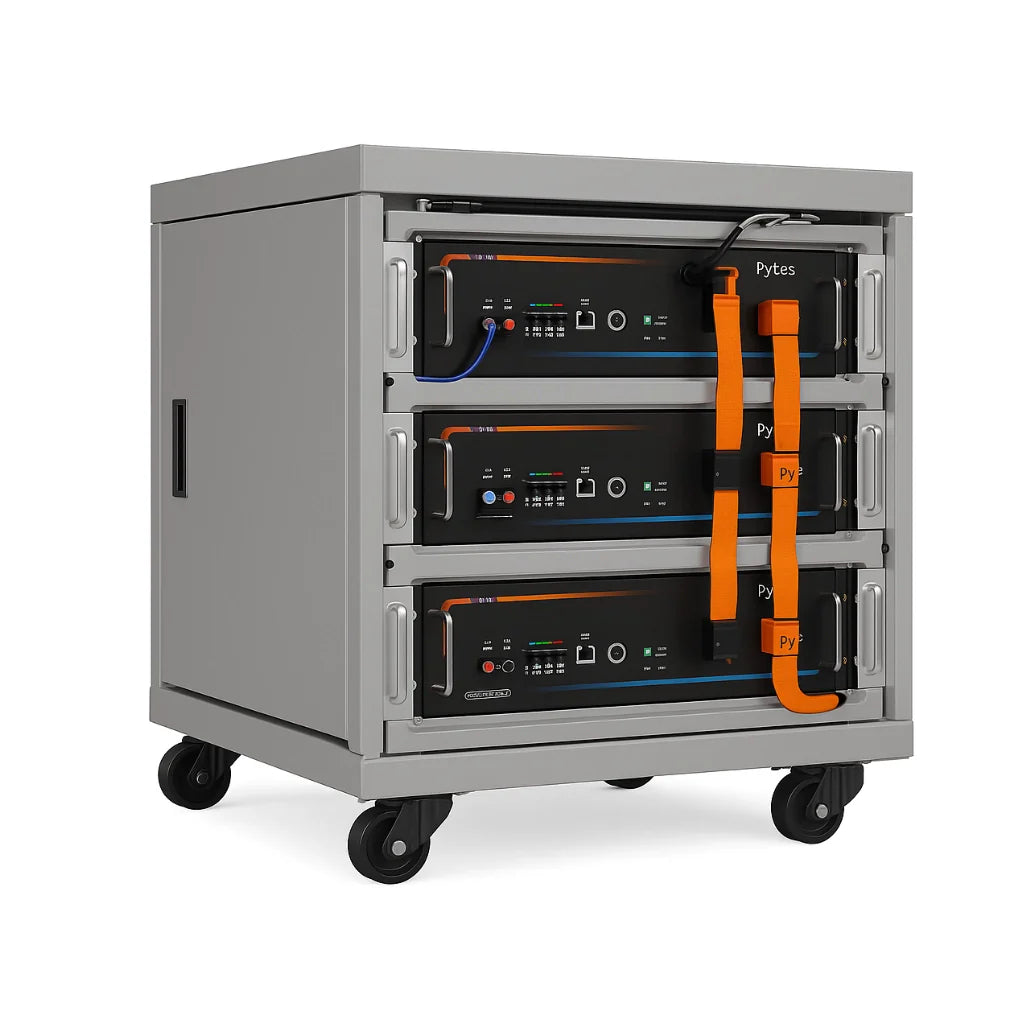
If you are building or upgrading an off-grid or leisure vehicle energy system, Skyenergi supplies high-performance lithium battery systems, solar panels, and charge controllers designed for long-term reliability. Products like the Victron 610W solar panel kit pair Victron MPPT charge controllers with compatible battery options, giving you a well-engineered power solution from day one. For larger setups, the 3kVa solar and battery system covers inverter/charger functionality with battery-to-battery charging and real-time monitoring. Skyenergi sources directly from manufacturers, keeping quality high and prices competitive for anyone serious about energy independence.
FAQ
What is lithium battery recycling?
Lithium battery recycling is the process of recovering valuable materials such as lithium, cobalt, and nickel from spent batteries through industrial methods including pyrometallurgy, hydrometallurgy, and direct recycling, preventing toxic waste and reducing the need for new raw material extraction.
Can lithium batteries go in the general recycling bin?
No. Lithium-ion batteries must never go into general waste or standard kerbside recycling. Crushing or puncturing a cell can trigger thermal runaway, causing fires that are dangerous to waste handlers and difficult to control.
What are the main benefits of lithium recycling?
Recycling lithium batteries cuts greenhouse gas emissions by 58% to 81% and uses up to 88% less water compared to mining virgin materials, while also recovering economically valuable metals for reuse in new battery production.
How do I find a lithium battery recycling point in the UK?
Most large retailers, automotive shops, and council household waste recycling centres accept lithium batteries for specialist disposal. Contact your battery supplier or manufacturer for take-back scheme details, particularly for larger leisure or residential battery packs.
Is lithium ion battery reuse possible before recycling?
Yes. Batteries that have dropped below 80% of their original capacity for their primary use may still be functional in lower-demand second-life applications such as stationary backup power, extending useful life before the battery enters the formal recycling stream.
Recommended
Prev post

The role of battery cells in renewable energy storage
Updated on 26 May 2026
Next post

How to size a battery bank for off-grid power
Updated on 24 May 2026


