


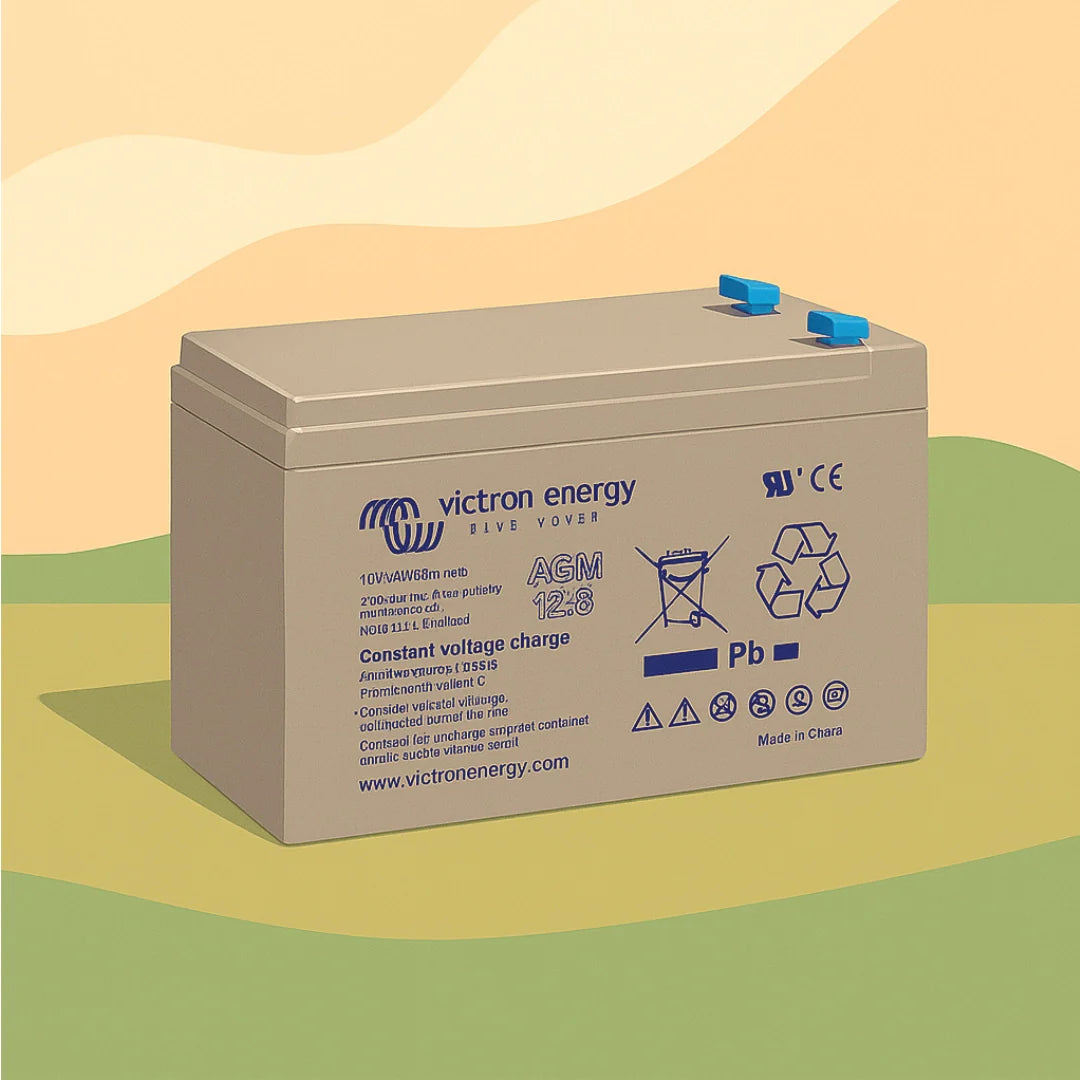
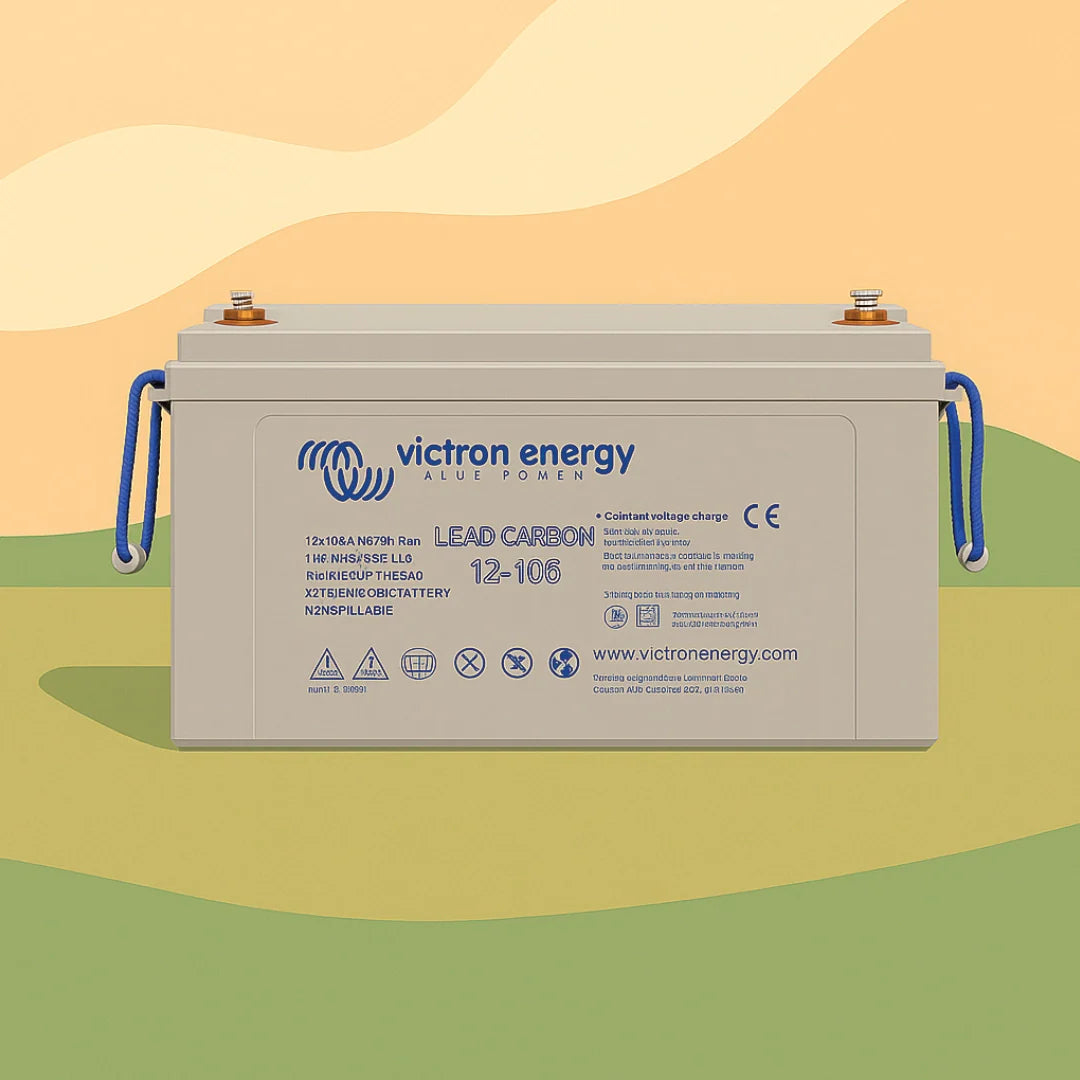
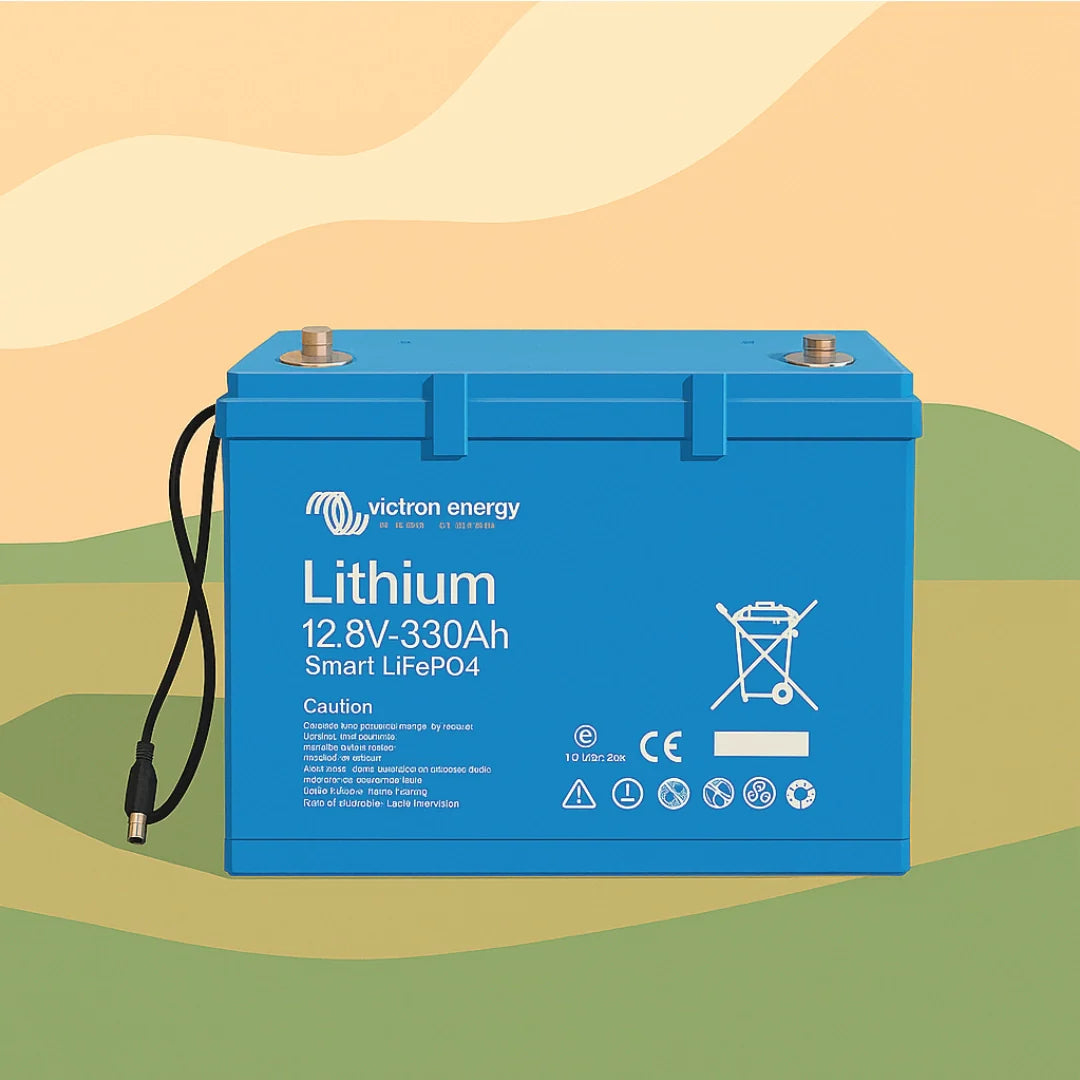
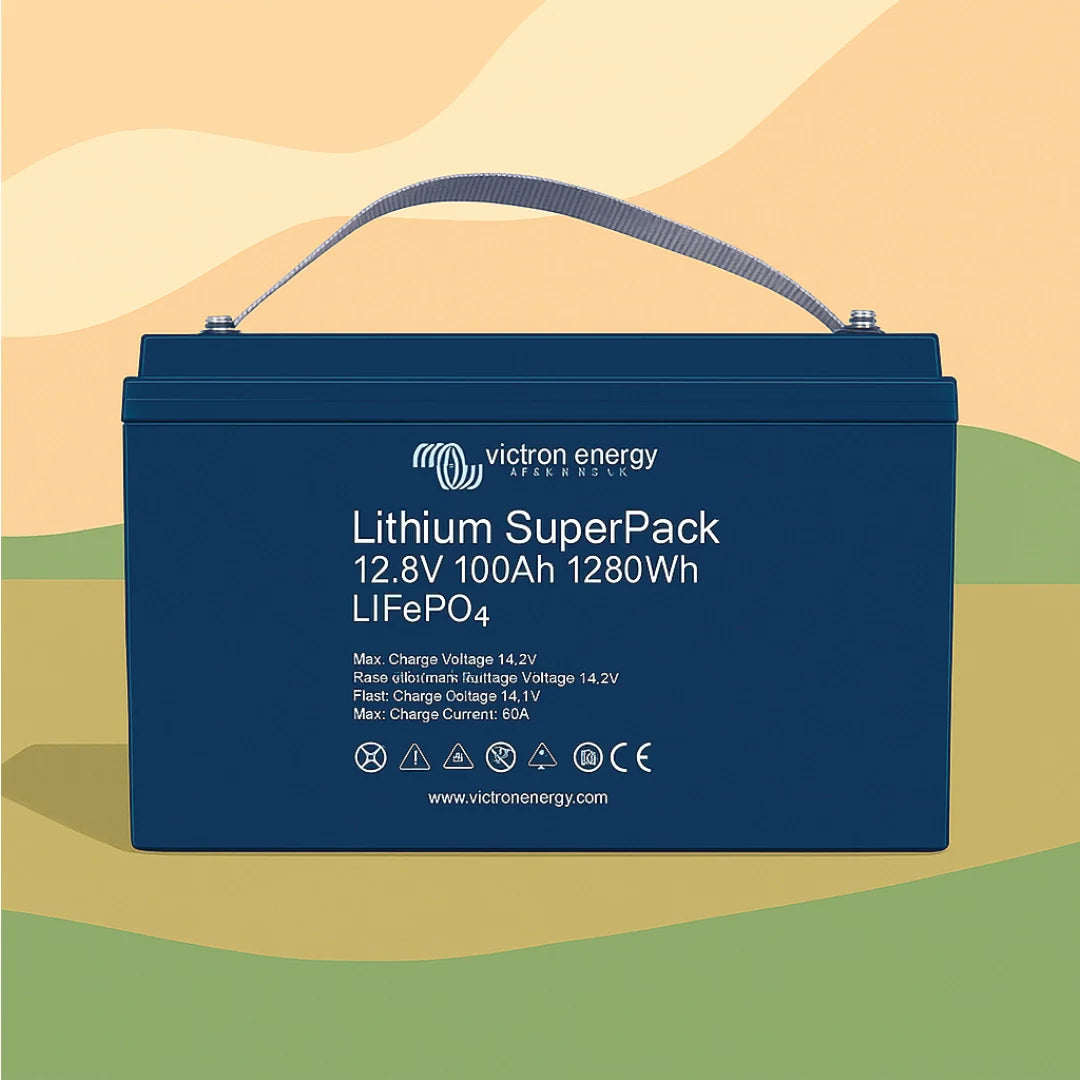



How Bluetooth monitoring transforms off-grid energy
Discover the role of Bluetooth monitoring in energy systems. Enhance off-grid living with real-time battery insights for reliable power management.
TL;DR:
- Bluetooth-enabled battery monitors estimate state-of-charge accurately and transmit data wirelessly, reducing guesswork on off-grid systems. Traditional voltage and shunt-based methods often mislead due to load effects, cold weather, and drift, leading to unexpected power failures. Combining external Bluetooth monitors with internal BMS data provides comprehensive, reliable insights for longer battery life and confident energy management.
Managing power on a campervan or boat without real-time visibility is a constant gamble. Many owners rely on a rough voltage reading or a simple LED indicator to judge battery status, only to find themselves underpowered mid-trip or overcharging on a sunny afternoon. Bluetooth-enabled battery monitors estimate state-of-charge and display it directly on your smartphone, giving UK off-grid users accurate, actionable data at a glance. The result is fewer surprises, longer battery life, and genuine confidence in your energy system.
Table of Contents
- Why traditional battery monitoring can mislead
- How Bluetooth monitoring works in off-grid power systems
- Evidence: Real-world advantages for UK campervans and boats
- Understanding limitations: When Bluetooth data isn’t enough
- What most owners miss about Bluetooth energy monitoring
- Take the next step with reliable off-grid monitoring
- Frequently asked questions
Key Takeaways
| Point | Details |
|---|---|
| Bluetooth means real-time insight | It offers up-to-date battery health and energy status you can trust on your phone or tablet. |
| Improved cost and energy use | Smart monitoring cuts costs and helps you get more out of your renewables off-grid. |
| Beware cold-weather quirks | Extreme conditions can cause monitor readings to diverge, so owners should check carefully in winter. |
| Best practice is cross-checking | For critical journeys, compare data from shunt and battery BMS apps for true confidence. |
Why traditional battery monitoring can mislead
Understanding why manual and analogue battery metering falls short is the starting point for any meaningful upgrade. Most basic voltage gauges read the terminal voltage of a battery, which is a rough proxy for state-of-charge at best. Voltage is affected by load, temperature, recent charge history, and battery chemistry. A lithium iron phosphate (LiFePO4) battery, for example, holds a very flat voltage curve across 80% of its capacity, making voltage alone almost useless for estimating remaining energy.
Shunt-based monitors improve on this by measuring the actual current flowing in and out of the battery. They count amp-hours consumed and returned, giving a more detailed picture. But even shunts have blind spots. If the battery starts from an inaccurate baseline, every subsequent reading compounds the error. A battery that never reaches 100% charge due to a suboptimal charging profile will cause the shunt to drift further from reality over time.
Cold weather makes things considerably worse. For UK owners travelling in autumn and winter, temperatures below freezing force modern lithium batteries to activate internal heating pads. This draws current internally, current that an external shunt cannot always account for properly. As noted in
Relying solely on an analogue meter in cold conditions is like reading a fuel gauge after someone has been siphoning from your tank. The number looks plausible, but it does not reflect reality.
Key failure modes of traditional monitoring include:
- Voltage sag under load: A heavily loaded battery drops voltage temporarily, suggesting lower charge than it actually holds.
- Recovery bounce: Shortly after a load is removed, voltage rises again, giving a falsely optimistic reading.
- Temperature compensation gaps: Analogue meters rarely adjust for the effect of cold on capacity.
- Shunt drift: Accumulated counting errors over days without a full synchronisation cycle.
For anyone who values battery reliability for off-grid travel, these limitations are not minor inconveniences. They are the root cause of most unexpected power failures on trips.
How Bluetooth monitoring works in off-grid power systems
With the weaknesses of traditional monitoring established, the practical mechanics of Bluetooth systems become much easier to appreciate. The core setup is straightforward: a shunt is installed on the negative cable of the battery bank, and a monitor unit connects to this shunt. The monitor performs all the amp-hour counting and calculation, then transmits the data wirelessly to a paired smartphone or tablet.
Here is how energy data moves from battery to device, step by step:
- Current measurement: The shunt measures every amp flowing in or out, to a precision of milliamps on quality units.
- Calculation: The monitor computes state-of-charge (SoC), current draw, voltage, power in watts, and the estimated time remaining at current consumption rates.
- Wireless transmission: Data is broadcast via Bluetooth Low Energy (BLE), typically updating every few seconds.
- App display: A companion app on your phone or tablet shows live readings, historical trends, and configurable alerts.
- Alert triggers: If SoC drops below a set threshold, or if charging current falls unexpectedly, the app sends a notification.
Bluetooth battery monitors paired with shunts accurately track ampere-hours and display real-time battery status on smartphones or tablets, removing the guesswork that analogue gauges introduce. This level of detail is particularly useful on boats where the battery bank may be in a sealed compartment, or in campervans where the battery is installed under a seat or bed.
The “time-to-go” feature deserves special mention. Rather than just showing a percentage, it calculates how long your current battery reserve will last at the present rate of consumption. Run the kettle, lights, and diesel heater simultaneously, and the time-to-go figure drops sharply. Switch off the heater, and it extends. This immediate feedback trains better energy habits over time.
For comprehensive insight into Bluetooth monitoring for off-grid use, the pairing of an external Bluetooth monitor with the internal battery management system (BMS) of a smart lithium battery provides two independent data streams, which together offer a much more complete picture than either source alone.
Pro Tip: Ensure your smartphone app and your battery’s internal BMS are both calibrated from the same fully charged baseline. If the BMS resets its counter at a different point than the external monitor, the two readings will diverge over time, especially after partial cycles.
For accurate power management, synchronising both data sources after every full charge cycle keeps errors from accumulating.
Evidence: Real-world advantages for UK campervans and boats
The operational improvements that Bluetooth monitoring enables are well-documented. Moving beyond anecdote, real data from managed energy systems supports a clear case for upgrading.
Smart energy systems using real-time data achieve 12.5% lower operating costs and 18% higher utilisation of renewable energy, based on simulation benchmarks comparing data-driven and unmonitored systems.
These figures translate directly into practical gains for UK off-grid users. An 18% improvement in solar energy utilisation means your MPPT controller and panels work harder, reducing the need to run a generator or connect to a hook-up. A 12.5% reduction in operating costs compounds over a season of trips.
The table below illustrates the contrast between a typical unmonitored system and one managed with Bluetooth monitoring:
| Parameter | Unmonitored system | Bluetooth-monitored system |
|---|---|---|
| SoC accuracy | ±20% (voltage-based estimate) | ±2% (shunt-based, calibrated) |
| Overcharge incidents | Common, especially with solar | Minimised via alerts and data |
| Battery cycle life | Shortened by frequent overcharge or deep discharge | Extended through controlled use |
| Renewable energy utilisation | Estimated, often suboptimal | Optimised with real-time data |
| Operating cost reduction | Baseline | Up to 12.5% improvement |
| User confidence on long trips | Low, frequent range anxiety | High, informed decision-making |
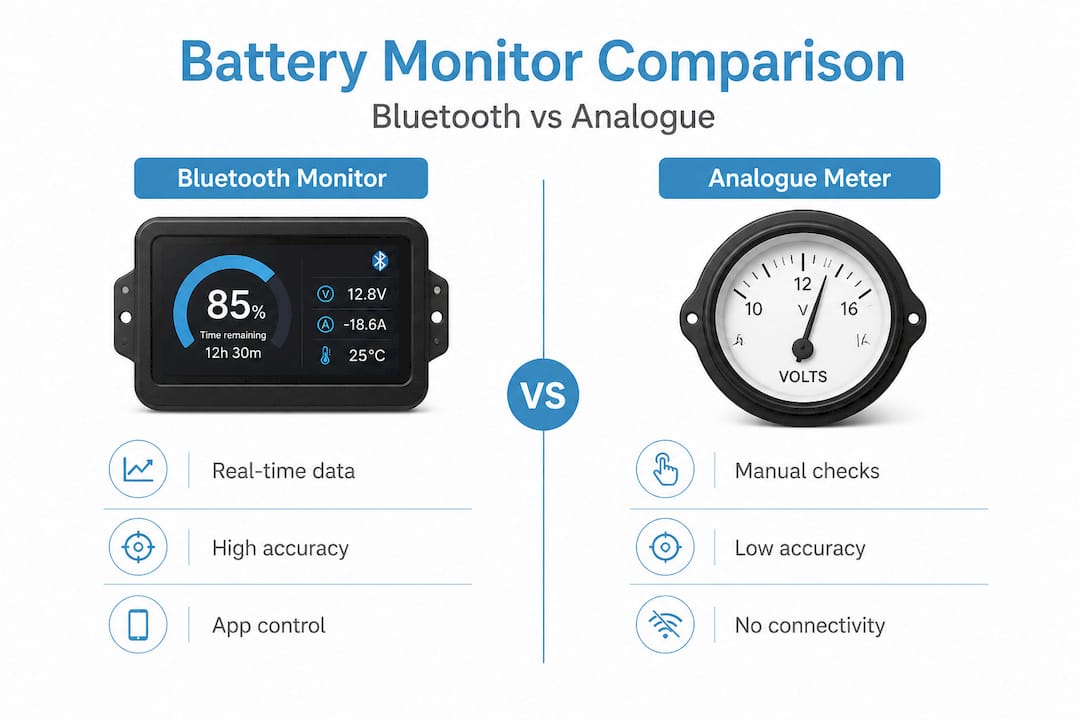
For UK-specific scenarios, consider a campervan owner on a two-week trip through Scotland in October. Without monitoring, they may avoid using the inverter for fear of draining the battery, then return home with 40% charge wasted. With Bluetooth monitoring, they can see exactly how much solar is coming in versus what is being consumed, and use their appliances with full confidence. Bluetooth monitoring drives operational improvements and significantly more reliable off-grid travel experiences.

Boat owners face similar dynamics, with the added complexity of alternator charging, shore power, and variable loads from navigation electronics, bilge pumps, and lighting. A single Bluetooth monitor on the leisure battery bank shows the net effect of all these inputs and outputs simultaneously, allowing skippers to manage their bank efficiently without manual calculations.
For a broader look at battery technology for adventures, the data consistently supports the case that real-time visibility is the single highest-impact upgrade for most off-grid systems.
Understanding limitations: When Bluetooth data isn’t enough
No monitoring system is infallible. Bluetooth monitoring is a significant improvement over analogue metering, but there are specific conditions where the data it provides can mislead if taken at face value.
The most common source of discrepancy is cold weather. Modern LiFePO4 batteries include a self-heating circuit to protect cells from charging below 0°C. When this circuit activates, it draws current from the battery itself, or in some designs from an external source. Cold-related heating can cause SoC mismatches between internal and external monitors, because the external shunt may not see the internal current draw accurately. The result is that the external Bluetooth monitor may read a higher SoC than the battery’s own BMS reports.
Other common sources of error include:
- Charging behaviour anomalies: A solar controller entering absorption phase can reduce charge current to near zero, causing a shunt to calculate a slower charge rate than the actual energy entering the cells.
- Parasitic loads: Small constant draws (from clocks, alarm systems, or monitoring units themselves) accumulate over days and can cause drift if not accounted for in the monitor’s configuration.
- BMS current limits: If the BMS temporarily restricts charge or discharge current, the shunt sees a different flow than the battery reports internally.
The table below compares how an external shunt and an internal battery BMS app typically behave across different scenarios:
| Scenario | External shunt reading | Internal BMS app reading |
|---|---|---|
| Normal operation (room temperature) | Accurate, matches BMS closely | Accurate, reliable |
| Charging in cold conditions (below 5°C) | May overread SoC | Correctly reflects restricted charge |
| Battery heating pad active | May miscount internal draw | Accurate, accounts for internal load |
| After partial cycle without full sync | Drift accumulates | Resets on next full charge |
| High discharge rate (inverter load) | Accurate | May show protective current limits |
Pro Tip: In temperatures below 5°C, always check both your external Bluetooth monitor and your battery’s own app before making decisions about available capacity. Use the lower reading as your safety margin.
For owners using batteries with Bluetooth heat pad functionality, cross-referencing both data sources is especially important during winter use. The Skyenergi Core range is specifically designed for this scenario, with integrated BMS data available alongside external monitor feeds.
For further guidance on interpreting your data correctly, the resource on smart Bluetooth for campervans covers the most common edge cases in detail.
What most owners miss about Bluetooth energy monitoring
Here is the honest perspective: Bluetooth monitoring is frequently treated as the end goal rather than one component in a larger system. Owners fit a shunt monitor, download the app, and feel the job is done. This is where the real risk lies.
A single Bluetooth reading provides a snapshot. It reflects what the monitor has measured since its last synchronisation. It cannot account for a degraded cell within the battery, a failing alternator diode, or a solar panel with partial shading. The data is only as accurate as the calibration behind it and the interpretation applied to it.
The research is clear on this point. Real-time telemetry coupled to forecasting and optimisation, not Bluetooth monitoring alone, is what drives the most meaningful improvements. The 12.5% cost reduction and 18% renewable uplift cited in benchmarking studies come from closed-loop systems where data informs decisions, and those decisions feed back into system behaviour. A Bluetooth app that you glance at once a day is not a closed-loop system.
The owners who get the most value from Bluetooth monitoring treat it as one layer in a stack. They combine the Bluetooth monitor reading with their battery’s own BMS data, their solar controller’s output log, and their own usage patterns. When something looks unusual, they investigate rather than dismiss the anomaly. This discipline, checking multiple data sources and understanding what each one measures, is what separates informed owners from those who are simply surprised less often.
For context on using battery management systems effectively, the BMS is not a replacement for an external monitor, nor is an external monitor a replacement for the BMS. They measure different things and have different failure modes. Together, they provide redundancy.
Take the next step with reliable off-grid monitoring
Skyenergi supports campervan and boat owners with products and guidance designed for real UK off-grid conditions. From lithium leisure batteries with integrated BMS and Bluetooth to Victron-compatible monitoring components, the range is built around practical, reliable energy management.

Explore the Bluetooth monitoring guide for a full breakdown of compatible systems, installation advice, and product recommendations tailored to campervans, motorhomes, and marine applications. Whether you are setting up a new system or upgrading an existing one, Skyenergi can help you specify the right monitoring solution. Browse the product range, read the technical guides, or get in touch directly for advice on your specific setup.
Frequently asked questions
What is a shunt and how does it improve Bluetooth monitoring?
A shunt is an electronic component that measures the flow of current into and out of your battery, enabling Bluetooth monitors to calculate accurate state-of-charge and cumulative amp-hour usage. Without a shunt, monitors can only estimate from voltage, which is far less precise.
Can Bluetooth monitoring reduce my campervan’s operating costs?
Yes. Smart data-driven systems show a 12.5% reduction in operating costs by enabling better energy allocation and maximising use of available solar and battery capacity. Over a full season of off-grid travel, the savings are meaningful.
Why do readings sometimes differ between my Bluetooth monitor and battery app?
This typically occurs in temperatures below 0°C, where cold-related heating causes SoC mismatches between the internal BMS and the external shunt monitor, as internal heating current may not be visible to the external shunt.
Is Bluetooth monitoring secure against signal loss or hacking?
Bluetooth Low Energy used in battery monitors is short-range and rarely presents significant security risks, but keeping your smartphone’s operating system and the monitor’s firmware updated ensures the best available protection.
What should I do if my monitor and battery BMS show different state-of-charge values?
Cross-check both readings, particularly in cold or extreme weather, and apply the lower figure as your working safety margin to avoid unexpected power loss mid-trip.
Recommended
- Bluetooth Battery Monitoring – Empowering Off-Grid Travel – Skyenergi
- Bluetooth Battery Monitoring – Real-Time Power Insights – Skyenergi
- Top Bluetooth battery uses for off-grid leisure vehicles – Skyenergi
- Bluetooth Battery Monitoring: Smarter Power On The Road – Skyenergi
- 7 ways to reduce energy consumption with your lighting system | LED Supply & Fit
Prev post

Troubleshoot campervan power systems with confidence
Updated on 08 May 2026
Next post

Understand expandable power systems for off-grid adventures
Updated on 04 May 2026


