





The role of DC-DC chargers in off-grid power systems
Discover the critical role of DC-DC chargers in off-grid power systems. Maximize battery health and efficiency in your vehicle or home.
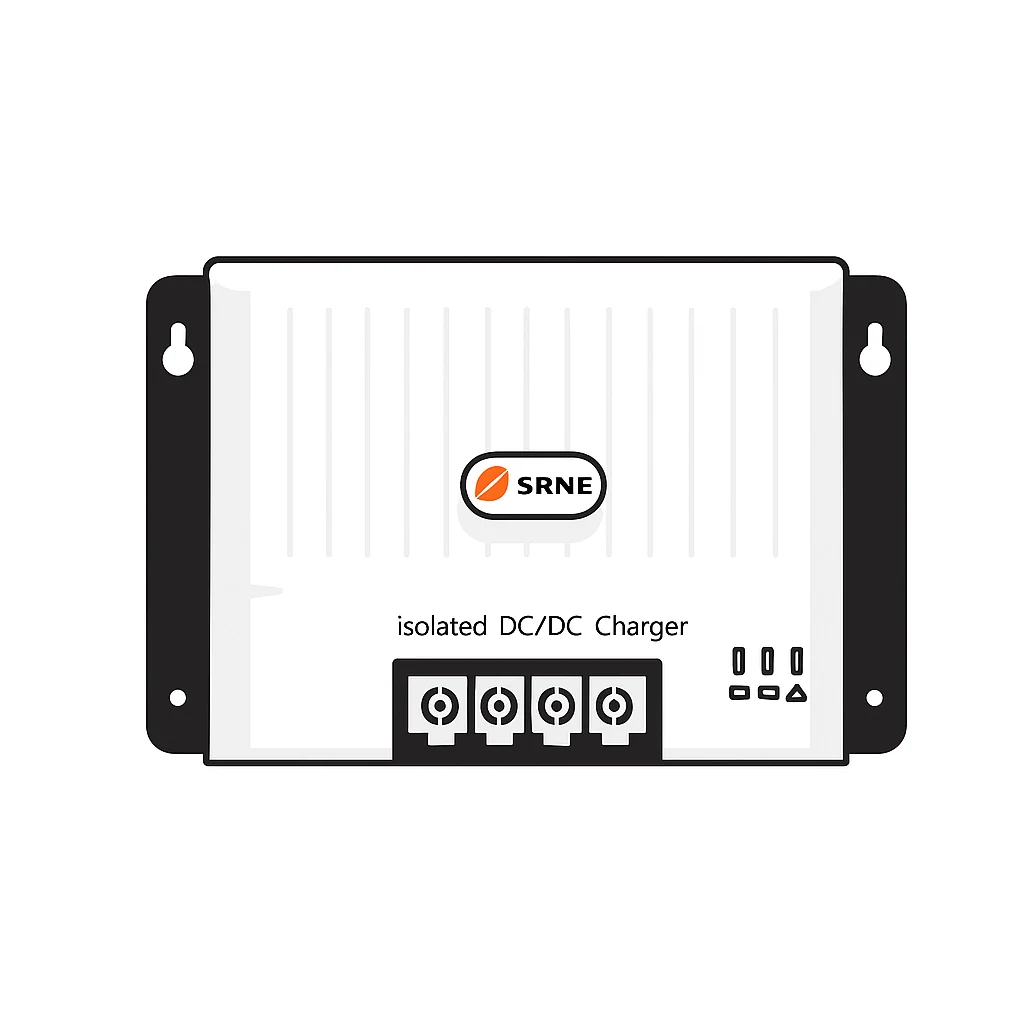
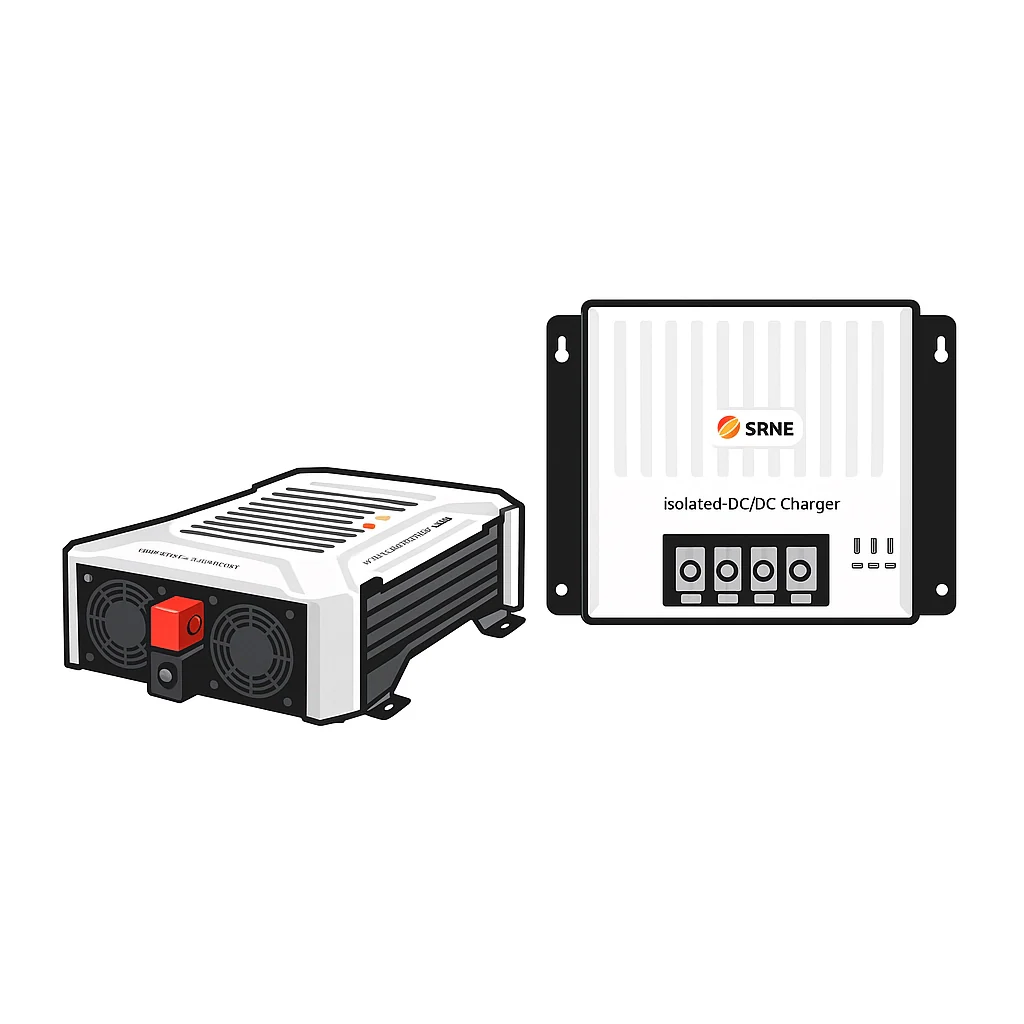
A DC-DC charger is an intelligent power management device that converts variable voltage from a vehicle alternator or renewable source into a stable, multi-stage charge for auxiliary batteries. The role of DC-DC chargers is to protect battery health, maximise charge efficiency, and prevent the damage caused by unregulated direct connections. Modern DC-DC converters achieve conversion efficiencies of 95%–98%, meaning almost no energy is wasted in the process. That level of efficiency matters enormously in off-grid and leisure vehicle applications, where every watt counts. Skyenergi supplies DC-DC chargers and compatible lithium battery systems specifically designed for campervans, motorhomes, marine setups, and residential off-grid installations.
How do DC-DC chargers work to charge batteries correctly?
DC-DC chargers operate by taking an unregulated or variable DC input and converting it to a precisely controlled DC output suited to the target battery’s chemistry and state of charge. The two core conversion methods are buck (step-down) and boost (step-up). A buck converter reduces a higher input voltage to a lower output voltage. A boost converter does the opposite, raising a low input to meet the battery’s charge requirements. Many units combine both functions, making them effective across a wide range of input conditions.
Galvanic isolation is a key design feature in quality DC-DC chargers. It uses a transformer to electrically separate the input and output circuits. This prevents ground loops and protects the vehicle’s ECU from interference caused by battery management system (BMS) activity.
The charging process itself follows a three-stage algorithm critical to battery longevity:
- Bulk stage. The charger delivers maximum current to rapidly restore the battery’s state of charge.
- Absorption stage. Current tapers as voltage holds steady at the target level, allowing the battery to reach full capacity without stress.
- Float stage. Voltage drops to a maintenance level, keeping the battery topped up without overcharging.
For lithium batteries, some chargers add a pre-charge stage for deeply discharged cells and a termination stage that cuts charge current completely when full capacity is reached. An internal microprocessor monitors temperature, input voltage, and output current throughout. Protective features include over-temperature shutdown, reverse polarity protection, and short-circuit cutoff.
Pro Tip: Select a DC-DC charger with programmable charge profiles. Lithium iron phosphate (LiFePO4) and AGM batteries require different absorption voltages, and a fixed-profile charger will undercharge one or overcharge the other.
Why is direct alternator charging not enough for modern batteries?
Connecting an auxiliary battery directly to a vehicle alternator was standard practice for decades. Split-charge relays and voltage-sensitive relays (VSRs) worked adequately with older lead-acid batteries and simple alternators that held a steady 14.4V output. That approach no longer works reliably with modern vehicles or lithium battery chemistries.
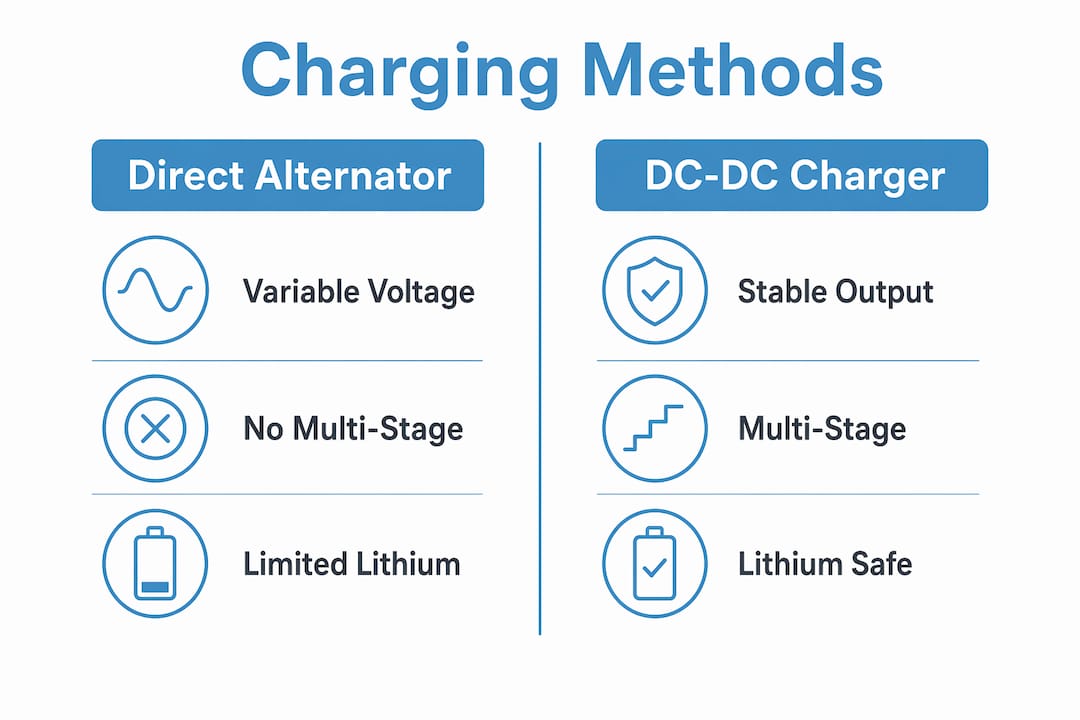
Euro 5 and Euro 6 vehicles use smart alternators that vary output voltage deliberately. These alternators reduce charging output during acceleration to improve fuel economy and recover energy during braking. The result is a fluctuating voltage that can swing between 12V and 15V within seconds. A VSR cannot regulate this variation. Smart alternators require DC-DC chargers to regulate variable voltages and deliver a stable multi-stage charge.
Voltage drop over long cable runs compounds the problem. A 4-metre cable run from the alternator to a rear-mounted auxiliary battery can lose 0.5V or more under load. That loss alone can prevent a lead-acid battery from reaching full charge and will cause a lithium BMS to interpret the incoming voltage as insufficient, triggering a protection cutoff.
Lithium batteries present a specific risk when connected directly to alternators. Direct connection risks overcurrent damage because a lithium BMS can demand full current at a flat voltage, which overloads the alternator. The BMS and the alternator’s voltage regulator then conflict, causing erratic charge cycles and shortening the life of both components.
| Charging method | Voltage regulation | Multi-stage charging | Lithium compatible | ECU protection |
|---|---|---|---|---|
| Direct connection | None | No | No | No |
| VSR / split-charge relay | Basic threshold only | No | No | No |
| DC-DC charger (non-isolated) | Yes | Yes | Yes | Limited |
| DC-DC charger (galvanically isolated) | Yes | Yes | Yes | Yes |
The table makes the hierarchy clear. A galvanically isolated DC-DC charger is the only method that addresses every limitation of direct alternator charging.
How do DC-DC chargers benefit renewable energy and off-grid systems?
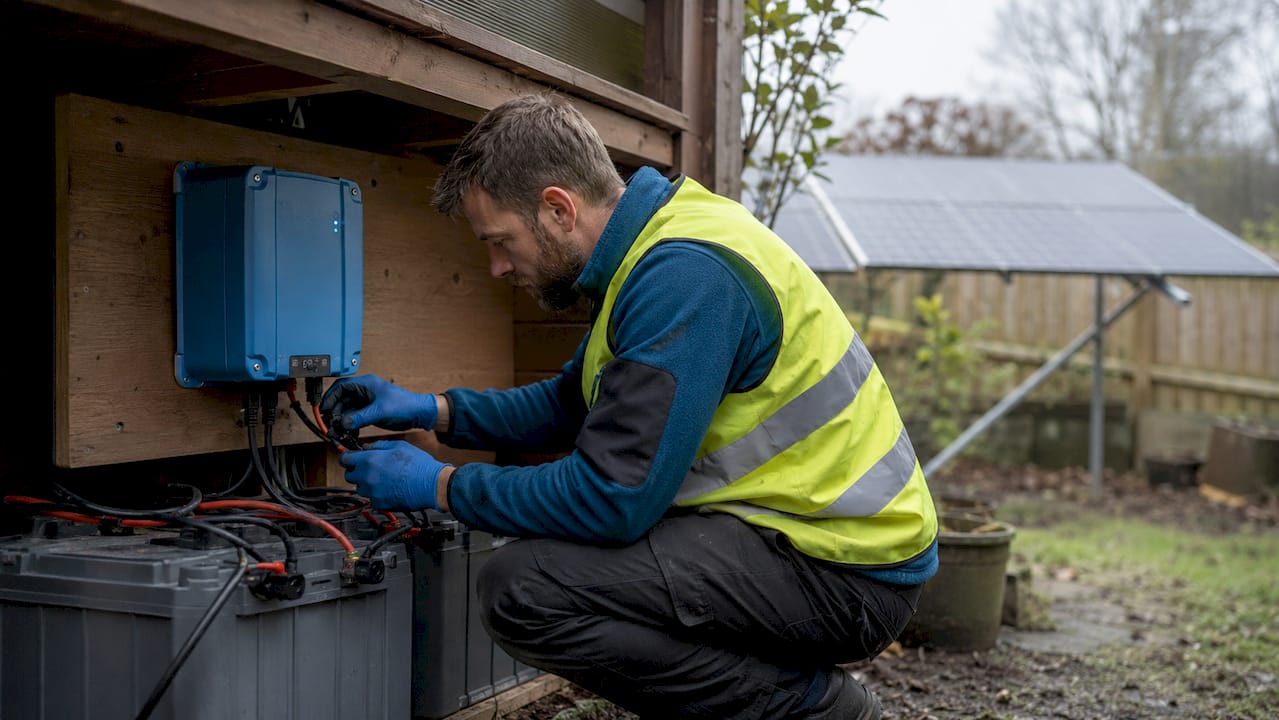
The benefits of DC-DC charging extend well beyond vehicle applications. In off-grid solar setups, input voltage from panels varies with sunlight intensity, temperature, and shading. A DC-DC charger accepts this variable input and delivers a consistent, chemistry-appropriate charge to the battery bank. This is the same function it performs in a vehicle, applied to a renewable energy context.
Correct multi-stage charging directly extends battery life. Lithium iron phosphate cells are particularly sensitive to overcharge and over-discharge. A charger that holds absorption voltage precisely and terminates charge at the right point prevents cell stress. The result is more charge cycles over the battery’s lifetime and a lower total cost of ownership. Skyenergi’s lithium battery charging guide covers how charge profile accuracy affects long-term cell health in detail.
DC-DC chargers also integrate cleanly with MPPT solar charge controllers and battery monitoring systems. In a combined solar and vehicle-charging setup, the DC-DC charger handles the alternator input while the MPPT controller manages the solar input. Both feed the same battery bank without conflict. Bluetooth-enabled battery monitors, such as those included with many Skyenergi lithium batteries, display real-time state of charge and allow you to verify that both charging sources are performing correctly.
Key benefits for off-grid and renewable energy applications:
- Chemistry flexibility. Programmable profiles support LiFePO4, AGM, gel, and calcium batteries within a single unit.
- Source independence. The charger accepts input from alternators, DC generators, or DC-coupled solar arrays.
- Battery isolation. When the input source drops below threshold, the charger disconnects the auxiliary battery, preventing drain back to the source.
- Consistent output. Input voltage swings of several volts produce no change in the charge profile delivered to the battery.
Pro Tip: In a combined solar and vehicle system, size your DC-DC charger and MPPT controller independently. Each should be capable of charging the full battery bank on its own, so you have redundancy if one source fails.
For those building or upgrading off-grid setups, Skyenergi’s guide on off-grid system best practices provides a practical framework for integrating multiple charging sources.
What are the key installation and sizing considerations?
Sizing a DC-DC charger correctly is as important as choosing the right model. Recommended charger sizing is 30%–40% of battery bank capacity in amp-hours. Oversizing beyond 50% of battery capacity provides little additional benefit. Undersizing below 20% leads to slow charging and risks system failure under sustained load. A 40A DC-DC charger at 12V delivers approximately 480Wh per hour, meaning a 200Ah lithium battery depleted to 20% state of charge can reach full capacity within 3–4 hours of motorway driving.
Galvanic isolation is non-negotiable in modern vehicle installations. Isolated chargers prevent ECU interference and ground loop issues that non-isolated budget units introduce. The upfront cost difference is real but modest. Avoiding a single alternator or ECU repair more than covers the investment.
Critical installation points:
- Wiring gauge. Use cable rated for the charger’s maximum continuous current plus a 20% safety margin. Undersized cable generates heat and voltage drop.
- Fuse protection. Fit an inline fuse as close to the source battery as possible. Size it to the cable rating, not the charger rating.
- Marine-grade wiring. In marine and high-humidity environments, use tinned copper cable to resist corrosion.
- Mounting location. Install in a ventilated space. DC-DC chargers generate heat during operation and require airflow to maintain efficiency.
- Vehicle type. Older vehicles with conventional alternators can use non-isolated chargers, but Euro 5/6 vehicles with smart alternators require a fully isolated unit to protect engine management systems.
Correct sizing also protects the alternator. A DC-DC charger limits its draw to a set current, preventing the alternator from being overloaded by a deeply discharged lithium battery demanding maximum current. This is a protection that a direct connection or VSR cannot provide. For a broader view of how DC-DC chargers fit within a complete battery bank, Skyenergi’s battery bank setup guide covers configuration options in depth.
Key takeaways
DC-DC chargers are the only reliable method for delivering a full, safe, multi-stage charge to auxiliary batteries from variable voltage sources such as smart alternators and renewable inputs.
| Point | Details |
|---|---|
| Multi-stage charging is essential | Bulk, absorption, and float stages protect battery health and maximise capacity. |
| Smart alternators require DC-DC chargers | Variable voltage output from Euro 5/6 alternators prevents full charging without regulation. |
| Galvanic isolation protects the vehicle | Isolated chargers prevent ECU interference and ground loops in modern vehicles. |
| Correct sizing matters | Size the charger at 30%–40% of battery bank capacity to balance charge speed and component protection. |
| Off-grid systems benefit equally | DC-DC chargers stabilise variable renewable inputs and integrate with MPPT controllers and battery monitors. |
Why I think most people underestimate what a DC-DC charger actually does
Most buyers treat a DC-DC charger as a simple relay upgrade. They see it as a device that “lets the alternator charge the leisure battery.” That framing misses the point entirely.
A DC-DC charger is a power conversion and battery management device. It actively controls every amp that enters your auxiliary battery. It protects your alternator from overcurrent. It protects your BMS from voltage conflicts. It protects your ECU from ground loops. The relay does none of those things.
The mistake I see most often is pairing a quality lithium battery with a budget non-isolated charger to save £30. The saving evaporates the first time the non-isolated unit introduces noise into the CAN bus and triggers a diagnostic fault. Alternator repairs and ECU resets cost far more than the price difference between an isolated and non-isolated unit.
The second mistake is undersizing. A 10A or 20A charger on a 200Ah lithium bank will take all day to recover from a heavy overnight discharge. You arrive at your destination with a half-charged battery. Size for 30%–40% of your bank and you recover meaningful capacity on a single motorway run.
Invest in a quality, galvanically isolated DC-DC charger. It is the component that makes everything else in your system work correctly.
— John
The Victron Energy Orion XS 12/12-50A: a practical DC-DC charging solution
Skyenergi stocks the Victron Energy Orion XS 12/12-50A DC-DC charger, a galvanically isolated unit designed for modern vehicle and off-grid applications.
The Orion XS delivers 50A of regulated charge current with full multi-stage charging across LiFePO4, AGM, and gel battery profiles. It is compatible with smart alternators and includes over-temperature protection, reverse polarity safeguards, and short-circuit cutoff. Programmable via the VictronConnect app over Bluetooth, it integrates directly with the wider Victron ecosystem. For campervans, motorhomes, and marine installations requiring reliable, protected auxiliary charging, the Orion XS is a proven choice. View full specifications and order directly through Skyenergi.
FAQ
What is the primary role of a DC-DC charger?
A DC-DC charger converts variable DC input voltage from an alternator or renewable source into a stable, multi-stage charge output suited to the auxiliary battery’s chemistry. Its primary role is to deliver a full, safe charge while protecting both the battery and the vehicle’s electrical systems.
Can I use a split-charge relay instead of a DC-DC charger?
A split-charge relay works with older vehicles and lead-acid batteries but cannot regulate voltage or deliver multi-stage charging. For Euro 5/6 vehicles with smart alternators, or for any system using lithium batteries, a DC-DC charger is required.
How do I size a DC-DC charger for my battery bank?
Size the charger at 30%–40% of your battery bank’s amp-hour capacity. A 200Ah battery bank requires a charger in the 60A–80A range for efficient charging without overloading the alternator.
Do DC-DC chargers work with solar panels?
DC-DC chargers accept input from any stable DC source, including DC-coupled solar arrays. In most off-grid setups, a dedicated MPPT solar charge controller handles panel input, while the DC-DC charger manages the alternator input separately.
Why does galvanic isolation matter in a DC-DC charger?
Galvanic isolation electrically separates the input and output circuits using a transformer. This prevents ground loops and protects the vehicle’s ECU from interference generated by lithium BMS activity, which is particularly important in Euro 5/6 vehicles.
Recommended
Prev post

Residential off-grid power tips for UK homeowners
Updated on 12 July 2026
Next post

Energy resilience for leisure vehicles: 2026 UK guide
Updated on 10 July 2026


