







Step by Step Campervan Battery Upgrade for Off-Grid Freedom
Follow this step by step campervan battery upgrade guide to install lithium batteries and improve off-grid energy with safe, reliable results.
Finding your campervan battery struggling to keep pace with your off-grid adventures is a common frustration for British van owners. Reliable power means more freedom, comfort, and confidence away from busy campsites. This practical guide walks you through every step, from assessing your current setup to upgrading with a modern lithium system, ensuring compliance with BS 7671 standards and unlocking improved performance monitoring for true energy independence.
Table of Contents
- Step 1: Assess Your Current Electrical Setup
- Step 2: Select The Right Lithium Battery And Components
- Step 3: Remove Old Batteries And Disconnect Safely
- Step 4: Install New Lithium Battery System
- Step 5: Test, Monitor And Optimise Battery Performance
Quick Overview
| Key Insight | Explanation |
|---|---|
| 1. Document Your Current Setup | Begin by assessing existing components, including battery specifications and power-consuming devices, to inform an effective upgrade. |
| 2. Choose the Right Lithium Battery | Select a lithium battery based on accurate power needs, ensuring it matches your daily consumption without oversizing. |
| 3. Follow Safe Disconnection Procedures | Always disconnect the negative terminal first before the positive to prevent electrical hazards during battery replacement. |
| 4. Install Components Methodically | Connect cables in the correct order and check connections to ensure your new system operates safely and reliably. |
| 5. Perform Thorough Testing After Installation | Conduct voltage tests and monitor battery behaviour to ensure everything functions correctly before going off-grid. |
Step 1: Assess your current electrical setup
Before upgrading your campervan battery, you need a clear picture of what you’re working with. This means documenting your existing components, understanding your power consumption patterns, and identifying any gaps or inefficiencies that a lithium upgrade will address.
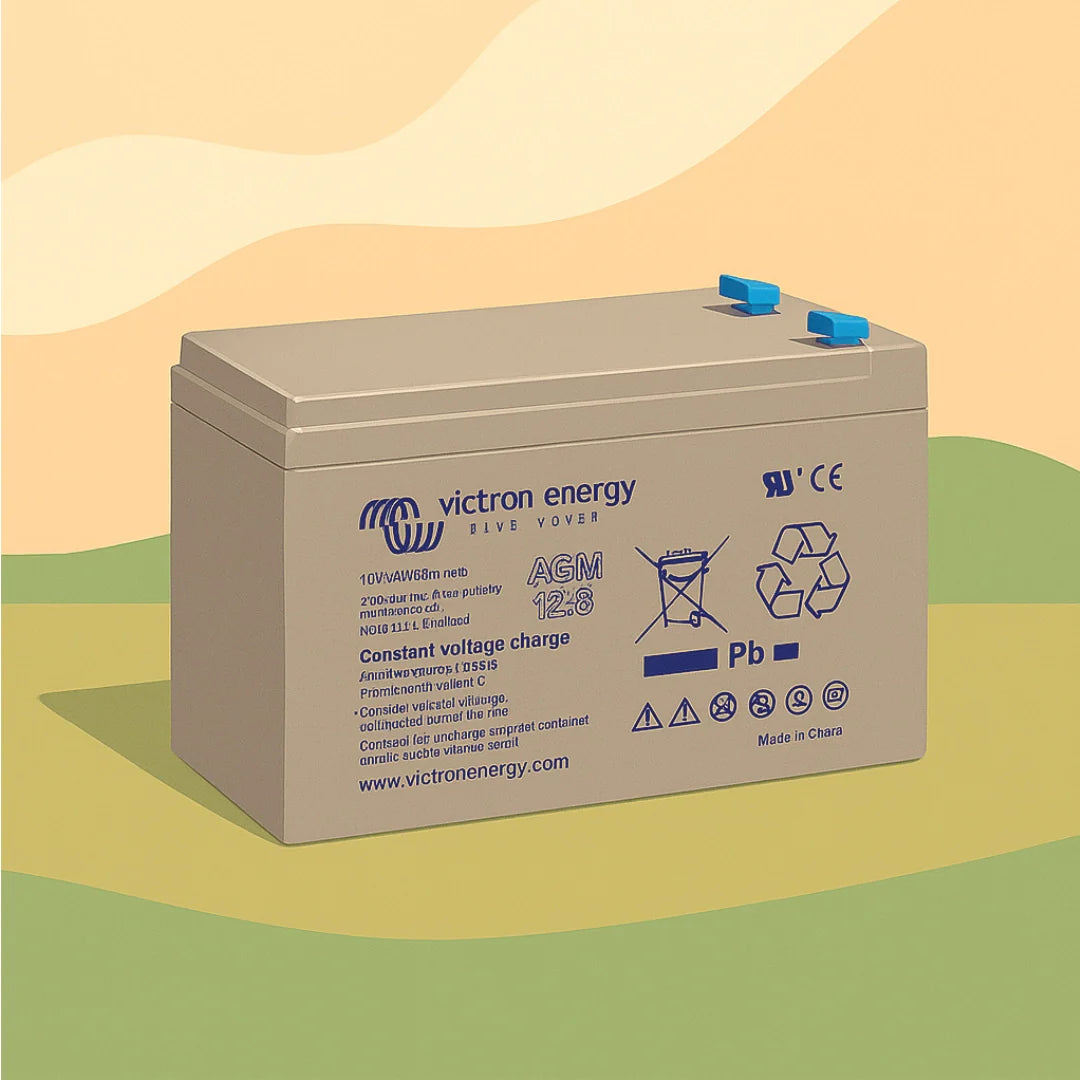
Start by locating your current battery and noting its specifications. Check the label for voltage, capacity (measured in amp-hours or Ah), and age. Open your electrical cabinet or locker and photograph the entire setup from multiple angles. Include your leisure battery, any existing charger, solar panels, and distribution boards in your photos.
Next, list all the electrical components you’re powering. Walk through your campervan and note everything that draws electricity.
- Lighting systems (LED strip lights, ceiling lights, reading lights)
- Appliances (fridge, cooker, water heater, microwave)
- Entertainment (television, satellite receiver, sound system)
- Ventilation (extractor fans, air conditioning)
- Connectivity (WiFi booster, mobile phone chargers)
- Heating and cooling equipment
Calculate your power consumption by identifying the wattage or amperage rating for each device. Most devices have this information on a label. Multiply the wattage by the hours you use it daily to estimate daily consumption. For example, a 100-watt fridge running 8 hours uses 800 watt-hours daily.
Understanding how to assess your campervan’s electrical needs helps you identify which devices drain your battery fastest and which upgrades will have the biggest impact.
Document your current charging sources as well. Note whether you have solar panels installed, a split charger connected to your engine alternator, or mains charging capability at campsites. Record the specifications for each.
Your assessment forms the foundation for a successful upgrade—rushing this step means oversizing or undersizing your new lithium system.
Check compliance standards. UK campervan installations should follow BS 7671 electrical safety standards. If your existing setup predates recent regulations, your upgrade provides an opportunity to bring the system up to current standards.
Pro tip: Create a spreadsheet documenting every component, its specifications, and its location—this becomes invaluable when ordering replacement parts and troubleshooting issues later.
Use this summary table to benchmark your electrical assessment process:
| Step | Data to Collect | Why It Matters |
|---|---|---|
| Battery specs | Voltage, Ah, age | Accurate upgrade planning |
| Power consumption | Watts per device, hours | Determines correct battery sizing |
| Charging sources | Solar, alternator, mains | Identifies upgrade requirements |
| Compliance check | Standards, documentation | Ensures safety and legal compliance |
Step 2: Select the right lithium battery and components
With your electrical assessment complete, you can now choose a lithium battery system that matches your actual power needs rather than guessing. The right selection ensures you have sufficient capacity for your lifestyle whilst avoiding unnecessary expense on oversized equipment.
Start by determining your required battery capacity based on your daily consumption calculations. If you identified that you use 2000 watt-hours daily, you’ll need a battery with at least 2000Wh capacity. Most campervan users find that a 100Ah to 200Ah lithium battery provides practical independence for weekend trips and extended off-grid periods.
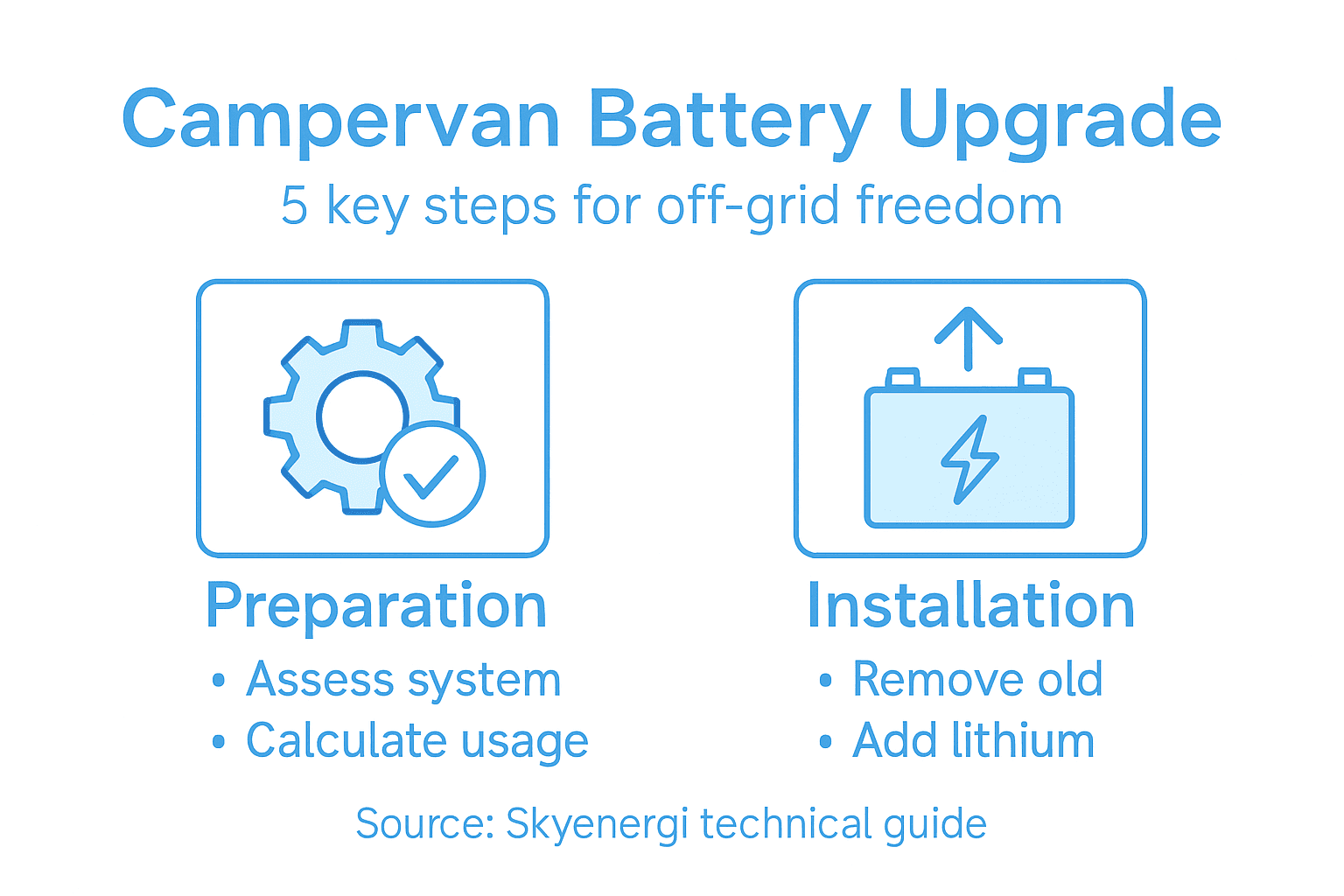
Consider voltage carefully. Most campervans use 12-volt systems, which is standard for leisure batteries and vehicle integration. Some larger setups use 48-volt systems, but these require complete rewiring and are typically unnecessary for campervans.
Lithium batteries offer distinct advantages over your current lead-acid setup. When comparing lithium versus lead-acid batteries, you’ll discover that lithium systems provide three to five times more usable capacity, charge significantly faster, and deliver superior performance in cold weather.
Here’s a quick reference to common battery technologies for campervans:
| Battery Type | Usable Capacity Ratio | Lifespan Estimate | Typical Charging Time |
|---|---|---|---|
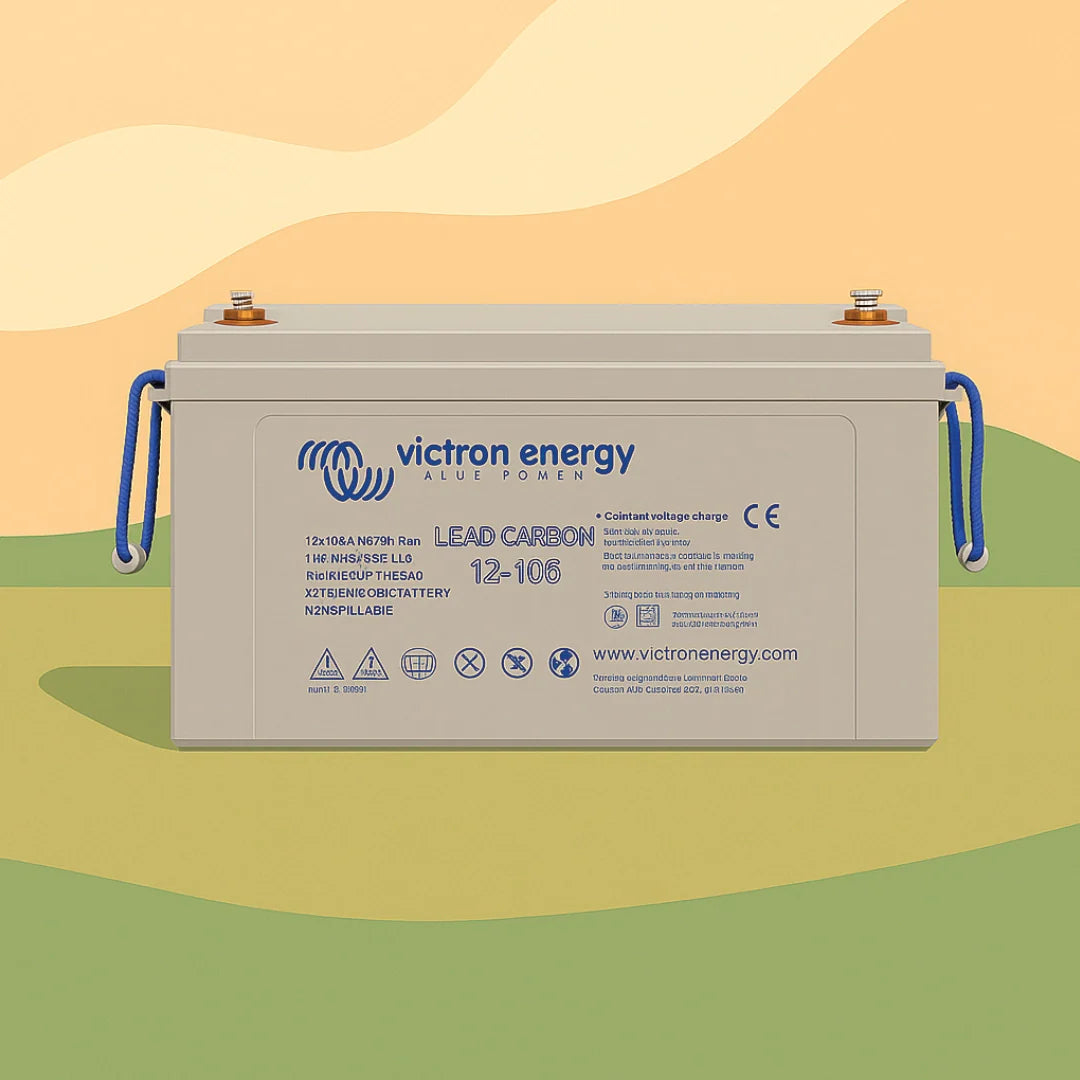
| Lead-acid (AGM/Gel) | 50% | 3–5 years | 8–12 hours |
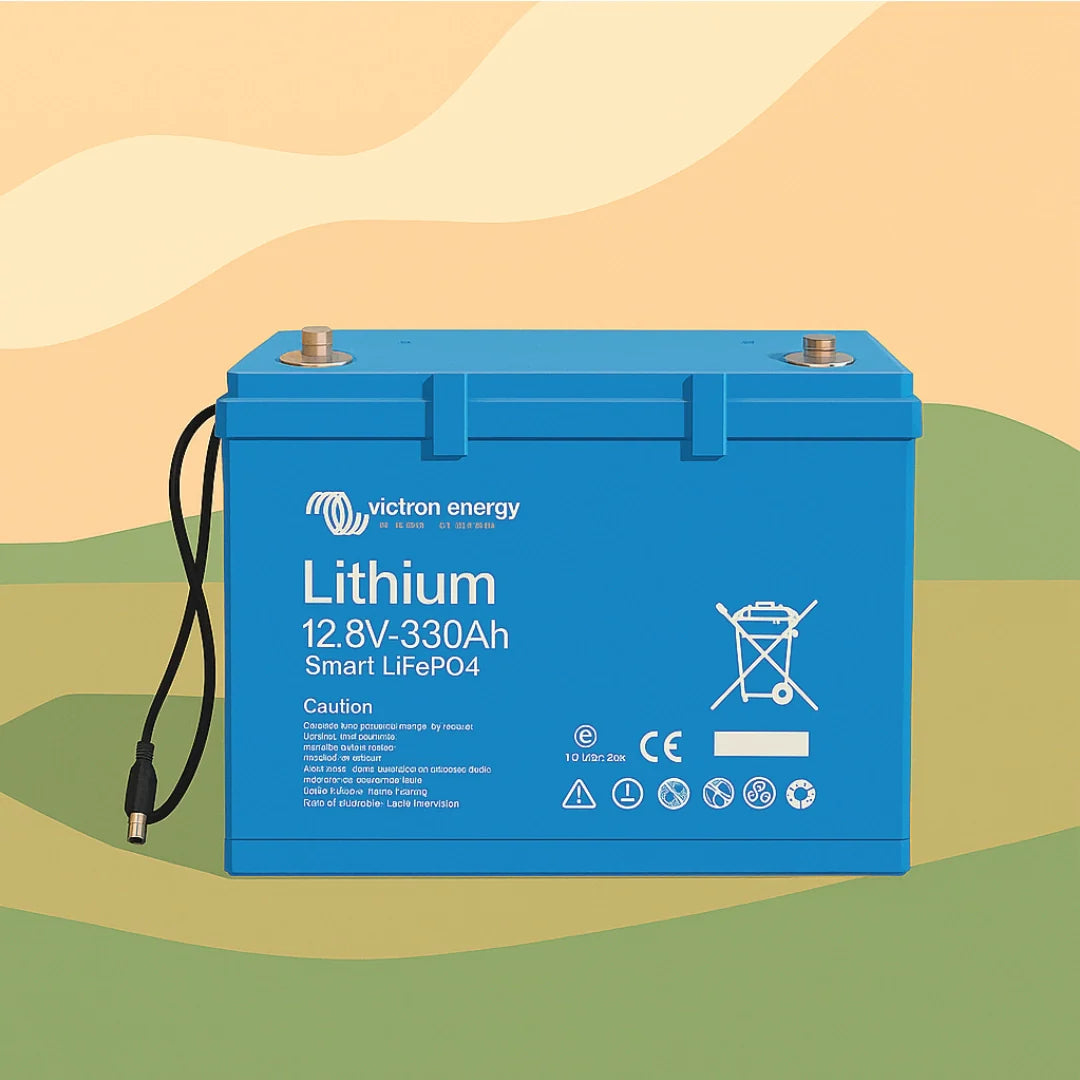
| Lithium (LiFePO4) | 80–90% | 8–12 years | 2–4 hours |
| Conventional Flooded | 30–35% | 2–4 years | 10–16 hours |
Now select your supporting components. You’ll need these alongside your new battery.
- Battery management system (BMS) with Bluetooth monitoring for real-time performance tracking
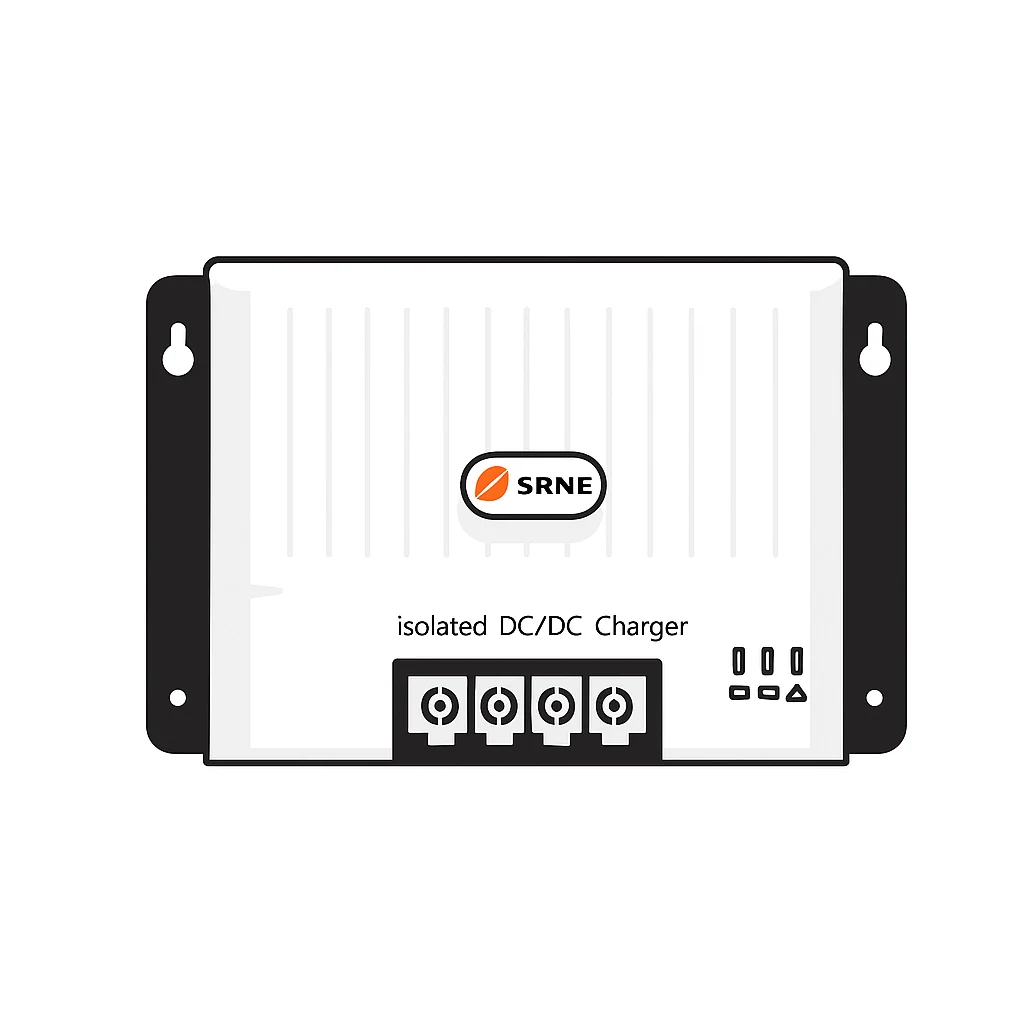
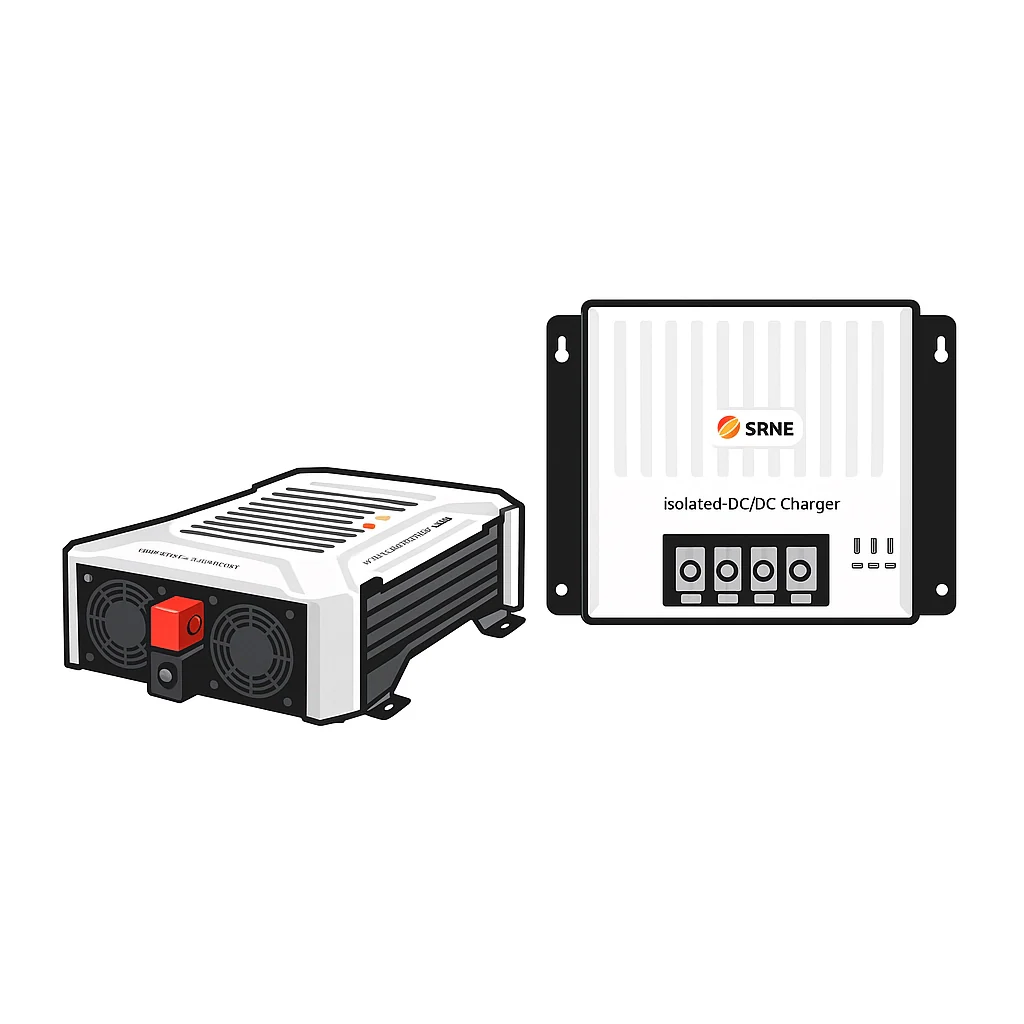
- DC/DC converter to safely charge your lithium battery from your vehicle alternator
- MPPT solar controller if you’re adding or upgrading solar panels
- Distribution board or fuse box rated for your system voltage and amperage
- Cabling and connectors sized appropriately for your power requirements
Verify compatibility across components. Your BMS, chargers, and monitoring systems should communicate seamlessly. Victron-compatible components are excellent choices as they integrate smoothly and provide comprehensive system visibility through unified apps.
Selecting components from compatible ecosystems saves installation headaches and simplifies troubleshooting down the road.
Check specifications against your space constraints. Measure your battery locker or intended installation location before ordering. Lithium batteries come in various physical sizes even with identical capacities, so dimensions matter for fitting everything properly.
Review lithium battery setup requirements for campervans to understand specific UK installation standards and ensure your chosen components meet safety regulations.
Pro tip: Buy slightly more capacity than your calculations suggest—real-world usage typically exceeds initial estimates by 15 to 25%, and extra capacity extends battery lifespan by reducing deep discharge cycles.
Step 3: Remove old batteries and disconnect safely
Removing your old battery safely is critical. A careless disconnect can cause electrical fires, damage your vehicle’s electronics, or result in serious injury. This step requires patience, proper equipment, and methodical attention to detail.
Before touching anything, gather your safety equipment. You’ll need insulated gloves, safety glasses, and a non-metallic spanner or socket set. Keep a fire extinguisher nearby, though you shouldn’t need it if you follow these steps carefully.
Disconnect the negative terminal first. This is absolutely essential. Locate the black or negative cable on your current battery and loosen the terminal bolt using your spanner. Remove the cable completely and set it aside, ensuring it cannot accidentally touch the positive terminal or any metal part of the van.
Wait a full two minutes. This allows residual charge to dissipate safely from the system and significantly reduces the risk of sparks or short circuits when you remove the positive cable.
Disconnect the positive terminal second. Loosen the red or positive cable terminal and remove it. Again, position it away from any conductive surfaces. The order matters because disconnecting positive first could create a circuit through your vehicle’s frame.
When safely removing old batteries, ensure you’ve isolated all associated equipment and connections before lifting or moving the battery unit.
Now disconnect any other components attached to the old battery.
- Battery monitor cables or sensing wires
- Split charger or DC/DC converter connections
- Ground straps or bonding cables
- Fuse holders or distribution board connections
Label each cable with tape before disconnection if they’re not already colour coded. This prevents confusion during reinstallation and saves significant troubleshooting time.
Remove the old battery safely. Lead-acid batteries are heavy and contain hazardous materials. Use proper lifting technique or get assistance. Never drag or tilt the battery unnecessarily, as this can spill electrolyte or damage the case.
Proper disposal of old batteries is a legal requirement in the United Kingdom and protects the environment from lead and sulphuric acid contamination.
Dispose of your old battery correctly. UK regulations require recycling through approved waste disposal facilities. Most automotive retailers and battery suppliers accept old batteries for recycling. Never dump old batteries in standard waste.
Pro tip: Take comprehensive photographs of your old battery setup before disconnecting anything—close-ups of cable connections, terminal positions, and component placement will prove invaluable when installing your new system.
Step 4: Install new lithium battery system
With your old battery removed and the space prepared, you’re ready to install your new lithium system. This is where your upgrade truly begins. Proper installation determines system reliability, safety, and performance for years to come.
Position your new lithium battery in the same location as your old battery or in your designated battery locker. Ensure it sits level and secure. Use rubber isolation pads or battery straps to prevent movement during vehicle motion, which could damage connections or the battery case itself.

Connect the negative cable first. Attach the black or negative cable to the negative terminal of your new lithium battery. Tighten the terminal securely using your spanner, but avoid over-tightening which can strip threads or crack terminal posts.
Connect the positive cable second. Attach the red or positive cable to the positive terminal and secure it tightly. This reversed order from disconnection ensures maximum safety during installation.
Install your battery management system (BMS). Mount the BMS module near your battery according to manufacturer instructions. Connect the sense wires and control cables as specified in your system documentation. The BMS monitors cell voltage, temperature, and current flow to protect your investment.
When setting up a Victron-based lithium system, ensure all monitoring devices communicate seamlessly with your battery management system for comprehensive real-time oversight.
Connect your supporting components in this sequence.
- DC/DC converter from alternator to battery
- Solar controller and solar panel connections
- Distribution board and fuse holders
- Bluetooth monitoring module for app access
- Inverter (if upgrading DC to AC capability)
Test each connection before moving forward. Use a multimeter to verify voltage at key points matches your system specifications. Confirm no loose wires or exposed terminals exist before powering up the system.
Activate your system carefully. Switch on your battery isolator or main disconnect switch. Monitor the battery monitor display for any error codes or unusual readings. Everything should show normal voltage and zero current draw at rest.
System activation should be uneventful—if alarms sound or errors appear, disconnect immediately and review all connections before troubleshooting further.
Run a complete functional test. Turn on lights, check the fridge, test any solar charging input, and verify your monitoring app displays correctly. Document baseline readings for future reference and performance tracking.
Pro tip: Leave your system switched off overnight before full use—this allows the BMS to complete initial calibration cycles and ensures all components settle into their normal operating state before handling real-world demands.
Step 5: Test, monitor and optimise battery performance
Your new lithium system is installed, but testing reveals whether everything works correctly before you rely on it for extended off-grid trips. This step ensures your battery performs reliably and identifies any issues whilst you’re still at home.
Start with a voltage test. Use a multimeter to measure voltage at the battery terminals with nothing running. A fully charged 12-volt lithium battery should read between 13.2 and 13.6 volts. Record this baseline reading for future comparison and to detect degradation over time.
Test under load next. Turn on your fridge, lights, and any other appliances you normally use. Monitor voltage whilst devices run. Voltage should remain stable and not drop below 11 volts even under moderate load. Significant voltage sag indicates either undersized cabling or a struggling battery.
Check your BMS display and monitoring app. Ensure the battery management system shows accurate readings matching your multimeter. Verify that cell voltage balancing displays correctly and that temperature readings make sense for your environment.
When testing campervan electrical systems thoroughly, pay special attention to continuity and polarity checks to ensure all connections meet British Standards for safety and reliability.
Monitor charging performance with several tests.
- Plug into mains power and confirm your charger activates and shows current flowing to the battery
- Monitor charge time from 20 to 80 percent capacity and note it for future reference
- Test solar charging if panels are installed by checking controller output and battery charge rate
- Verify your DC/DC converter charges the battery from your vehicle alternator during engine operation
Optimise your system settings based on test results. Access your BMS settings menu and adjust charge current limits if needed. Many lithium batteries benefit from slightly reduced charge rates during initial cycling, which extends long-term lifespan.
Run a discharge cycle test. Deplete your battery to about 20 percent through normal use, then fully recharge. This helps your BMS calibrate capacity measurements and ensures accurate state-of-charge reporting going forward.
Thorough testing now prevents problems later and gives you confidence that your system will perform reliably when you’re parked miles from any support.
Use Bluetooth monitoring for real-time performance insights to track voltage, current, temperature, and capacity data continuously as you use your system over several weeks.
Document all baseline readings in a spreadsheet. Track voltage, charge times, discharge rates, and any anomalies. This historical data becomes invaluable for detecting problems before they become serious failures.
Pro tip: Set phone reminders to check your battery monitor weekly during the first month of use—you’ll quickly understand normal behaviour patterns and spot unusual readings that might indicate developing issues.
Upgrade Your Campervan Battery with Confidence and Precision
Upgrading your campervan battery to a high-performance lithium system is a crucial step towards true off-grid freedom. If you have followed the detailed steps outlined in the article, you understand how important it is to accurately assess your current electrical setup, choose the right lithium battery with compatible components, and safely install and monitor your new system. Avoid common pitfalls such as undersized batteries, incompatible chargers, or unsafe installation by trusting proven solutions tailored to your unique power needs.

Skyenergi specialises in delivering well-engineered lithium battery systems designed specifically for campervans. Our products include intelligent battery management systems with Bluetooth monitoring, allowing you to track your battery performance and health in real time. Whether you need a robust lithium leisure battery, a DC/DC converter for safe alternator charging, or compatible solar charging accessories, we offer practical, reliable, and expandable solutions that make your upgrade seamless and worry-free. Start your journey towards energy independence with expert support and quality you can rely on today.
Explore our range at Skyenergi and discover how our turnkey energy solutions can transform your campervan electrical system. Visit Skyenergi to get started and equip your van for extended adventures with confidence.
Take control of your power system now and experience the freedom that comes with a properly sized and professionally supported lithium upgrade.
Frequently Asked Questions
What should I assess in my current electrical setup before upgrading my campervan battery?
Start by documenting your existing components, including the specifications and age of your current battery. Identify all electrical devices you use, their wattage, and how long you use them daily to understand your power consumption patterns. This assessment helps ensure you choose the right battery capacity for your needs.
How do I select the right lithium battery for my campervan upgrade?
Determine the required capacity based on your daily consumption calculations. For example, if you use 2000 watt-hours daily, look for a lithium battery with at least 2000Wh capacity. This ensures you have enough power for off-grid adventures without overspending on unnecessary capacity.
What safety precautions should I take when removing my old campervan battery?
Always disconnect the negative terminal first to prevent short circuits. Use insulated gloves and safety glasses, and wait two minutes after disconnecting the negative terminal before removing the positive terminal to allow any residual charge to dissipate. This ensures a safer disconnection process.
How do I test my new lithium battery system after installation?
Begin by performing a voltage test at the battery terminals with no load; a fully charged lithium battery should read between 13.2 and 13.6 volts. Then, turn on your appliances to check voltage stability under load. This helps identify any potential issues before relying on the system during long trips.
What components do I need to install along with my new lithium battery?
You will need a Battery Management System (BMS), a DC/DC converter for charging from the engine, and possibly a solar charge controller if you’re using solar panels. Additionally, ensure to include appropriately rated distribution boards and cabling, as these will ensure safe and efficient operation of your new system.
How can I monitor the performance of my lithium battery system over time?
Use Bluetooth monitoring to keep track of voltage, current, and temperature in real-time. Regularly check your battery’s performance data recorded during tests to spot any anomalies early. Set reminders to review this data at least once a week for the first month to establish normal behaviour patterns.
Recommended
- Step by Step Lithium Battery Upgrade for UK Campervans – Skyenergi
- Solar Battery Connection Steps for Campervans UK Guide – Skyenergi
- Step by Step Lithium Battery Installation for Campervans – Skyenergi
- Lithium Battery Setup Guide for Campervans UK 2026 – Skyenergi
- 6 Ways to Maximize Fleet Efficiency for Bus Charters - GridOps | Charter, Limo and Shuttle Reservation System & Operating System
- Why Upgrade Old Appliances: Benefits & Efficiency Gains
- Electrical, Electronics and Navigation
Prev post

Reliable Energy for Campervans – Maximising Off-Grid Freedom
Updated on 25 February 2026
Next post

Battery Safety Explained: Ensuring Reliable Campervan Power
Updated on 23 February 2026


