


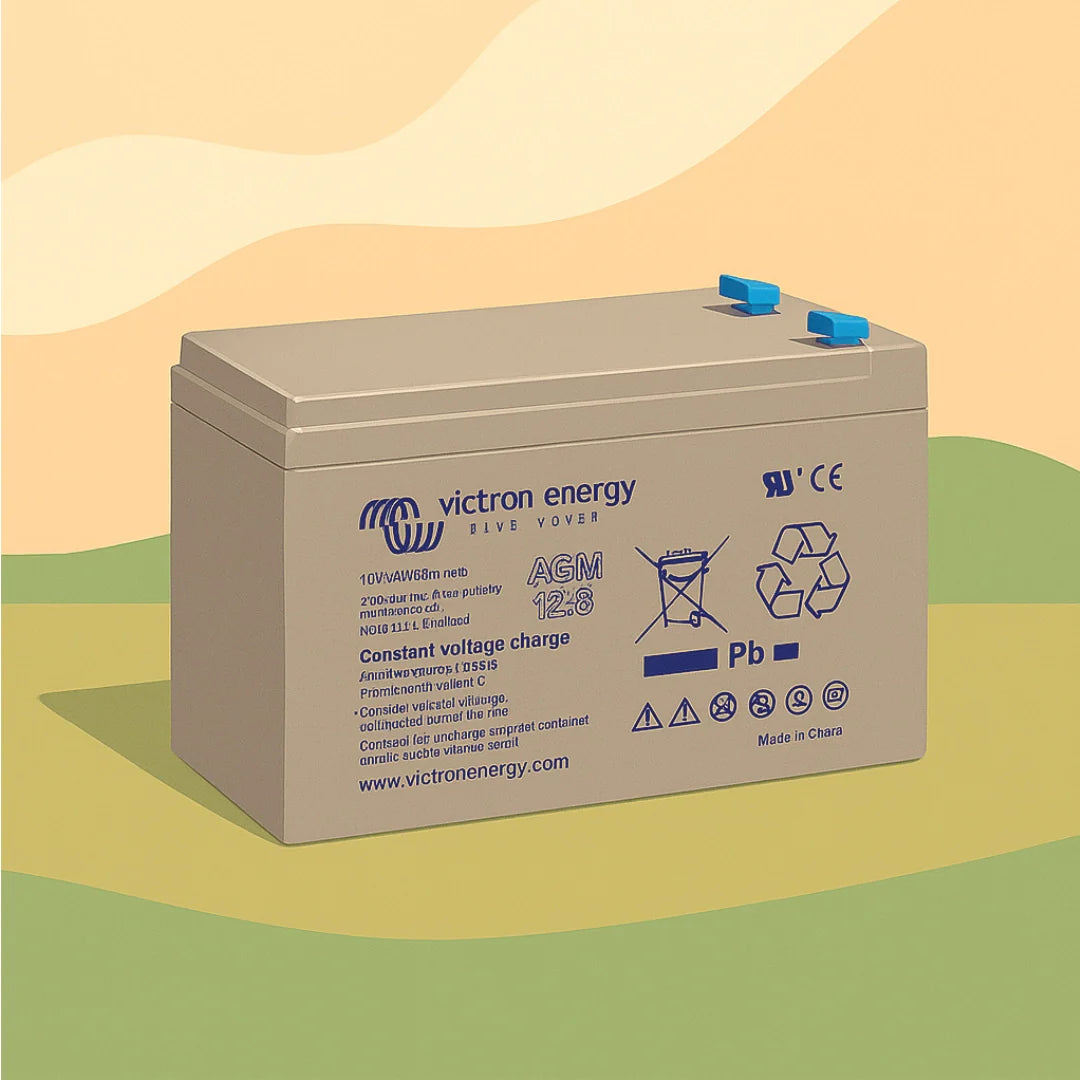
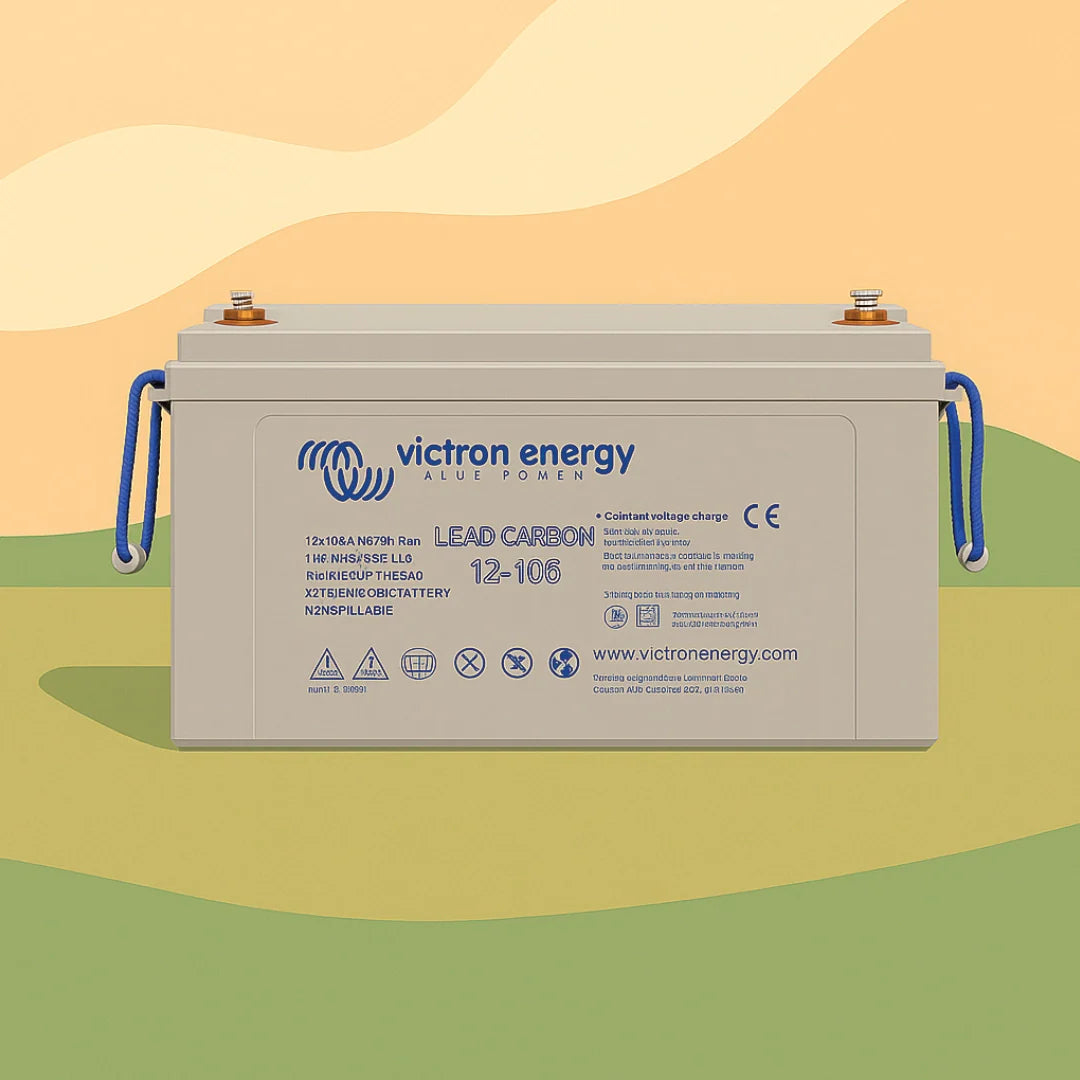
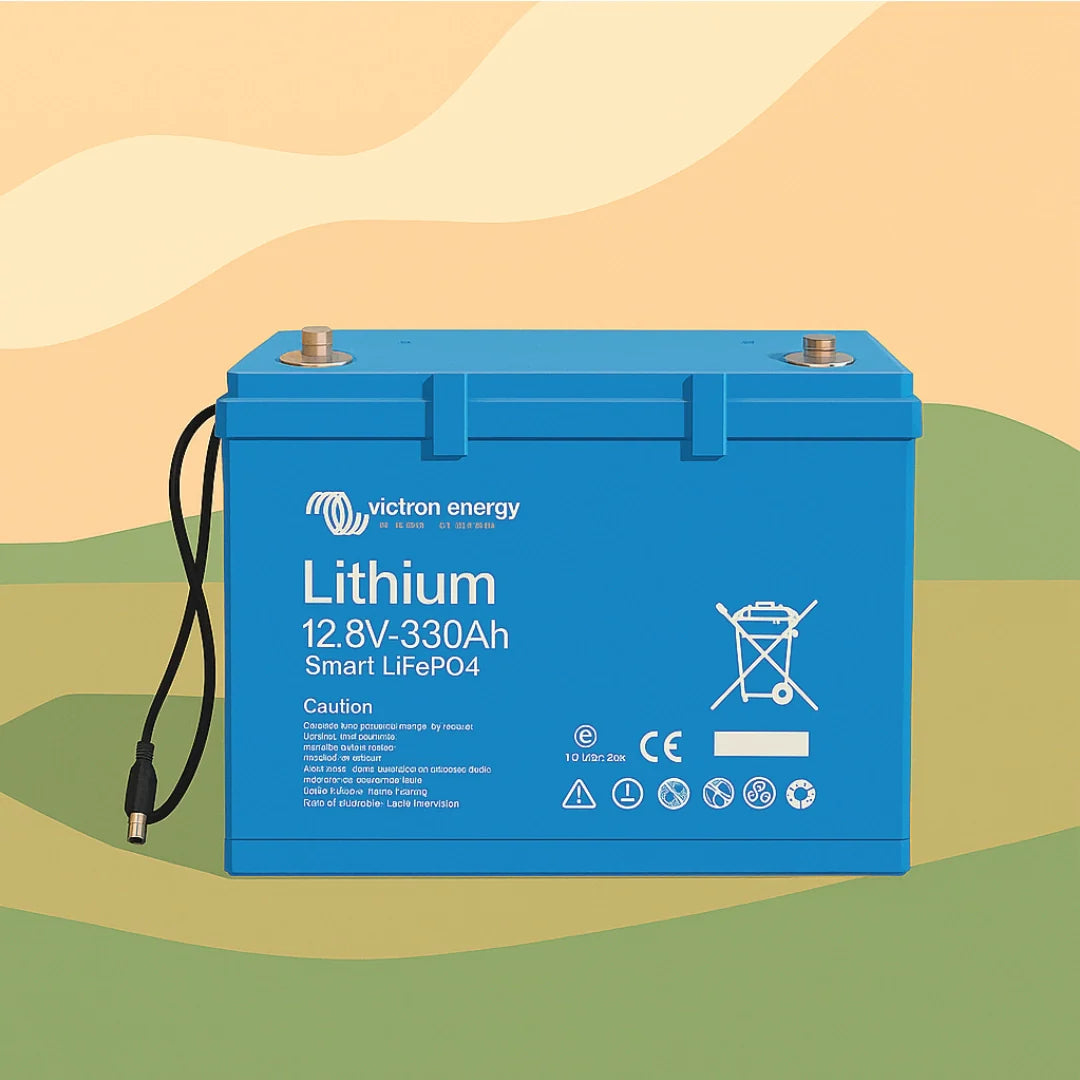
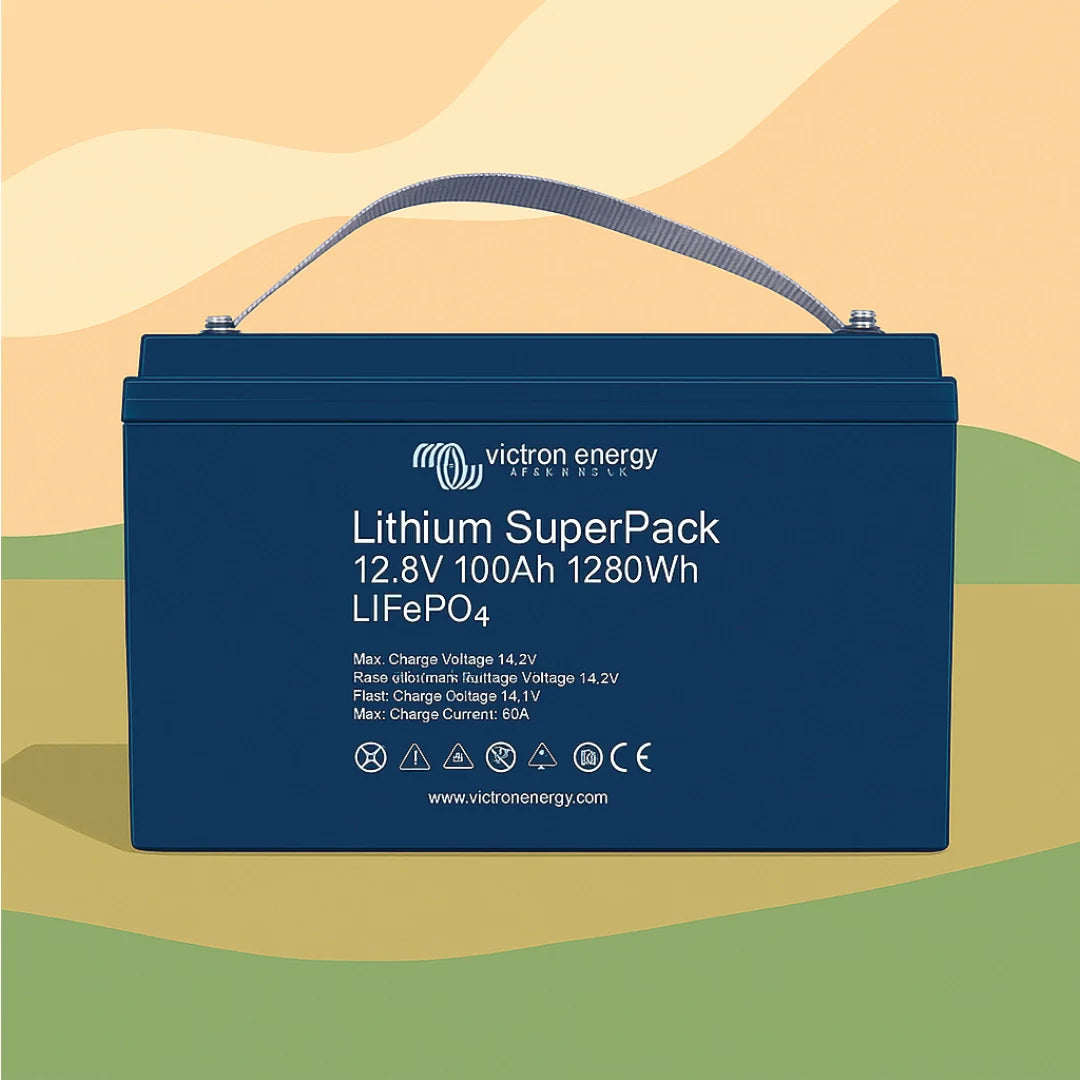



How to Maintain Lithium Batteries: 2026 UK Guide
Learn how to maintain lithium batteries for campervans and off-grid power. Expert tips on charging, storage temperature, and winter care. Find out more.
Table of Contents
- Why Lithium Batteries Need Different Care Than Lead-Acid
- Lithium Battery Charging Best Practices
- Optimal Lithium Battery Storage Temperature
- How to Store Lithium Batteries for Winter
- Monitoring Your Battery's Health and State of Charge
- Signs of Degradation and Common Faults to Watch For
- Safe Disposal and Recycling of Lithium Leisure Batteries
- Conclusion
- Frequently Asked Questions
Last Updated: September 5, 2026
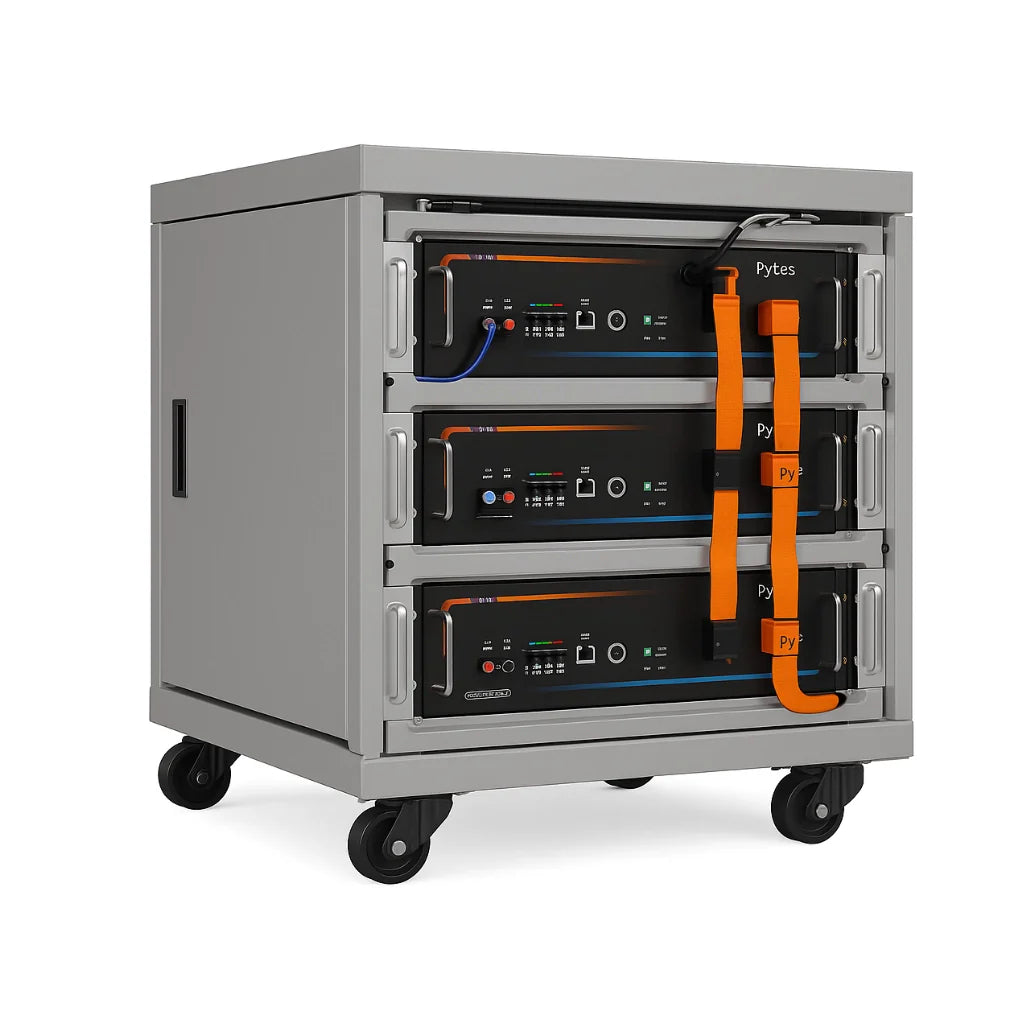
Lithium batteries now power most new campervan and motorhome electrical systems, yet many owners still treat them like the lead-acid batteries they replaced. That approach shortens lifespan and creates safety risks. In this Skyenergi guide, we break down the practical routines that keep lithium leisure batteries performing.
Why Lithium Batteries Need Different Care Than Lead-Acid
The fundamental difference comes down to chemistry. Lead-acid batteries tolerate being parked at full charge and accept a trickle charge without complaint. Lithium iron phosphate (LiFePO4) cells prefer to sit between 20% and 80% state of charge and do not need a continuous float charge.
Depth of discharge matters more with lithium than with lead-acid. A lead-acid battery degrades quickly if you regularly drain it past 50%. Lithium handles deeper discharge far better, but repeatedly running to empty still adds avoidable stress.
Lithium Battery Charging Best Practices
Charging a lithium leisure battery correctly is simple once you understand the voltage requirements. A lithium battery needs a charger with a lithium-specific profile, typically absorbing at 14.4V to 14.6V and floating at 13.5V to 13.8V. Most modern DC-to-DC chargers and MPPT solar charge controllers, including SRNE units supplied by Skyenergi, handle this automatically.
Setting Up Your Charging Sources
Getting the most from your lithium battery means configuring each charging source correctly. Here is how to approach the three most common setups.
Solar (MPPT Charge Controllers): An MPPT controller is the primary charger for many off-grid setups. With an SRNE MPPT controller, select the correct battery type in the settings, often labelled as 'LFP' or 'User'. If you choose 'User', you will need to manually set the absorption, float, and low-voltage disconnect parameters. A common mistake is leaving the controller on its default 'Gel' or 'Flooded' setting, which will undercharge your lithium battery.
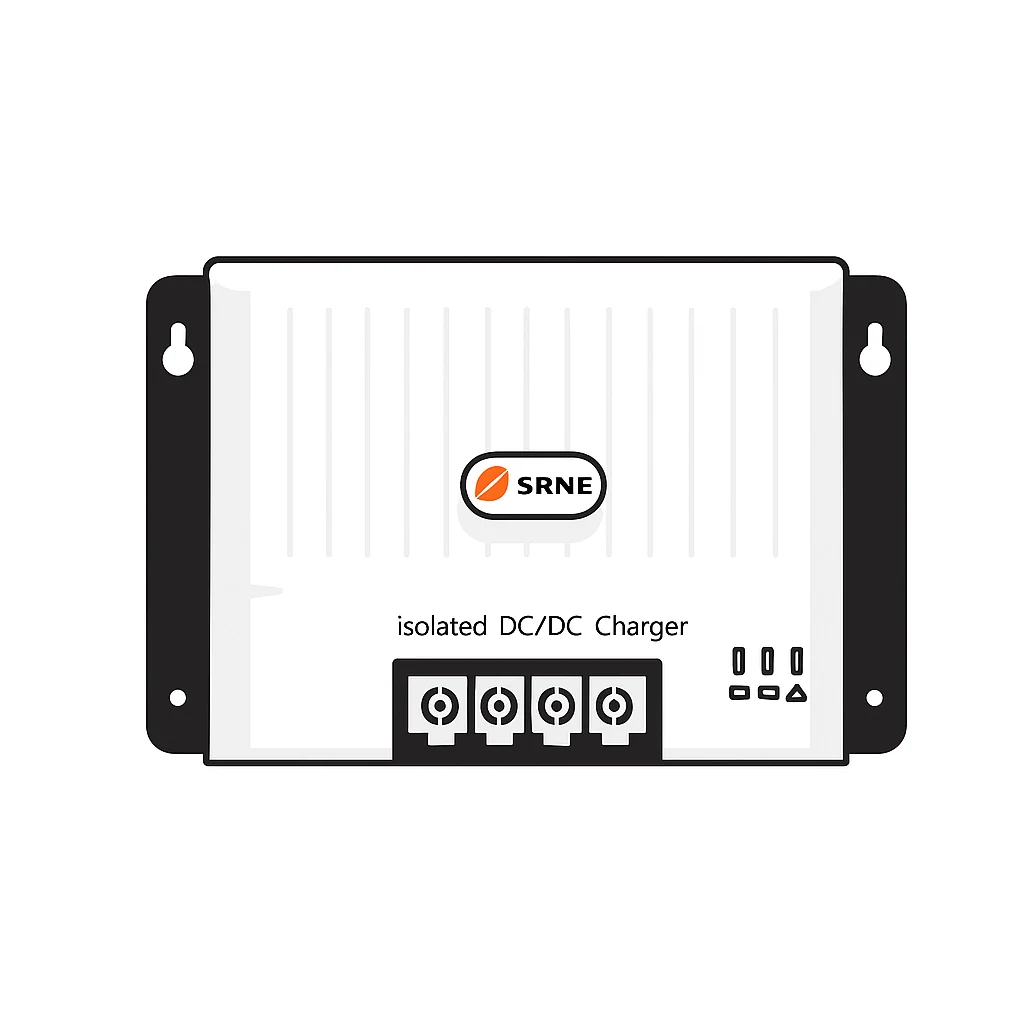
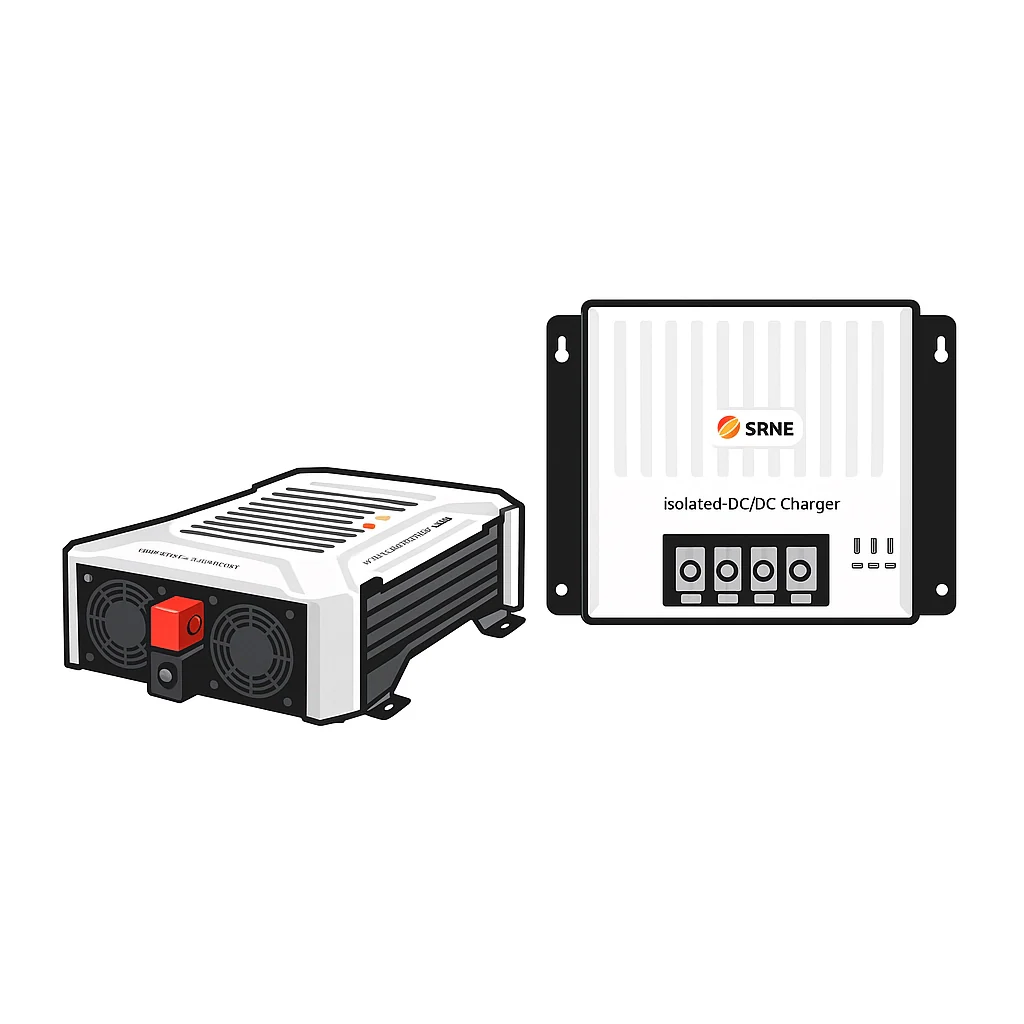
Alternator (DC-to-DC Chargers): A DC-to-DC charger is essential when charging from your vehicle's alternator. A standard split-charge relay will not work because it delivers the alternator's voltage directly, which is often too low to fully charge a lithium battery and can confuse the BMS. A quality DC-to-DC charger, like those in the SRNE range, boosts the alternator's output to the correct lithium charging voltage.
Mains (Battery Chargers): When on hook-up, a smart battery charger with a dedicated lithium mode is required. These chargers will run a specific charging algorithm that includes a constant current/constant voltage (CC/CV) stage followed by a rest period, rather than a continuous float charge.
Understanding the Charging Profile
The charging current should stay within the limits your battery manufacturer specifies. Most lithium leisure batteries accept a charge rate of 0.5C, meaning a 100Ah battery can safely take a 50A charge. Exceeding that generates excess heat and accelerates degradation.
A standard lithium charging profile has two main stages:
- Constant Current (CC): The charger delivers its maximum current until the battery reaches its absorption voltage (around 14.4V).
- Constant Voltage (CV): The charger holds the voltage steady while the current gradually tapers off. The battery is considered fully charged when the current drops to a low level, typically around 0.05C (5A for a 100Ah battery).
The 20-80% Rule and What It Actually Means
The 20-80% rule advises keeping your battery's state of charge between roughly 20% and 80% to avoid the stress of full charge and deep discharge. Industry guidance for 2026 continues to support this approach as a way to extend cycle life Portlandia Electric Supply's 2026 guidance on the 20-80 rule. The logic is straightforward: lithium cells experience the most mechanical stress at the extremes of their voltage range.
That said, the rule is not a universal requirement. Modern lithium iron phosphate batteries handle full charges better than older lithium-ion chemistries. For daily use, charging to 100% before a trip is fine. For long-term storage, keeping the battery between 30% and 50% is safer.
Optimal Lithium Battery Storage Temperature
Temperature is the single biggest factor in lithium battery longevity. Lithium cells degrade faster at elevated temperatures, and storing a battery in a hot campervan through summer accelerates chemical aging even when the battery is not in use. The ideal storage environment is cool and dry, ideally between 10°C and 20°C, with proper ventilation to allow any heat to dissipate. Health and Safety Executive guidance on battery storage
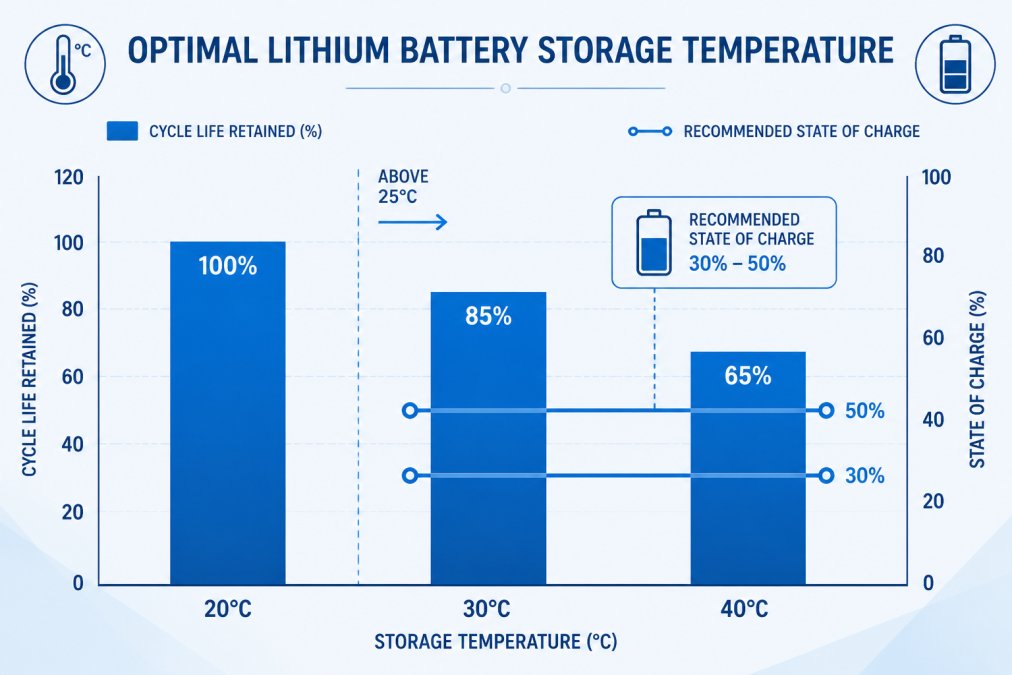
High temperatures also increase self-discharge rates and can cause the BMS to reduce charge acceptance. At the other extreme, charging a lithium battery below 0°C damages the cells through lithium plating. If your campervan sits through a cold winter, move the battery indoors before temperatures drop.
How to Store Lithium Batteries for Winter
Storing lithium batteries for winter requires more thought than simply parking the van and walking away. The correct approach is to charge the battery to between 30% and 50% state of charge before storage. A fully charged battery is more sensitive to stress and maintains higher internal pressure, which is why storage guidance recommends keeping charge levels in that 30% to 50% window International Fire and Safety Journal's lithium-ion battery guide.
Batteries should not be left unused for extended periods without checking. If a battery remains unused for six months, you need to check its charge status to ensure it stays within healthy parameters Tektronix lithium-ion battery maintenance guidelines. A battery that self-discharges to below 10% during storage can suffer permanent damage.
| Storage Duration | Recommended State of Charge | Action Required |
|---|---|---|
| Up to 3 months | 30-50% | No action needed |
| 3-6 months | 30-50% | Check voltage monthly |
| Over 6 months | 30-50% | Recharge to 50% before further storage |
Monitoring Your Battery's Health and State of Charge
Monitoring your battery's state of charge is essential, but voltage alone is a poor indicator for lithium. A LiFePO4 battery holds a nearly flat voltage curve between 20% and 90% state of charge, so a voltage reading tells you little about remaining capacity. A battery monitor that tracks amps in and out gives an accurate picture.
Narrowing the operating window extends cycle life significantly. Testing shows that cycling a battery between 75% and 65% state of charge, rather than running it from full to empty, dramatically increases the number of cycles the battery delivers Battery University's BU-808 guide on prolonging lithium-based batteries. For a leisure battery that mostly runs a fridge and lighting, keeping the discharge shallow means the battery will outlast the van.
Signs of Degradation and Common Faults to Watch For
Lithium batteries do not fail suddenly. They degrade gradually, and the signs are easy to miss if you are not tracking performance. The most common indicator is reduced capacity: your fridge runs for fewer hours than it used to on a full charge. Swelling of the battery case indicates internal cell damage and requires immediate replacement.
A Practical Troubleshooting Framework
When something seems wrong, work through this checklist to isolate whether the issue is with the battery, the charging system, or your monitoring equipment.
1. Check the Battery Management System (BMS) Status.
Most quality lithium batteries, including Skyenergi's Edge and Elite series, have a BMS that can communicate with a monitor or via Bluetooth. The first step is to check if the BMS has triggered a protection event. Common protections include:
- Low Temperature Cut-off: The BMS will refuse to charge the battery if the cell temperature is below 0°C. This is a protective measure, not a fault.
- High Temperature Cut-off: Charging or discharging at extreme temperatures will also trigger a shutdown.
- Over-current Protection: Drawing more current than the BMS allows will cause it to disconnect the battery.
If a protection event is active, the BMS will often show an error code. Resetting the BMS usually involves removing the load or charge source and letting the battery rest for a few minutes.
2. Verify the State of Charge with a Shunt-Based Monitor.
Voltage is an unreliable indicator of state of charge for LiFePO4 batteries. If your battery seems to be running out of power quickly, check the reading on your battery monitor. A monitor that tracks amp-hours is the only reliable way to know what is left.
3. Isolate the Problem.
- If the battery is not charging: Check the voltage at the battery terminals with a multimeter. If the charger is outputting the correct voltage (around 14.4V) but the battery is not accepting it, the BMS may be in protection mode. If there is no voltage at the terminals, the issue is with the charger or the wiring.
- If the battery is not providing power: Check the voltage under load. A healthy LiFePO4 battery should maintain a voltage above 12V under a moderate load. If the voltage drops sharply, the battery may have a weak cell or be in a low state of charge.
- If the battery is cutting out under load: This is a classic sign of a BMS over-current or low-voltage protection event. It could mean your load is too large for the battery, or one of the cells has become unbalanced and is hitting the low-voltage cutoff before the others.
What to Do About a Swollen or Leaking Battery
A swollen or bulging case is a critical safety issue. It indicates internal cell damage, often from overcharging, physical impact, or a manufacturing defect. Do not attempt to use, charge, or puncture a swollen battery. Here is what to do:
- Isolate the battery: Disconnect it from all charging sources and loads immediately.
- Move it to a safe location: Place it outside, away from any flammable materials, in a metal container if possible.
- Do not dispose of it in household waste: A swollen battery is a fire hazard. Contact your local council or a specialist battery recycling facility for advice on safe disposal.
For a leaking battery, the same rules apply. The electrolyte is corrosive and toxic. Wear gloves and eye protection if you must handle it, and ventilate the area. Clean up any spill with a dry cloth and dispose of it as hazardous waste.
Chemical aging happens even when a battery sits unused. Calendar aging, driven by temperature and state of charge, degrades lithium cells independently of charge cycles. A battery stored at 40°C will age noticeably faster than one stored at 20°C, regardless of use.
Safe Disposal and Recycling of Lithium Leisure Batteries
Lithium batteries must never go in household waste or standard recycling bins. They pose a significant fire risk during transport and processing, and UK waste facilities have reported fires caused by discarded lithium batteries. When your battery reaches the end of its service life, it needs to go to a dedicated battery recycling facility.
The regulatory environment is tightening. As of January 1, 2026, a new requirement mandates a maximum state of charge of 30% for shipping any equipment batteries over 2.7 Wh RecycleNation's January 2026 update on lithium-ion battery recycling rules. This affects how batteries are transported for recycling and disposal, so check with your recycling centre about their collection requirements before dropping off a battery.
Life cycle assessments of lithium-based batteries highlight that the environmental impact extends beyond the materials themselves, including labour standards and community effects at production sites ScienceDirect review of lithium-based battery life cycle assessments. Choosing a quality battery that lasts longer reduces the number of batteries you need to dispose of over time, which is both a financial and environmental win.
Conclusion
Maintaining lithium batteries comes down to three habits: charge with the right equipment, store them cool and at partial charge, and monitor state of charge rather than guessing from voltage. Follow those routines and a quality lithium leisure battery will deliver thousands of cycles over a decade or more.
Skyenergi supplies Edge and Elite lithium batteries built for campervan, motorhome and off-grid use, alongside SRNE charging systems, MPPT solar controllers and battery monitors that handle the maintenance work automatically. With fast UK delivery and specialist technical support, you can build a power system designed to last. Get started with Skyenergi and make your lithium battery the last one you buy.
Frequently Asked Questions
What is the 20-80% rule for lithium batteries?
The 20-80% rule advises keeping your lithium battery's state of charge between 20% and 80% during regular use. This avoids the stress of full charge and deep discharge, which can accelerate degradation. For daily use, this means avoiding leaving the battery at 100% for extended periods and not letting it drop below 20%. For long-term storage, the recommended range is lower, typically between 30% and 50%.
Should a lithium battery be charged after every use?
No, you do not need to charge a lithium battery after every single use. Unlike lead-acid batteries, lithium batteries do not suffer from the 'memory effect' and are not damaged by partial state of charge. You can charge it when convenient, though for optimal cycle life, staying within the 20-80% operating window is best. For example, if you use 15% capacity, a full charge isn't necessary.
How long can a lithium battery sit unused?
A lithium battery can sit unused for several months, but it requires preparation. For long-term storage, charge it to between 30% and 50% state of charge and store it in a cool, dry place. If a battery remains unused for 6 months, check its charge status. Top it up to the recommended 30-50% range if it has dropped, to prevent damage from deep discharge.
What are the signs of a failing lithium leisure battery?
Key signs include a noticeable drop in capacity, where the battery discharges much faster than before. Other indicators are physical swelling of the casing, excessive heat during charging or discharging, and the battery management system (BMS) frequently cutting off power under load. If you observe any of these, stop using the battery immediately and check its status with a compatible monitor.
This article was written using GrandRanker
Prev post

Off Grid Solar Battery Storage Guide (2026 UK)
Updated on 06 September 2026
Next post

12V Campervan Electrical System Kits: Complete Guide
Updated on 04 September 2026


