





Off-Grid Solar vs Wind Power for UK Homes
Off-grid solar vs wind power for UK homes: Compare off-grid solar and wind power systems for UK homes. Explore efficiency, costs, battery storage.
Table of Contents
- What Off-Grid Living Means for Homeowners
- Solar vs Wind: Efficiency Comparison for UK Climate
- Battery Storage Systems: Choosing the Best Lithium Leisure Batteries for Off-Grid
- Hybrid Solar and Wind Power Systems: Balancing Seasonal Generation
- MPPT Solar Charge Controller Efficiency in Off-Grid Setups
- Planning Permission, Maintenance and Real-World ROI for Homes
- Which System Wins for Your Home?
- Frequently Asked Questions
Last Updated: September 27, 2026
What Off-Grid Living Means for Homeowners
Off-grid living means generating and storing your own electricity without connection to the national grid. For homeowners, off-grid solar vs wind power for homes represents a fundamental choice between two renewable energy sources that behave differently across the seasons. This guide from Skyenergi breaks down exactly how each technology performs in our climate and which combination works best for your property.
The renewable energy landscape has shifted dramatically. Renewables delivered a record 44% of electricity in 2025, with wind as the single largest source in the national energy generation mix Energy UK national energy generation mix. Yet for homeowners pursuing energy independence, the decision between solar and wind isn't straightforward. Approximately 1.6 million homes have solar panels installed, but far fewer have domestic wind turbines Sunsave residential solar PV market adoption. Understanding why requires looking at efficiency, cost, maintenance, and how seasonal weather patterns affect each technology.
Solar vs Wind: Efficiency Comparison for UK Climate
Solar panels typically convert 18% to 22% of energy that passes through them into usable electricity. Wind turbines perform better in absolute terms, converting 30% to 45% of wind energy into electricity MyBuilder efficiency comparison against solar panels. But efficiency alone doesn't determine which technology wins for your home.
The critical difference lies in seasonal generation. Solar output peaks in summer; winter generation drops 60-70%. Wind generation follows the opposite pattern, peaking in winter when heating and lighting demands are highest. A homeowner relying on solar alone faces an energy deficit in winter.
Wind turbines require consistent wind speeds above 10 mph at hub height. Urban turbines generate 40-60% less energy than rural installations due to turbulence from buildings and trees. For optimal performance, wind turbines typically require a tower height of around 10-15 metres.
Solar installations are far more forgiving. They work in any location with south or south-west facing roof or ground space, and generate usable energy even in overcast weather. This makes solar the more practical choice for most residential properties.
Battery Storage Systems: Choosing the Best Lithium Leisure Batteries for Off-Grid
Battery storage makes off-grid systems viable by capturing excess generation and releasing it when demand exceeds production.
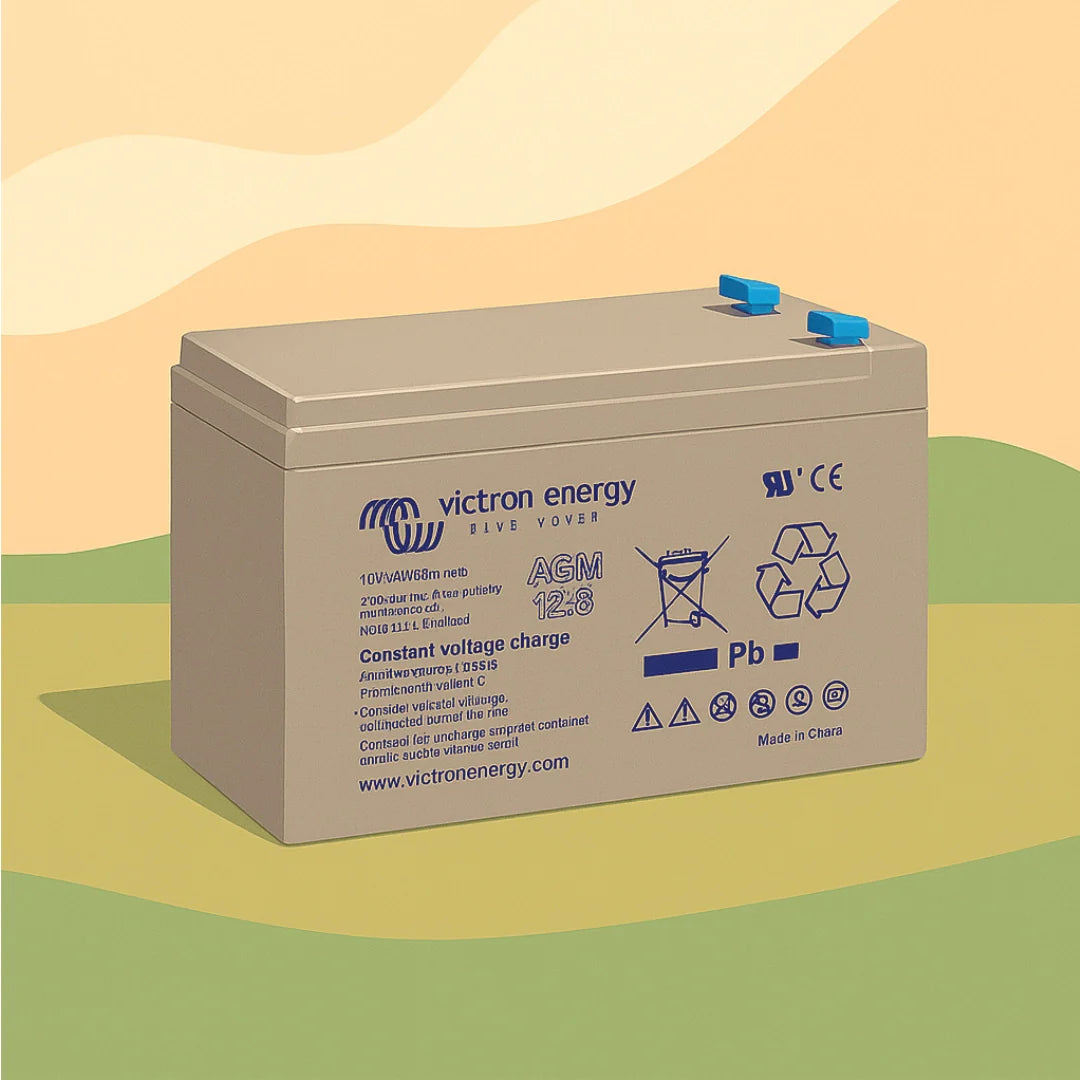
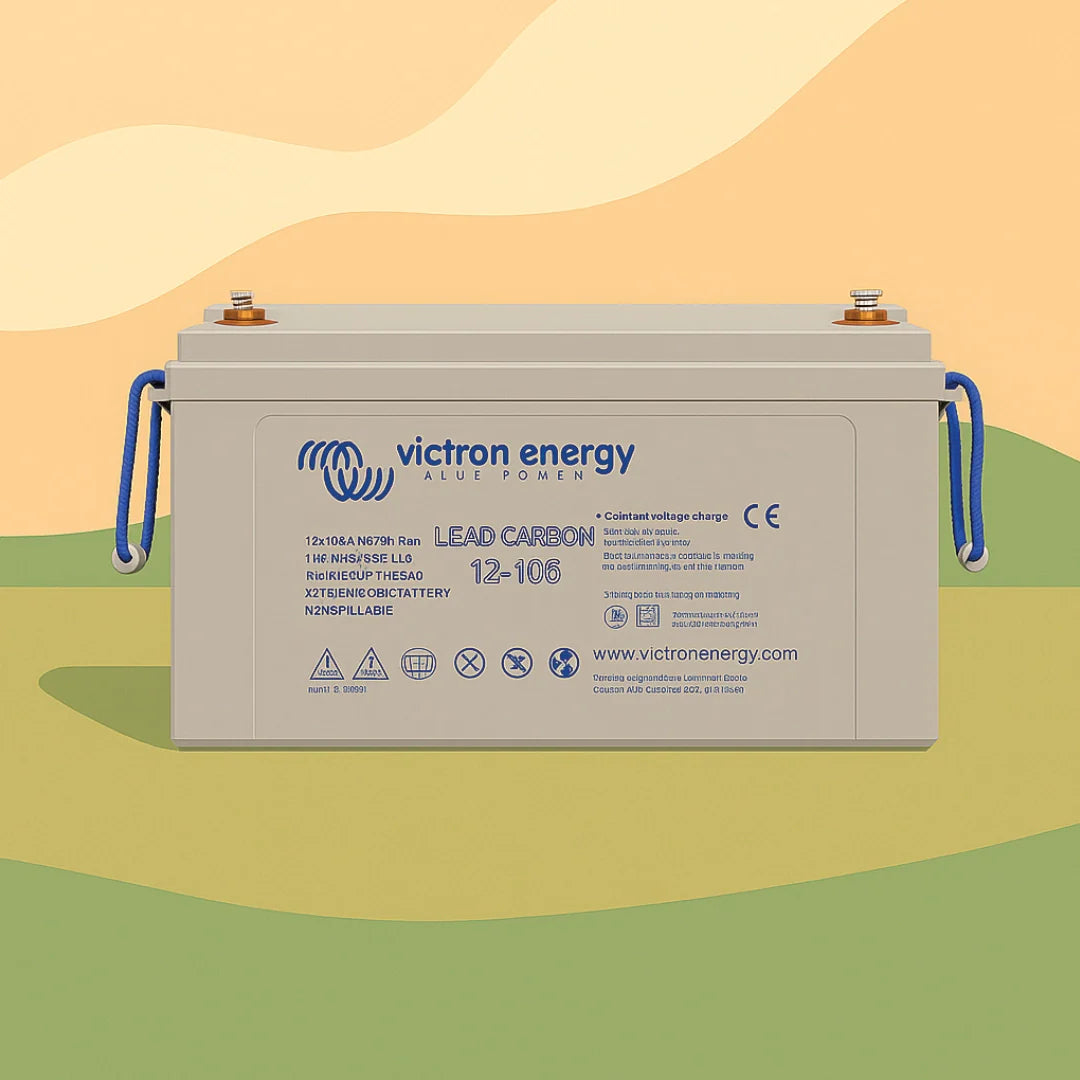
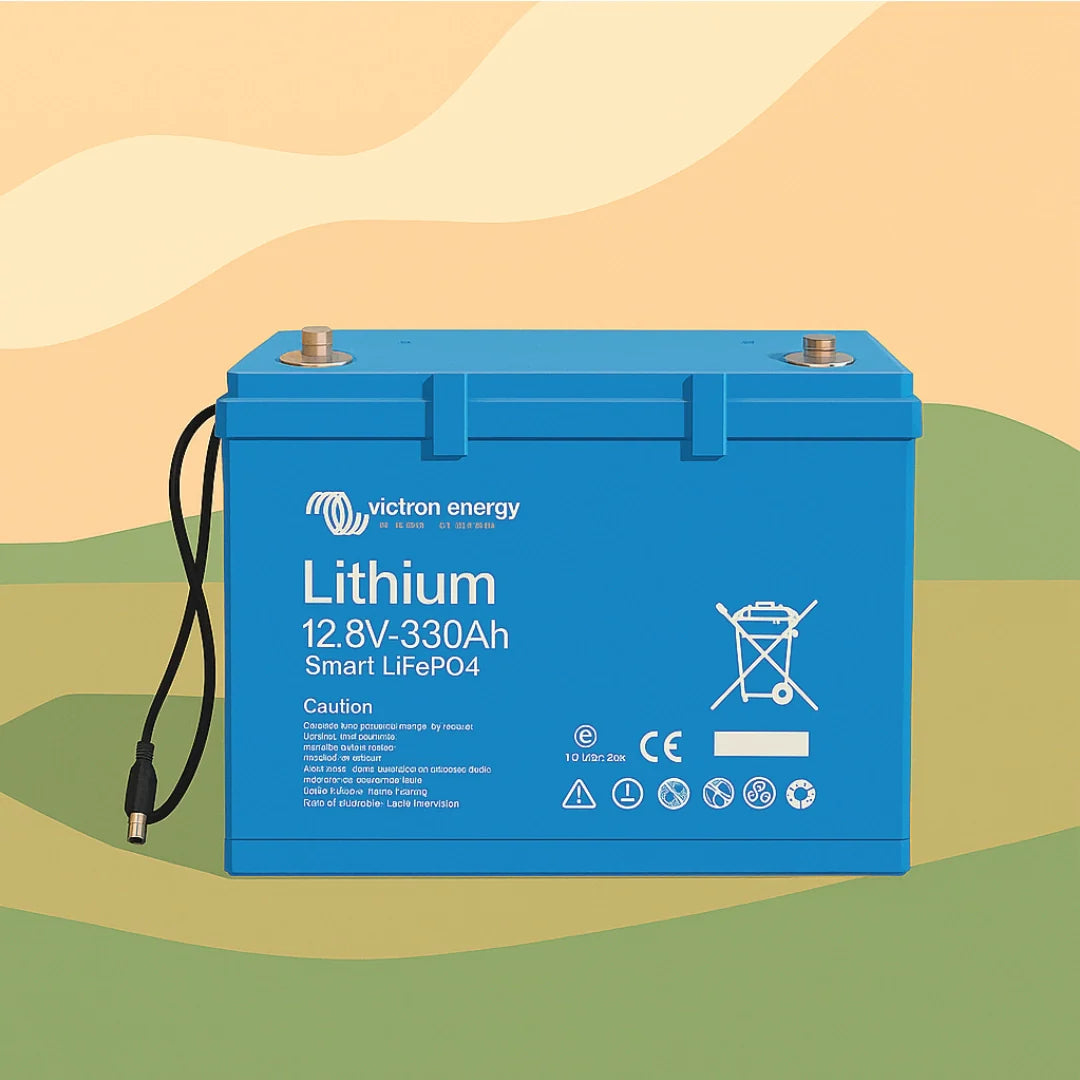
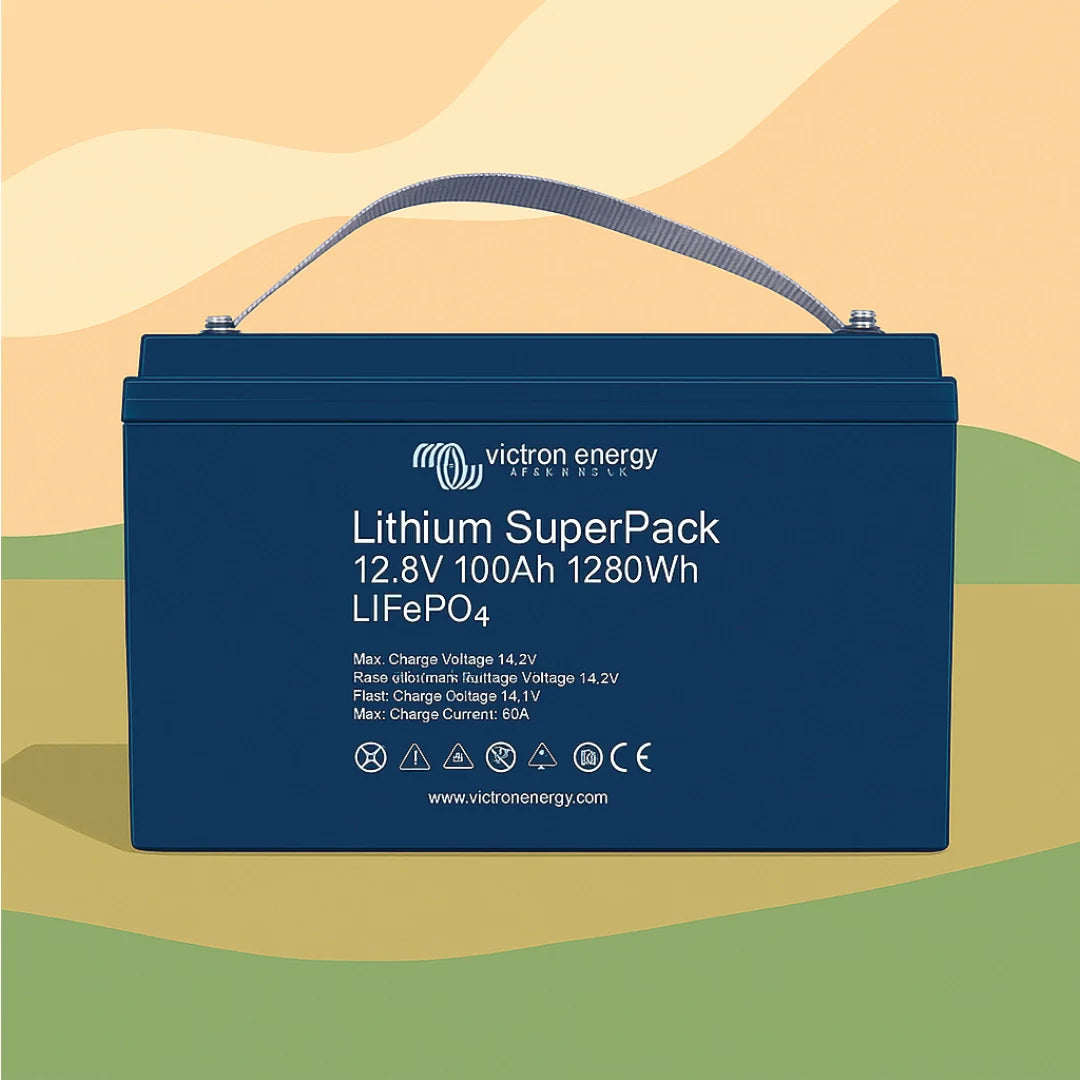
Lithium iron phosphate batteries are the standard for off-grid storage, offering 6,000+ cycles and a 10-20 year lifespan versus 500-1,000 cycles and a 5-7 year lifespan for lead-acid. Upfront cost is higher, but total cost of ownership over 20 years favours lithium decisively.
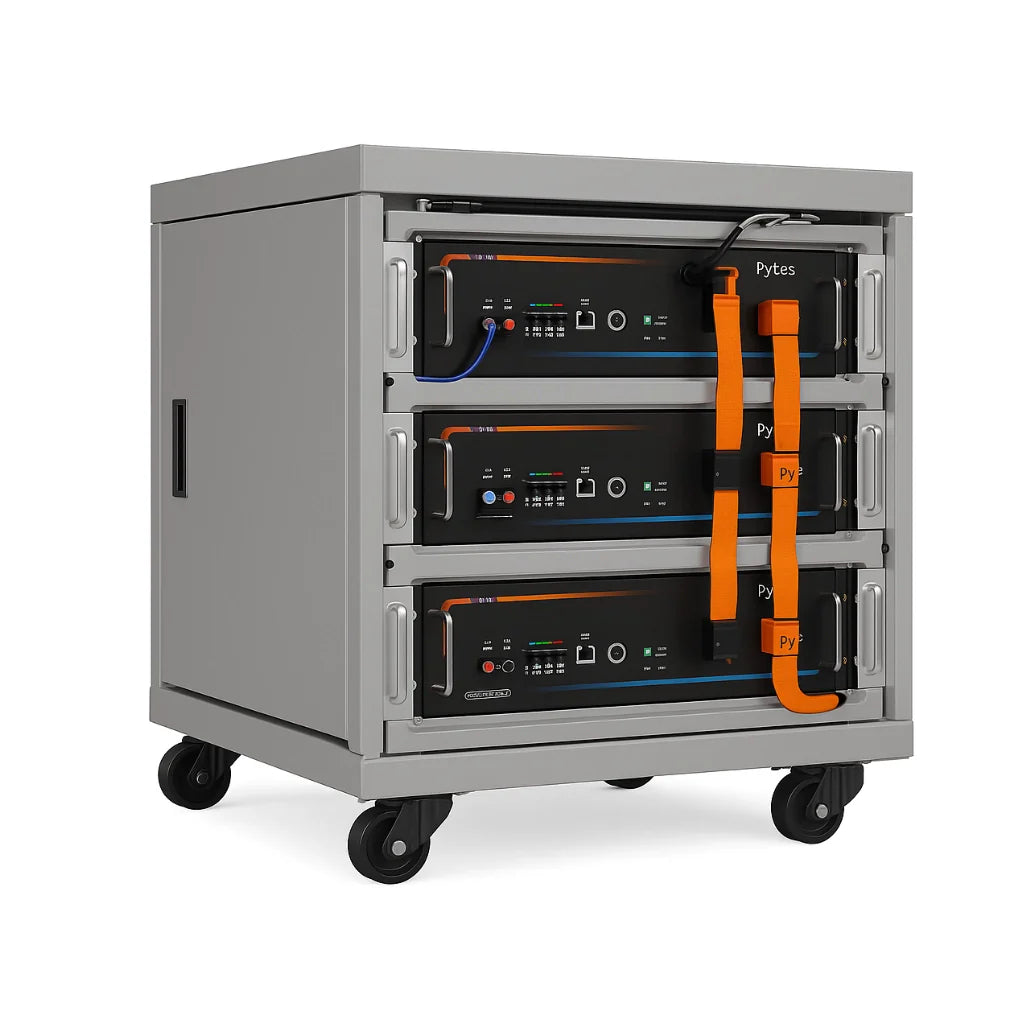
The Pytes V5 5.12kWh battery is a rack-mounted solution designed for off-grid applications with built-in battery heating, critical for lithium systems in colder climates.
Key specifications matter:
- Round-trip efficiency: >95% means minimal energy loss during charge and discharge cycles
- Scalability: The V5 connects up to 56 units in parallel, allowing expansion from 5.12 kWh to 286.72 kWh
- Compatibility: Works with most inverter brands, not locked into a single manufacturer's ecosystem
- Warranty: 10 years standard, with design life extending to 20 years
| Battery Type | Cycle Life | Lifespan | Best For |
|---|---|---|---|
| Lead-acid | 500-1,000 cycles | 5-7 years | Budget-conscious, short-term use |
| Lithium (LiFePO4) | 6,000+ cycles | 10-20 years | Long-term off-grid, frequent cycling |
| Lithium with heating | 6,000+ cycles | 10-20 years | Off-grid, cold climates |
Hybrid Solar and Wind Power Systems: Balancing Seasonal Generation
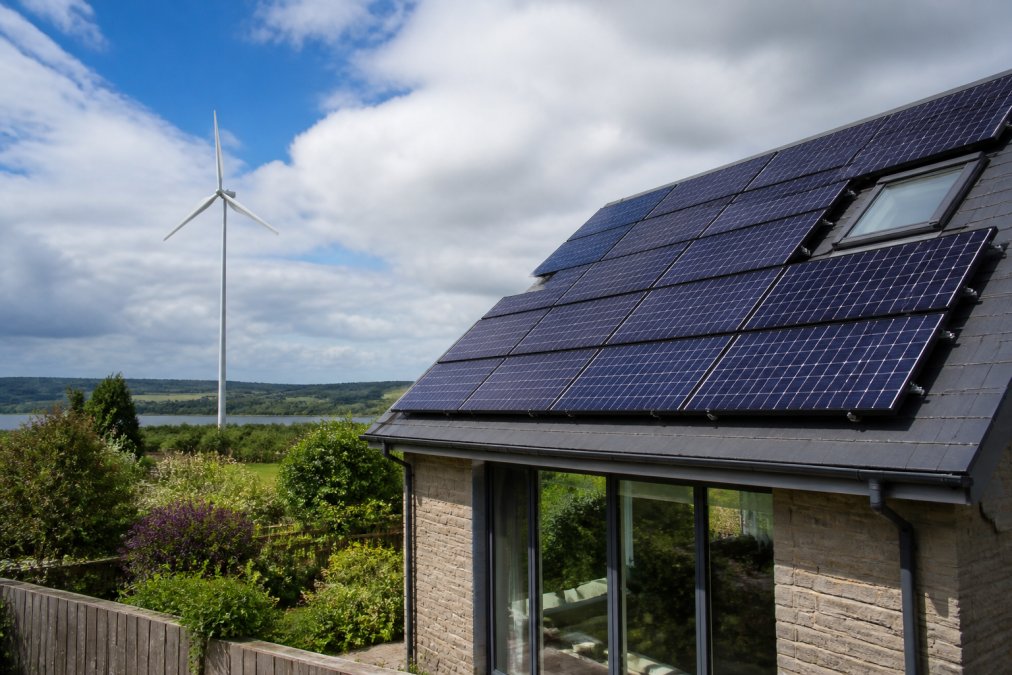
The strongest off-grid systems combine solar and wind because they offset each other's seasonal weakness. An individual off-grid homeowner using 8.7 kW of solar alongside a 60 kWh LiFePO4 battery system and a 10-15 metre wind turbine maintained reliable power year-round by balancing summer solar generation with winter wind generation Reddit r/OffGrid hybrid system case study.
MPPT Solar Charge Controller Efficiency in Off-Grid Setups
MPPT (Maximum Power Point Tracking) charge controllers are essential for off-grid solar systems. They extract maximum available power from your panels by constantly adjusting the electrical load to match the panel's optimal operating point. A basic PWM (Pulse Width Modulation) controller wastes 20-30% of available solar energy in typical conditions. An MPPT controller recovers that loss, delivering 20-30% more usable power from the same panels.
UK Climate-Specific Efficiency Challenges
The low winter sun angle (15-20° in December) means solar panels operate at sub-optimal voltage. PWM controllers reduce voltage to match battery charge state without tracking peak power. MPPT controllers continuously adjust DC-to-DC conversion, maintaining peak power extraction when panel voltage is low and current is high, the condition dominating winter generation.
Sizing MPPT Controllers for Off-Grid Generation
Controller size should match your solar array's short-circuit current (Isc), not inverter capacity. If your 4 kW array produces 120A at Isc but your inverter accepts 80A input, you need a 120A controller. During charging windows when batteries are depleted, the controller must handle full 120A without thermal stress or efficiency loss.
DC/AC Conversion Ratio and Oversizing Strategy
DC/AC ratio (installed solar capacity to inverter capacity) directly affects MPPT controller demand. A 4 kW inverter with a 150% DC/AC ratio means 6 kW of installed panels. The MPPT controller must handle 6 kW input while the inverter accepts 4 kW output, storing excess in batteries or limiting output to prevent overcharge.
Hoymiles HYS 3.6kW Hybrid Inverter ph1 →
Real-World Efficiency in UK Conditions
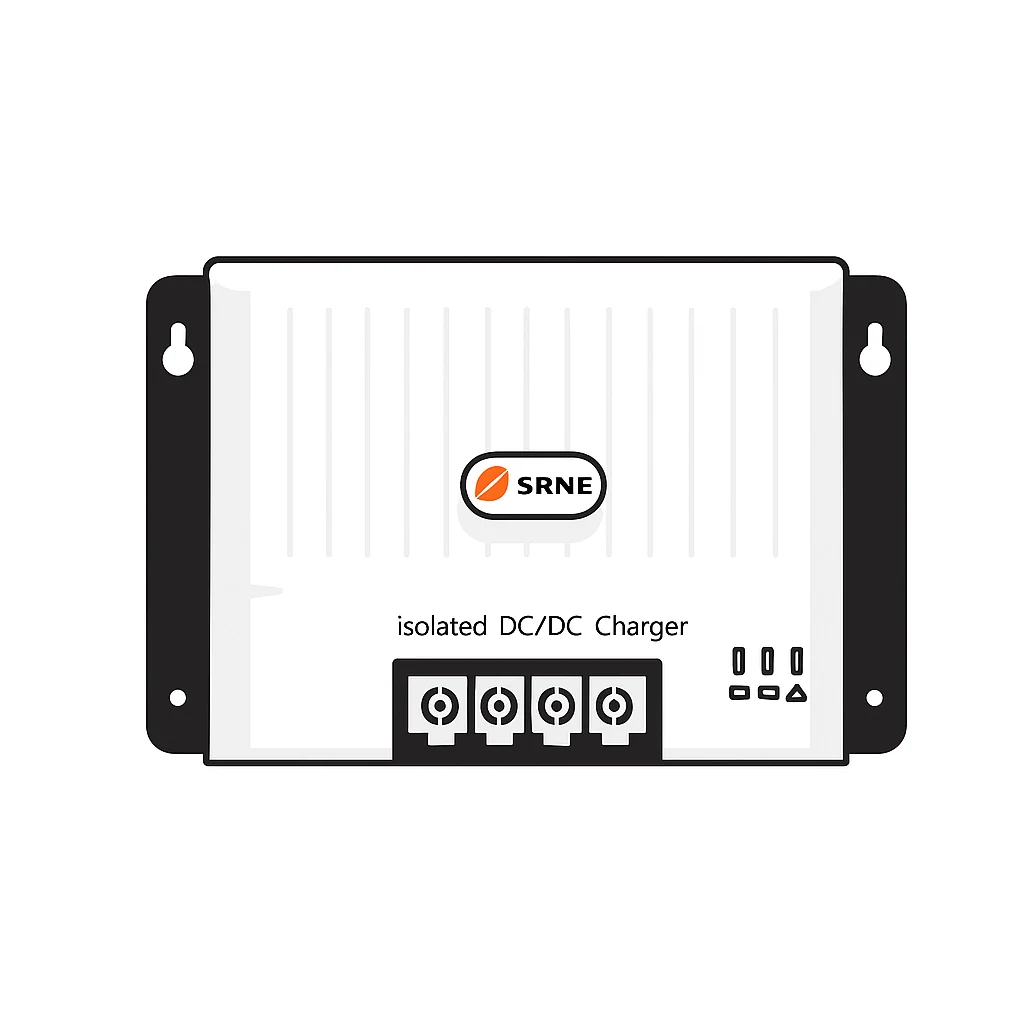
A homeowner with a 5 kW solar array, SRNE ML4880 MPPT controller, and a 48V lithium battery bank will see: Summer 18-22 kWh daily (97-98% efficiency, charging complete by 2 p.m.); Winter 3-5 kWh daily (96-97% efficiency, charging extends to late afternoon); Spring/Autumn 10-15 kWh daily (97-98% efficiency, 1-2 daily cycles).
Planning Permission, Maintenance and Real-World ROI for Homes
Wind Turbine Planning Permission and Noise Constraints
Domestic wind turbines face significantly higher planning barriers than solar installations. The Town and Country Planning (General Permitted Development) Order 2015 exempts small turbines only if hub height ≤15 metres, rotor diameter ≤3.8 metres, and installation is on a building. A 5 kW turbine requires a 10-15 metre hub height to access consistent wind, automatically triggering planning permission in most local authorities.
Solar panel installations on roofs are generally permitted development if:
- Installation is on a residential building (not a commercial structure)
- Panels don't protrude more than 200mm from the roof surface
- Total area doesn't exceed 4 square metres per roof slope
Maintenance Requirements and Long-Term Costs
Solar and wind systems have fundamentally different maintenance profiles.
Solar panels require minimal intervention: cleaning 2-4 times yearly, annual visual inspection, and inverter servicing every 5-10 years. Expected maintenance: £100-£300 annually.
Wind turbines require more frequent checks, including annual inspections of mechanical components, blade integrity, and lubrication of moving parts. Costs can range from £200-£500 annually, depending on the turbine size and complexity.
Lithium battery systems are largely maintenance-free, with modern units featuring integrated battery management systems (BMS) for optimal performance and longevity. Periodic monitoring of state of charge and temperature is recommended.
Real-World ROI for Off-Grid Systems
ROI depends on location, energy consumption, and system size. For properties where mains grid connection is unavailable or prohibitively expensive, hybrid systems deliver genuine ROI within 15 years. For suburban properties with available grid connection, solar-only systems are more cost-effective unless you prioritise energy independence over financial return.
Which System Wins for Your Home?
Choose solar if you have good south-facing roof or ground space and want the simplest, lowest-maintenance system. Solar is more affordable, requires no planning permission in most cases, and generates reliably across all seasons. You'll need 3-4 days of battery storage for winter cloud cover, manageable with modern lithium systems.
Frequently Asked Questions
Is wind power more efficient than solar for off-grid homes?
Wind turbines convert 30% to 45% of wind energy into electricity, while solar panels typically convert 18% to 22%. However, efficiency alone doesn't determine which works best for your home. Wind performs better in consistently windy locations and during winter months, whereas solar generates steadily year-round in most climates. Many off-grid homeowners find that combining both sources balances seasonal generation gaps and improves overall energy security.
How do the best lithium leisure batteries for off-grid compare to traditional lead-acid options?
Lithium iron phosphate (LiFePO4) batteries offer superior performance for off-grid systems. They deliver over 6,000 cycles at 90% depth of discharge with round-trip efficiency exceeding 95%, compared to lead-acid's 300-500 cycles and 80% efficiency. Lithium batteries also tolerate lower temperatures with built-in heating, making them ideal for cold climates. The Pytes V5 5.12kWh battery, for example, supports scalable expansion up to 286.72kWh and includes a 10-year warranty with up to 20 years design life.
Can I combine solar and wind power for a home system?
Yes, hybrid solar and wind power systems are increasingly popular for off-grid homes. Solar generates peak output in summer, while wind typically performs better in winter, creating complementary generation patterns. This approach improves grid resilience and increases electricity accessibility throughout the year. A hybrid system with 8.7 kW of solar and a 10-15 metre wind turbine, backed by 60 kWh of lithium battery storage, can maintain off-grid power requirements through combined energy generation.
What maintenance is required for off-grid wind turbines versus solar panels?
Solar panels require minimal maintenance: occasional cleaning to remove dust and debris, and regular monitoring through systems like the Hoymiles S-Miles Cloud platform. Wind turbines demand more attention, including annual inspections of mechanical components, blade checks, and bearing lubrication. Lithium battery systems need periodic monitoring of state of charge and temperature, though modern batteries with built-in battery management systems (BMS) handle most tasks automatically. Hybrid systems benefit from centralised monitoring through inverter platforms.
Off-grid living isn't about choosing between solar and wind, it's about combining them intelligently. Skyenergi supplies the hybrid inverters, lithium batteries, and solar charge controllers needed to build a system that actually works year-round. With the Hoymiles HYS hybrid inverter and Pytes V5 battery storage, you get the intelligent energy management that makes seasonal generation gaps manageable. Get started with Skyenergi and move toward genuine energy independence.
Prev post

Connect Solar Panels in Parallel for Caravans
Updated on 29 September 2026
Next post

How to Troubleshoot DC to DC Charger Voltage Drops
Updated on 26 September 2026


