





Sizing Solar Panels: A Campervan and Off-Grid Guide
Sizing solar panels for campervans and off-grid power? Learn to match panels, MPPT controllers and lithium batteries with our practical UK guide.
Table of Contents
- Calculating Daily Energy Consumption for Off-Grid Systems
- How to Size Solar Panels for a Campervan Roof
- MPPT Solar Charge Controller Sizing Explained
- Matching Solar Panels to Lithium Leisure Batteries
- Sizing Solar Panels for Shading, Orientation and UK Sunlight
- Future-Proofing Your Solar Array for EV Charging and Battery Storage
- Common Mistakes When Sizing Solar Panels
- Frequently Asked Questions
Last Updated: September 29, 2026
Calculating Daily Energy Consumption for Off-Grid Systems
Sizing solar panels starts with one number: your daily energy use. Add up every device you run in a day, in watt-hours (Wh), and you have the foundation for the whole system.
Here's how to work it out:
- List each appliance and its power rating in watts.
- Estimate daily hours of use.
- Multiply watts by hours for each item.
- Add the totals together.
How to Build a Load Profile for Your Campervan
A load profile is a simple table of what you use, when, and for how long. Build it once and every other sizing decision gets easier.
| Appliance | Watts | Hours/Day | Daily Wh |
|---|---|---|---|
| Compressor fridge | 45 | 8 | 360 |
| LED lighting (10) | 30 | 5 | 150 |
| Laptop + phone | 65 | 3 | 195 |
| Water pump | 60 | 1 | 60 |
| Diesel heater fan | 25 | 6 | 150 |
| Total | 915 |
How to Size Solar Panels for a Campervan Roof
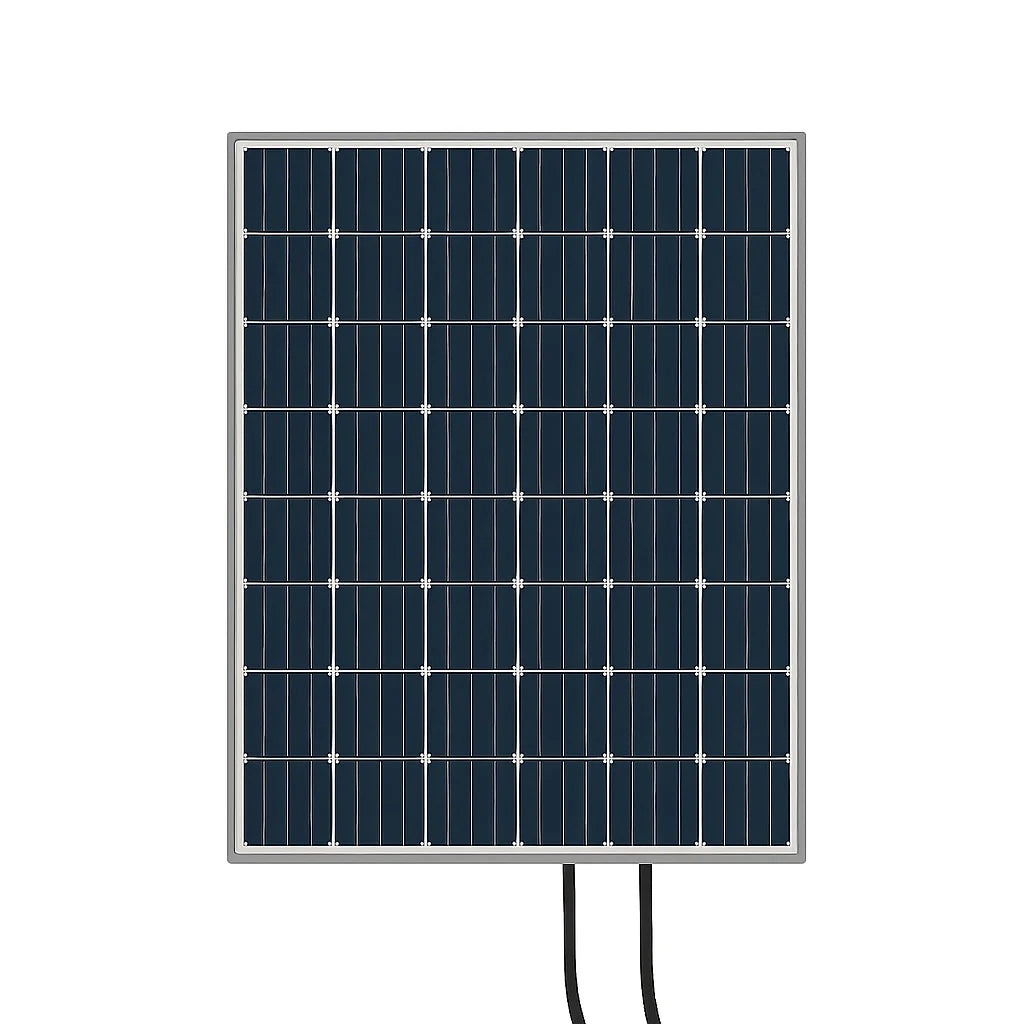
To size solar panels for a campervan, divide your daily Wh by the realistic sun hours you get, then add a margin. On a typical day with 3.5 peak sun hours, 915Wh needs roughly 260W of panel. Round up to 300W.
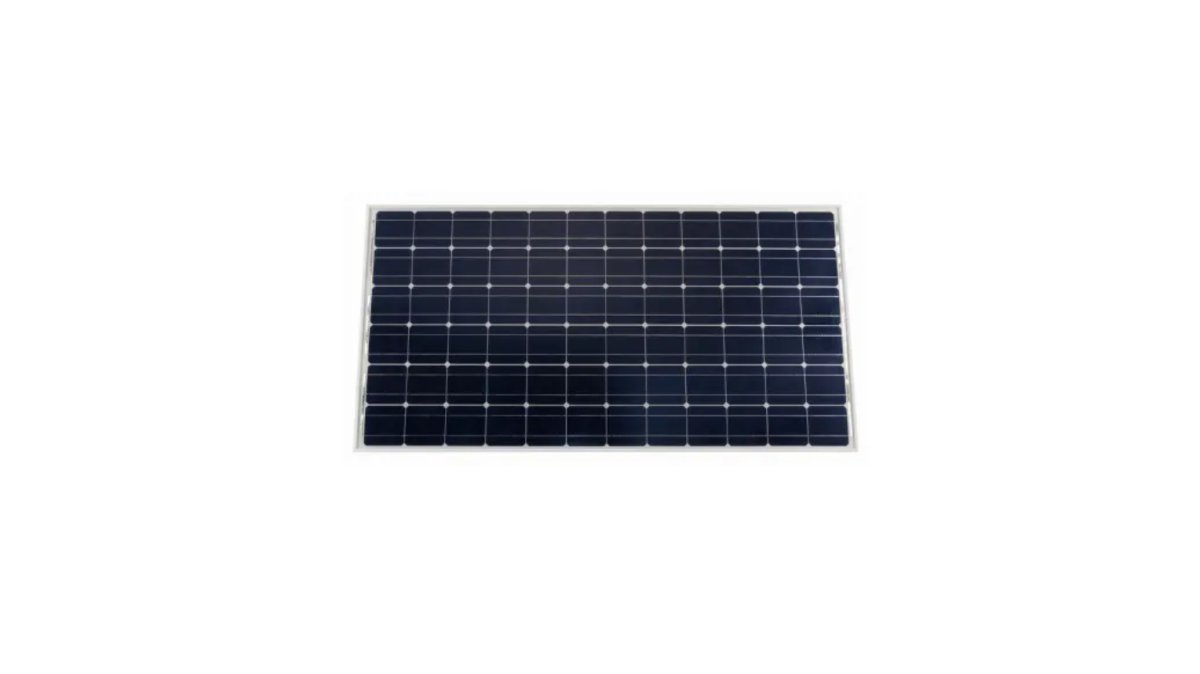
Panel Dimensions and Roof Space Requirements
Check the physical size before you check the wattage. A panel that doesn't fit is worthless.

Real options from our range:
- Victron 130W Mono - 1200 x 668 x 30mm, £75.00. Best for narrow roofs and short wheelbases.
- Victron 185W Mono - the workhorse for a standard panel van roof at £84.66.
- Victron 190W Mono - 1485 x 668 x 30mm, £95.00. Narrow but long.
- Victron 285W Mono - 1550 x 880 x 35mm, £148.00. Maximum output when you have the width.
MPPT Solar Charge Controller Sizing Explained
MPPT solar charge controller sizing comes down to two numbers: the array's open-circuit voltage (Voc) and its short-circuit current (Isc). Your controller must handle both, with headroom. The wattage rule of thumb is a starting point, not the whole calculation.
The two ratings that actually matter
Every MPPT controller has a maximum PV open-circuit voltage and a maximum charge current. Exceed either and you either get throttled output or a dead controller.
- Max PV Voc: the highest voltage the array can produce. On a cold, bright morning, panel voltage rises above its rated Voc. A panel rated at 22V Voc can push 24-25V at 0°C. If your controller's limit is 100V, you can run four such panels in series (4 × 25V = 100V) but not five.
- Max charge current: the amps the controller can deliver to the battery. This is where the watts ÷ volts rule applies.
Worked example: 300W array on a 12V lithium bank
- Array watts ÷ battery volts = 300 ÷ 12 = 25A.
- Add 20% headroom = 30A.
- Check the array's Voc against the controller's PV limit. Three 100W panels in series at 22V Voc each = 66V nominal, but 72-75V cold. A 100V controller handles that; a 75V controller does not.
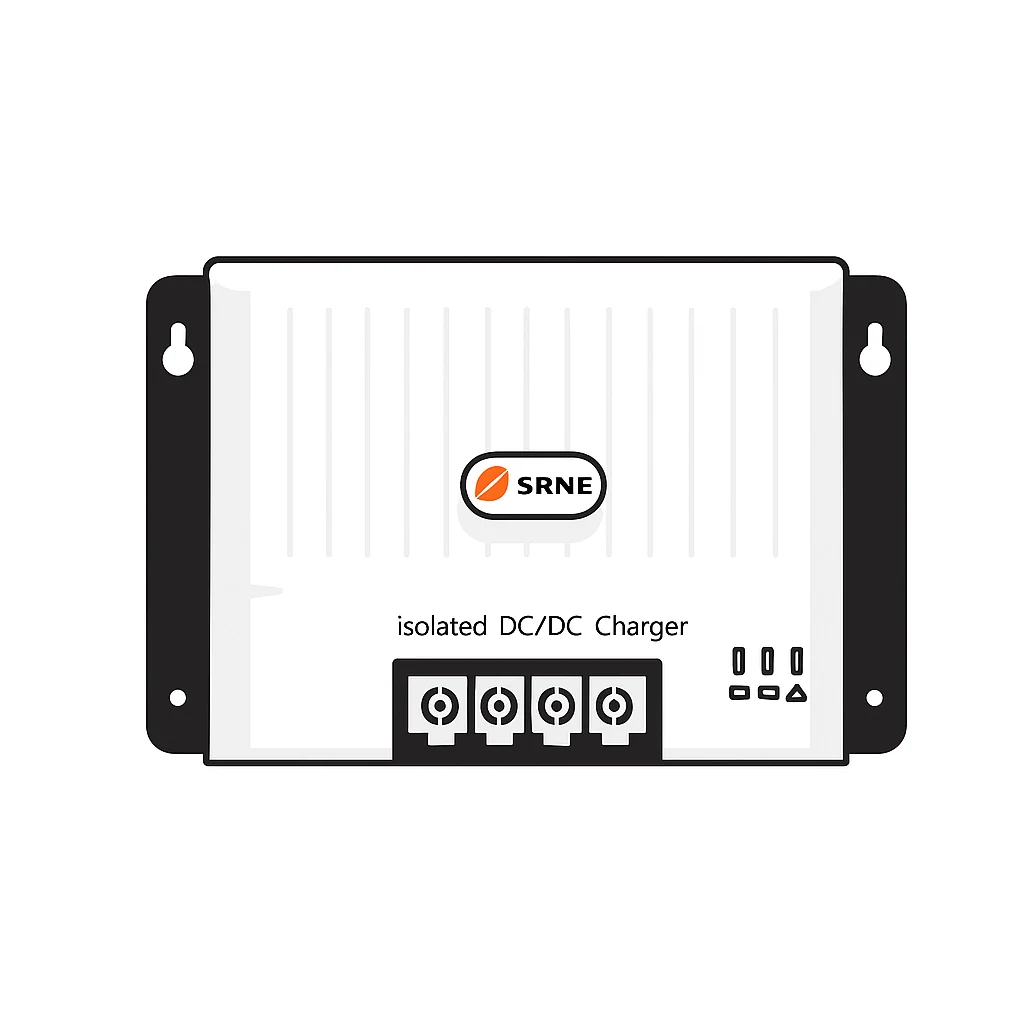
So you need a 30A, 100V MPPT controller. Skyenergi stocks SRNE MPPT charge controllers built for exactly this job, with the voltage headroom and monitoring you need for a lithium setup.
Why MPPT beats PWM in a van
A "12V" panel actually produces around 18V at maximum power and 22V open-circuit. A PWM controller drags the panel down to battery voltage, wasting the difference. An MPPT controller converts that excess voltage into extra charging current. On a cold day with a partly discharged lithium bank, that difference can be 15-30% more harvest from the same panel.
Cable and voltage drop
Controller sizing is not just about the box. Long cable runs from roof to controller lose voltage. A common pattern is to mount the controller close to the battery and run the panel cables in series to keep current low and voltage high, reducing loss. Use 4mm² or 6mm² cable for typical van arrays, and check the voltage drop is under 3%.
Never size a controller to exactly match your array's wattage. A 300W array on a 30A controller looks fine on paper, but cold-weather voltage spikes can push the Voc past the controller's limit. Always leave 20% headroom on both current and voltage, or you'll be replacing it.
If you plan to add panels later, buy the next controller size up now. The price difference between a 30A and a 40A SRNE MPPT is small compared with rewiring and replacing later.
Matching Solar Panels to Lithium Leisure Batteries
Most sizing guides stop at the panel. The battery is where the system either works or wastes half your array. Matching solar panels to lithium leisure batteries means balancing three things: charge acceptance, array output, and usable capacity. Get the ratio wrong and you either waste panel output or never fully charge. Calculating these electrical requirements effectively requires managing gear weight across your entire build to ensure the vehicle remains balanced and efficient.
Lithium changes the sizing maths
Lithium batteries accept charge far faster than lead-acid. A 100Ah lithium unit can absorb 50A or more without damage. Lead-acid would cook at that rate. This changes how you size the array: you can push more current into a lithium bank, so a larger array is actually usable rather than wasted.
Victron Energy Solar Panel 12V 185W →
Sizing for days of autonomy
A practical method is to size the battery for the number of days you want to run without sun, then size the array to recharge it in a reasonable window.
- Start with your daily Wh figure (915Wh in the campervan example above).
- Decide your autonomy: 1 day, 2 days, 3 days?
- Multiply: 915Wh × 2 days = 1,830Wh.
- Convert to Ah at battery voltage: 1,830Wh ÷ 12V = 152Ah.
- Add depth-of-discharge margin. Lithium can safely use 80-90% of capacity, so a 200Ah bank gives you 160-180Ah usable, covering the 152Ah target with headroom.
Matching array to battery
A common target is to replace a full day's use in under 4 hours of good sun. For 915Wh daily, that means roughly 230W of panel minimum, so 300W gives you margin for cloudy days and winter. The array and battery should be sized together: a 300W array feeding a 200Ah lithium bank is a balanced campervan setup.
Charge acceptance and controller matching
Your MPPT controller must be able to deliver the current the lithium bank will accept. A 200Ah lithium bank might accept 100A, but your 300W array only produces about 25A at 12V. That is fine: the battery will take what the array gives. The controller just needs to be rated above the array's maximum output, as covered in the controller section.
Size the battery for autonomy, size the array for recharge speed, and size the controller for the array's maximum output. When all three line up, you stop wasting panel output and stop running out of power.
Sizing Solar Panels for Shading, Orientation and UK Sunlight
Shading is the factor most sizing guides ignore, and it's the one that wrecks real-world performance. A single shadow across one cell can cut a panel's output by half.
The fix for shading:
- Use panels with bypass diodes (all the Victron units above have them)
- Split the array into separate strings where possible
- Avoid mounting next to roof vents and aerials
- Accept that partial shade means oversizing by 20-30%
Future-Proofing Your Solar Array for EV Charging and Battery Storage
Two upgrades are coming for most van owners: an electric vehicle to charge, and a bigger battery bank. Plan for both now.
Common Mistakes When Sizing Solar Panels
The biggest mistake when sizing solar panels is trusting the rule of thumb. Generic estimates like "1,100 kWh per kW" ignore roof orientation, pitch, and shading. On a campervan, those variables dominate.
Other traps:
- Sizing to the label, not the meter. Real fridge and heater draw is often lower than rated.
- Forgetting winter. December sun hours are a third of June's. Size for the worst month you'll camp in.
- Ignoring controller headroom. Undersized MPPT controllers throttle silently.
- Mixing battery chemistries. Lithium and lead-acid have different charge profiles. Don't pair them.
- Skipping the load profile. Guessing your daily use is how systems end up too small.
Frequently Asked Questions
What is the 20% rule for solar panels?
The 20% rule is a safety margin applied to solar charge controllers. Your controller's rated output current should exceed the array's maximum current by roughly 20% to handle peak conditions without clipping. For example, a 200W array at 12V produces around 16.6A, so you would choose a controller rated at 20A or higher. SRNE MPPT controllers are available in a range of current ratings to match different array sizes.
How do I calculate the solar panel wattage needed for my campervan?
Start by calculating daily energy consumption for off-grid use. List every appliance, its wattage and daily hours, then multiply and add the totals to get watt-hours. Divide that by your location's peak sun hours (roughly 2.5 to 3 in winter, 5 to 6 in summer) and add a 25-30% buffer. A 100Ah 12V lithium battery holds about 1,200Wh, so a 200W to 300W array suits most campervan setups.
Does battery capacity affect how I size my solar panels?
Yes. Matching solar panels to lithium leisure batteries matters because the array must be able to recharge the bank within a reasonable time. A 100Ah battery needs roughly 1,200Wh to recharge from empty. A 200W array producing 800Wh on an average day would take about 1.5 days of good sun. Oversizing the array relative to the battery wastes potential, while undersizing it leaves you relying on mains hook-up or a DC-to-DC charger.
Is it better to have one large solar panel or several small ones?
It depends on roof layout, not total wattage. A single 285W panel is simpler to wire and cheaper per watt, but it may not fit around roof vents, skylights or aerials. Several smaller panels, such as two 130W units, give more flexibility on a cluttered roof and reduce losses from partial shading because each panel has its own bypass diodes. Measure your usable roof area first, then choose the configuration that fills it.
Sizing a system that actually keeps up with your trips takes more than a calculator. You need panels, a controller, and a battery that work as one package. Skyenergi supplies the full chain: Victron solar panels, SRNE MPPT charge controllers, and Edge and Elite lithium leisure batteries, all matched for off-grid use. Get started with Skyenergi and build a system sized for real days, not best-case ones.
Prev post

12V Fridge Runtime on 100Ah Lithium Battery
Updated on 01 October 2026
Next post

Connect Solar Panels in Parallel for Caravans
Updated on 29 September 2026


