





Off Grid Solar Battery Storage Guide (2026 UK)
Off grid solar battery storage guide for UK homes and campervans. Learn sizing, depth of discharge, MPPT setup and lithium options. Start your off-grid.
Table of Contents
- Sizing Your Off Grid Solar Battery Storage: A Step-by-Step Method
- Lithium Leisure Battery Capacity: Why Chemistry Dictates Your Options
- Solar Battery Depth of Discharge and Cycle Life Explained
- MPPT Solar Charge Controller Setup: Getting Maximum Yield
- SRNE Charge Controllers and Inverters for Your Solar Battery Storage
- Comparing Skyenergi Lithium Batteries for Off-Grid Use
- Installation, Safety and Common Mistakes to Avoid
- Final Checklist for Your Off-Grid Power System
- Frequently Asked Questions
Last Updated: September 6, 2026
Sizing Your Off Grid Solar Battery Storage: A Step-by-Step Method
Industry guidance for 2026 suggests most households require between 5 kWh and 15 kWh of battery storage for residential solar applications Sunway PV 2026 sizing guidance. That is a wide range, and the correct figure depends entirely on your daily consumption. This off grid solar battery storage guide from Skyenergi walks through the sizing method we recommend to every customer, whether outfitting a campervan or a rural property.
The process is straightforward: list every appliance, calculate your daily watt-hour usage, apply your battery's depth of discharge, then select a capacity in amp-hours. A typical residential off-grid system needs 5-20 kWh of usable storage Eway Energy sizing recommendations, so getting the calculation right prevents both undersizing and wasted spend.
Calculating Your Daily Load and Battery Bank Size
Start by listing each appliance, its wattage, and the hours you use it per day. Multiply wattage by hours to get watt-hours, then total everything. A fridge running at 60 W for 24 hours consumes 1,440 Wh daily. Add LED lighting at 20 W for 5 hours (100 Wh), a laptop at 65 W for 3 hours (195 Wh), and a water pump at 100 W for 30 minutes (50 Wh), totalling roughly 1,785 Wh per day.
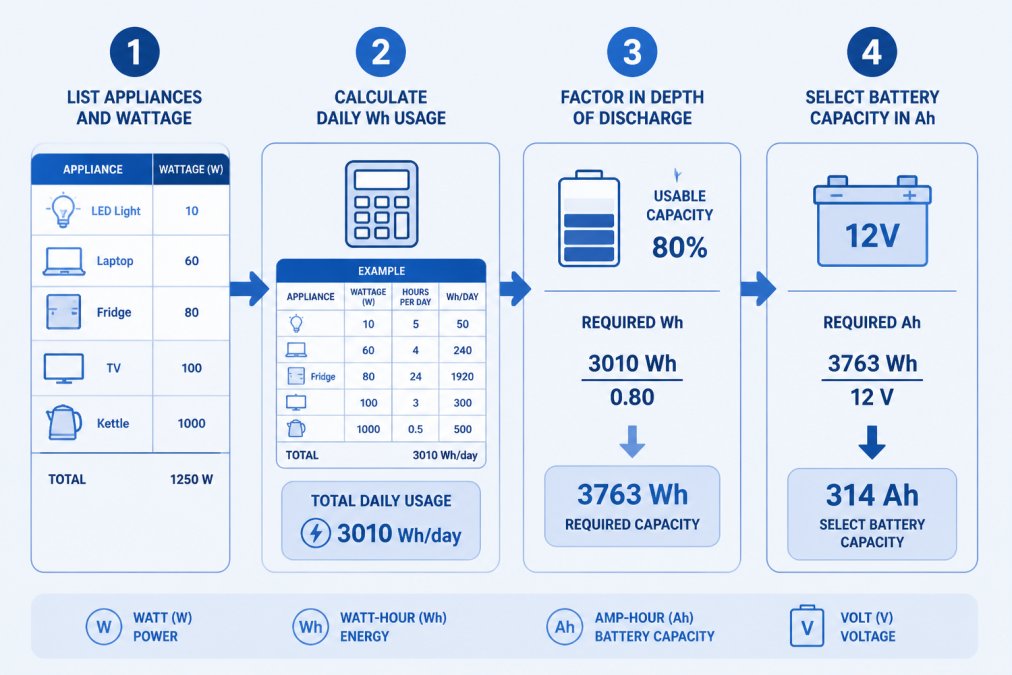
Convert that to battery capacity by dividing by your system voltage. At 12 V, 1,785 Wh requires roughly 149 Ah before accounting for depth of discharge. With a lithium battery at 80% usable capacity, you need about 186 Ah rated. A 7 kWh usable system, typically a 10-13 kWh rated battery, covers basic overnight needs for a typical household Sunway PV 2026 capacity guidance.
Lithium Leisure Battery Capacity: Why Chemistry Dictates Your Options
Lithium iron phosphate (LiFePO₄) has become the preferred chemistry for 2026 home backup and off-grid systems SolarInfoPath chemistry analysis. Unlike lead-acid, LiFePO₄ handles deep discharges without damage and delivers thousands of cycles at a usable depth of discharge.
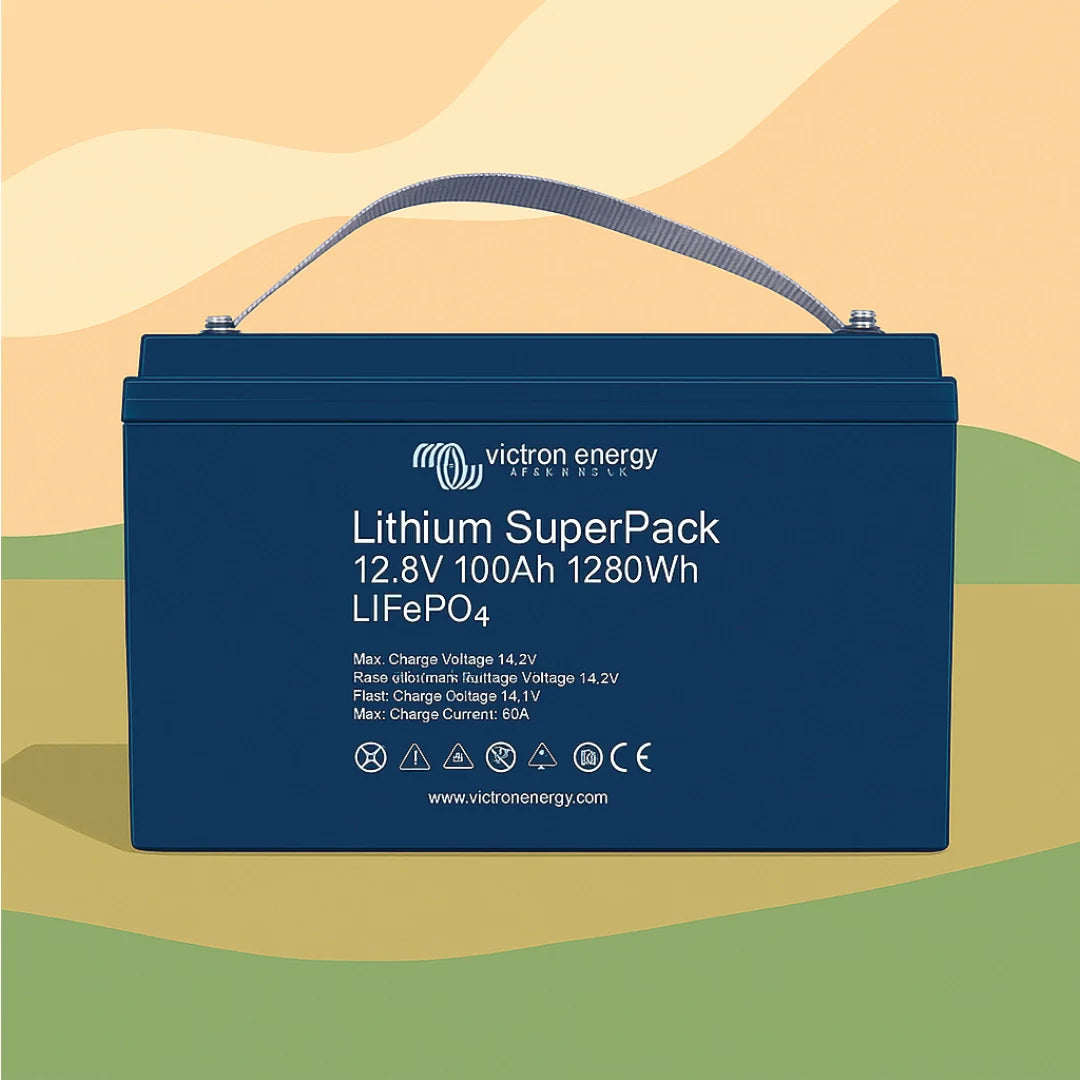
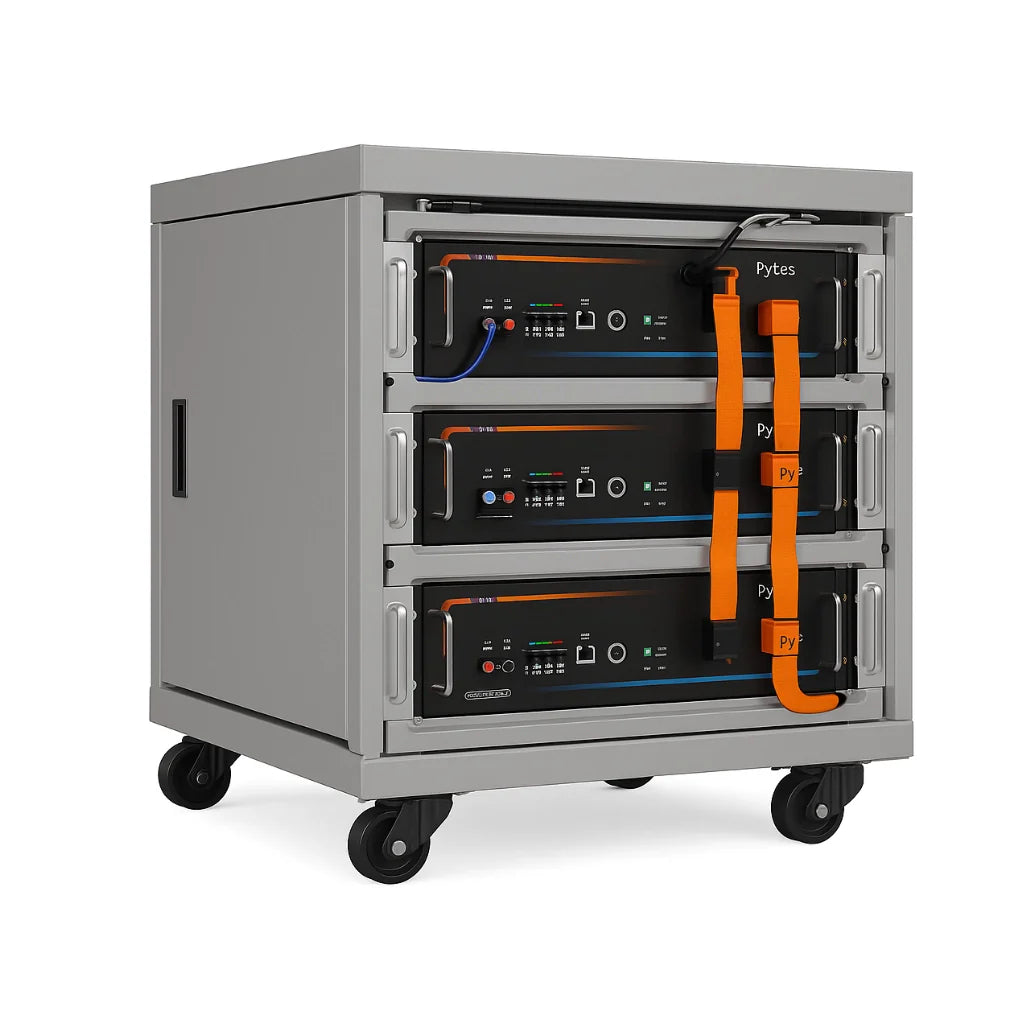
Lithium leisure battery capacity is measured in amp-hours, but the usable figure matters more than the rated one. A 100 Ah Skyenergi Edge battery at 12 V stores 1,280 Wh, and most of that is accessible without harming the cells. Lead-acid batteries should not be discharged below 50% if you want them to last, effectively halving their rated capacity.

A 100 Ah lithium battery typically weighs around 10-12 kg, compared with 25-30 kg for an equivalent lead-acid unit. For campervan conversions where every kilogram counts, that difference is decisive.
Solar Battery Depth of Discharge and Cycle Life Explained
Depth of discharge (DoD) is the percentage of a battery's capacity that has been used. Cycle life refers to how many charge-discharge cycles a battery can complete before its capacity drops to 80% of the original rating. Discharge deeper, and you shorten cycle life.
Lithium iron phosphate batteries comfortably operate at 80-90% DoD while delivering 3,000-5,000 cycles. Lead-acid batteries delivering the same cycle life require you to stay above 50% DoD. Over a decade of daily cycling, a lithium battery provides roughly double the usable energy of a lead-acid unit of the same rated capacity.
For residential solar battery storage, this translates directly into cost per kilowatt-hour over the battery's lifetime. A higher upfront cost for lithium is offset by significantly more usable cycles, making it the more economical choice for anyone cycling daily rather than occasionally.
MPPT Solar Charge Controller Setup: Getting Maximum Yield
Maximum Power Point Tracking (MPPT) charge controllers extract more energy from your solar panels than older PWM controllers by continuously matching the panel's operating voltage to its maximum power point. MPPT solar charge controller setup is the single most impactful upgrade for an off-grid system because it can recover 20-30% more energy from the same panels.
Setup follows a logical sequence. Connect the battery to the controller first, then the solar panels, then any loads. Configure the battery type as lithium, set the absorption voltage to the manufacturer's specification (typically 14.4-14.6 V for LiFePO₄), and set the float voltage to around 13.6 V. Most MPPT controllers also require you to set the maximum charging current based on your battery's recommended charge rate.
SRNE Charge Controllers and Inverters for Your Solar Battery Storage
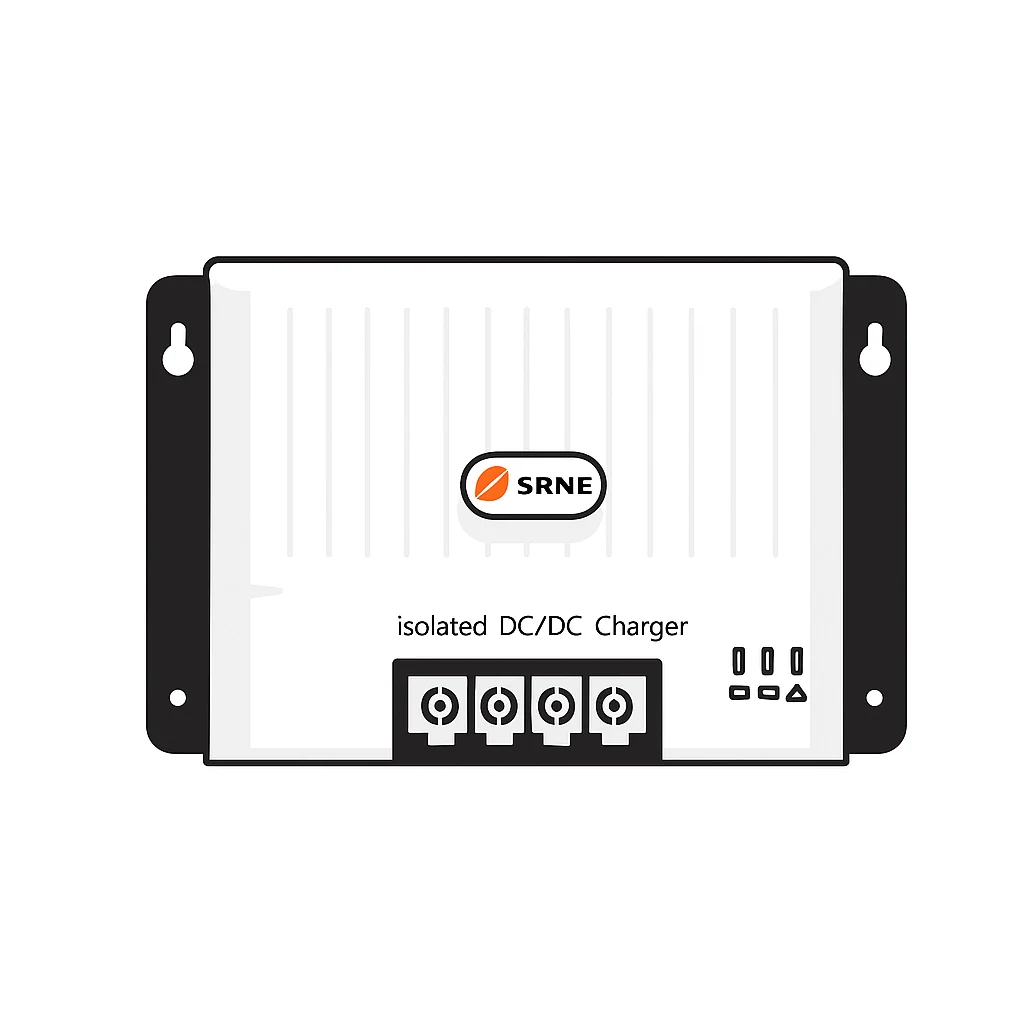
SRNE produces some of the most reliable MPPT charge controllers and inverters available for off-grid installations. Skyenergi supplies SRNE charging and monitoring systems as part of a complete 12V energy management solution, pairing them with lithium batteries designed for demanding UK conditions.
The SRNE MPPT range handles input voltages from 12 V to 48 V systems, making them suitable for campervans, motorhomes, and larger residential installations. Their integrated monitoring displays real-time generation data, battery voltage, and load status, which helps you verify your system is performing as sized.
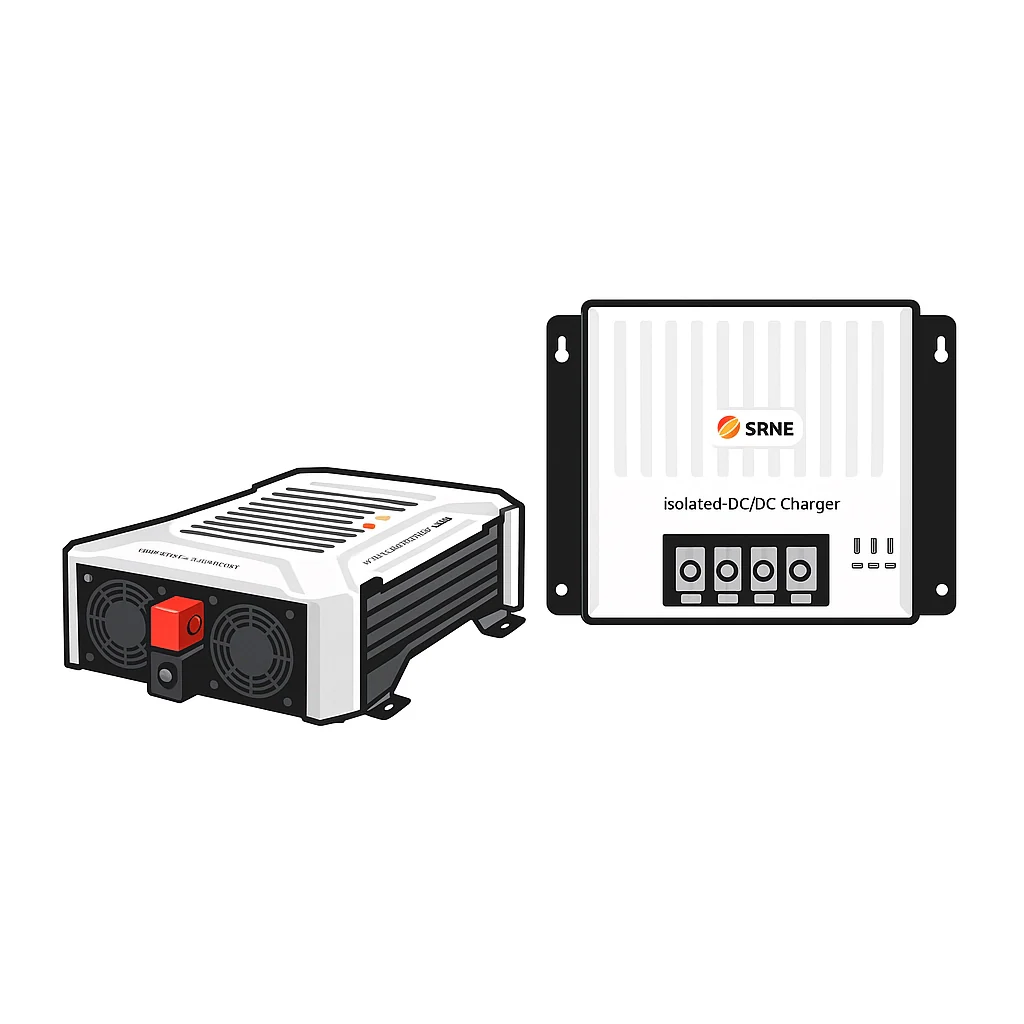
For inverter duties, SRNE units provide pure sine wave output, essential for running sensitive electronics and appliances with motors. Pairing an SRNE charge controller with a Skyenergi lithium battery creates a system where the charging profile matches the battery's BMS requirements, reducing the risk of undercharging or overvoltage events.
| Component | Role | Skyenergi Recommendation |
|---|---|---|
| Solar panels | Generate DC power | Match array voltage to controller input |
| SRNE MPPT controller | Optimise panel output | Set lithium profile at 14.4-14.6 V |
| Skyenergi lithium battery | Store energy | Size at 80-90% usable capacity |
| SRNE inverter | Convert DC to AC | Pure sine wave for sensitive loads |
Comparing Skyenergi Lithium Batteries for Off-Grid Use
Skyenergi offers four lithium leisure battery tiers, each suited to different off-grid demands. The Edge 100Ah suits small campervans with modest loads. The Edge 280Ah doubles capacity for larger motorhomes or longer off-grid periods. For installations integrating with Victron systems, the Elite 304Ah and Elite 560Ah add plug-and-play Victron CAN-bus communication. At the top, the Core2 680Ah includes Bluetooth monitoring and an integrated heat pad for cold-weather performance.
| Battery | Rated Capacity | Best For |
|---|---|---|
| Edge 100Ah | 1,280 Wh | Small vans, weekend trips |
| Edge 280Ah | 3,584 Wh | Motorhomes, extended off-grid |
| Elite 304Ah | 3,891 Wh | Victron system integration |
| Core2 680Ah | 8,704 Wh | Residential off-grid, full-time living |
Each battery uses a JBD BMS, protecting against overcurrent, overvoltage, and temperature extremes. The Elite and Core2 ranges add heat pads, which maintain charging capability in sub-zero conditions.
Installation, Safety and Common Mistakes to Avoid
The most common failures we see in the field are not component faults but installation errors: undersized cabling, incorrect fuse ratings, and loose terminations. Each of these can be avoided with a disciplined approach to wiring and protection.
Cabling: Sizing for Voltage Drop, Not Just Current
Undersized cable is the single most frequent cause of mysterious BMS shutdowns. At high current, resistance in a thin cable reduces the voltage reaching the battery, which can trigger a low-voltage cutoff even when the battery is adequately charged.
For a 12 V system, aim for a voltage drop of no more than 3% between the battery and your loads. A 100 A load over 5 metres of 16 mm² cable loses roughly 0.5 V, nearly 4% of system voltage. For high-current loads like inverters, keep cable runs as short as possible and use the cable gauge specified by the inverter manufacturer. A common pattern is to mount the inverter as close to the battery bank as physically possible, then run longer AC lines to appliances instead of long DC lines.
Fusing and Protection: Your First Line of Defence
Every positive cable run from the battery must be fused within 18 cm of the battery terminal. The fuse rating should be matched to the cable's maximum current capacity, not the appliance's draw. For example, if you run a 16 mm² cable rated at 100 A to a distribution box, the fuse at the battery should be 80 A or 100 A, never higher than the cable rating.
A common mistake is fitting a single large fuse at the battery and then branching to multiple loads without individual fuses at the distribution point. Each branch circuit needs its own fuse rated for that branch's cable and expected load. SRNE's monitoring systems can help you track current draw per circuit, making diagnosing a blown fuse or an overloaded branch much simpler.
Ventilation and Thermal Management
Ventilation requirements differ by chemistry. Lead-acid batteries release hydrogen gas during charging and must be housed in a vented enclosure. LiFePO₄ batteries do not off-gas in normal operation, so they do not require the same sealed-box ventilation. However, they do generate heat under sustained high-rate charging or discharging. Leave at least 20 mm of air space on all sides of the battery and avoid mounting it directly against a heat source like an inverter or a hot water cylinder. home electrical alternatives.
Charging lithium cells below 0°C causes permanent damage through lithium plating. The Skyenergi Elite and Core2 ranges include integrated heat pads that draw a small current from the battery to warm the cells before the charge controller begins delivering current. If you are using a battery without a heat pad, the SRNE charge controller can be configured with a temperature sensor to halt charging below 5°C, protecting the battery until conditions improve.
Torque and Connection Integrity
Loose connections are a hidden fire risk. A loose terminal creates resistance, which generates heat under load. Every bolted connection, battery terminals, fuse holders, busbars, and controller lugs, should be torqued to the manufacturer's specification. For M8 bolts on typical battery terminals, that is usually 9-11 Nm. If you do not own a torque wrench, borrow or buy one; guessing tightness is not acceptable for high-current DC circuits.
After installation, use a thermal camera or an infrared thermometer to check all connections under load. Any connection more than 10°C warmer than ambient is suspect and should be re-torqued.
Regulatory and Insurance Considerations for Self-Installation
In the UK, small-scale off-grid installations in vehicles are generally not notifiable, but residential systems that connect to a building's AC wiring fall under Part P of the Building Regulations. If you are wiring an inverter into a house ring main or a dedicated circuit, that work must be certified by a qualified electrician registered with a competent person scheme. Many home insurance policies also require professional installation for any system that connects to the mains or is permanently wired into the property. Check your policy before you start; a DIY installation that causes damage may not be covered.
A final check: verify that your battery's BMS and your SRNE charge controller are communicating on the same voltage parameters. A mismatch between the controller's absorption voltage and the BMS's maximum cell voltage can cause the BMS to disconnect mid-charge, which is jarring but protective. Configuring the SRNE to the lithium profile specified by Skyenergi eliminates this risk.
Final Checklist for Your Off-Grid Power System
Before you commission your system, work through this checklist. It covers the essentials and the often-overlooked details that separate a reliable installation from one that fails at the worst moment.
- Daily load calculated in watt-hours, not guessed
- Battery capacity sized with a 20-25% buffer
- Depth of discharge applied to usable capacity
- MPPT controller configured for lithium profile
- All cabling sized for maximum expected current
- Correct fuse ratings fitted at battery and load ends
- Ventilation clearance around the battery
- Monitoring system configured to track state of charge
- All connections torqued to specification
- Charge controller temperature sensor enabled (if fitted)
Cold-Weather Performance and Thermal Management
Off-grid systems in the UK face a specific challenge: the shortest, darkest days of winter are also the coldest. Lithium iron phosphate cells cannot be charged below 0°C without risking permanent damage. A hard frost can render an unprotected battery in a shed or a campervan unable to accept charge for days.
If your battery does not have an integrated heat pad, you have three options. First, mount the battery in a living space that stays above freezing. Second, use a DC-powered heating blanket designed for batteries, which draws from the battery itself to warm the cells before charging begins. Third, configure your SRNE charge controller with a low-temperature cutoff so it simply waits until the battery warms above 5°C before delivering current.
The Skyenergi Elite and Core2 ranges include an integrated heat pad that activates automatically when the BMS detects cell temperatures near freezing. This is the most reliable solution because it is automatic and draws minimal current, typically 2-3 A for a short period, to bring the cells to a safe charging temperature.
Integrating a Backup Generator for Winter Redundancy
For full-time off-grid living, a backup generator is a necessity for the darkest months. A typical UK winter week can see solar generation drop to 10-20% of summer output. If your battery bank is sized for three days of autonomy, a week of overcast weather will deplete it.
A generator integration strategy has two parts: charging and load coverage. The simplest approach is a generator with a battery charger that connects directly to the battery bank, separate from the solar charge controller. This allows you to run the generator for a few hours to replenish the bank without reconfiguring your solar setup.
A more elegant approach uses a hybrid inverter with generator input. SRNE's inverter range includes models with generator start functionality. When the battery voltage drops to a set threshold, the inverter sends a start signal to the generator, which then charges the battery through the inverter's internal charger. When the battery reaches a target voltage, the inverter signals the generator to stop. This automation removes the need to manually monitor and start the generator during a winter storm.
When integrating a generator, set the charging current to the battery's maximum recommended rate. For a Skyenergi Edge 280Ah, that is typically 50-70 A. Charging faster than the BMS allows will trigger a disconnect. Configure the generator's output to match your system voltage, a 12 V system needs a 12 V charger, not a car battery charger set to 'fast'. The SRNE controller's monitoring display will show the charging current, allowing you to verify the system is operating within parameters.
Battery Recycling and End-of-Life Disposal
LiFePO₄ batteries are classified as waste under UK regulations and must not be disposed of with general household waste. Under the Waste Batteries and Accumulators Regulations 2009, retailers and distributors of batteries have a responsibility to take back waste batteries for recycling.
When your battery reaches the end of its service life, typically after 3,000-5,000 cycles or when capacity drops below 80%, contact your supplier. Skyenergi operates a take-back scheme for its batteries, ensuring that cells are processed at an approved recycling facility.
A final note on system monitoring: the SRNE monitoring display is your window into system health. Check it weekly during the summer and daily during winter. A sudden drop in state of charge or a persistent low-voltage alarm is an early warning of a problem, a failing cell, a loose connection, or a charge controller misconfiguration. Catching these issues early is far cheaper than replacing a battery or an inverter.
For most households and campervan owners, a Skyenergi lithium battery paired with an SRNE MPPT charge controller delivers the most reliable off-grid experience at the lowest lifetime cost. The Edge 100Ah covers small installations, while the Core2 680Ah handles full-time residential off-grid living with room to spare.
Frequently Asked Questions
How much battery storage do I need to go off-grid?
Most UK households need between 5 kWh and 15 kWh of usable solar battery storage. A 7 kWh usable system covers basic overnight needs for a typical home. For a campervan or van conversion, 100Ah to 300Ah at 12V is a common starting point. Calculate your daily energy consumption in watt-hours, then divide by your battery's depth of discharge to find the rated capacity you need.
What is the difference between lead-acid and lithium leisure batteries for off-grid use?
Lithium iron phosphate (LiFePO4) batteries offer around 80-90% usable capacity compared to 50% for lead-acid. They also last 3-5 times longer in cycle life and charge faster. A Skyenergi Edge 100Ah lithium battery delivers roughly double the usable energy of a 100Ah lead-acid battery in the same physical space, making them ideal for off-grid solar battery storage where weight and space matter.
How do MPPT charge controllers optimise off-grid solar efficiency?
MPPT (Maximum Power Point Tracking) controllers extract more power from your solar panels than older PWM types. They match the panel voltage to the battery voltage, converting excess voltage into additional charging current. In cold UK conditions, MPPT can deliver 20-30% more energy than PWM. SRNE MPPT controllers, available through Skyenergi, are a solid choice for reliable solar battery storage charging.
What happens when off-grid solar batteries are full?
When your solar battery storage bank reaches full capacity, the charge controller reduces or stops the flow of power from the panels. With an MPPT controller, the system shifts the panel's operating point to limit output. Excess solar energy is simply not harvested. Some systems divert surplus power to heating water or other loads, but for most off-grid setups, the energy is simply left unused.
What is the 33% rule for solar panels?
The '33% rule' is a common sizing guideline suggesting your solar array should produce about 33% more energy than your daily consumption to account for cloudy days and seasonal variation. In the UK, where winter solar gain is limited, many off-grid installers recommend an even larger buffer. Pairing a correctly sized solar array with sufficient solar battery storage is critical for year-round reliability.
What are the safety regulations for lithium battery storage in the UK?
UK regulations for lithium battery storage focus on fire safety and ventilation. Batteries should be installed in a well-ventilated area, away from flammable materials. The Battery Regulations 2009 and waste regulations cover disposal, requiring batteries to be recycled at end of life. For large residential installations, Building Regulations may apply. Always follow the manufacturer's instructions and use appropriate fusing and cable sizes.
Building an off-grid power system requires careful sizing, the right chemistry, and charging equipment that matches your battery's requirements. Skyenergi supplies the complete chain: Edge and Elite lithium batteries, SRNE MPPT charge controllers and inverters, solar panels, and DC-to-DC chargers, all backed by UK-based technical support. Get started with Skyenergi and build a system sized correctly from day one.
Prev post

DIY Van Conversion Electrical Setup: Complete UK Guide
Updated on 07 September 2026
Next post

How to Maintain Lithium Batteries: 2026 UK Guide
Updated on 05 September 2026


