





Streamline your off-grid renewable energy storage workflow
Optimize your renewable energy storage workflow for off-grid adventures. Discover essential tips to ensure reliable power during your trips!
TL;DR:
- UK off-grid solar systems require season-specific sizing and backup charging strategies.
- Proper component selection and monitoring are essential to prevent power disruptions in winter.
- Realistic planning emphasizes backup options, efficient workflows, and understanding seasonal limitations.
Running out of power mid-trip is one of the most common frustrations for UK campers and motorhome owners. Whether it’s a flat battery on a grey winter morning or an inverter cutting out during a coastal stay, unexpected power loss disrupts everything. Building a well-planned renewable energy storage workflow solves this problem at its root. This guide walks through every stage, from component selection to daily operation and troubleshooting, with specific attention to UK seasonal conditions. Follow these steps and you will spend less time worrying about power and more time enjoying life off-grid.
Table of Contents
- Key components in a renewable energy storage workflow
- Designing your storage: sizing, seasonal strategy and autonomy
- Step-by-step workflow: from solar charging to 230V appliances
- Troubleshooting and workflow optimisation: common issues and solutions
- What most guides miss: practical trade-offs and UK priorities
- Take your next steps with Skyenergi
- Frequently asked questions
Key Takeaways
| Point | Details |
|---|---|
| Component workflow matters | Using the right hardware sequence ensures reliable power for off-grid camper and motorhome use. |
| Size for UK conditions | Plan storage and solar to suit UK’s summer and winter output, with backup options for winter. |
| Monitor and optimise | Accurate battery monitoring helps prevent surprises and extend your system’s autonomy. |
| Anticipate common issues | Knowing how to diagnose charge or battery issues saves time and preserves comfort when off-grid. |
Key components in a renewable energy storage workflow
Understanding which components are involved, and how they interact, is the foundation of any reliable off-grid system. Each element plays a specific role, and a weak link in any one of them affects the entire workflow.
Here are the core components required for a campervan or motorhome energy storage setup:
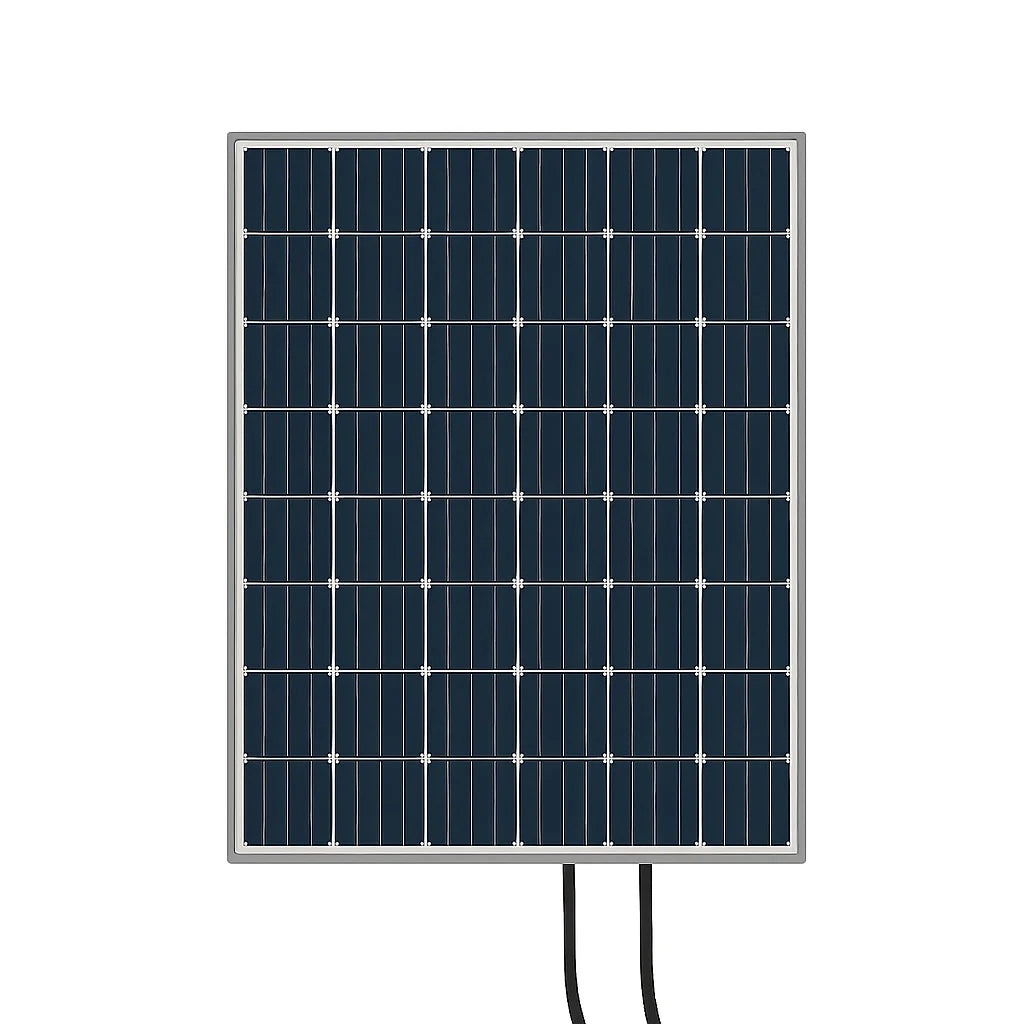
- Solar panels: Generate DC electricity from sunlight. Monocrystalline panels are the standard choice for mobile applications due to their higher efficiency in low-light conditions, which matters greatly in the UK.
- MPPT charge controller: Maximum Power Point Tracking (MPPT) controllers regulate the voltage and current from solar panels to optimise battery charging. Learning more about MPPT for off-grid systems is worthwhile before choosing a model.
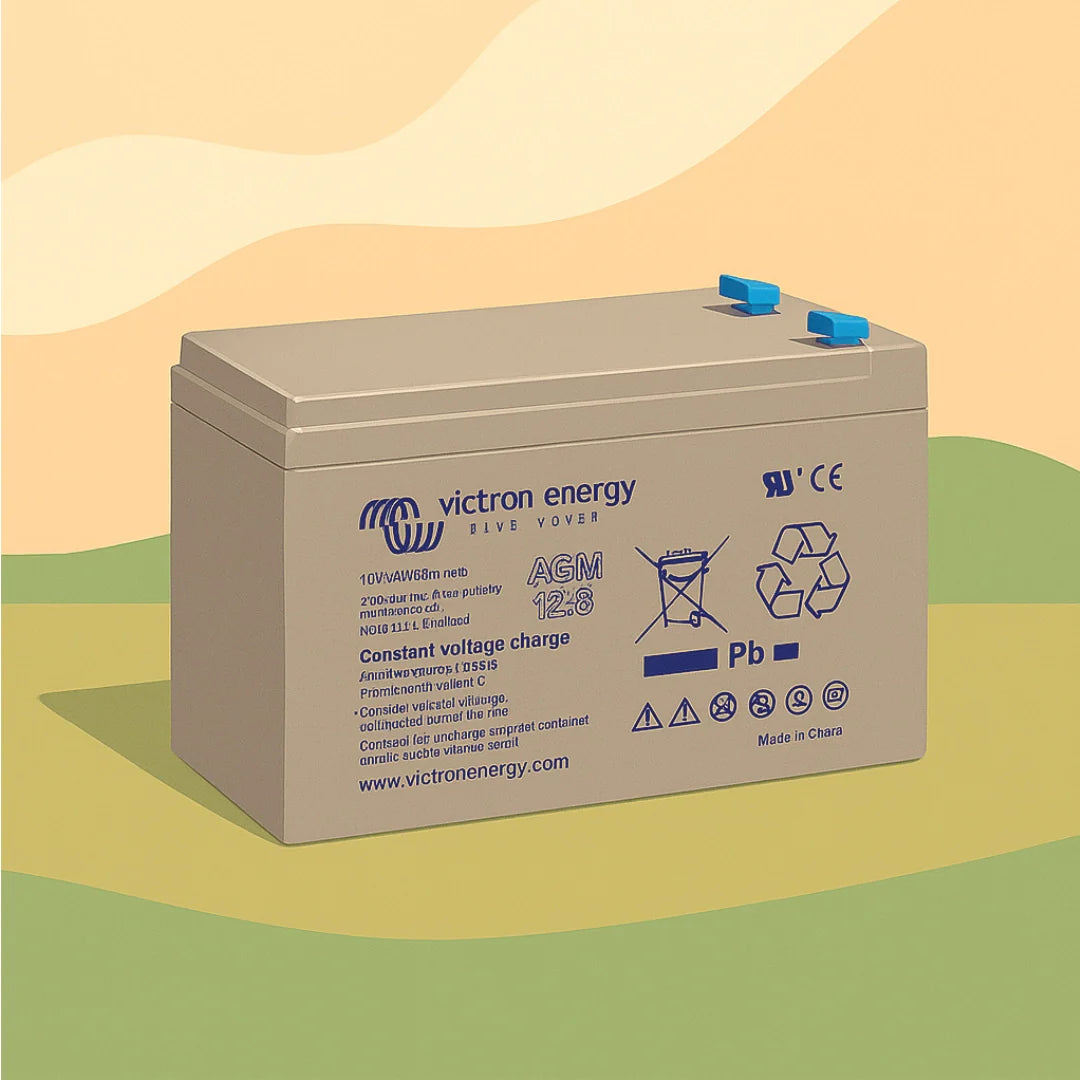
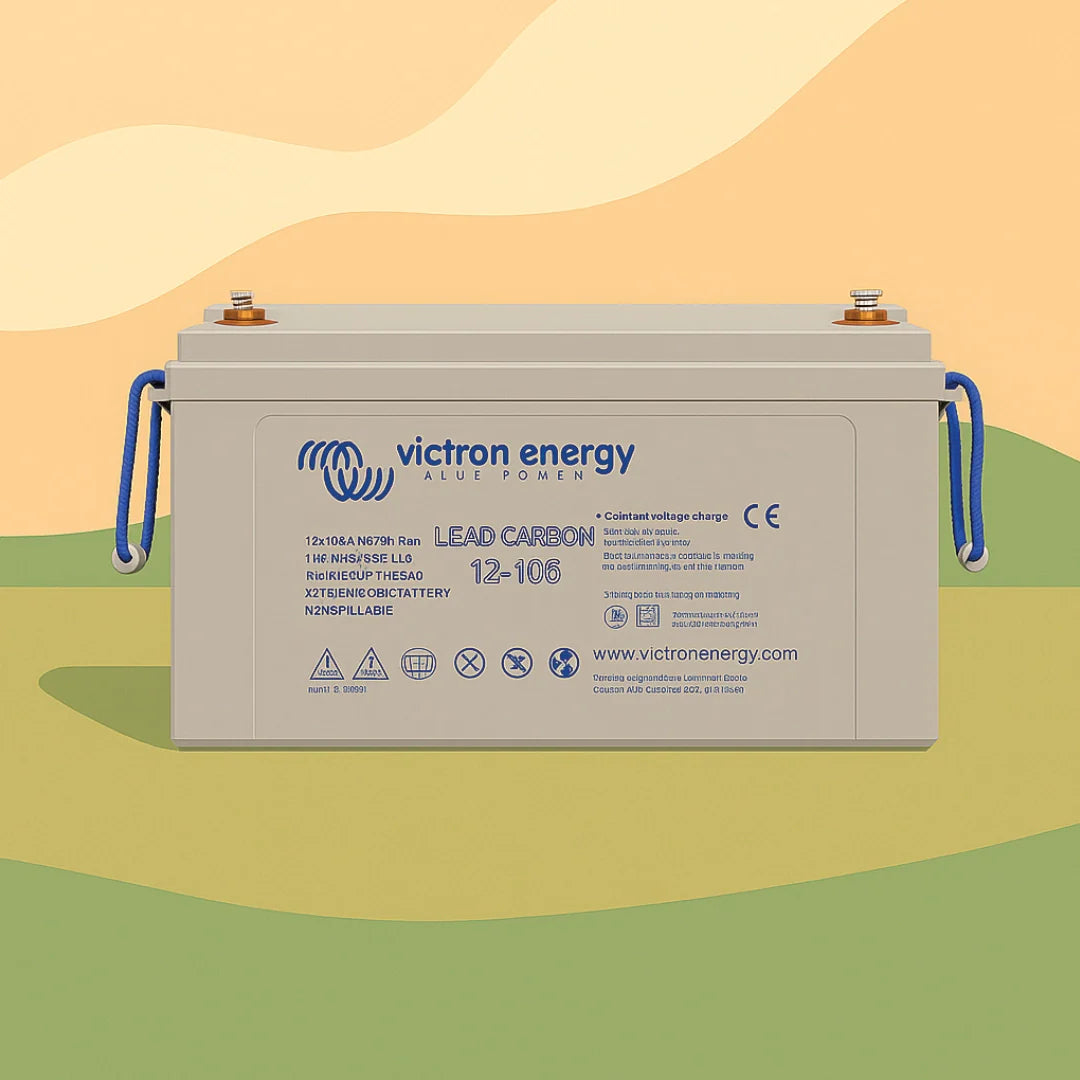
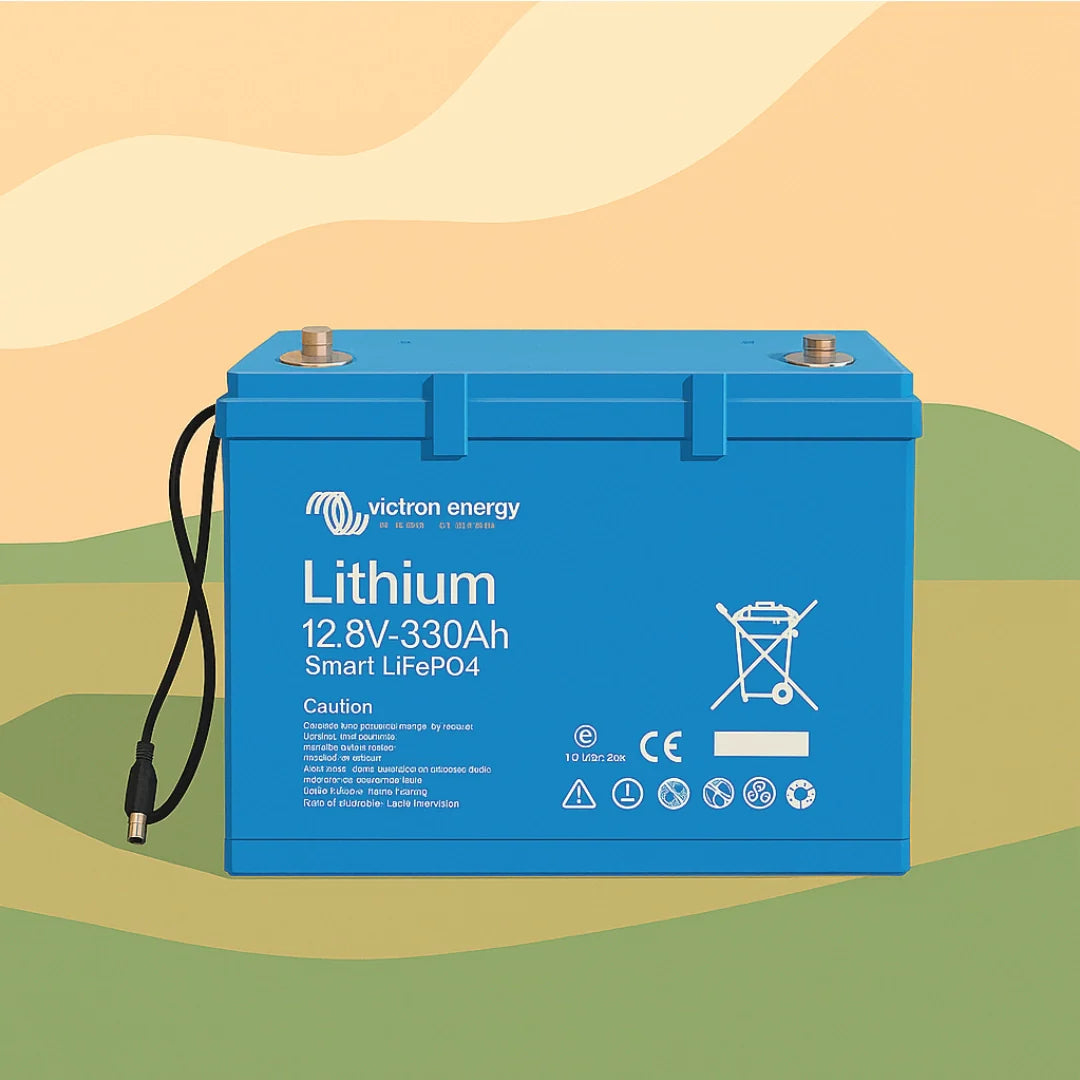
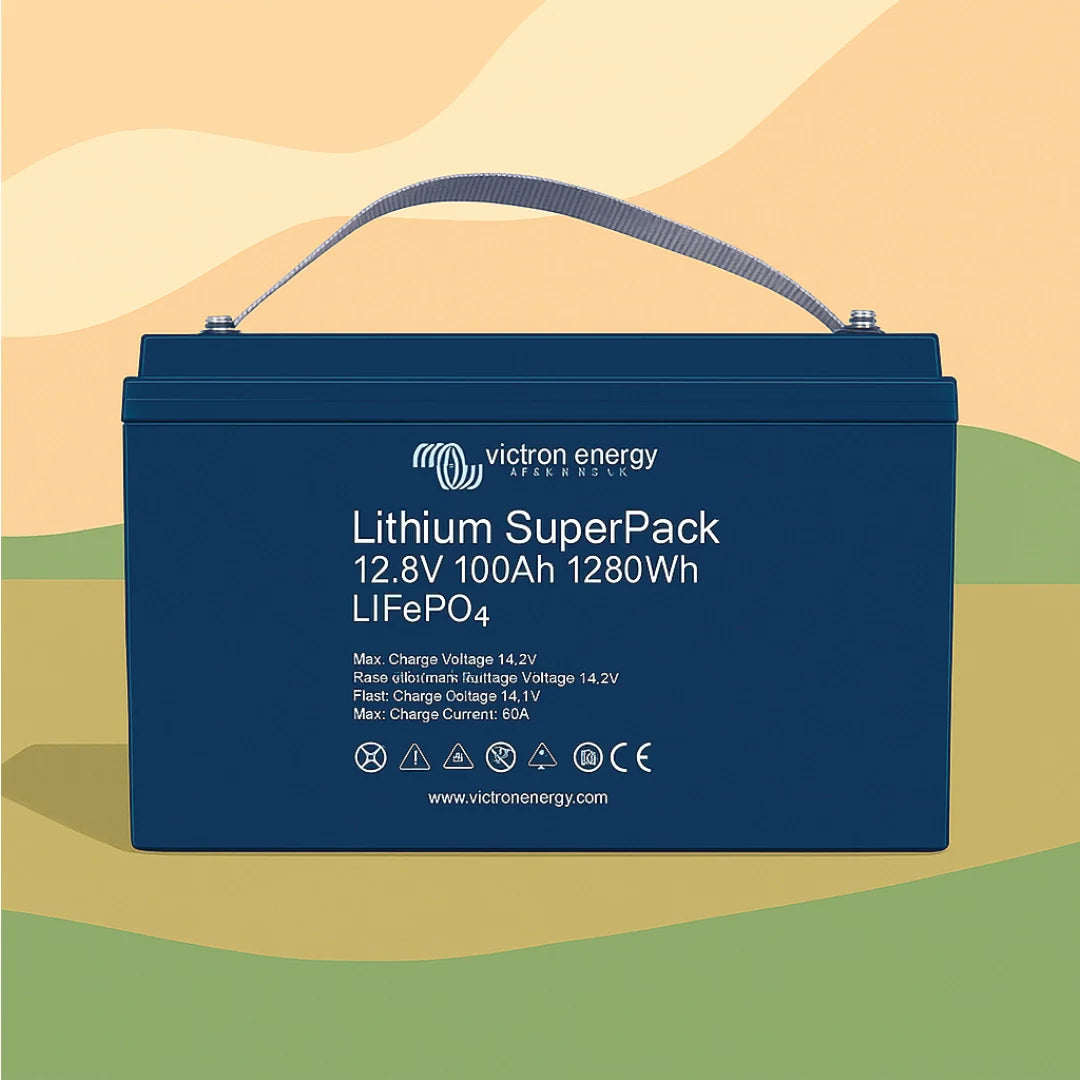
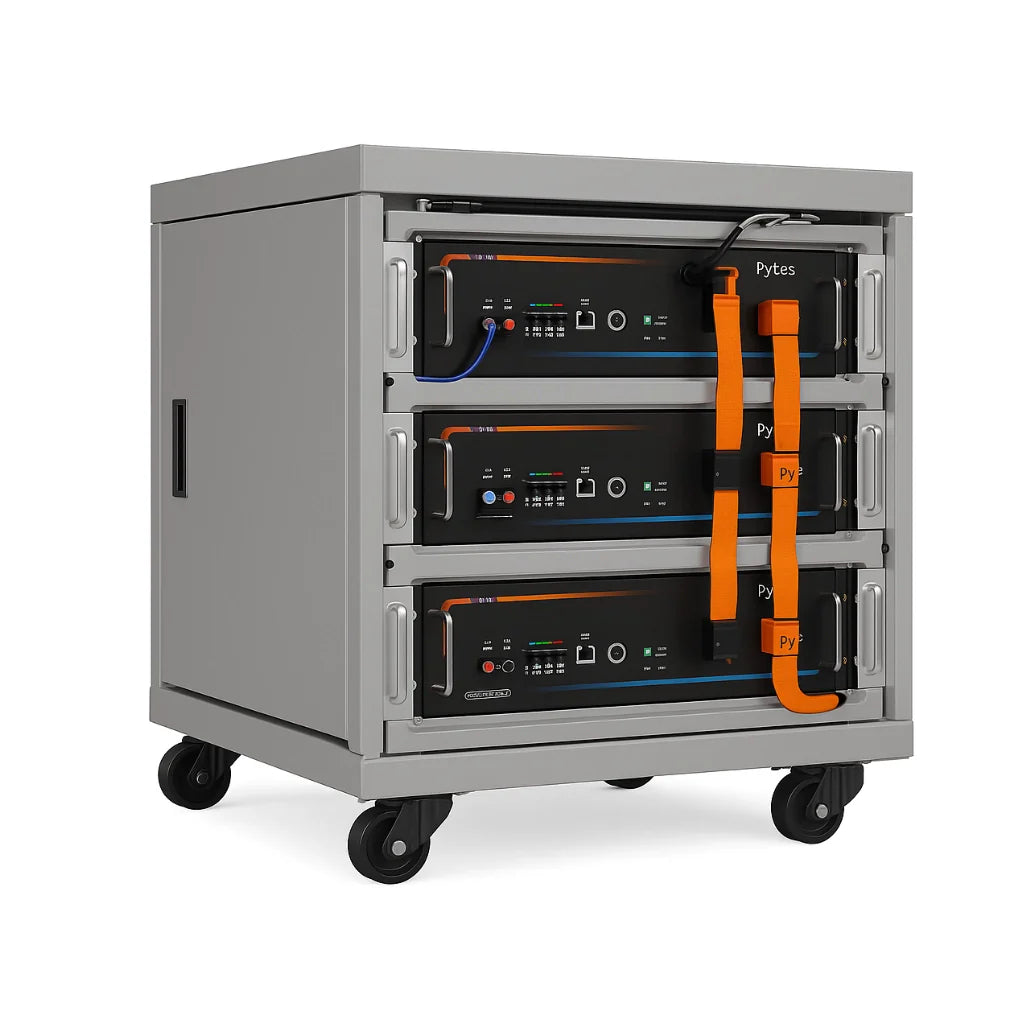
- LiFePO4 battery bank: Lithium Iron Phosphate (LiFePO4) batteries are the preferred storage chemistry for mobile setups. They offer higher usable capacity, longer cycle life, and lower weight compared to AGM or gel alternatives.
- Battery shunt and monitor: A battery shunt measures current flow in and out of the battery. This data feeds a monitor display that shows real-time state of charge, voltage, and power consumption. Understanding battery shunt details helps you choose the right monitoring solution.
- DC cabling and fuses: Proper cable sizing and fusing protects every component in the system. Under-rated cables cause voltage drop and heat, both of which reduce efficiency and create safety risks.
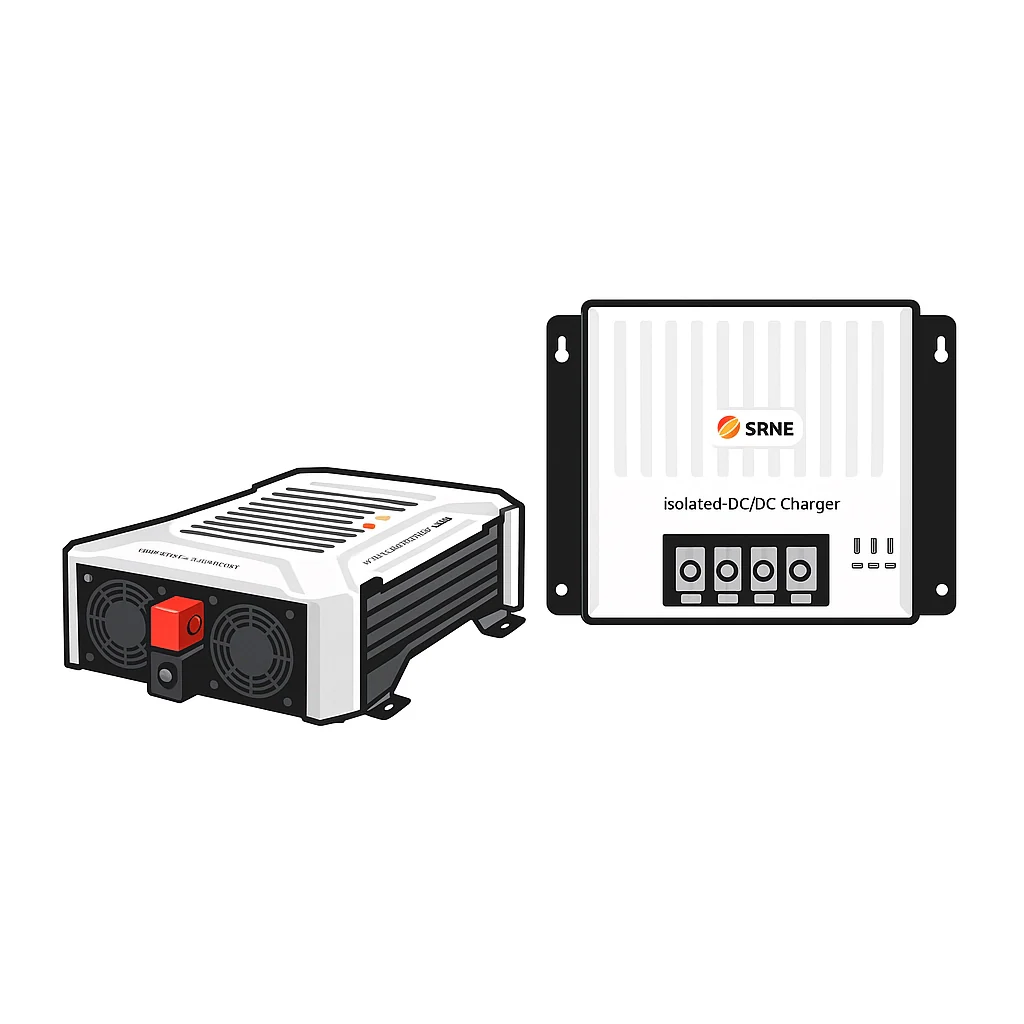
- Inverter or inverter/charger: An inverter converts stored DC power to 230V AC for household appliances. An inverter/charger adds the ability to accept shore power or generator input for battery charging.
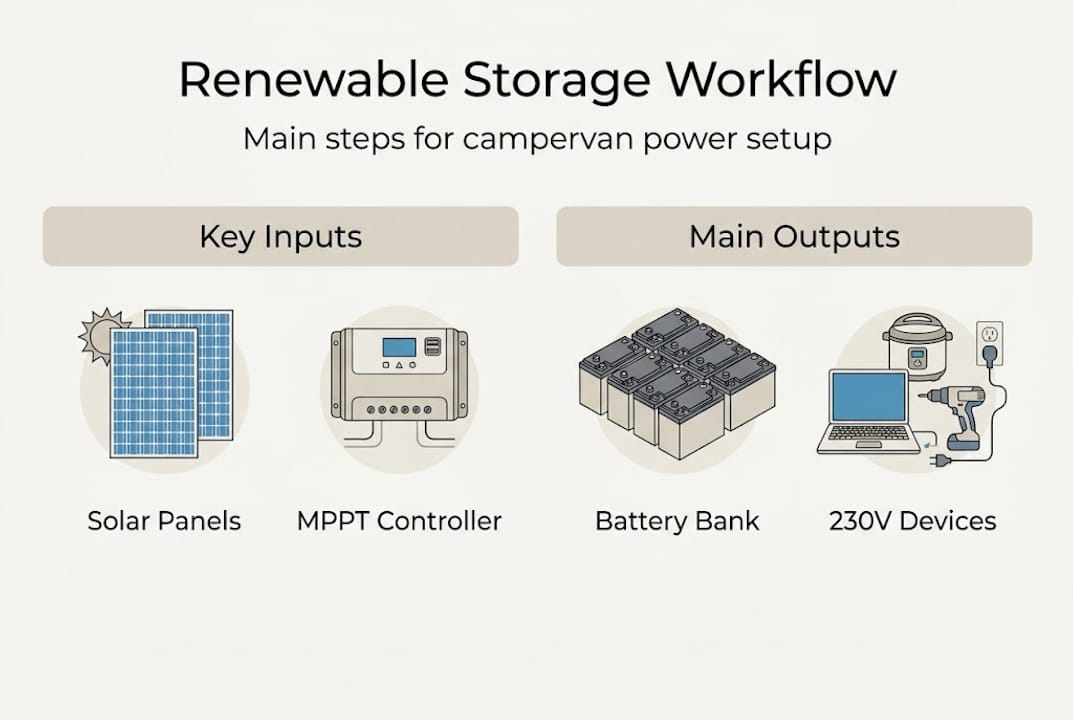
As noted in a complete off-grid campervan system guide, a typical campervan workflow involves MPPT solar charging into a LiFePO4 battery, monitoring via a battery shunt, then converting DC to AC only for needed loads via an inverter, optionally with an inverter/charger for shore or generator transitions.
| Component | Typical specification | Role in workflow |
|---|---|---|
| Solar panels | 200W to 600W total array | Energy generation |
| MPPT controller | 20A to 60A | Voltage regulation and charging |
| LiFePO4 battery | 100Ah to 300Ah | Energy storage |
| Battery shunt | 500A rated | Current measurement |
| Inverter/charger | 1000W to 3000W | AC conversion and backup charging |
Pro Tip: Always size your DC cables and fuses based on the maximum continuous current the circuit will carry, not the average. Under-rated cables are the most common cause of system failures in DIY campervan builds.
Designing your storage: sizing, seasonal strategy and autonomy
Once you know the components, selecting the right capacities for year-round UK operation is where many builds go wrong. The UK climate demands a fundamentally different design approach compared to southern Europe or the US Sun Belt.
UK solar output drops by approximately 70% in winter relative to peak summer performance. In December and January, usable peak sun hours in many parts of the UK can fall to as little as 0.5 to 1.5 hours per day. This single fact changes everything about how a system should be designed.
Follow these steps to size your storage and generation correctly:
- Calculate daily consumption: List every electrical load in your motorhome (lighting, fridge, water pump, phone charging, laptop, inverter loads). Multiply each device’s wattage by the hours used per day to get watt-hours (Wh). Add a 15% buffer for inefficiencies.
- Size your battery bank: Divide your total daily Wh requirement by 0.8 to preserve the top 20% of capacity as a buffer. LiFePO4 batteries can be used to 80 to 90% depth of discharge, but regular deep cycling shortens service life.
- Size your solar array for summer: Target generating 120 to 150% of your daily consumption in a good summer day. This allows surplus generation to top up any deficits from cloudy periods.
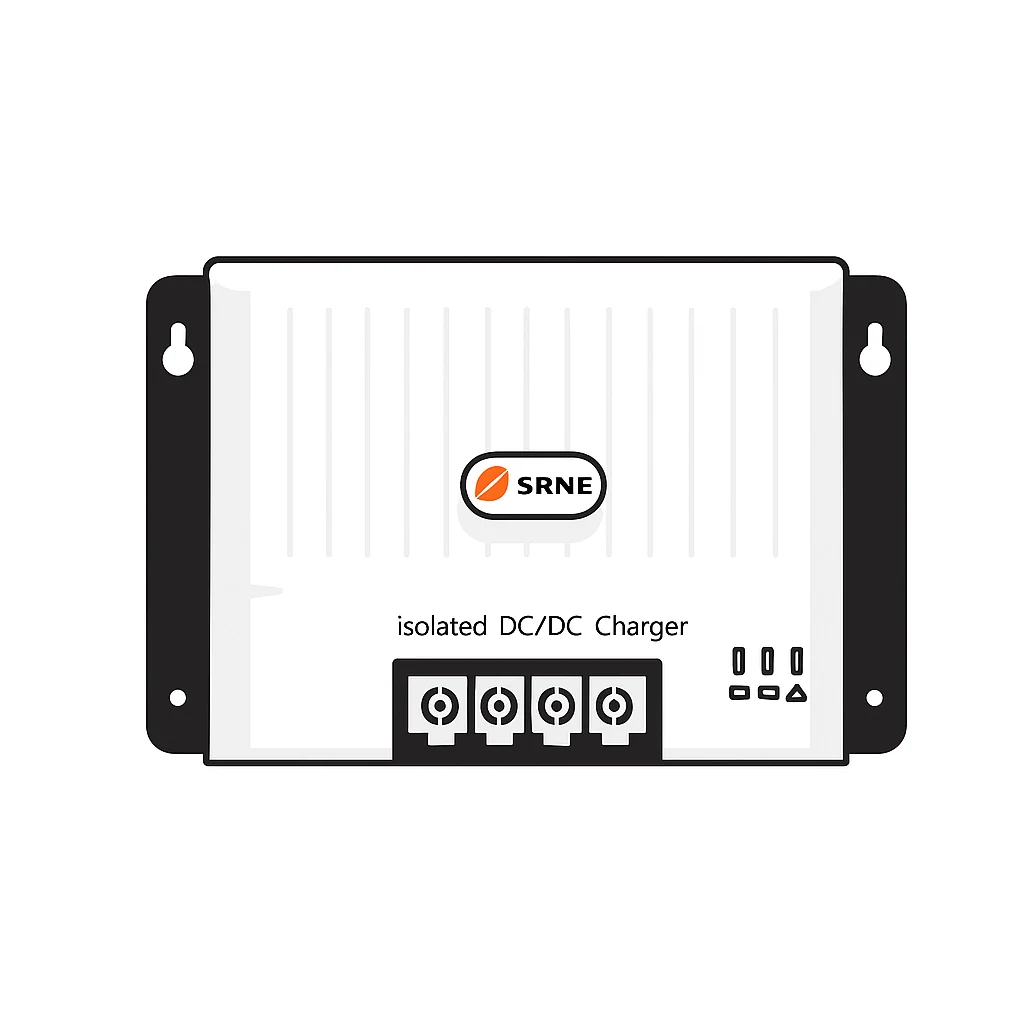
- Acknowledge the winter design point: Do not assume solar will cover your needs in winter. Design your winter strategy around backup charging from a vehicle alternator via a DC/DC converter, a generator, or occasional shore power hookups.
- Plan for autonomy days: In summer, a well-sized system might sustain you for multiple weeks without any driving or external charging. In winter, realistic autonomy between backup charges may be only one to three days.
“UK off-grid solar design requires treating summer and winter as completely separate design challenges. No single panel count or battery size elegantly solves both seasons. Accept the trade-off and build in flexibility.” This is the consistent message from experienced off-grid solar UK campervan builders.
Using off-grid solar design tips during the planning stage helps avoid over-investment in hardware that cannot overcome seasonal physics.
| Parameter | Summer (Jun to Aug) | Winter (Dec to Feb) |
|---|---|---|
| Peak sun hours per day | 4 to 6 hours | 0.5 to 1.5 hours |
| Expected solar harvest (400W array) | 1600 to 2400 Wh/day | 200 to 600 Wh/day |
| Autonomy without backup (200Ah LiFePO4) | 5 to 10 days | 1 to 2 days |
| Recommended backup strategy | Optional | Essential |
The table above makes the seasonal gap stark. Acknowledge this early and your system will be practical rather than disappointing.
Step-by-step workflow: from solar charging to 230V appliances
With sizing determined, you can now follow the daily energy workflow that takes power from sunlight through to your 230V appliances. Understanding each stage helps you identify where inefficiencies creep in and where monitoring attention is most valuable.
Here is the typical daily workflow:
- Solar generation begins: As daylight increases, solar panels start generating DC electricity. Output climbs with light intensity, reaching peak generation at solar noon on a clear day.
- MPPT controller regulates input: The MPPT controller continuously tracks the panels’ optimal operating voltage, ensuring maximum energy extraction regardless of varying light levels. This is especially important on partially cloudy UK days.
- Battery charging phases: The controller charges the LiFePO4 battery through Bulk (maximum current), Absorption (voltage held constant as current drops), and Float or Storage phases. LiFePO4 batteries spend much less time in Absorption than lead-acid, which improves daily efficiency.
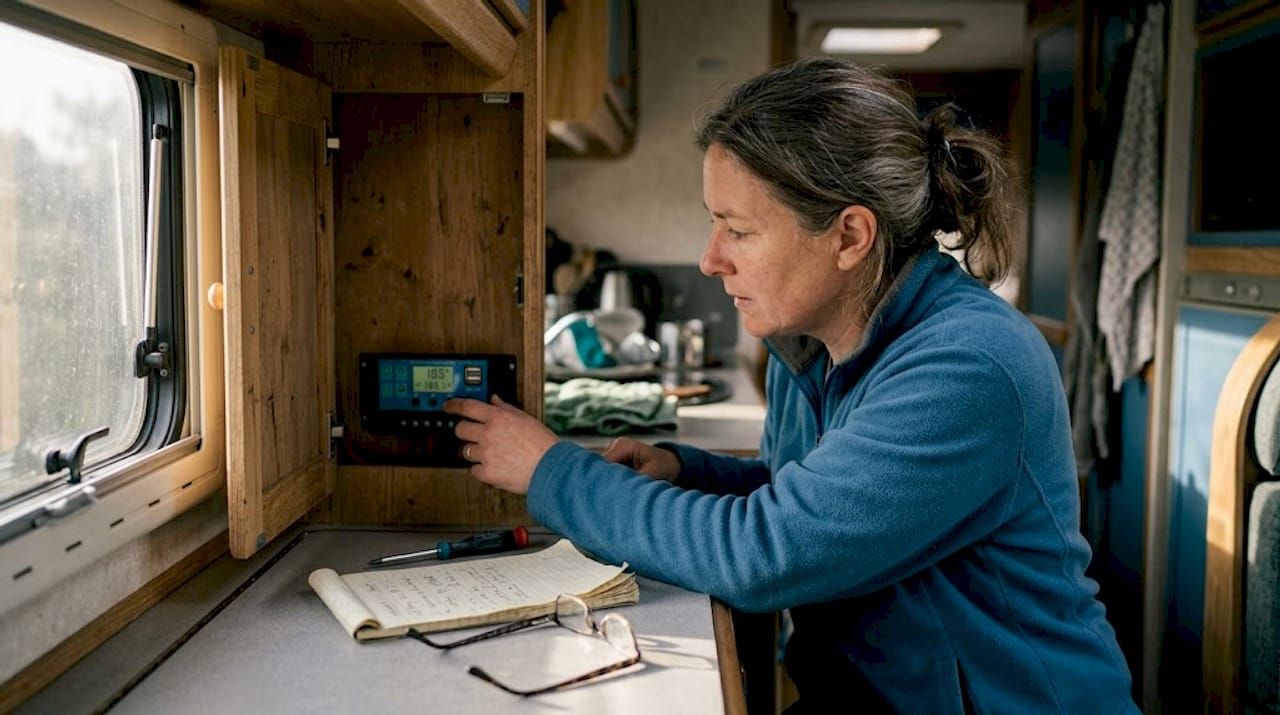
- Monitor your state of charge: Your battery monitoring overview via the battery shunt gives you real-time state of charge data. Checking this at midday tells you whether the day’s solar harvest is sufficient to cover the evening’s consumption.
- Inverter activation for AC loads: Activate the inverter only when a 230V appliance is required. Inverters draw idle power (typically 5W to 30W depending on the model) even with no load attached. Switching it off when not in use preserves battery capacity meaningfully over a full day.
- Evening consumption management: As solar generation drops in late afternoon, the battery bank supplies all loads. Prioritise high-consumption tasks like laptop charging or coffee making during peak solar hours to reduce evening battery draw.
Statistic callout: A correctly sized MPPT controller operating at peak efficiency can harvest up to 30% more energy from the same solar array compared to a basic PWM (Pulse Width Modulation) controller. On a typical UK summer day with a 400W array, that difference can represent 300 to 500Wh of additional stored energy every day.
As confirmed in a complete Victron off-grid campervan system guide, the efficient path flows from MPPT solar charging into LiFePO4 storage, monitored by a battery shunt, with DC to AC conversion via inverter only as required.
Pro Tip: Run high-draw 230V appliances such as kettles and microwaves during mid-morning when the battery is well charged from overnight rest and solar has already begun contributing. Avoid heavy AC loads in the evening when no solar generation is available and the battery is the sole source.
Troubleshooting and workflow optimisation: common issues and solutions
Even well-planned systems encounter real-world problems. UK-specific conditions, particularly extended overcast periods and cold temperatures, introduce challenges that are not always obvious from a manual.
Common issues and checks:
- MPPT controller not charging: Check panel voltage at the controller’s PV input terminals. If voltage is present but no charging current flows, check that the battery voltage is within the controller’s operating range. Some controllers refuse to begin charging if the battery voltage is below a minimum threshold, requiring a brief boost from an external source.
- Battery appearing to reject charge: LiFePO4 batteries with an active Battery Management System (BMS) can appear to stop accepting charge when solar input drops significantly, causing the system to cycle between charge, float, and standby states repeatedly during intermittent cloud cover. This is normal BMS behaviour, not a fault.
- Unexpected capacity loss: If your battery depletes faster than expected, check for parasitic loads. Common culprits include inverter idle draw, 12V fridge thermostats, and always-on device chargers.
- Voltage drop under load: Heavy loads like compressor fridges or inverters pulling large currents can cause significant voltage drop if cable sizing is inadequate. Check cable cross-sectional area against the load’s maximum current draw.
- Charge controller in Float when battery is not full: This can indicate a faulty battery voltage sensor or incorrect battery voltage settings in the controller. Always programme the controller’s battery type and absorption voltage to match your specific LiFePO4 battery’s specifications.
“On a grey January day in Scotland, my 300Ah LiFePO4 seemed completely stuck at 78%. The MPPT was showing 2A in, then 0A, then 2A again every few minutes. Turns out the BMS was cutting in and out as the panels barely kept up with the controller’s minimum operating current. The fix was simply waiting for clearer skies.” This kind of intermittent behaviour is characteristic of UK winter solar conditions and is widely reported in community discussions.
Pro Tip: During extended low-light periods lasting more than two or three consecutive days, programme your MPPT controller to use a fixed absorption schedule rather than relying solely on voltage detection. This ensures the battery receives a proper absorption phase even when solar input is marginal. Check your controller’s settings for a “timed absorption” or “fixed absorption time” option.
For more guidance on resolving these situations, reviewing troubleshooting MPPT scenarios provides practical diagnostic frameworks applicable to most common controller brands.
What most guides miss: practical trade-offs and UK priorities
Most off-grid storage guides focus on component specifications. They recommend the largest LiFePO4 bank you can afford and the most panels you can fit on the roof. In practice, this approach has real limitations for UK mobile setups.
Bigger is not always better. Adding a second 100Ah battery to a motorhome adds roughly 12 to 15kg and takes up cabinet space. If UK winter solar still yields only 300Wh on a cloudy day, a 200Ah bank simply stays flat for longer than a 100Ah bank would. The solar limitation is the constraint, not the storage size.
The UK winter solar reality is also harsher than many guides acknowledge. Even with practical MPPT insights and premium hardware, physics limits what a rooftop array can achieve in December north of Birmingham. No controller optimisation, no matter how sophisticated, creates sunshine that is not there.
What genuinely matters is workflow simplicity and honest monitoring. Owners who check their battery shunt data regularly, understand their consumption patterns, and have a practised backup charging routine, whether via a DC/DC converter from the engine, a small generator, or planned stops at EHU (Electric Hook-Up) sites, experience far fewer disruptions than those who build elaborate systems and then ignore the monitoring data.
Peace of mind in off-grid living comes from realistic expectations and flexible systems, not from chasing the largest specification. Design for winter, enjoy the surplus in summer, and embrace backup charging as a normal part of the seasonal workflow rather than a sign of system failure.
Take your next steps with Skyenergi
If you’re ready to build or upgrade your motorhome or campervan energy system, Skyenergi offers curated products and complete systems designed specifically for UK off-grid conditions.

Our range includes Victron solar and MPPT kits that pair high-efficiency panels with precision charge controllers, removing the guesswork from component matching. For those wanting full shore power and generator integration, our 3kVA inverter/charger systems provide a ready-configured solution with battery-to-battery charging and system monitoring included. All systems are sourced directly from manufacturers to provide reliable performance at competitive UK prices. Contact us for technical support on system design, sizing, or expansion.
Frequently asked questions
Why does my lithium battery stop charging even on a cloudy day?
Lithium batteries may enter standby if solar output is low and the charge controller reduces power, as LiFePO4 BMS behaviour causes the system to cycle between charge and standby states during intermittent cloud cover. This is normal operation rather than a fault.
How much autonomy can I expect from solar in winter?
UK winter solar output can drop by up to 70% compared to summer peak performance, meaning you may have only one to two days of autonomy between backup charging sessions in darker months.
What is the simplest way to monitor my battery status?
A battery shunt gives accurate, real-time data on state of charge, current flow, and power consumption, making it the most reliable tool for managing daily battery capacity in a campervan or motorhome system.
Should I invest in a larger solar array or a bigger battery bank?
Balance is key. Over-investing in either without addressing UK winter solar limitations will not deliver continuous autonomy. Prioritise efficiency, correct cable sizing, and a reliable backup charging option alongside any panel or battery upgrades.
Do I need an inverter/charger for off-grid living?
An inverter/charger is valuable if you plan to use shore power or a generator alongside solar, as a typical campervan workflow benefits from seamless transitions between solar charging and external power sources when UK conditions require backup input.
Recommended
Prev post

High-performance lithium battery types for leisure vehicles
Updated on 30 April 2026
Next post

Why monitoring battery health ensures reliable off-grid power
Updated on 28 April 2026


