





Residential battery buying guide for UK homes
Discover our comprehensive residential battery buying guide for UK homes to confidently choose the best energy storage solution for your needs.
A residential battery system is a rechargeable energy storage unit installed in your home to capture electricity from solar panels or the grid and release it when you need it most. This residential battery buying guide covers everything UK homeowners and renters need to make a confident purchase: chemistry, capacity, installation, warranties, costs, and the top brands available in 2026. The industry term for these products is home energy storage systems (HESS), and understanding that terminology helps you compare quotes accurately. Brands like Tesla Powerwall 3, Enphase IQ Battery, and Pytes are now setting the standard for what a well-engineered system looks like.
1. What are the key battery chemistries for UK homes?
Lithium Iron Phosphate (LFP) is the dominant chemistry in residential energy storage in 2026. It offers a better safety profile than older Nickel Manganese Cobalt (NMC) cells, tolerates deeper discharge cycles, and typically delivers 3,000–6,000 charge cycles before significant capacity loss. That translates to 10–15 years of reliable service in most UK homes.
NMC batteries offer higher energy density in a smaller footprint, but they carry greater thermal risk and shorter cycle life. Sodium-ion batteries are emerging as a lower-cost alternative, though commercial residential products remain limited. Flow batteries suit large commercial installations rather than typical homes due to their size and cost.

| Chemistry | Cycle life | Safety rating | Best use case |
|---|---|---|---|
| LFP | 3,000–6,000 cycles | High | Most UK homes |
| NMC | 1,000–2,000 cycles | Moderate | Space-constrained installs |
| Sodium-ion | 2,000–4,000 cycles | High | Emerging market only |
| Flow | 10,000+ cycles | Very high | Commercial scale |
Modern residential batteries favour modular LFP chemistry for safety and longevity, with typical household systems sized around 20 kWh for comprehensive utility. That sizing reflects both overnight consumption and the need for meaningful backup capacity.
Pro Tip: For a standard UK home, LFP is the correct default choice. Only consider NMC if physical space is genuinely restricted and you have confirmed the installer’s thermal management provisions.
2. How to size your battery correctly
Battery sizing is the single most consequential decision in any home battery purchase. Undersizing means you run out of stored power before morning. Oversizing means you pay for capacity you never use.
Start with your energy bills. The average UK household uses roughly 8–10 kWh per day. A battery sized at 10 kWh covers overnight demand for most homes. If you run an electric vehicle charger, heat pump, or home office equipment, you will need 15–20 kWh to maintain meaningful backup.
Key sizing factors to assess:
- Overnight consumption: Check your smart meter data or energy bill for daily usage patterns.
- Solar generation: Match battery capacity to your panels’ daily output, not your total daily demand.
- Backup priority: Decide which circuits you need to keep running during a grid outage.
- Tariff structure: Time-of-use tariffs like Octopus Agile make larger batteries more financially worthwhile.
Battery sizing and integration must be tailored to individual household consumption and solar production profiles for best economic and energy outcomes. Generic sizing recommendations ignore the variables that actually drive your payback period.
Pro Tip: Download 12 months of half-hourly consumption data from your energy supplier’s app or smart meter portal. A free load calculator from your installer should use this data, not industry averages.
3. Define your use case before choosing specs
Experts stress defining a clear use case first before selecting battery specs, to avoid costly mismatches and disappointment. This is the step most buyers skip.
There are two primary use cases: self-consumption and backup power. Self-consumption means storing cheap or solar-generated electricity and using it during peak-rate hours. Backup power means keeping your home running during grid outages. These goals require different battery configurations, different inverter types, and sometimes different installation approaches.
A self-consumption system prioritises daily cycling efficiency and tariff arbitrage. A backup system prioritises continuous power output (measured in kilowatts) and the ability to operate independently from the grid. Some systems, like the Tesla Powerwall 3, handle both well. Others are optimised for one or the other. Clarify your priority before you request a single quote.
4. What to look for in installation and warranties
Installation typically requires 2–3 qualified electricians and can take several hours up to a full day depending on electrical complexity. Homeowners should obtain multiple itemised quotes covering equipment, labour, and warranty terms separately. A quote that bundles everything into one figure makes comparison impossible.
The warranty is not a marketing document. Buyers who treat the warranty as a legally binding contract rather than mere marketing experience fewer surprises. Read the warranty carefully for capacity retention guarantees, typically 70–80% after 10 years, and check whether the manufacturer or the installer is the liable party.
Vendor financial stability matters more than most buyers realise. Industry professionals warn that many buyers overlook vendor financial stability, risking voided warranties due to installer insolvency. A 10-year warranty from a company that folds in year three is worthless.
Practical installation checklist:
- Confirm the installer holds a current MCS (Microgeneration Certification Scheme) accreditation.
- Verify the battery location meets manufacturer temperature and ventilation requirements.
- Request a single-line electrical diagram before work begins.
- Confirm grid connection notification has been submitted to your Distribution Network Operator (DNO).
- Check that the warranty is registered in your name, not the installer’s.
Pro Tip: For retrofits onto an existing solar system, matching battery brand to inverter brand simplifies installation, warranty, and monitoring significantly. Enphase IQ Battery with Enphase microinverters is the clearest example of this principle in practice.
5. Costs, incentives, and payback in the UK
Battery system costs in the UK typically range from £4,000 to £12,000 installed, depending on capacity and brand. That figure covers hardware, labour, and DNO notification. VAT on residential battery storage is currently 0% in the UK when installed alongside solar panels, which reduces the effective cost meaningfully.
Financial savings from batteries increase significantly when the spread between peak and off-peak electricity rates is substantial. On Octopus Agile or similar time-of-use tariffs, the arbitrage opportunity is real and measurable. Homes without time-of-use tariffs see slower payback periods.
Battery system payback times depend on tariff structure, usage pattern, and careful lifecycle cost modelling including operations, maintenance, and disposal over 15–20 years. A simple payback calculation that ignores degradation, maintenance, and end-of-life disposal will overstate your returns.
Note: Not all solar-equipped homes benefit equally from a battery. A customised cost-benefit analysis based on your home’s unique profile should precede any investment decision. If your export rate is already high and your grid tariff is flat, a battery may not pay back within its useful life.
Australia’s federal government introduced a 30% upfront discount on battery systems in 2025 through its Cheaper Home Batteries Programme. The UK has not yet matched this directly, but the Smart Export Guarantee (SEG) and potential future incentives under the government’s clean energy strategy are worth monitoring before you commit.
6. Top residential battery brands for UK buyers in 2026
The best residential batteries available to UK consumers in 2026 fall into a clear tier structure based on warranty strength, ecosystem integration, and verified field performance.
| Brand and model | Usable capacity | Warranty | Best for |
|---|---|---|---|
| Tesla Powerwall 3 | 13.5 kWh | 10 years | New solar installs, backup priority |
| Enphase IQ Battery 10C | 10.08 kWh | 15 years | Enphase solar system owners |
| Sonnen Eco | 5–15 kWh (modular) | 10 years | Premium self-consumption |
| BYD Battery-Box Premium HVS | 5.1–12.8 kWh | 10 years | Flexible multi-brand installs |
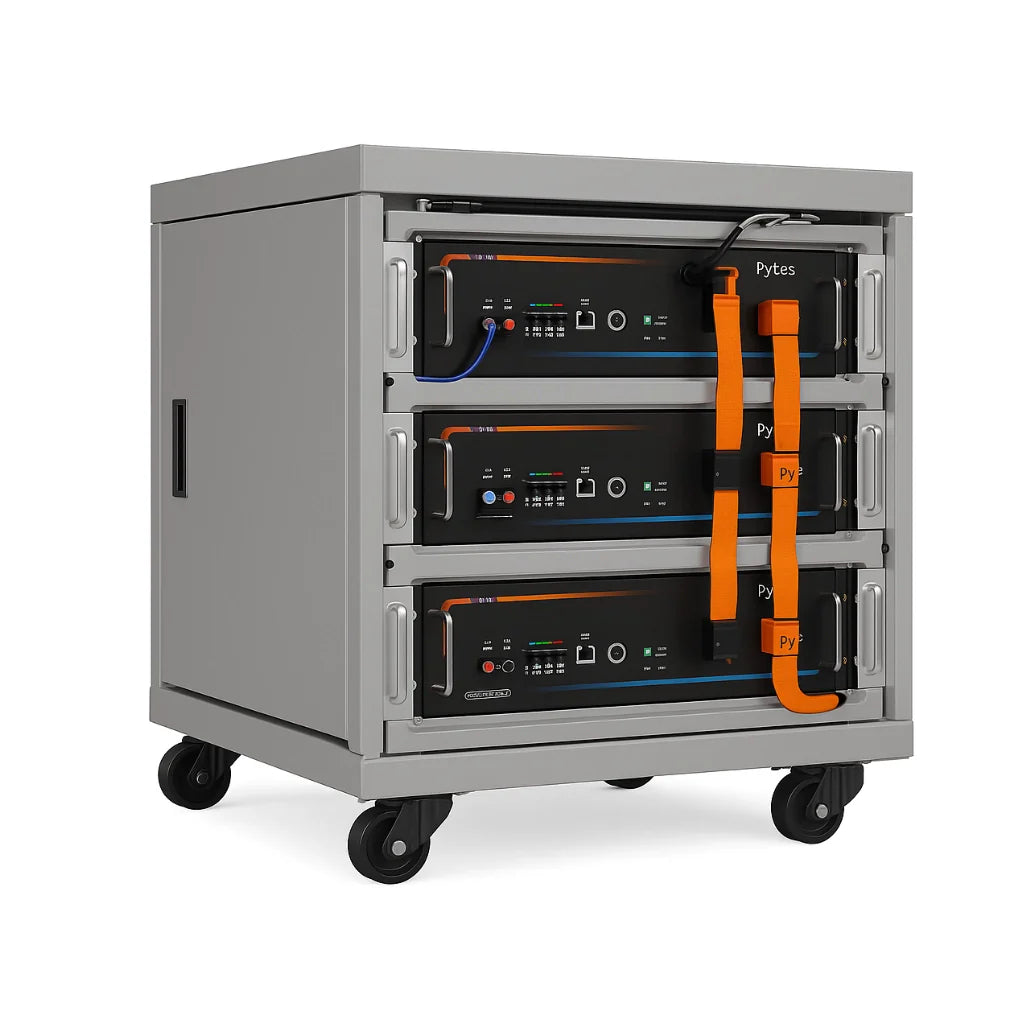
| Pytes E-Box 48100R | 4.8 kWh (expandable) | 10 years | Modular, budget-conscious buyers |
Matching battery brand and existing solar inverter brand simplifies installation, warranty, and monitoring, yielding a cleaner and more reliable overall system. This is particularly relevant for Enphase users retrofitting storage.
Key considerations when comparing models:
- Modular design: BYD and Pytes allow capacity expansion without replacing the core unit.
- App ecosystem: Tesla and Enphase offer mature monitoring apps with detailed cycle data.
- AC versus DC coupling: DC-coupled systems like the Enphase IQ Battery are more efficient when paired with compatible solar.
- Grid-forming capability: Tesla Powerwall 3 supports whole-home backup without a separate transfer switch.
The price difference between low-end commodity batteries and premium, bankable systems is typically only 10–20% of total project cost, yet premium systems offer superior and verifiable long-term warranties and support. That premium is almost always worth paying.
Skyenergi supplies expandable battery systems and Pytes home energy storage units directly, with Victron-compatible components for homeowners who want a modular, well-supported setup without paying for a branded installer network.
Key takeaways
Choosing the right home energy storage system requires matching battery chemistry, capacity, and warranty terms to your specific home profile before comparing prices.
| Point | Details |
|---|---|
| LFP chemistry is the default | Choose Lithium Iron Phosphate for safety, cycle life, and long-term reliability in UK homes. |
| Size to your actual usage | Use 12 months of smart meter data, not industry averages, to determine the right kWh capacity. |
| Define your use case first | Decide between self-consumption and backup power before requesting any quotes. |
| Treat the warranty as a contract | Verify capacity retention guarantees and confirm the manufacturer is the liable party. |
| Model total cost of ownership | Include maintenance, degradation, and disposal costs over 15–20 years in your payback calculation. |
What I have learned from watching buyers get this wrong
The most common mistake I see is buyers who lead with price. They find the cheapest quote, accept a vague warranty document, and discover two years later that the installer has dissolved and the manufacturer’s support line does not recognise their system registration. The 10–20% premium for a bankable brand is not a luxury. It is the cost of having a warranty that actually functions.
The second mistake is skipping the use case conversation entirely. I have spoken with homeowners who bought a 5 kWh system for backup purposes and were genuinely surprised when it ran out of power after four hours. Backup capacity and daily cycling capacity are different engineering targets. Your installer should be asking which one matters more to you before they size anything.
My honest view on cost modelling: most payback calculators you find online are optimistic. They assume consistent tariff spreads, no degradation, and zero maintenance costs. A rigorous purchasing process includes evaluating total cost of ownership incorporating hardware, installation, ongoing maintenance, system augmentation, and end-of-life disposal over 15–20 years. Run that number before you sign anything.
The buyers who get the best outcomes are those who spend two weeks reading before they spend two hours with a salesperson. This guide is a starting point, not a substitute for that process.
— John
Power your home with Skyenergi
Skyenergi supplies battery-ready solar systems and Victron-compatible components directly to UK homeowners, with no inflated installer margins.
The Victron Energy Solar Home System 200 MPPT is a fully integrated, modular solution designed for residential installs. It combines an MPPT charge controller, battery management, and load control in a single unit, making it straightforward to expand as your needs grow. Pair it with a Victron 305 Watt Solar Panel bundle for a complete, matched system. Skyenergi sources directly from manufacturers, so you get verified components at competitive prices with full UK support. Browse the full range at skyenergi.com.
FAQ
What is the best battery chemistry for a UK home?
Lithium Iron Phosphate (LFP) is the recommended chemistry for most UK residential installs in 2026. It offers the best combination of safety, cycle life, and long-term reliability.
How much does a home battery system cost in the UK?
Installed costs typically range from £4,000 to £12,000 depending on capacity and brand. VAT is currently 0% on battery storage installed with solar panels, which reduces the effective price.
How long does a home battery last?
Most LFP batteries are warranted for 10 years with a capacity retention guarantee of 70–80%. Real-world cycle life often extends to 15 years under normal residential use.
Do I need solar panels to install a home battery?
No. A battery can charge from the grid during off-peak hours and discharge during peak-rate periods. However, pairing a battery with solar panels significantly improves the financial case and energy independence.
Is a solar battery worth it for every home?
Not automatically. A customised cost-benefit analysis based on your tariff structure, consumption profile, and solar output should precede any purchase decision. Homes on flat-rate tariffs with high export rates may see limited financial benefit.
Recommended
Prev post

Deep cycle battery explained: your complete guide
Updated on 18 June 2026
Next post

Why battery bank capacity matters for off-grid power
Updated on 16 June 2026


