





Must-have solar accessories for off-grid power in 2026
Discover essential must-have solar accessories for off-grid power in 2026. Ensure efficiency and reliability for your solar setup!
Must-have solar accessories are the components that determine whether an off-grid power system performs reliably or fails under real-world conditions. Whether you are fitting out a campervan, a motorhome, a marine vessel, or a residential off-grid setup, the accessories surrounding your solar panels matter as much as the panels themselves. Victron Smart MPPT charge controllers, MC4 connectors, rapid shutdown devices, and quality monitoring systems each play a direct role in efficiency, safety, and longevity. This guide covers the solar accessory essentials list for 2026, structured around practical off-grid use cases.
1. Must-have solar accessories: the four core categories
A standard solar kit is built from four categories: solar modules, converters (inverters), structural mounting hardware, and balance-of-system components. That final category, which includes wiring, breakers, fuses, and safety disconnects, is where most off-grid builds either succeed or fall short. Understanding all four categories before purchasing prevents costly gaps in your system.
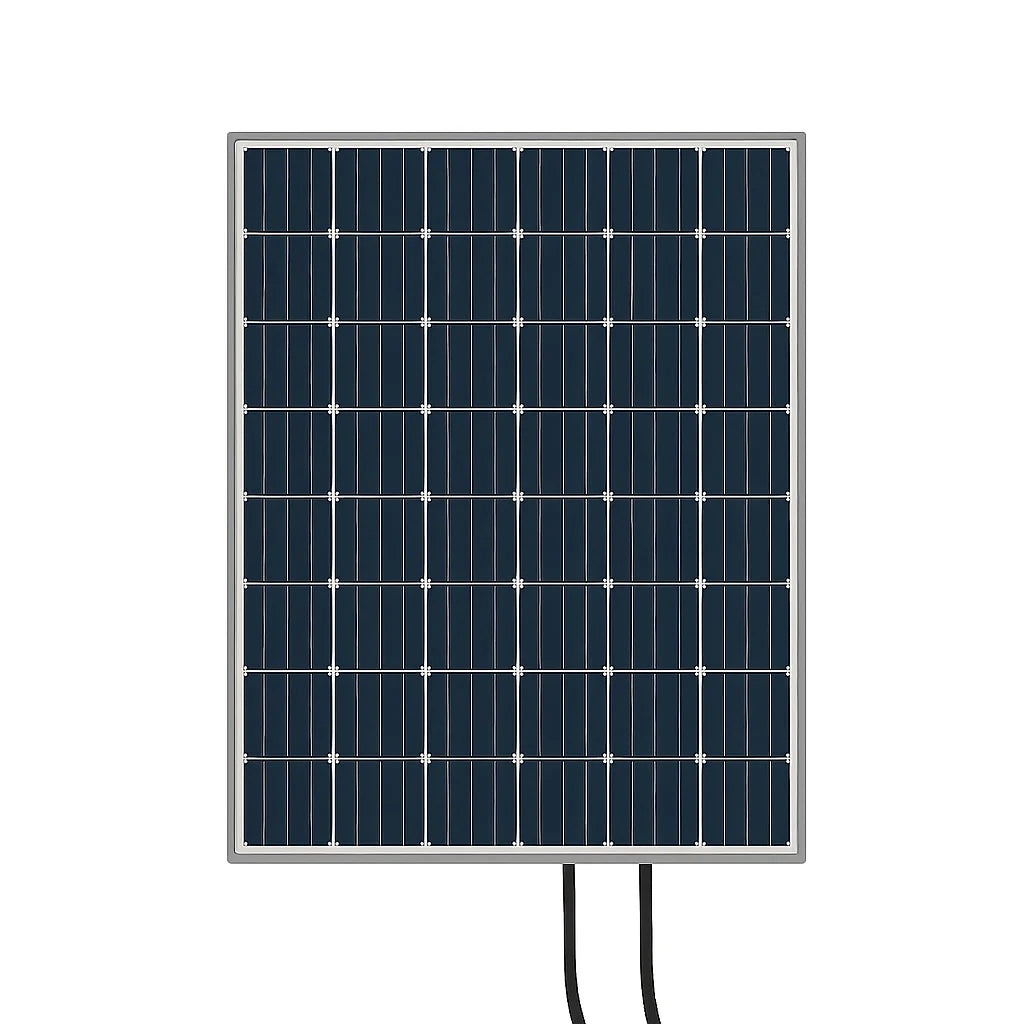
- Solar modules: Monocrystalline panels deliver the highest efficiency per square metre and suit space-constrained rooftop or vehicle installations. Polycrystalline panels cost less but require more surface area for equivalent output.
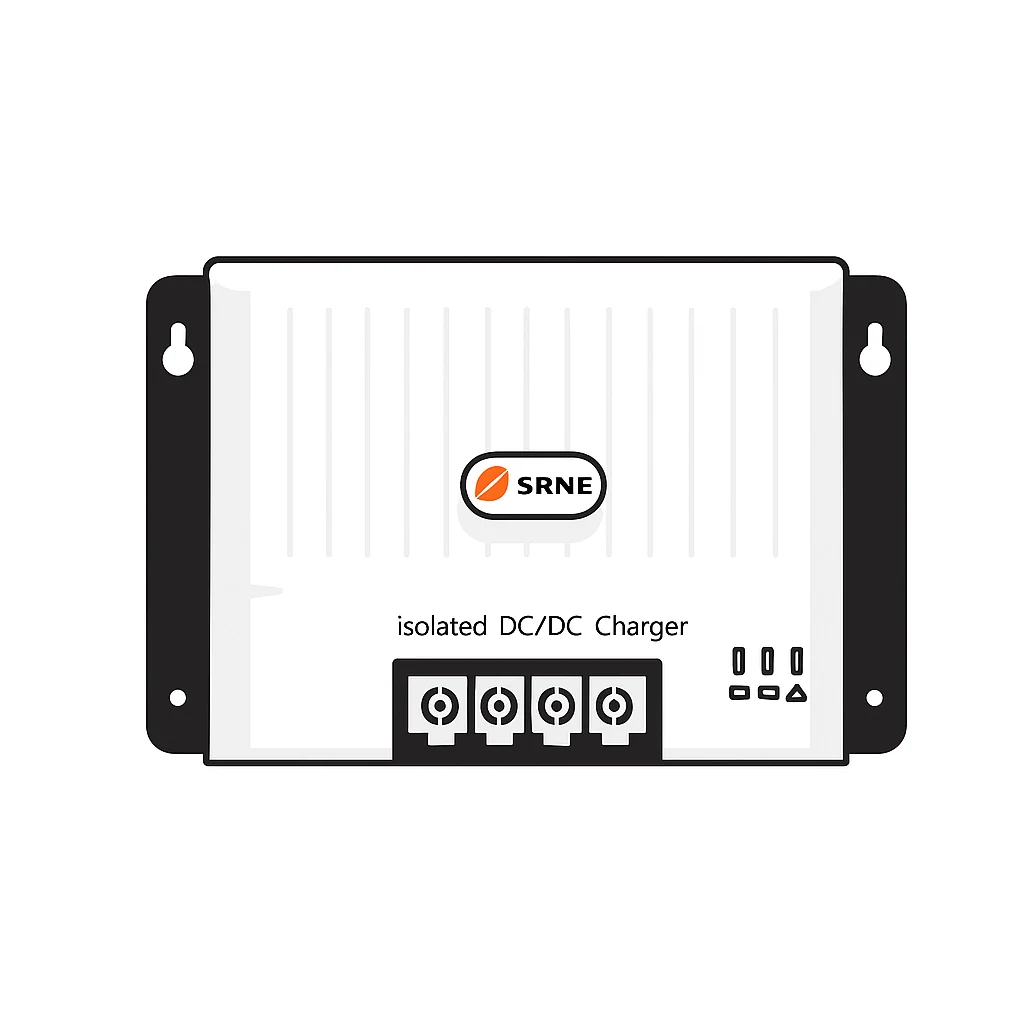
- Charge controllers: MPPT (Maximum Power Point Tracking) controllers extract significantly more energy from panels than PWM (Pulse Width Modulation) units. Smart MPPT controllers offer up to 30% greater charging efficiency than standard PWM chargers, along with multi-stage charging and anti-reverse drain protection.
- Mounting hardware: Fixed roof mounts suit permanent residential or vehicle installations. Ground mounts work for residential off-grid sites with available land. Portable adjustable racks serve campers and overlanders who need to angle panels toward the sun throughout the day.
- Balance-of-system (BoS) components: MC4 connectors, correctly rated DC cabling, fuse holders, circuit breakers, and safety disconnects. These are not optional extras. They are the components that protect your battery bank and prevent electrical faults.
2. Charge controllers: MPPT vs PWM
The charge controller is the single most performance-critical accessory in any solar system. It regulates the voltage and current flowing from panels to batteries, and the technology you choose directly affects how much energy you actually store. MPPT controllers improve efficiency by up to 30% compared to PWM units, which is a meaningful gain on a system running daily.
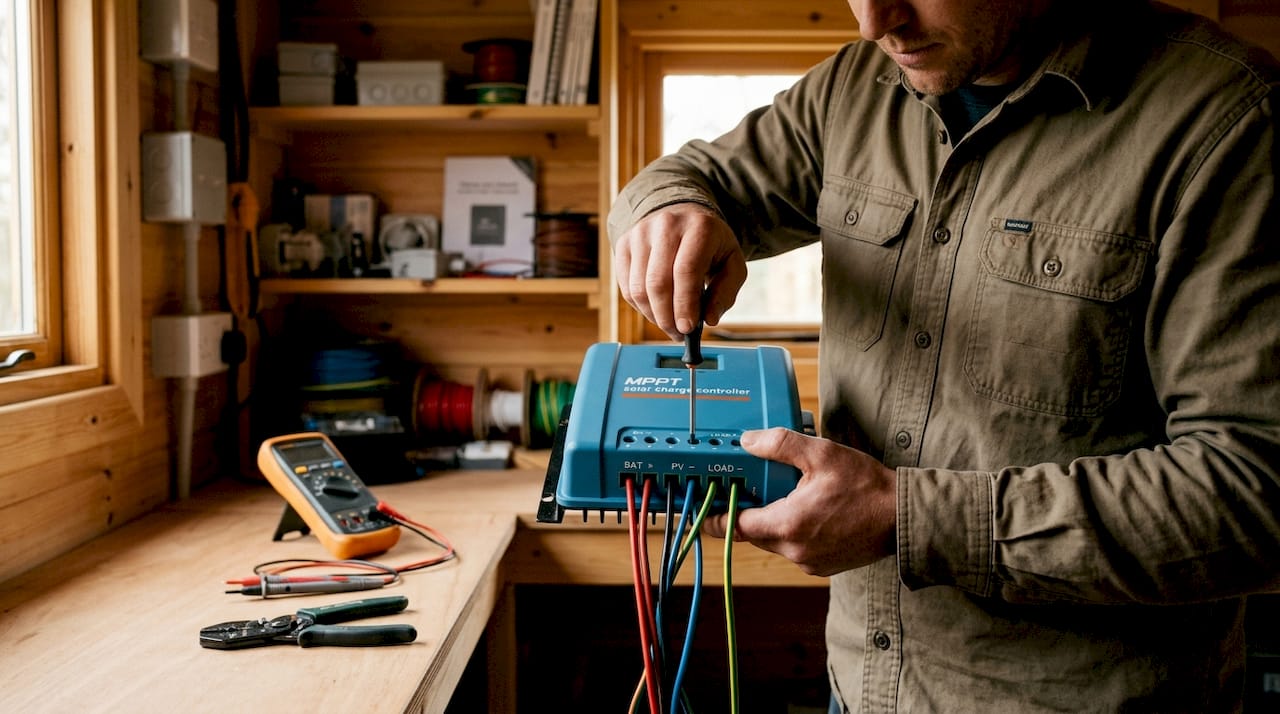
PWM controllers are adequate for small, simple 12V systems where panel voltage closely matches battery voltage. For any system using lithium batteries, higher-voltage panels, or multiple panels in series, MPPT is the correct choice. Victron SmartSolar MPPT controllers are the benchmark for off-grid vehicle and residential use, offering Bluetooth monitoring, programmable charge profiles, and compatibility with Victron’s VE.Direct communication network.
Pro Tip: When sizing an MPPT controller, account for the maximum open-circuit voltage (Voc) of your panel array at cold temperatures. Panels produce higher voltages in cold conditions, and undersizing the controller can cause permanent damage.
3. Solar panels: matching type to application
Panel selection depends on available space, portability requirements, and budget. For fixed rooftop installations on campervans or motorhomes, rigid monocrystalline panels in the 200W to 400W range offer the best balance of output and durability. Victron’s 610W solar panel is suited to larger residential or high-demand vehicle systems where roof space allows.
Flexible panels suit curved surfaces such as boat decks or low-profile van roofs, though they typically carry a shorter service life than rigid alternatives. Semi-flexible panels offer a middle ground. For any permanent installation, the panel’s IP rating, frame construction, and warranty period are the practical indicators of long-term value.
4. Safety accessories: rapid shutdown and arc-fault protection
Safety accessories are not optional for rooftop PV systems. NEC 690.12 rapid shutdown requires DC conductors to drop to 30V or less outside the array boundary and 80V or less inside within 30 seconds of activation. This standard exists to protect emergency responders from live DC conductors during a fire or incident. Rapid shutdown is a legal requirement in many jurisdictions and a practical necessity in all of them.
Arc-fault detection is equally critical. UL 1699B arc-fault devices must interrupt detected arcs within 2.5 seconds and are rated to detect arcs at 300W or higher. This is the DC-specific standard, distinct from the AC UL 1699 standard, and it applies directly to PV string wiring.
Key compliance point: Rapid shutdown methods differ between module-level power electronics (MLPE) systems and string inverter setups. Hobbyists must verify component compatibility carefully to pass inspection. SunSpec PLC protocol-based devices allow string inverter compliance without per-module electronics, which reduces cost on larger arrays.
Arc-fault detection effectiveness also depends on installation quality. Correct DC connectors, proper crimping, and firmware updates on detection devices reduce nuisance trips and genuine fire risk. MC4 connectors must be matched by brand and generation. Mixing connector types from different manufacturers is a common installation error that compromises both safety and warranty.
5. Mounting hardware and structural components
Mounting hardware determines the long-term integrity of any solar installation. For vehicle rooftops, low-profile aluminium mounting rails with stainless steel fixings resist vibration and corrosion over years of road use. For residential ground mounts, galvanised steel frames rated for local wind and snow loads are the correct specification.
Tilt-adjustable mounts improve seasonal output for fixed residential installations. A panel tilted at the correct angle for winter sun can recover a meaningful percentage of generation that a flat-mounted array loses. For off-grid homes, this is a practical gain worth the additional hardware cost.
Cable entry glands and roof penetration seals are frequently overlooked. A poorly sealed roof penetration causes water ingress over time, which damages both the vehicle structure and the electrical system. Quality EPDM or silicone glands rated for UV exposure are the correct choice for any permanent installation.
6. Portable solar accessories for outdoor and vehicle use
Portable solar chargers paired with power banks provide on-demand power after sundown. The panel charges the bank during daylight; the bank powers devices at night. This is the correct pairing for camping, overlanding, and emergency preparedness. A solar panel alone cannot power a device after dark.
When selecting portable solar gear, the key specifications are:
- Efficiency rating: Higher-efficiency panels produce more power from the same surface area. Monocrystalline portable panels outperform amorphous types in direct sunlight.
- Waterproof rating: IPX4 is the minimum for outdoor use. IPX6 or IP67 is preferable for kayaking, coastal camping, or wet climates.
- Port types: USB-C Power Delivery (PD) is the current standard for fast-charging laptops, tablets, and modern smartphones. Panels without USB-C PD output are already outdated for 2026 device compatibility.
- Modularity: Systems like NESTOUT modular panels allow you to add capacity as needed, angling individual panels for maximum sun exposure throughout the day.
Pro Tip: Pair panels with suitable battery capacities and account for real environmental conditions. A 20W panel in overcast UK conditions produces a fraction of its rated output. Size your power bank to cover at least two days of consumption without solar input.
7. Monitoring systems and performance accessories
Solar monitoring systems provide real-time data on power production, battery state of charge, and system health. Many modern systems connect via smartphone apps, giving you immediate visibility of energy consumption patterns and early warning of faults. Without monitoring, a failing cell or a shaded panel can go undetected for weeks, silently reducing system output.
| Accessory | Function | Recommended specification |
|---|---|---|
| MPPT charge controller | Regulates panel-to-battery charging | Victron SmartSolar, sized to array Voc |
| Monitoring interface | Real-time system data via app | Victron VE.Direct or Bluetooth |
| Surge protector | Protects against voltage spikes | DC-rated, matched to system voltage |
| Battery monitor | Tracks state of charge accurately | Victron BMV-712 or equivalent |
| Fuse and breaker set | Overcurrent protection for all circuits | ANL fuse on battery positive, MCBs on loads |
Surge protectors are a low-cost accessory that prevent expensive damage from voltage spikes caused by lightning or grid interaction in hybrid systems. A DC-rated surge protection device fitted at the combiner box is standard practice in professional installations and should be standard in DIY builds too.
8. Cabling, connectors, and wiring quality
Cable quality directly affects system efficiency and safety. Undersized DC cabling causes resistive losses that reduce the power reaching your battery bank. For a 12V system, even a 0.5V drop across a cable run represents a meaningful percentage of available voltage. Correctly sized cables, calculated for both current and run length, are part of the solar accessory essentials list that many builders underestimate.
MC4 connectors are the industry standard for PV string connections. They are rated for outdoor UV exposure, IP67 sealing, and the DC voltages present in solar arrays. Using non-rated connectors or mixing MC4 brands introduces resistance, potential arcing, and warranty voidance. A proper MC4 crimping tool is a one-time purchase that pays for itself by preventing connection failures.
For vehicle installations, tinned marine-grade copper cable resists corrosion in damp environments far better than standard automotive cable. This is particularly relevant for motorhomes, campervans, and boat installations where condensation and humidity are constant factors.
Key takeaways
A solar system’s output and safety depend on the quality and compatibility of every accessory in the chain, not just the panels.
| Point | Details |
|---|---|
| MPPT over PWM | MPPT controllers deliver up to 30% more charging efficiency, making them the correct choice for lithium and multi-panel systems. |
| Safety compliance is mandatory | NEC 690.12 rapid shutdown and UL 1699B arc-fault protection are legal and practical requirements for rooftop PV installations. |
| Portable gear needs power bank pairing | A solar panel alone cannot power devices after dark; always pair with a correctly sized power bank for off-grid outdoor use. |
| Cable and connector quality matters | Undersized cabling and mismatched MC4 connectors reduce efficiency and create genuine fire risk. |
| Monitoring prevents silent losses | Real-time monitoring via Victron VE.Direct or Bluetooth apps detects faults before they become costly failures. |
What I have learned building off-grid systems
After working with off-grid solar builds across campervans, motorhomes, and residential setups, the pattern I see most often is this: buyers spend carefully on panels and batteries, then cut corners on everything else. The result is a system that underperforms from day one and becomes a fault-finding exercise within a year.
The accessories that get skipped most frequently are the ones that matter most. Correct cable sizing, matched MC4 connectors, a quality MPPT controller, and a battery monitor are not upgrades. They are the foundation. A Victron SmartSolar MPPT controller with Bluetooth monitoring costs more than a generic PWM unit, but the performance gap and the diagnostic capability justify the difference on any system you intend to rely on.
I have also seen the consequences of ignoring rapid shutdown compliance on rooftop installations. Professional installation checklists cover safety equipment, commissioning tools, and compliance items that DIY builders frequently overlook. Failing an inspection because of a missing rapid shutdown device or an incorrect arc-fault circuit interrupter is an avoidable and expensive problem.
For anyone starting out, the practical advice is to plan your accessory list before you buy your panels. The residential off-grid system guide from Skyenergi is a useful reference for understanding how components interact before committing to a specific configuration. Buy the monitoring system at the same time as the controller. Fit the correct fusing from the start. These decisions are far easier to make before installation than after.
— John
Explore Victron solar accessories at Skyenergi
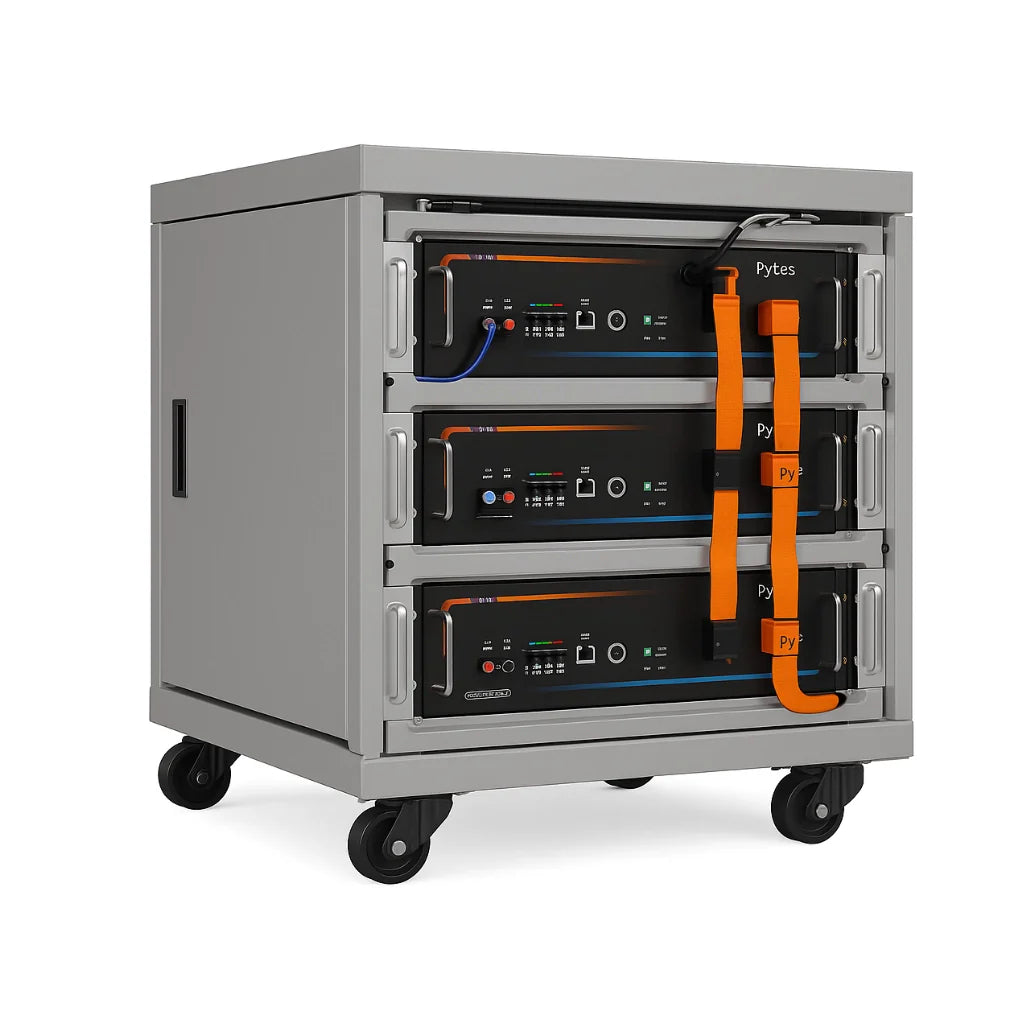
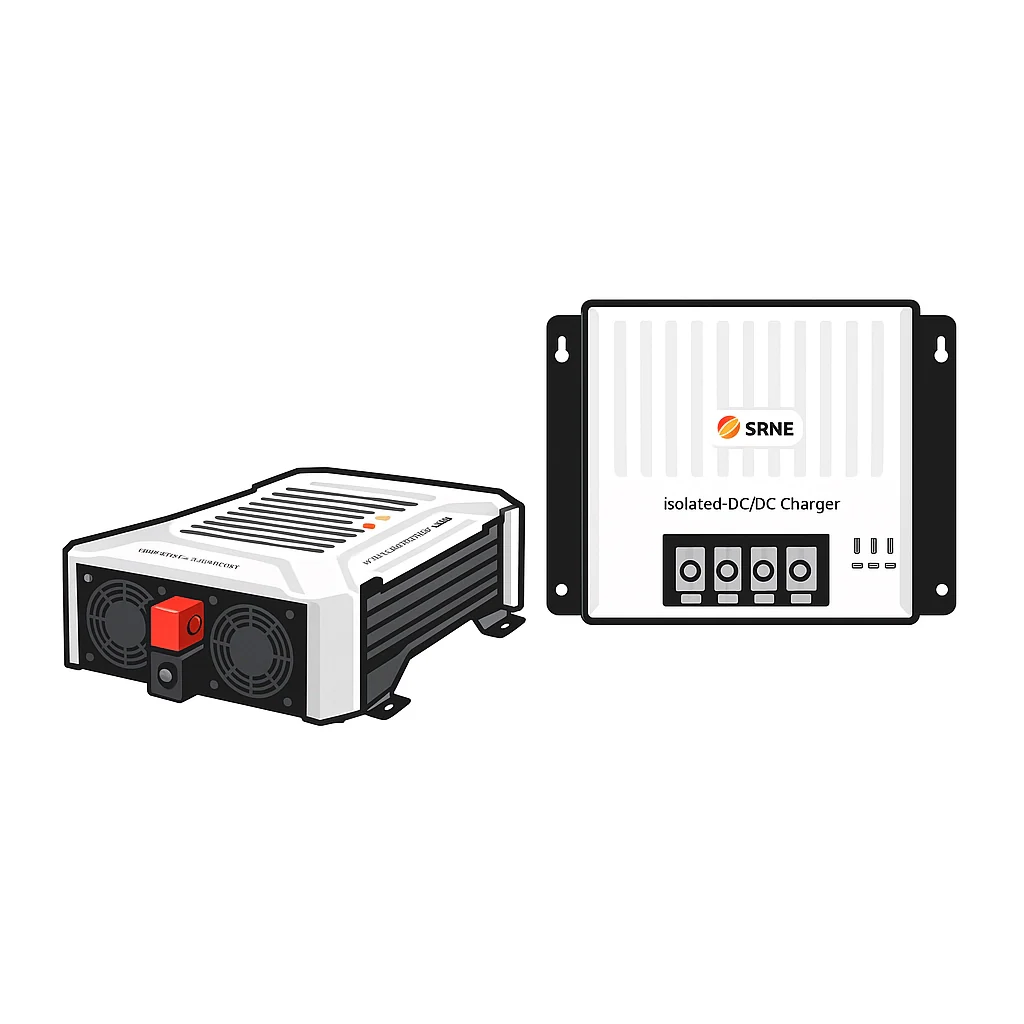
Skyenergi stocks a range of essential solar gear suited to off-grid vehicle and residential builds. The Victron 610W solar panel with Smart MPPT controller bundle includes cabling, a mounting gland, and a battery option, giving you a complete, compatible starting point for a high-performance system. For larger builds requiring inverter-charging and battery-to-battery charging, the 3kVa off-grid power system covers the full electronics stack. All products are sourced directly from manufacturers and are compatible with Victron’s monitoring and communication ecosystem.
FAQ
What is the most important solar accessory for off-grid use?
The MPPT charge controller is the most performance-critical accessory, as it regulates energy flow from panels to batteries and can improve charging efficiency by up to 30% compared to PWM alternatives.
Do I need rapid shutdown devices for a campervan solar install?
Rapid shutdown is primarily a requirement for rooftop PV systems on buildings under NEC 690.12, but verifying local regulations for vehicle installations is advisable. For residential rooftop systems, it is a legal requirement in most jurisdictions.
What does UL 1699B mean for solar arc-fault protection?
UL 1699B is the DC-specific arc-fault circuit interrupter standard for PV systems. Compliant devices must detect arcs at 300W or higher and interrupt them within 2.5 seconds, reducing fire risk from wiring faults.
Can a portable solar panel charge devices directly without a power bank?
A portable solar panel can charge devices directly during daylight, but output varies with cloud cover and panel angle. Pairing with a power bank is the correct approach for reliable, on-demand power after dark or in low-light conditions.
Which connectors are standard for solar PV wiring?
MC4 connectors are the industry standard for solar PV string connections. They are rated for outdoor UV exposure and IP67 sealing. Mixing MC4 connectors from different manufacturers is a common error that compromises both safety and system warranty.
Recommended
Prev post

The role of inverter chargers in off-grid systems
Updated on 06 June 2026
Next post

High voltage battery systems explained: 2026 guide
Updated on 04 June 2026


