





Master marine battery terminology for smarter off-grid boating
Decode confusing marine battery terms like DoD, SoC, and BMS. Learn which battery chemistry suits UK leisure boats for reliable off-grid power and longer life.
You’ve invested in a leisure boat for those perfect UK coastal escapes, only to find yourself baffled by terms like depth of discharge, state of charge, and battery management systems. Confusing marine battery terminology leads to poor purchasing decisions, shortened battery life, and frustrating power failures when you’re miles from shore. This guide cuts through the jargon, explaining essential battery terms in plain language so you can confidently select, manage, and maintain your off-grid power system for reliable boating adventures.
Table of Contents
- Key takeaways
- Common marine battery types and their key terms
- Understanding critical marine battery terminology
- Choosing and managing marine batteries for off-grid UK leisure boating
- Discover Skyenergi’s marine power solutions
- Frequently asked questions about marine battery terminology
Key Takeaways
| Point | Details |
|---|---|
| DoD ranges by type | Flooded lead acid allows about 50 per cent DoD, while AGM typically 50 to 70 per cent DoD. |
| LiFePO4 long term value | LiFePO4 chemistries provide 80 to 100 per cent DoD and 2500 to 5000 cycles, offering greater usable capacity and lighter weight. |
| AGM practical balance | AGM batteries are maintenance free with good vibration resistance and no spill risk, making them a reliable balance of cost and reliability. |
| Gel charging precision | Gel batteries offer deep discharge tolerance and long life but need precise charging and are more expensive. |
| SoC monitoring importance | Understanding state of charge helps prevent over discharging and extends battery life, with modern monitors displaying real time state of charge. |
Common marine battery types and their key terms
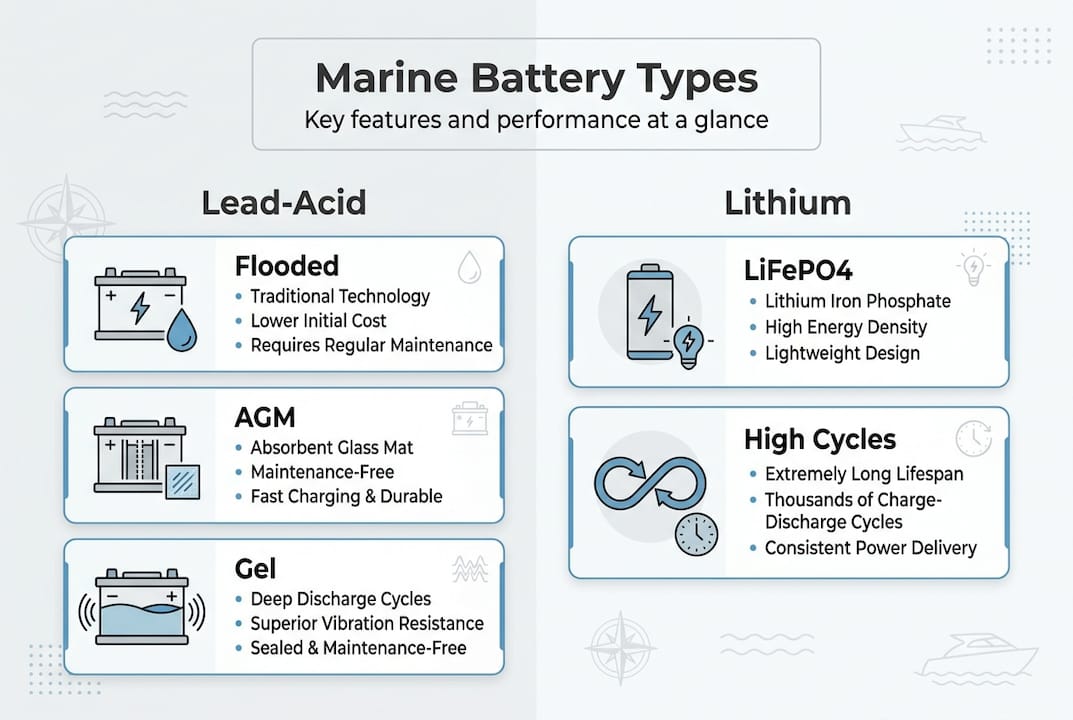
Marine batteries fall into four main chemistry families, each with distinct performance characteristics that directly impact your off-grid boating experience. Understanding these differences helps you match battery technology to your specific power needs and budget.
Flooded lead-acid (FLA) batteries represent the traditional choice, using liquid electrolyte that requires periodic topping up with distilled water. These batteries cost less upfront but deliver only 50% usable depth of discharge, meaning you can safely drain just half the stated capacity before risking damage. Cycle life typically reaches 300-500 cycles when properly maintained.
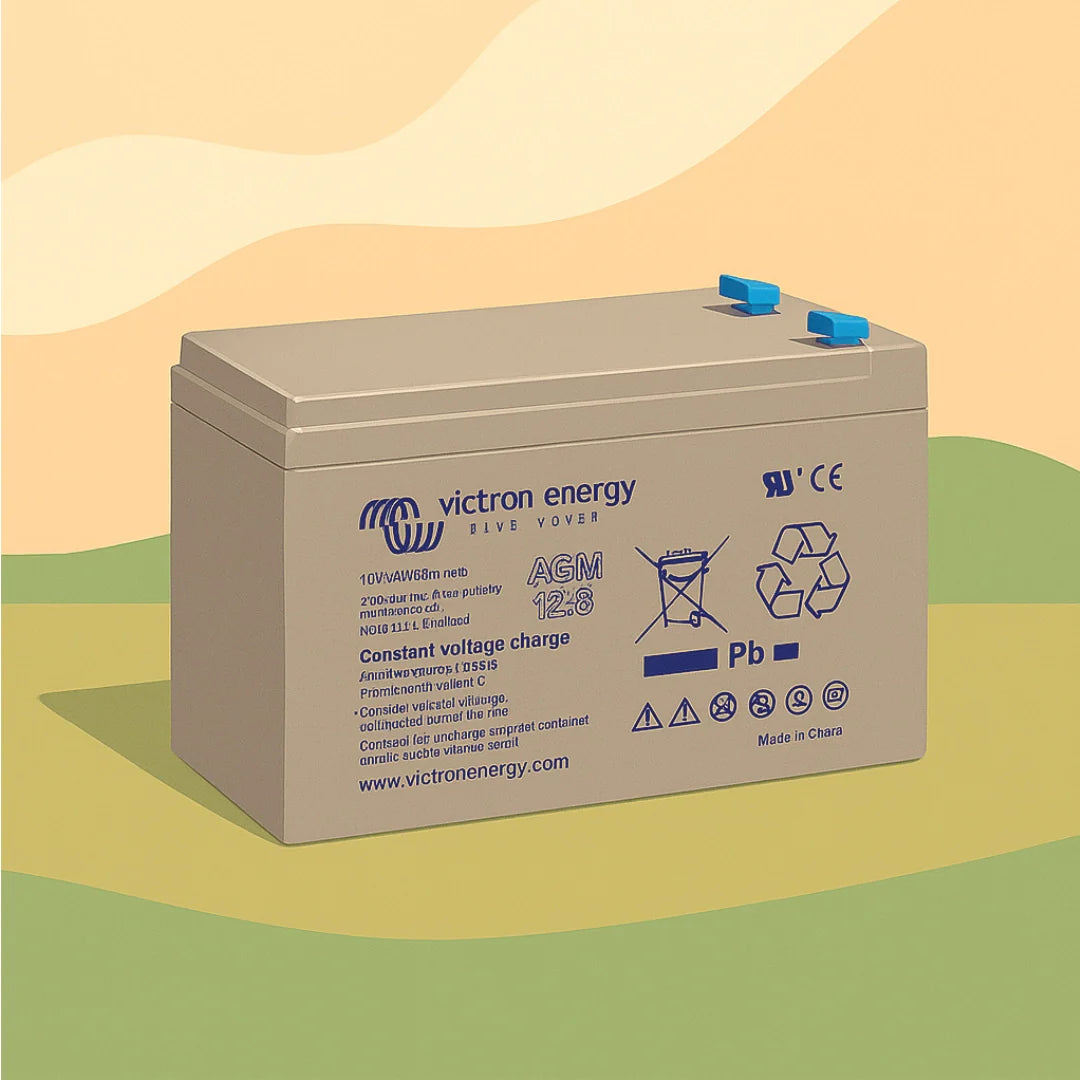
Absorbent glass mat (AGM) batteries seal the electrolyte in fibreglass mats, eliminating maintenance whilst improving vibration resistance. AGM technology allows 50-70% DoD and delivers 500-800 cycles, making it popular among UK leisure boaters seeking reliable, hassle-free power. The sealed design prevents acid spills, crucial for marine environments.
Gel batteries suspend electrolyte in silica gel, offering excellent deep discharge tolerance and longer life in hot climates. However, they require precise charging voltages and cost more than AGM, limiting their popularity in UK marine applications where temperature extremes are less common.
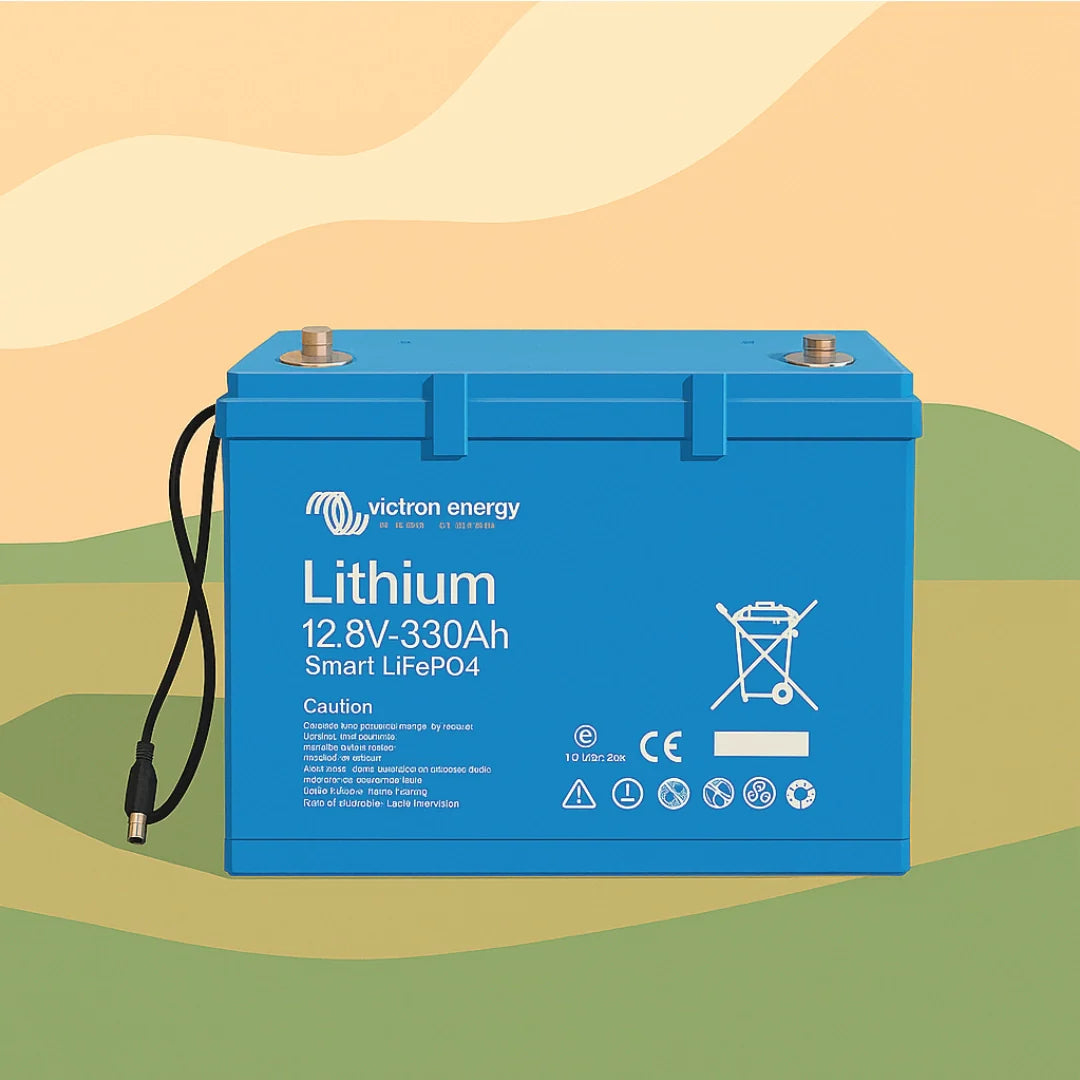
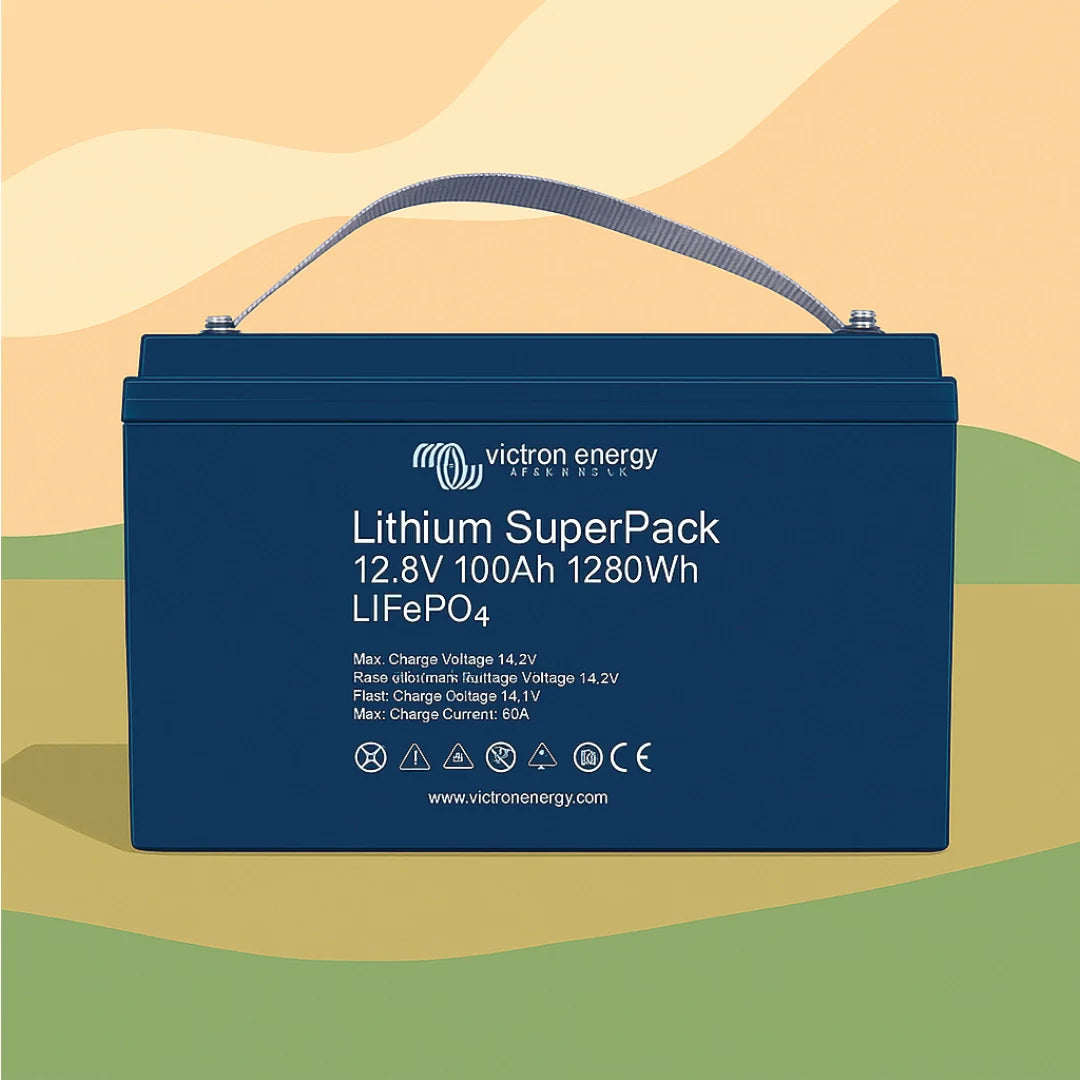
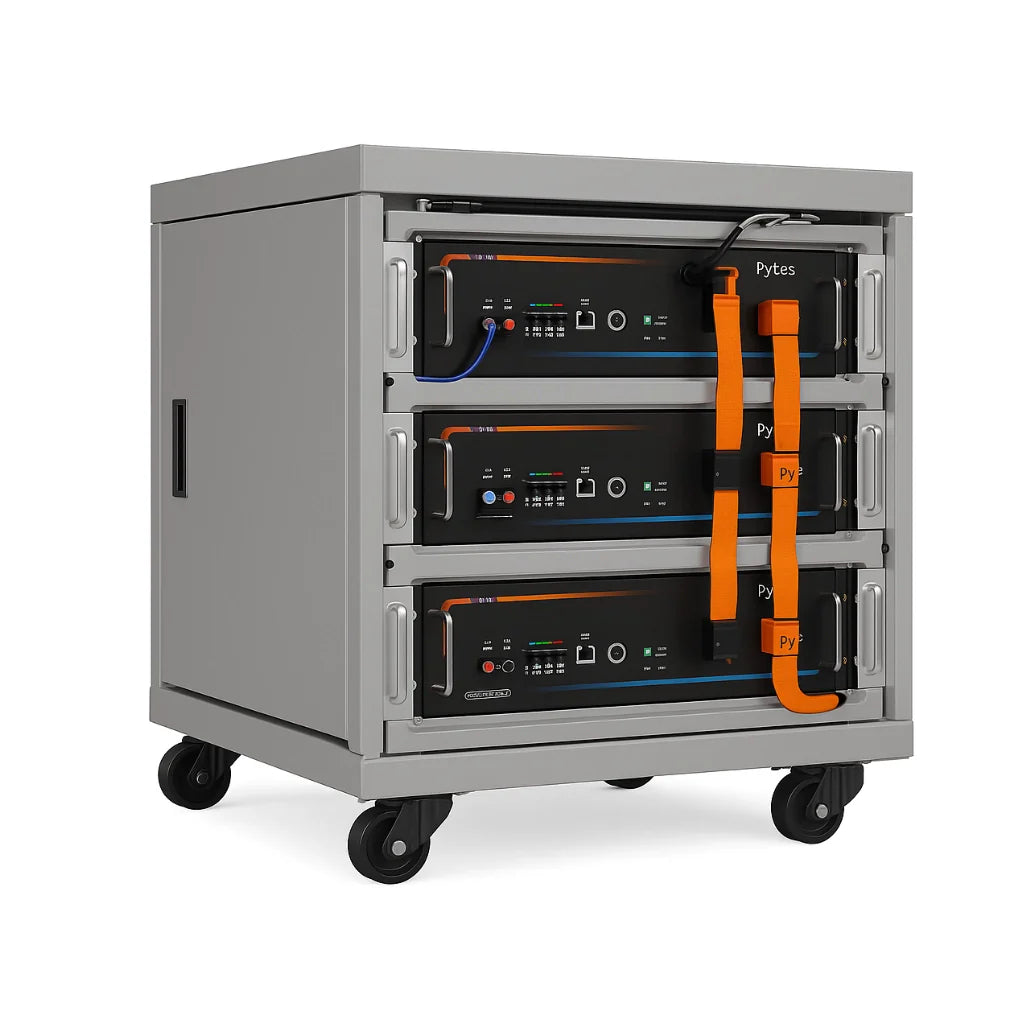
LiFePO4 batteries weigh less and have higher usable capacity with 2500-5000 cycles versus lead-acid types. Lithium iron phosphate chemistry allows 80-100% DoD, effectively doubling usable capacity compared to lead-acid batteries of the same amp-hour rating. A 100Ah lithium battery provides similar usable power to a 200Ah lead-acid battery whilst weighing 60% less.
Comparison of marine battery types:
| Battery type | Typical capacity range | Cycle life | Safe DoD | Weight (100Ah equivalent) | Maintenance |
|---|---|---|---|---|---|
| Flooded lead-acid | 50-400Ah | 300-500 | 50% | 30kg | Regular water top-ups |
| AGM/VRLA | 50-400Ah | 500-800 | 50-70% | 28kg | None |
| Gel | 50-300Ah | 800-1200 | 70-80% | 28kg | None |
| LiFePO4 | 50-400Ah | 2500-5000 | 80-100% | 12kg | None |
Advantages and limitations of each battery type:
- Flooded lead-acid: lowest upfront cost, widely available, proven technology, but requires maintenance, limited DoD, heavy, shorter lifespan
- AGM: maintenance-free, good vibration resistance, no spill risk, moderate cost, but heavier than lithium, limited DoD compared to LiFePO4
- Gel: excellent deep discharge tolerance, long life in stable temperatures, but expensive, requires precise charging, slower charging rates
- LiFePO4: lightweight, highest usable capacity, longest life, fast charging, but higher initial cost, requires compatible charging equipment and BMS
Pro tip: Deep cycle AGM batteries offer the best balance of cost, reliability, and performance for UK leisure boaters on a budget, whilst LiFePO4 delivers superior long-term value for frequent users willing to invest in compatible charging infrastructure. Calculate your annual usage cycles to determine which technology offers better lifetime economics for your specific boating patterns.
Exploring types of leisure batteries uk helps you understand broader applications beyond marine use, whilst marine battery systems explained dives deeper into complete power system design for boats.
Understanding critical marine battery terminology
State of charge (SoC) indicates the percentage of capacity remaining in your battery at any moment. A fully charged battery sits at 100% SoC, whilst a completely depleted battery reaches 0% SoC. Monitoring SoC prevents over-discharging, which permanently damages batteries and shortens their working life. Modern battery monitors display real-time SoC using voltage measurements and coulomb counting, giving you precise awareness of remaining power.

Amp-hours (Ah) measure battery capacity, representing how many amps the battery can deliver for one hour before reaching its discharge limit. A 100Ah battery theoretically provides 5 amps for 20 hours or 20 amps for 5 hours. However, actual runtime varies based on discharge rate, temperature, and battery age. Higher discharge rates reduce effective capacity due to internal resistance and chemical reaction limits.
Cold cranking amps (CCA) measure a battery’s ability to start engines in cold conditions, specifically the amps delivered for 30 seconds at 0°F whilst maintaining minimum voltage. This specification matters for starting batteries but holds little relevance for deep cycle leisure batteries powering lights, electronics, and appliances. Confusing CCA with capacity leads boaters to choose inappropriate batteries for house loads.
LiFePO4 batteries offer higher DoD and cycle life but require compatible charging and BMS. The battery management system monitors individual cell voltages, temperatures, and current flow, disconnecting loads or charging sources when parameters exceed safe limits. Without BMS protection, lithium batteries risk thermal runaway, fire, or permanent damage from voltage imbalances between cells.
Steps to check and maintain battery health:
- Check voltage at rest (no loads or charging for 3+ hours) using a multimeter to estimate SoC
- Monitor voltage under load to identify weak batteries showing excessive voltage drop
- Record charging time and voltage progression to detect capacity loss over time
- Inspect terminals monthly for corrosion, cleaning with wire brush and applying protective spray
- Verify electrolyte levels in flooded batteries, topping up with distilled water as needed
- Test specific gravity in flooded batteries using a hydrometer to assess individual cell condition
Pro tip: Many boaters mistakenly believe a battery reading 12.4V is “nearly full” when it actually indicates roughly 50% SoC for lead-acid types. Resting voltage of 12.7V or higher indicates full charge, whilst 12.0V signals deep discharge approaching damage threshold. Install a proper battery monitor rather than relying on voltage alone, as voltage varies significantly under load and doesn’t accurately reflect remaining capacity during use.
Understanding lithium battery maintenance workflow off grid provides detailed guidance on preserving battery performance in remote locations where professional service isn’t readily available.
Choosing and managing marine batteries for off-grid UK leisure boating
UK leisure boaters typically consume 50-150Ah daily running navigation electronics, cabin lighting, refrigeration, and entertainment systems during weekend trips or extended cruising. Your specific power needs depend on equipment inventory, usage patterns, and whether you run high-draw appliances like electric cooking, air conditioning, or bow thrusters. Calculating daily consumption guides appropriate battery bank sizing.
Battery selection involves balancing upfront investment against operational lifespan and performance characteristics. AGM offers cost-effective reliability, whilst lithium excels in long-term savings despite higher upfront costs. A quality AGM battery bank might cost £400-800 for 200Ah usable capacity (400Ah total at 50% DoD), lasting 3-5 years with proper care. An equivalent lithium system costs £1200-2000 but delivers 8-12 years of service with superior performance.
AGM versus LiFePO4 for UK marine applications:
| Factor | AGM | LiFePO4 |
|---|---|---|
| Initial cost (200Ah usable) | £400-800 | £1200-2000 |
| Expected lifespan | 3-5 years | 8-12 years |
| Weight (200Ah usable system) | 110-120kg | 25-30kg |
| Maintenance requirements | None, but monitor voltage | None, BMS handles protection |
| Charging efficiency | 80-85% | 95-99% |
| Low temperature performance | Reduced capacity below 5°C | Reduced charging ability below 0°C |
| Replacement frequency | Every 3-5 years | Every 8-12 years |
Key factors when deciding between AGM and lithium batteries:
- Budget constraints and ability to invest upfront versus spreading costs through more frequent replacements
- Boat usage frequency, with daily or weekly users benefiting more from lithium’s extended cycle life
- Weight sensitivity, particularly important for smaller boats or those seeking improved fuel efficiency
- Charging infrastructure compatibility, as lithium requires specific charge profiles and temperature monitoring
- Space availability, with lithium’s higher energy density allowing smaller installations
- Expected ownership period, making lithium more attractive for long-term boat owners
Compatible charging equipment proves essential for battery longevity regardless of chemistry choice. Lead-acid batteries tolerate basic chargers reasonably well, though multi-stage charging optimises life and performance. Lithium batteries demand chargers specifically programmed for LiFePO4 chemistry, delivering precise voltage limits and temperature-compensated charging. Installing incompatible chargers voids warranties and risks battery damage or fire.
The battery management system in lithium batteries provides crucial protection but adds complexity. Quality BMS units monitor each cell individually, balancing charge levels and disconnecting when any cell approaches voltage limits. Some systems communicate with compatible chargers and inverters, creating integrated power management. Cheaper lithium batteries use basic BMS with limited protection, increasing risk of premature failure.
Pro tip: Extending battery life hinges on managing depth of discharge and charging properly. Never discharge lead-acid batteries below 50% SoC routinely, and recharge fully after each use rather than leaving them partially discharged. For lithium batteries, avoid storing at 100% SoC for extended periods, instead maintaining 50-70% charge during winter layup. Temperature matters too, with both chemistries preferring 10-25°C for optimal performance and longevity. Installing batteries in temperature-stable locations away from engine heat preserves capacity.
Comparing best lithium batteries for boats 8 reveals specific product recommendations, whilst the boat energy storage checklist uk owners 2026 ensures you address all system components. The detailed comparison in lithium vs AGM what s best for campervans applies equally to marine installations, helping you make informed chemistry decisions.
Discover Skyenergi’s marine power solutions
Transforming battery knowledge into reliable off-grid power requires quality components that work together seamlessly. Skyenergi specialises in complete marine energy systems combining solar charging, battery management, and monitoring for UK leisure boats.

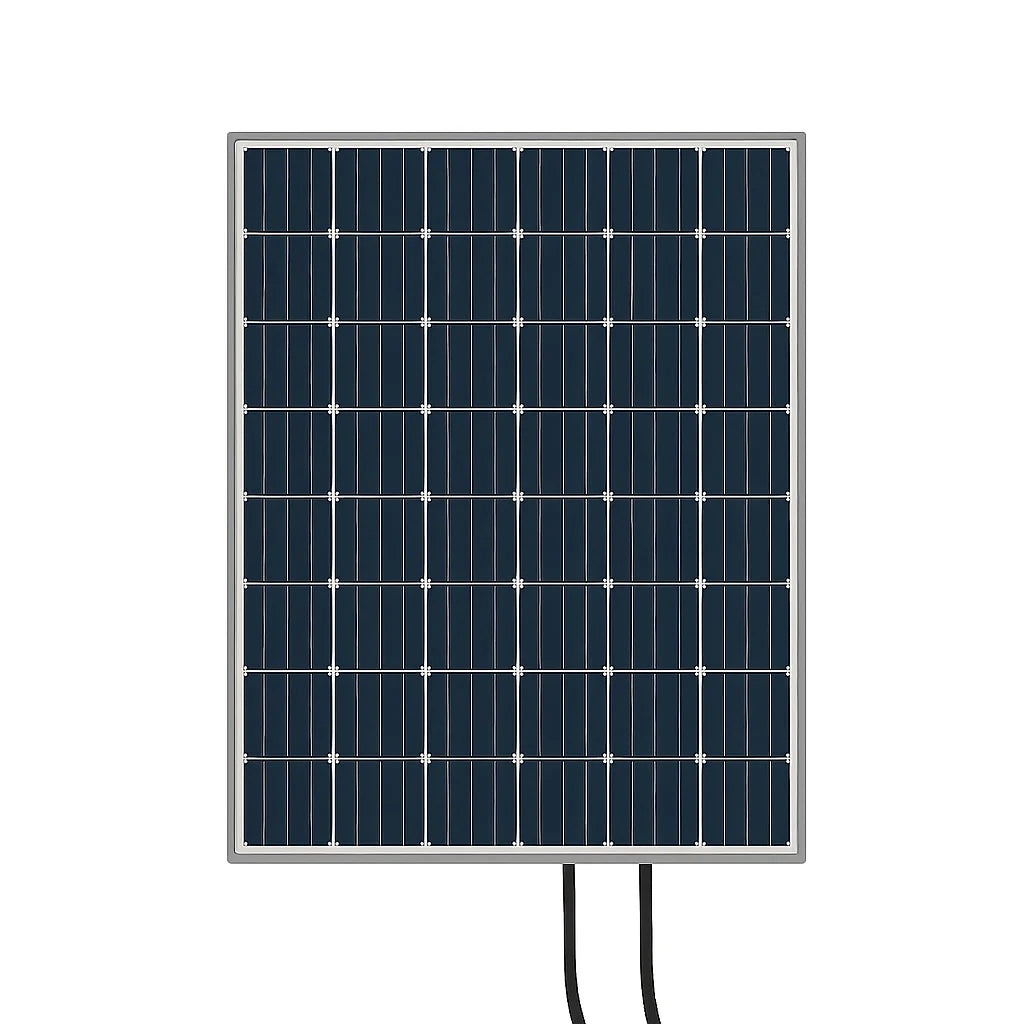
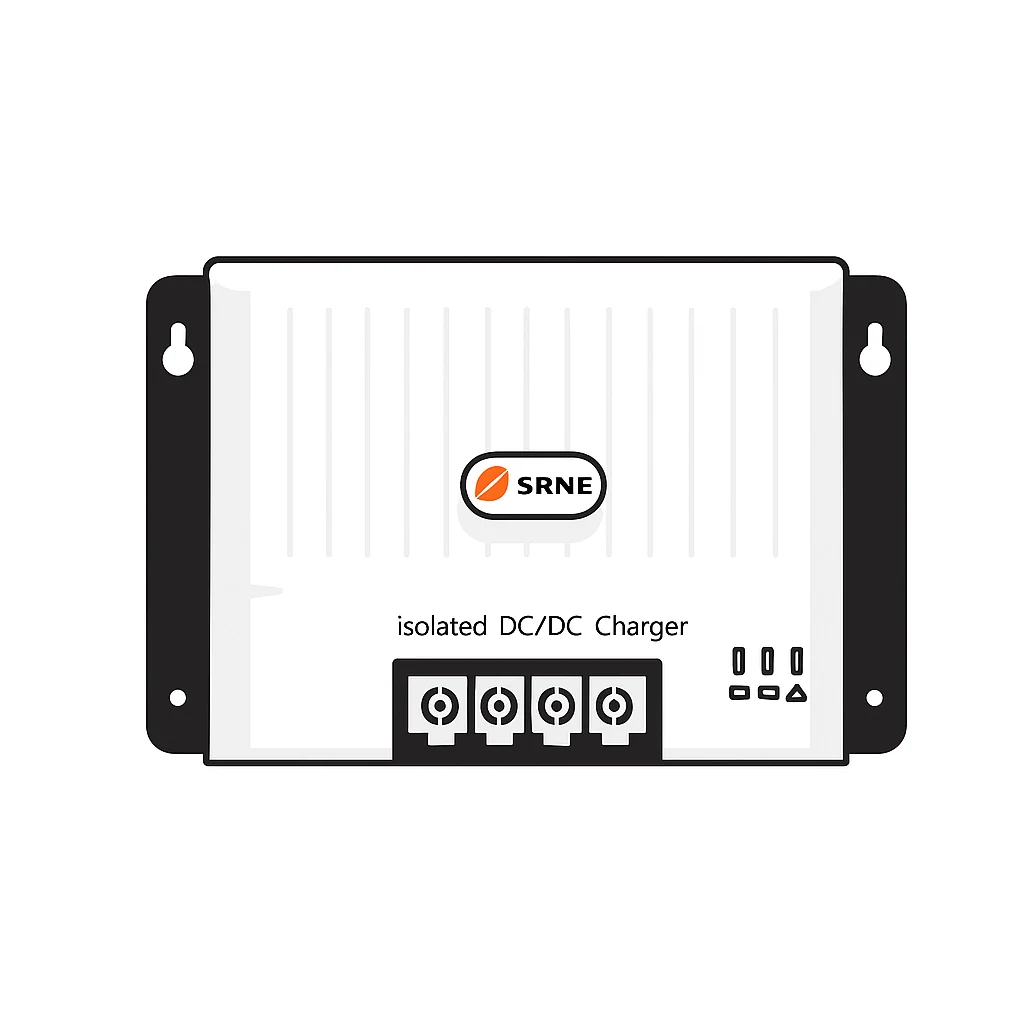
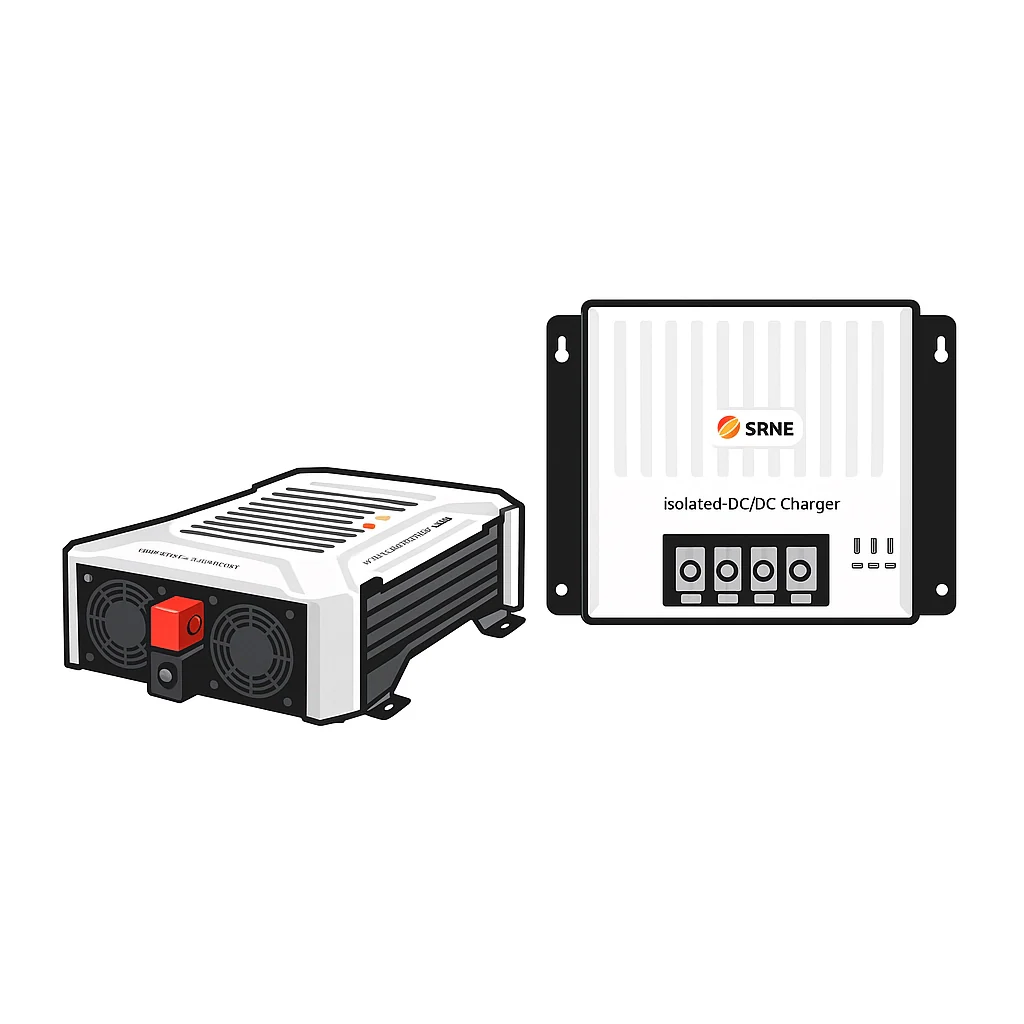
Our solar power electrics system 3kva inverter charger battery to battery charger integrates charging from multiple sources whilst the victron energyeasysolar ii mppt charger combines solar regulation with powerful inverter charging. For straightforward solar integration, the victron 610 watt solar panel and smart mppt controller delivers reliable renewable charging with Bluetooth monitoring. These systems work with both AGM and lithium batteries, providing the compatible charging profiles and protection features discussed throughout this guide.
Frequently asked questions about marine battery terminology
What does depth of discharge (DoD) mean for my boat battery?
Depth of discharge indicates how much capacity you’ve used from your battery, expressed as a percentage. A battery discharged to 50% DoD has used half its capacity and retains half its charge. Respecting maximum safe DoD limits for your battery chemistry prevents damage and maximises cycle life, with lead-acid batteries limited to 50% DoD and lithium batteries safely reaching 80-100% DoD.
How can I tell if my battery is fully charged?
A fully charged lead-acid battery measures 12.7-12.8V at rest (no loads or charging for 3+ hours), whilst lithium batteries reach 13.3-13.6V depending on specific chemistry. Voltage alone provides only rough guidance, so proper battery monitors using coulomb counting deliver accurate state of charge readings. During charging, lead-acid batteries are full when current drops to 2-3% of capacity and voltage stabilises at absorption voltage.
Why do lithium batteries need a battery management system?
The battery management system protects lithium batteries from voltage extremes, temperature problems, and cell imbalances that cause permanent damage or safety hazards. Individual cells in lithium batteries must stay within narrow voltage ranges, with the BMS disconnecting loads or charging when limits approach. Without BMS protection, lithium batteries risk thermal runaway, fire, or catastrophic failure from overvoltage, undervoltage, or excessive current.
Are AGM batteries suitable for all boating conditions?
AGM batteries perform well in most UK marine environments, handling vibration, moderate temperatures, and typical discharge patterns effectively. They struggle in extreme heat above 35°C, which accelerates internal degradation, and lose capacity in freezing conditions. AGM batteries suit weekend cruisers and seasonal boaters perfectly but may disappoint liveaboards with heavy daily cycling or those operating in temperature extremes where lithium excels.
What maintenance is required for flooded lead-acid batteries?
Flooded batteries need monthly electrolyte level checks, topping up cells with distilled water to cover the plates. Check specific gravity quarterly using a hydrometer to assess individual cell health and charge state. Clean terminals every few months to prevent corrosion, and equalise charge periodically by applying controlled overcharge to balance cell voltages. This maintenance burden makes sealed AGM or lithium batteries more attractive for modern leisure boating.
Exploring marine battery systems explained provides comprehensive guidance on designing complete power systems using the terminology and concepts covered here.
Recommended
Prev post

Best 5 Campervan Lithium Batteries 2025
Updated on 25 March 2026
Next post

Off-grid solar installation guide for UK leisure vehicles
Updated on 23 March 2026


