





Must-have inverter accessories for safe off-grid setups
Discover essential must-have inverter accessories for safe off-grid setups. Ensure your system is reliable and protects against hazards effectively.
Must-have inverter accessories are the components that make the difference between a safe, reliable off-grid power system and one that fails or causes a fire. For DIY builders and vehicle owners fitting inverters in campervans, motorhomes, or boats, the right inverter setup essentials cover everything from fuse protection to cable management and system monitoring. UK electrical best practice sets clear requirements for these add-ons, and skipping them creates real risk. Skyenergi supplies a range of certified accessories designed to meet those standards and work reliably in demanding mobile environments.
1. What are the must-have inverter accessories for safety?
Safety accessories are the non-negotiable foundation of any inverter installation. Without them, a short circuit can cause a fire, and an AC fault can deliver a lethal shock.
Fuses and fuse holders
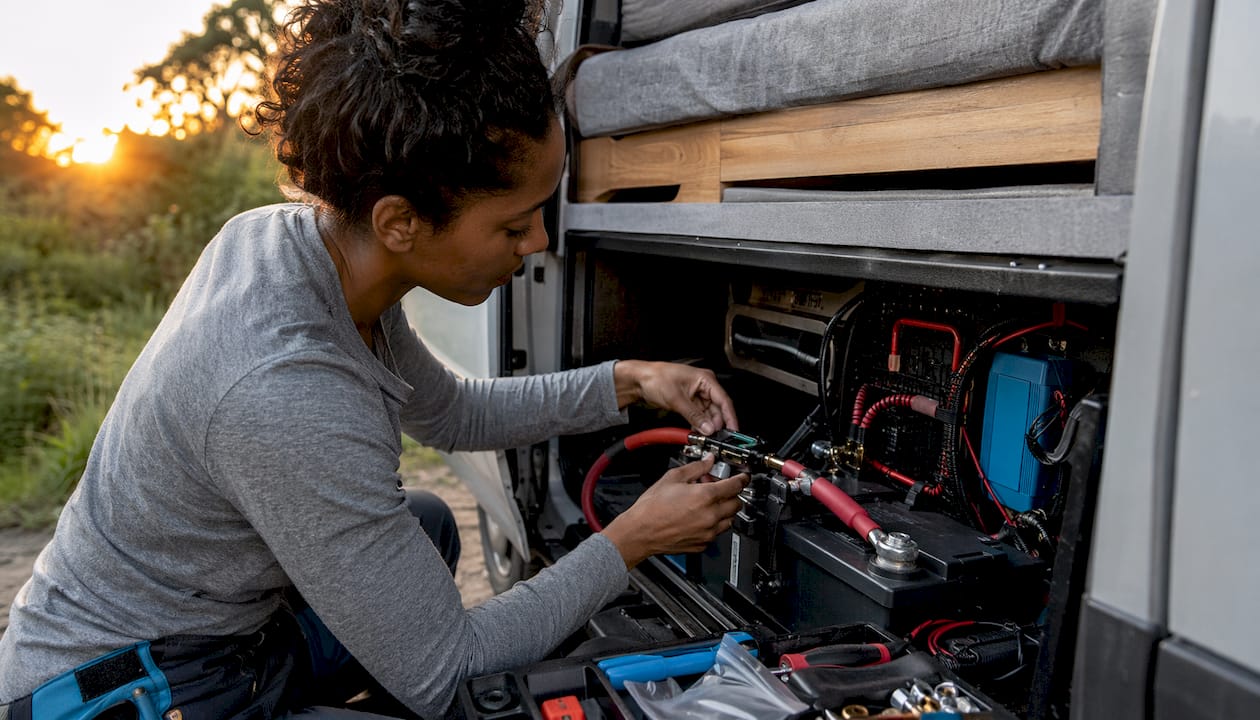
A fuse must sit on the positive DC cable within 150mm to 300mm of the battery terminal. That short unprotected section is the highest fire risk in the entire system. For a 3,000W inverter drawing 250A at 12V, a 300A fuse is the correct rating. ANL or MEGA inline fuse holders are the standard choice for high-current DC circuits, as they are sized to cable ampacity and rated for the vibration found in vehicles.
Residual Current Device (RCD)
All 230V socket circuits in leisure vehicles must be protected by a 30mA RCD. This device trips within milliseconds if current leaks to earth, preventing electrocution. One important detail: many inverters have a floating AC output, meaning the neutral and earth are not bonded internally. In that case, you need an external neutral-earth (N-E) bond via a contactor to guarantee RCD operation during a fault.
Earthing cable
The inverter’s AC earth terminal connects to the vehicle chassis using 4mm² or 6mm² earth cable terminated at bare metal. A poor earth connection is one of the most common causes of RCD failure and unexplained electrical faults.
Ventilation
Inverters require at least 50mm clearance on all sides for air circulation. Mount the unit on a non-combustible surface. In enclosed spaces, a small 12V fan directed across the inverter body significantly extends its working life.
Pro Tip: Never mount a fuse more than 300mm from the battery terminal. The cable between the battery and fuse carries full fault current with zero protection. Even a short run can ignite if a fault occurs.
| Accessory | Specification | Purpose |
|---|---|---|
| ANL fuse and holder | Rated to cable ampacity | DC short circuit protection |
| 30mA RCD | Type A or AC | AC shock protection |
| Earth cable | 4mm² or 6mm² | Chassis bonding for AC safety |
| N-E bond contactor | Matched to inverter output | Enables RCD to trip on fault |
2. Which cables and connectors are essential inverter add-ons?
Cable quality determines whether your system runs reliably or shuts down under load. Incorrect cable sizing causes voltage drop and forces the inverter to cut out, even when the battery has plenty of charge remaining.
DC battery cables
Use flexible, fine-stranded welding cable or battery cable for DC connections between the battery and inverter. These cables tolerate vibration far better than rigid single-strand wire. Size the cable to minimise voltage drop, not just to carry the rated current. A 3,000W inverter at 12V needs cable rated well above 250A continuous, with the shortest possible run to reduce resistance.
AC output cable
The 230V AC side uses 2.5mm² 3-core flex, secured every 150mm to 250mm with cable clips to prevent chafing against metal edges. Run AC cables through trunking or conduit wherever they pass through bulkheads or near sharp surfaces. Never share a conduit with DC cables, as this creates interference and a potential fault path.
Connectors and crimping
Lugged ring terminals, crimped with a hydraulic crimper, give the most reliable connection at battery terminals and fuse holders. Screw-on connectors and push-fit terminals loosen over time with vehicle vibration. A hydraulic crimper costs more than a ratchet type, but the connection quality is noticeably better for high-current DC work.
Pro Tip: Avoid powering any inverter from a cigarette lighter socket unless it is rated below 150W. Cigarette lighter sockets are fused at 10A–15A, which limits safe output to around 150W. Anything above that requires a hardwired installation.
- Fine-stranded welding or battery cable for DC runs
- 2.5mm² 3-core flex for 230V AC output
- Hydraulic crimper and lugged ring terminals
- Cable clips every 150mm–250mm
- Trunking or conduit for protection at bulkheads
3. What functional accessories improve inverter control and performance?
Beyond safety, a set of top inverter accessories makes your system easier to use and monitor day to day. These add-ons are the difference between a basic install and one that works well over years of use.
Remote ON/OFF switch
A wired remote switch lets you turn the inverter on and off from a cab switch panel or living area without reaching the unit itself. This is particularly useful when the inverter is mounted in a locker or under a bed. Most quality inverters include a remote switch port; check compatibility before purchasing a separate switch.
Battery monitor
A battery monitor tracks state of charge, current draw, and cumulative amp-hours consumed. Without one, you are guessing how much power remains in the battery. Skyenergi lithium leisure batteries include Bluetooth monitoring, which lets you read live data on a phone without any additional hardware.
Solar charge controller (MPPT)
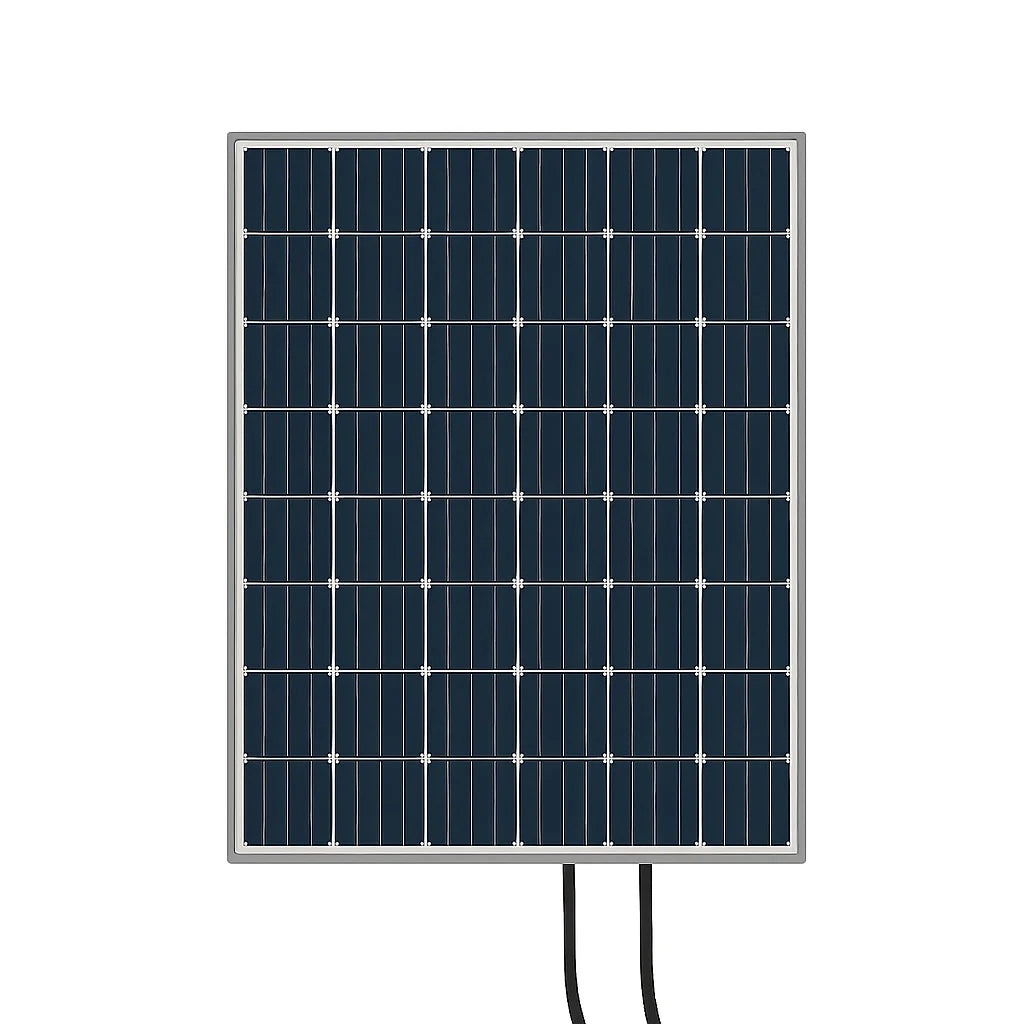
If your setup includes solar panels, an MPPT charge controller manages the charge going into the battery and works alongside the inverter to maintain system balance. Pairing an MPPT controller with a battery monitor gives you a clear picture of power in and power out.
Mounting brackets and hardware
Secure mounting prevents vibration damage to the inverter and keeps cable connections tight. Use purpose-made inverter mounting brackets rated for the unit’s weight. For vehicle installations, add rubber anti-vibration mounts between the bracket and the inverter body.
- Remote ON/OFF switch (wired to switch panel)
- Battery monitor with shunt
- MPPT solar charge controller (if solar is fitted)
- Inverter mounting bracket with anti-vibration mounts
- 12V cooling fan for enclosed installations
4. How to choose inverter accessory kits and modular add-ons
Inverter accessory kits bundle the most common components into a single purchase. They suit builders who want a verified, compatible set of parts rather than sourcing each item separately.
What kits typically include
A standard inverter accessory kit covers the DC fuse and holder, battery cables of a specified length and cross-section, ring terminals, and sometimes a remote switch. Premium kits add an RCD unit, earth cable, and cable management hardware. The advantage of a kit is that the components are matched in rating, reducing the risk of mismatched fuse and cable sizes.
Buying kits versus individual parts
Kits work well for straightforward installations where the cable run lengths match the kit specification. Individual parts give more flexibility for complex layouts or longer cable runs. If your battery-to-inverter distance exceeds the kit cable length, buying individual cable by the metre is the better approach.
Compatibility checks
Before purchasing any kit or individual accessory, confirm three things: the voltage rating (12V, 24V, or 48V), the current rating relative to your inverter’s maximum draw, and the connector type at the inverter terminals. A mismatch on any of these creates a safety risk or a failed installation.
Pro Tip: Always check that accessory kits carry CE marking or equivalent UK Conformity Assessed (UKCA) certification. Uncertified components may fail under load or in high-temperature environments typical of vehicle installations.
For advanced residential or three-phase setups, a unit like the Hoymiles HAT-10.0HV battery inverter supports modular accessory expansion and includes Wi-Fi monitoring as standard. Pairing it with correctly rated accessories from the outset avoids costly retrofits later.
For vehicle-based builds, the Victron Energy Sun Inverter 12V 250VA and the Victron Energy Sun Inverter 24V 250VA are compact, well-supported units with clear accessory compatibility documentation. Both are available through Skyenergi with the supporting components needed for a compliant UK installation.
Pro Tip: Check campervan accessory guides such as must-have camping gadgets for broader kit ideas that complement your inverter setup.
Key takeaways
A safe inverter installation depends on correctly rated fuses, a 30mA RCD, proper earthing, and cable sized for voltage drop, not just current capacity.
| Point | Details |
|---|---|
| Fuse placement | Fit the fuse within 300mm of the battery terminal to protect the full cable run. |
| RCD protection | All 230V circuits in leisure vehicles require a 30mA RCD and a working N-E bond. |
| Cable sizing | Size DC cables to minimise voltage drop, not just to meet the rated current. |
| Cigarette sockets | Cigarette lighter sockets cannot safely power inverters above 150W. |
| Kit compatibility | Verify voltage rating, current rating, and connector type before buying any accessory kit. |
Why proper accessories matter more than the inverter itself
The inverter gets all the attention, but the accessories determine whether the system is safe and reliable. I have seen installations where a quality inverter was connected with undersized cable and no fuse near the battery. The inverter worked fine until a high-load appliance caused a voltage drop, the inverter shut down, and the owner assumed the unit was faulty. The real problem was a 6mm² cable where 16mm² was needed.
Earthing is the most overlooked part of a DIY inverter build. Builders connect the AC earth to a painted surface or a bolt that is not properly bonded to the chassis, and the RCD never trips during a fault because the earth path has too much resistance. Connecting to bare metal and testing the earth continuity with a multimeter before energising the system takes ten minutes and prevents a serious hazard.
The 230V AC side of any inverter installation should be inspected by a qualified electrician before the system goes into regular use. This is not about doubting your skills. It is about insurance, safety certification, and catching the one connection that looks right but is not. The DC side is well within DIY capability for most builders. The AC side carries lethal voltage and deserves a second set of professional eyes.
Remote switches and battery monitors are not luxury add-ons. They change how you use the system. Knowing your state of charge in real time means you stop the inverter before the battery drops to a damaging depth of discharge, which extends battery life considerably. For anyone building a campervan off-grid system, these functional accessories pay for themselves quickly.
— John
Skyenergi’s inverter accessories for dependable off-grid power
Skyenergi stocks the key components needed for a compliant, reliable inverter installation in campervans, motorhomes, and marine applications.
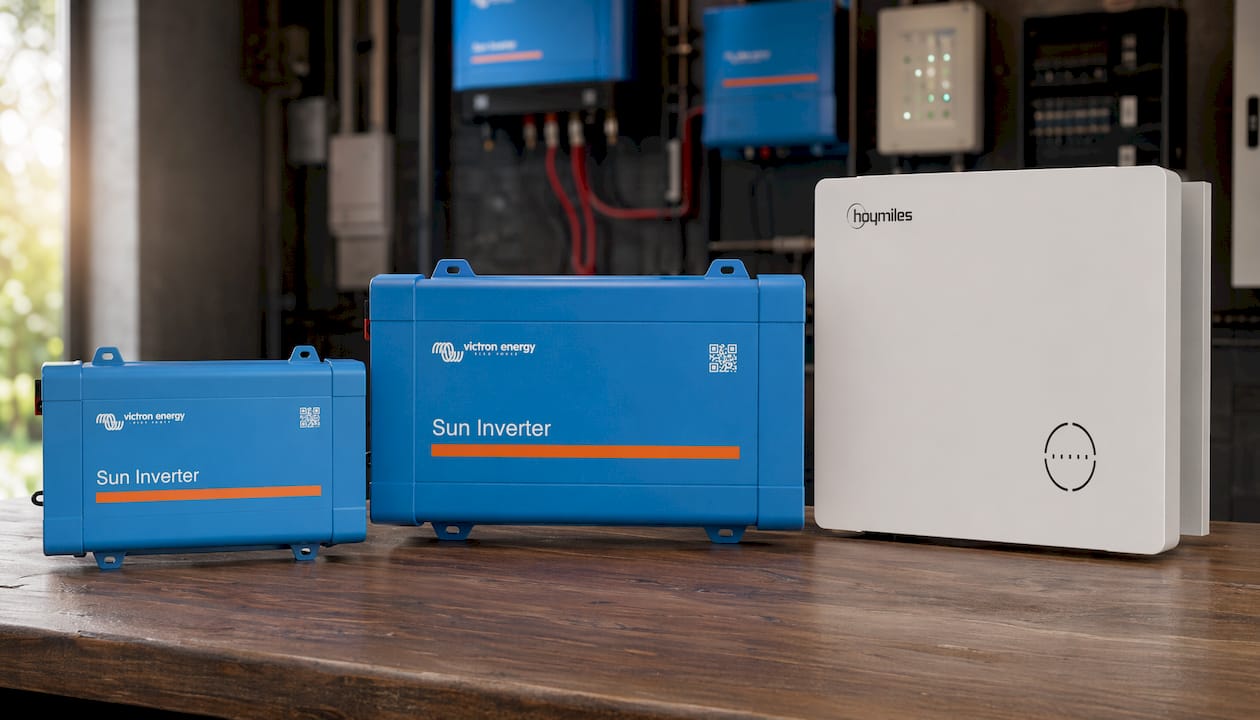
The range covers ANL fuse holders, earth cables, remote switches, and Victron-compatible accessories, all sourced directly from manufacturers and suitable for UK installations. Skyenergi’s campervan electrical upgrades guide covers system planning in detail. For a complete starting point, browse the Victron Sun Inverter range and pair your chosen unit with the correct accessory kit. Every product is selected for quality and compatibility, so you spend less time troubleshooting and more time using your system.
FAQ
What fuse size does a 3,000W inverter need?
A 3,000W inverter drawing 250A at 12V requires a 300A fuse fitted within 300mm of the battery terminal on the positive cable.
Do I need an RCD for a campervan inverter?
Yes. All 230V socket circuits in leisure vehicles must be protected by a 30mA RCD, and most inverters require an external N-E bond to make the RCD function correctly during a fault.
Can I run an inverter from a cigarette lighter socket?
Only for loads below approximately 150W. Cigarette lighter sockets are fused at 10A–15A, making them unsuitable for higher-power inverters. A hardwired installation is required for anything above that rating.
What cable size should I use for inverter DC connections?
Size the cable to minimise voltage drop across the full run, not just to carry the rated current. For a 3,000W inverter at 12V, this typically means cable rated well above 250A with the shortest possible route between battery and inverter.
Is it safe to install the 230V side of an inverter myself?
The DC side is within DIY capability for most builders, but the 230V AC side should be inspected by a qualified electrician before regular use, for both safety and insurance compliance.
Recommended
Prev post

Eco-friendly battery materials list: 2026 guide
Updated on 20 July 2026
Next post

Why the SRNE RV Ecosystem Will Change the Way You Power Your Campervan
Updated on 18 July 2026


