





Lithium Battery Weight Saving for Campervans: A 2026 Guide
Lithium battery weight saving: Discover how lithium batteries save 50kg+ weight in campervans vs lead-acid. Compare options, payload impact & installation.
Table of Contents
- How Much Weight Do Lithium Batteries Actually Save?
- Lithium Leisure Battery Weight Comparison: The Numbers
- Campervan Payload Management Tips: Maximising Your Weight Budget
- Energy Density and Performance: Why Weight Matters Less Than You Think
- Installing Lithium Batteries in Campervans: What You Need to Know
- Lifespan and Cycle Life: The Long-Term Value Case
- Cost vs. Benefit: Is the Weight Saving Worth the Investment?
- Conclusion
- Frequently Asked Questions
Last Updated: September 3, 2026
How Much Weight Do Lithium Batteries Actually Save?
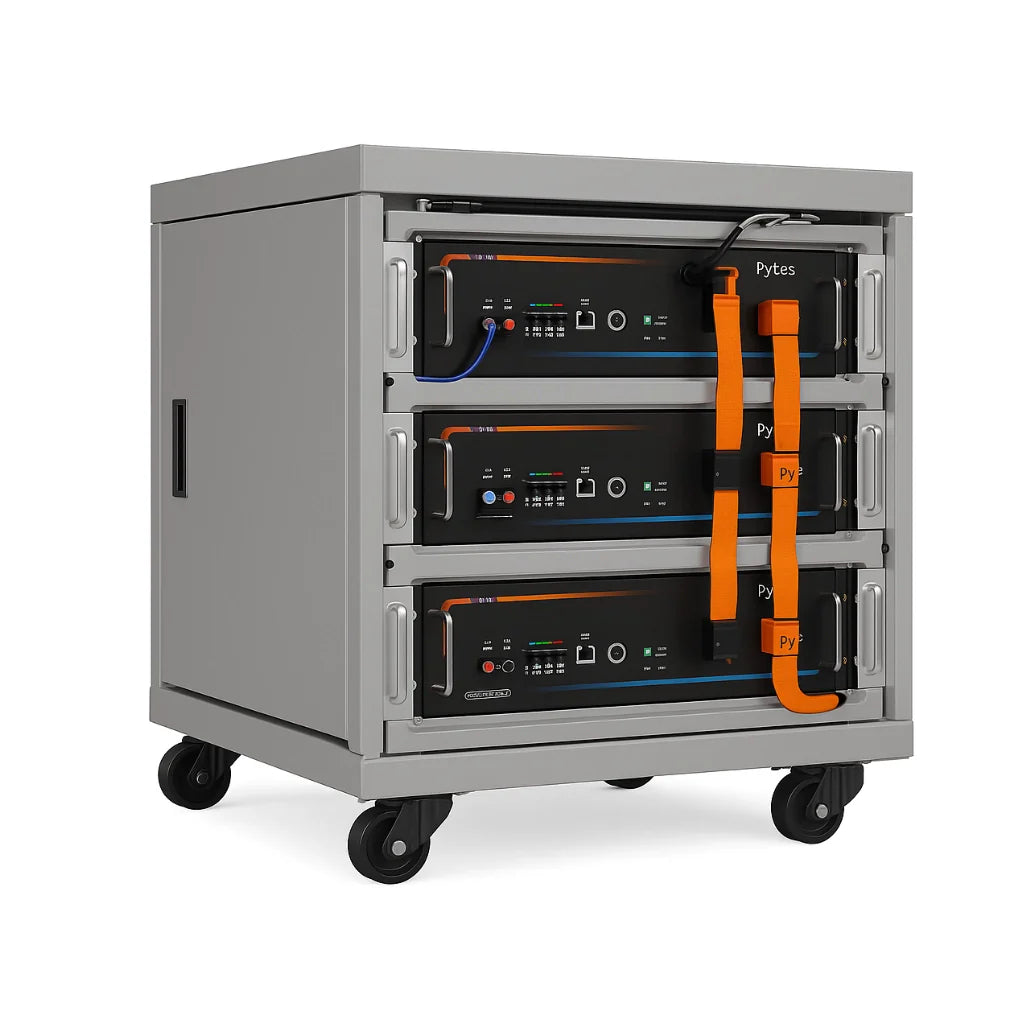
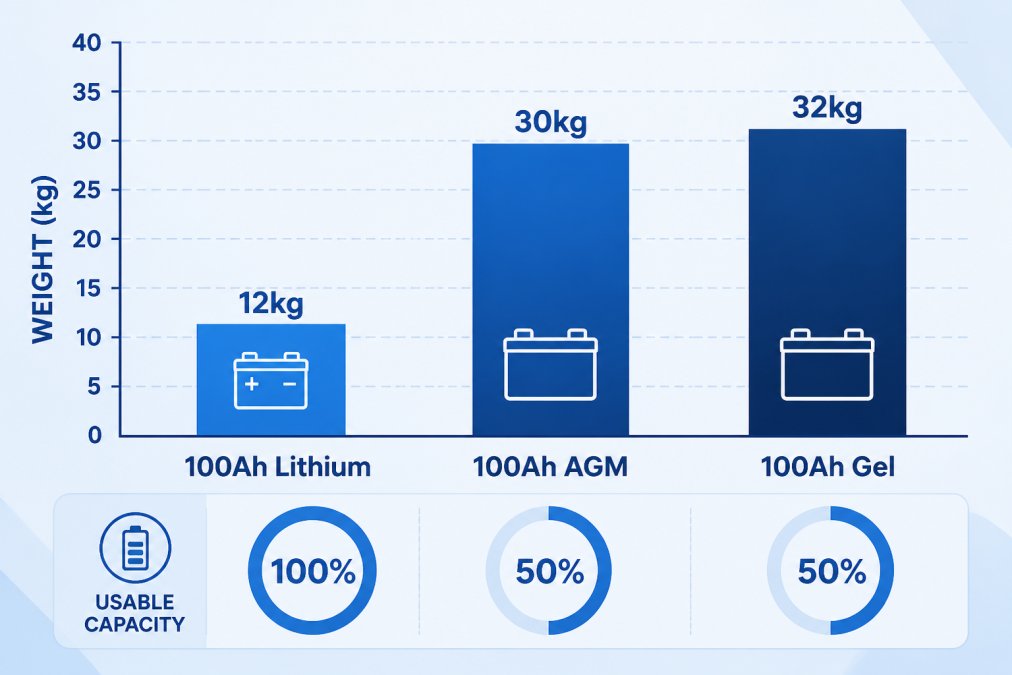
A 100Ah lithium battery weighs between 11-14 kg, compared to 27-32 kg for an equivalent AGM battery and 30-35 kg for gel. That's a weight saving of around 50 kg when you're building a complete 100Ah system using lithium instead of lead-acid technology. For campervans operating near their payload limit, this difference transforms what's possible, extra capacity for fuel, water, equipment, or passengers that would otherwise be impossible to carry.
The real advantage becomes clearer when you consider usable energy. A 100Ah lead-acid battery delivers roughly 50% of its rated capacity in practice, meaning you need approximately 60-70 kg of AGM batteries to achieve 100Ah of usable energy. Lithium delivers 90-100% of its rated capacity, so a single 11-14 kg lithium battery gives you what would require three times the weight in traditional batteries weight comparison of leisure batteries.
This isn't just about moving a few kilograms around. Payload capacity directly affects how you use your campervan. Heavier batteries mean less room for fresh water, food, or additional solar panels. For vehicles already pushing their limits, lithium batteries unlock genuine off-grid independence without the weight penalty that makes lead-acid systems impractical.
At Skyenergi, we've worked with converters and owners who've reclaimed 30-50 kg of payload capacity by switching to lithium. That's the difference between a comfortable two-week trip and an uncomfortable one, or the ability to add a second battery bank without exceeding vehicle limits.
Lithium Leisure Battery Weight Comparison: The Numbers
Understanding the actual weight difference requires looking beyond single batteries to complete systems. A 100Ah capacity showdown reveals why lithium dominates for space-constrained applications.
100Ah Capacity Showdown
| Battery Type | Weight (kg) | Usable Capacity | Total System Weight* | Space Required |
|---|---|---|---|---|
| 100Ah Lithium LiFePO4 | 11-14 | 90-100Ah | 11-14 kg | Compact |
| 100Ah AGM | 27-32 | 50Ah | 54-64 kg (2 units) | Large |
| 100Ah Gel | 30-35 | 50Ah | 60-70 kg (2 units) | Very large |
| Lead-Acid | 25-30 | 40Ah | 75+ kg (3 units) | Extremely large |
*System weight assumes achieving equivalent usable capacity across all types
A single 100Ah lithium battery weighs what two AGM batteries weigh combined, yet delivers roughly double the usable energy. This efficiency gap widens further when you account for the physical space required in engine bays or under-bed installations. Lead-acid batteries demand more frequent charging cycles and deeper discharges, which degrades them faster and forces you to carry larger capacity to maintain reliability.
lithium battery weight savings for campervans data shows that switching from a traditional dual-AGM setup (64 kg, 100Ah nominal capacity, 50Ah usable) to a single 100Ah lithium battery (12 kg, 100Ah usable) saves approximately 52 kg whilst actually improving your available energy. That's not a marginal improvement, it's transformative for payload-constrained vehicles.
Usable Energy and Real-World Capacity
Lead-acid batteries degrade if discharged below 50% state of charge. This "usable capacity" limitation means a 100Ah lead-acid battery only provides 50Ah of reliable energy before you risk permanent damage. Lithium batteries tolerate 80-90% depth of discharge safely, and some systems allow 100% discharge without harm.
The practical outcome: a 100Ah lithium battery delivers 90-100Ah of usable energy, whilst a 100Ah lead-acid delivers only 40-50Ah. To match the usable capacity of a single lithium battery, you'd need two or three lead-acid units, adding 50-70 kg to your campervan.
This explains why lithium leisure batteries typically deliver 2,000-5,000 charge cycles, whereas lead-acid manages only 300-500 cycles cycle life comparison. A lithium battery lasting 8-15 years versus 2-4 years for lead-acid makes the weight advantage permanent, not temporary.
Campervan Payload Management Tips: Maximising Your Weight Budget
Payload capacity is the maximum weight your campervan can carry beyond its kerb weight. Most modern campervans have 300-600 kg of payload available, but many owners don't know their exact limit. Exceeding it risks handling problems, brake failure, and invalidates your insurance.
Start by finding your vehicle's maximum authorised mass (MAM) and kerb weight. The difference is your payload budget. Subtract the weight of fuel, water, and permanent fixtures (solar panels, roof bars, awnings). What remains is discretionary weight for batteries, food, equipment, and passengers.
A typical campervan conversion uses 150-250 kg of payload for electrical systems alone. A dual-AGM battery setup (64 kg) plus solar panels, charge controller, wiring, and inverter easily reaches this threshold. Switching to a 100Ah lithium battery (12 kg) frees 50+ kg immediately.
This freed capacity transforms your trip planning. You can now carry:
- 50 litres of additional fresh water (50 kg)
- A second lithium battery for extended off-grid trips
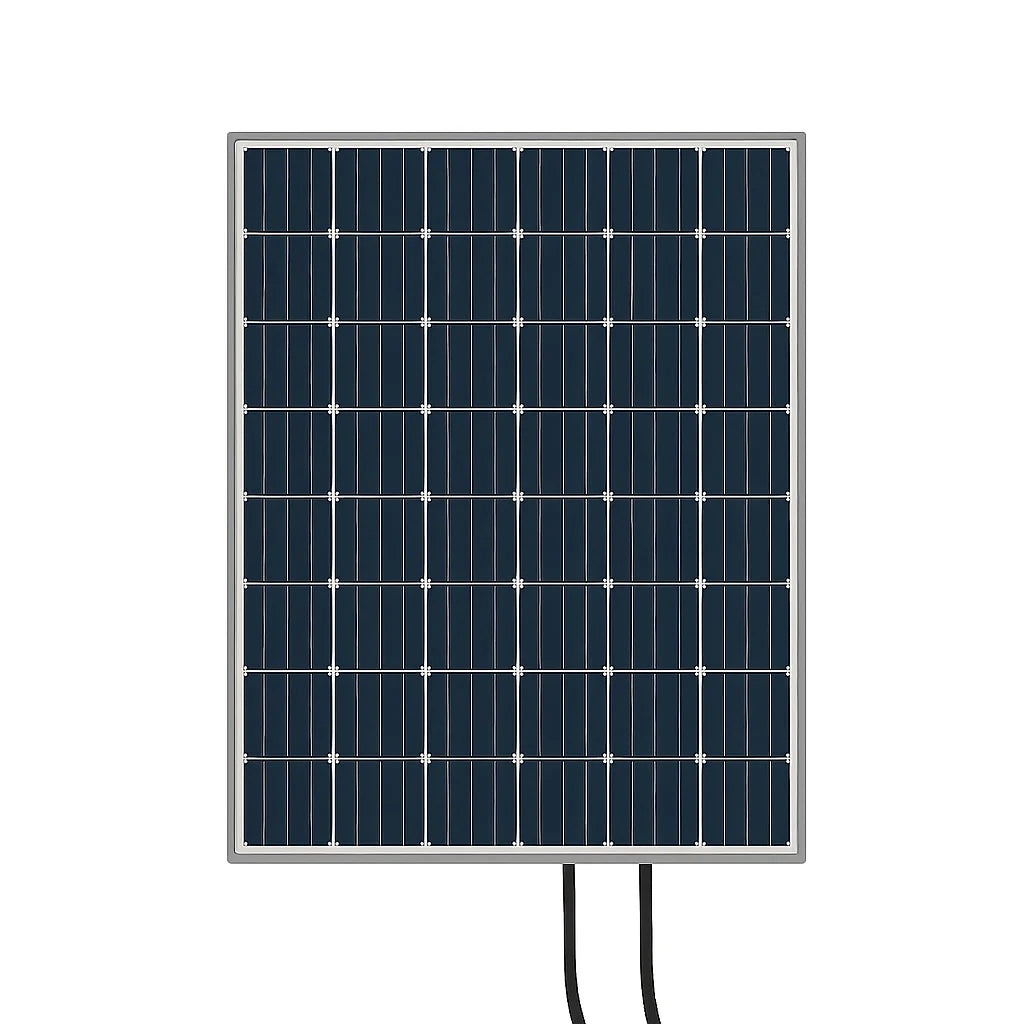
- Professional-grade solar panels without sacrificing payload elsewhere
- Genuine comfort items: better bedding, more food variety, additional tools
Skyenergi's Edge and Elite lithium batteries are designed for this calculation. The Edge 100Ah (£219.00) weighs 12 kg and delivers 100Ah usable capacity. If you're replacing a dual-AGM system, you're reclaiming approximately 50 kg of payload capacity.

For vehicles with tight payload margins, this difference determines whether a trip is possible or not.
Energy Density and Performance: Why Weight Matters Less Than You Think
Energy density measures how much usable energy you get per kilogram. Lithium LiFePO4 batteries deliver approximately 150-160 Wh/kg of usable energy. Lead-acid manages only 30-40 Wh/kg. This 4:1 advantage explains why lithium batteries are so much lighter.
But weight isn't the only performance advantage. Lithium batteries maintain stable voltage until nearly depleted, whilst lead-acid voltage drops continuously as it discharges. This matters practically: your fridge, water pump, and lights run at full power from a lithium battery's first amp-hour to the last. Lead-acid voltage sag means your appliances weaken as the battery depletes.
Charging speed follows the same pattern. A 100Ah lithium battery charges fully in 1-5 hours with proper equipment, whilst lead-acid requires 6-12 hours. This speed advantage compounds: you can top up during a brief sunny period rather than requiring an entire day of charging.
The battery management system (BMS) inside lithium batteries monitors voltage, current, and temperature in real-time. Bluetooth-enabled systems like Skyenergi's Elite range let you monitor state of charge on your phone, eliminating guesswork about remaining power. Lead-acid requires a dedicated monitor or manual voltage checks.
These performance differences matter more than raw weight for daily usability. A lighter battery that can't power your fridge reliably is worse than a heavier one that can.
Installing Lithium Batteries in Campervans: What You Need to Know
Lithium batteries aren't simple drop-in replacements for lead-acid units. They require compatible charging infrastructure to function properly and safely. This isn't a limitation, it's an opportunity to build a system optimised for your actual needs.
Compatibility with Existing Charging Systems
Your campervan likely has three charging sources: mains charger, solar panels, and alternator. Each requires compatibility checking before installing lithium.
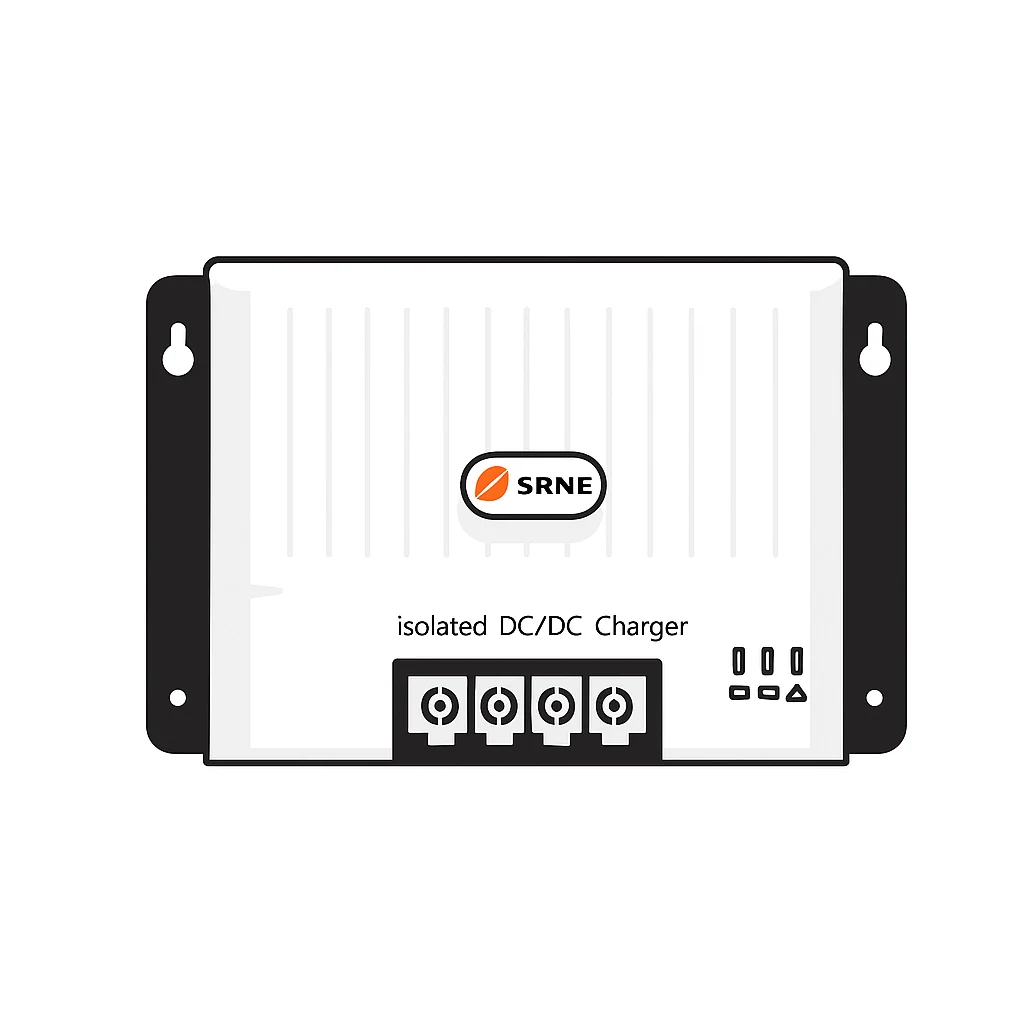
Mains chargers designed for lead-acid use constant-current charging profiles that overcharge lithium batteries, potentially damaging the BMS. You'll need a lithium-compatible charger, or a DC-DC charger that accepts 12V input from your alternator or solar system and outputs controlled charging to the lithium battery. portable power requirements.
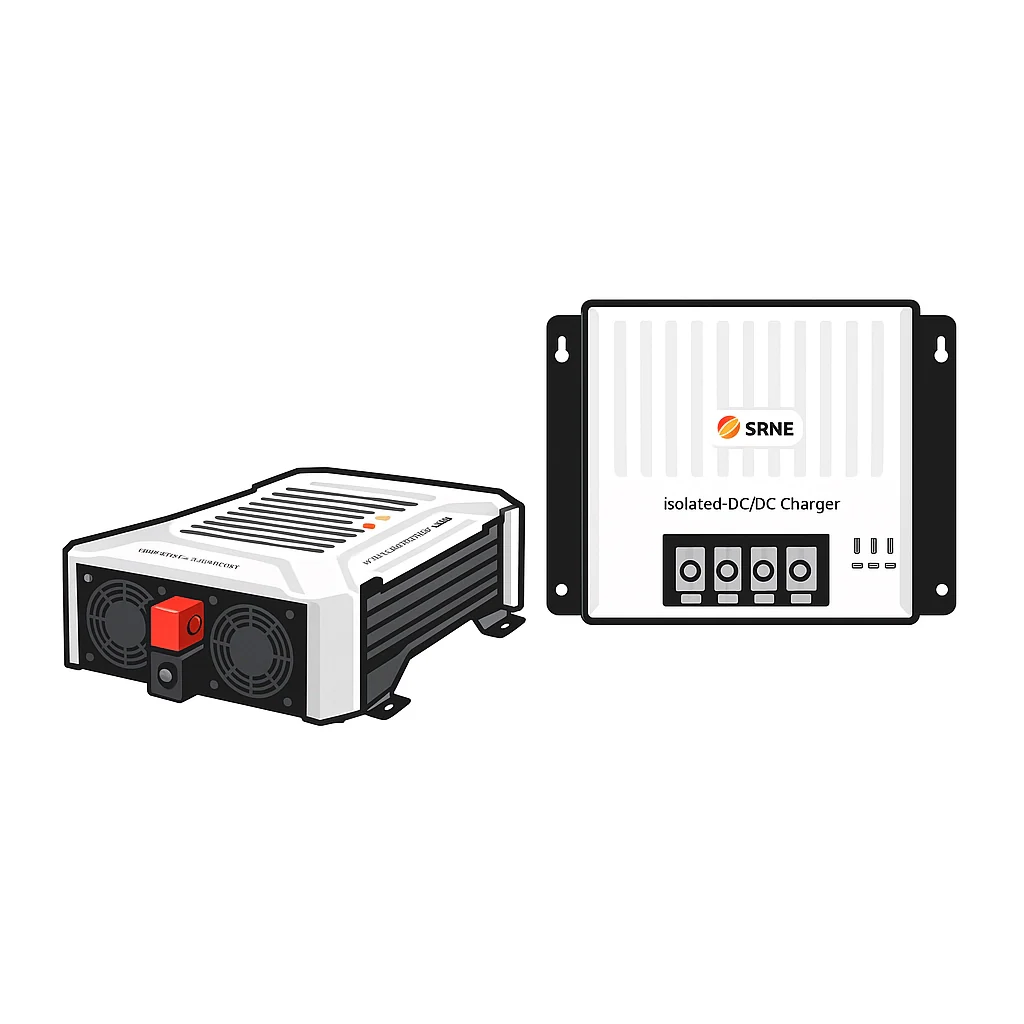
Solar charge controllers must support lithium's different voltage profile. MPPT (Maximum Power Point Tracking) controllers designed for lead-acid won't charge lithium efficiently. Lithium-compatible MPPT controllers like those from SRNE automatically adjust their charging curve to match your battery's requirements.
Alternator charging presents the biggest compatibility challenge. Your vehicle's alternator is designed to charge lead-acid batteries, which accept high current at any state of charge. Lithium batteries require controlled charging and will reject overcharging. A DC-DC charger isolates the alternator from the lithium battery, accepting whatever the alternator produces and converting it to safe charging current.
Skyenergi supplies complete SRNE systems that integrate lithium batteries, MPPT charge controllers, and DC-DC chargers as matched components. This eliminates compatibility guesswork, every component works with every other component, and the system is optimised for off-grid performance.
Space and Mounting Considerations
Lithium batteries are physically smaller than lead-acid equivalents, but mounting requirements differ. Lead-acid batteries tolerate rough handling and vibration. Lithium batteries need secure mounting to prevent BMS damage from impacts.
Standard campervan battery boxes work for lithium, but you'll want to add vibration dampening. Battery boxes designed for lithium often include integrated terminals and BMS monitoring, simplifying installation.
Most lithium batteries mount horizontally or vertically without issue. Check your vehicle's available space and the battery's dimensions before purchasing. A 100Ah lithium battery typically measures 300 × 170 × 200 mm, small enough for most under-bed or engine-bay installations.
Temperature matters during installation. Standard LiFePO4 batteries cannot be charged below 0°C without integrated heating elements. If you're installing in winter or in a cold climate, specify a heated variant. Skyenergi's Elite range includes heating pads for this purpose.
Lifespan and Cycle Life: The Long-Term Value Case
A lithium battery lasting 8-15 years versus 2-4 years for lead-acid transforms the cost-per-year calculation. This longevity comes from cycle life: lithium batteries tolerate 3,000-6,000+ charge cycles without significant degradation, whilst lead-acid manages 500-800 cycles.
What's a charge cycle? A full discharge from 100% to 0% and back to 100%. In real campervans, you rarely fully discharge daily. Most off-grid users cycle 20-30% daily (from 100% to 70%, then back to 100%). At this rate, a lithium battery survives 10-15 years of regular use. Lead-acid, cycling the same way, lasts 3-4 years.
Over 15 years, you'll replace lead-acid batteries 3-5 times. Each replacement costs £400-800 for a decent-quality unit, plus labour for removal and installation. Total replacement cost: £1,200-4,000 over the campervan's life. A single lithium battery (£219-975 depending on capacity) lasts the entire period.
The warranty difference reflects this durability. Lithium batteries typically carry 5-10 year warranties. Lead-acid batteries carry 2-3 year warranties. Manufacturers wouldn't offer longer warranties if the batteries didn't last.
This durability advantage compounds if you upgrade your campervan. A lithium battery moves to your next vehicle. A lead-acid battery is scrap. Resale value also favours lithium, buyers recognise the cost savings.
Cost vs. Benefit: Is the Weight Saving Worth the Investment?
A 100Ah Skyenergi Edge lithium battery costs £219.00. An equivalent 100Ah AGM battery costs approximately £200-300. The upfront cost is comparable, but the comparison ends there.
To achieve 100Ah of usable capacity with lead-acid, you need two 100Ah batteries (approximately £400-600 total) to account for the 50% usable capacity limitation. Lithium delivers the same usable capacity in a single £219 unit.
Over 15 years:
- Lead-acid: £400-600 initial + £1,200-2,000 replacements = £1,600-2,600 total
- Lithium: £219 initial + £0 replacements = £219 total
The lithium battery pays for itself in reduced replacement costs alone. Add the weight savings (50+ kg of payload capacity worth £500-1,000 in additional capability or comfort), and the value case becomes compelling.
The higher upfront cost for premium models like the Skyenergi Elite (£745-975) reflects advanced features: Victron Can-Bus integration, Bluetooth monitoring, and heating pads for cold-weather charging. These features simplify installation and provide genuine value for serious off-grid users, but they're optional. The Edge range delivers the same weight savings and durability at lower cost.
price reduction trend for lithium-ion batteries shows lithium costs have fallen 82% from 2013 to 2023, and the trend continues. Prices today represent the best value point in the technology's history.
Conclusion
The weight saving from switching to lithium is real: approximately 50 kg when replacing a complete lead-acid system. But weight is just the entry point. The actual value comes from usable capacity, charging speed, durability, and long-term cost.
A single 100Ah lithium battery delivers what would require two or three lead-acid units, freeing payload capacity for the things that make camping comfortable. It charges in hours instead of days. It lasts 8-15 years instead of 2-4. It costs less over time despite higher upfront pricing.
For campervans operating near payload limits, lithium isn't optional, it's the only practical choice. For others, the weight saving is a bonus on top of genuine performance improvements.
Skyenergi's Edge and Elite lithium batteries are designed specifically for UK campervans and off-grid applications. The Edge range delivers reliable, durable power at competitive pricing. The Elite range adds Bluetooth monitoring and Victron integration for users building sophisticated energy systems. Both are backed by UK-based support and fast delivery.
If you're upgrading your campervan's electrical system, lithium weight savings are just the beginning.
Frequently Asked Questions
How much weight can I actually save by switching to a lithium leisure battery?
A 100Ah lithium battery weighs 11-14kg compared to 27-32kg for AGM or 30-35kg for gel equivalents. To achieve 100Ah of usable energy, you'd need approximately 60-70kg of AGM batteries versus just 11-14kg of lithium, representing savings of around 50kg. This weight reduction directly increases your campervan's payload capacity for gear, passengers and supplies.
Will a lighter lithium battery improve my campervan's fuel efficiency?
Yes. Every kilogramme saved reduces overall vehicle weight, which decreases fuel consumption and improves handling. Switching from lead-acid to lithium can free up 50kg of payload capacity. For motorhomes nearing payload limits, this reclaimed weight allows you to carry additional supplies or equipment without exceeding manufacturer specifications, improving both efficiency and safety.
Do I need to upgrade my charging system when installing a lithium leisure battery?
Most modern lithium batteries include a Battery Management System (BMS) that protects against overcharging and over-discharging. However, your existing charger, solar controller and DC-DC charger should be compatible with lithium chemistry. SRNE systems and Skyenergi's range integrate seamlessly with standard 12V electrical setups, though you may benefit from an MPPT solar controller for faster charging and better efficiency with solar panels.
How long will a lithium leisure battery last compared to lead-acid?
Lithium batteries deliver 2,000-5,000 charge cycles and typically last 8-15 years, whereas lead-acid batteries manage only 300-500 cycles and last 2-4 years. This longer lifespan means fewer replacements over time, making lithium a better long-term investment despite higher upfront costs. Skyenergi Edge and Elite batteries are built with advanced JBD BMS technology to maximise cycle life and reliability.
This article was written using GrandRanker
Prev post

12V Campervan Electrical System Kits: Complete Guide
Updated on 04 September 2026
Next post

Lithium for campervans: 7 key benefits explained
Updated on 02 September 2026


