





Lithium for campervans: 7 key benefits explained
Lithium for campervans: Discover the 7 main benefits of lithium leisure batteries for campervans: longer lifespan, weight savings, faster charging and.
Table of Contents
- Why lithium for campervans matters now
- Longer lifespan and cycle life
- Lithium battery weight savings for vans
- Usable energy and depth of discharge
- Campervan battery charging requirements and speed
- Best lithium leisure battery for motorhomes: what to look for
- Cold weather performance and safety features
- Cost-benefit analysis: long-term value
- Frequently Asked Questions
Why lithium for campervans matters now
Lithium batteries have fundamentally transformed how campervan owners think about independence and power. Almost six in 10 motorhome owners surveyed by Caravan Guard are already using lithium leisure batteries, with a further 10% actively considering the switch. That's a decisive market movement.
The reason is straightforward: lithium for campervans delivers genuine usable capacity paired with reliability across the full discharge range. When your fridge cuts out because voltage has dropped too far, or you're rationing power because you're only getting half the advertised capacity, the limitations of traditional batteries become painfully obvious.
At Skyenergi, we supply high-performance Edge and Elite lithium batteries designed to deliver dependable, long-lasting power for campervans, motorhomes, caravans, van conversions and home or off-grid energy applications. This guide breaks down seven key advantages that explain why lithium for campervans has moved from niche choice to mainstream expectation.
Longer lifespan and cycle life
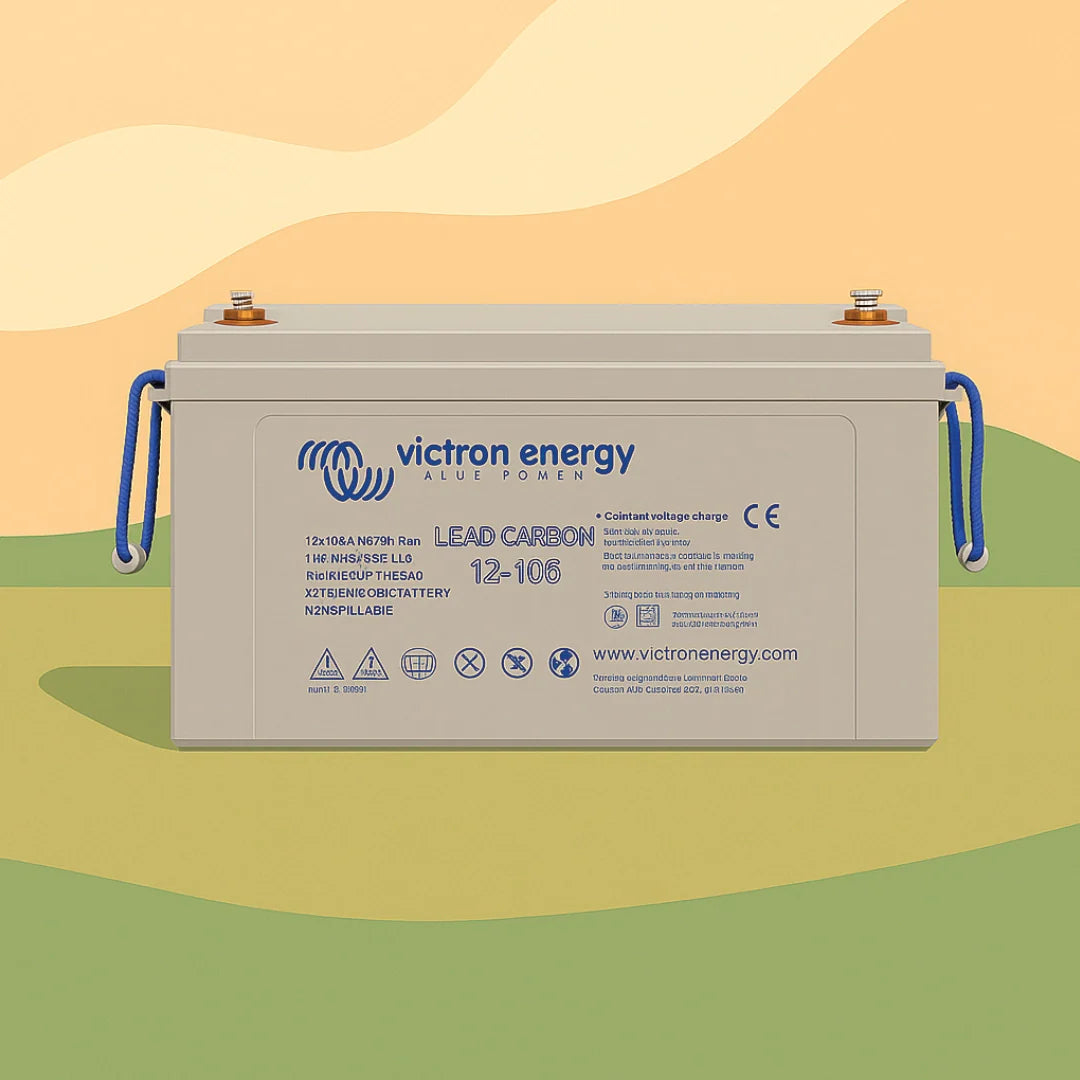
A lithium battery typically survives 10-15 years with over 3,500 charge cycles, compared to the 3-5 years and 300-500 cycles from lead-acid. That's a lifespan difference of 6-10 times longer.
In practice, your first lead-acid battery might fail halfway through a serious off-grid project. A lithium battery installed today will still be delivering reliable power years later. Each charge cycle on lead-acid degrades capacity slightly; by year three, you're working with 60-70% of original capacity. Lithium batteries maintain consistent performance across their entire lifespan.
For full-time motorhomers, this longevity translates directly into peace of mind. A single battery installation handles years of continuous use without the anxiety of imminent failure.
Lithium battery weight savings for vans
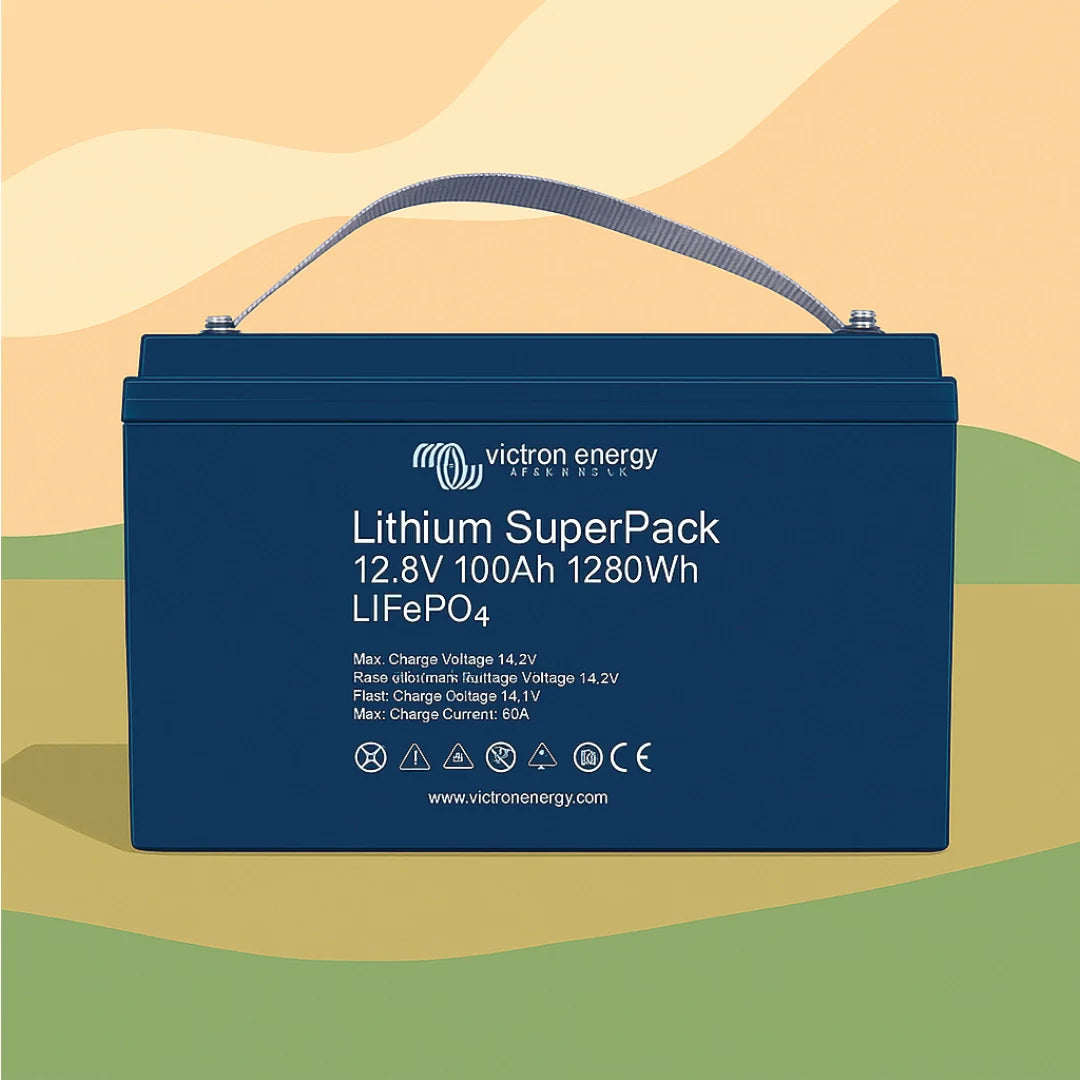
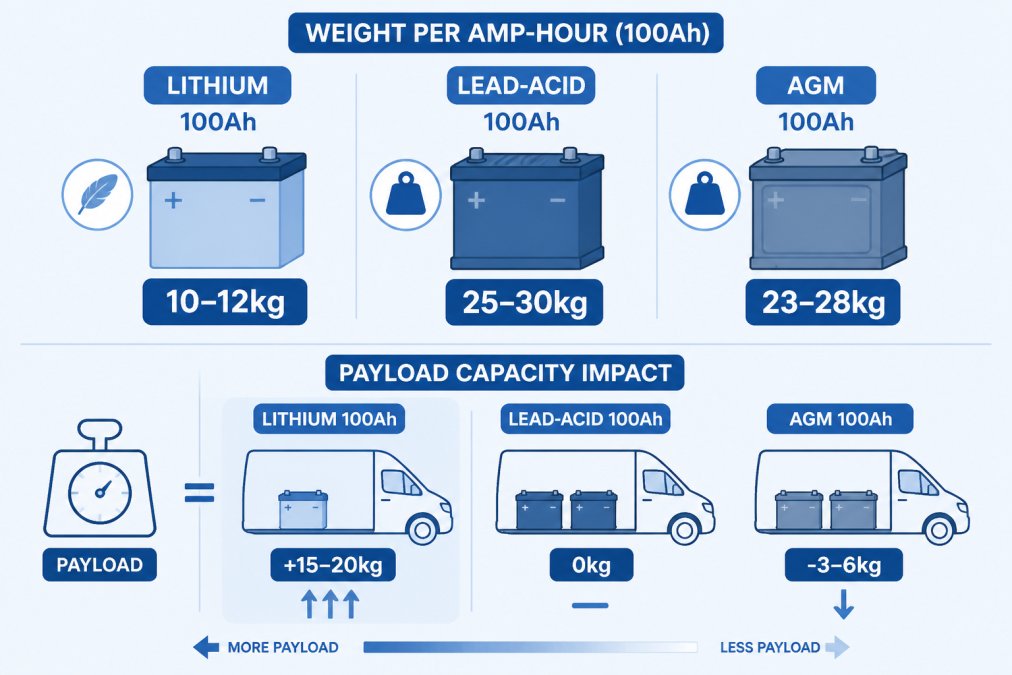
A 100Ah lithium battery typically weighs 10-12kg, compared to 25-30kg for an equivalent lead-acid unit. That's a payload saving of 15-18kg per battery, which matters significantly for campervans operating under strict weight limits.
Every kilogram counts toward your Maximum Authorised Mass. Excess weight reduces fuel efficiency, strains suspension, and eats into your payload allowance for water, fuel, and cargo. A single lithium battery saves roughly the equivalent weight of a full water tank without sacrificing power.
For DIY converters, this weight advantage cascades through the entire system. A lighter battery means you can add solar panels and additional charging equipment without approaching your weight ceiling. The weight reduction also improves handling characteristics and safety in crosswinds.
Usable energy and depth of discharge
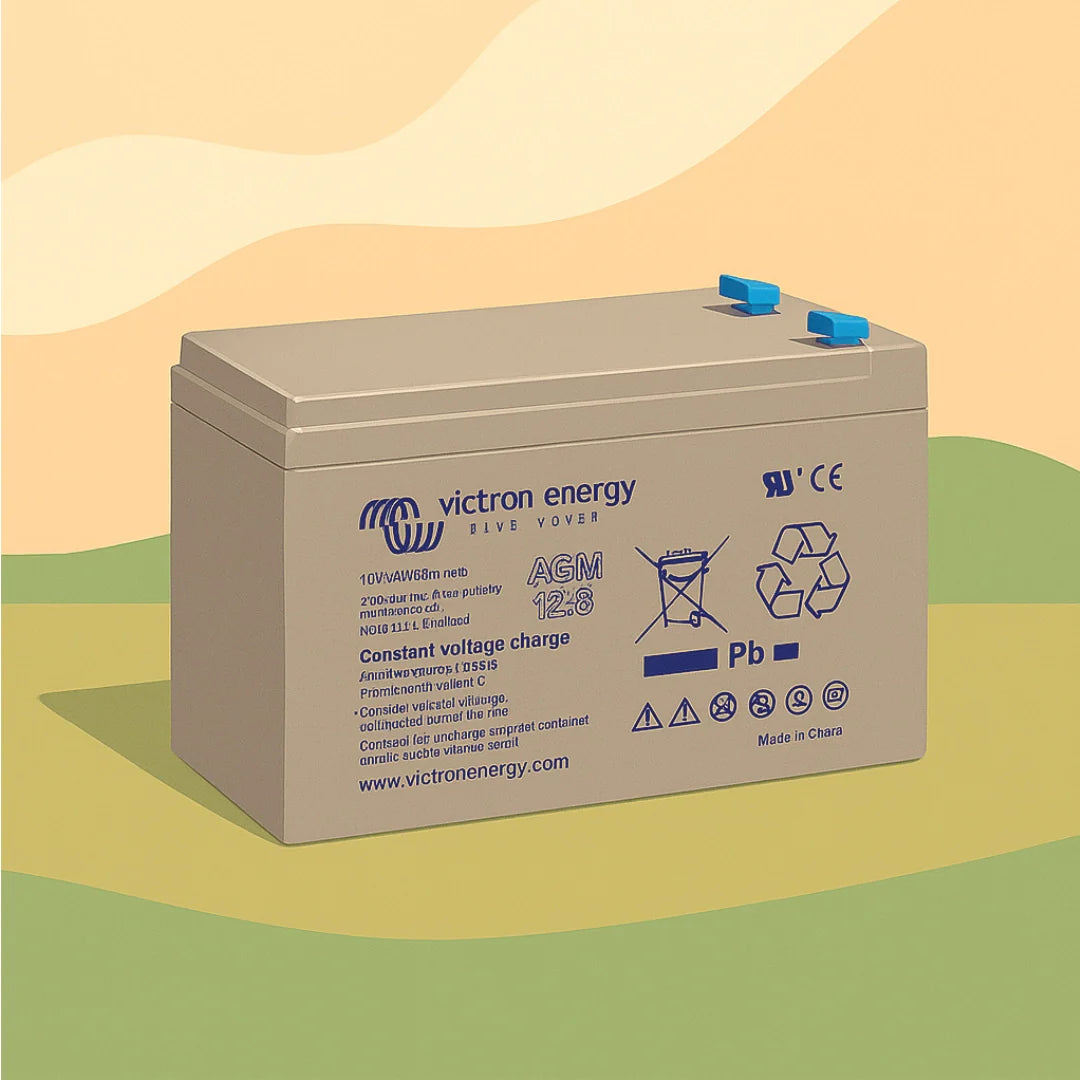
A 100Ah lithium battery provides at least 80Ah of usable energy, whereas a 100Ah AGM or gel battery only provides 50Ah of usable power. You're getting 60% more usable capacity from the same physical footprint.
Lead-acid and AGM batteries degrade rapidly when discharged below 50%. Manufacturers recommend never discharging them beyond that point to preserve lifespan. Lithium Iron Phosphate (LiFePO4) batteries maintain performance even when discharged down to 10-20% capacity.
Your 100Ah lithium battery genuinely provides 100Ah of usable power. Your 100Ah lead-acid battery provides 50Ah before you risk damage. If you're running a fridge, heating system, and lighting on a three-day cloudy period, that difference determines whether you're comfortable or rationing power.
Depth of discharge (DoD) is the percentage of the battery's total capacity that you can safely use. Lithium batteries handle 90-100% DoD without degradation. Lead-acid batteries should never exceed 50% DoD.
Campervan battery charging requirements and speed
Lithium batteries accept charging current much more efficiently than lead-acid batteries, allowing them to recharge faster through solar panels, alternators, or shore power. A lithium battery can accept 1C charge rate, whereas an AGM battery is happiest at 0.2-0.3C.
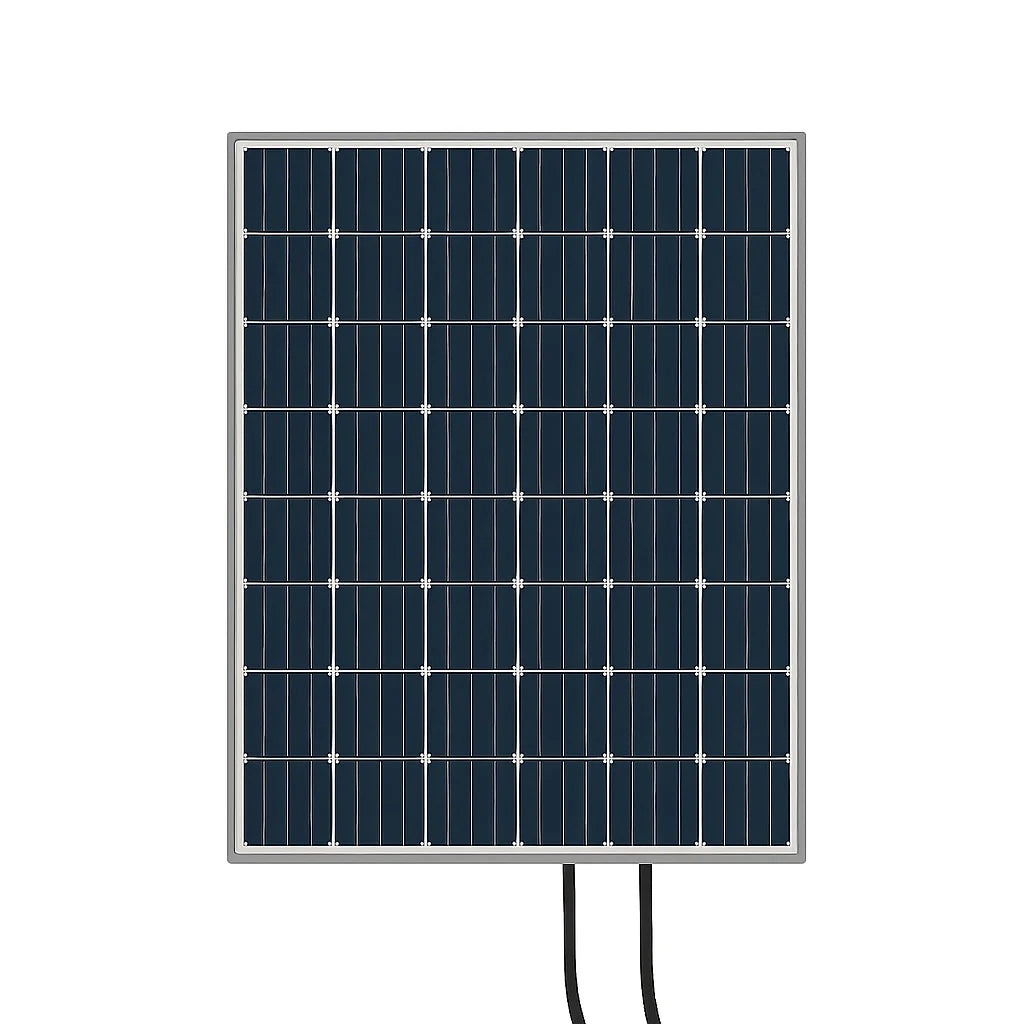
Your lithium battery fully recharges from a solar array in a fraction of the time. A cloudy day that leaves your lead-acid battery barely topped up might fully charge your lithium system once the sun emerges. Lithium batteries have charge efficiency close to 99%, compared to 80-85% for lead-acid types. That 15% efficiency gap means significantly more of your solar energy actually goes into storage.
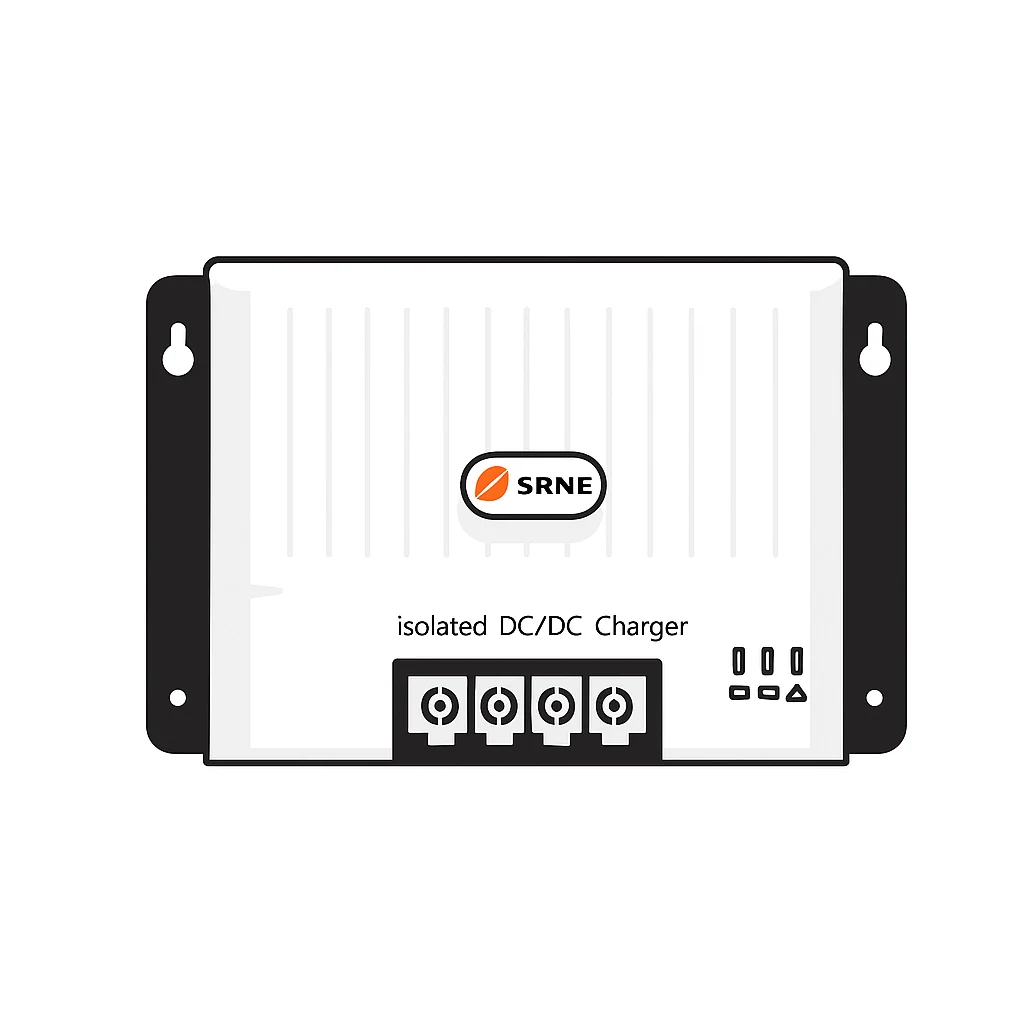
For campervan owners using SRNE charge controllers and Skyenergi's advanced monitoring systems, the fast-charging capability unlocks genuine flexibility. You can design a system that harvests power opportunistically, maximising solar capture during brief sunny periods.
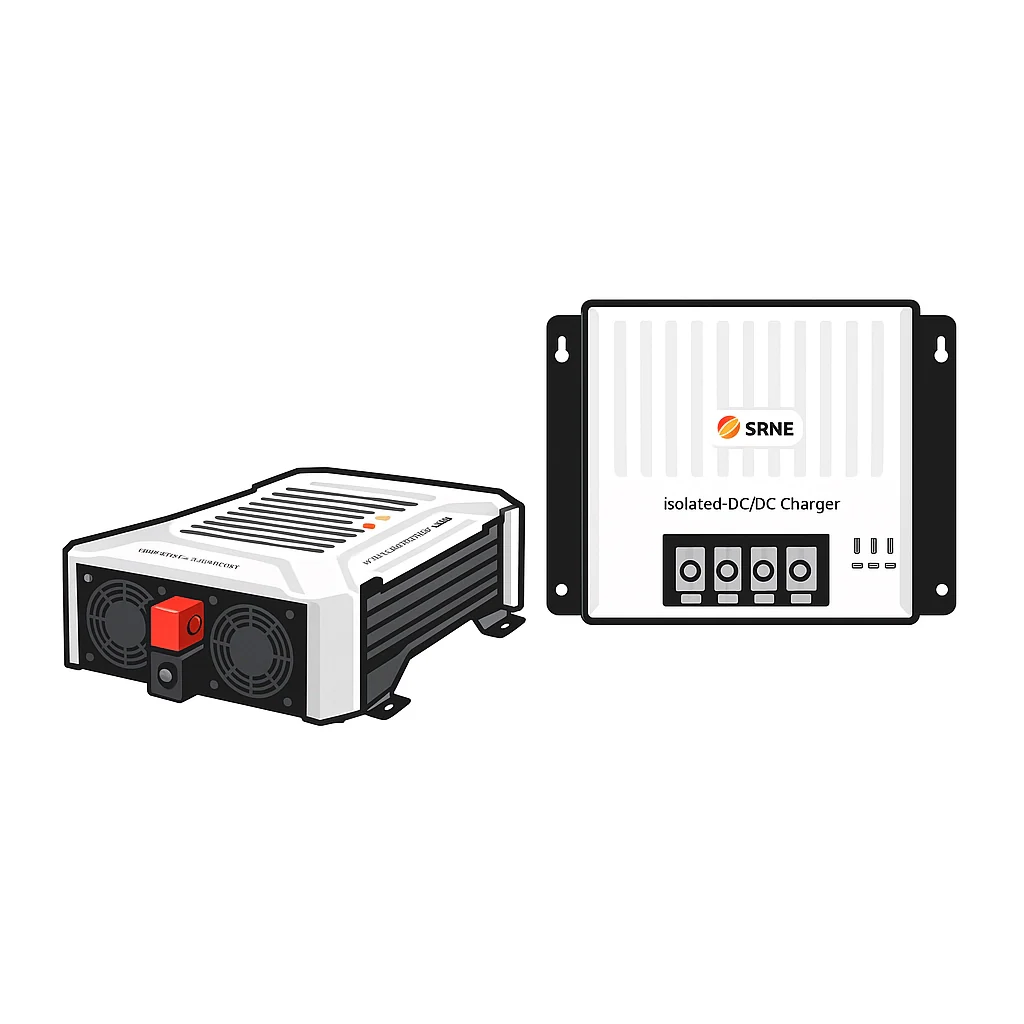
Lithium batteries require lithium-compatible mains chargers, solar MPPTs, and DC-to-DC chargers for Euro 6 engines to function safely and efficiently. This ensures your system is properly configured.
Best lithium leisure battery for motorhomes: what to look for
Selecting the right lithium for campervans requires understanding what separates a premium system from a basic one. The most critical component is the Battery Management System (BMS), the electronics that monitor internal temperature and voltage and control charging at the individual cell level.
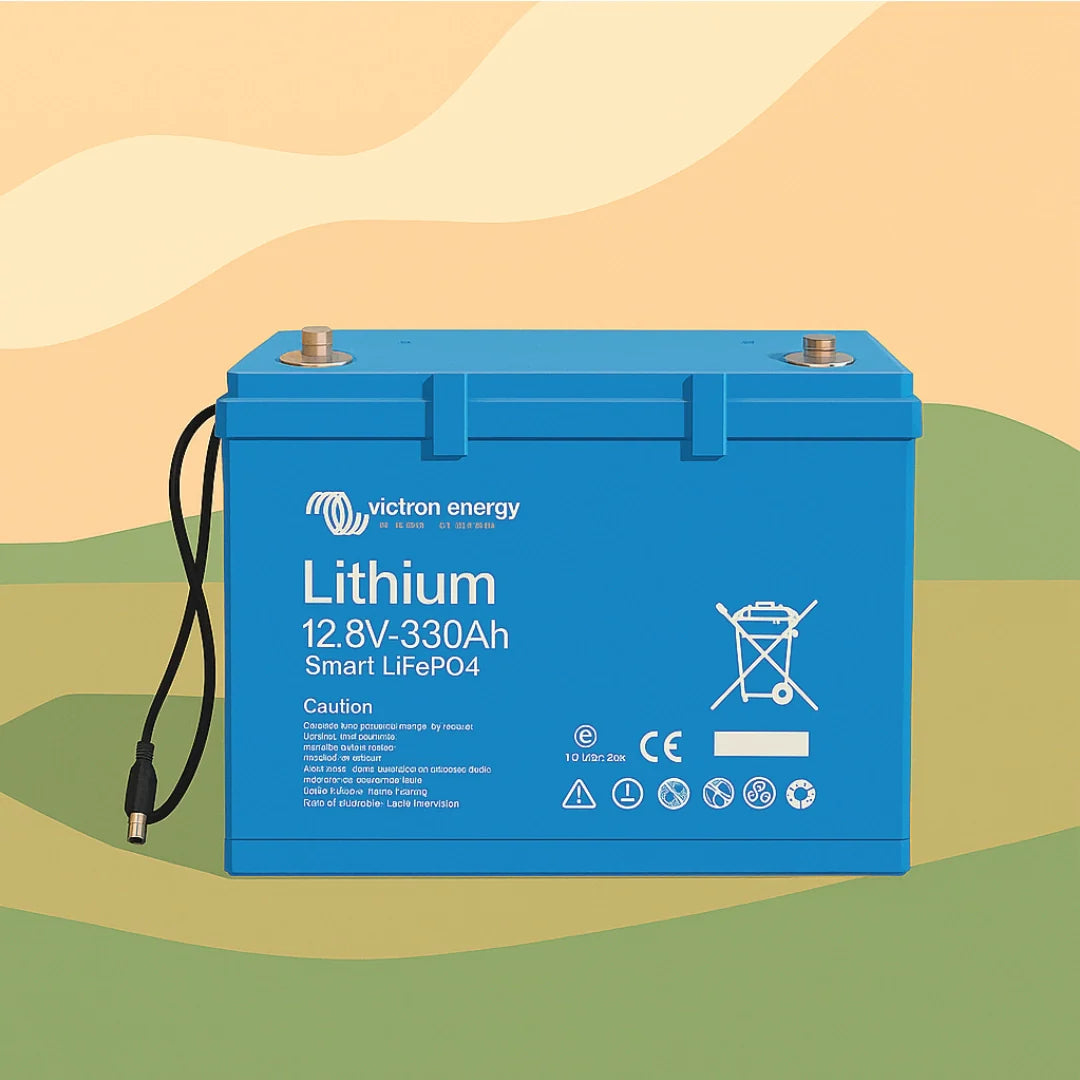
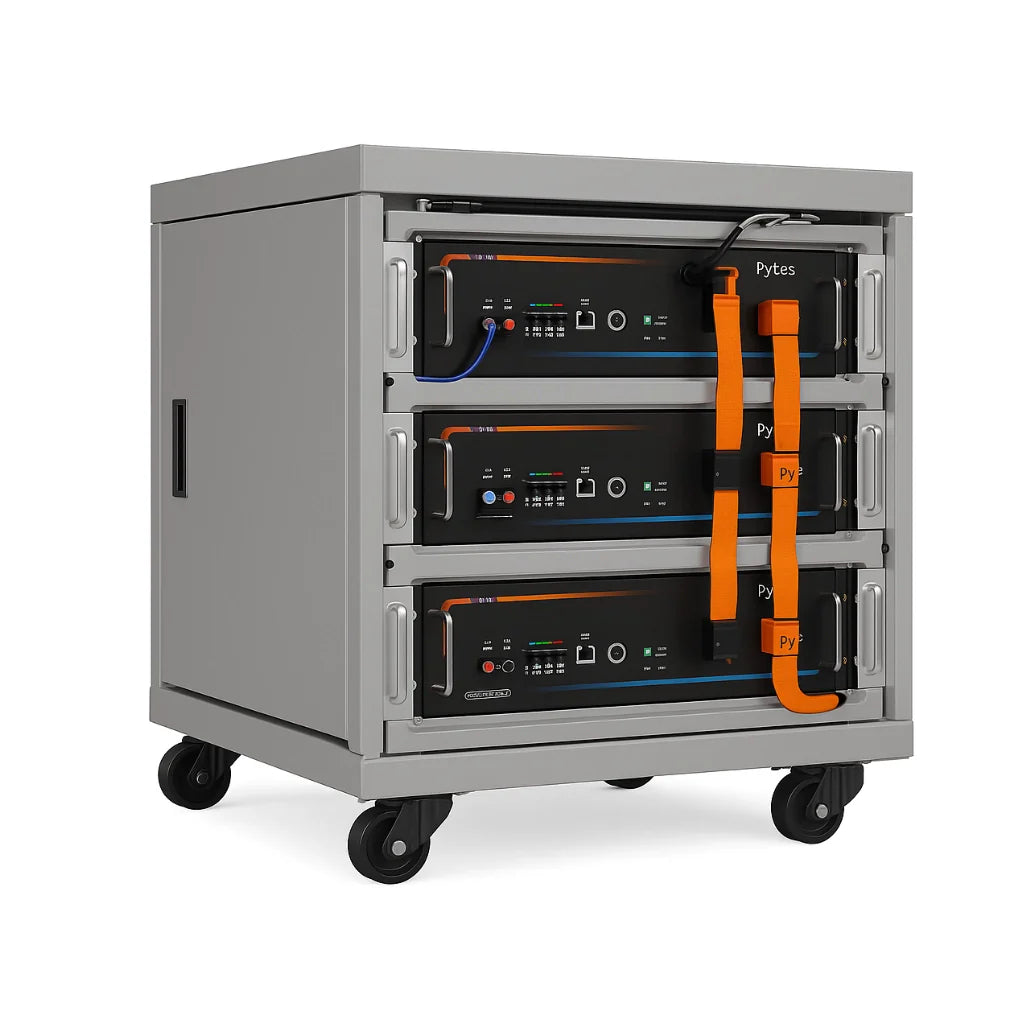
The Skyenergi Elite 304Ah Smart Lithium Leisure Battery features a modern 250A JBD BMS, representing the most advanced leisure battery management system available. The JBD BMS actively monitors each cell's voltage and temperature, preventing overcharging, over-discharging, and thermal runaway. For serious off-grid users, this level of protection is non-negotiable.
Capacity selection depends on your actual power requirements. A 230Ah system suits campervan owners with modest power needs, basic lighting, phone charging, and occasional fridge use. The Skyenergi Core2 230Ah Lithium Leisure Battery provides this capacity with integrated Bluetooth monitoring and a heat pad for safe charging in freezing conditions.
For full-time users or those running multiple high-draw appliances, larger systems deliver genuine independence. The Skyenergi Core2 680Ah Lithium Leisure Battery provides the usable energy equivalent of 1,360Ah of lead-acid capacity, enough to power a fully equipped campervan for multiple days without external charging.
Premium lithium systems like the Skyenergi Elite 560Ah include Victron Can-Bus compatibility, allowing seamless integration with solar charge controllers, inverter chargers, and monitoring systems. This integration is essential for complex electrical systems.
Heat pads are essential for UK users. Lithium batteries require specific temperature ranges for safe charging. Integrated heat pads in Skyenergi Core2 models ensure you can charge safely even in winter conditions, preventing the charging lockouts that plague basic lithium systems in freezing weather.
| Battery Model | Capacity | BMS Type | Best For |
|---|---|---|---|
| Skyenergi Core2 230Ah | 230Ah | 200A JBD | Small vans, basic power needs |
| Skyenergi Elite 304Ah | 304Ah | 250A JBD | Mid-size campervans, mixed use |
| Skyenergi Elite 560Ah | 560Ah | 300A JBD | Large motorhomes, Victron integration |
| Skyenergi Core2 680Ah | 680Ah | Premium JBD | Full-time living, maximum capacity |
Cold weather performance and safety features
Lithium Iron Phosphate (LiFePO4) maintains 80-90% capacity in freezing conditions, whereas lead-acid capacity drops 50% below 0°C. For UK campervan owners, this cold-weather resilience is a genuine advantage.
LiFePO4 cells don't suffer the same internal resistance increase that lead-acid experiences in cold temperatures. Your battery delivers consistent power whether you're parked in the Scottish Highlands in January or the South Coast in summer.
However, charging lithium batteries below freezing creates a different problem. Lithium cells can suffer permanent damage if charged while frozen. Integrated heat pads become essential. Skyenergi's Core2 and Elite models include heat pads that warm the battery during charging in cold conditions.
A proper BMS monitors battery temperature and prevents charging attempts when the battery is too cold. Never fit a lithium battery not certified for its intended use. The battery MUST have a BMS that monitors internal temperature and voltage and controls charging at the individual cell level.
The thermal stability of LiFePO4 chemistry is genuinely superior to older lithium chemistries. LiFePO4 doesn't suffer thermal runaway in the way that other lithium types can. For campervan applications where the battery lives in confined spaces with limited cooling, this safety margin matters.
Cost-benefit analysis: long-term value
The upfront cost of lithium for campervans is undeniably higher than lead-acid. The question isn't whether lithium costs more initially, it obviously does. The question is whether the long-term value justifies that premium.
Price per kilowatt-hour for lithium batteries dropped roughly 30-40% from 2021 to 2026. This price trajectory continues, lithium becomes more accessible every year.
Over 10 years, a lithium system costs 2.8 times less per usable kilowatt-hour than lead-acid. You'll replace your lead-acid battery 2-3 times in the period where a single lithium battery continues delivering reliable power. The total cost of ownership strongly favours lithium.
Each lead-acid replacement requires installation labour, system downtime, and the disruption of discovering your battery has failed during a trip. A lithium battery eliminates these recurring costs.
For professional campervan converters and full-time motorhomers, the cost-benefit analysis is decisive.
For DIY van converters, the cost difference becomes less significant when spread across the entire electrical system. A complete power setup including battery, solar panels, MPPT controller, and monitoring equipment costs £2,000-£4,000 regardless of whether you choose lithium or lead-acid. Choosing lithium adds a meaningful but not prohibitive premium for a system that will outlast the vehicle.
Lithium for campervans represents a genuine shift in what's possible for off-grid independence. The weight savings, usable capacity, and longevity advantages compound over years of use, transforming how you approach extended trips and seasonal living.
Skyenergi's range of lithium leisure batteries, from the Core2 230Ah entry-level system to the Elite 560Ah premium option, provides solutions for every campervan configuration. With integrated heat pads, advanced BMS protection, and Victron compatibility on premium models, these systems eliminate the compromises that have historically defined leisure battery choices. Get started with Skyenergi's lithium batteries and unlock genuine off-grid independence for your campervan.

Frequently Asked Questions
Q: Is a lithium battery better for a campervan than lead-acid?
A: Yes, for most campervan owners. Lithium delivers 80-100Ah of usable energy from a 100Ah battery, compared to just 50Ah from a 100Ah lead-acid unit. You get twice the usable power, plus faster charging, a 10-15 year lifespan versus 3-5 years, and weight savings of 15-18kg per battery. The upfront cost is higher, but over 10 years a lithium system costs 2.8 times less per usable kilowatt-hour than lead-acid. If you run appliances off-grid or travel frequently, lithium pays for itself.
Q: How long do lithium leisure batteries actually last in a motorhome?
A: Lithium batteries typically last 10-15 years with over 3,500 charge cycles. Some modern units push 4,000-6,000 cycles. This is 2-3 times longer than lead-acid (300-500 cycles) or AGM batteries (600-1,000 cycles). Real-world lifespan depends on depth of discharge, charging habits, and temperature management. Skyenergi's Core2 and Elite models include integrated heat pads, which maintain 80-90% capacity in freezing conditions, critical for winter camping when lead-acid drops to 50% capacity.
Q: Can I replace my existing lead-acid battery with lithium without changing my whole system?
A: Not always. Lithium batteries require a compatible charging ecosystem: a lithium-compatible mains charger, solar MPPT controller, and DC-to-DC charger for Euro 6 engines. If your current system uses a standard lead-acid charger, you'll need to upgrade to avoid damaging the battery or losing performance. A Battery Management System (BMS) monitors voltage and temperature, so incompatible chargers can't communicate safely. Skyenergi's Elite and Core2 models use advanced JBD BMS technology and Victron Can-Bus integration, making them compatible with modern solar and charging setups.
Q: Do I need a special charger for a lithium campervan battery?
A: Yes. Lithium batteries require a charger that supports constant-voltage, constant-current (CC-CV) charging and communicates with the BMS. Standard lead-acid chargers don't adjust for lithium's different voltage curve and can overcharge or damage the cells. Skyenergi batteries integrate with SRNE MPPT solar controllers and Victron inverter chargers, which handle lithium profiles automatically. If you're upgrading, factor in a compatible solar controller and mains charger, typically £200-400 combined. This is part of the upfront investment but ensures safe, efficient charging.
This article was written using GrandRanker
Prev post

Lithium Battery Weight Saving for Campervans: A 2026 Guide
Updated on 03 September 2026
Next post

Lithium Battery Warranty for Campers: What's Covered
Updated on 01 September 2026


