





Is Lithium Battery Worth the Cost in 2026?
Is lithium battery worth the cost: Lithium battery prices have dropped 90% since 2010. Explore real TCO data, lifespan comparisons, and whether lithium.
Table of Contents
- The Real Cost of Lithium vs Lead-Acid Batteries
- Lithium vs AGM Battery Lifespan: What the Data Shows
- Total Cost of Ownership Over 10 Years
- Benefits of Lithium Leisure Batteries for Campervan Use
- SRNE Solar Charge Controller Compatibility and System Integration
- When Lithium Isn't Worth It: Cold Weather and Grid-Connected Use
- Conclusion: Is the Investment Justified?
Last Updated: August 29, 2026
The Real Cost of Lithium vs Lead-Acid Batteries
Is lithium battery worth the cost? That question sits at the heart of every motorhome and campervan upgrade decision. The short answer: yes, but only if you understand what you're actually paying for. According to Market Research Future's 2025 UK Lithium-Ion Battery Market analysis, the UK lithium-ion battery market is projected to grow from £2,058.95 million in 2025 to £3,200 million by 2035, driven largely by consumers making exactly this calculation and choosing lithium.
At Skyenergi, we've spent years helping campervan owners, motorhome converters, and off-grid installers navigate this decision. The comparison between lithium and lead-acid isn't just about upfront cost, it's about total cost of ownership, usable capacity, and how your power system actually performs when you're miles from the nearest mains hook-up.
The headline difference is stark. Lithium batteries cost more initially. A Skyenergi Edge 100Ah lithium leisure battery starts at £219, while comparable lead-acid alternatives run £200-250. But that surface-level similarity masks a fundamental truth: lithium delivers dramatically more usable energy, lasts significantly longer, and requires zero maintenance.

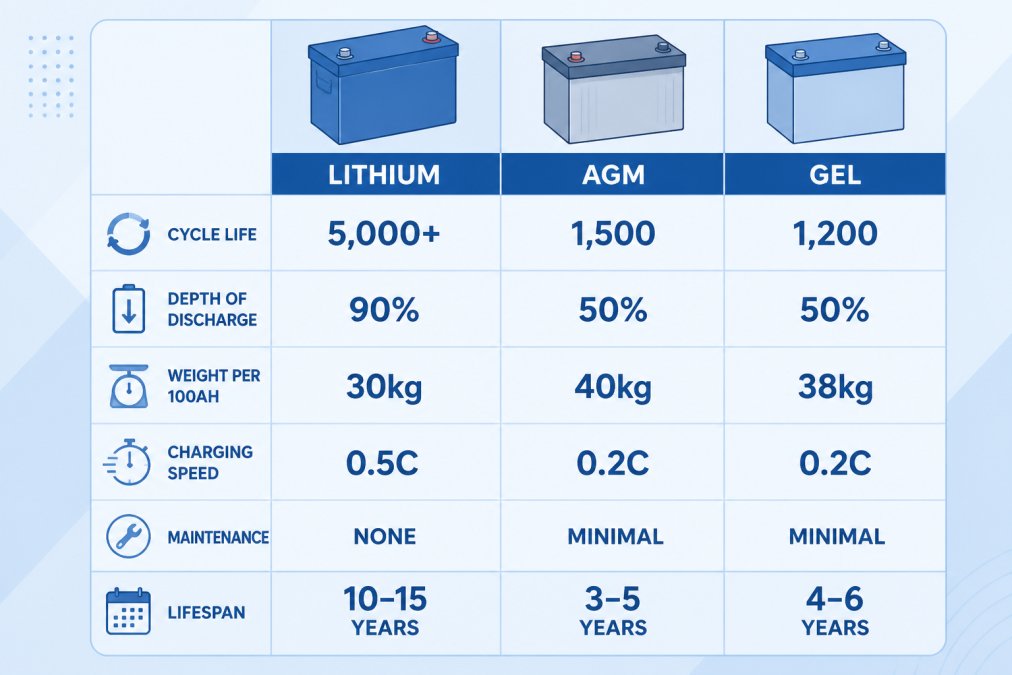
Lead-acid batteries, whether AGM or gel types, typically offer 50% depth of discharge safely. That means a 100Ah lead-acid battery gives you roughly 50 usable amp-hours before you risk damaging the battery. Lithium, particularly LiFePO4 chemistry, safely delivers 80-100% depth of discharge. A 100Ah lithium battery gives you 80-100 usable amp-hours. You're not just paying for the same capacity, you're paying for twice the usable energy in the same physical footprint.
Lithium vs AGM Battery Lifespan: What the Data Shows
How long will your battery actually last? This is where the investment case for lithium becomes undeniable. Lead-acid batteries, including AGM and gel types, typically survive 3-5 years in leisure vehicle use with proper maintenance. Lithium batteries, particularly LiFePO4 variants, regularly exceed 10 years and often reach 15 years with intelligent charging management.
The cycle-life difference is the reason. Lead-acid batteries degrade with every charge cycle, especially if cycled deeply. AGM batteries handle partial cycling better than flooded lead-acid, but they still suffer from sulfation if left in a low state of charge. Lithium doesn't. In fact, research from Heaven Green Energy on lithium vs lead-acid solar battery costs shows that lithium actually performs better under shallow discharge conditions, the exact scenario most leisure vehicle owners operate in.
Consider this: a lead-acid battery cycled to 50% depth of discharge and recharged daily might survive 1,500 cycles before capacity drops below 80%. A lithium battery under identical conditions can handle 5,000+ cycles. That's not marketing, that's chemistry. The LiFePO4 cell structure simply doesn't degrade the same way lead compounds do.
Total Cost of Ownership Over 10 Years
This is the section where numbers tell the real story. Most people focus on the purchase price and miss the total cost of ownership entirely.
Let's work through a realistic 10-year scenario for a campervan owner who uses their vehicle 150 days per year with moderate energy draw. You need roughly 5 kWh of usable storage capacity.
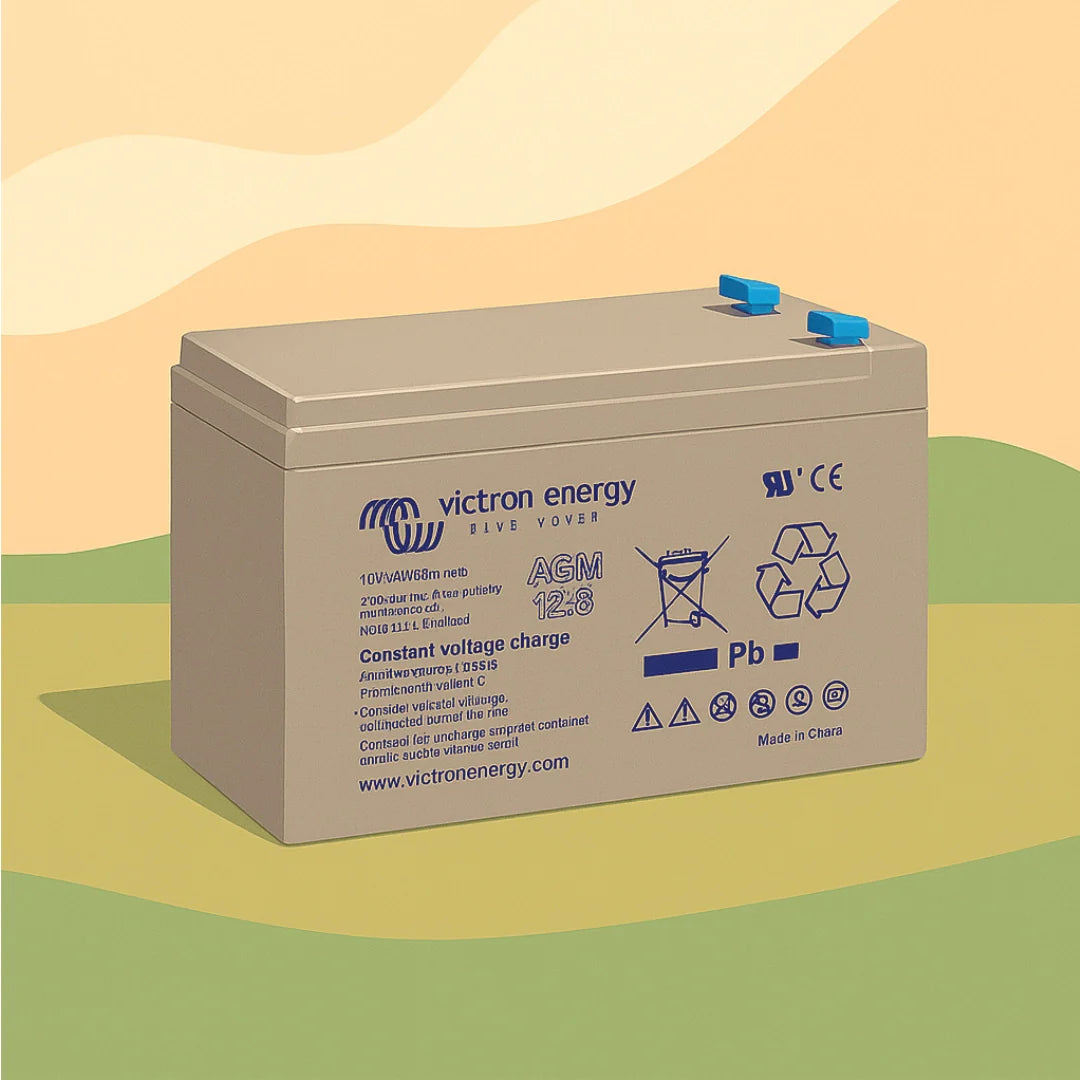
Lead-acid option: A 110Ah gel battery like the Victron Energy Gel Deep Cycle Battery 12V 110Ah (£207.81) gives you approximately 55 usable amp-hours at 12V, or 0.66 kWh. To get 5 kWh usable capacity, you'd need eight of these batteries in parallel, costing £1,662 upfront. Over 10 years, you'd replace the entire bank twice (3-5 year lifespan), plus additional replacements for failed units. Total cost: approximately £4,986-5,610 including replacements and labour.

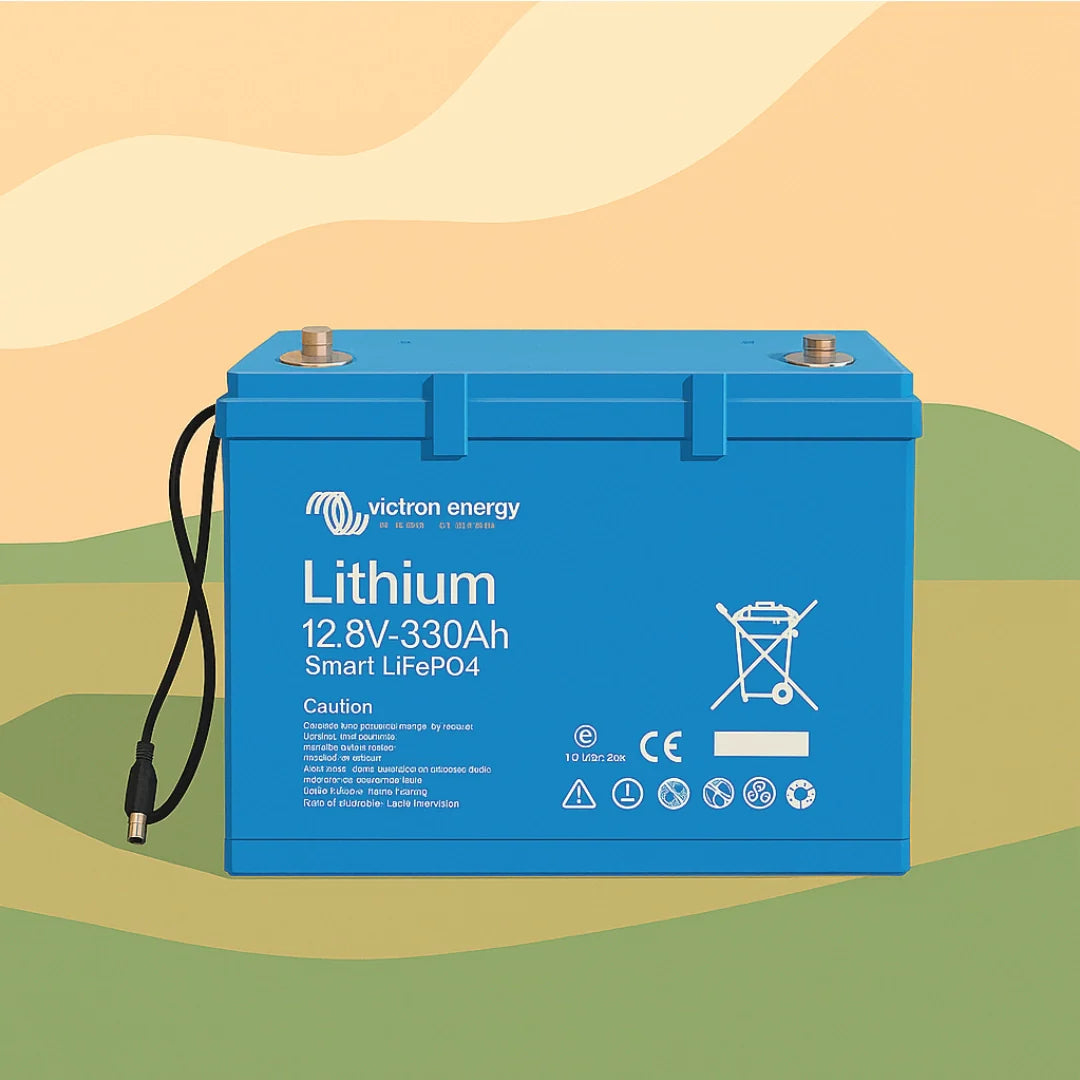
Lithium option: A Skyenergi Edge 100Ah lithium battery (£219) delivers 80-100 usable amp-hours at 12V, or roughly 1.0-1.2 kWh. You'd need five batteries to reach 5 kWh usable capacity, costing £1,095 upfront. Over 10 years, you'd replace the bank once, possibly twice depending on usage patterns. Total cost: approximately £1,925-2,190 including one replacement and labour.
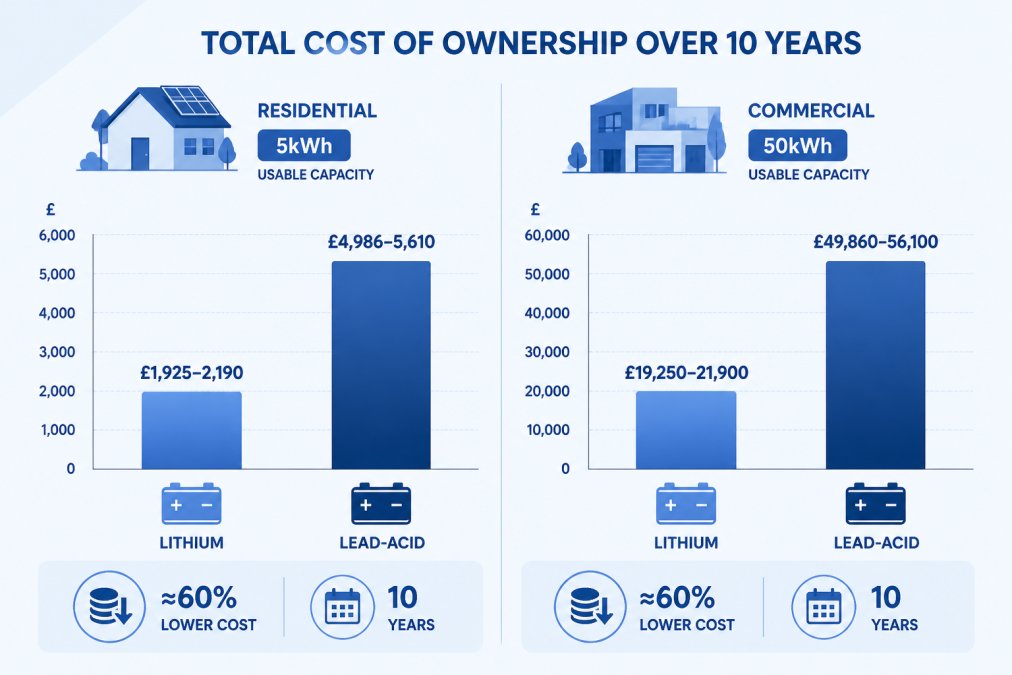
This aligns with independent research. According to PowerTech Systems' lithium vs lead-acid cost analysis, the total cost of ownership per usable kWh is approximately 2.8 times cheaper for lithium-based solutions than lead-acid, despite the higher initial cost.
The maths is simple: lithium costs more upfront but delivers lower cost per usable kilowatt-hour, lasts longer, requires no maintenance, and occupies less physical space. Over a decade, you're looking at savings of £3,000-4,000 on a typical campervan system.
Benefits of Lithium Leisure Batteries for Campervan Use
Lithium batteries solve specific problems that lead-acid simply cannot address. Understanding these benefits explains why 78% of new hybrid solar installations now choose lithium, according to Heaven Green Energy's 2026 installation data.
Depth of Discharge and Usable Capacity
A lead-acid battery's usable capacity is a fraction of its rated capacity. A 100Ah lead-acid battery safely delivers only 50 usable amp-hours before risking sulfation and permanent capacity loss. Lithium batteries, particularly LiFePO4 chemistry, safely operate at 80-100% depth of discharge.
This matters enormously in campervan use. Your fridge, heating system, and lighting don't care about your battery's rated capacity, they care about how much energy you can actually draw. A 100Ah lithium battery with 90% usable capacity outperforms a 200Ah lead-acid battery with only 50% usable capacity, while occupying half the space.
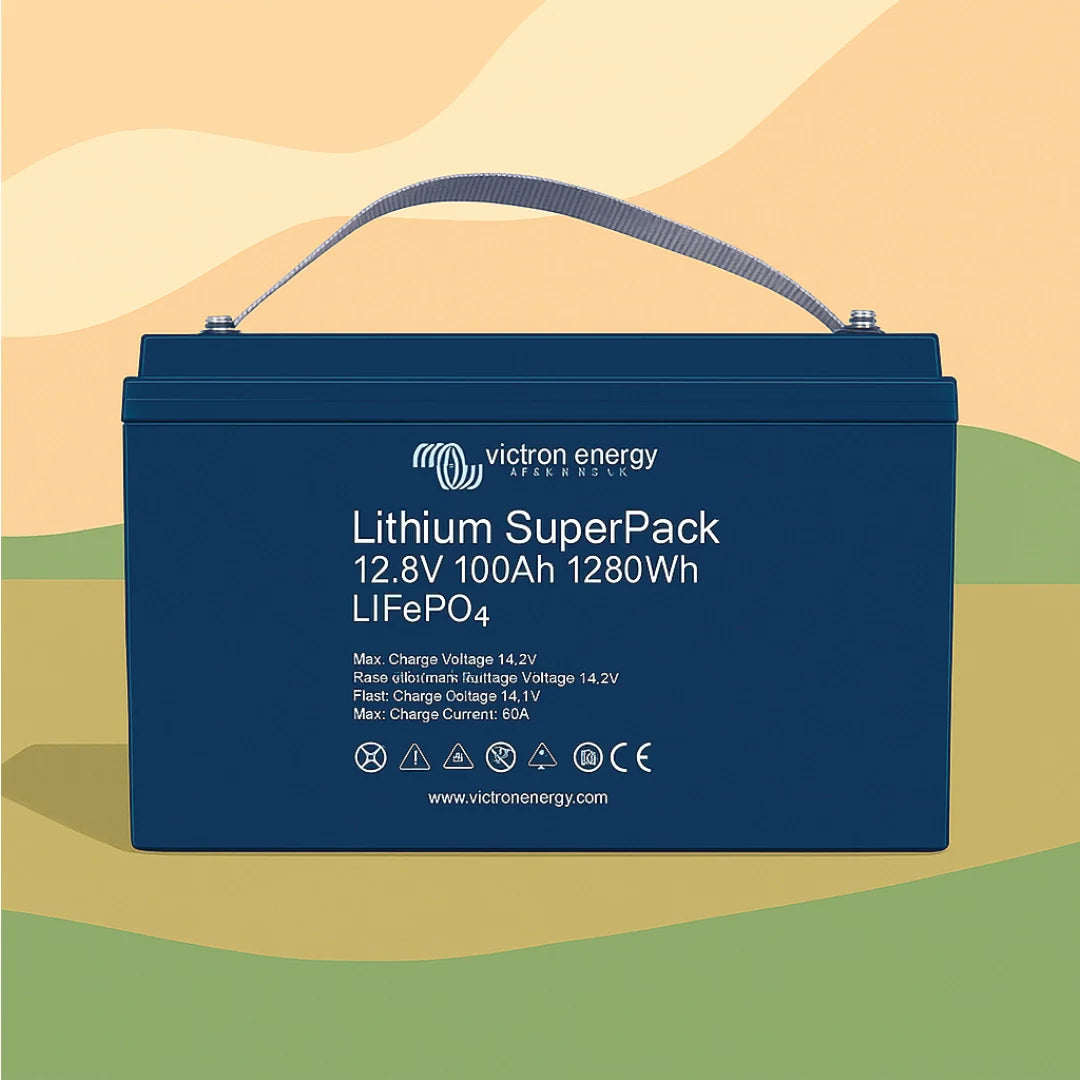
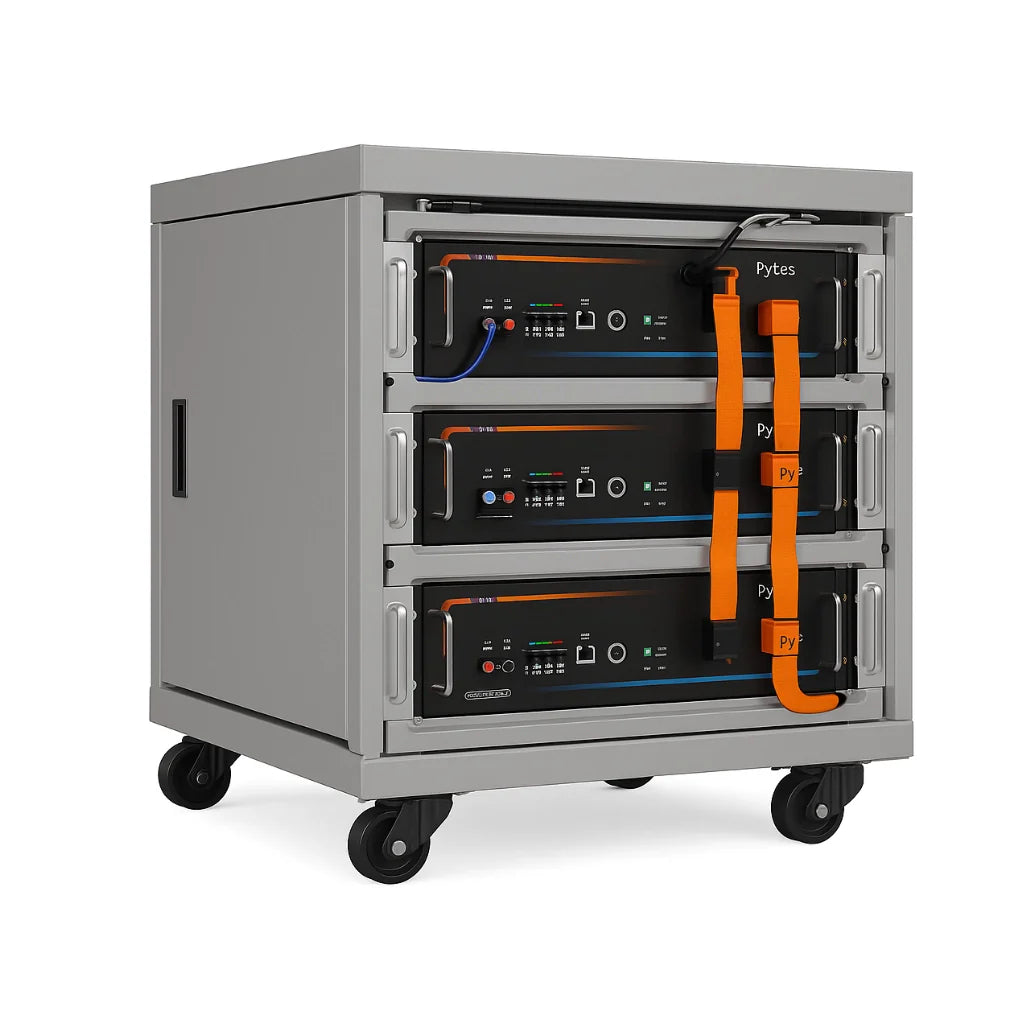
The Victron Energy LiFePO4 Battery 12.8V 100Ah Smart (£521.79) delivers full depth-of-discharge capability with integrated cell balancing and Bluetooth monitoring. You can run the battery down to 10% state of charge without degrading longevity, something you'd never do with lead-acid.

Weight Savings and Space Efficiency
A lithium leisure battery weighs roughly 30% of an equivalent lead-acid battery. A 100Ah lithium battery weighs approximately 30 kg. A 100Ah lead-acid battery weighs 35-40 kg. But remember: you need roughly twice the lead-acid capacity to match lithium's usable energy, so you're comparing 30 kg of lithium against 70-80 kg of lead-acid for equivalent usable capacity.
In a campervan, weight distribution matters. Excess battery weight over the rear axle affects handling and can exceed payload limits. Lithium batteries reduce weight dramatically, allowing you to add solar panels, additional appliances, or water tanks without exceeding your vehicle's maximum authorised mass. sustainable technology investments.
Space efficiency is equally important. Lead-acid batteries occupy roughly 50 litres per 100Ah. Lithium batteries occupy roughly 15-20 litres. In a small motorhome or van conversion where every cubic centimetre counts, lithium lets you install the capacity you need without losing living space.
SRNE Solar Charge Controller Compatibility and System Integration
One of the biggest concerns DIY installers raise is compatibility. Will a lithium battery work with my existing solar setup? The answer is almost always yes, but the details matter.
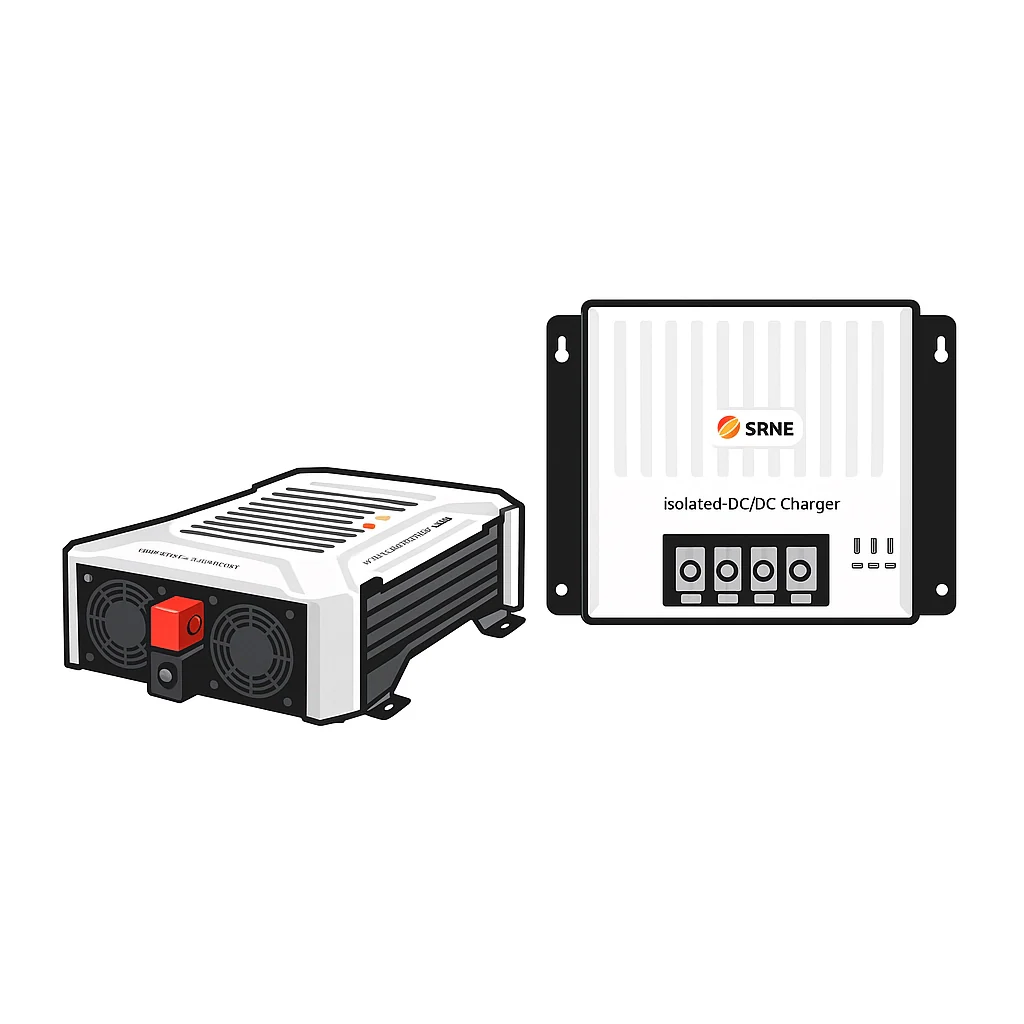
Most leisure vehicle solar systems use MPPT (Maximum Power Point Tracking) charge controllers. These controllers manage how solar panels charge your battery. The good news: lithium batteries are fully compatible with MPPT controllers, including SRNE solar charge controllers, which are widely used in UK campervan and motorhome installations.
The critical detail is the charge profile. Lead-acid batteries require a specific charging algorithm: bulk charge at constant current, then absorption charge at constant voltage, then float charge at a lower voltage. This three-stage process prevents overcharging and reduces battery stress.
Lithium batteries, particularly LiFePO4, have different charging requirements. They prefer constant-current charging to a specific voltage threshold, then immediate float. Many MPPT controllers, including SRNE models, can be configured for lithium charging profiles. If yours cannot, a simple firmware update or controller replacement solves the problem.
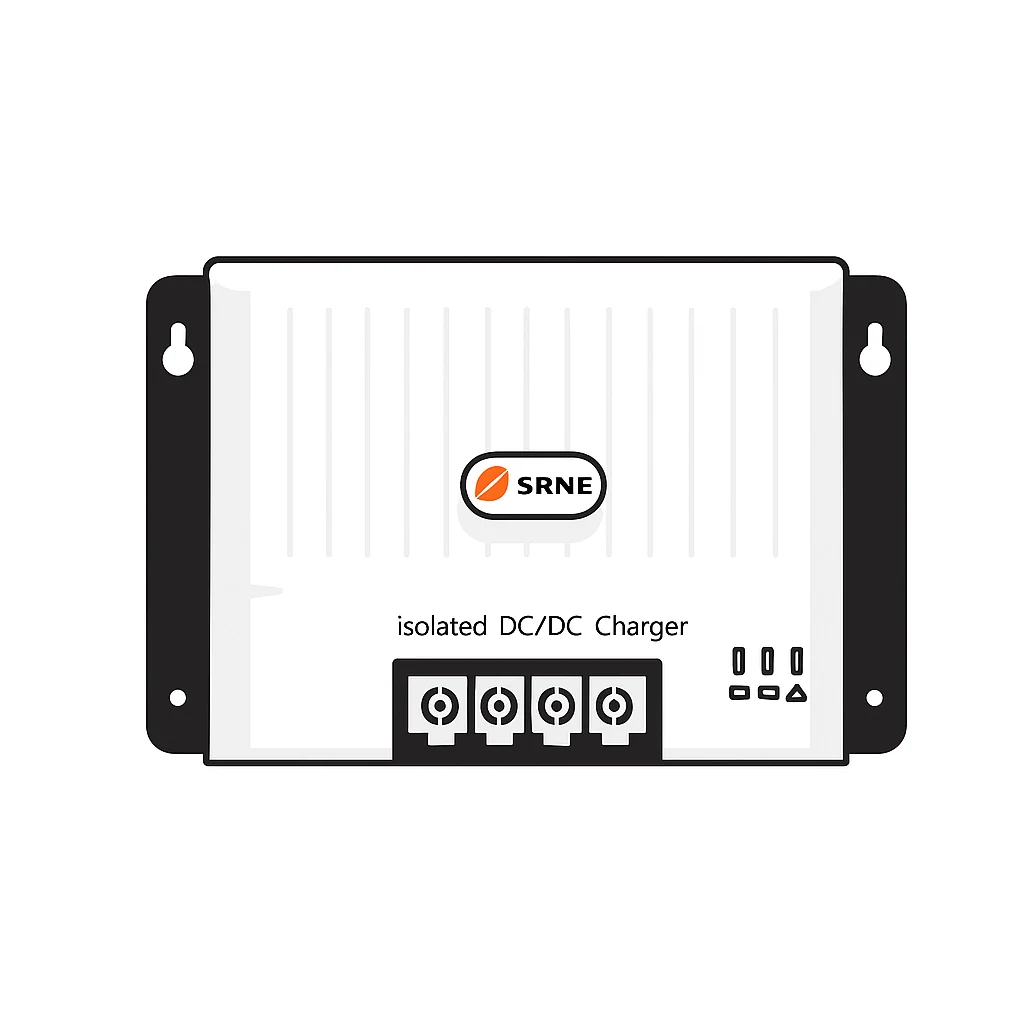
Skyenergi supplies complete system solutions that eliminate guesswork. Our SRNE solar charge controller range integrates seamlessly with our Edge and Elite lithium batteries. When you buy the system as a matched pair, you're not piecing together components and hoping they work, you're installing a tested, optimised solution.
The broader point: lithium isn't a drop-in replacement for lead-acid in every scenario. It requires slightly more careful system design. But that design work pays dividends in reliability, efficiency, and longevity. A properly configured lithium system with intelligent charging delivers 92% round-trip energy efficiency, compared to 80% for lead-acid.
When Lithium Isn't Worth It: Cold Weather and Grid-Connected Use
Lithium batteries have genuine limitations. Understanding them prevents costly mistakes.
Cold weather performance. Lithium batteries lose capacity in freezing temperatures. At 0°C, a lithium battery's usable capacity drops roughly 20-30%. At -10°C, it can drop 50% or more. If you're touring Scotland in winter or parking in alpine conditions, this matters. Lead-acid batteries handle cold better, though they also lose capacity in freezing conditions.
The solution isn't to avoid lithium in cold climates, it's to add a battery heater. Victron and other manufacturers offer heating systems that keep lithium batteries within their optimal operating range. This adds cost and complexity, but it's the only reliable approach if you need full capacity in winter conditions.
Grid-connected use. If your motorhome spends most of its time on mains hook-up at campsites, a lithium battery might be unnecessary luxury. The battery acts merely as a buffer for brief periods without mains power. In this scenario, a standard lead-acid or AGM battery costs less and serves the purpose adequately. You're paying for lithium's depth-of-discharge capability and long cycle life, features you won't fully utilise.
The contrarian viewpoint from the research is worth noting: lithium leisure batteries may be overkill for certain touring styles. If you're mostly on-grid at campsites with electric hook-up, upgrading your charging system might deliver better value than upgrading your battery.
Budget constraints. A Skyenergi Edge 100Ah lithium battery costs £219. A comparable lead-acid battery costs £207-250. The upfront difference is small. But if you're building a complete system with multiple batteries, the cost difference compounds. A five-battery lithium system costs roughly £1,095, while five lead-acid batteries cost £1,035-1,250. The lithium advantage becomes clearer over 10 years, but if you're budget-constrained and can only afford the system today, lead-acid remains a viable option.
Conclusion: Is the Investment Justified?
Lithium batteries are worth the cost for most campervan owners, motorhome converters, and off-grid installers. The data supports this conclusion clearly.
You'll recover your additional investment within 5-7 years through avoided replacements, reduced maintenance, and superior efficiency. Over 10 years, a lithium system costs 2.8 times less per usable kilowatt-hour than lead-acid. You gain reliability, weight savings, and the ability to actually use your battery's full capacity without degradation.
The exceptions are narrow: if you're touring exclusively on-grid, operating in sustained sub-zero temperatures without heating capability, or facing genuine budget constraints, lead-acid remains defensible. For everyone else, off-grid campers, solar enthusiasts, and anyone who values reliability and independence, lithium delivers genuine value.
Skyenergi supplies the complete ecosystem to make this transition straightforward. Our Edge lithium batteries pair seamlessly with SRNE solar charge controllers and Victron monitoring systems. We handle the system design so you don't have to. Fast UK delivery means your upgrade happens on your timeline, not months from now.
The investment in lithium battery technology isn't about luxury. It's about building a power system that actually delivers the independence and reliability you expect from your campervan or off-grid setup. Get started with Skyenergi and experience the difference that intelligent energy storage delivers.
| Battery Type | Usable Capacity (100Ah rated) | Lifespan | Cycle Life | Cost per Usable kWh (10-year) | Best For |
|---|---|---|---|---|---|
| LiFePO4 Lithium | 80-100Ah | 10-15 years | 5,000+ | £0.24-0.28 | Off-grid, solar storage, frequent cycling |
| AGM Lead-Acid | 50Ah | 3-5 years | 1,500 | £0.67-0.78 | Budget-conscious, grid-connected, occasional use |
| Gel Lead-Acid | 50Ah | 4-6 years | 1,200 | £0.71-0.82 | Marine use, vibration resistance, moderate cycling |
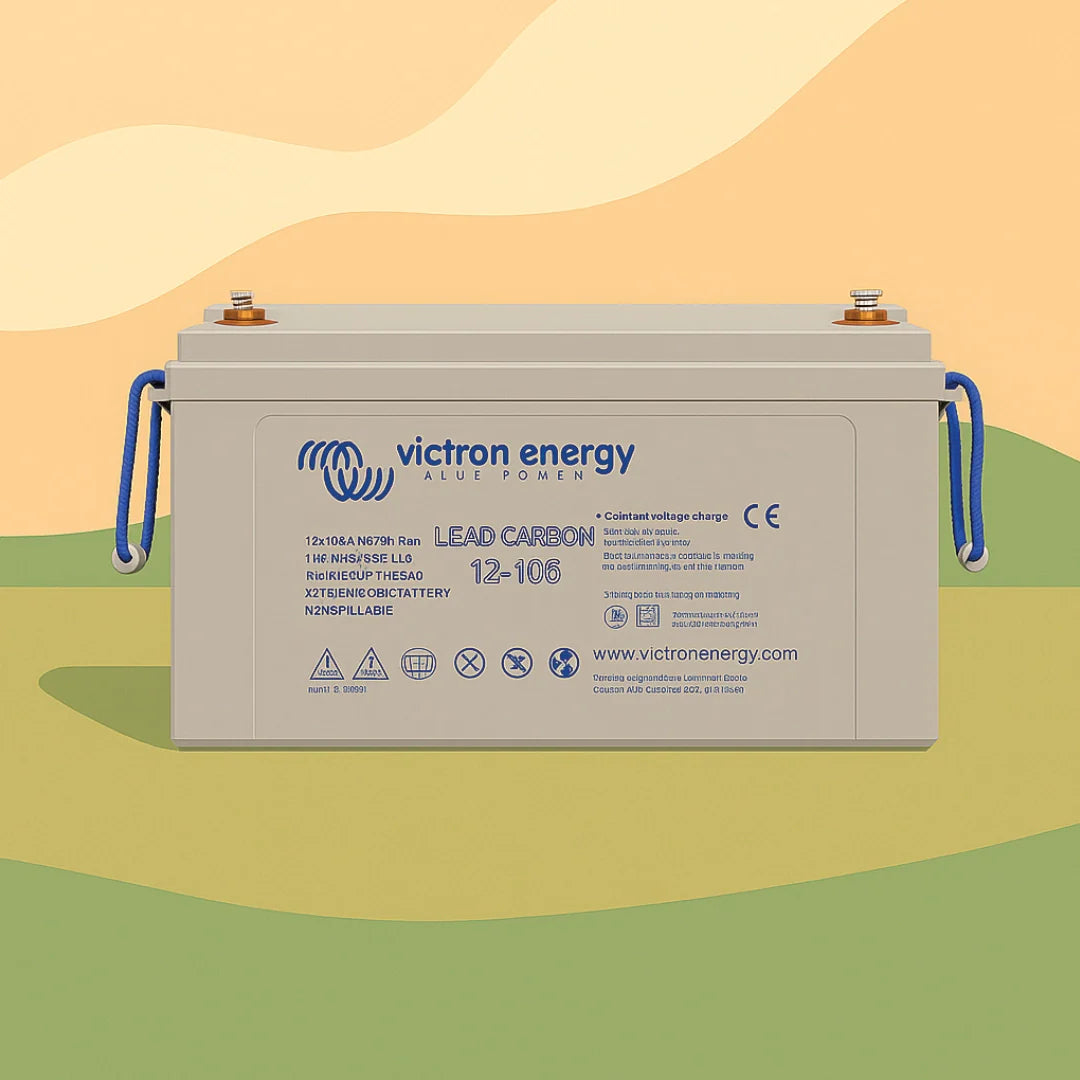
| Lead-Carbon | 60-70Ah | 5-8 years | 2,000 | £0.54-0.63 | Partial state-of-charge operation, improved efficiency |
Frequently Asked Questions
Q: Are lithium batteries worth the extra money compared to lead-acid?
A: Yes, if you use your battery regularly. A 10-year total cost analysis shows lithium costs 2.8 times less per usable kWh than lead-acid, despite higher upfront costs. The Skyenergi Edge 100Ah (£219.00) delivers more cycles than AGM, making it cost-effective for off-grid and campervan use.
Q: How long do lithium batteries last compared to AGM?
A: Lithium batteries typically last 10-15 years with 5,000+ cycle life, while AGM batteries last 3-5 years with 1,500 cycles. LiFePO4 chemistry tolerates deep discharge without degradation, whereas AGM suffers from sulfation when partially discharged. Skyenergi lithium batteries maintain 80% capacity after 10 years, whereas lead-acid batteries lose usable capacity much faster, especially in partial state-of-charge operation.
Q: Can I use my existing solar panels and charger with a lithium battery?
A: Most existing systems work with lithium, but charge profiles differ. Lead-acid chargers use specific voltages; lithium requires different charging parameters. SRNE solar charge controllers are compatible with lithium batteries and automatically adjust charging parameters. If upgrading to lithium, confirm your DC-to-DC charger or MPPT controller supports LiFePO4 profiles, or pair with Skyenergi's compatible SRNE system for seamless integration.
Q: What are the main downsides of lithium leisure batteries?
A: Cold weather performance drops significantly below 0°C without a heater; lithium batteries charge slowly or not at all in freezing conditions. Upfront cost is higher than lead-acid. If your campervan is grid-connected at campsites 90% of the time, lithium acts as an expensive buffer and may not justify the investment. However, for off-grid touring and frequent deep cycling, these downsides are outweighed by superior lifespan and efficiency.
This article was written using GrandRanker
Prev post

Best Campervan Battery Management System: 2026 Guide
Updated on 30 August 2026
Next post

Why Your Campervan Fridge Cuts Out: 7 Fixes
Updated on 28 August 2026


