





Solar Panel with Battery: Essential Guide for Off-Grid Power
Discover how a solar panel with battery works for off-grid power. Learn about MPPT controllers, lithium leisure battery lifespan, and system design.
Table of Contents
- How a Solar Panel with Battery System Works
- Key Benefits of MPPT Solar Charge Controller for Your System
- Understanding Lithium Leisure Battery Lifespan and Performance
- Off-Grid Solar Power System Design for Campervans and Homes
- SRNE and Skyenergi Product Comparison for Off-Grid Power
- Installation and Safety for a Solar Panel with Battery Setup
- Conclusion
- Frequently Asked Questions
Last Updated: September 21, 2026
How a Solar Panel with Battery System Works
A solar panel with battery system is a self-contained power setup that converts sunlight into electricity, stores it in a rechargeable battery, and releases it on demand to run appliances when the sun isn't shining. According to the International Energy Agency's Global Energy Review, 108 GW of new battery storage capacity was deployed worldwide in 2025, and installed global capacity is now eleven times higher than in 2021.
The Role of the MPPT Solar Charge Controller
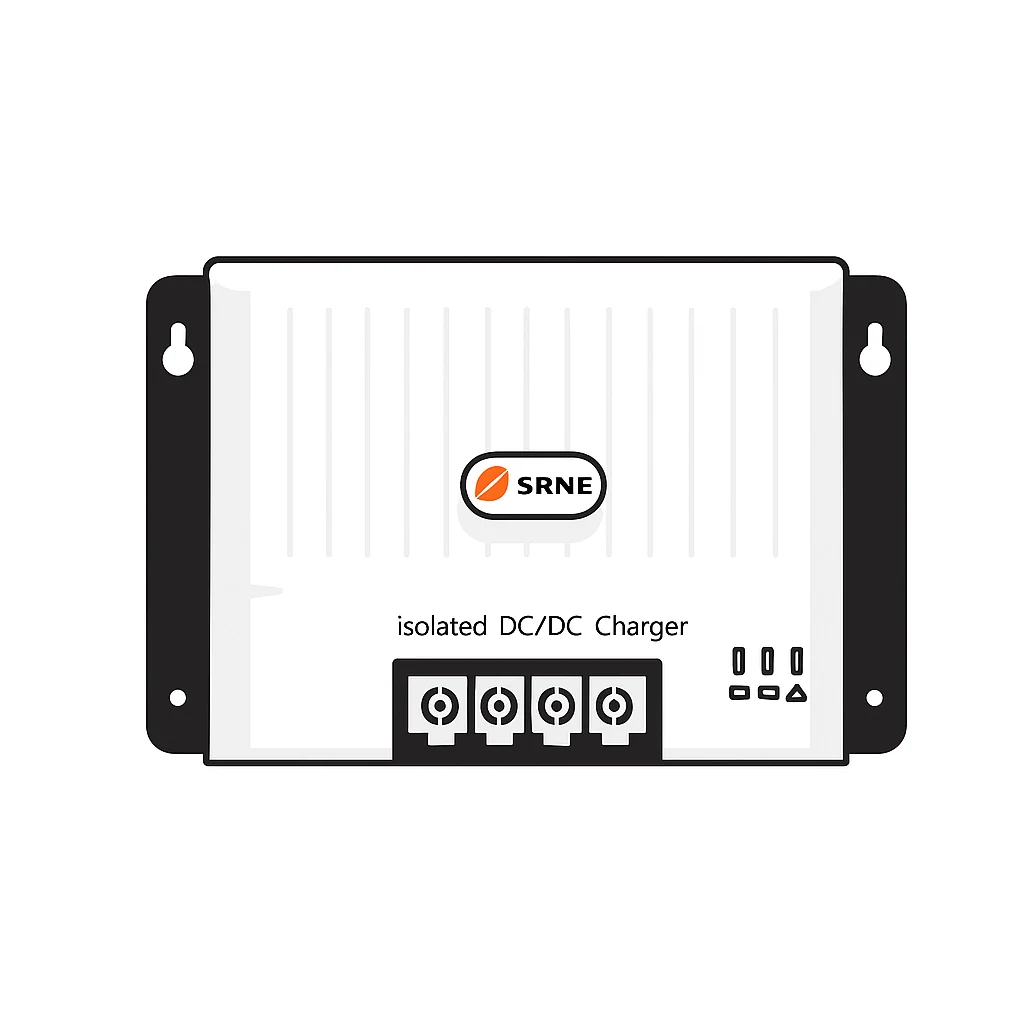
An MPPT solar charge controller extracts the maximum available power from your panels and delivers it to the battery at the correct voltage. Maximum Power Point Tracking constantly adjusts the electrical load to keep panels at peak output, which matters most in low light and cold conditions.
- A PWM controller drops panel voltage to battery voltage, wasting the surplus; an MPPT controller converts that surplus into additional charging current
- The gain is largest when panel voltage is well above battery voltage, typical on 12V systems
Key Benefits of MPPT Solar Charge Controller for Your System
Pair a quality controller with an intelligent energy management system and you can see exactly what is generated, stored and consumed.
Understanding Lithium Leisure Battery Lifespan and Performance
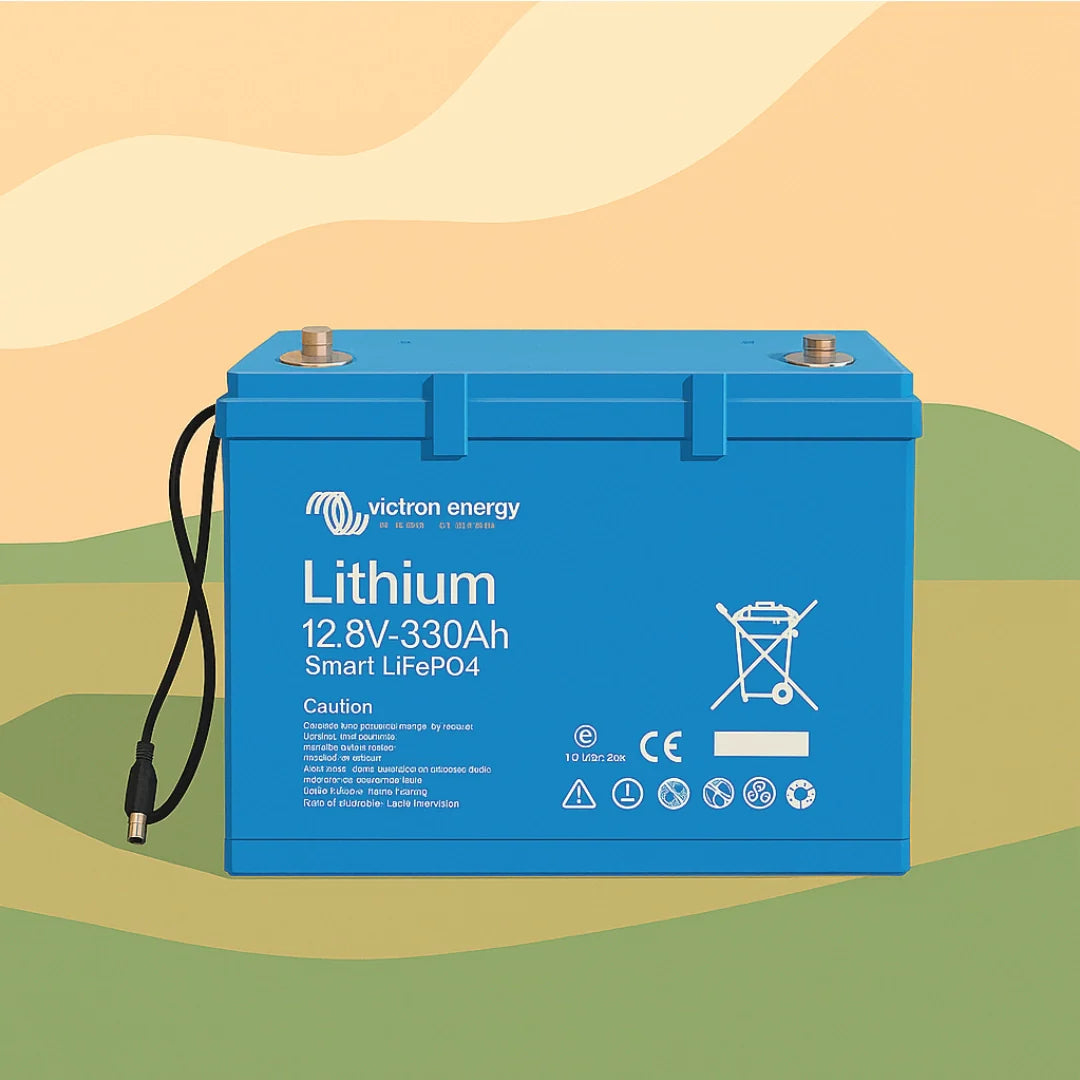
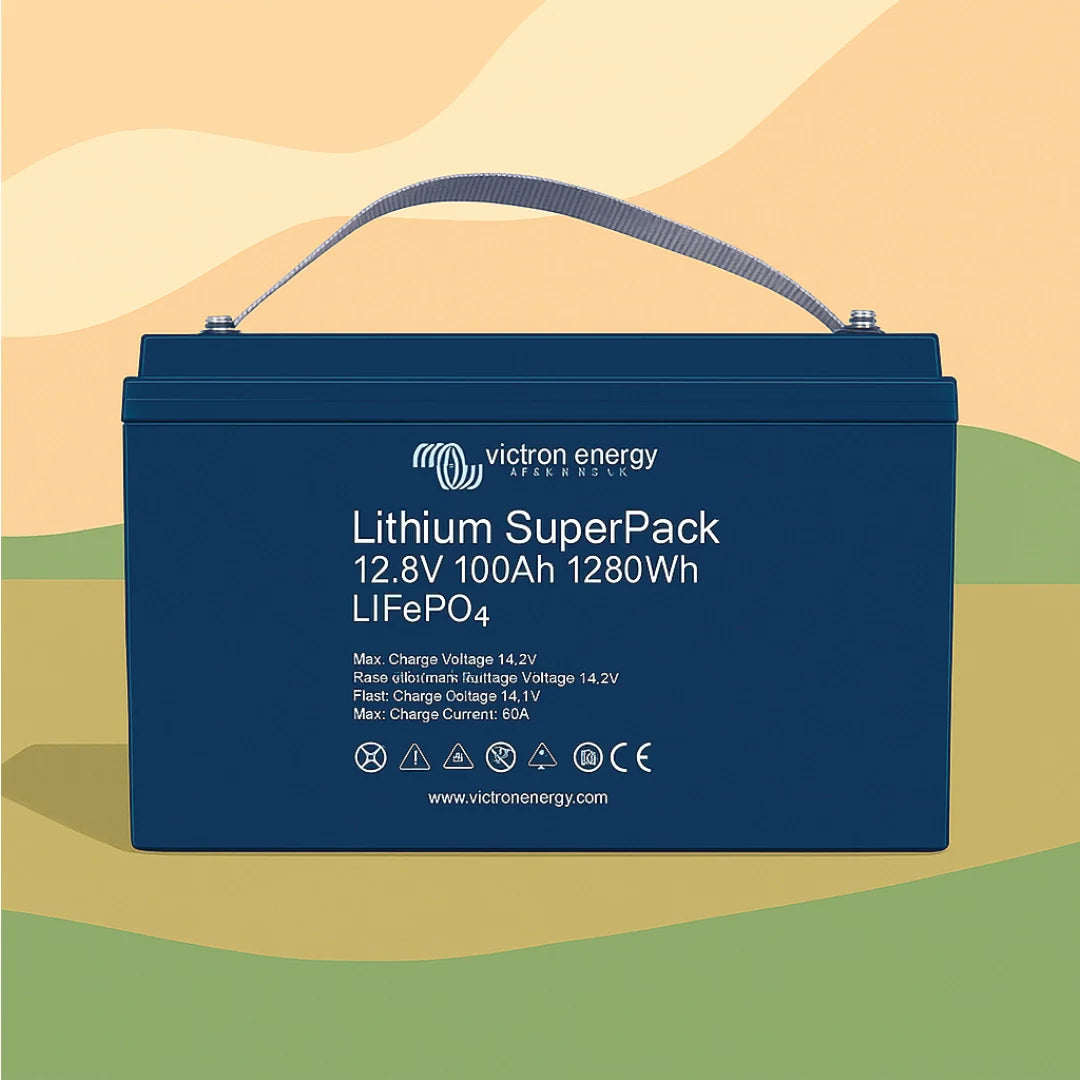
A lithium leisure battery lifespan is measured in charge cycles, not years. A well-managed LiFePO4 battery delivers several thousand cycles at usable depth of discharge, while a lead-acid equivalent manages a few hundred. But the headline cycle figure is only meaningful when you know how it was measured.
What a "Cycle" Actually Means
One cycle is a full charge from empty to full and back to empty; partial cycles accumulate, so two discharges to 50% count as one full cycle. A campervan that rarely drops below 60% state of charge puts far less wear on the battery than the cycle count suggests. A battery rated at 4,000 cycles at 80% depth of discharge delivers more total energy throughput than one rated at 4,000 cycles at 100% DoD.
Depth of Discharge and Usable Capacity
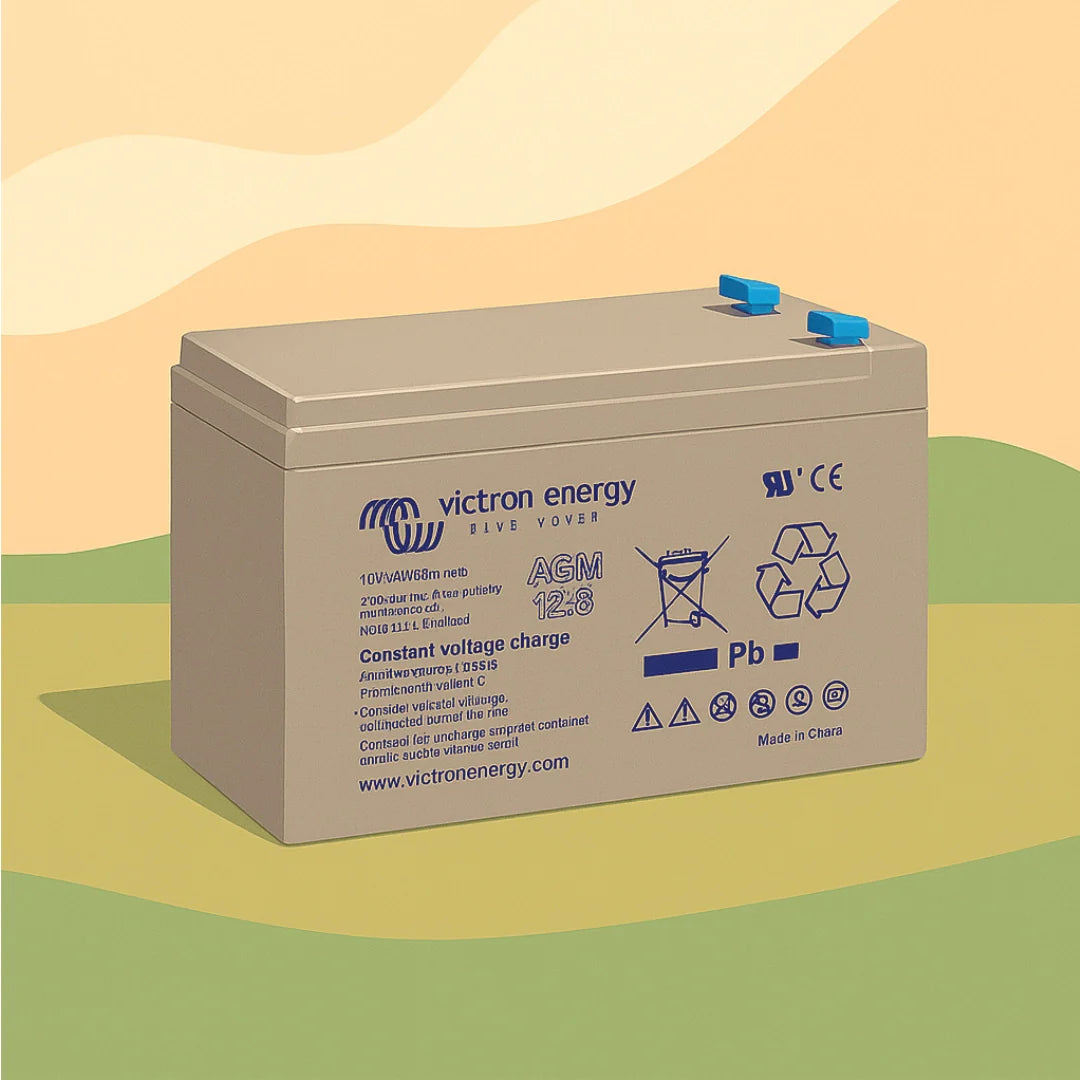
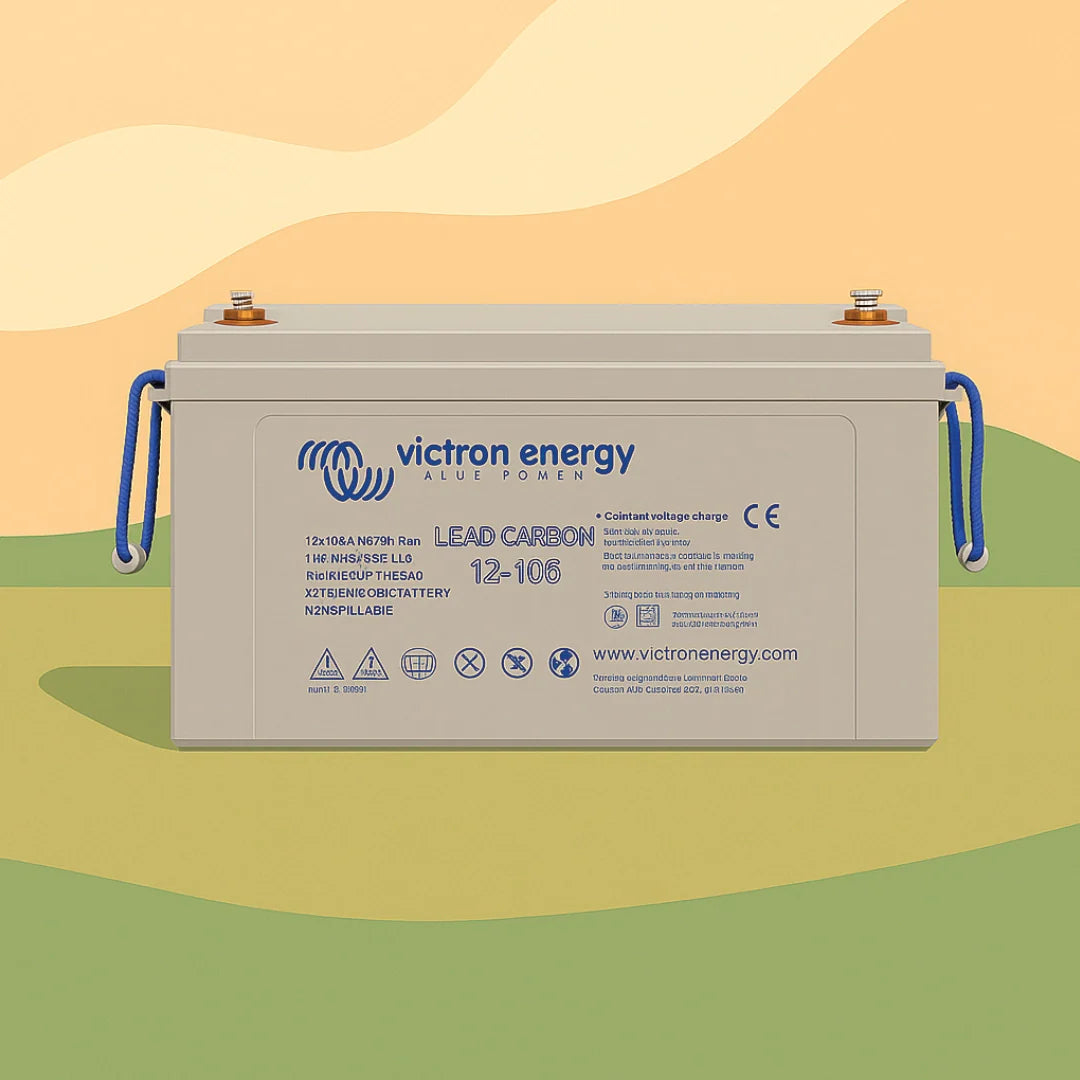
Depth of discharge (DoD) is the practical figure to watch. Lead-acid batteries should not be run below roughly half their capacity without shortening their life, while LiFePO4 cells tolerate far deeper discharge. A 100Ah LiFePO4 at 90% DoD gives 90Ah usable; a 100Ah lead-acid at 50% DoD gives 50Ah, so matching the lithium takes roughly two lead-acid batteries.
Temperature, Charging and Real-World Lifespan
Lifespan is not fixed at manufacture. Three factors dominate:
- Charging voltage. LiFePO4 cells want a precise absorption voltage, typically 14.2-14.6V for a 12V system. Overcharging shortens life; undercharging leaves capacity on the table. SRNE controllers manage bulk, absorption and float stages automatically, removing the most common cause of premature failure.
- Temperature. Charging a lithium battery below 0°C can cause permanent damage. Skyenergi lithium batteries include heat pads for exactly this reason, allowing safe charging in cold conditions.
- Depth of discharge. Consistently running to 100% DoD wears a battery faster than stopping at 80%. If you have the capacity, set your inverter cut-off conservatively.
Round-Trip Efficiency
Round-trip efficiency matters too. Lithium systems return a higher proportion of the energy you put in, while lead-acid loses more to heat and gassing. Over a year of daily cycling, that difference shows up as more usable energy from the same panels.
LiFePO4 vs. Lead-Acid: What Lasts Longer?
LiFePO4 lasts considerably longer than lead-acid in leisure use and holds its voltage under load rather than sagging, which is why fridges and inverters stop cutting out after an upgrade.
| Factor | LiFePO4 | Lead-Acid |
|---|---|---|
| Usable depth of discharge | Deep, typically 80-90% | Shallow, around 50% |
| Cycle life | Several thousand cycles | A few hundred cycles |
| Weight for same capacity | Much lighter | Substantially heavier |
| Voltage under load | Stable | Drops as it discharges |
| Cold-weather charging | Needs heating below 0°C | Tolerates cold better |
| Up-front cost per usable Ah | Higher | Lower |
End-of-Life and Recycling
LiFePO4 cells are not hazardous like older chemistries, but they should not go in general waste. Reputable suppliers operate take-back or recycling routes, and cells can be processed to recover lithium, iron and phosphate. Ask your supplier before you buy.
Off-Grid Solar Power System Design for Campervans and Homes
Design starts with an energy audit, not a shopping list. Add up what you run in watts and multiply by the hours per day you run it. That gives daily consumption in watt-hours, the number every other decision follows from.

Sizing Your Battery Bank and Solar Array
Size the battery bank for two days of consumption if you want resilience, one day with reliable alternator charging. Then size the array to refill that bank in a realistic day's sun, allowing for output falling short of nameplate rating.
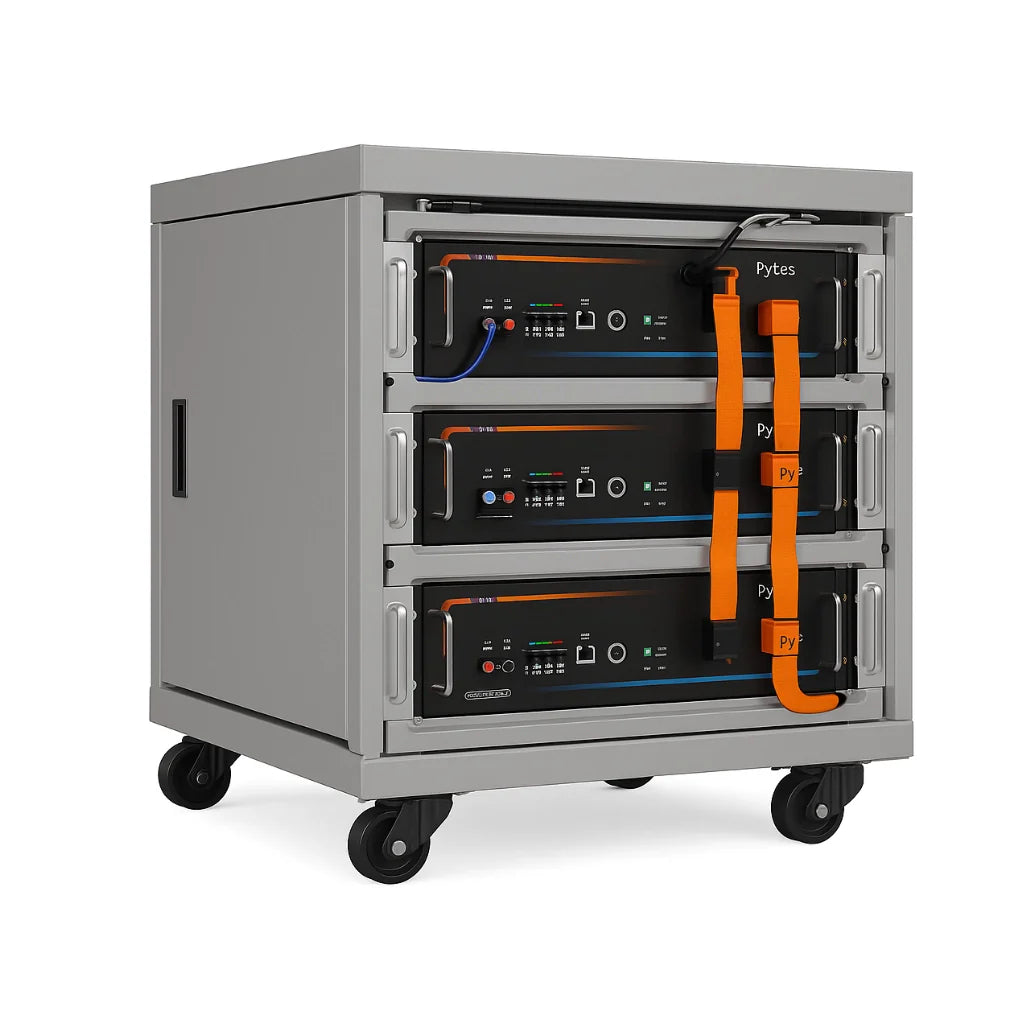
Victron 3000 Easysolar 2 GX with Pytes →
Practical sizing sequence:
- Calculate daily consumption in watt-hours
- Multiply by your chosen days of autonomy
- Divide by usable depth of discharge to get nominal capacity
- Size the array to replace daily consumption plus a margin
- Match the charge controller to array output
SRNE and Skyenergi Product Comparison for Off-Grid Power
Choosing between kits comes down to how much you want pre-matched. SRNE equipment and Skyenergi batteries are designed to work as one system, with charging, inversion and monitoring communicating rather than running as separate islands.
| System | Core Components | Best For | Price |
|---|---|---|---|
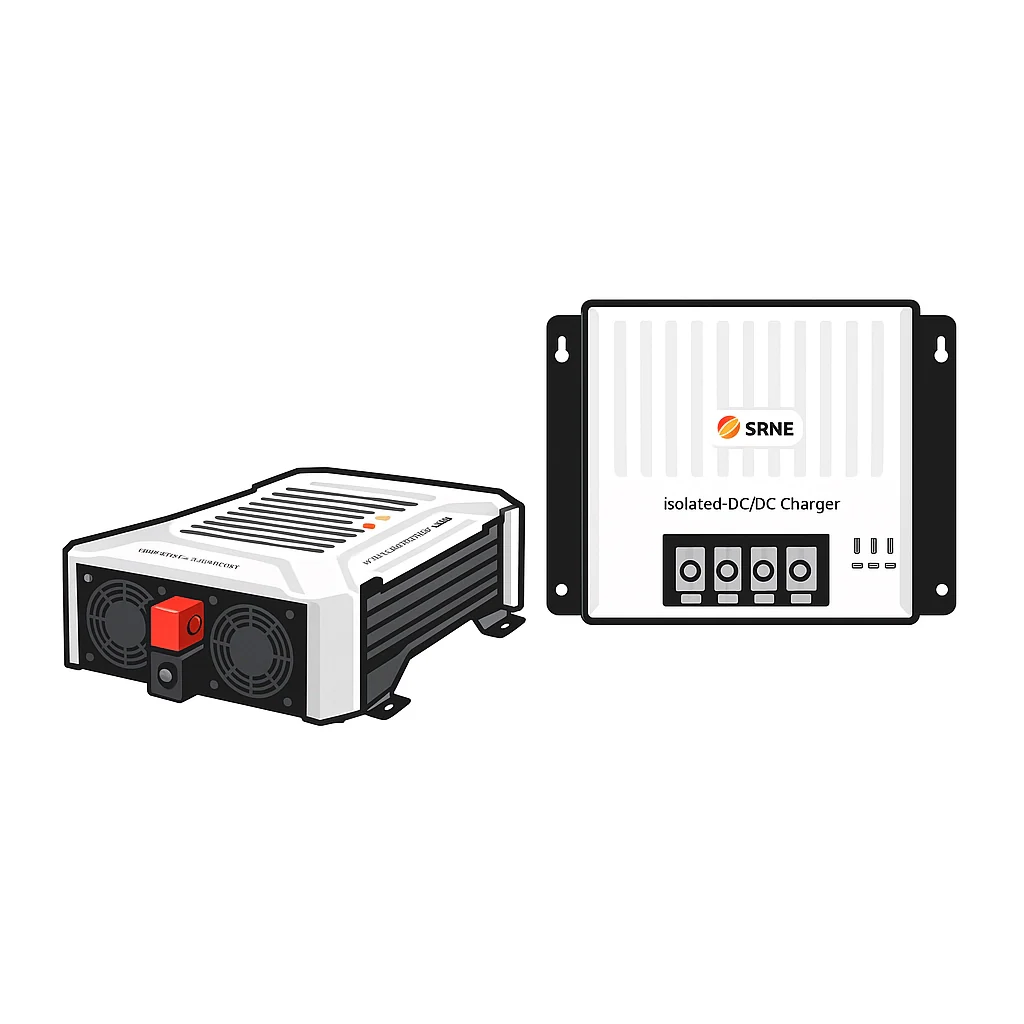
| SRNE Power System | SAA 3-in-1 MPPT/DC-DC/AC charger, 3kW inverter, shunt | Vans charging from multiple sources | £874.00 |
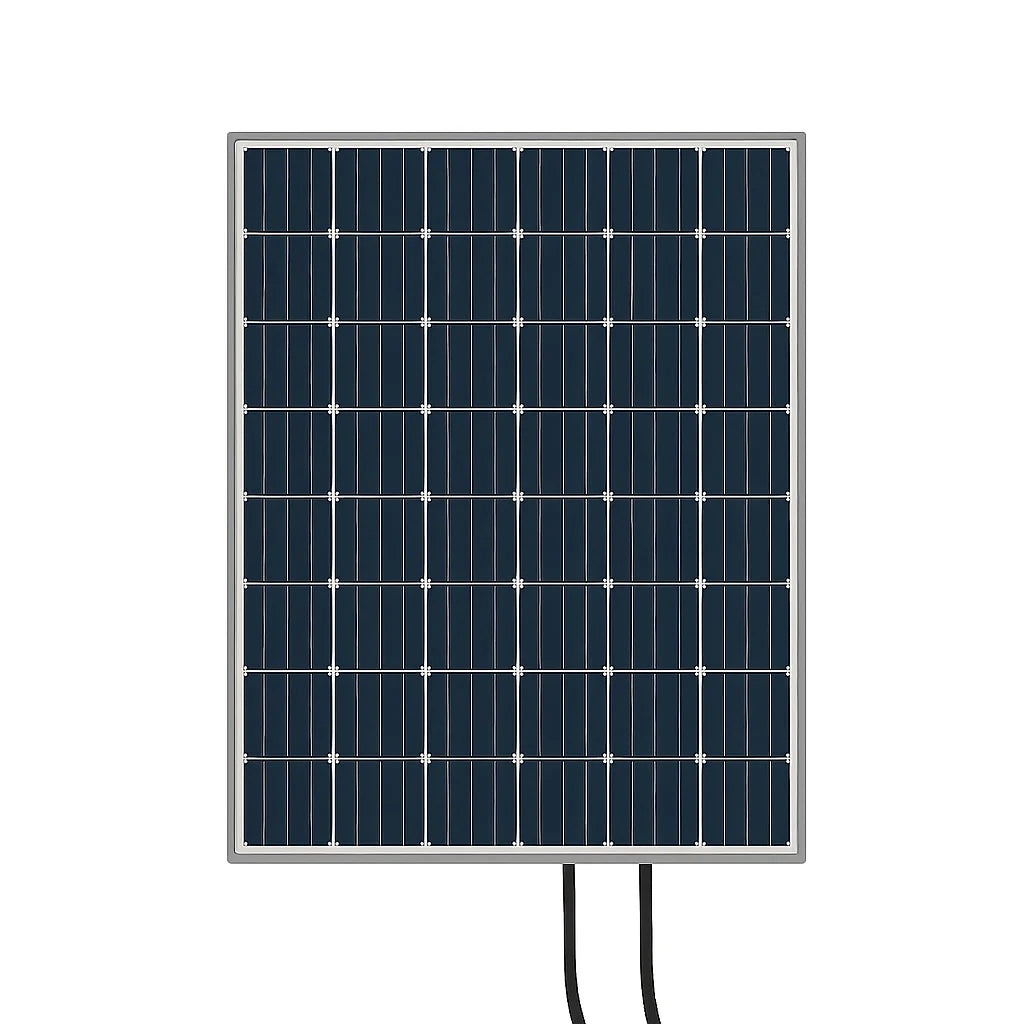
| Victron 370W Solar Kit | 2 x 185W panels, SRNE 40A MPPT, 2kW inverter, 230Ah battery | Self-contained solar-first builds | £1,169.00 |
| Victron EasySolar II GX with Pytes | MultiPlus-II 48/3000, SmartSolar MPPT, GX device, Pytes V5A | Full-time off-grid and hybrid backup | £1,017.00 |
| Complete Solar & Electrics System | 3kVA inverter/charger, DC-to-DC, Cerbo GX monitoring | Higher-amperage builds with CAN bus | £1,825.00 |
Installation and Safety for a Solar Panel with Battery Setup
Installation should be carried out by a qualified electrician. DC systems carry high current, and a loose connection at 200A is a fire risk, not an inconvenience.
Retrofitting a Battery to an Existing Solar System
If you already have solar panels and an inverter, adding a battery is usually simpler than a full new install, but not plug-and-play. Three things need checking:
- Inverter compatibility. A grid-tied string inverter without battery inputs cannot accept a battery directly. You either add an AC-coupled battery system, or replace the inverter with a hybrid unit. The SRNE power system's three-in-one design is a common retrofit choice because it replaces several separate boxes with one unit handling MPPT, DC-to-DC and AC charging.
- Charge controller capacity. If your existing controller is a PWM unit, upgrading to MPPT is usually worthwhile before adding storage, because the controller determines how much of your array's output reaches the battery.
- Cable and fuse ratings. Adding a battery increases DC-side current. Existing cable may need upgrading, and the battery positive must be fused close to the terminal.
Safety and Fire Regulations for Battery Placement
Battery placement is governed by more than common sense. In the UK, residential electrical installations follow BS 7671 (the IET Wiring Regulations), with energy storage guidance in BS EN IEC 62933 and the IET Code of Practice for Electrical Energy Storage Systems. Part P of the Building Regulations applies to domestic electrical work, and notifiable work must be certified by a registered competent person.
The practical implications for placement:
- Indoor placement. Batteries should be in a ventilated enclosure, away from habitable rooms where possible, and not in a means of escape. LiFePO4 is far less prone to thermal runaway than older chemistries, but the installation still needs to account for worst-case failure.
- Outdoor placement. Outdoor enclosures must be weatherproof to at least IP65, with thermal management for summer heat and winter cold. Heat pads, as fitted to Skyenergi lithium batteries, allow charging in sub-zero conditions that would otherwise damage the cells.
- Clearance and access. Leave space around the battery for ventilation and future maintenance.
- Labelling and isolation. Fit a clearly labelled DC isolator so the battery can be safely disconnected in an emergency.
Key Safety Points
- Fuse the battery positive close to the terminal, not at the far end of the cable
- Use cable sized for the run; upgrade to 25mm² beyond 10 metres
- Mount batteries securely and ventilate the enclosure
- Fit a battery monitor so you can see faults before they strand you
- Confirm your installer is registered for notifiable work under Part P
Conclusion
Building an off-grid system that works comes down to matching components rather than collecting the biggest numbers. Skyenergi supplies lithium leisure batteries, solar panels, MPPT controllers and SRNE charging systems as a coordinated package, with fast delivery and practical support. Explore the SRNE power system, our 370W solar kit and the Victron EasySolar II GX range to find the configuration that fits your van or property.
Frequently Asked Questions
Is it worth getting a battery with solar panels?
Yes, adding a battery to a solar panel system increases self-consumption and provides backup power during outages. With 108 GW of new battery storage deployed globally in 2025, the technology is proven. For off-grid applications like campervans, a battery is essential to store energy for use when the sun isn't shining. It also allows you to use time-of-use tariffs to charge when electricity is cheaper.
How does an MPPT controller improve solar charging efficiency?
An MPPT solar charge controller constantly adjusts the electrical operating point of your solar panels to extract maximum available power. Unlike simpler PWM controllers, MPPT controllers can increase charging efficiency by 15-30%, especially in low-light or cold conditions. This means your battery charges faster and you get more usable energy from the same solar array, which is critical for off-grid systems.
Can I use lithium batteries for off-grid solar storage?
Lithium batteries, particularly LiFePO4 (lithium iron phosphate), are ideal for off-grid solar storage. They offer higher depth of discharge (DoD), often 80-90% compared to 50% for lead-acid, meaning you can use more of the stored energy. They also have a longer lifespan, often 3,000-5,000 cycles, and are lighter and more compact. Brands like Skyenergi offer lithium leisure batteries specifically designed for campervan and off-grid use.
How do I size a solar system for my campervan or off-grid application?
To size your system, first calculate your daily energy consumption in kilowatt-hours (kWh) by listing each appliance's power rating and usage hours. Then determine the solar array size needed to replenish that energy, accounting for average sun hours. Finally, size your battery bank to cover at least 1-2 days of autonomy. For example, a 2kWh daily demand might require a 400-600W solar array and a 200-300Ah lithium battery at 12V.
Prev post

Campervan Lithium Battery Size Guide: 2026 UK Sizing
Updated on 22 September 2026
Next post

How to Wire a DC to DC Charger with Smart Alternator
Updated on 20 September 2026


