





Benefits of Lithium for Off-Grid: 2026 Guide
Discover the benefits of lithium for off-grid power in 2026. Compare LiFePO4 vs AGM, sizing, weight savings and SRNE & Skyenergi systems. Start.
Table of Contents
- Why Lithium Is the Backbone of Off-Grid Power in 2026
- LiFePO4 vs AGM for Campervans: The Chemistry That Decides Your System
- Lithium Battery Weight Savings: What It Means for Your Van
- Off-Grid Solar Power System Sizing with Lithium
- Charging Efficiency: Fast Charging, Solar Controllers and SRNE Integration
- Safety, BMS and Cold Weather Performance
- Choosing the Right Lithium Battery for Your Off-Grid Setup
- Frequently Asked Questions
Last Updated: September 12, 2026
Why Lithium Is the Backbone of Off-Grid Power in 2026
Energy storage lithium consumption is forecast to grow 55% in 2026, and grid-scale storage alone accounts for 31% of that increase, according to analysis of the 2026 energy storage cell price landscape. For anyone running power away from the mains, that shift matters: the benefits of lithium for off-grid systems now go well beyond marketing claims.
At Skyenergi, we supply lithium leisure batteries and the charging hardware that keeps them healthy, so we see where the real gains sit. This guide covers the chemistry, sizing maths, weight savings and cold-weather behaviour that actually decide whether a system performs.
The short version: lithium iron phosphate (LiFePO4) gives you more usable capacity, a longer lifespan and less weight than lead-acid for the same nominal rating. Below, we break down each benefit with the numbers behind it.
LiFePO4 vs AGM for Campervans: The Chemistry That Decides Your System
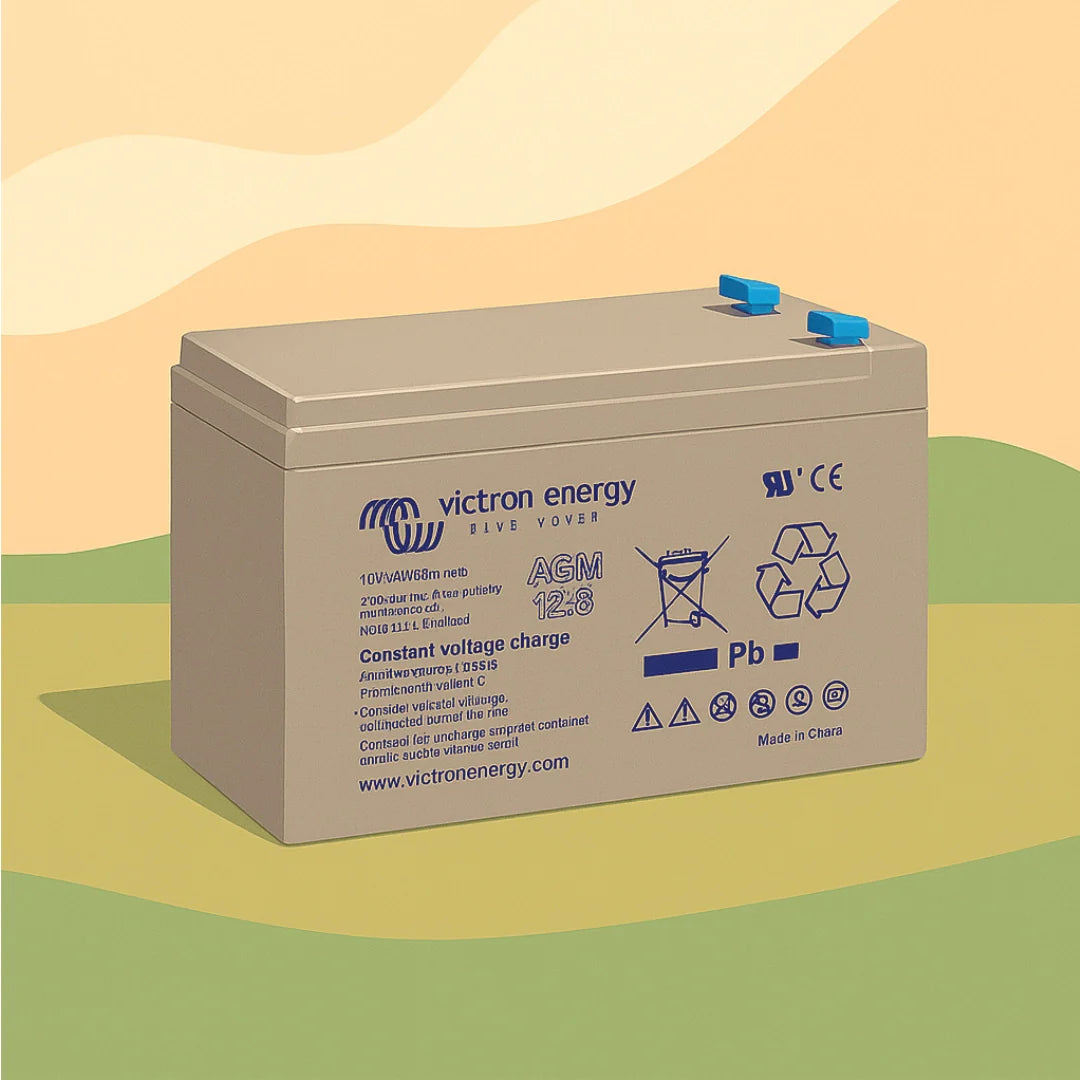
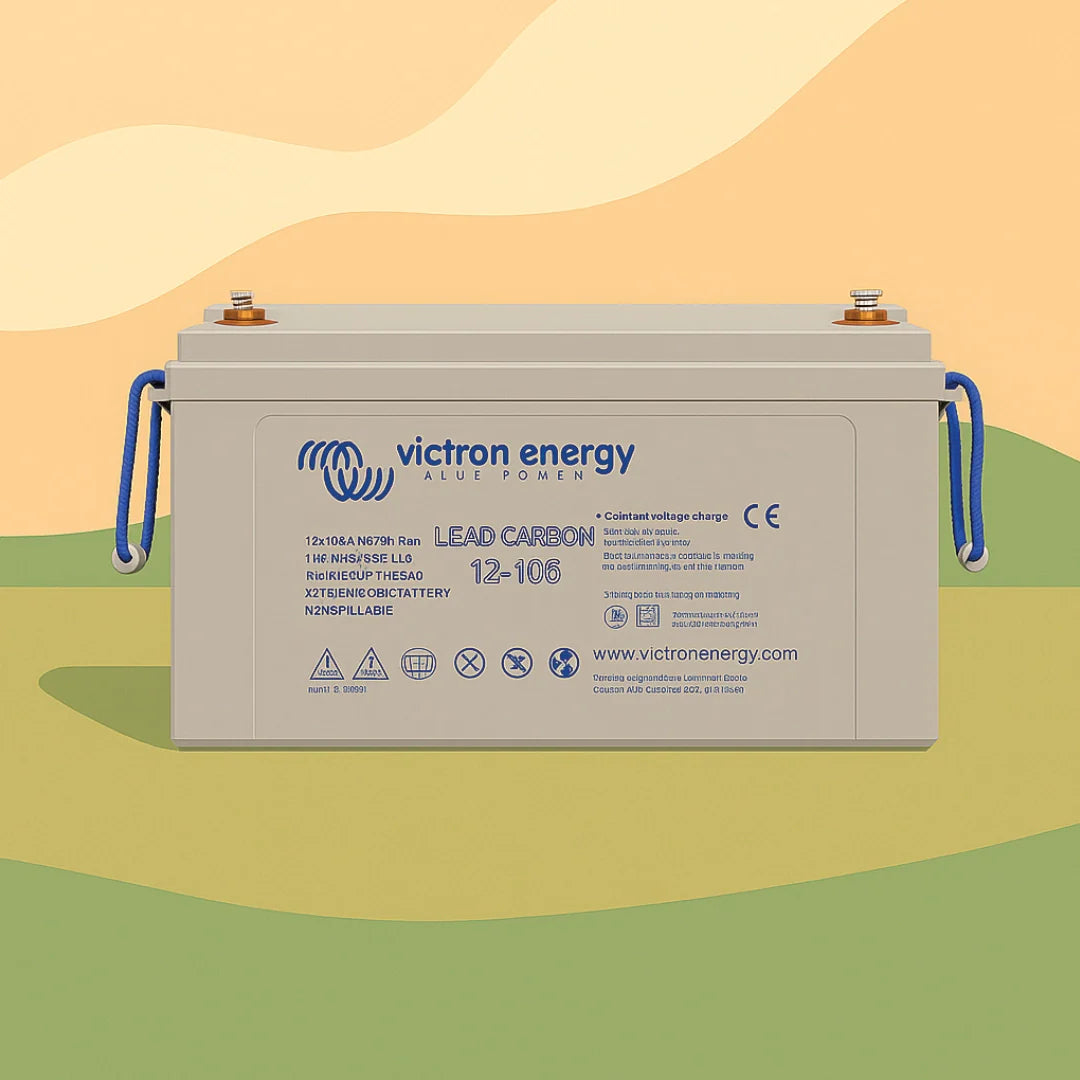
LiFePO4 is a lithium iron phosphate chemistry that stores energy in a stable cathode structure, while AGM (absorbed glass mat) is a sealed lead-acid design. The chemistry determines how much energy you can actually use, how many times you can cycle it, and how long it lasts.
This is where the two diverge sharply.
Depth of Discharge and Usable Capacity
Depth of Discharge (DoD) is the percentage of a battery's total capacity you can draw before recharging. LiFePO4 tolerates 80-90% DoD routinely; AGM should not go below 50% without shortening its life.
A 100Ah lithium battery therefore delivers roughly 80-90Ah of usable energy. A 100Ah AGM gives you about 50Ah. To match the lithium unit, you would need nearly double the AGM capacity, and double the weight.
Cycle Life and Total Cost of Ownership
High-quality LiFePO4 batteries are expected to reach 15 to 20 years of service life, or between 6,000 and 10,000 cycles, according to Anern Store's 2026 home energy storage trends. AGM typically manages 500-800 cycles at 50% DoD.
Run the maths over a decade and the picture flips. Lithium costs more upfront but replaces two to three AGM banks in the same period, so the total cost of ownership drops.
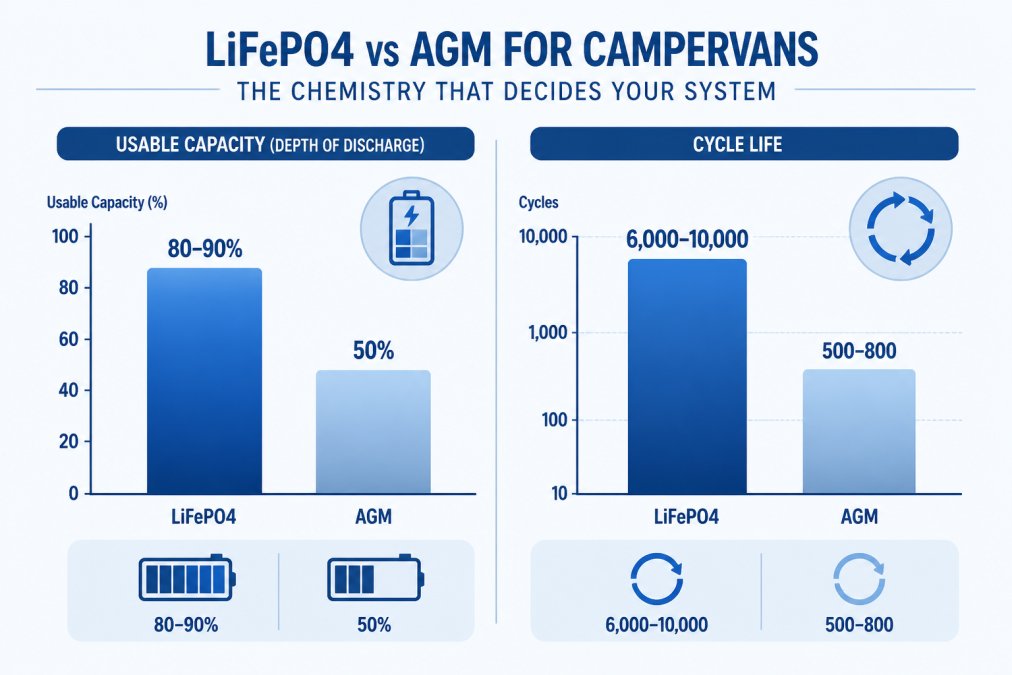
| Spec | LiFePO4 | AGM |
|---|---|---|
| Usable capacity (100Ah unit) | 80-90Ah | ~50Ah |
| Cycle life | 6,000-10,000 | 500-800 |
| Typical lifespan | 15-20 years | 3-5 years |
| Weight (100Ah) | ~11-14kg | ~30kg |
| Maintenance | None | Periodic |
Lithium Battery Weight Savings: What It Means for Your Van
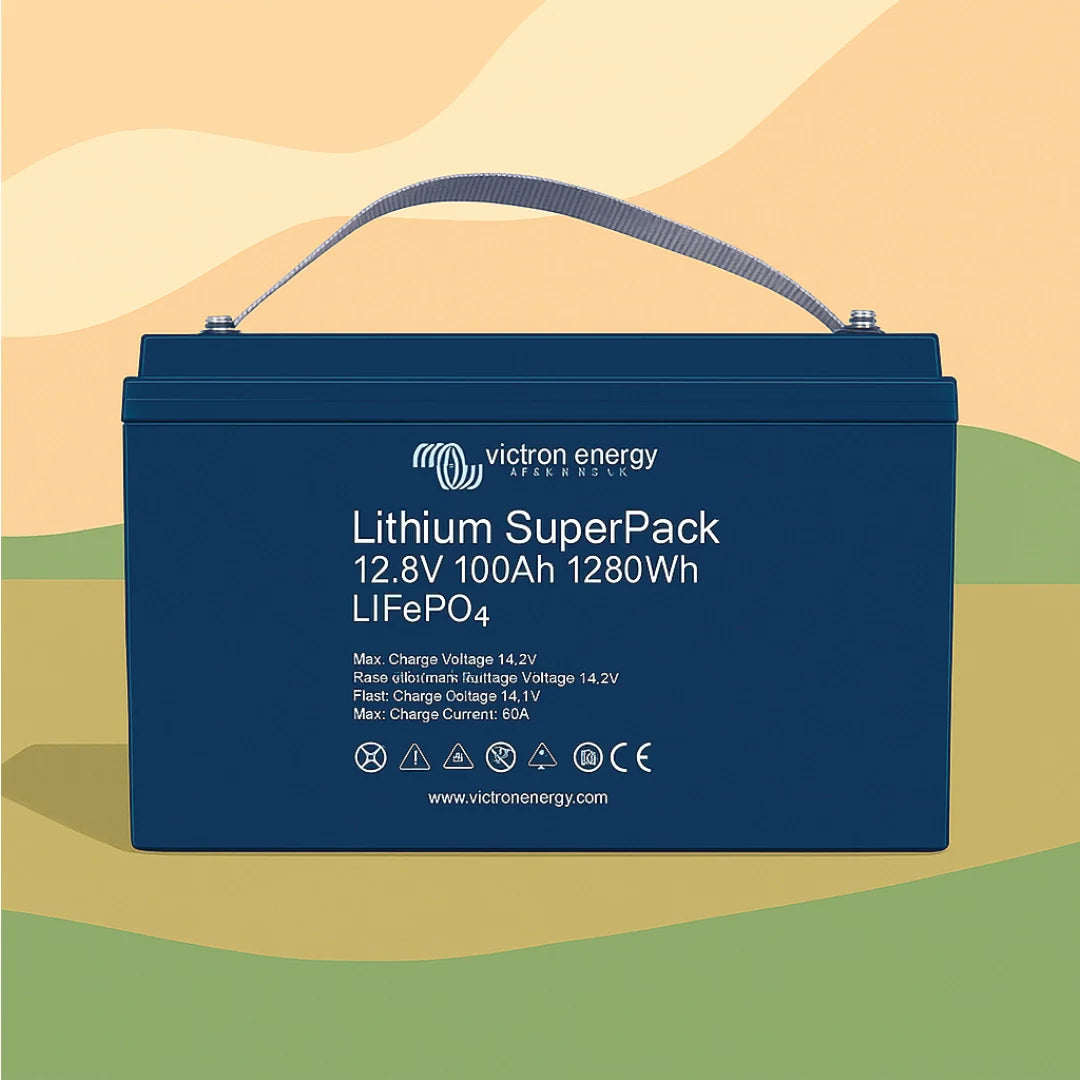
Weight is the benefit campervan owners feel immediately. A 100Ah LiFePO4 battery weighs roughly 11-14kg, while an equivalent AGM unit sits near 30kg. Swap two AGM batteries for one lithium bank and you can shed 40kg or more.
That matters for payload limits, fuel economy and handling. It also frees up locker space, since lithium packs more energy into a smaller footprint.
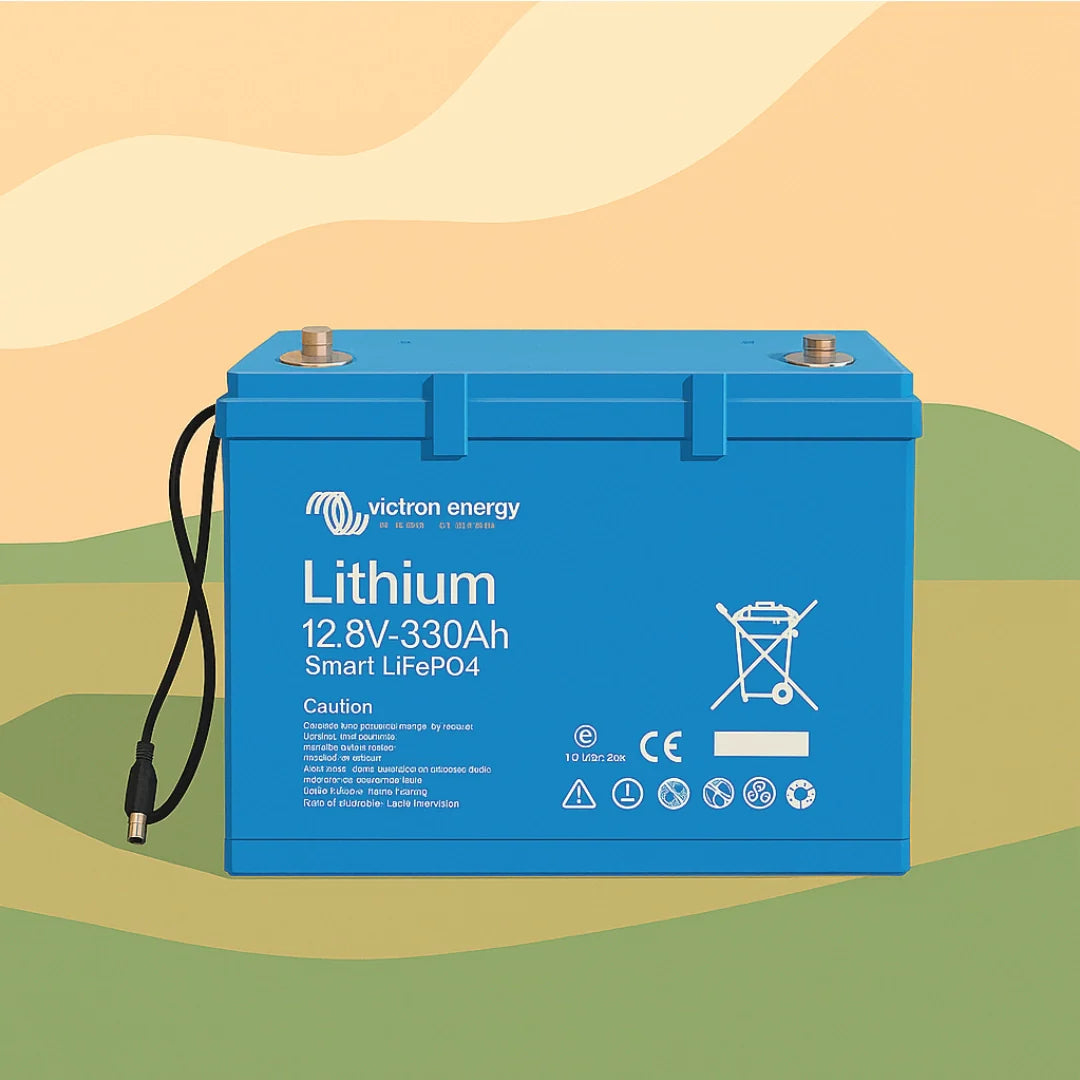
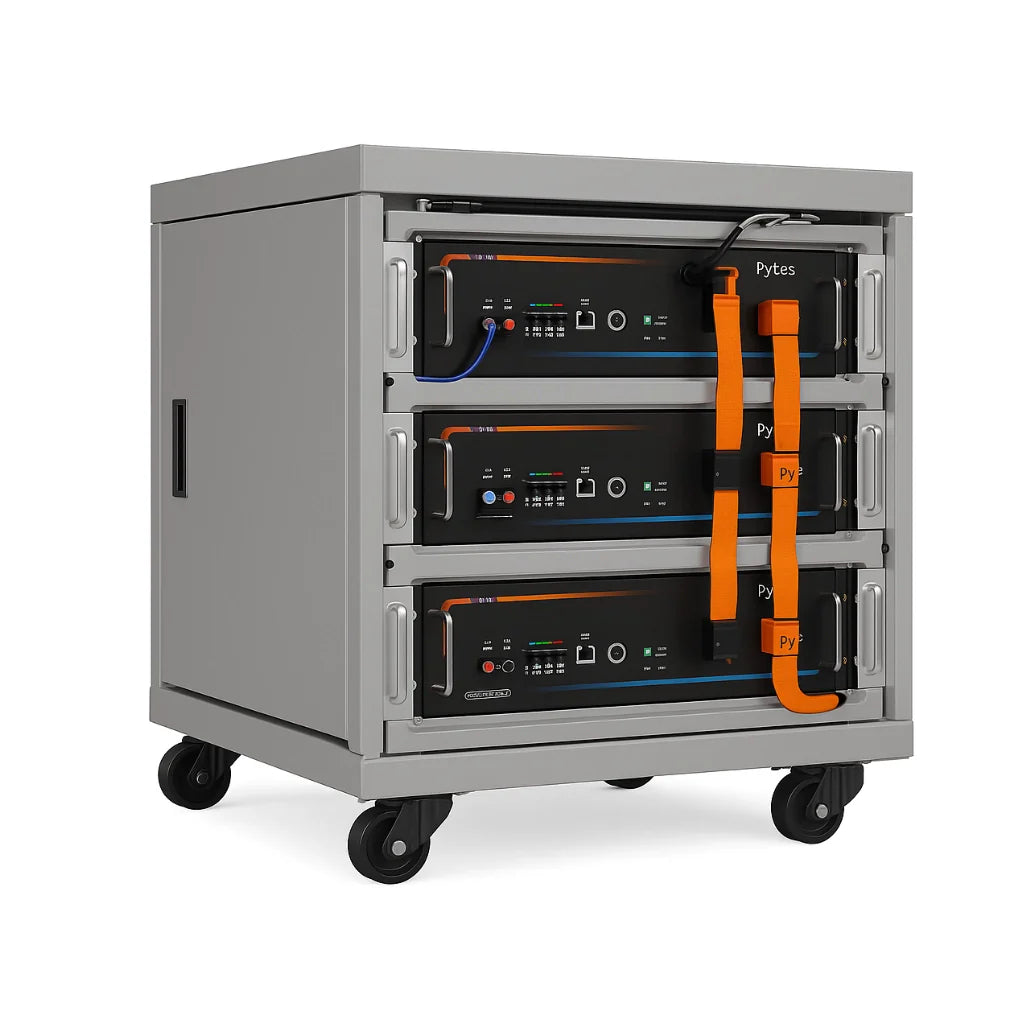
For a small motorhome, a single 100Ah lithium unit can replace a bulky twin-AGM setup. The Skyenergi Edge 100Ah, for example, delivers dependable usable capacity in a compact case, and the Edge 280Ah scales that up for larger builds without the weight penalty of parallel lead-acid banks.

Off-Grid Solar Power System Sizing with Lithium
Off-grid solar power system sizing is the process of matching your daily energy consumption to battery capacity and solar input. With lithium, the maths is simpler because you can plan around 80-90% DoD instead of 50%.
Start with a load audit. List every appliance, its wattage and its daily runtime in hours. Multiply watts by hours to get watt-hours (Wh), then add everything up. A typical campervan load might look like this:
| Appliance | Wattage | Hours/day | Wh/day |
|---|---|---|---|
| 12V compressor fridge | 45W | 8 (duty cycle) | 360 |
| LED lighting | 15W | 5 | 75 |
| Laptop charging | 65W | 3 | 195 |
| Water pump | 60W | 0.5 | 30 |
| Phone/tablet charging | 20W | 4 | 80 |
| Inverter standby | 10W | 24 | 240 |
| Total | 980Wh/day |
That is just under 1kWh per day. Add a 20% buffer for inefficiencies and you are planning around 1.2kWh daily consumption.
Matching Your Battery Bank to Load and Solar Input
A 200Ah 12V lithium bank gives you roughly 2.4kWh at 80% DoD, which comfortably covers a 1.2kWh daily load with one day of autonomy. If you want two days of backup for cloudy weather, double the bank to 400Ah or accept that you will need a generator or alternator charging on the second day.
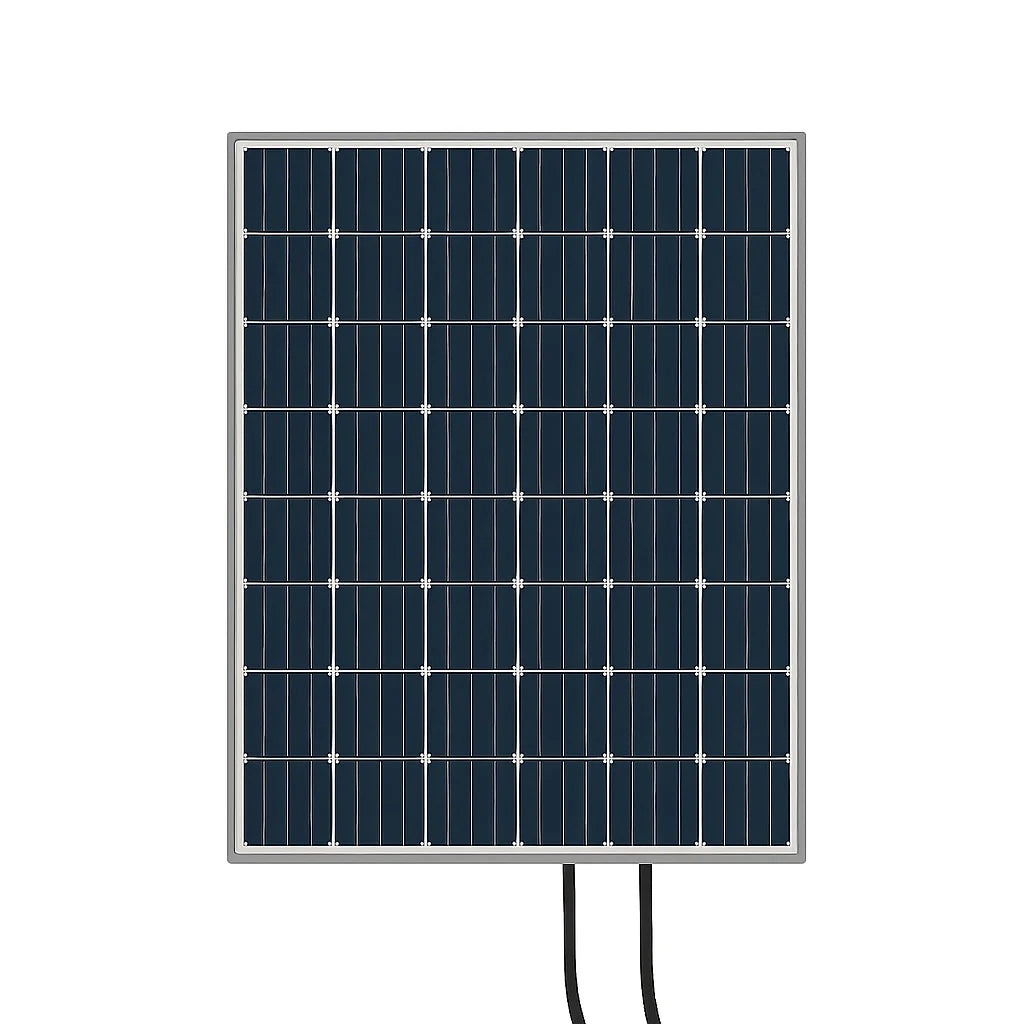
Size your solar array to replace daily consumption plus a buffer. In the UK, assume 2-3 peak sun hours on an average day, so a 400W array realistically produces 800-1,200Wh. That is enough to cover a 1kWh daily load in summer but will fall short in winter, when peak sun hours drop to 1-1.5 and panel output can halve. Pair the array with an MPPT solar charge controller for the best harvest, PWM controllers waste up to 30% of available power in cool conditions.
Seasonal Variation and Winter Planning
The UK winter is the hardest test for any off-grid solar system. Between November and February, a fixed 400W array might produce only 300-500Wh on a typical day, and less during overcast spells. If your daily consumption is 1.2kWh, you will be running a deficit for weeks.
There are three practical responses:
- Oversize the array. A 800W-1kW array gives you more headroom in shoulder months and keeps the battery topped up on brighter winter days.
- Add alternator or generator charging. A DC-to-DC charger from the vehicle alternator can put 30-50A into the bank during drives, and a generator run for an hour can replace a day's consumption.
- Reduce winter load. Switching the fridge off and using a cooler box, or running the inverter only when needed, can cut daily consumption by 30-40%.
For higher-demand off-grid properties, scaling to a 48V battery bank and a larger array keeps voltage drop low and efficiency high. A 48V system also lets you use smaller cable sizes for the same power, which matters when cable runs exceed a few metres.
A Note on Inverter Sizing
Battery capacity and inverter size are separate decisions. A 200Ah 12V lithium bank can comfortably run a 1,000-1,500W inverter for short bursts, but a 3,000W inverter will pull more current than the BMS allows and will trip. Check your battery's continuous discharge rating before buying an inverter, and remember that inductive loads like induction hobs and power tools draw a surge on startup that can be two to three times their rated wattage.
Charging Efficiency: Fast Charging, Solar Controllers and SRNE Integration
Lithium accepts charge far faster than lead-acid and holds a high C-rating, so you can recharge a flat bank in a few hours rather than a full day. That fast charging capability changes how you plan trips and generator runs.
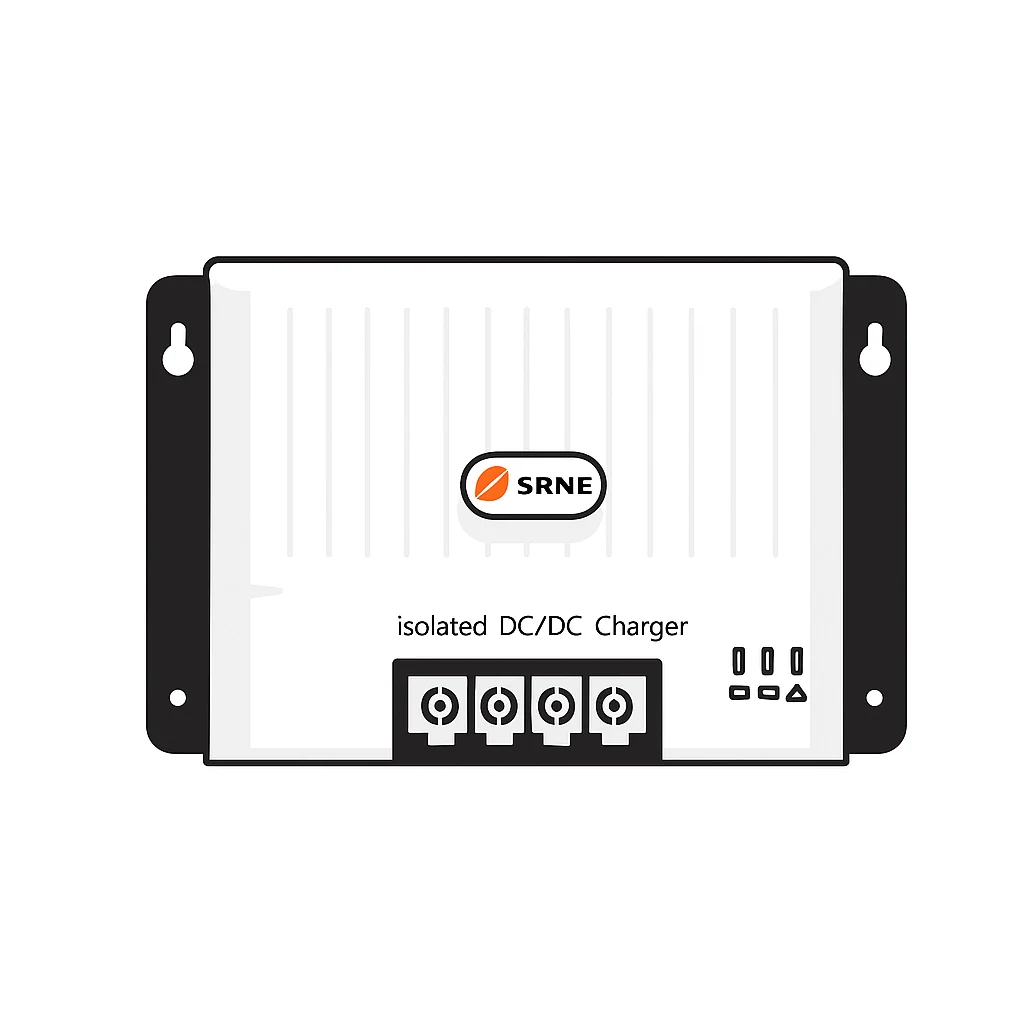
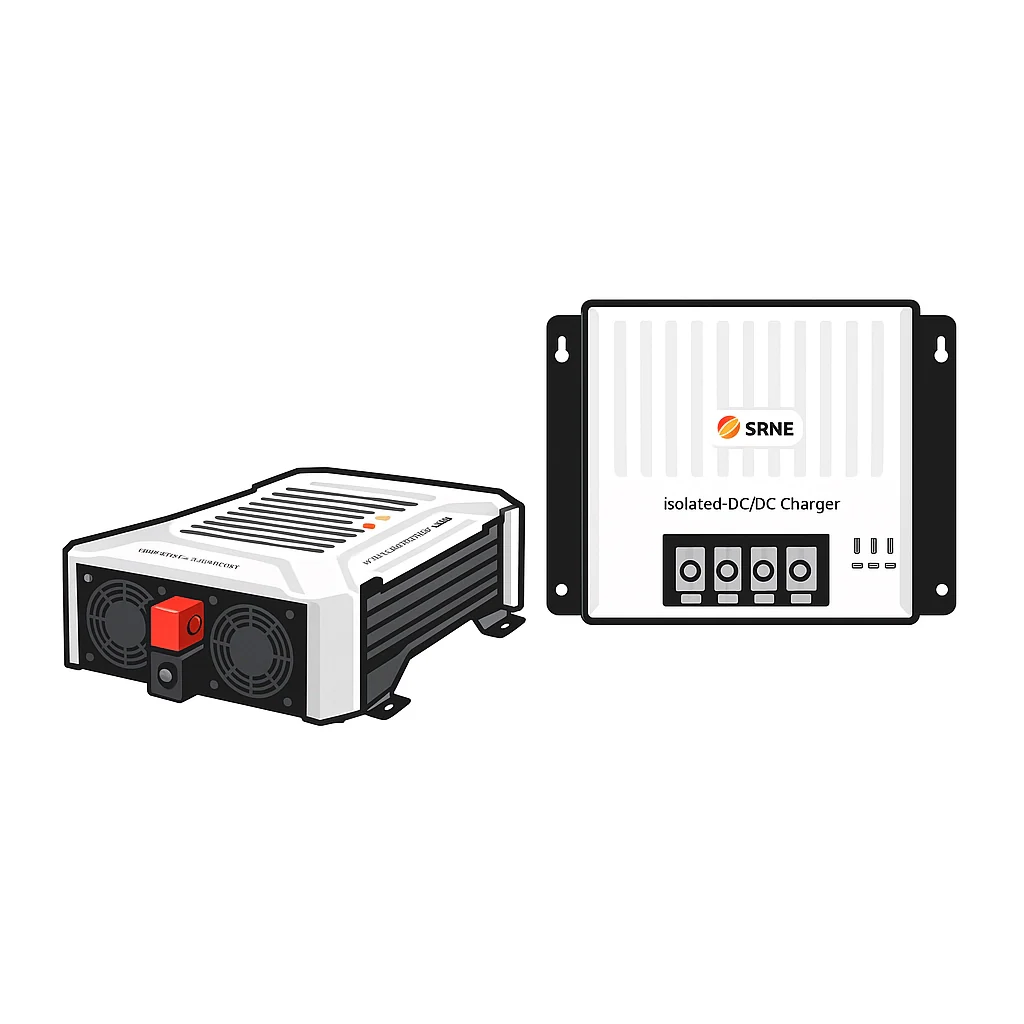
The hardware matters as much as the cells. Skyenergi supplies advanced SRNE charging and monitoring systems alongside MPPT solar charge controllers and DC-to-DC chargers. SRNE units handle the charging stages, over-discharge protection and state-of-charge reporting in one package, which matters if you are integrating with an existing setup.
Why the Charge Profile Matters More Than the Charger Brand
A common mistake is pairing new lithium batteries with an old lead-acid charge profile. Lead-acid charging runs through bulk, absorption and float stages at voltages designed to stir electrolyte and prevent stratification. LiFePO4 does not need that. It needs a simpler profile: constant current to roughly 14.2-14.6V for a 12V bank, then a hold until current tapers, then a float around 13.4-13.6V. Push absorption too high and the BMS will disconnect to protect the cells; set float too low and the battery never reaches full charge.
Most practitioners find that the single biggest upgrade to an existing off-grid system is not a bigger battery but a charger that supports a proper LiFePO4 profile. SRNE charge controllers include preset lithium profiles and allow custom voltage adjustment, so you can match the exact absorption and float figures your battery manufacturer specifies.
Configuring an SRNE Controller for a Lithium Bank
When commissioning an SRNE MPPT controller with a lithium bank, the sequence is straightforward but easy to get wrong:
- Set battery type to LiFePO4 (not AGM or flooded).
- Confirm absorption voltage against your battery's datasheet, typically 14.2-14.6V for 12V, 28.4-29.2V for 24V, 56.8-58.4V for 48V.
- Set float voltage to roughly 13.4-13.6V per 12V nominal.
- Disable equalisation, lithium cells must never be equalised.
- Set low-voltage disconnect to match your BMS cutoff, usually around 10.5-11.0V per 12V nominal under load.
- Enable temperature compensation only if the controller supports lithium-specific profiles; otherwise leave it off.
If you are adding lithium to a system that already has an inverter-charger or a DC-to-DC charger, check that every charge source uses the same profile. A mismatch between the solar controller and the alternator charger is one of the most common causes of chronic undercharging and premature BMS disconnects.
Fast Charging in Practice
A 100Ah LiFePO4 battery can typically accept 50-100A of charge current, meaning a 50A charger can refill it from 20% to 100% in under two hours. An AGM battery of the same nominal capacity would accept perhaps 20-30A and would need a much longer absorption phase to reach full charge. For off-grid users running a generator, that difference translates directly into fuel saved and fewer running hours.
Safety, BMS and Cold Weather Performance
Every quality lithium battery includes a Battery Management System (BMS), the electronic control unit that monitors cell voltage, temperature and current. It enforces over-discharge protection, short-circuit protection and cell balancing.
LFP chemistries are significantly less prone to thermal runaway than other lithium-ion variants, according to RTO Insider's 2026 clean energy outlook. That thermal stability is a core reason LiFePO4 dominates off-grid use.
Cold weather is the one genuine limitation. Lithium should not be charged below 0°C, so winter use needs care. Heated batteries solve this: the Skyenergi Elite range includes an integrated heat pad that warms the cells before charging begins. Models like the Elite 304Ah and Elite 560Ah also offer Victron CAN-bus integration for seamless monitoring.

Choosing the Right Lithium Battery for Your Off-Grid Setup
Pick based on daily consumption, available space and whether you camp year-round. A light user with a small van needs less capacity than a full-time off-grid household.
The Skyenergi range covers most builds. The Edge 100Ah suits compact campervans at £219.00, the Edge 280Ah handles larger loads at £445.00, and the Elite 304Ah at £745.00 and Elite 560Ah at £975.00 add Victron CAN-bus and heat pad functionality for demanding installations.

For most campervan owners, the Edge 280Ah is the sweet spot: enough usable capacity for a fridge, inverter and daily charging without overspending. If you run an inverter heavily or live off-grid through winter, step up to the Elite range.
MDPI's long-term study of off-grid photovoltaic systems confirms that high-capacity lithium solutions hold their engineering reliability over years of real-world use, which is why the upfront premium pays back.
Frequently Asked Questions
How long will a 100Ah lithium battery run a 12V fridge?
A 100Ah lithium battery gives roughly 1,200Wh of usable energy. A typical 12V compressor fridge draws 40-60W, so expect 20-30 hours of continuous running. In practice, with the fridge cycling on and off, you can stretch this to 2-3 days. Pairing a 100Ah lithium battery with a 200W solar panel and an MPPT controller keeps it topped up indefinitely in summer. The Skyenergi Edge 100Ah is a good starting point for small campervans.
Why are LiFePO4 batteries better for off-grid campervans than AGM?
LiFePO4 batteries offer 80-90% depth of discharge versus 50% for AGM, so a 100Ah lithium battery delivers almost double the usable energy. They also last 6,000-10,000 cycles compared to 500-800 for AGM, and weigh around half as much. That means fewer batteries, less weight, and a lower total cost of ownership over 15-20 years. For campervans where space and payload are tight, lithium is the practical choice.
What are the downsides of using lithium batteries?
The main downsides are higher upfront cost and sensitivity to charging below 0°C. Lithium batteries cannot be charged below freezing without a heating pad, which adds complexity. They also require a compatible charger or BMS to avoid over-discharge. However, the long-term savings and performance gains usually outweigh these issues. For cold climates, look for batteries with integrated heating, like the Skyenergi Elite range, which includes a heat pad.
How does the depth of discharge (DoD) of lithium impact off-grid power capacity?
Depth of discharge determines how much of a battery's rated capacity you can actually use. Lithium allows 80-90% DoD, so a 100Ah battery gives 80-90Ah usable. AGM only allows 50%, giving 50Ah. This means you need half as many lithium batteries for the same usable energy, saving space and weight. It also reduces the number of charge cycles needed, extending battery life. For off-grid solar power system sizing, always calculate based on usable capacity, not nominal amp-hours.
The challenge with any off-grid build is matching capacity, charging and safety into one system that simply works. Skyenergi supplies the complete package: high-performance Edge and Elite lithium batteries, SRNE charging and monitoring, MPPT solar controllers and DC-to-DC chargers, all backed by UK-based support and fast delivery. Get started with Skyenergi and build an off-grid power system you can rely on.
Prev post

7 Best Flexible Solar Panels for Campervans UK (2026)
Updated on 13 September 2026
Next post

Home Solar Array: Costs, Sizing & Battery Storage
Updated on 11 September 2026


