





Best Lithium Battery for Off-Grid: 2026 Guide
Find the best lithium battery for off-grid power. Compare LiFePO4 options, sizing, BMS technology and real-world performance for campervans and homes.
Table of Contents
- What Makes a Lithium Battery Suitable for Off-Grid Use
- LiFePO4 Battery vs Lead Acid: Why Chemistry Matters for Off-Grid
- How to Size a Solar Battery Bank for Your Off-Grid System
- Lithium Battery BMS Explained: Protection and Monitoring
- MPPT Solar Charge Controller Setup with Lithium Batteries
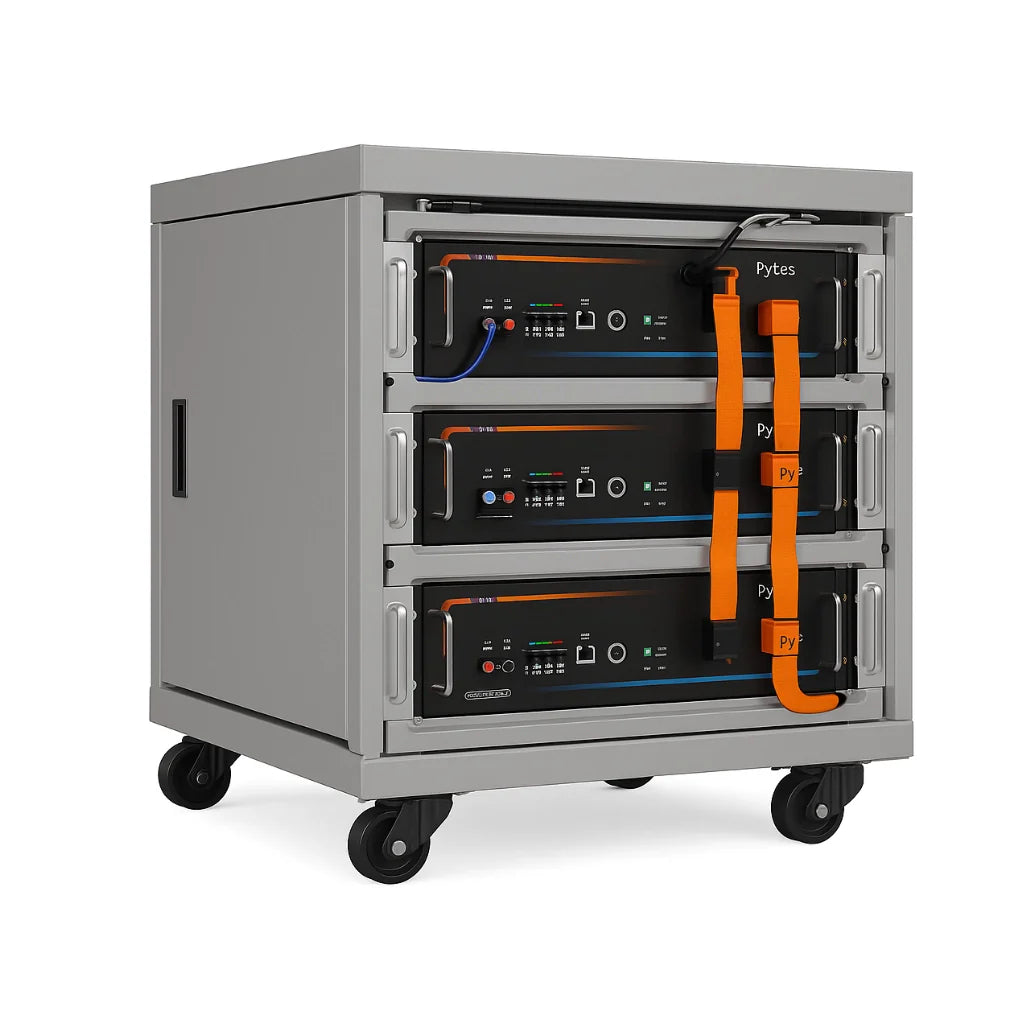
- Top Lithium Battery Recommendations for Off-Grid Power
- Feature Comparison Table: Off-Grid Lithium Battery Options
- Cold-Weather Charging and Real-World Discharge Performance
Last Updated: August 23, 2026
What Makes a Lithium Battery Suitable for Off-Grid Use
The best lithium battery for off-grid use combines sufficient depth of discharge, reliable battery management protection, and compatibility with solar charge controllers. Lithium batteries maintain stable voltage output and deliver 2,000-8,000 cycles, far exceeding lead-acid's 500-1,000 cycles.
LiFePO4 (Lithium Iron Phosphate) has emerged as the dominant technology for off-grid applications. According to Grand View Research's analysis of the UK lithium-ion battery market, LiFePO4 is the fastest-growing segment. The chemistry offers inherent thermal stability, longer cycle life, and superior cold-weather charging compared to older lithium cobalt alternatives.
At Skyenergi, we've spent years helping UK campervan owners, motorhome converters, and off-grid homeowners select the right battery system. Over 22,000 home battery systems were installed in the UK in 2024, and the Microgeneration Certification Scheme reported that 92% of new battery installations were paired with solar panels in the first half of 2026. Lithium batteries work best as part of an integrated system, not standalone.
LiFePO4 Battery vs Lead Acid: Why Chemistry Matters for Off-Grid
Lead-acid batteries are cheap and familiar but heavy, require maintenance, and lose capacity rapidly in cold weather. A 100Ah flooded lead-acid battery weighs around 30 kg; the same capacity in LiFePO4 weighs 12-15 kg.
Lead-acid batteries deliver only 500-1,000 useful cycles before degradation. A LiFePO4 battery from Skyenergi's Core2 or Edge range delivers 2,000-8,000 cycles depending on capacity and depth of discharge. Lithium chemistry doesn't suffer from sulfation or plate degradation at the same rate.
In practice, a 230Ah lead-acid battery costs around £300-400 and lasts 3-4 years in typical campervan use. A 230Ah Skyenergi Core2 lasts 10+ years. Over a decade, the lithium system costs less per year of service.
Cold-weather performance separates the two dramatically. Lead-acid capacity drops 50% below 0°C. LiFePO4 maintains 80-90% capacity in freezing conditions. Skyenergi's Core2 and Elite models include integrated heat pads that enable safe charging even when temperatures drop below freezing.
How to Size a Solar Battery Bank for Your Off-Grid System
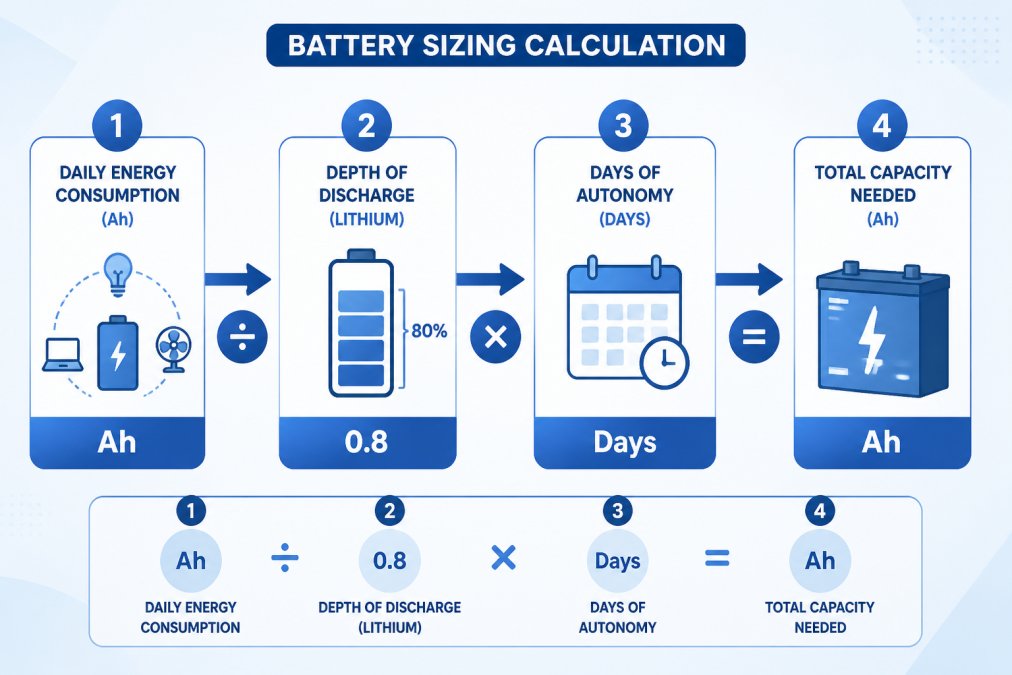
Sizing a battery bank correctly prevents undersizing (fridge cuts out mid-afternoon) and oversizing (wasted capacity). The calculation involves three steps: daily energy consumption, depth of discharge adjustment, and days of autonomy.
Step 1: Calculate Daily Energy Consumption List every 12V load: fridge (30-50Ah per day), lighting (2-5Ah), water pump (1-3Ah), inverter for 230V devices (variable). Add a 20% safety margin. Most campervan systems draw 40-80Ah per day during active use.
Step 2: Apply Depth of Discharge If you've calculated 60Ah daily consumption and want to preserve battery longevity, size for 80% DoD. Divide 60 by 0.8 = 75Ah minimum battery capacity. With LiFePO4, you can use this full 75Ah daily without degradation. Lead-acid would require 120Ah capacity to achieve the same usable energy.
Step 3: Account for Days of Autonomy Most UK off-grid systems plan for 2-3 days of cloudy weather. Multiply daily consumption by autonomy days: 60Ah × 3 days = 180Ah total capacity needed. A Skyenergi Edge 280Ah or Core2 230Ah would handle this comfortably.

Lithium Battery BMS Explained: Protection and Monitoring
The Battery Management System is the brain of your lithium battery, monitoring cell voltage, current, and temperature in real time. When any parameter drifts outside safe limits, the BMS disconnects the battery to prevent damage.
Skyenergi's Edge range uses a 100-280A JBD BMS. The Core2 range upgrades to 200-300A JBD BMS with integrated heat pad control. The Elite range features a 250-300A JBD BMS with Victron Can-Bus integration for seamless communication with Victron Cerbo GX systems.

A 200A BMS can safely handle 200 amps of continuous discharge. If your inverter draws 250A during startup, the BMS will cut the load. This protection prevents catastrophic battery failure but means you must match BMS rating to your system's peak current demand.
The BMS also manages cell balancing. LiFePO4 cells drift slightly in voltage over thousands of cycles. The BMS continuously rebalances them, ensuring all cells age evenly. Without active balancing, the weakest cell becomes a bottleneck.
Skyenergi's Core2 and Elite models support Bluetooth monitoring through our in-house developed app, giving you real-time state of charge, voltage, current, temperature, and individual cell voltages. This visibility lets you diagnose issues before they become failures.
MPPT Solar Charge Controller Setup with Lithium Batteries
An MPPT (Maximum Power Point Tracking) solar charge controller is essential for efficient solar charging. Unlike older PWM controllers, MPPT units continuously adjust voltage and current to extract maximum power from your solar array.
Lithium batteries require specific charge profiles. Lead-acid uses three stages: bulk, absorption, and float. Lithium batteries need only two stages: bulk and absorption. The float stage isn't needed because LiFePO4 cells don't self-discharge like lead-acid.
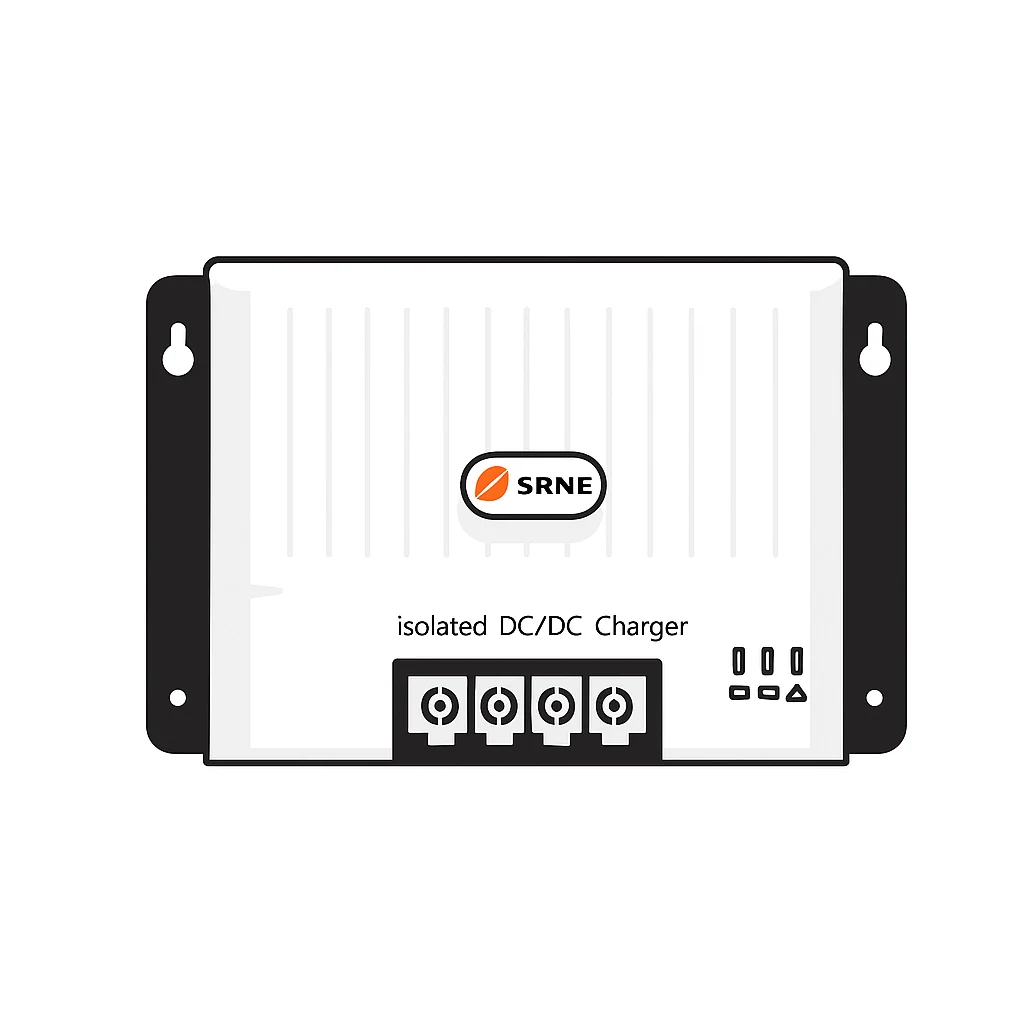
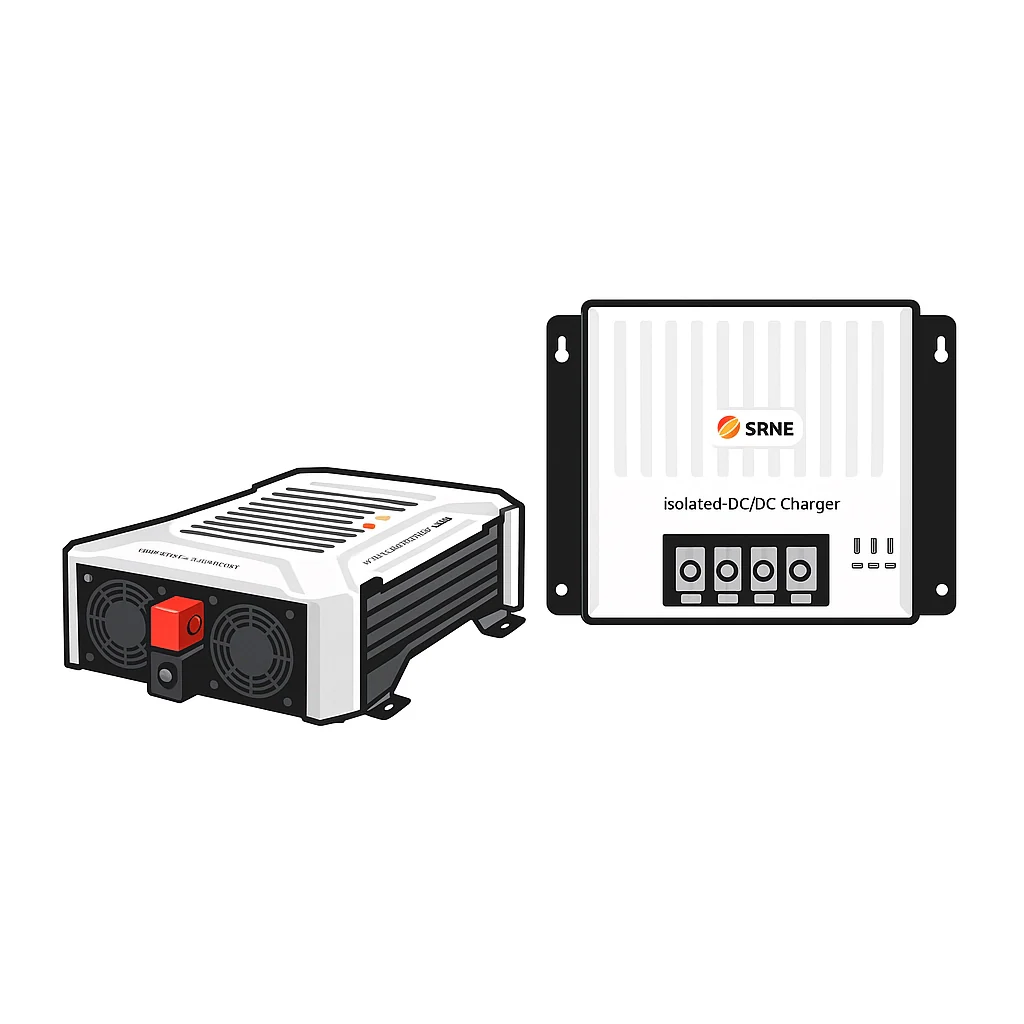
Your MPPT controller must support lithium charge profiles. Skyenergi recommends SRNE controllers, which offer dedicated lithium modes that communicate via RS485 with compatible BMS systems. When the BMS detects the battery is fully charged, it signals the controller to stop charging, preventing overcharge damage.
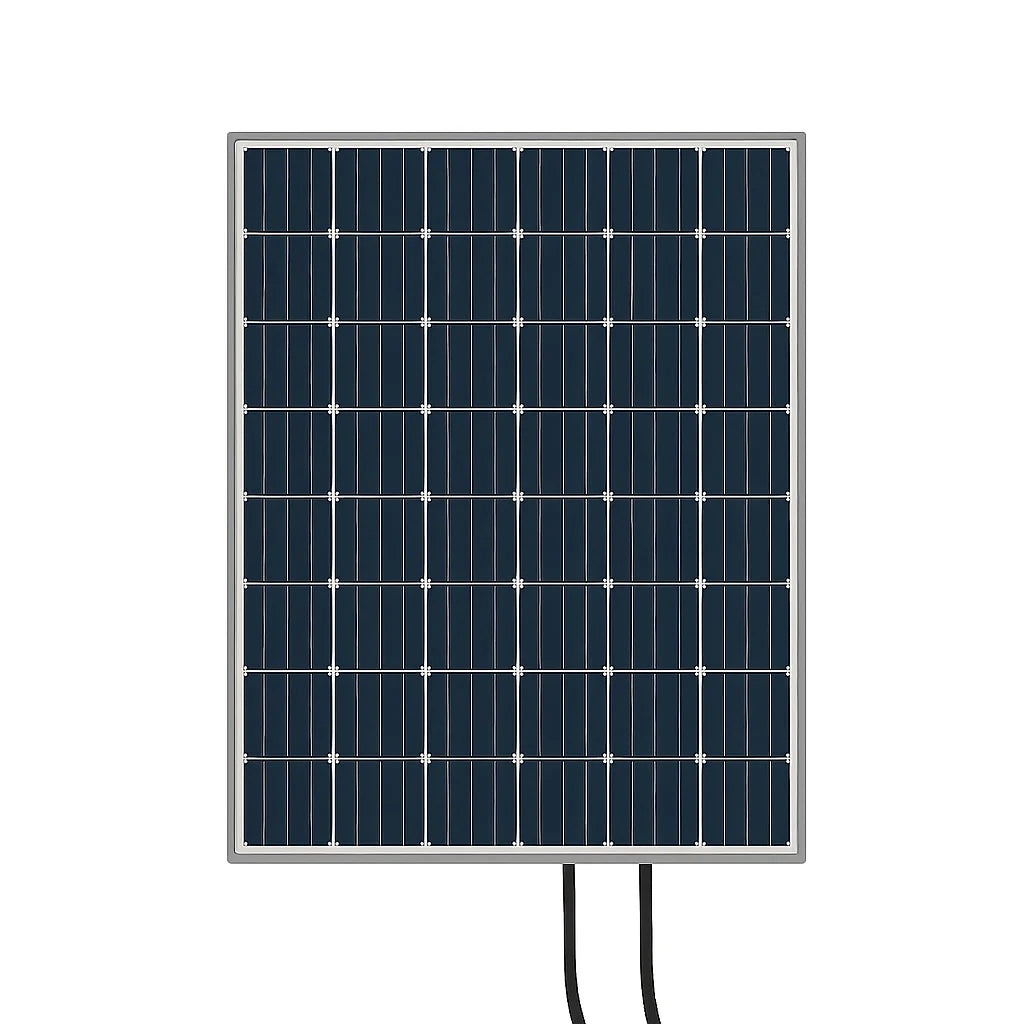
Sizing the MPPT controller depends on your solar array size. A 400W solar array typically needs a 40-60A MPPT controller. A 1,000W array needs 60-100A. The controller's input voltage must match your array configuration and its output current must not exceed your battery's BMS rating. off-grid solar kits.
Skyenergi's Core2 and Elite batteries work seamlessly with SRNE MPPT controllers via CAN-Bus communication. The controller and battery exchange data continuously. If the battery is cold, the controller reduces charge current. If the battery is full, the controller stops charging immediately. This dialogue maximizes charging efficiency and battery longevity.
Top Lithium Battery Recommendations for Off-Grid Power
Skyenergi Edge: Budget-Friendly Reliability
The Skyenergi Edge delivers dependable off-grid power without unnecessary features. It uses a 100-280A JBD BMS paired with Grade-A EVE lithium cells, available in 4S or 4P configurations. The IP67-rated waterproof housing handles harsh environments in motorhomes, boats, and remote cabins.
What you don't get: Bluetooth monitoring or heat pad technology. If you're installing this in a heated campervan or don't need remote monitoring, that's fine. If you're deploying it in a freezing climate or want app-based diagnostics, step up to the Core2.
The Edge pairs well with a Victron SmartShunt for monitoring. For DIY installers on a budget, this is the sweet spot.
Skyenergi Edge 100Ah: 1,280Wh usable capacity | 100A BMS | Best for small campervans, boats, or supplementary power Skyenergi Edge 280Ah: 3,584Wh usable capacity | 280A BMS | Best for larger motorhomes or whole-home off-grid systems
Skyenergi Core2: Smart Monitoring and Cold-Weather Performance
The Core2 includes everything the Edge offers plus Bluetooth monitoring, integrated heat pad technology, and a more powerful BMS (200-300A depending on capacity). The heat pad activates when the battery temperature drops below 0°C, warming the cells enough to accept charge safely.
Bluetooth monitoring via the Skyenergi app shows real-time state of charge, voltage, current, temperature, and individual cell voltages. Historical performance graphs help you understand your energy patterns.
The Core2 is available in multiple capacities: 105Ah, 172Ah (H8 DIN fit), 230Ah (standard or seat-base), 340Ah, and 680Ah. The seat-base variant fits neatly under captain's seats in common van platforms, saving interior space.
Skyenergi Core2 230Ah: 2,944Wh usable capacity | 200A BMS | Heat pad + Bluetooth | Best for mid-size campervans and off-grid homes Skyenergi Core2 340Ah: 4,352Wh usable capacity | 250A BMS | Heat pad + Bluetooth | Best for larger installations or multiple appliances
Skyenergi Elite: Maximum Integration and Victron Compatibility
The Elite features the most advanced JBD BMS (250-300A), Victron Can-Bus integration, and heat pad technology. The key differentiator is Victron Can-Bus. If you're building a system around Victron Cerbo GX, MultiPlus inverters, or other Victron components, the Elite integrates seamlessly.

The Elite's larger BMS handles higher peak currents than the Core2, making it suitable for systems with 3kW inverters or larger. Installation is straightforward, Victron Can-Bus uses a single twisted-pair cable, eliminating complex wiring.
Skyenergi Elite 304Ah: 3,891Wh usable capacity | 250A BMS | Victron Can-Bus | Heat pad | Best for mid-to-large Victron systems Skyenergi Elite 560Ah: 7,168Wh usable capacity | 300A BMS | Victron Can-Bus | Heat pad | Best for whole-home off-grid systems or multi-battery banks
Feature Comparison Table: Off-Grid Lithium Battery Options
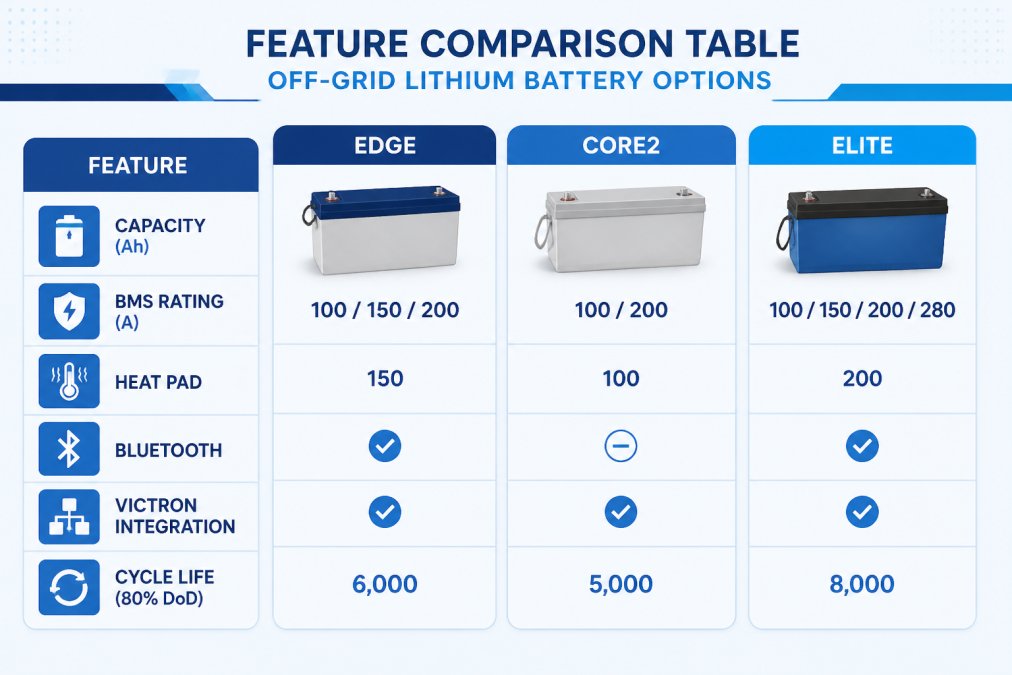
| Model | Capacity (Ah) | BMS Rating (A) | Heat Pad | Bluetooth | Victron Can-Bus | Cycle Life |
|---|---|---|---|---|---|---|
| Edge 100Ah | 100 | 100A | No | No | No | 2,000 |
| Edge 280Ah | 280 | 280A | No | No | No | 2,000 |
| Core2 105Ah | 105 | 100A | Yes | Yes | No | 2,000 |
| Core2 172Ah (H8) | 172 | 250A | Yes | Yes | No | 2,000 |
| Core2 230Ah | 230 | 200A | Yes | Yes | No | 4,000 |
| Core2 340Ah | 340 | 250A | Yes | Yes | No | 8,000 |
| Core2 680Ah | 680 | 300A | Yes | Yes | No | 7,000 |
| Elite 304Ah | 304 | 250A | Yes | No | Yes | 8,000 |
| Elite 560Ah | 560 | 300A | Yes | No | Yes | 8,000 |
The table reveals a clear pattern: Edge models are entry-level, Core2 adds monitoring and heat pads, Elite adds Victron integration. Choose based on your system architecture and climate.
Cold-Weather Charging and Real-World Discharge Performance
Cold weather is where lithium batteries prove their worth. Below 0°C, lead-acid capacity drops 50%. Lithium drops only 10-20%, and with integrated heat pads, the loss is negligible.
Skyenergi's Core2 and Elite models include heat pad technology that activates when the battery temperature falls below 5°C. The heat pad draws power from the battery itself, typically 50-100W, to warm the cells. This small energy cost prevents far larger damage from cold-charging a frozen battery.
Real-world discharge curves depend on your system's minimum voltage tolerance. Most 12V appliances tolerate voltage down to 10.5V. Some sensitive equipment needs 11.5V or higher. If your system requires 11.5V minimum, you lose roughly 10-15% of rated capacity.
According to Enlit World's analysis of UK battery storage market growth, the UK residential battery storage market is projected to grow from £3.4 billion in 2025 to £11.8 billion by 2031, demonstrating a compound annual growth rate exceeding 23%. This growth reflects increasing demand for reliable, integrated power systems.
Real-world testing shows that a properly sized Skyenergi battery paired with an SRNE MPPT controller and quality inverter will deliver 95%+ of rated capacity in typical UK conditions. Cold snaps reduce this to 85-90%, but that's still dramatically better than lead-acid's 50% winter penalty.
The discharge curve also depends on C-rating, how quickly the battery can discharge relative to its capacity. Skyenergi's BMS ratings (100-300A) define the maximum safe discharge current. Exceeding this triggers the BMS cutoff, protecting the cells but also cutting your power.
Choosing the best lithium battery for off-grid use means matching chemistry, capacity, and integration to your specific system. LiFePO4 technology has proven itself across thousands of UK installations, delivering 10+ years of reliable service when properly sized and managed. Skyenergi's Edge, Core2, and Elite ranges cover the full spectrum from budget-conscious campervan owners to professional installers building mission-critical off-grid homes. Start with an honest assessment of your daily energy consumption, peak current requirements, and climate conditions. Then select a battery with sufficient capacity, a BMS rated for your peak load, and monitoring features appropriate to your technical comfort level. The result is a system that works reliably for a decade and gives you genuine energy independence.
Frequently Asked Questions
How long will a 100Ah lithium battery run a 12V fridge?
A 100Ah lithium battery with 80% depth of discharge provides approximately 8 kWh of usable energy. A typical 12V fridge draws 3-5 amps continuously. At 4 amps, this gives you roughly 20 hours of runtime. However, real-world performance depends on ambient temperature, fridge efficiency, and whether the battery is being charged simultaneously by solar or alternator. Skyenergi Core2 105Ah and Edge 100Ah models are popular choices for motorhomes with refrigeration, as their LiFePO4 chemistry and integrated BMS maintain stable voltage throughout the discharge cycle.
What are the advantages of LiFePO4 over lead-acid for off-grid use?
LiFePO4 batteries deliver 3,000-8,000 cycle life compared to lead-acid's 300-500 cycles, meaning they last 10+ years versus 2-3 years. They accept 80-100% depth of discharge versus lead-acid's 50%, doubling usable capacity. LiFePO4 charges 3-5 times faster, critical when relying on solar or alternator charging. They weigh 60-70% less, improving payload in campervans. Lead-acid requires maintenance (watering, equalising); LiFePO4 is maintenance-free. Off-grid systems benefit most because you're fully dependent on stored energy, LiFePO4's longer cycle life and faster recharge mean greater reliability and independence from the grid.
Do I need a specific charger for lithium leisure batteries?
Yes. Lithium batteries require a lithium-compatible charger with a constant-current, constant-voltage (CC-CV) profile that stops at the correct float voltage (typically 13.6V for 12V LiFePO4). Lead-acid chargers often overcharge lithium batteries, damaging the BMS and cells. Skyenergi batteries feature a Battery Management System (BMS) that communicates with compatible chargers via CAN-bus or RS485 protocols. MPPT solar charge controllers must also be lithium-compatible. Many installers pair Skyenergi batteries with Victron or SRNE charge controllers, which offer native lithium profiles and prevent charging errors.
How do I calculate the battery capacity needed for my off-grid system?
Step 1: List all devices and daily usage (e.g., fridge 4A × 24h = 96Ah, lights 2A × 8h = 16Ah). Step 2: Total daily consumption (96 + 16 = 112Ah). Step 3: Apply depth of discharge, use 80% for LiFePO4 (divide by 0.8: 112 ÷ 0.8 = 140Ah). Step 4: Add autonomy buffer, multiply by days without sun (e.g., 140 × 2 days = 280Ah). For a 2-day off-grid period with your load, you'd need approximately 280Ah. Skyenergi offers models from 100Ah to 680Ah, covering most campervan and off-grid home requirements. Use a load calculator or consult our technical team for site-specific advice.
What is the lifespan of a high-quality lithium leisure battery?
Premium LiFePO4 leisure batteries typically deliver 2,000-8,000 cycles at 80% depth of discharge, translating to 10-15 years of real-world use. Skyenergi Core2 models reach up to 8,000 cycles; Edge models deliver 2,000-4,000 cycles depending on capacity. Lifespan is extended by avoiding full discharge, charging in moderate temperatures, and using a quality BMS (like Skyenergi's 250A-300A JBD systems). Cold-weather performance can reduce charging efficiency, but integrated heat pads on Core2 and Elite models mitigate this. Proper installation and compatible charging equipment are critical, poor charging practices can halve battery life.
This article was written using GrandRanker
Prev post

Best Lithium Leisure Battery 2026
Updated on 24 August 2026
Next post

How to Get a Lithium Battery System Installed
Updated on 22 August 2026


