





How to Charge Lithium Leisure Battery: Complete Guide
Learn how to charge your lithium leisure battery safely from mains, solar, or while driving. Step-by-step guide with charger settings and timing.
Table of Contents
- Why Lithium Leisure Batteries Need Different Charging
- Understanding Lithium Leisure Battery Charger Settings
- How to Charge a Leisure Battery While Driving
- Charging Your Lithium Leisure Battery with Solar Panels
- Lithium Leisure Battery Charging Time: What to Expect
- Charging from Mains Power at Home or on Site
- Common Charging Mistakes to Avoid
- Frequently Asked Questions
Last Updated: October 12, 2026
Why Lithium Leisure Batteries Need Different Charging
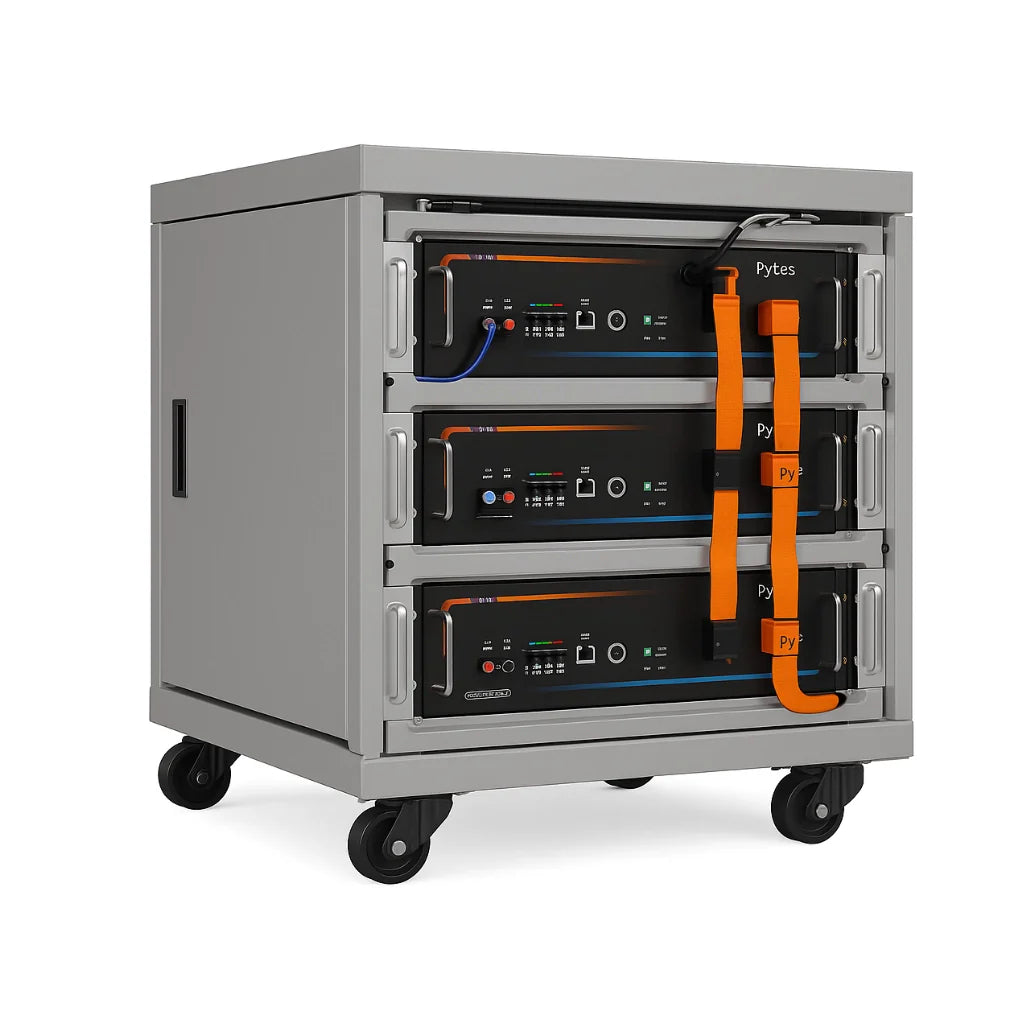
Lithium leisure batteries behave differently from lead-acid alternatives. They charge faster, hold more energy, and demand precision. A standard lead-acid charger won't work safely with lithium cells. That's the core reason you need a lithium-specific approach to charge lithium leisure battery systems correctly.
The difference matters because lithium cells are sensitive to voltage and temperature. Overcharge them slightly, and you risk damage. Undercharge them, and you leave capacity on the table. A proper lithium charger manages both automatically.
At Skyenergi, we work with campervan converters, motorhome owners, professional installers and DIY enthusiasts across the UK, offering practical product knowledge alongside dependable UK-based support. The most common mistake is assuming any charger will do. It won't. Here's what changes when you move to lithium:
- Lithium requires a constant-current, constant-voltage (CC-CV) charge profile
- Temperature monitoring prevents charging in extreme cold
- A battery management system (BMS) communicates with your charger
- Charging stops automatically when the battery reaches full capacity
Lead-acid chargers often use a simpler three-stage algorithm that overcharges lithium. The Victron Energy Blue Smart IP22 Charger 12/30 solves this with a programmable six-stage algorithm built for lithium cells. It connects via Bluetooth so you can monitor and adjust settings from your phone.

Understanding Lithium Leisure Battery Charger Settings
Your charger needs to be set correctly. The wrong settings can cut battery life short or leave you with less usable capacity than you paid for.
Most lithium leisure batteries use LiFePO₄ chemistry. This chemistry requires a peak charge voltage around 3.6V per cell. For a 12V system (four cells in series), that's roughly 14.4V. Lead-acid chargers typically stop at 13.8V, which is too low for lithium.
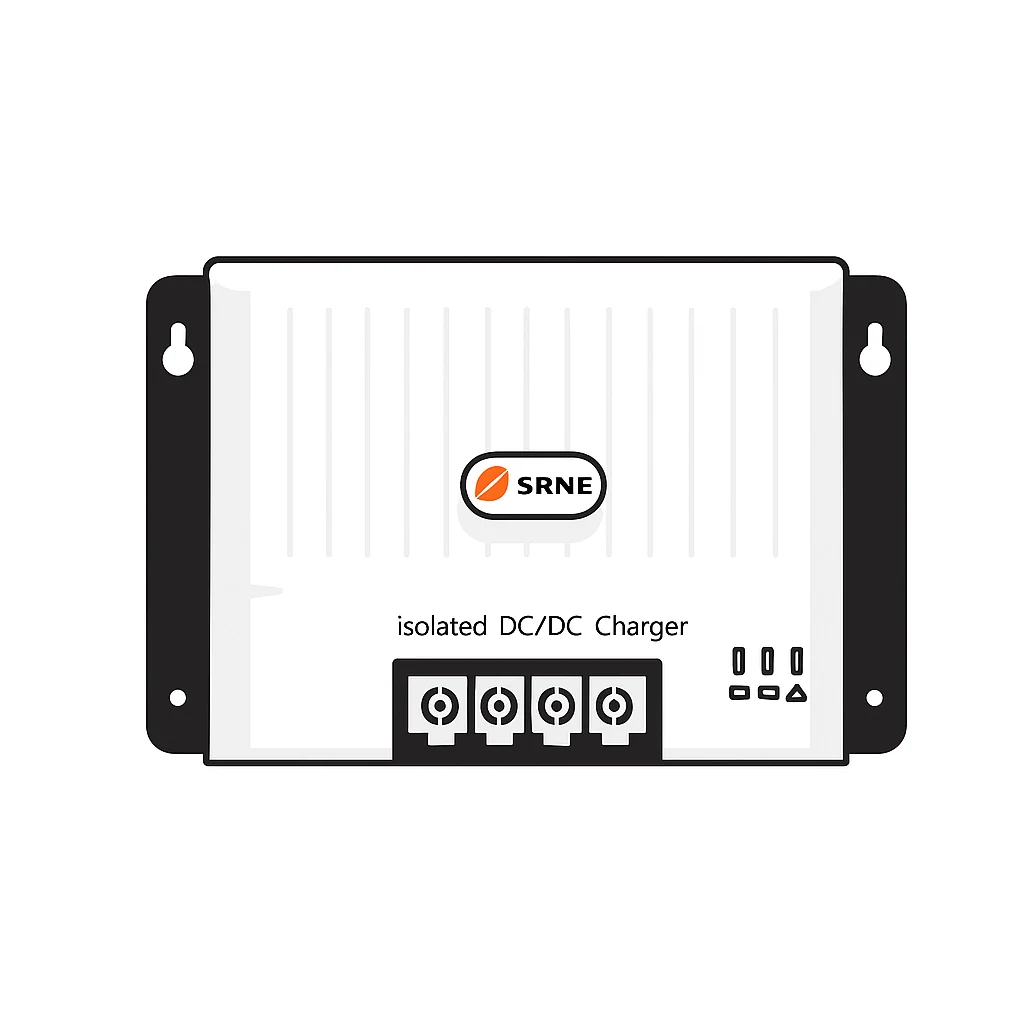
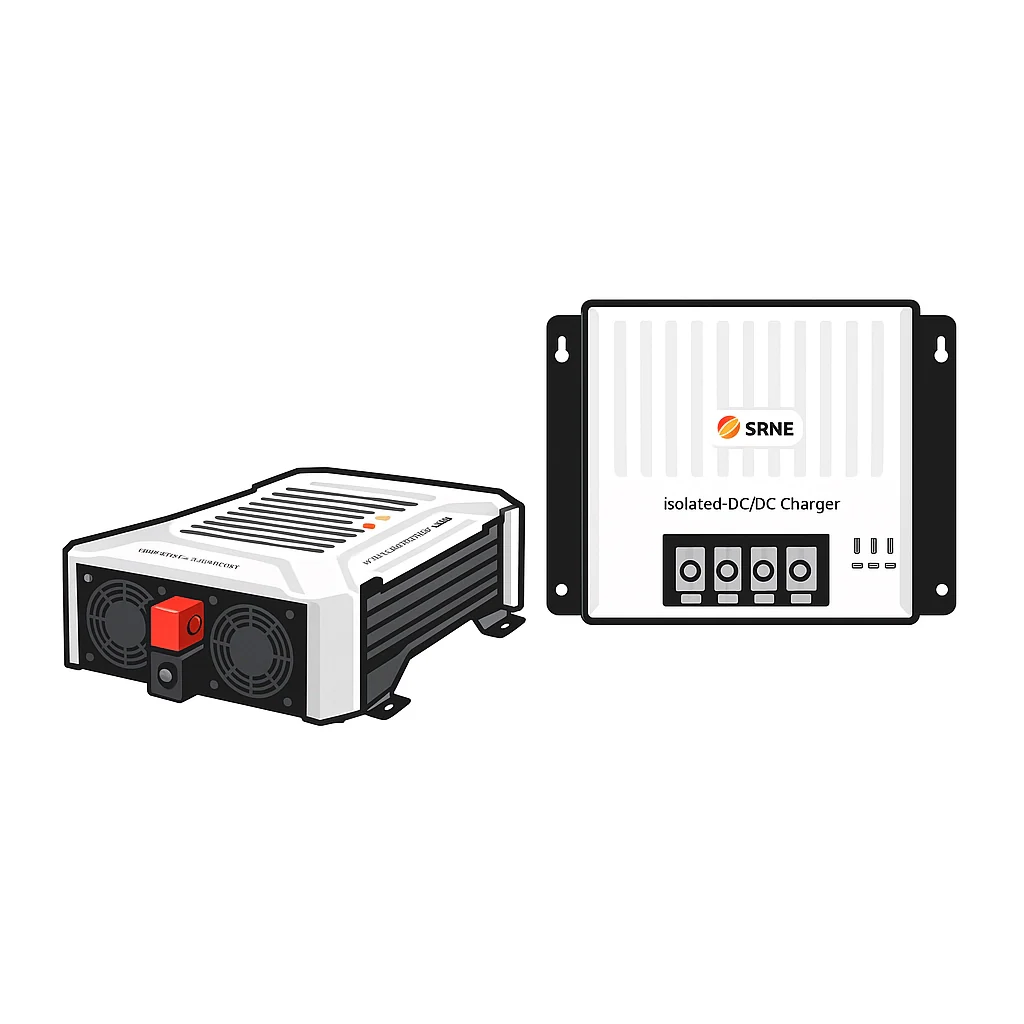
The second critical setting is charge current. Lithium can accept high charge rates safely, but your alternator or solar controller might not deliver enough. A DC-DC charger like the Victron Orion 30A limits current to protect your vehicle's electrical system while charging the leisure battery quickly.

Temperature compensation is often overlooked. Cold weather slows chemical reactions inside the battery. Most lithium chargers reduce charge current below 0°C to prevent damage. Some stop charging entirely until the battery warms up.
Absorption time matters too. After the bulk charge phase, your charger holds a steady voltage while current tapers. For lithium, this phase is usually much shorter than for lead-acid. The Victron Blue Smart defaults to a short absorption time optimised for lithium, which keeps charging efficient.
How to Charge a Leisure Battery While Driving
Charging while driving uses your vehicle's alternator. This is the simplest charging source because the alternator runs whenever the engine runs.
The catch: your alternator wasn't designed to charge a leisure battery quickly. It's built to maintain the starter battery and run the vehicle's systems. Pulling high current from it stresses the alternator and can overheat it.
A DC-DC charger solves this. It sits between your alternator and leisure battery, managing the current flow. The Victron Orion 30A DC-DC Charger with built-in Bluetooth is designed exactly for this job. It limits current to protect your alternator while charging the leisure battery safely.
Here's how the setup works:
- Alternator charges the starter battery normally
- DC-DC charger monitors starter battery voltage
- When voltage rises above a threshold, the charger activates
- Current flows from starter battery through the charger to the leisure battery
- The charger limits current to a safe level (typically 30A for the Orion)
The Orion detects when your engine is running using an engine-sensing input. It won't try to charge if the engine is off. This prevents draining your starter battery.
Temperature monitoring is built in. If the alternator gets too hot, the charger reduces current automatically. This protects both your vehicle and your leisure battery.
Charging Your Lithium Leisure Battery with Solar Panels
Solar panels are the most flexible charging source. They work 24/7 as long as there's daylight, and they need no fuel or engine running.
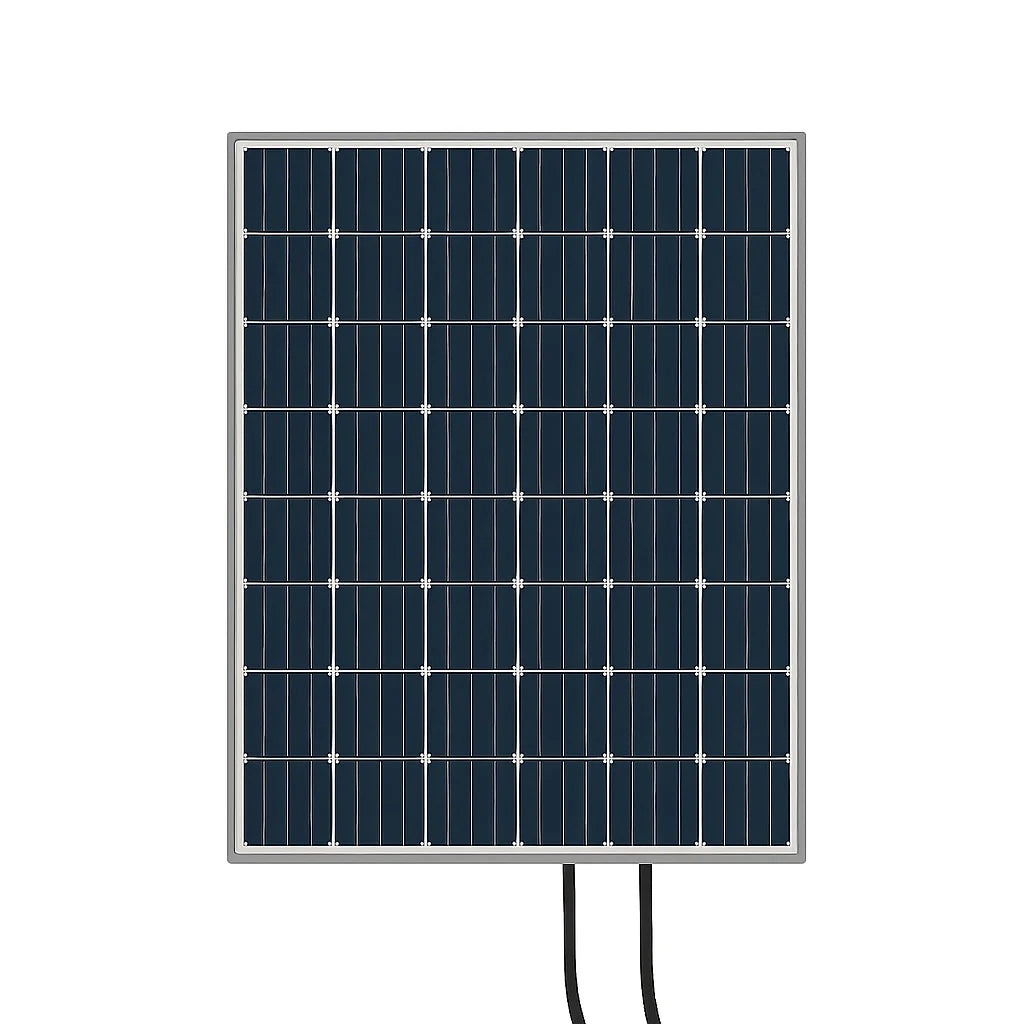
The challenge is matching panel output to battery voltage. A 130W solar panel generates around 18V in bright sun. Your 12V battery can't accept 18V directly. An MPPT (Maximum Power Point Tracking) controller steps the voltage down and manages the current.
The Victron SmartSolar MPPT 75/15 does this efficiently. It's built into the Victron 130 Watt Solar Panel kit from Skyenergi. The controller tracks the solar panel's output moment by moment, extracting maximum power even when clouds pass overhead.

Here's the charging sequence with solar:
- Solar panel generates voltage (varies with sunlight)
- MPPT controller reads panel voltage and adjusts its internal circuit
- Controller steps voltage down to safe levels for the battery
- Lithium charge profile is applied automatically
- Charging stops when battery reaches full capacity
The Victron SmartSolar includes a lithium battery profile. Select it in the VictronConnect app, and the controller adjusts charge voltage and current automatically. No manual tweaking needed.
Solar charging is slow compared to mains or alternator charging. A 130W panel in good sun might deliver 10-15A to your battery. This means a 100Ah battery takes many hours to charge fully. But solar runs for free while you're parked, so it's ideal for topping up between longer journeys.
Lithium Leisure Battery Charging Time: What to Expect
Charging time depends on three factors: battery capacity, charge current, and power source.
Charging can take anywhere from 20 minutes to three hours, depending on total capacity.
Let's work through some real examples:
Mains Charging (fastest): A Victron Blue Smart 30A charger delivering 30A to a 100Ah Skyenergi Edge battery takes roughly 3-4 hours for a full charge from empty. In practice, you rarely start from zero, so topping up takes 1-2 hours.
Victron Energy Blue Smart IP22 Charger 12/30 →
Alternator Charging (medium): A Victron Orion 30A DC-DC charger delivers up to 30A while driving. The same 100Ah battery takes 3-4 hours to charge fully.
Solar Charging (slowest): A 130W solar panel in good sun delivers around 10A. Charging a 100Ah battery from empty takes 10+ hours. In practice, you're topping up throughout the day, so you never need a full charge from solar alone.
The math is simple: capacity divided by charge current equals hours. A 100Ah battery charged at 30A takes 3.3 hours (100 ÷ 30). A 50Ah battery charged at 30A takes 1.7 hours (50 ÷ 30).
Real charging is faster because the charger applies a high current initially, then tapers as the battery fills. The last 20% takes much longer as the charger reduces current to protect the cells.
| Charging Source | Current | 100Ah Battery Time | 50Ah Battery Time |
|---|---|---|---|
| Mains (Blue Smart 30A) | 30A | 3-4 hours | 1.5-2 hours |
| Alternator (Orion 30A) | 30A | 3-4 hours | 1.5-2 hours |
| Solar (130W panel) | 10A | 10+ hours | 5+ hours |
Charging speed also depends on how low your battery is. A battery at 50% state of charge charges faster than one at 10% because the voltage is already higher. The charger ramps current up gradually to avoid shocking the cells.
Charging from Mains Power at Home or on Site
Mains charging is the fastest and most reliable method to charge lithium leisure battery systems. When you're parked at home or on a campsite with a power hook-up, plug in and let the charger do the work.
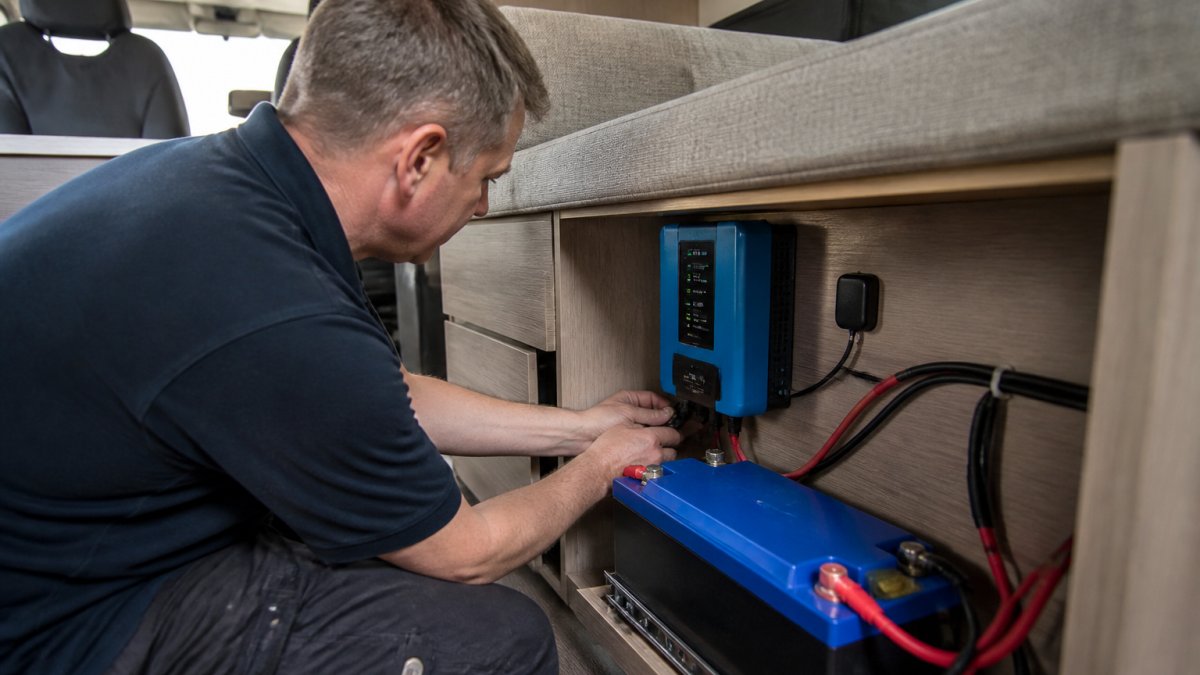
A mains charger like the Victron Blue Smart IP22 12/30 plugs into a standard 230V socket. It converts AC mains power to DC power for your battery. The charger includes a lithium profile that manages voltage and current automatically.
The setup is straightforward:
- Connect the charger's output terminals to your battery (positive to positive, negative to negative)
- Plug the charger into a mains socket
- The charger detects your battery voltage and starts charging
- Bluetooth connection lets you monitor progress on your phone
The Blue Smart is programmable via its Bluetooth app. You can set the peak charge voltage, absorption time, and other parameters. For most lithium batteries, the default lithium profile works perfectly.
Safety features are built in. The charger stops if it detects a fault (reversed polarity, short circuit, overtemperature). It also includes a fully discharged battery recovery function.
Mains charging is ideal for overnight charging. Park at a campsite with a hook-up, plug in before bed, and your battery is fully charged by morning.
One limitation: you need mains power. This isn't available everywhere. For off-grid living or wild camping, you'll rely on solar and alternator charging.
Common Charging Mistakes to Avoid
Even with the right equipment, mistakes can damage your battery or slow charging.
Mistake 1: Using a lead-acid charger. Lead-acid chargers overcharge lithium. They push voltage too high and hold it there too long. This damages the cells and shortens battery life.
Mistake 2: Charging in extreme cold. Lithium cells resist charging below 0°C. A good charger stops or slows charging automatically.
Mistake 3: Ignoring the BMS. Your battery's BMS communicates with your charger. If the BMS detects a problem (overtemperature, cell imbalance, overvoltage), it cuts charging off.
Mistake 4: Overcharging storage. If you're storing your battery long-term, keep it at 50% state of charge, not 100%. A fully charged battery sitting idle degrades faster.
Mistake 5: Mixing charge sources carelessly. If you're using both solar and mains charging, make sure they don't fight each other.
Mistake 6: Ignoring temperature monitoring. Charge current generates heat. In a hot van or during fast charging, temperature rises quickly. If your charger doesn't monitor temperature, you're risking the battery.
Charging a lithium leisure battery correctly extends its life and maximises your energy independence.
Skyenergi supplies complete charging solutions designed for lithium batteries. Combine these with a Skyenergi Edge 100Ah lithium battery (£219.00), and you have a complete, reliable power system.
Frequently Asked Questions
Do I need a special charger to charge a lithium leisure battery?
Yes. Lithium leisure batteries require chargers with a lithium-compatible charging profile. Standard lead-acid chargers can damage lithium batteries or charge them incorrectly. Look for chargers that offer lithium LiFePO₄ settings or are specifically designed for lithium batteries. The Victron Energy Blue Smart IP22 Charger, for example, features a programmable algorithm that adapts to lithium battery chemistry, ensuring safe and efficient charging.
How long does it take to charge a lithium leisure battery?
Charging time depends on battery capacity and charger output. For example, a 30A charger will charge a 100Ah battery faster than a 16A charger. Charging rate, state of charge when you start, and ambient temperature all affect the final time.
Can I charge a lithium leisure battery while driving?
Yes, using a DC-DC charger or battery-to-battery charger. These devices take power from your vehicle's alternator and convert it to the correct voltage and current for your leisure battery. A Victron Orion 30A DC-DC charger, for instance, features smart alternator compatibility and can charge lithium batteries safely whilst your engine runs. This method works well for topping up during travel but won't fully charge a depleted battery in a single journey.
Can solar panels charge a lithium leisure battery?
Yes, but you need an MPPT solar charge controller between the panels and battery. The controller regulates voltage and current to protect your lithium battery and maximise energy harvest. A Victron SmartSolar MPPT 75/15 controller with a 130W solar panel, for example, adjusts charging automatically based on sunlight conditions and battery state. This setup is ideal for campervans and off-grid systems where mains power isn't available.
Prev post

Calculating Battery Lifespan for Off Grid Campervan Living
Updated on 13 October 2026
Next post

Run an Induction Hob on 12V Lithium: A How-To Guide
Updated on 12 October 2026


