





Calculating Battery Lifespan for Off Grid Campervan Living
Learn how to calculate battery lifespan for off grid campervan living. Work out daily power use, runtime and real service life with practical steps.
Table of Contents
- Calculating Battery Lifespan for Off Grid Campervan Living
- Mapping Your Campervan Daily Power Consumption
- Using a Campervan Battery Runtime Calculator
- How Long Will a 100Ah Leisure Battery Last?
- Campervan Solar Panel Battery Charging and Alternator Input
- Temperature, Aging and Real-World Adjustments
- Monitoring and Validating Your Battery Lifespan
- Frequently Asked Questions
Last Updated: October 13, 2026
Calculating Battery Lifespan for Off Grid Campervan Living
Working out how long a leisure battery will last comes down to two separate sums. One tells you how many hours it runs on a single charge. The other tells you how many years it survives before it needs replacing. Most guides mix the two together, which is why so many campervan owners end up buying the wrong battery.
At Skyenergi, we supply lithium leisure batteries and 12V power systems to van converters and off-grid owners across the UK. This guide separates runtime from service life, then walks you through the load worksheet we would use on any build.

Runtime Per Charge vs Battery Service Life
Runtime per charge is how many hours your battery runs before it needs recharging. Battery service life is how many years it lasts before capacity drops too far to be useful.
These are different numbers, and confusing them costs money. A battery can give you three days of power per charge and still be scrap after four years.
Here is the distinction in plain terms:
- Runtime depends on load, capacity and usable capacity
- Service life depends on chemistry, depth of discharge, temperature and charging habits
- A big battery gives long runtime. It does not automatically give a long service life.
Battery University guide to how depth of discharge affects cycle life
Mapping Your Campervan Daily Power Consumption
Start with a load worksheet. List every appliance, its wattage, and how many hours a day you actually use it. Multiply watts by hours to get watt-hours (Wh).

Here is a realistic worksheet for a two-person van:
| Appliance | Watts | Hours/day | Wh/day |
|---|---|---|---|
| 12V compressor fridge | 45 | 8 | 360 |
| LED lighting | 10 | 5 | 50 |
| Laptop charging | 60 | 3 | 180 |
| Water pump | 40 | 0.5 | 20 |
| Phone charging | 15 | 2 | 30 |
| Total | 640 Wh/day |
A common mistake is using the fridge's rated wattage for 24 hours. Compressor fridges cycle on and off, so eight hours of running time is closer to reality in mild weather.
Convert watt-hours to amp-hours at 12V by dividing by 12. That 640 Wh becomes roughly 53Ah per day.
Using a Campervan Battery Runtime Calculator
A campervan battery runtime calculator does one job: it divides usable capacity by your daily load. The formula is simple enough to do by hand.
Runtime (days) = Usable capacity (Wh) ÷ Daily consumption (Wh)
Usable capacity is where most people go wrong. You cannot drain a battery to zero without damaging it.
- Lead-acid and AGM: plan on around half the rated capacity as usable
- Lithium (LiFePO4): plan on roughly 80 to 90 per cent usable
So a 100Ah lithium battery at 12V holds about 1,200 Wh. At 85 per cent usable, that is roughly 1,020 Wh. Divide by 640 Wh per day and you get about 1.6 days of autonomy.
But runtime per charge is only half the story. To calculate battery lifespan in years, you need to combine usable capacity, daily consumption, and recharge input into one reproducible method. Here is the complete worked example for a two-person van with a 100Ah lithium battery and 200W of solar:
Step 1, Usable capacity: 100Ah × 12V = 1,200Wh × 0.85 = 1,020Wh
Step 2, Daily consumption: 640Wh (from your load worksheet)
Step 3, Daily recharge: Assume 200W solar, 4 peak sun hours, 80% MPPT efficiency = 200 × 4 × 0.8 = 640Wh. On a good day, solar exactly covers consumption. On a cloudy day, you might get only 200Wh.
Step 4, Net daily deficit: 640Wh consumption − 640Wh recharge = 0Wh on a good day; 640 − 200 = 440Wh deficit on a cloudy day.
Step 5, Days of autonomy: 1,020Wh usable ÷ 440Wh deficit = 2.3 days before you need a full recharge. If you drive daily, the alternator adds bulk charge and extends this indefinitely.
Step 6, Service life in years: A lithium battery rated at 3,000 cycles to 80% depth of discharge, cycled once per day, lasts about 8 years. If you only cycle to 50% depth, you might get 5,000 cycles, over 13 years. Lead-acid at 500 cycles to 50% depth gives roughly 1.5 years if cycled daily.
This is the calculation competitors skip: they give you the formula but not the full chain from load to lifespan. Use it as your template.
How Long Will a 100Ah Leisure Battery Last?
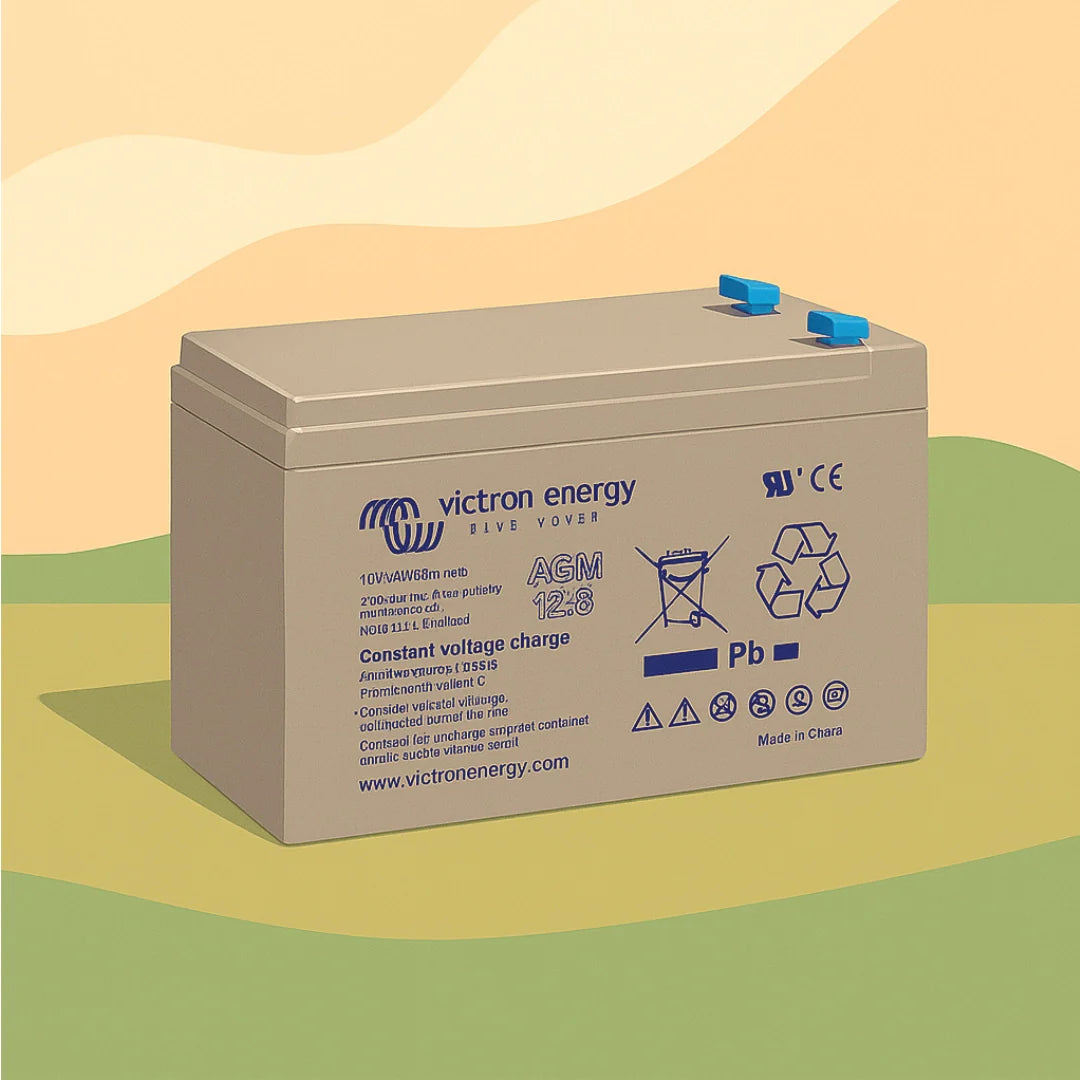
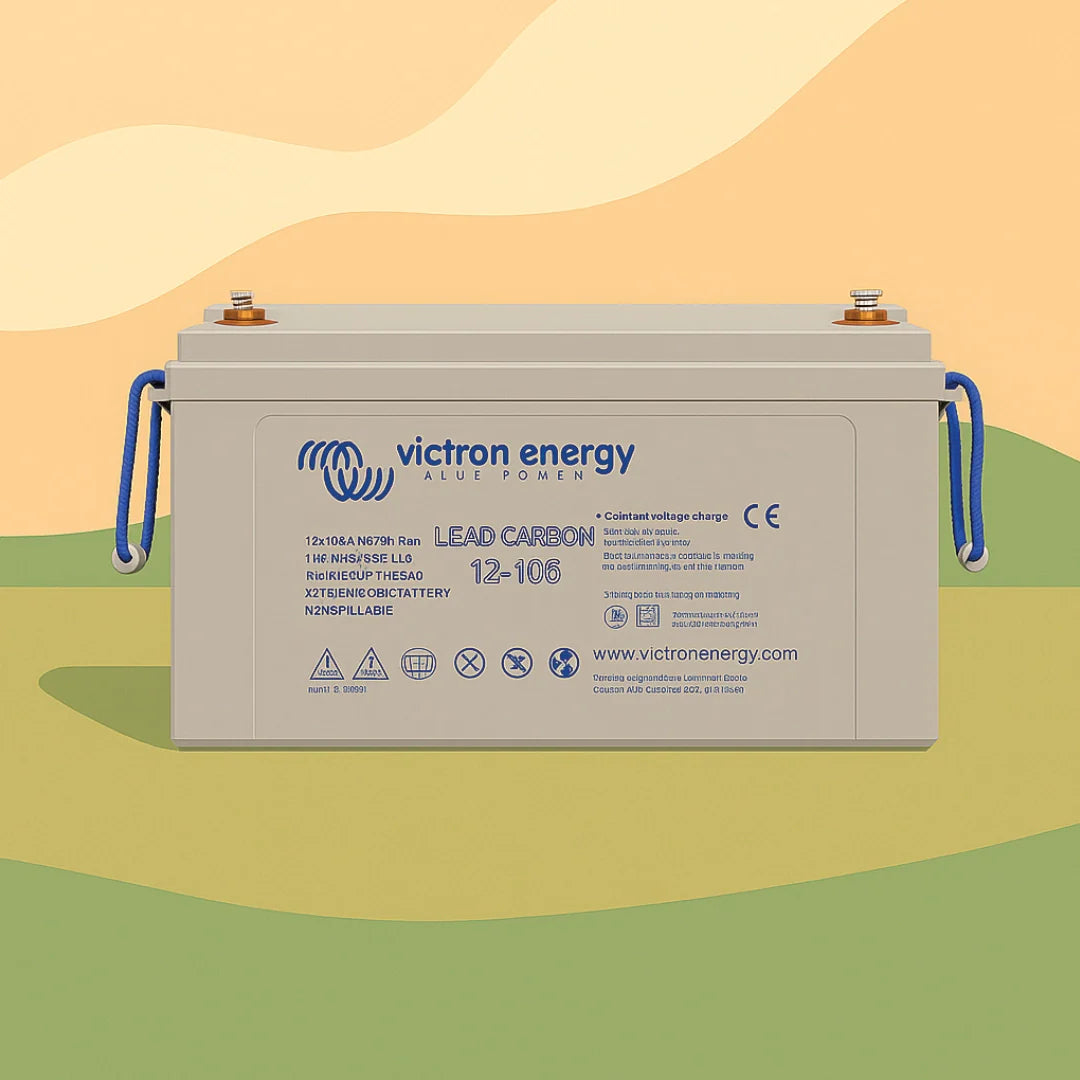
A 100Ah lithium leisure battery typically runs a modest campervan setup for one to two days per charge. A 100Ah lead-acid battery in the same van will run closer to half a day, because only about half its capacity is usable.

That gap is the whole argument for lithium. Same label, very different real-world output.
Skyenergi Edge 100Ah Lithium Leisure Battery →
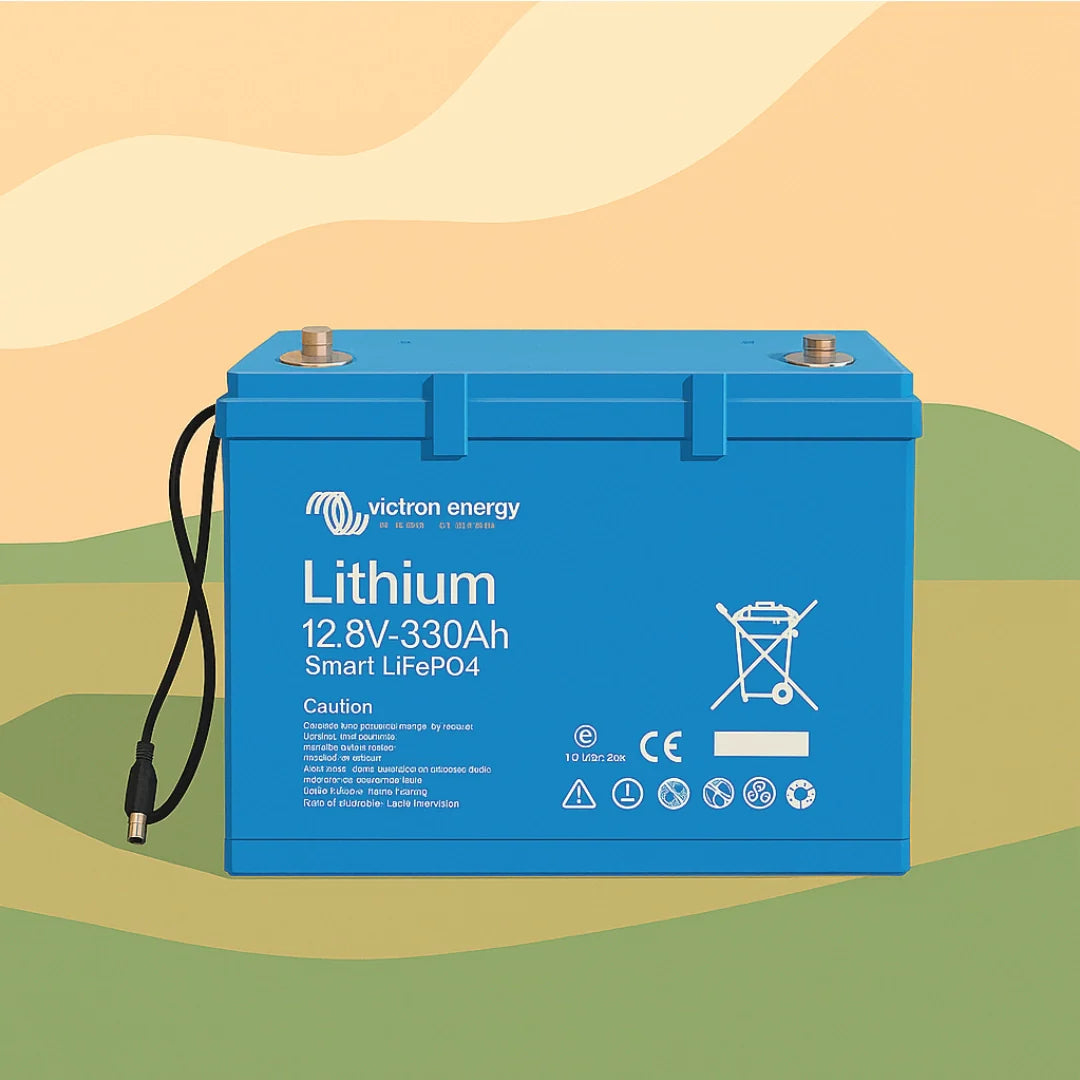
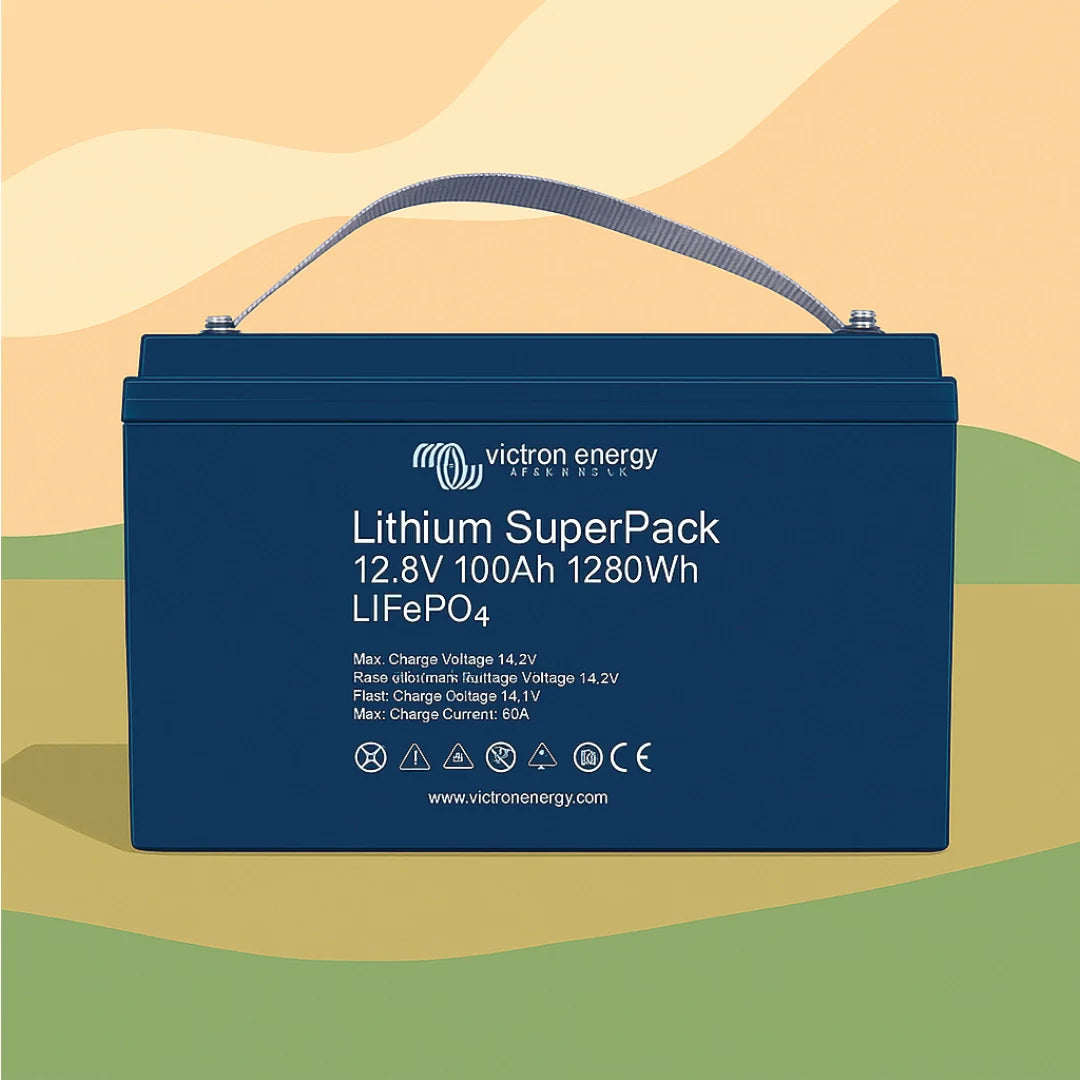
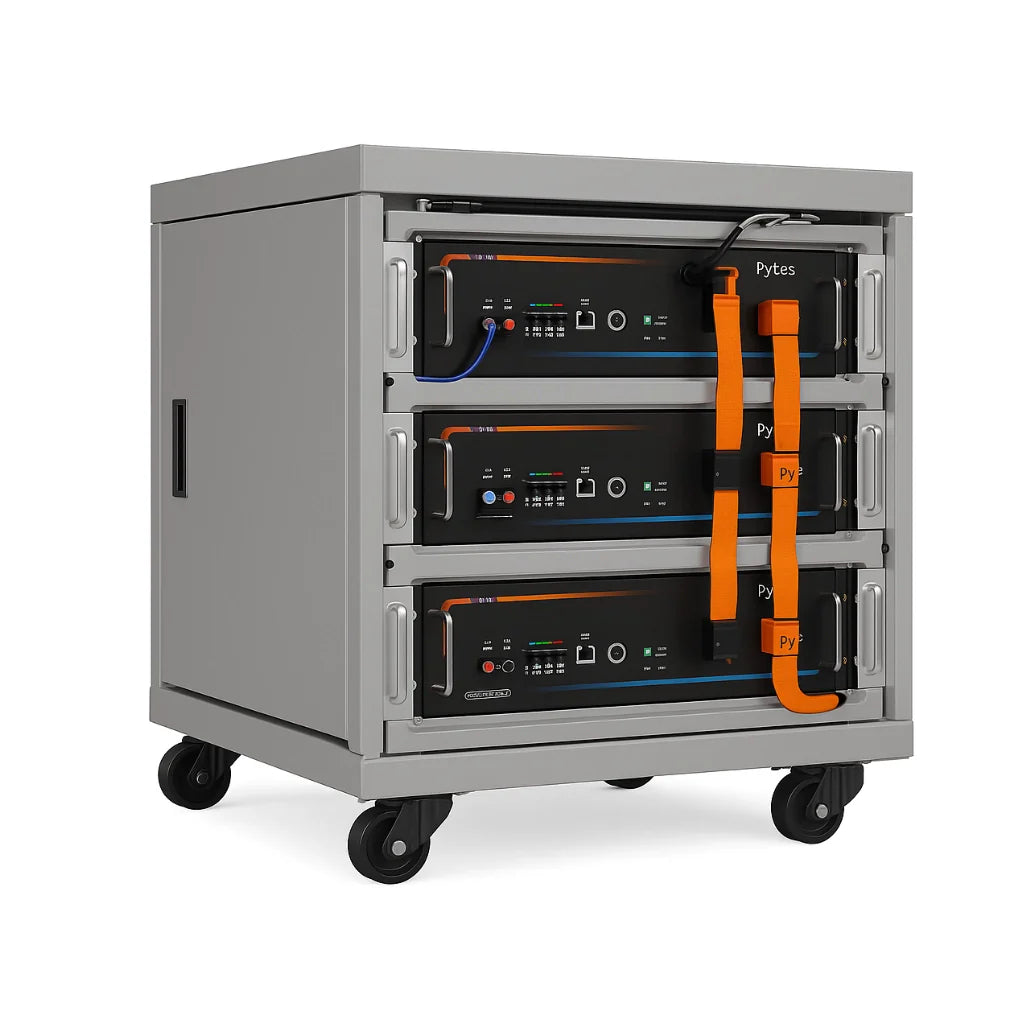
For longer trips, the Skyenergi Edge 100Ah Lithium Leisure Battery is built around Grade A EVE cells and a 100A JBD BMS, with an IP65 housing. If your load worksheet keeps climbing, the Skyenergi Edge 280Ah Lithium Leisure Battery gives you the same chemistry with far more headroom, and both can be paired with a Victron Energy SmartShunt 500A if you want to watch state of charge in real time.

Campervan Solar Panel Battery Charging and Alternator Input
Charging decides whether your runtime holds up day after day. Solar and alternator input are the two main sources on a campervan, and they do different jobs.
Solar covers your daytime base load. An MPPT controller pulls more usable power from the panels than a basic controller, especially in broken cloud. A Victron Energy SmartSolar MPPT 75/15 will also disconnect loads before the battery runs flat, which protects service life.
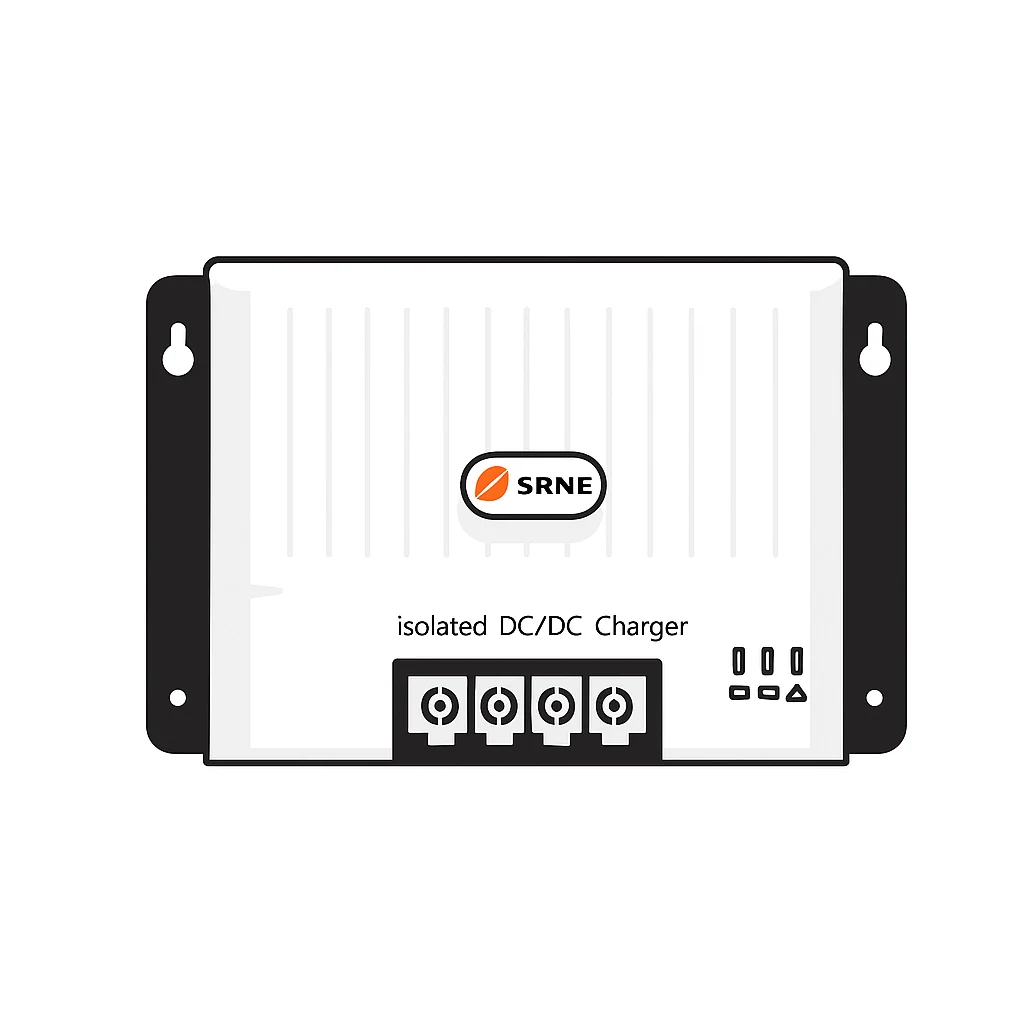
The alternator is your bulk charger on travel days. A DC-to-DC charger manages that input properly rather than letting the battery take whatever the vehicle gives it.
Balance matters more than raw panel size. If your daily consumption is 640 Wh and your solar harvests 500 Wh on a good day, you are drawing down the battery every day. Over a fortnight of free camping, that adds up. Maintaining this energy equilibrium is just as vital as managing your water supply when you are selecting the right wild camping gear to ensure your independence remains sustainable.
Temperature, Aging and Real-World Adjustments
Cold and heat both shorten battery service life, and they do it in different ways. Lithium charges slowly below freezing. Lead-acid loses usable capacity in the cold and ages fast in the heat.
Two adjustments belong in every calculation:
- Temperature: knock usable capacity down in winter, especially for lead-acid
- Aging: assume capacity falls gradually over the battery's life, not all at once
But what do those adjustments actually look like in numbers? Here is how to apply them to your runtime and lifespan estimates.
Temperature derating:
- Lithium (LiFePO4): At 0°C, usable capacity drops by roughly 10-20%. At -10°C, charging should be avoided entirely unless the battery has internal heating. Above 30°C, cycle life shortens, every 10°C rise above 25°C can halve lifespan.
- Lead-acid: At 0°C, expect only 80% of rated capacity. At -10°C, that falls to 70%. Heat above 30°C accelerates grid corrosion and water loss.
So if your 100Ah lithium battery gives 1,020Wh usable at 25°C, at 0°C it might give only 850Wh. That cuts your 1.6 days of autonomy to about 1.3 days.
Aging derating:
Batteries lose capacity gradually. A common pattern is 2-3% per year for lithium, 4-5% per year for lead-acid, even with good care. After five years, your 100Ah lithium might only hold 85Ah. Plan for this by oversizing your bank by 10-20% if you intend to keep the van long-term.
Depth of discharge (DoD) and cycle life:
This is the biggest lever on service life. A lithium battery cycled to 80% DoD might last 3,000 cycles. Cycled to 50% DoD, the same battery could last 5,000 cycles. For lead-acid, 50% DoD gives about 500 cycles; 30% DoD gives 1,200 cycles. Our rule of thumb: size the bank so your normal day uses no more than half of usable capacity. That keeps you in the shallow-cycling zone where lifespan is longest.
Voltage cutoffs and discharge rate:
High discharge rates (e.g., running a 2,000W inverter) reduce usable capacity due to internal resistance. Lithium handles this better than lead-acid, but both suffer. Set your low-voltage cutoff conservatively, 12.0V for lead-acid, 11.0V for lithium under load, to avoid damaging deep discharges.
Monitoring and Validating Your Battery Lifespan
You cannot manage what you do not measure. A battery monitor shows state of charge, current draw and time remaining, which turns guesswork into data.
The Victron Energy SmartShunt 500A connects by Bluetooth and shows all monitored battery parameters in the VictronConnect app, including state of charge, time to go and historical information. It also supports a temperature sensor, so you can see how conditions affect your bank.
Check three things monthly:
- Whether your daily draw matches your worksheet
- Whether your solar is actually replacing what you use
- Whether capacity is drifting down over time
If your numbers slip, find the cause before you buy a bigger battery.
Working out battery lifespan for off-grid campervan living is really two habits: measuring your real load, and watching how your bank behaves over time. Get those right and you will size the system once, not three times. Skyenergi supplies Edge and Elite lithium leisure batteries alongside MPPT solar charge controllers, DC-to-DC chargers and monitoring equipment, with fast UK delivery and specialist support. Get started with Skyenergi and build a 12V system that keeps your fridge running and your trips longer.
Frequently Asked Questions
How long should a leisure battery last in a campervan?
It depends on the chemistry and how deeply you discharge it. A lead-acid leisure battery cycled to 50% depth of discharge typically manages a few hundred cycles before capacity drops noticeably. A lithium battery such as the Skyenergi Edge 100Ah, which allows deeper discharge, is rated for far more recharge cycles and will hold usable capacity for longer. Charging quality, temperature and how often you run it flat all shorten or extend that figure.
How many amp-hours do I need for off-grid campervan living?
Start with your campervan daily power consumption in watt-hours, then divide by the battery voltage to get amp-hours. If you use 1,200Wh per day on a 12V system, that is 100Ah of actual energy. Because you should not drain a battery completely, size up: a 100Ah lithium battery gives roughly 80-90Ah of usable capacity, so you would need at least 150Ah for comfortable off-grid living with a day of reserve.
How does solar affect campervan battery runtime?
Solar charging offsets what you draw from the battery, so it extends runtime rather than changing the battery's capacity. A 200W panel array might return 600-800Wh on a decent day, covering a large share of your daily load. Pair panels with an MPPT controller such as the Victron SmartSolar MPPT 75/15 to harvest more energy in partial cloud, and treat solar as a top-up rather than a guaranteed daily input.
What kills leisure batteries in a campervan?
The main culprits are repeated deep discharges, chronic undercharging, leaving the battery at a low state of charge for weeks, and high temperatures. Running a lead-acid battery below 50% state of charge shortens its cycle life quickly. Lithium batteries tolerate deeper discharge but still suffer if left flat or charged in freezing conditions. A battery monitor like the Victron SmartShunt 500A shows real state of charge so you can catch problems early.
Prev post

12V DC-to-DC Charger Benefits Explained
Updated on 15 October 2026
Next post

How to Charge Lithium Leisure Battery: Complete Guide
Updated on 13 October 2026


