





Benefits of Switching to Lithium Leisure Batteries for Caravans
Discover the benefits of switching to lithium leisure batteries for caravans, from longer lifespan to faster charging and reliable off-grid power.
Table of Contents
- Why Caravan Owners Are Switching to Lithium Leisure Batteries
- Lithium vs AGM Caravan Battery: What Actually Changes
- Lithium Leisure Battery Lifespan and Long-Term Value
- Lithium Battery Charging for Caravans: Solar, Mains and Alternator
- Lithium Caravan Battery Installation: A Compatibility Checklist
- Choosing the Right Lithium Leisure Battery for Your Caravan
- Pros, Cons and the Honest Trade-Offs of Switching
- Conclusion
- Frequently Asked Questions
Last Updated: October 8, 2026
Why Caravan Owners Are Switching to Lithium Leisure Batteries
Lithium leisure batteries are the biggest single upgrade you can make to a caravan's 12V system: they store more usable energy, weigh far less and last many times longer than the lead-acid battery most caravans leave the factory with.
That shift changes what a caravan can do off-grid: lights, fridge, laptop, phone charging and an inverter all run from one battery bank without the voltage sag that makes lead-acid systems frustrating.
Lithium vs AGM Caravan Battery: What Actually Changes
A lithium vs AGM caravan battery comparison comes down to three differences: usable capacity, weight and voltage stability.
Usable capacity is the headline.
Weight matters because caravan payload is finite. Lithium is dramatically lighter for the same stored energy, freeing payload for everything else.
Voltage stability is the difference owners notice first. Lead-acid voltage sags as it discharges, which is why fridges and inverters cut out.
Usable Capacity and Depth of Discharge
Depth of discharge (DoD) is the percentage of a battery's capacity you can safely use before recharging, the single most important number when comparing batteries.
| Battery Type | Rated Capacity | Safe Depth of Discharge | Usable Capacity |
|---|---|---|---|
| AGM / lead-acid | 100Ah | ~50% | ~50Ah |
| LiFePO4 lithium | 100Ah | ~80% | ~80Ah |
That gap explains why a smaller, lighter lithium battery often outperforms a larger lead-acid one.
Weight, Payload and Voltage Stability
Payload is a legal limit, and every kilogram counts on a touring caravan. Lithium's higher energy density means a comparable usable capacity weighs a fraction of an AGM equivalent, and that saving goes straight back into your payload budget.
Voltage stability is the quieter benefit: because lithium holds its voltage, your fridge, heater fan and inverter run consistently rather than fading as the battery drains. If your fridge keeps cutting out, voltage sag is usually the culprit.
Lithium Leisure Battery Lifespan and Long-Term Value
Lithium leisure battery lifespan is where the upfront cost argument collapses in lithium's favour, but only if you look at cost per usable kilowatt-hour rather than the price on the shelf.
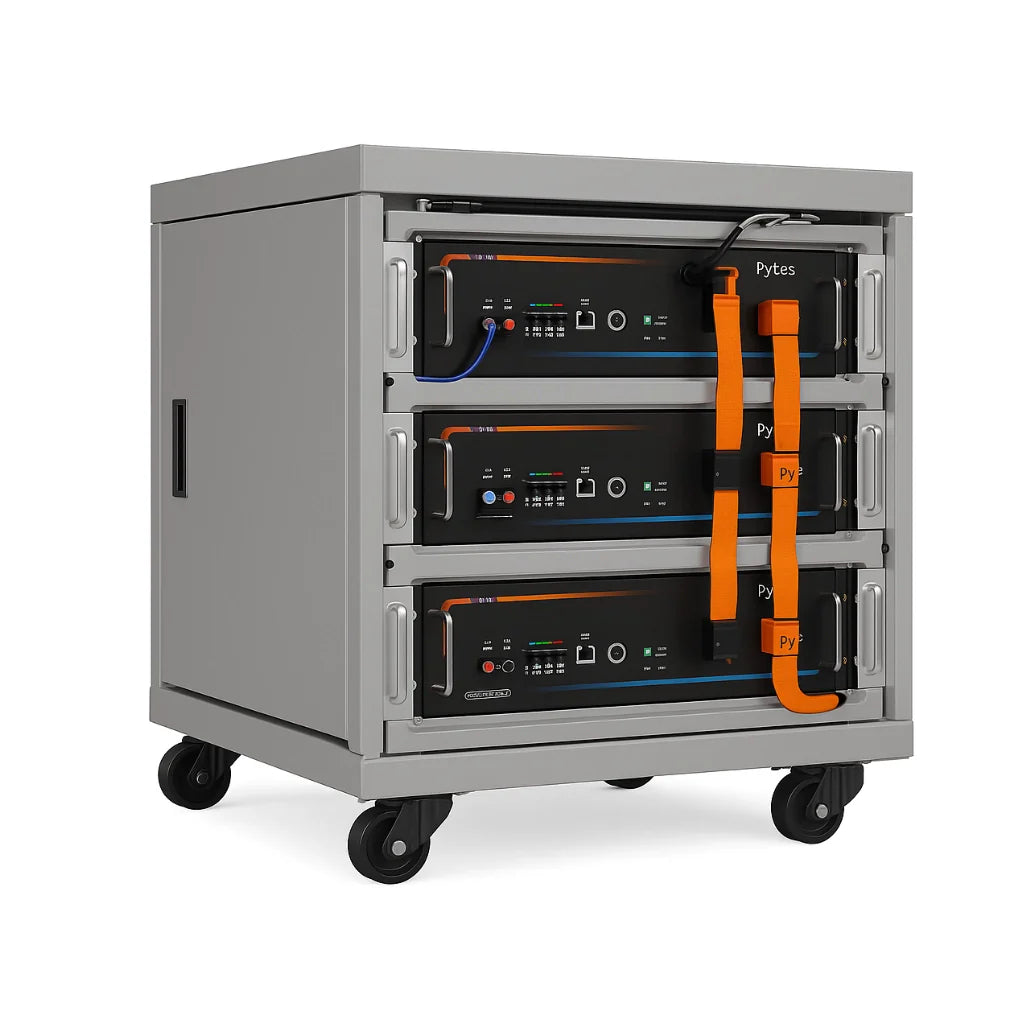
Our Core2 680Ah battery, for example, is rated for up to 7,000 cycles at 80% depth of discharge, a lifespan of over ten years. Compare that with replacing an AGM battery every few seasons and the maths shifts.

Total Cost of Ownership: The Numbers That Actually Matter
Most guides stop at sticker price.
Take a 100Ah AGM battery at roughly £120 and a 100Ah LiFePO4 battery at roughly £219.
| Metric | 100Ah AGM | 100Ah LiFePO4 |
|---|---|---|
| Usable capacity | ~50Ah | ~80Ah |
| Typical cycle life | ~400 | 3,000-7,000 |
| Replacements over 10 years | 3-4 | 0-1 |
| Cost per usable Ah | ~£2.40 | ~£2.74 |
| Cost per cycle | ~£0.30 | ~£0.03-£0.07 |
On cost per usable amp-hour, the two look close.
A worked example makes it concrete. A touring couple using 60Ah per day, 100 days a year, draws 60,000Ah over ten years.
The catch is that lithium only delivers that lifespan if it is charged and stored correctly.
What Shortens Lithium Lifespan
Three things erode cycle life fastest:
- Charging below freezing without a heat pad, which damages cells permanently
- Storing at 100% state of charge in warm conditions, which accelerates cell ageing
- Chronic undercharging from a legacy charger, which leaves cells unbalanced
A quality battery management system mitigates all three, but it cannot fix a charger never configured for lithium. If you want the lifespan you paid for, the charging equipment is not optional.
Lithium Battery Charging for Caravans: Solar, Mains and Alternator
Lithium battery charging for caravans needs the right charging profile, and this is the part that trips people up. LiFePO4 batteries charge faster and accept higher currents than lead-acid, but they need equipment configured for lithium, not a legacy charger set to an AGM profile.
Three charging sources matter on a caravan:
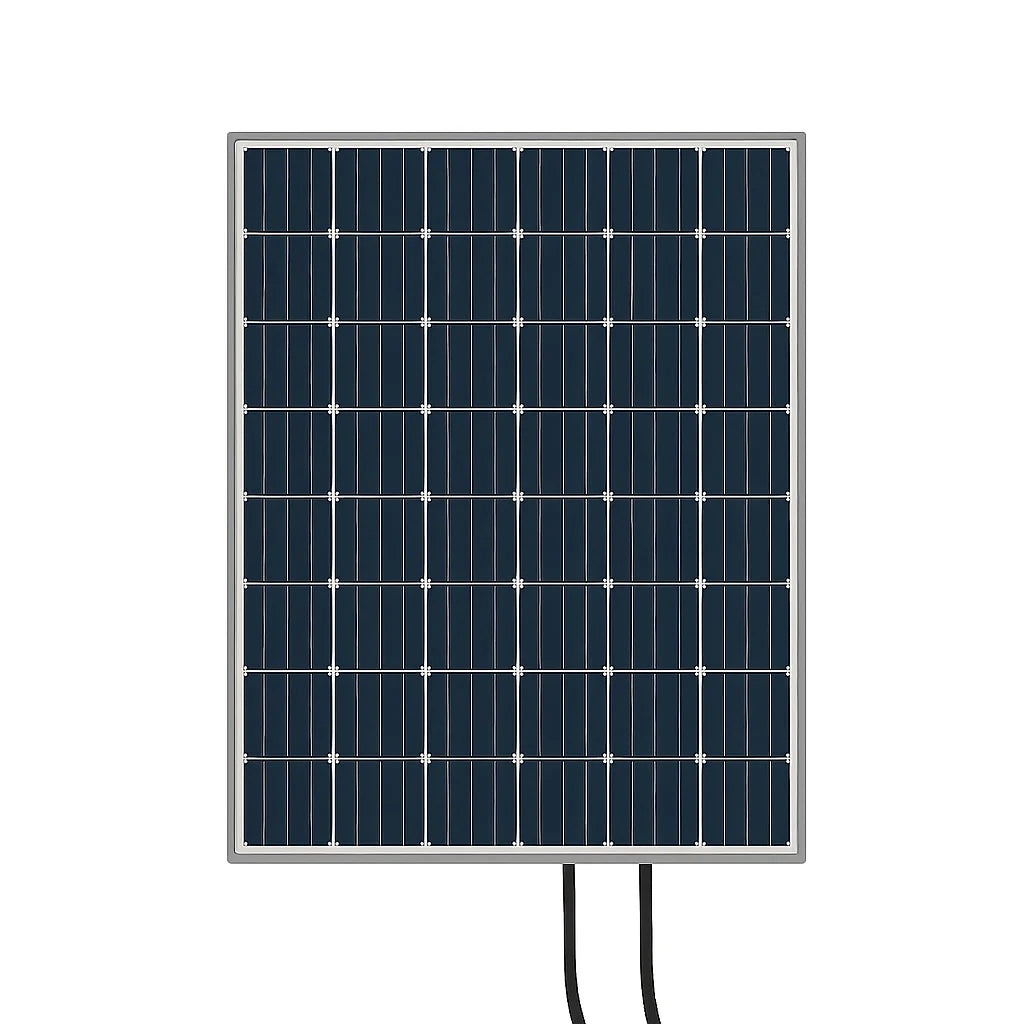
- Solar through an MPPT charge controller, which extracts more power from your panels than a basic controller
- Mains via a lithium-compatible charger or inverter charger when you are on a hook-up
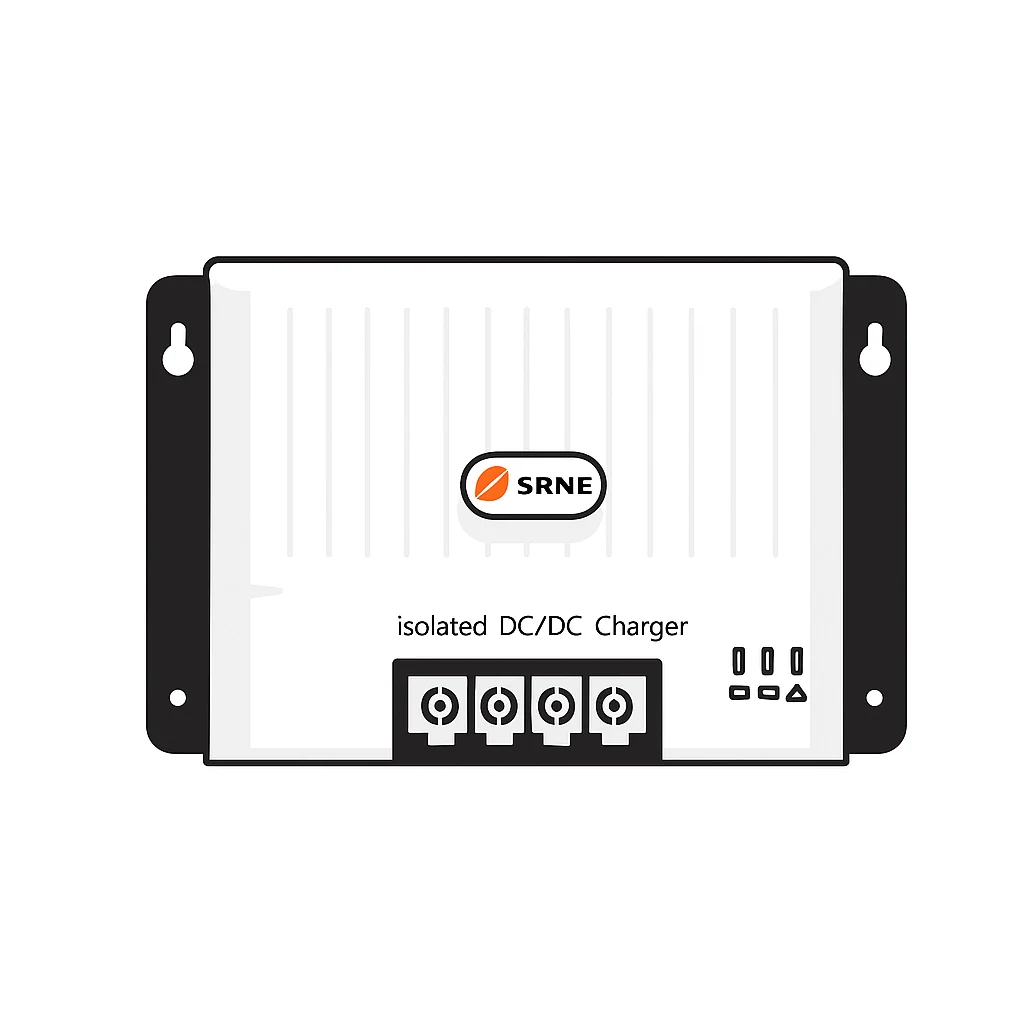
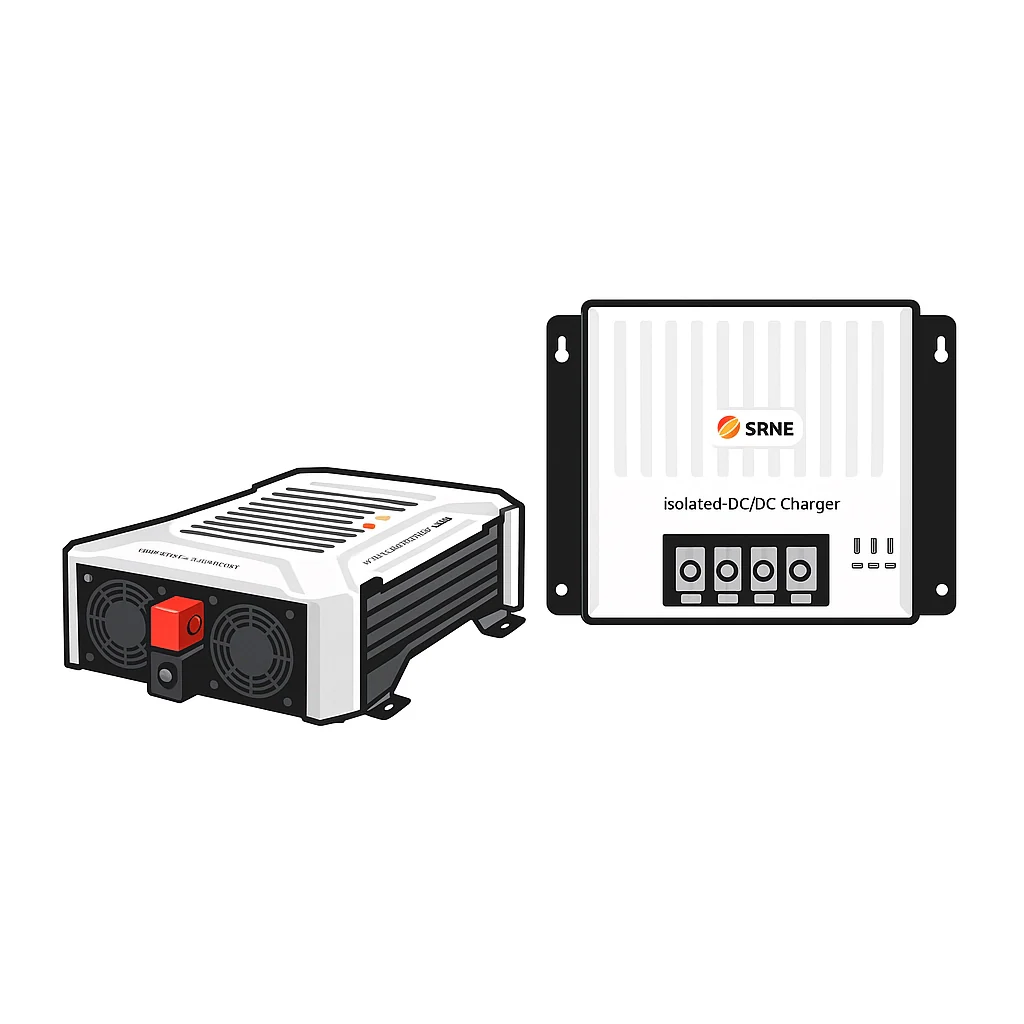
- Alternator through a DC-to-DC charger while towing or driving
A battery management system (BMS) inside the battery handles overcharge protection, over-discharge protection and cell balancing, making a lithium battery safe to leave connected.
Cold-Weather Charging and Storage
Cold-weather charging is the one genuine limitation of lithium. Charging a LiFePO4 battery below freezing can damage it, so the BMS blocks charging in low temperatures to protect the cells.
Some batteries solve this with integrated heat pad technology, which warms the cells so charging can continue safely in freezing conditions.
For storage, charge to around half capacity, disconnect the battery and keep it somewhere dry. Lithium self-discharges far more slowly than lead-acid, holding that charge for months.
Skyenergi Edge 100Ah Lithium Leisure Battery →
Lithium Caravan Battery Installation: A Compatibility Checklist
Lithium caravan battery installation is usually straightforward, but not always a straight swap. Work through this checklist before you buy.
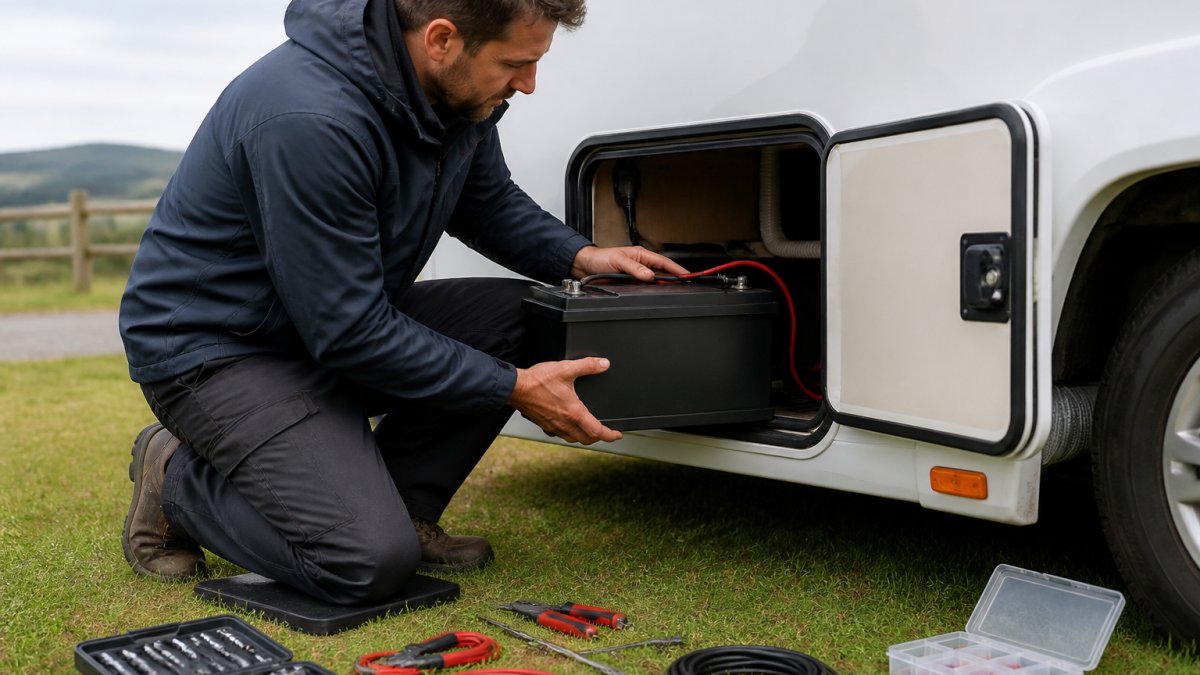
- Charger compatibility: Does your mains charger have a lithium profile, or will it need replacing?
- Solar controller: Is your MPPT controller lithium-compatible?
- Alternator charging: Do you have a DC-to-DC charger, or is your split-charge relay suitable for lithium?
Work through this list and you will know exactly what else your upgrade needs. Skip it and you risk a battery that never charges properly.
Choosing the Right Lithium Leisure Battery for Your Caravan
Choosing the right lithium leisure battery means matching capacity to your real energy use, not guessing. Estimate your daily consumption in watt-hours, then size the bank to cover it with headroom.
Our range covers the common caravan scenarios:
| Battery | Capacity | Best For | Price |
|---|---|---|---|
| Skyenergi Edge 100Ah | 100Ah | Weekend touring, light use | £219.00 |
| Skyenergi Edge 280Ah | 280Ah | Regular off-grid trips | £445.00 |
| Skyenergi Elite 304Ah | 304Ah | Full-time off-grid, Victron systems | £745.00 |
| Skyenergi Elite 560Ah | 560Ah | Extended off-grid living | £975.00 |
| Skyenergi Core2 680Ah | 680Ah | Maximum capacity, 3kW inverters | £1,129.00 |
The Edge range is our no-frills option, built with JBD BMS and Grade A EVE cells, for owners who want dependable power without paying for features they will not use.

Real-World Energy Use: How Many Days Off-Grid?
Capacity figures mean little until you translate them into days. Here is a realistic summer load profile for a touring couple:
| Load | Daily consumption |
|---|---|
| Compressor fridge (12V) | 30-40Ah |
| LED lighting (4-6 hours) | 5-8Ah |
| Phone and laptop charging | 5-10Ah |
| Water pump | 2-4Ah |
| TV (2 hours) | 8-12Ah |
| Base total | 50-74Ah |
Add an inverter for a kettle, hair dryer or coffee machine and demand spikes sharply: a 1,500W kettle run for five minutes draws roughly 10Ah, and a 2,000W hair dryer for ten minutes about 28Ah.
Now apply that to our range, assuming 80% depth of discharge and no solar input:
| Battery | Usable capacity | Days off-grid (base load) | Days with inverter use |
|---|---|---|---|
| Edge 100Ah | ~80Ah | 1-1.5 days | Under 1 day |
| Edge 280Ah | ~224Ah | 3-4 days | 2-3 days |
| Elite 304Ah | ~243Ah | 3-5 days | 2-3 days |
| Elite 560Ah | ~448Ah | 6-9 days | 4-6 days |
| Core2 680Ah | ~544Ah | 7-11 days | 5-7 days |
Add 200W of solar through an MPPT controller and you recover roughly 40-60Ah per day in good summer sun, extending every figure above by a day or more. In winter, expect a third of that.
Inverter Demands and Cable Sizing
Inverters draw heavily from the battery. A 3kW inverter can pull well over 250A at 12V, which is why the Core2 is rated for operation with a 3000W inverter.
Cable sizing is not optional: a 250A draw through undersized cable causes voltage drop, heat and nuisance shutdowns. Keep cable runs short and match the cross-sectional area to the inverter's peak draw, not its average, if in doubt, go one size up.
Matching Capacity to Your Touring Style
A simple framework:
- Weekend tourer, always on hook-up: 100Ah Edge is plenty. You are charging from mains most nights.
- Regular off-grid weekends: 280Ah Edge gives you two to three days without solar.
- Week-long off-grid trips: 304Ah Elite or 560Ah Elite, especially if you run an inverter.
If you are unsure, size up rather than down. Adding a second battery later is possible, but matching an older battery to a new one is never ideal, and being underpowered on a trip costs more than the extra capacity.
Pros, Cons and the Honest Trade-Offs of Switching
The benefits of switching to lithium leisure batteries for caravans are real, but so are the trade-offs.
Pros:
- Roughly double the usable capacity of an equivalent lead-acid battery
- Far lighter for the same stored energy, protecting your payload
- Thousands of charge cycles and a lifespan measured in years, not seasons
- Stable voltage keeps fridges and inverters running
Cons:
- Higher upfront cost than a like-for-like AGM replacement
- May require a new charger, DC-to-DC charger or controller to charge correctly
- Cold-weather charging needs heat pad technology or careful management
- Occasional-use owners may not recoup the cost over the battery's life
That last point matters. If you use your caravan twice a year and always hook up, an AGM battery may genuinely be the sensible choice. Lithium rewards people who tour often, go off-grid, or run demanding electrical loads.
Conclusion
The hardest part of upgrading is not choosing a battery, it is knowing whether the rest of your system is ready. Get the charging equipment right and lithium transforms what your caravan can do off-grid; get it wrong and you will never see the benefit.
At Skyenergi, we supply the complete system, not just the battery.
Get started with Skyenergi and build a caravan power system that keeps your fridge, your inverter and your plans running, wherever you park up.
Frequently Asked Questions
Are lithium caravan batteries worth switching to?
It depends on how you use your caravan. Lithium leisure batteries give you far more usable capacity from the same amp-hour rating, hold voltage steadier under load, and last many more charge cycles than lead-acid or AGM. If you tour off-grid regularly or run high-draw appliances, the switch pays back over time. If you only use hook-ups a few weekends a year, the higher upfront cost is harder to justify.
How long does a lithium leisure battery last in a caravan?
A LiFePO4 leisure battery typically delivers thousands of charge cycles before capacity drops noticeably, which for most caravan owners works out at well over a decade of normal use. The Skyenergi Core2 680Ah is rated at up to 7,000 cycles at 80% depth of discharge. A quality battery management system and correct charging profile are the main factors that decide whether you reach that figure.
Can you replace a lead-acid caravan battery with lithium?
Yes, but it is rarely a straight swap. Check four things first: your charger has a lithium or LiFePO4 profile, your solar controller supports the higher charge voltage, your DC-to-DC charger is lithium-compatible, and your cable sizes suit the current. The physical footprint is usually smaller, which helps tight lockers. Skyenergi's Edge and Elite ranges are available in 4S or 4P configurations to fit different existing setups.
Do lithium caravan batteries charge faster, and can a solar panel charge one?
Lithium accepts charge far more readily than lead-acid, so it reaches full capacity in a shorter window and wastes less energy as heat. A caravan solar panel can charge a lithium battery, but the controller must have a lithium charging profile, since LiFePO4 needs a higher absorption voltage and no float stage. Pairing panels with an MPPT controller and a DC-to-DC charger covers solar, mains and alternator charging in one system.
Prev post

Compact Lithium Battery for Motorhome: 2026 Guide
Updated on 09 October 2026
Next post

5 Best 12V Power Distribution Solutions for DIY Van Conversions
Updated on 07 October 2026


