




MPPT vs DC-to-DC Chargers: Which Suits Your Motorhome
Compare MPPT and DC-to-DC chargers for motorhome battery systems. Learn how each works, efficiency ratings, and which suits lithium leisure batteries.
Table of Contents
- MPPT vs DC-to-DC Chargers: Core Differences Explained
- Comparison Table: MPPT and DC-to-DC Performance
- How to Wire Solar and Alternator Charging Together
- Benefits of SRNE MPPT Controllers for Dual-Input Systems
- Skyenergi Lithium Battery Charging Requirements and Compatibility
- Integrated vs Separate Systems: Pros, Cons and Real-World Trade-Offs
- Smart Alternators, Voltage Drop and Charging Efficiency
- Conclusion: Choosing the Right Charger for Your Setup
- Frequently Asked Questions
Last Updated: October 2, 2026
MPPT vs DC-to-DC Chargers: Core Differences Explained
When you're upgrading your motorhome's electrical system, the choice of MPPT vs DC-to-DC chargers feels like picking between two equally important components.
An MPPT solar charge controller is a device that optimises power extraction from solar panels by tracking the maximum power point and converting it to the voltage your battery needs.
The market for integrated systems combining both functions is growing rapidly. According to DataIntelo's 2026 market analysis, the MPPT DC-DC charger vehicle market reached £1.8 billion in 2025 and is projected to hit £4.1 billion by 2034, growing at 9.6% annually. This growth reflects a clear industry shift toward dual-input charging solutions for modern motorhomes and campervans.
At Skyenergi, we've spent years helping UK campervan owners and professional installers understand this distinction. The confusion exists because newer integrated controllers blur the line between the two technologies.
How DC-to-DC Chargers Work
A DC-to-DC charger sits between your vehicle's starter battery (charged by the alternator) and your leisure battery.
Your alternator outputs between 13.2V and 16V when running, but your leisure battery needs a specific voltage profile depending on its chemistry. A lead-acid battery wants a different charge curve than a lithium iron phosphate (LiFePO₄) battery.
Modern DC-to-DC chargers like the Victron Orion XS 12/12-50A deliver up to 50A output with 98.5% efficiency, supporting both lead-acid and lithium batteries with adaptive multi-stage charging profiles. They handle voltage drop across wiring, compensate for temperature changes, and protect against reverse current at night.

For motorhomes with smart alternators (common in Euro 5 and Euro 6 vehicles), a DC-to-DC charger becomes essential.
Understanding MPPT Solar Controllers
MPPT stands for Maximum Power Point Tracking. A solar panel's output varies constantly based on temperature, angle, and cloud cover.
Think of it this way: your solar panel might output 18V at 5A under ideal conditions, but if you connect it directly to a 12V battery, you lose efficiency.
Industry testing from VanderCamp Adventures' 2026 performance benchmarks shows that integrated MPPT units achieve 99% solar tracking efficiency, with DC-to-DC conversion reaching 97% efficiency.
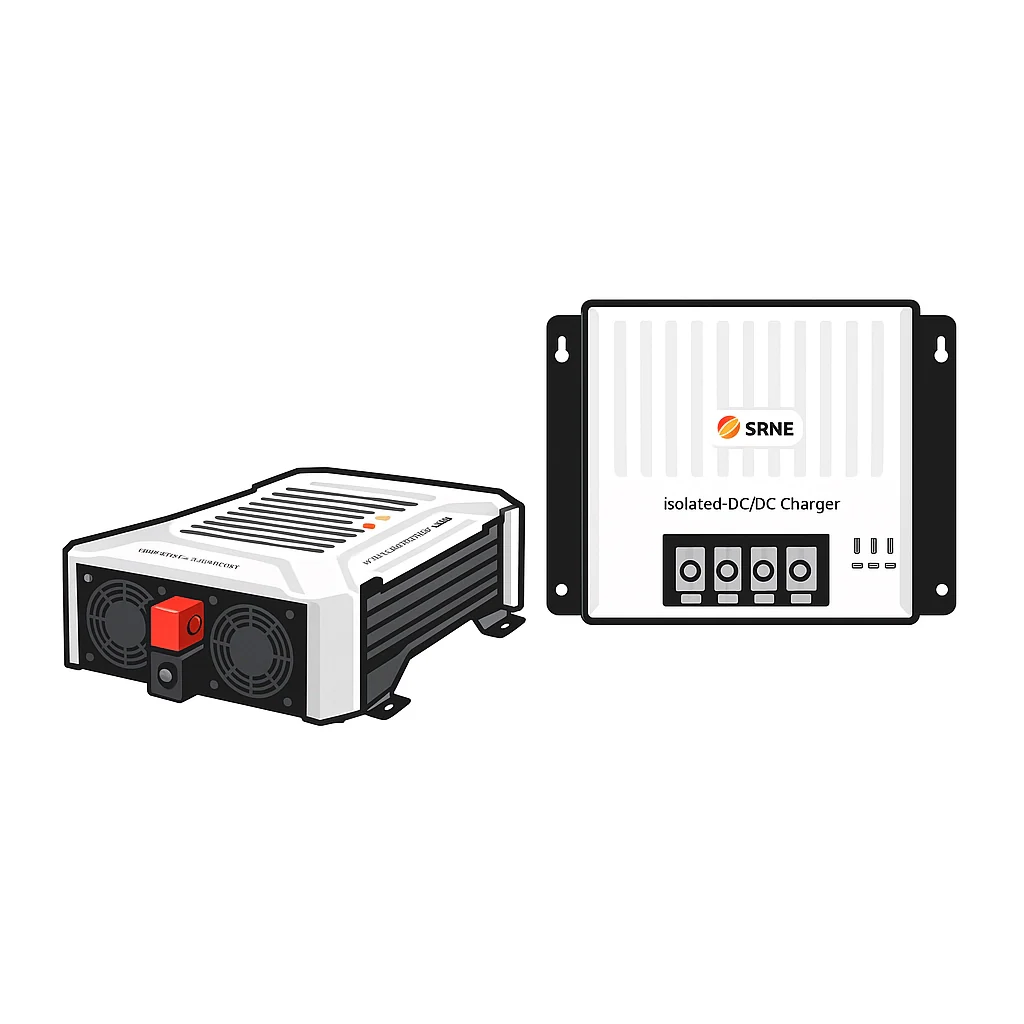
The Victron SmartSolar MPPT 100/30 (£93.38) handles smaller solar arrays, whilst the SRNE MD1250 (£221.00) combines both MPPT and DC-to-DC functionality in a single unit rated for up to 700W solar input and 50A alternator charging.


Comparison Table: MPPT and DC-to-DC Performance
| Feature | DC-to-DC Charger | MPPT Solar Controller | Integrated Unit |
|---|---|---|---|
| Power Source | Vehicle alternator | Solar panels | Both alternator and solar |
| Max Efficiency | Up to 98.5% | Up to 99% | Up to 98% combined |
| Voltage Regulation | 12V to 12V with boost/buck | PV array to battery | Both inputs managed |
| Battery Chemistry Support | Lead-acid, lithium, gel | All types | All types |
| Smart Alternator Compatible | Yes | N/A | Yes |
| Typical Cost | £264-£339 | £93-£221 | £221-£449 |
| Best For | Alternator charging | Solar-only systems | Dual-input off-grid |
How to Wire Solar and Alternator Charging Together
Wiring both power sources requires careful planning to avoid conflicts and voltage drops.
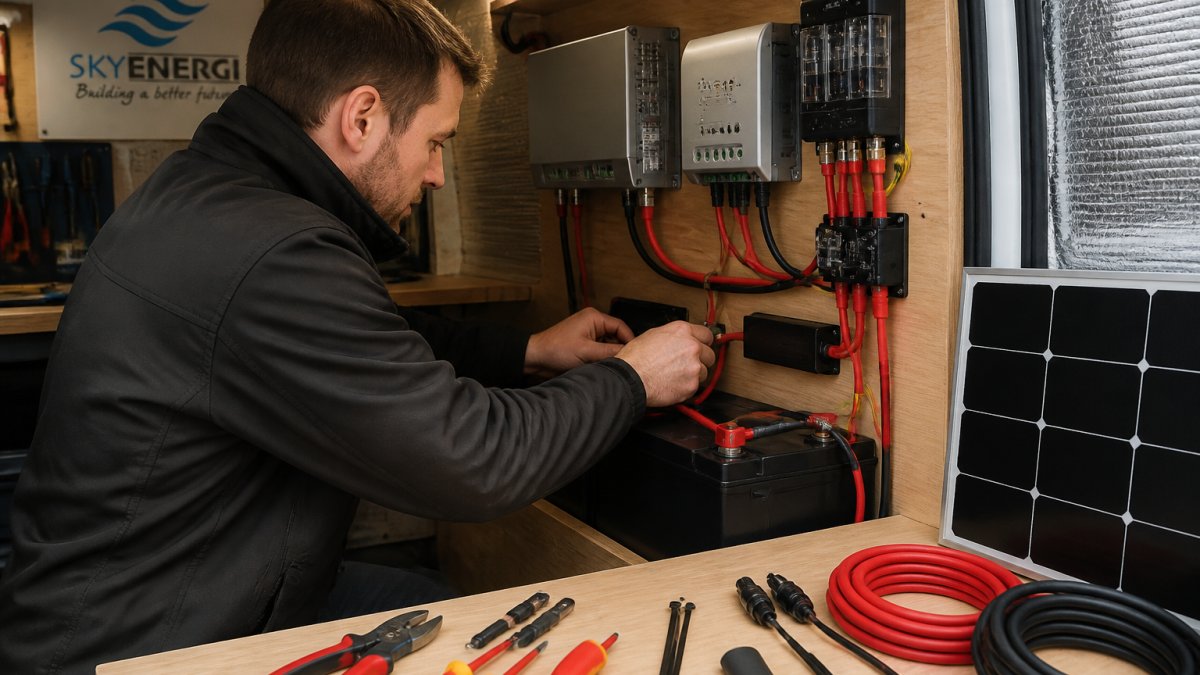
Start with the alternator input. Run heavy-gauge cable (typically 25-50mm² depending on distance and current) from the starter battery through an isolator or split-charge relay to the DC-to-DC charger.
Next, add the solar input. Your solar panels connect to the MPPT controller's PV input, and the controller's output goes to the same leisure battery. If you're using an integrated unit like the SRNE MD12100 (£449.00), both inputs feed into a single intelligent controller that manages charging priority and prevents conflicts.
The key mistake most installers make is undersizing wiring. Voltage drop across long cable runs reduces charging current significantly.
Benefits of SRNE MPPT Controllers for Dual-Input Systems
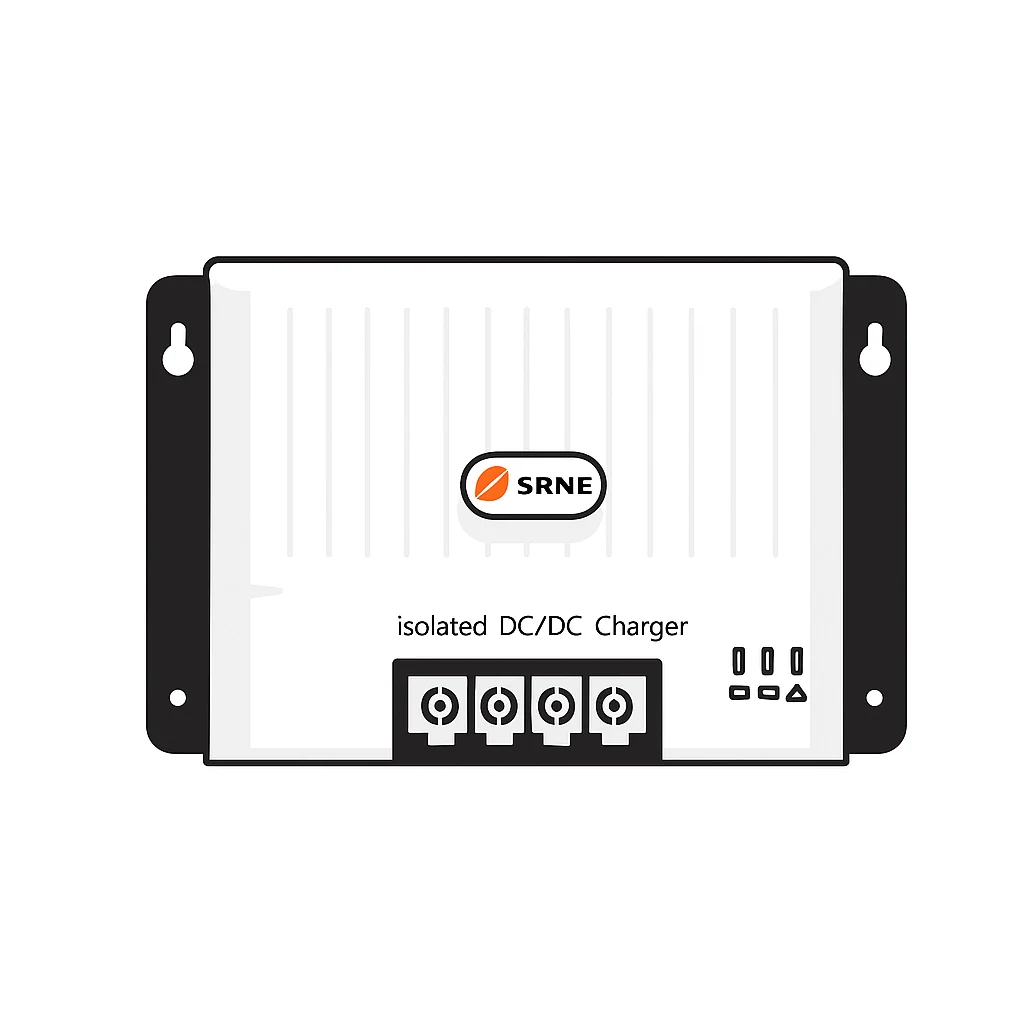
The SRNE MD1250 and MD12100 series represent the integrated approach to dual-input charging. Instead of managing two separate devices, you get one controller handling both alternator and solar inputs with a single BMS connection.
This simplification matters in tight motorhome spaces. You save weight, reduce wiring complexity, and eliminate the risk of one charger stepping on the other's toes. The SRNE MD1250 (£221.00) supports up to 50A alternator input and 50A solar input.
For larger systems, the SRNE MD12100 (£449.00) handles 100A alternator charging and up to 95A solar input. Both units feature Bluetooth connectivity for remote monitoring, comprehensive protection against overvoltage and reverse polarity, and multi-chemistry battery support including lithium iron phosphate.
Skyenergi Lithium Battery Charging Requirements and Compatibility
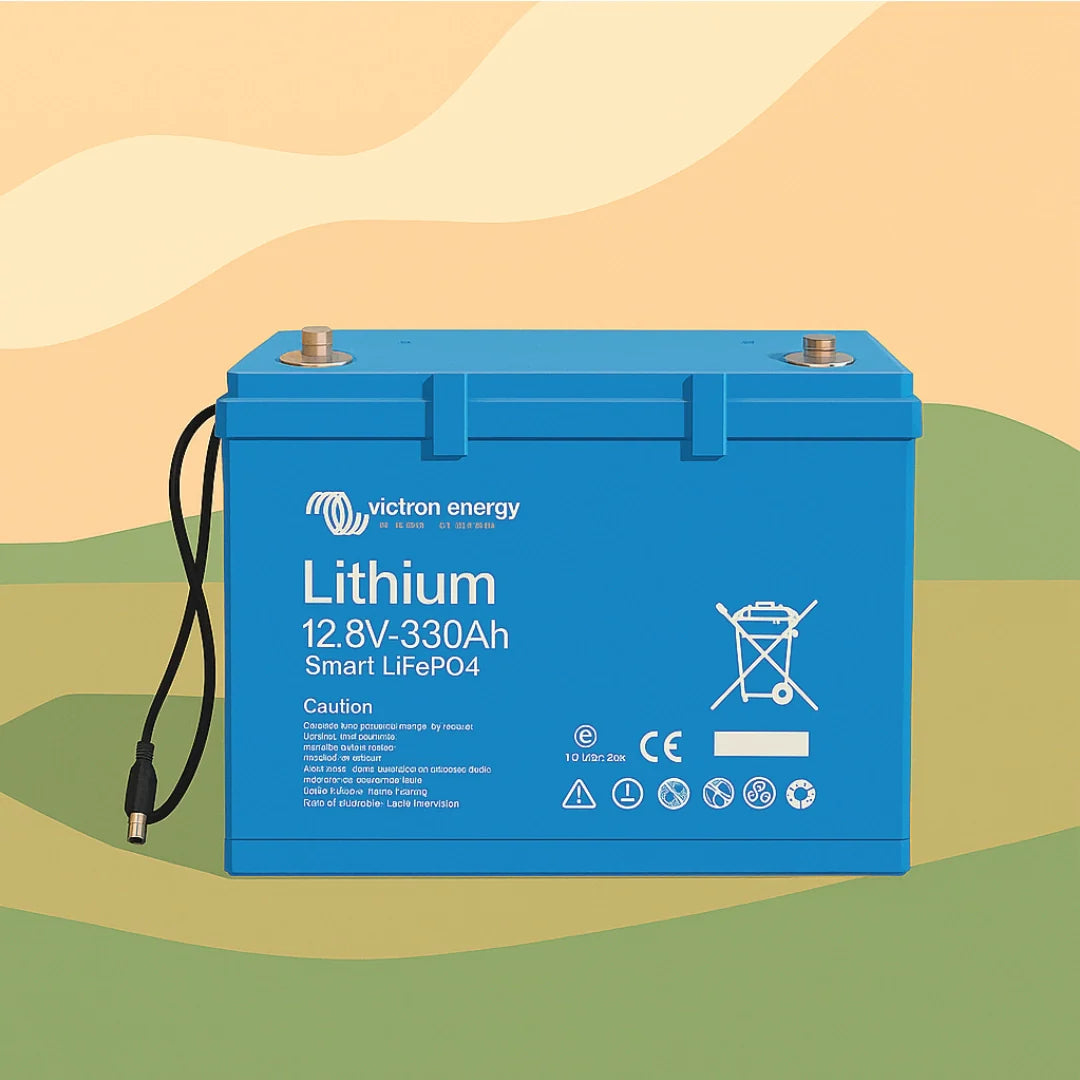
Lithium leisure batteries, particularly lithium iron phosphate (LiFePO₄), have strict charging requirements that differ fundamentally from lead-acid batteries.
Your charger must respect the battery's BMS settings. Most lithium batteries accept a maximum charge voltage of 14.4V, whilst lead-acid batteries often need 14.7V or higher.
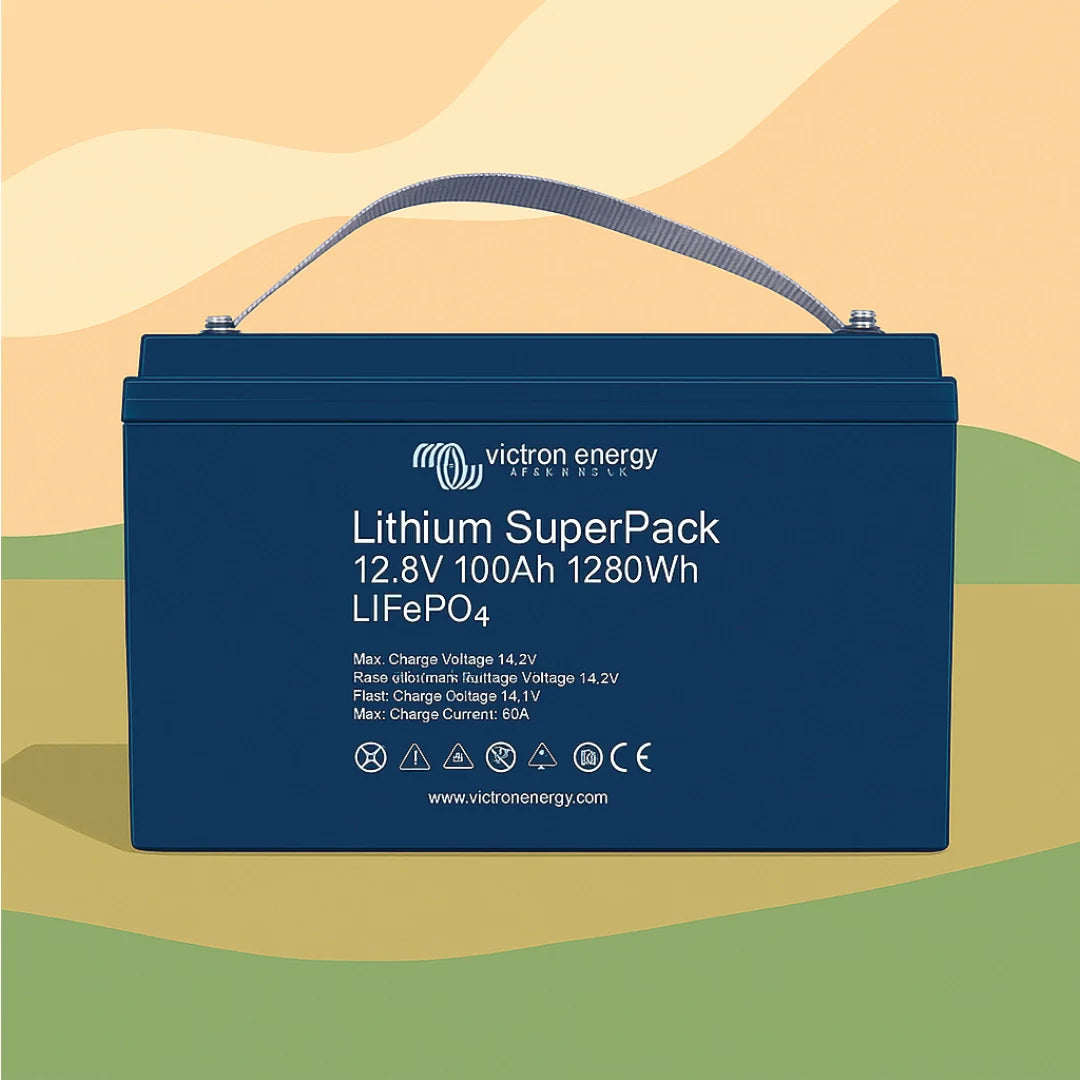
This is where DC-to-DC chargers with lithium-specific profiles become critical. The Victron Orion XS supports customisable charge profiles for lithium batteries via its VictronConnect app, allowing you to match your specific battery's BMS requirements. Skyenergi's range of lithium batteries work seamlessly with both Victron and SRNE controllers.
12V Battery To Battery Charger Kit - Includes Victron Orion XS 12/12-50A DC-DC →
SRNE Solar's 2026 technical guidance clarifies that DC-to-DC chargers are optimised for alternator input to manage voltage from the vehicle's electrical system, whilst MPPT controllers extract maximum power from solar panels. When both feed a lithium battery, the integrated controller prevents charging conflicts by prioritising the input with available power and managing current limits to respect the battery's BMS.
Temperature protection is another critical feature. Lithium batteries charge more slowly in cold weather to avoid internal damage.
Integrated vs Separate Systems: Pros, Cons and Real-World Trade-Offs
The choice between integrated controllers and separate MPPT plus DC-to-DC units depends on your space, budget, and system complexity. Both approaches work; the trade-offs are real.
When Integrated Controllers Make Sense
Integrated units save space, weight, and installation complexity. You run fewer cables, need fewer fuses, and have a single point of configuration via Bluetooth.
Cost is another factor. A dedicated DC-to-DC charger (£264-£339) plus a separate MPPT controller (£93-£221) totals £357-£560.
Integrated controllers also simplify troubleshooting. A single Bluetooth connection shows you both alternator and solar charging status in one app.
When Separate Devices Offer Better Reliability
Some users prefer redundancy. If your MPPT fails, your DC-to-DC still charges from the alternator. If the DC-to-DC fails, solar charging continues.
Separate systems also allow you to upgrade one component without replacing both. If solar technology improves dramatically, you can swap just the MPPT controller without touching your DC-to-DC setup.
According to Reddit's r/vandwellers community discussions, some experienced van builders argue that keeping components separate ensures a single failure doesn't compromise the entire charging architecture. This perspective holds particular weight for full-time nomads who can't afford downtime.
The trade-off is complexity: more wiring, more fuses, more potential connection points for voltage drop and failure.
Smart Alternators, Voltage Drop and Charging Efficiency
Modern vehicles with Euro 5 and Euro 6 engines use smart alternators that vary output based on engine load and electrical demand.
A DC-to-DC charger compensates by boosting voltage when the alternator output drops.
Voltage drop across wiring reduces charging efficiency significantly. A 10-metre run from alternator to leisure battery with undersized cable (say, 10mm²) can drop 0.5-1V under 50A load.
Conclusion: Choosing the Right Charger for Your Setup
For most UK motorhome owners, an integrated MPPT and DC-to-DC controller like the SRNE MD1250 (£221.00) represents the best balance of cost, simplicity, and performance. It handles both alternator and solar charging through a single intelligent unit, manages lithium battery profiles, and connects to your phone for monitoring.
If you need maximum solar capacity or want redundancy, separate components give you flexibility, but expect higher cost and more complex installation. The Victron Orion XS (£339.00) paired with the Victron SmartSolar MPPT 100/30 (£93.38) delivers premium performance and extensive monitoring, totalling £432.38.
Whichever you choose, ensure your charger supports lithium battery chemistry, handles smart alternators, and includes temperature protection. Skyenergi stocks the full range of controllers and lithium batteries you need to build a reliable, efficient charging system. Get started with Skyenergi and ensure your motorhome stays powered wherever you travel.
Frequently Asked Questions
Do you need both an MPPT controller and a DC-to-DC charger in a motorhome?
Not always. A DC-to-DC charger manages alternator voltage to charge your leisure battery safely. An MPPT controller optimises solar panel input. If you have solar panels, you need an MPPT. If you rely only on alternator charging, a DC-to-DC charger alone suffices. Many modern setups use integrated dual-input controllers like the SRNE MD1250, which handle both sources simultaneously, eliminating the need for separate devices and reducing wiring complexity.
What is the primary difference between MPPT and DC-to-DC charging?
MPPT (Maximum Power Point Tracking) continuously adjusts to extract maximum power from solar panels, improving overall charging efficiency by up to 98%. DC-to-DC chargers regulate voltage from your vehicle alternator to safely charge your leisure battery, delivering up to 98.5% conversion efficiency. MPPT optimises variable solar input; DC-to-DC handles fixed alternator output. Both are essential for complete off-grid motorhome systems that use solar and alternator charging.
Why are DC-to-DC chargers essential for lithium leisure batteries?
Lithium iron phosphate (LiFePO₄) batteries require precise multi-stage charging profiles (bulk, absorption, float) and strict voltage limits that differ from lead-acid. A DC-to-DC charger like the Victron Orion XS 12/12-50A provides programmable charging algorithms via Bluetooth, protects against overvoltage and overcurrent, and works with smart alternators found in modern vehicles. Without proper voltage regulation, alternator output can damage lithium batteries or trigger their BMS (battery management system) protection, cutting off charging entirely.
Can you use an MPPT controller and DC-to-DC charger at the same time?
Yes. Many motorhome owners run both devices together: the DC-to-DC charger pulls power from the alternator while driving, and the MPPT controller harvests solar energy during stationary periods. However, integrated dual-input controllers like the SRNE MD12100 combine both functions in one unit, managing alternator and solar inputs simultaneously. This reduces wiring complexity, saves space, and eliminates potential conflicts between separate chargers competing for battery voltage regulation.
What efficiency can you expect from SRNE MPPT controllers?
SRNE MPPT controllers like the MD1250 and MD12100 deliver up to 98% overall charging efficiency. This means nearly all available solar energy is captured and transferred to your leisure battery with minimal loss as heat. Combined with their fanless design and ultra-low standby consumption (under 0.6W), SRNE controllers maximise your solar harvest whilst keeping power drain minimal during idle periods, extending battery life in off-grid motorhome setups.
Prev post

12V Lithium Battery Monitoring System: SRNE Review
Updated on 04 October 2026
Next post

Solar Products UK: A 2026 Guide to Panels, MPPT & Batteries
Updated on 01 October 2026


