





Compact Lithium Battery for Motorhome: 2026 Guide
Compare compact lithium batteries for motorhomes in 2026. Find the right 100Ah or 230Ah LiFePO4 battery, charging options, and Skyenergi solutions.
Table of Contents
- Compact Lithium Battery for Motorhome: Quick Comparison Table
- Why Choose a Compact Lithium Battery for Your Motorhome
- 100Ah Lithium Battery for Motorhome: Entry-Level Power
- Lithium Battery Dimensions and Weight: Space-Saving Advantage
- Motorhome Lithium Battery Charging: System Compatibility
- DC-to-DC Charger for Lithium Battery: When You Need One
- How to Select the Right Compact Lithium Battery
- Real-World Runtime: What Your Battery Will Actually Power
- Frequently Asked Questions
Last Updated: October 9, 2026
Compact Lithium Battery for Motorhome: Quick Comparison Table
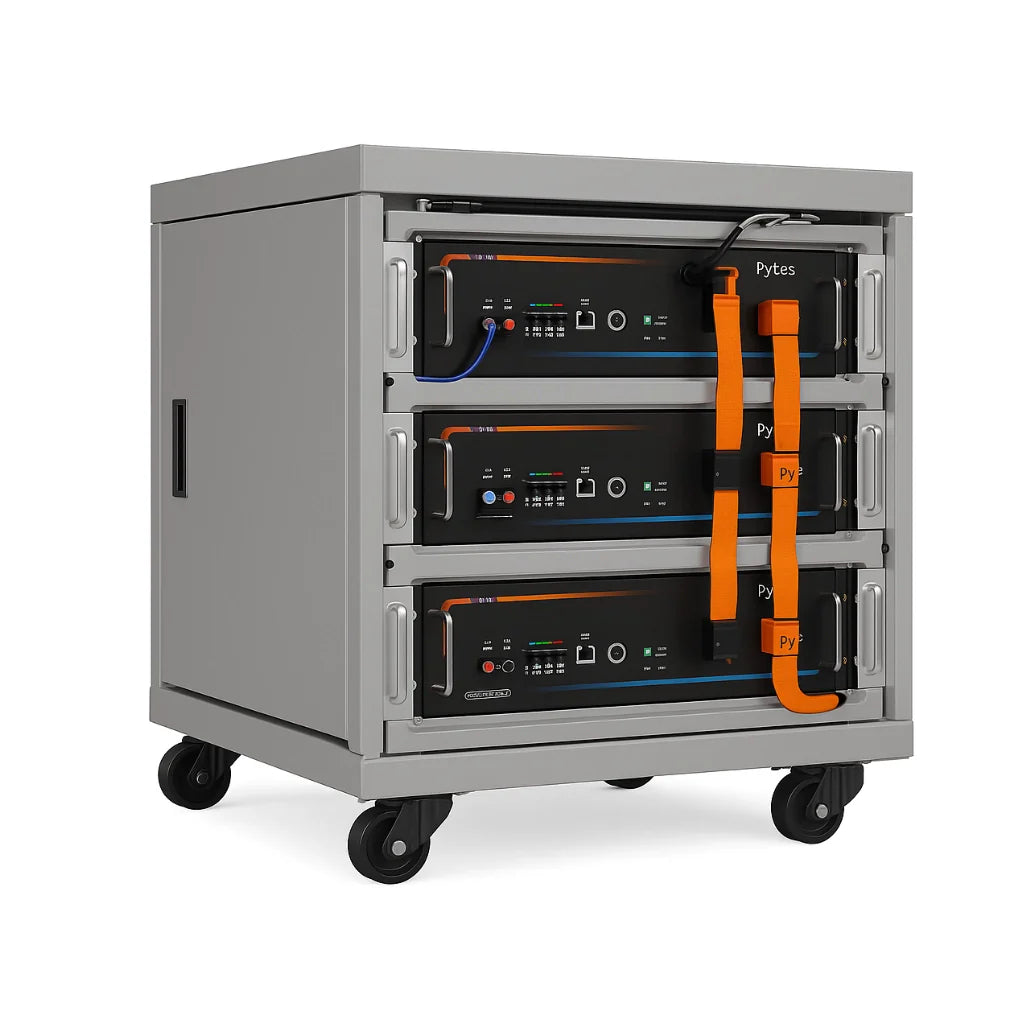
A compact lithium battery for motorhome is a lightweight, space-efficient LiFePO₄ energy storage system built to fit tight campervan spaces whilst delivering deeper usable capacity than lead-acid. At Skyenergi, we specialise in these systems for UK motorhome owners seeking reliable off-grid power.
The global recreational-vehicle battery market is projected to grow from £4.2 billion in 2026 to £7.4 billion by 2034, according to Fortune Business Insights' recreational vehicle battery market analysis, reflecting growing demand for efficient leisure power solutions.
Below is a quick reference comparing the most popular compact lithium options available:
| Battery | Capacity | Dimensions | Weight | Price | Best For |
|---|---|---|---|---|---|
| Skyenergi Edge 100Ah | 100Ah | Standard DIN | ~10kg | £219 | Budget-conscious upgraders |
| Skyenergi Core2 105Ah | 105Ah | Compact | ~12kg | £266 | Entry-level with Bluetooth |
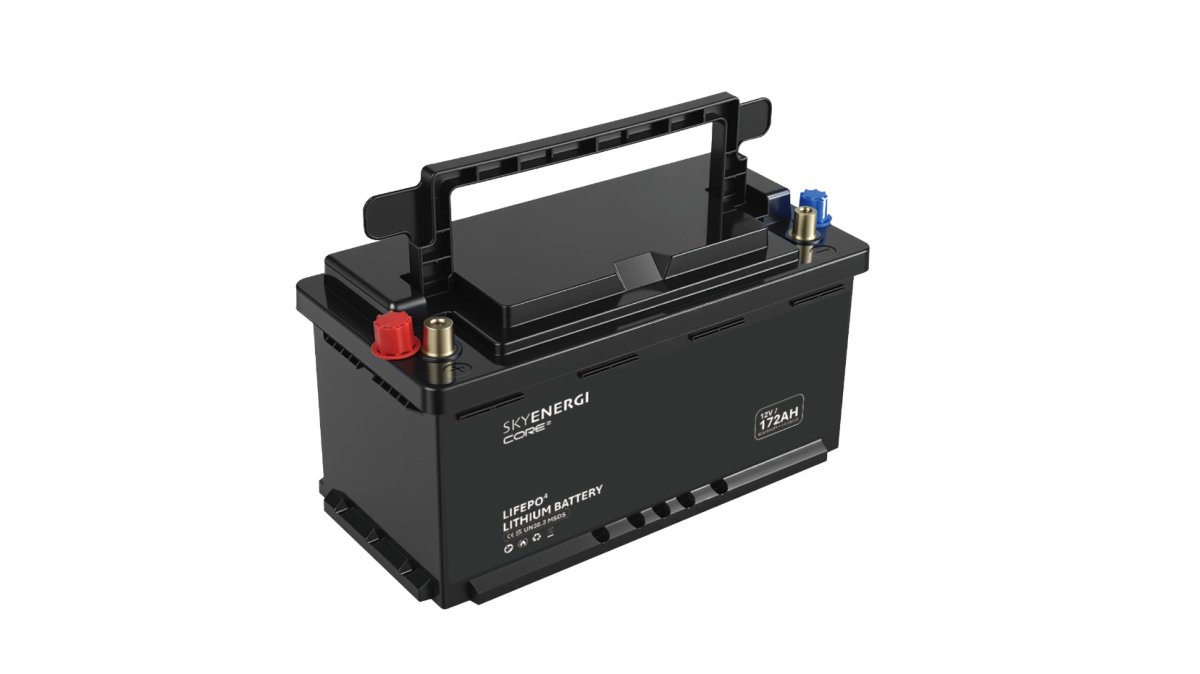
| Skyenergi Core2 172Ah (DIN) | 172Ah | H8 DIN fit | ~18kg | £482 | Direct lead-acid replacement |
| Skyenergi Core2 230Ah Seat-base | 230Ah | Under-seat | ~22kg | £619 | Space-saving, high capacity |
| Skyenergi Elite 304Ah | 304Ah | Standard | ~28kg | £745 | Victron integration, advanced |
Why Choose a Compact Lithium Battery for Your Motorhome
Most motorhome owners stick with lead-acid batteries because they're familiar and cheap upfront, not realising how much that choice costs in freedom and maintenance.

Lead-acid leisure batteries can only be discharged safely to 50% of rated capacity, so a 200Ah lead-acid gives you 100Ah usable. Lithium delivers 80-100% usable capacity, so a 100Ah lithium system genuinely provides 80-100Ah you can draw on.
That difference compounds quickly. If your fridge, lights, and water pump draw 15 amps per hour, a lead-acid 200Ah battery (100Ah usable) runs roughly 6-7 hours. Lithium lasts the same but in a smaller, lighter battery, saving weight, space, and the hassle of checking water levels and terminal corrosion.
Charging speed matters too. If your alternator produces 100 amps, a lead-acid battery may only safely accept 20-30 amps continuously, whereas lithium accepts 50-100+ amps depending on the battery management system (BMS). Longer driving days mean faster top-ups and more usable power on arrival.
Weight savings are substantial: a 200Ah lead-acid battery weighs 60-70kg, while an equivalent 230Ah lithium weighs 20-25kg. That's 40-50kg less mass, improving handling, reducing fuel consumption, and freeing payload for gear.
100Ah Lithium Battery for Motorhome: Entry-Level Power
A 100Ah lithium battery is the minimum threshold for comfortable off-grid motorhome use, not weak, but an entry point to lithium that handles genuine workloads.
With 80-100Ah usable, a 100Ah lithium system powers a small fridge (3-5 amps), LED lights (0.5-2 amps), and a water pump (5-10 amps) for 8-12 hours. Many weekend campers find this sufficient; extended trips or high-consumption appliances demand more.
The Skyenergi Edge 100Ah (£219) is purpose-built for this segment, with a 100A JBD battery management system and Grade-A EVE cells in a rugged IP65-rated housing. No Bluetooth, no heat pads, just reliable power at the lowest entry cost.
The Skyenergi Core2 105Ah (£266) steps up with integrated Bluetooth monitoring via the SkyEnergi App and a heat pad for cold-weather charging, letting you monitor state of charge, voltage, current, and temperature from your phone and charge safely in freezing conditions.

Both deliver up to 2,000 cycles at 80% depth of discharge, ensuring 10+ years of service. Choose the Edge for simplicity and lowest cost, or the Core2 if cold-weather reliability and real-time monitoring matter.
Lithium Battery Dimensions and Weight: Space-Saving Advantage
Space is the limiting factor in most motorhome conversions: a compact lithium battery for motorhome installation must fit where your old lead-acid lived, or in tighter spots if you're optimising layout.
Lead-acid leisure batteries occupy substantial volume: a typical 200Ah wet-cell measures roughly 520mm × 240mm × 240mm and weighs 60-70kg. Even AGM batteries are dense and bulky.
Lithium achieves the same usable capacity in smaller packages. The Skyenergi Core2 172Ah (DIN fit) uses a standard H8 DIN enclosure, the same footprint as many lead-acid batteries it replaces, delivering 172Ah at roughly 18kg, a direct swap without new mounting brackets.

For ultra-compact installations, the Skyenergi Core2 230Ah Seat-base (£619) fits under captain's seats in Fiat Ducato, Ford Transit, VW T6.1, T7, Mercedes Sprinter, and others.
Higher-capacity models (Core2 340Ah, Elite 304Ah, Elite 560Ah) occupy more space but weigh far less than equivalent lead-acid.
Motorhome Lithium Battery Charging: System Compatibility
Not every motorhome charging system works with lithium. Lead-acid chargers and alternator regulators use voltage profiles optimised for lead-acid chemistry, which can damage or fail to charge lithium correctly.
Lithium requires a charger delivering a constant-current, constant-voltage (CC-CV) profile that stops at full state of charge (typically 13.6V for 12V lithium). Most modern smart chargers support this; older alternator regulators and basic chargers may not.
Your three charging sources are:
Alternator charging, Your engine's alternator produces power whilst driving. A standard regulator holds 13.8-14.4V, compatible but suboptimal. A lithium-compatible regulator or DC-to-DC charger regulates the output to the correct lithium profile, charging faster and more safely.
Skyenergi Core2 105Ah Lithium Leisure Battery - Bluetooth & Heat-Pad →
Mains charger, A 230V AC to 12V DC charger is essential on campsites. Most modern chargers are lithium-compatible, but check the spec, older lead-acid-only chargers may not work reliably.
Solar charging, An MPPT (maximum power point tracking) controller is the standard and inherently lithium-compatible, regulating voltage to match battery requirements.
The Skyenergi team can advise on your specific charging setup. Many motorhomes need only a mains charger upgrade; others benefit from a DC-to-DC charger to improve alternator charging speed.
DC-to-DC Charger for Lithium Battery: When You Need One
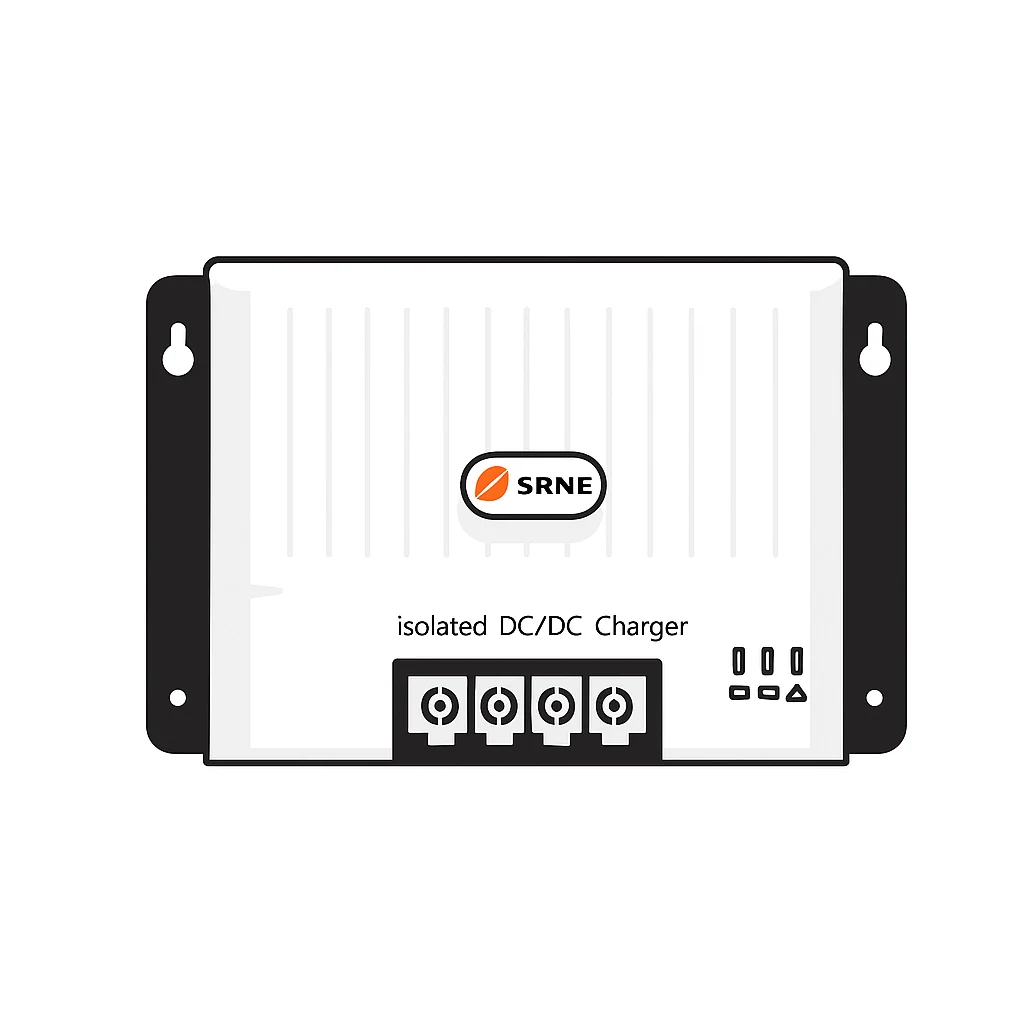
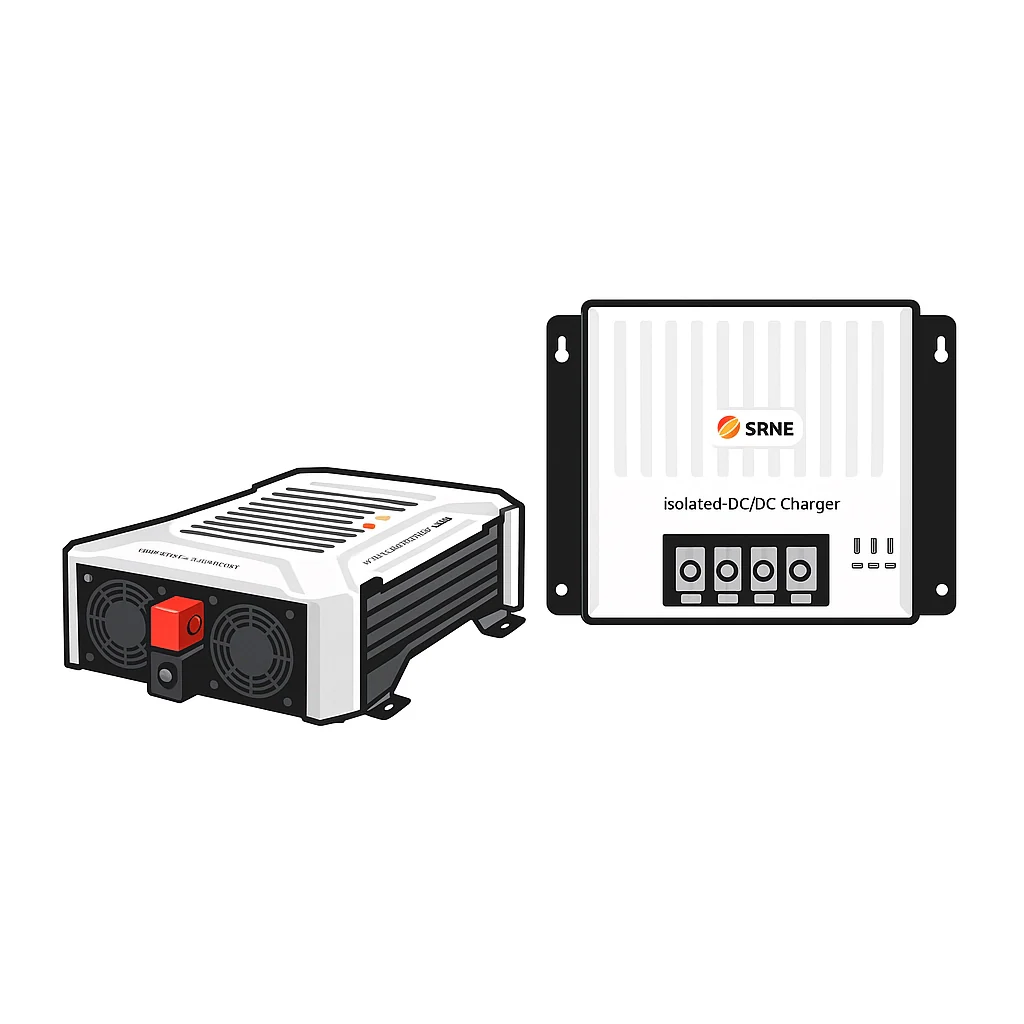
A DC-to-DC charger takes 12V input from your alternator and converts it to a controlled 12V output optimised for lithium charging. You don't always need one, but the right installation uses one.
When a DC-to-DC charger is essential:
- Your motorhome has an older alternator regulator (pre-2010) designed only for lead-acid
- You want fast charging from the alternator during driving
- Your alternator produces high voltage spikes that could stress a lithium BMS
- You're installing a large lithium battery (300Ah+) and want to maximise charging current
When you might skip it:
- Your motorhome already has a modern smart alternator regulator that supports lithium
- You rely primarily on solar and mains charging; alternator charging is secondary
- You're on a tight budget and your current alternator regulator is lithium-compatible (check the manual)
A quality DC-to-DC charger costs £150-400 depending on current rating (50A, 100A, 150A models exist). Skyenergi supplies compatible units as part of complete system builds, justified if your alternator is your primary charging source during touring.
Motorhome owners who drive frequently and want to maximise charging speed from the alternator, or who have older alternator regulators incompatible with lithium chemistry.
How to Select the Right Compact Lithium Battery
Selecting a compact lithium battery for motorhome use comes down to three questions: How much usable capacity do you need? Where will the battery fit? What charging infrastructure do you have?
Capacity assessment, List your main appliances and their current draw:
- 12V fridge: 3-8 amps
- LED lights: 0.5-2 amps per fixture
- Water pump: 5-10 amps (runs intermittently)
- Inverter (if used): 5-50 amps depending on load
- Heater or fan: 5-20 amps
For weekend trips or light usage, a 100Ah lithium battery suffices. For extended off-grid touring or higher consumption, 172Ah (Core2 DIN fit) or 230Ah (Core2 Seat-base) is more comfortable.
Space constraints, Measure your existing compartment. A standard DIN tray suits the Core2 172Ah DIN fit; under-seat space suits the Core2 230Ah Seat-base, which maximises capacity in a compact footprint.
Charging infrastructure, Assess what you have. A modern smart alternator regulator (check the manual) may mean no DC-to-DC charger is needed; solar panels with a modern MPPT controller are set for solar charging.
Real-World Runtime: What Your Battery Will Actually Power
Spec sheets don't tell you how long your system actually runs, real-world runtime depends on usable capacity, appliance draw, and depth of discharge.
A Skyenergi Core2 230Ah lithium battery delivers approximately 2,944 Wh (watt-hours) of usable energy. In practical terms:
- 12V fridge running continuously: 230Ah ÷ 5 amps = 46 hours of runtime
- LED lighting (4 fixtures at 2 amps total) for 8 hours per day: 8Ah consumed; battery lasts 23 days of daily use
- Water pump (8 amps, used 1 hour daily): 8Ah consumed; battery lasts 23 days of daily use
- Small inverter (500W) powering a laptop (50W) for 4 hours daily: 50W ÷ 12V ≈ 4 amps; battery lasts 46 days of daily use
Combined realistic scenario: fridge (5A continuous), lights (2A for 8 hours), water pump (8A for 1 hour), inverter (4A for 4 hours) = 45Ah per day. A 230Ah battery lasts roughly 5 days before needing a recharge from alternator, solar, or mains.
Smaller batteries deliver proportionally shorter runtimes. A 100Ah lithium battery (80Ah usable) runs the same scenario for 1.8 days before recharge.
The key insight: lithium doesn't degrade significantly when discharged to 20-30% state of charge, unlike lead-acid. You can safely use 70-80% of capacity daily, this usable depth of discharge is why lithium outperforms lead-acid in real-world touring.
Choosing the right compact lithium battery for motorhome touring means matching capacity to your actual power consumption, fitting the battery to your available space, and ensuring your charging system is compatible. Skyenergi's range spans the budget-focused Edge 100Ah at £219, the feature-rich Core2 models with Bluetooth monitoring and heat pads, and the advanced Elite series with Victron integration for complex electrical systems.
Frequently Asked Questions
How long will a 100Ah lithium battery run a 12V fridge in my motorhome?
A 100Ah lithium battery with 80% usable capacity delivers approximately 80 amp-hours of actual power. A typical 12V fridge draws 4-8 amps per hour, so you can expect 10-20 hours of continuous fridge operation. Real-world runtime varies with fridge efficiency, ambient temperature, and how often the door opens. Skyenergi's Core2 105Ah battery (£266) provides this entry-level capacity with integrated heat pad technology for reliable cold-weather performance.
Do I need a DC-to-DC charger for a lithium battery in my motorhome?
Yes, a DC-to-DC charger is essential if your motorhome's alternator was designed for lead-acid batteries. Lead-acid chargers apply constant voltage that can damage LiFePO4 batteries. A dedicated DC-to-DC charger regulates charging current and voltage to protect lithium cells, extend battery lifespan, and maximise charge speed from your engine. This is especially important when upgrading from lead-acid without replacing the entire charging system.
What size compact lithium battery do I need for my motorhome?
Battery size depends on your daily power consumption and trip length. Small motorhomes with basic lighting and a fridge typically need 100-150Ah; medium setups with heating, water pump, and inverter need 200-300Ah; full-time off-grid installations often require 300Ah or more. Calculate your total daily load in amp-hours, then choose a battery with at least 50% more capacity to avoid deep discharge. Skyenergi offers compact options from 100Ah (Core2 105Ah, £266) up to 680Ah (Core2 680Ah, £1,129).
How long do lithium batteries last in a motorhome?
LiFePO4 leisure batteries typically last 10+ years in motorhome use. Skyenergi's Core2 range delivers up to 8,000 cycles at 80% depth of discharge, translating to 15-20 years of reliable service depending on usage patterns. Lithium batteries outlast lead-acid by 5-10 times because they handle deep discharge without degradation. Proper charging, temperature management (helped by integrated heat pads in Core2 models), and avoiding extreme cold preserve cycle life.
Prev post

Off-Grid Power System for Van: Complete 2026 Guide
Updated on 10 October 2026
Next post

Benefits of Switching to Lithium Leisure Batteries for Caravans
Updated on 08 October 2026


