





Battery cycle life in 2026: what you need to know
Discover understanding cycle life in batteries 2026. Learn key factors affecting battery longevity and how to optimize performance for your needs.
Battery cycle life is defined as the number of complete charge and discharge cycles a cell can deliver before its capacity falls to 80% of its original rated value. That 80% threshold is the standard end-of-life benchmark across electric vehicles, energy storage systems, and off-grid power applications in 2026. Understanding cycle life in batteries 2026 is no longer a concern limited to engineers. Campervan owners, marine operators, and businesses running grid-tied storage all need to know how their batteries age, what accelerates that ageing, and how to slow it down. The IEC 61960-3 standard formalises this 80% capacity retention threshold as the accepted cycle life benchmark across the industry.
What factors most affect battery cycle life in 2026?
Depth of discharge is the single largest controllable variable in battery longevity. A cell cycled to 100% depth of discharge every day degrades far faster than one cycled to 50%. High depth of discharge and aggressive usage patterns can reduce battery life by up to 30%. That figure means a battery rated for 2,000 cycles at moderate discharge could deliver fewer than 1,400 cycles under heavy daily use.
Temperature is the second major factor. Hot climates cause approximately 0.4% additional annual capacity loss compared to mild climates such as the UK. That gap compounds over years. A battery operating in southern Europe loses meaningfully more capacity each year than an identical unit running in Scotland, purely because of ambient heat.

Charging behaviour also shapes how quickly cells degrade. Fast DC charging generates more heat and mechanical stress inside cells than slower AC overnight charging. Both approaches work, but repeated fast charging shortens the effective lifetime of lithium-ion cells over thousands of cycles.
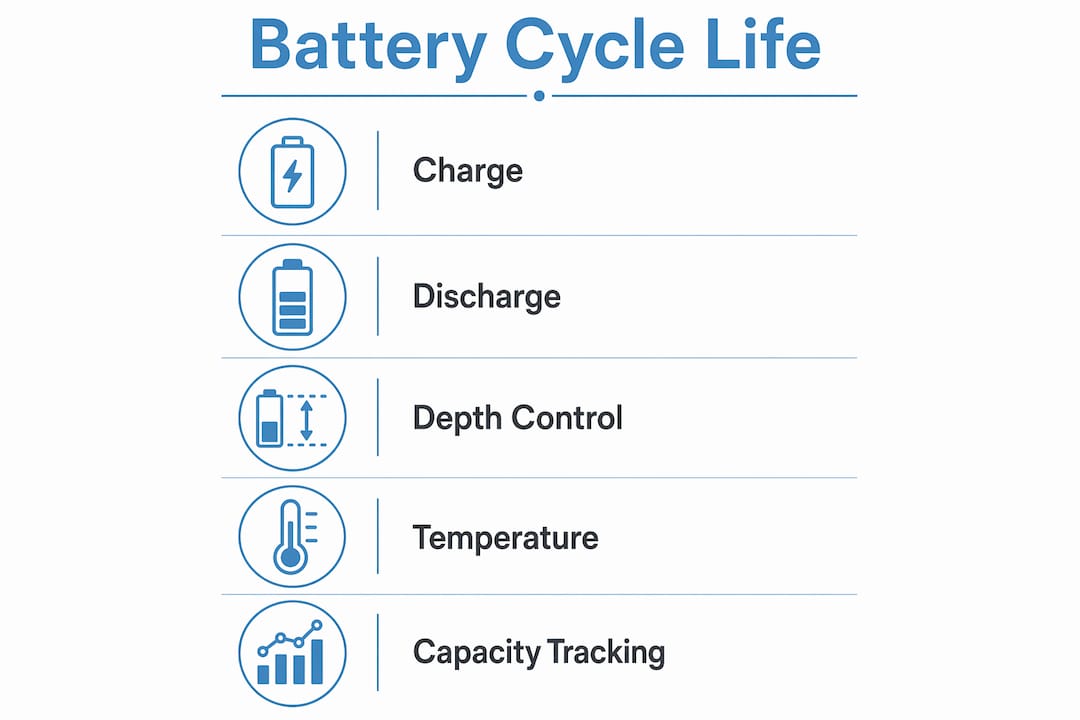
Key degradation factors at a glance:
- Depth of discharge: Shallower cycles extend total cycle count significantly.
- Temperature: Heat accelerates chemical reactions inside cells; cold causes lithium plating during charging.
- Charging speed: Slow AC charging is gentler on cell chemistry than repeated DC fast charging.
- Usage intensity: Aggressive, high-current draws increase internal heat and mechanical stress.
- Calendar ageing: Batteries degrade even when idle, at roughly 0.7% per year regardless of cycling.
Pro Tip: Never charge a lithium battery in sub-zero temperatures. Charging at low temperature causes lithium plating on the anode, which is permanent and irreversible. This is the single most damaging daily habit for lithium-ion cells.
How is battery cycle life measured and standardised?
Cycle life measurement follows defined laboratory protocols. A cell is charged to its upper voltage limit, discharged to its lower limit, and the delivered capacity is recorded. This sequence repeats until capacity falls below 80% of the initial rated value. The number of completed cycles at that point is the rated cycle life.
The industry uses the concept of full cycle equivalents (FCE) to account for partial cycling. If a battery is discharged to 50% and recharged twice, that counts as one full cycle equivalent. FCE calculations allow meaningful comparison between batteries used in different applications, from daily solar storage to weekly leisure use.
| Measurement method | Description | Typical use case |
|---|---|---|
| Laboratory cycling | Controlled charge/discharge at standard conditions | Manufacturer rating and certification |
| Full cycle equivalents | Partial cycles summed to full cycle count | Real-world fleet and ESS monitoring |
| State of Health (SOH) | Ratio of current capacity to original rated capacity | BMS reporting and field diagnostics |
| Incremental capacity analysis | Voltage curve analysis to detect internal changes | Advanced diagnostic and research use |
The IEC 61960-3 standard defines the test conditions and end-of-life criteria used by manufacturers to validate cycle life claims. Without this standard, comparing ratings across different brands would be unreliable.
Battery management systems (BMS) bring this measurement into real-world use. A BMS monitors voltage, current, temperature, and internal resistance continuously. It uses these inputs to estimate State of Health, giving operators a live view of how much usable life remains. BMS monitoring of internal resistance and power fade provides real-time SOH data that tracks degradation as it happens. Skyenergi products with integrated BMS and Bluetooth monitoring make this data accessible directly from a smartphone, which is practical for campervan and marine operators who need quick system checks without specialist equipment.
Pro Tip: Log your battery’s capacity at regular intervals using your BMS data. A sudden drop in measured capacity, rather than a gradual one, is the first sign of the degradation “knee” point. Acting at that stage, by reducing discharge depth or checking for temperature issues, can extend usable life by months.
For a detailed look at BMS role in storage, Skyenergi’s guide covers how these systems protect and extend battery health in practice.
Which battery chemistries deliver the best cycle life in 2026?
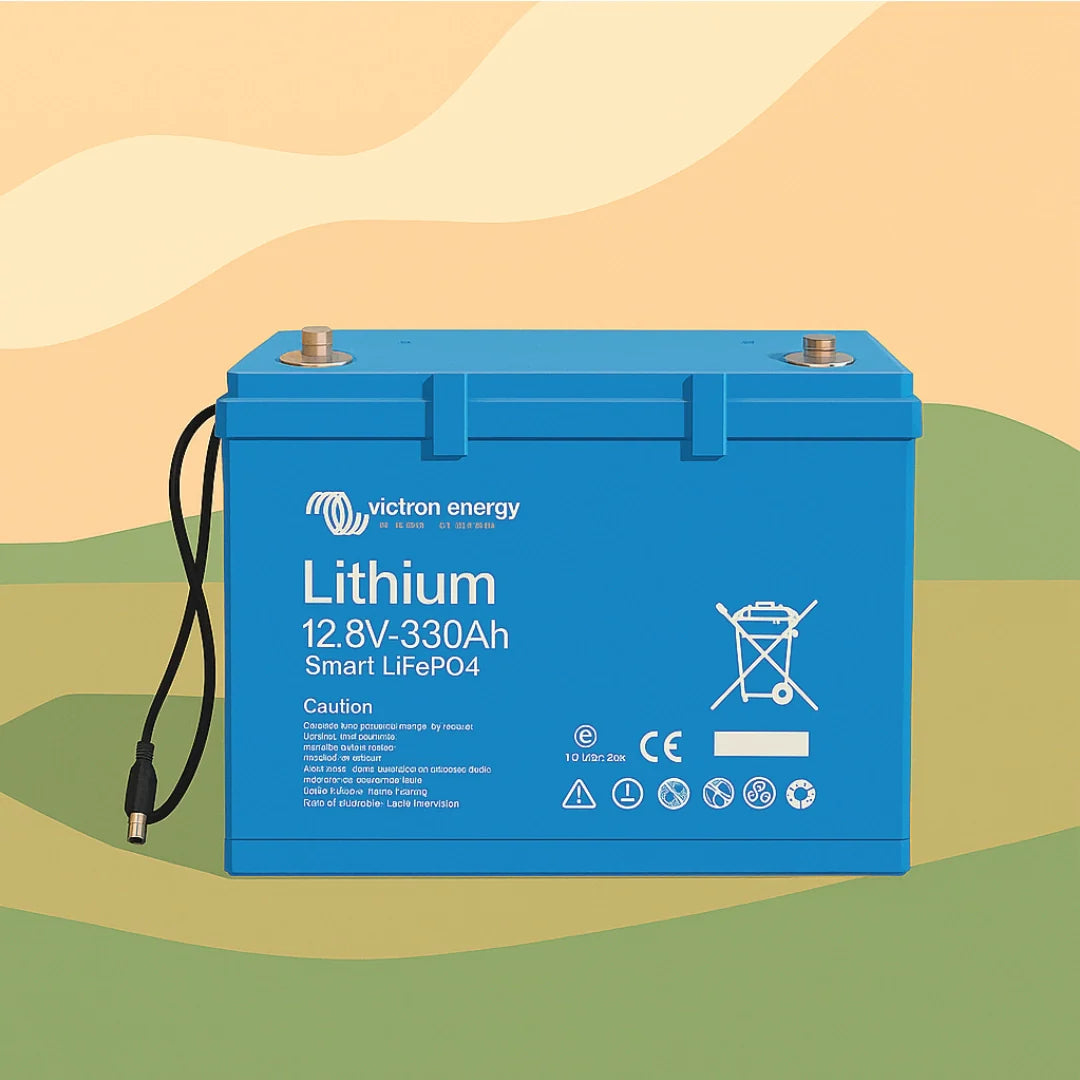
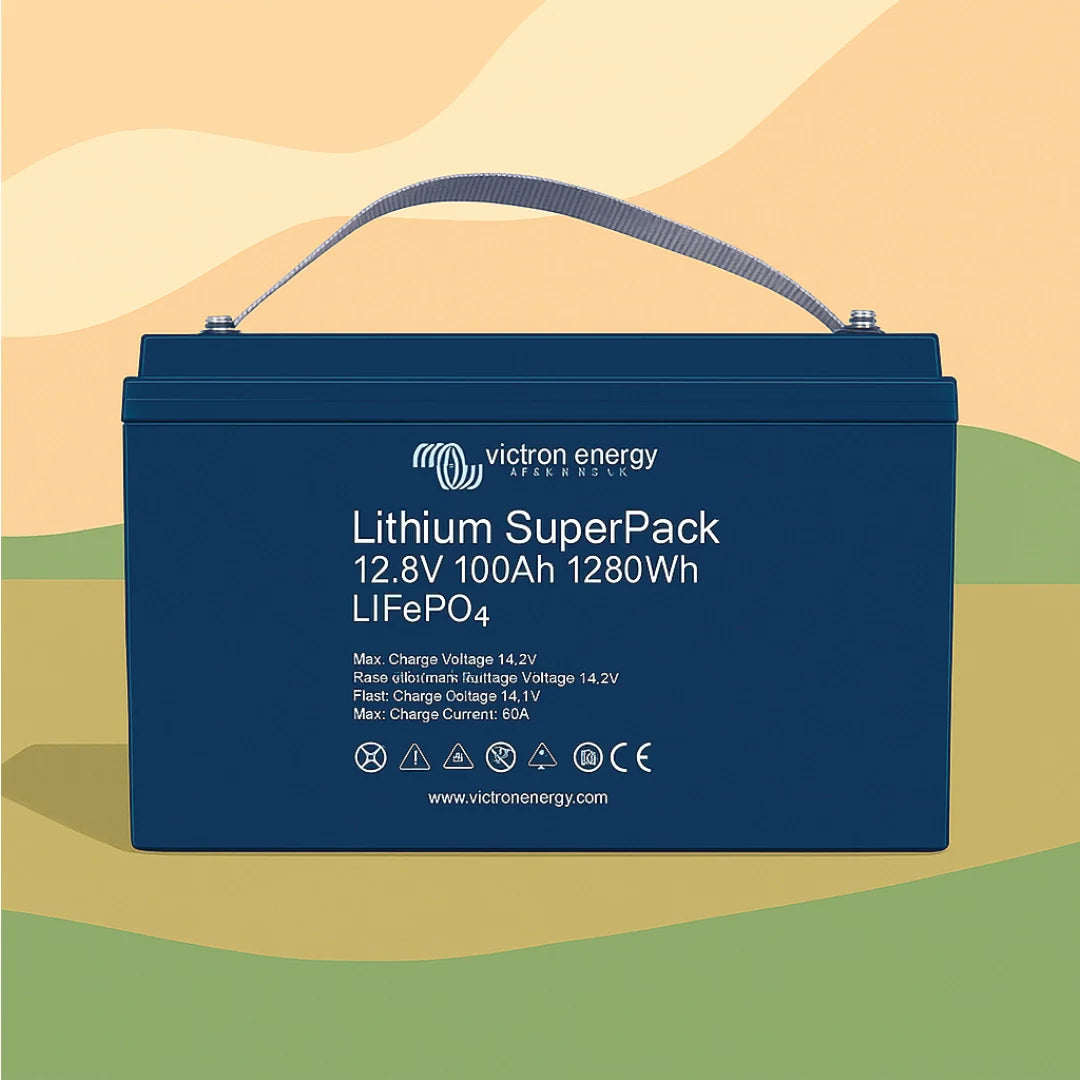
Lithium iron phosphate (LFP) chemistry leads on cycle life among mainstream lithium-ion options. LFP cells routinely achieve 3,000–6,000 cycles to the 80% threshold under moderate conditions. Lithium nickel manganese cobalt oxide (NMC) cells offer higher energy density but typically reach end-of-life sooner, at 1,000–2,000 cycles. Lithium titanate oxide (LTO) cells deliver exceptional cycle counts, sometimes exceeding 10,000 cycles, but at lower energy density and higher cost per kilowatt-hour.
For leisure, marine, and off-grid applications, LFP is the practical choice. Its flat discharge curve, thermal stability, and long cycle life make it well suited to the irregular charging patterns common in campervans and residential solar setups.
Recent advances in 2026 battery technology are improving cycle life further through better electrolyte formulations and tighter manufacturing tolerances. Cell design improvements reduce internal resistance, which lowers heat generation during cycling and slows degradation.
Machine learning is also entering lifecycle management. Gaussian Process Regression and deep neural networks now outperform traditional methods in predicting State of Health and Remaining Useful Life. These models analyse voltage curves and temperature patterns to flag degradation trends before they become critical. For large-scale energy storage operators, this kind of predictive analysis reduces unexpected failures and improves replacement planning.
Second-life applications are also gaining traction. Batteries that have reached 80% capacity in an EV context still hold substantial value for stationary storage, where lower energy density is acceptable. This extends the productive life of cells and reduces the total environmental cost of battery production.
Key chemistry comparison points:
- LFP: Best cycle life, thermal stability, flat discharge curve. Preferred for leisure and off-grid.
- NMC: Higher energy density, shorter cycle life. Common in EVs where weight matters most.
- LTO: Exceptional cycle count, lower energy density, higher cost. Suited to specialist applications.
- Lead carbon: Improved cycle life over standard lead-acid, lower cost than lithium. Viable for budget-conscious off-grid setups.
For more detail on lithium battery lifespan factors, including how chemistry choice interacts with usage patterns, Skyenergi’s guide covers the key variables in plain terms.
How do you maximise battery cycle life in practice?
The most effective daily habit is keeping the battery’s state of charge between 20% and 80%. Maintaining this SoC window reduces both mechanical stress on electrodes and electrochemical side reactions that cause permanent capacity loss. This single practice has more impact on longevity than any other operational choice.
A practical framework for extending battery life:
- Set charge limits. Programme your charger or BMS to stop at 80% for daily use. Reserve 100% charges for days when maximum range or capacity is genuinely needed.
- Avoid deep discharges. Discharging below 20% increases electrode stress. Most BMS units allow a low-voltage cutoff to prevent this automatically.
- Manage temperature. Store and operate batteries in cool, shaded environments where possible. Avoid leaving batteries in direct sun or near heat sources during charging.
- Prefer slow charging. Use AC overnight charging as the default. Reserve fast DC charging for situations where time is the constraint, not routine use.
- Monitor regularly. Check SOH data from your BMS at least monthly. A consistent downward trend is normal; a sudden drop signals a problem worth investigating.
Calendar ageing and cycle ageing both contribute to degradation simultaneously. Halving your cycling frequency does not halve total degradation, because calendar fade continues at roughly 0.7% per year regardless of use. This means that even a battery in storage loses capacity over time, and that long-term storage at high state of charge accelerates that loss.
Pro Tip: For seasonal storage, such as a campervan battery over winter, store at around 50% state of charge in a cool, dry location. This minimises both calendar ageing and the risk of deep self-discharge damage.
For a full battery maintenance checklist covering leisure and off-grid setups, Skyenergi’s guide provides a step-by-step reference for keeping systems in good condition year-round.
Most EV batteries last 8–15 years before falling below 80% capacity, with average degradation of about 2.3% per year in moderate climates. Off-grid and leisure batteries follow similar patterns when managed well.
Key takeaways
Battery cycle life is determined by the 80% capacity retention threshold, and the factors you control daily, including discharge depth, temperature, and charging speed, have the greatest impact on how quickly that threshold is reached.
| Point | Details |
|---|---|
| End-of-life threshold | 80% capacity retention is the standard benchmark, defined by IEC 61960-3. |
| Depth of discharge | Shallower daily cycles extend total cycle count; high DoD can cut life by up to 30%. |
| SoC operating window | Keeping charge between 20% and 80% is the most effective longevity habit. |
| Calendar vs cycle ageing | Both degrade batteries simultaneously; storage at high SoC accelerates calendar fade. |
| BMS monitoring | Real-time SOH data from a BMS is the most reliable way to track degradation in the field. |
What I have learned from watching batteries age in real-world systems
The most common mistake I see is treating cycle life as a fixed number printed on a datasheet. It is not. That rated figure assumes controlled laboratory conditions: a specific temperature, a defined discharge rate, and a precise charge protocol. Real-world conditions rarely match any of those assumptions simultaneously.
What actually determines how long a battery lasts is the accumulation of small daily decisions. A campervan owner who charges to 100% every night, parks in full sun, and occasionally runs the battery flat is compressing years of degradation into months. The same battery, managed with a 20%–80% SoC window and stored in shade, will serve reliably for years longer.
The degradation “knee” point is the detail most guides skip. Batteries do not degrade linearly. They lose capacity slowly and steadily for most of their life, then accelerate sharply once cumulative damage, such as porous anode clogging and lithium plating, reaches a tipping point. By the time that acceleration is obvious, the battery is already close to end-of-life. Catching it early, through regular BMS checks, is the only way to act before the knee rather than after it.
My view on 2026 battery technology is cautiously positive. LFP chemistry has matured to the point where a well-managed system genuinely delivers the cycle counts manufacturers claim. Machine learning tools for SOH prediction are moving from research labs into commercial BMS firmware. That shift will make proactive lifecycle management accessible to individual owners, not just fleet operators.
The practical takeaway is straightforward. Choose LFP where cycle life matters most. Use a BMS with monitoring capability. Keep the SoC window tight. And treat the datasheet cycle count as a ceiling you can approach with good management, not a guarantee you will reach regardless of how you operate the system.
— John
Skyenergi’s battery range for long cycle life
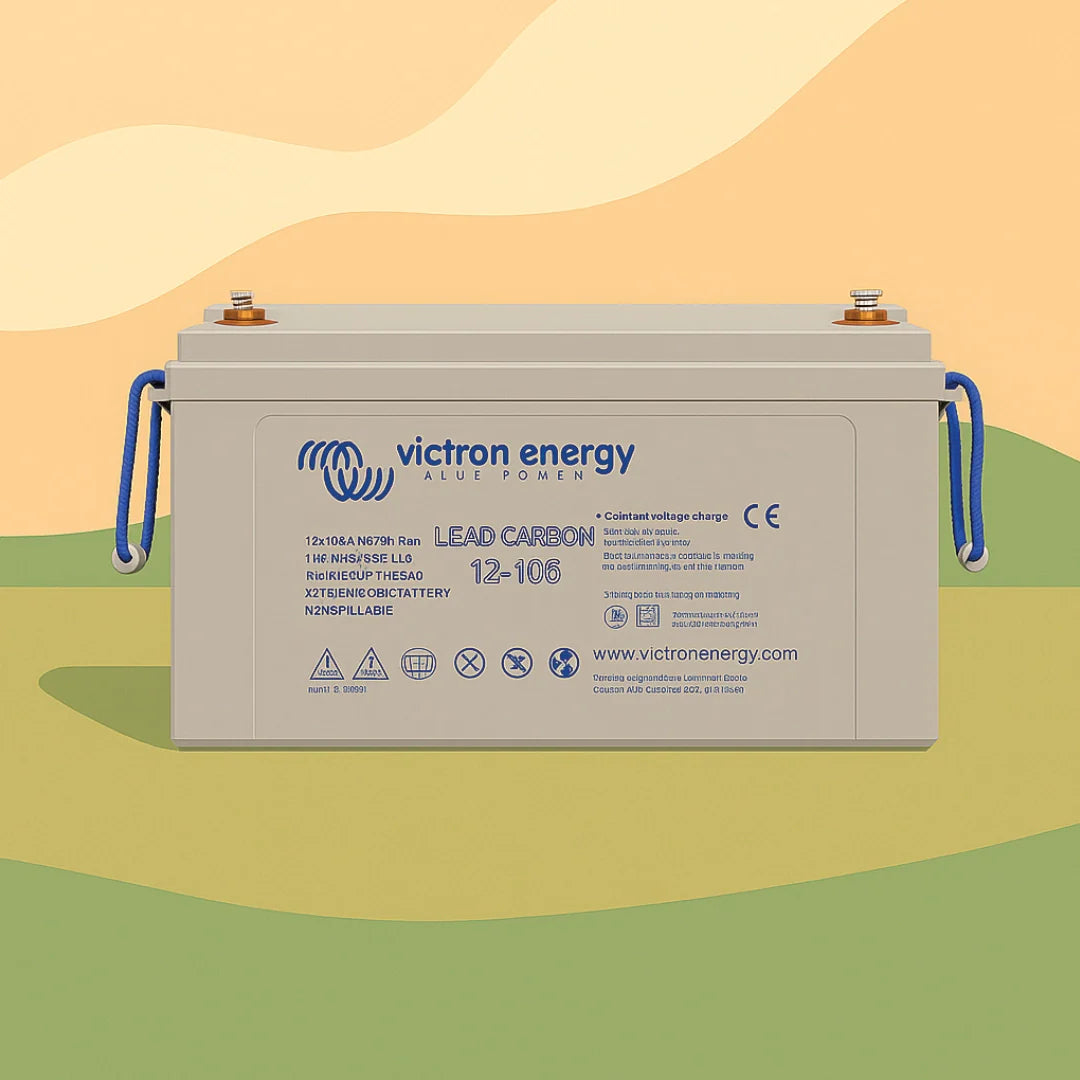
Skyenergi stocks a range of batteries built for applications where cycle life and reliability matter. The Victron Energy Lead Carbon 12V 160Ah delivers strong cycle performance for off-grid and leisure setups, with lead carbon chemistry that outperforms standard lead-acid on cycle count and partial-state-of-charge operation. For installations where space is tighter, the Victron Energy Lead Carbon 12V 106Ah offers the same chemistry in a more compact form. Demanding applications benefit from the Victron AGM Super Cycle 12V 230Ah, designed specifically for extended cycle life in high-use environments.
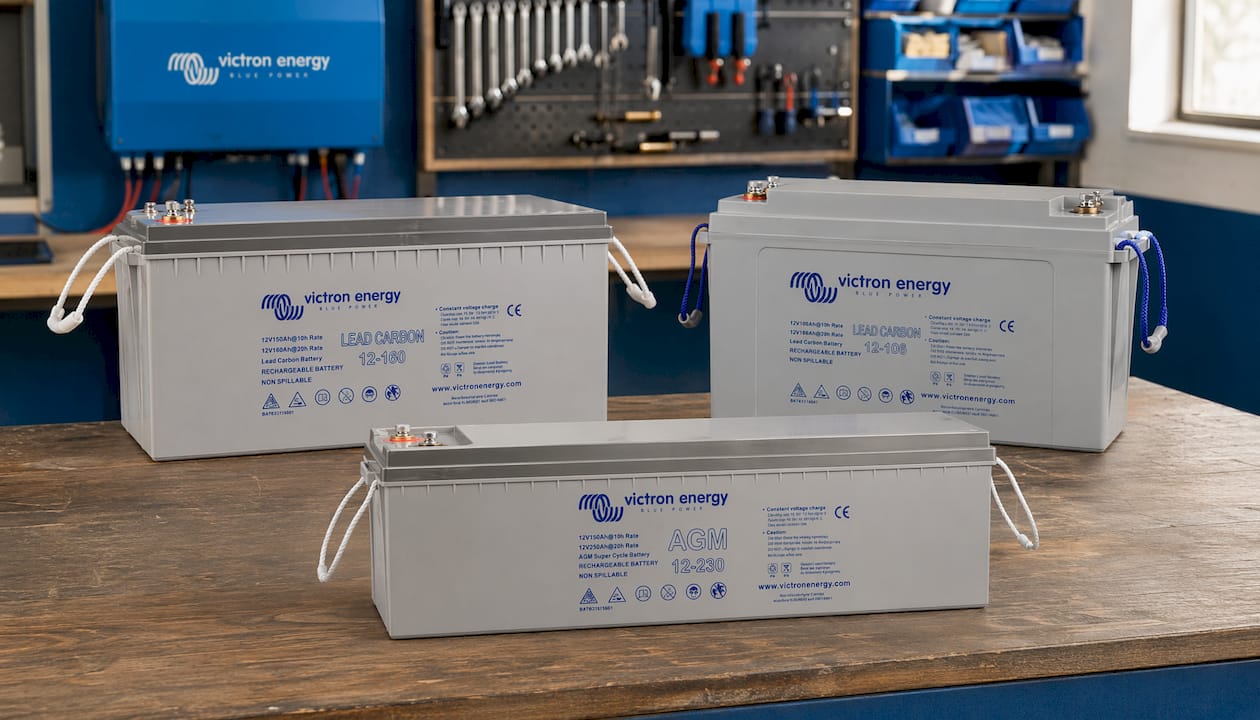
All three options are available directly from Skyenergi, sourced from Victron Energy and priced competitively for UK buyers. For solar storage guidance relevant to these batteries, France Habitat ENR’s solar storage guide provides useful context on matching battery capacity to solar generation.
FAQ
What is battery cycle life?
Battery cycle life is the number of complete charge and discharge cycles a battery can complete before its capacity drops to 80% of its original rated value. This 80% threshold is the standard end-of-life benchmark defined by IEC 61960-3.
How long do lithium batteries last in off-grid systems?
LFP lithium batteries in well-managed off-grid systems typically deliver 3,000–6,000 cycles before reaching the 80% capacity threshold. In practice, this translates to 8–15 years of useful service under moderate daily cycling.
Does temperature affect battery cycle life?
Yes. Hot climates cause approximately 0.4% additional annual capacity loss compared to mild climates. Cold temperatures cause a different problem: charging a lithium battery below freezing causes irreversible lithium plating on the anode.
What is the best state of charge for daily battery use?
Keeping a battery between 20% and 80% state of charge is the most effective daily habit for preserving cycle life. This range reduces both electrode stress and electrochemical side reactions that cause permanent capacity loss.
What is the difference between calendar ageing and cycle ageing?
Cycle ageing is capacity loss caused by charge and discharge activity. Calendar ageing is capacity loss that occurs simply with time, even when the battery is idle, at roughly 0.7% per year. Both processes run simultaneously and cannot be separated.
Recommended
Prev post

Why the SRNE RV Ecosystem Will Change the Way You Power Your Campervan
Updated on 18 July 2026
Next post

The Ultimate Guide to Off-Grid Living: Everything You Need to Succeed
Updated on 17 July 2026


