







What Is a BMS in a Lithium Battery: A Guide
What is a BMS in a lithium battery: Understand what a BMS does in lithium batteries. Learn how monitoring, cell balancing, and protection keep.
Table of Contents
- What Is a BMS in a Lithium Battery?
- Why Your Lithium Battery Needs a BMS
- Core Functions: Monitoring, Balancing, and Protection
- How Long Do Lithium Batteries Last with a BMS?
- LiFePO4 Battery Safety Features and BMS Design
- Choosing the Right BMS for Your System
- Frequently Asked Questions
Last Updated: September 19, 2026
What Is a BMS in a Lithium Battery?
Understanding what is a BMS in a lithium battery, the electronic control system that manages and protects your battery pack during charging and discharging, is essential for reliable power. Think of it as the brain of your battery, constantly monitoring cell voltage, temperature, and current flow to keep everything running safely and efficiently.
The global Battery Management System market is projected to reach £13.1 billion in 2026, according to Fortune Business Insights market analysis, with demand driven by the rapid expansion of lithium-ion energy storage worldwide. This growth reflects how critical BMS technology has become for everything from campervan power systems to off-grid home installations.
At Skyenergi, we've worked with hundreds of van converters and off-grid installers who initially underestimated how much a quality BMS matters. The difference between a system that runs reliably for a decade and one that fails after two years often comes down to the BMS design and implementation. A BMS doesn't just prevent catastrophic failures, it optimises battery performance, extends lifespan, and gives you real-time visibility into your system's health.
Why Your Lithium Battery Needs a BMS
Lithium batteries are more energy-dense and longer-lasting than lead-acid, but less forgiving of misuse. Without active management, a single cell can overheat, overcharge, or discharge too deeply, damaging the entire pack or creating a safety hazard.
The BMS prevents these failure modes by actively monitoring each cell in your battery pack. According to ScienceDirect research on battery management systems, a properly designed BMS ensures safe, reliable operation by carefully monitoring each cell to maintain optimal performance and prevent degradation. This cell-level oversight is what separates lithium systems from older battery technologies.
In practical terms, this means your campervan fridge stays powered through the night without voltage sag, your solar charging works efficiently without overcharging cells, and your battery survives years of charge cycles instead of degrading rapidly. For off-grid applications, where you can't simply swap out a failed battery, this reliability is non-negotiable.
Core Functions: Monitoring, Balancing, and Protection
A BMS performs three interconnected functions that work together to keep your lithium battery safe and performing at its best.
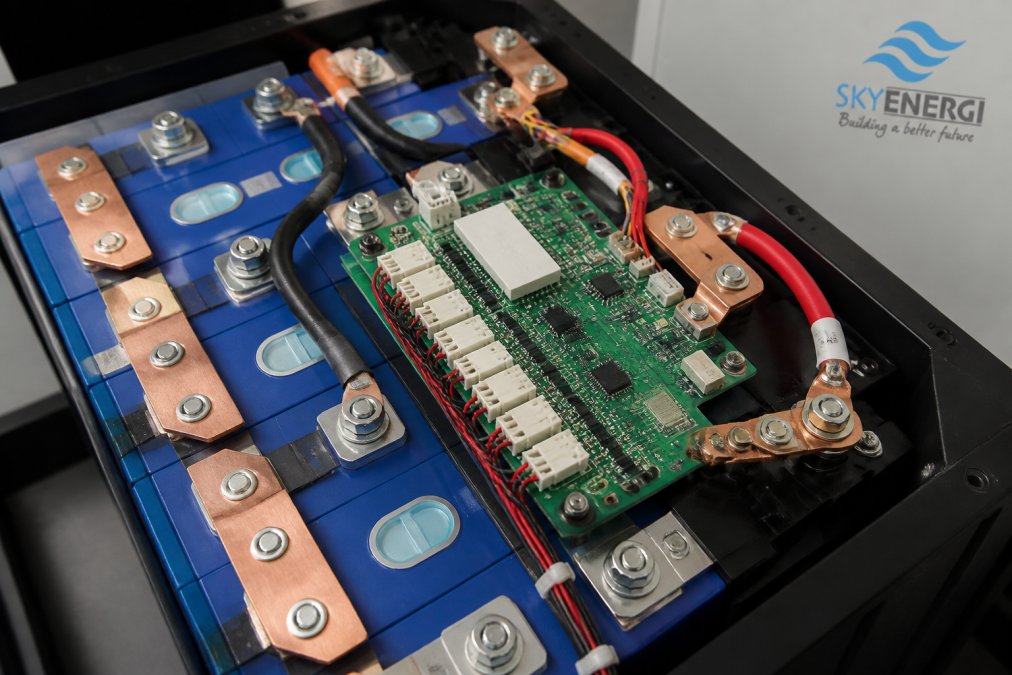
Voltage and Temperature Monitoring
The BMS continuously reads the voltage of each individual cell and the temperature throughout the battery pack. This real-time visibility tells you exactly what's happening inside your battery at any moment.
For campervan and off-grid systems, voltage monitoring is critical. If a single cell drifts too high during charging, the BMS cuts current to prevent damage. If voltage drops too low during discharge, the BMS protects your battery from over-discharge. Temperature sensors ensure the pack doesn't overheat during fast charging or high-load discharge.
Cell Balancing in Lithium Batteries
Cell balancing is one of the most misunderstood aspects of BMS design, yet it's fundamental to battery longevity. Over time, individual cells within a pack drift slightly in voltage due to minor manufacturing variations and different charge/discharge histories. If left unchecked, these small differences compound, forcing the BMS to cut off charging when the highest cell reaches maximum voltage, even though other cells aren't fully charged.
There are two approaches to balancing: passive and active. Passive balancing bleeds excess charge as heat through resistors, simple but inefficient. Active balancing redistributes charge between cells, preserving energy and working faster. Skyenergi systems using SRNE monitoring include active balancing, ensuring even charge distribution across all cells.
Without proper balancing, usable capacity drops over time. With active balancing, you maintain closer to the original capacity throughout the battery's life.
Over-Voltage and Under-Voltage Protection
Over-voltage protection stops charging when cells reach maximum safe voltage (3.65V per cell for lithium-ion, 3.5V for LiFePO4). Under-voltage protection cuts off discharge at minimum safe voltage (2.5V), preventing deep discharge that permanently damages cells.
Modern systems use tiered warnings: the BMS reduces charging current as voltage approaches the limit, then stops entirely if crossed. It alerts you before cutting loads, maximising usable capacity while maintaining safety.
How Long Do Lithium Batteries Last with a BMS?
A well-managed lithium battery can deliver 3,000 to 5,000 full charge cycles, roughly 10 to 15 years of daily use in a campervan or off-grid home. Lead-acid batteries typically provide 500 to 1,000 cycles. This longevity comes from the BMS preventing the stress conditions that degrade lithium cells: overcharging, deep discharge, thermal runaway, and uneven cell aging.
Common BMS Error Codes and What They Mean
Most users don't realise their BMS is trying to communicate a problem until the battery stops working. Understanding these signals is the difference between a quick fix and a catastrophic failure.
Over-voltage error (OV): Cells exceed safe charging voltage (3.65V per cell for lithium-ion, 3.5V for LiFePO4), usually from a faulty charger or wrong voltage profile. Response: Stop charging, check charger settings, and verify BMS calibration.
Under-voltage error (UV): Cells drop below minimum safe voltage (2.5V), triggered by over-discharge or internal cell failure. Response: Stop discharge, rest 30 minutes, then recharge at low current. If the error persists, the battery may have internal damage.
Over-temperature error (OT): Temperature exceeds safe limits (usually above 55°C), from fast charging, high-load discharge, or poor ventilation. Response: Reduce charging current, pause loads, ensure airflow, and check sensor placement.
Victron Energy Smart BMS 12/200 →
Under-temperature error (UT): Battery is too cold to charge safely (below 0°C), risking lithium plating. Response: Move to warmer location or use a battery heater. SRNE-integrated systems include automatic temperature-based charging lockouts.
Over-current error (OC): Discharge current exceeds BMS rating, from short circuit, faulty inverter, or excessive loads. Response: Disconnect all loads, check for cable damage, and verify inverter draw.
Cell imbalance warning: Alert when cell voltage spread exceeds threshold (e.g., 0.2V difference). Response: Run a full charge cycle at low current or reduce discharge rate to allow balancing time.
Why BMS Failures Happen Before Battery Failure
BMS failures typically stem from connector corrosion, temperature sensor drift (after 2-3 years), firmware bugs, or capacitor degradation. Conversely, a battery can fail while the BMS reports normal operation if a single cell develops an internal short circuit.
SRNE-integrated systems include cloud-based data logging and calibration history, tracking trends over weeks and months to alert you to drift in cell balance or sensor accuracy before they become critical.
Extending Battery Life Through Preventive Monitoring
A campervan owner replacing lead-acid every 3-4 years can switch to lithium for a decade, but only if they monitor BMS warnings. Ignoring imbalance warnings can reduce capacity by 15-20%; allowing over-temperature conditions can reduce cycle life by 30%.
Proactive monitoring, checking voltage balance monthly and reviewing logs, separates a 15-year battery from a 7-year battery.
LiFePO4 Battery Safety Features and BMS Design
LiFePO4 chemistry is the standard for leisure and off-grid applications because it's safer and longer-lasting than lithium-ion. Though thermally stable, the BMS still plays a critical role in maximising safety.
A BMS designed for LiFePO4 focuses on precise voltage monitoring, active balancing, and temperature-based charging adjustments.
Choosing the Right BMS for Your System
Selecting a BMS requires matching specifications to your application: maximum discharge current, charging current, cell count, and voltage (12V, 24V, or 48V systems require different designs).
BMS Communication Protocols: The Hidden Layer
One of the most overlooked aspects of BMS selection is how the BMS communicates with the rest of your system. This communication layer determines whether your BMS can talk to your charge controller, inverter, and monitoring dashboard, or whether it operates in isolation, blind to what the rest of your system is doing.
Why Communication Protocol Matters in Practice
Bluetooth only: BMS detects cell imbalance and sends a phone alert. You manually reduce charging current days later, losing 5% capacity. CAN bus: BMS immediately signals the charge controller to reduce current, self-correcting within two cycles.
SRNE Integration and System Automation
SRNE-integrated systems are built around CAN bus communication, meaning your BMS, charge controller, inverter charger, and monitoring dashboard all speak the same language. This integration enables:
- Automatic load shedding: If the BMS detects low voltage, it can signal the inverter to disconnect non-essential loads (e.g., water heater, heating) before the battery voltage drops to critical levels.
- Charging priority management: If solar and alternator charging are both available, the system automatically prioritises the source that delivers the fastest charge without stressing the battery.
- Predictive alerts: By analysing charge/discharge patterns and cell voltage trends, the system can predict when you'll run out of power and alert you hours in advance, rather than waiting until the battery is critically low.
- Remote diagnostics: Cloud-based data logging means our support team can review your system's behaviour and identify issues (e.g., a faulty charger, a misaligned voltage setpoint) without you having to describe the problem.
Matching Communication Protocol to Your Application
Small campervan (under 200A, single charger source): Bluetooth monitoring is often sufficient. You're present in the van, you can manually adjust charging or loads, and the system is simple enough that isolation isn't a major risk.
Frequently Asked Questions
Can you run a lithium battery without a BMS?
Running a lithium battery without a BMS is dangerous and not recommended. A BMS monitors each cell's voltage, current, and temperature to prevent overcharging, over-discharging, and thermal runaway. Without these protections, lithium-ion and LiFePO4 batteries can fail catastrophically, damage connected equipment, or pose safety risks. For campervan and off-grid systems, a BMS is essential for reliable, safe operation.
Does a BMS prevent lithium battery overcharging?
Yes. A BMS actively prevents overcharging by monitoring cell voltage and disconnecting the charger when cells reach their safe maximum voltage threshold. This protection extends battery life and prevents damage to the battery pack. In Victron Smart BMS systems like the Lynx Smart BMS 500, charge regulation works alongside your charger to ensure safe, consistent charging cycles.
How does a BMS balance lithium battery cells?
Cell balancing corrects voltage differences between individual cells in a battery pack. Passive balancing dissipates excess energy as heat through resistors when cells reach full charge, while active balancing transfers energy between cells to equalise voltage. Both methods prevent one cell from overcharging while others remain undercharged, which extends battery life and improves performance across the entire pack.
What happens if a lithium battery BMS fails?
A failed BMS loses its ability to monitor and protect battery cells. This can lead to overcharging, over-discharging, thermal runaway, or short circuits. In a campervan or off-grid system, a failed BMS may cause appliances to shut down unexpectedly, damage the battery pack, or create safety hazards. Victron Smart BMS units include pre-alarm contacts to warn you before disconnection occurs, giving you time to address issues before complete failure.
Prev post

How to Wire a DC to DC Charger with Smart Alternator
Updated on 20 September 2026
Next post

Alternatives to Fixed Solar Panels for Campervans
Updated on 18 September 2026


