





Alternatives to Fixed Solar Panels for Campervans
Explore practical alternatives to fixed solar panels for campervans. Compare semi-flexi, portable and DC-to-DC options to find your ideal off-grid setup.
Table of Contents
- Why Owners Look for Alternatives to Fixed Solar Panels
- Semi-Flexible Panels: The Low-Profile Alternative
- Portable Solar Panels for Campervans: Flexibility on the Road
- DC-to-DC Battery Charging: Power While You Drive
- Choosing the Best MPPT Solar Charge Controller for Vans
- Installation, Storage and Security for Non-Fixed Setups
- Frequently Asked Questions
Last Updated: September 18, 2026
Why Owners Look for Alternatives to Fixed Solar Panels
The main reason owners move away from fixed solar panels is simple: a permanently mounted array locks you into one roof, one angle and one vehicle. This guide from Skyenergi covers the realistic options for anyone who wants solar power without a drilled, bolted installation.
Semi-Flexible Panels: The Low-Profile Alternative
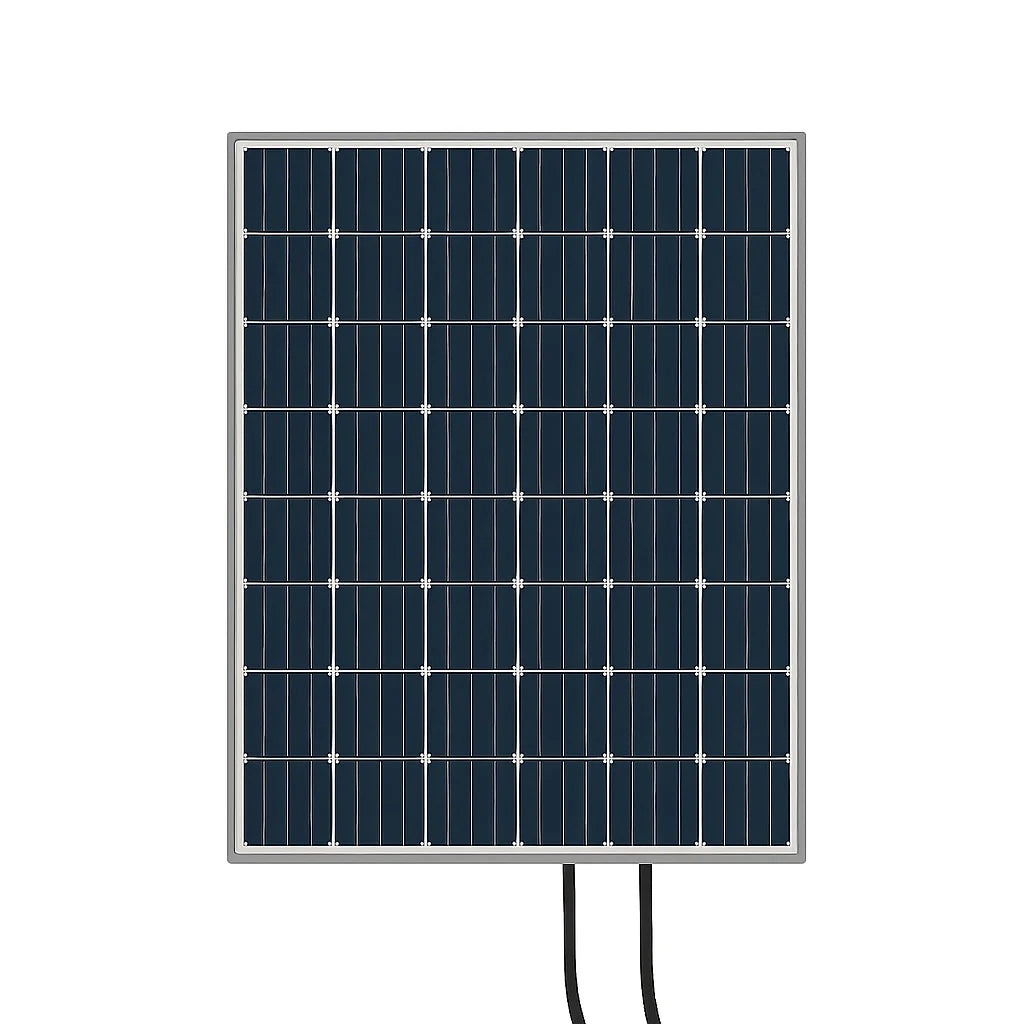
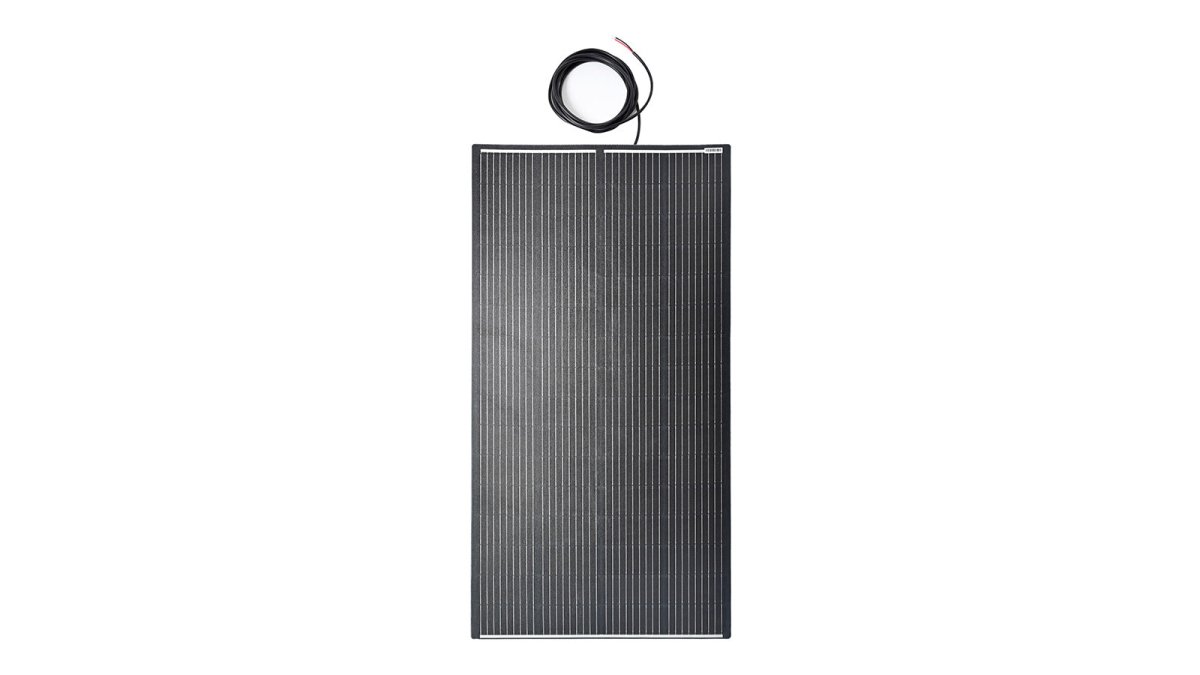
Semi-flexible panels sit between rigid and portable. They bond to the roof surface, adding almost no height or wind resistance, yet flex enough to follow a curved roof line.
Installation and Weight Considerations
Weight matters more than most owners expect. Semi-flexible panels are the lightest roof option, which keeps the centre of gravity low and avoids stressing a pop-top.

Portable Solar Panels for Campervans: Flexibility on the Road
Portable solar panels for campervans give you the most control over where your power comes from. Park in shade, carry the panel into the sun and angle it at the light, no roof space, no drilling, no permanent commitment to one vehicle.
What Actually Changes Your Output
Two portable panels rated at the same wattage can behave very differently in the field. The key variables:
- Cell technology. Monocrystalline cells are the norm for folding kits because they pack more output into a smaller footprint. Polycrystalline versions are cheaper but bulkier for the same wattage, which matters when locker space is tight.
- Cell efficiency. Higher-efficiency cells mean a smaller, lighter panel for the same output, useful when you are carrying it to a sunny spot and back twice a day.
- Angle and orientation. A portable panel aimed square at the sun can outperform a flat roof panel of the same rating, simply because it is not lying at a shallow angle to the light.
- Cable length and gauge. Long, thin cables drop voltage before the controller sees it. Keep the run short, or step up the cable gauge to compensate.
- Shading. A single leaf or a pole shadow across one cell string can cut output sharply. Portable panels let you move the whole array out of shade, which is the main reason owners buy them.
Connectors and Quick-Disconnect Wiring
Portable kits almost always terminate in MC4 connectors, the standard weatherproof DC connector used across the solar industry. To get that power into your leisure battery you need a short adapter harness taking the MC4 output to whatever your controller or battery input uses.
Common patterns:
- MC4 to Anderson plug. Anderson connectors are popular for high-current, quick-disconnect runs because they are keyed, robust and easy to plug in one-handed. A common setup is a permanent Anderson socket mounted near the van's side door, with the portable panel's lead plugging straight in.
- MC4 to SAE. SAE connectors are smaller and lighter, common on smaller folding kits and portable power stations. They are fine for modest currents but not ideal for high-wattage arrays.
- MC4 to bare cable into a controller. The tidiest permanent option, but it means the panel lead is not easily removable unless you fit an inline connector.
Sizing and Battery Compatibility
Portable panels feed a charge controller, which feeds the leisure battery. Match the controller to the panel's open circuit voltage (Voc) and short circuit current (Isc), and match its charge profile to your battery chemistry, lead-acid, AGM, gel and lithium all want different voltages. Paired with an MPPT controller, a portable kit extracts noticeably more usable power in weak or angled light than on a basic PWM controller.
The Real Trade-Offs
Portability is not free. You give up:
- Set-and-forget convenience. Every stop means unpacking, aiming, cabling and packing away again.
- Security. A panel sitting on the ground is an easy target, see the storage and security section below.
- Roof-space efficiency. A roof panel charges while you drive and while you are parked. A portable panel only charges when you deploy it.
Where portability wins is multi-purpose use: the same panel can charge your leisure battery at the van, run a power bank at a picnic spot, or top up a second battery in a trailer. For owners touring shade-prone areas, or wanting a backup alongside a roof array, that flexibility is the whole point.
| Option | Typical Output | Setup Effort | Best For |
|---|---|---|---|
| Semi-flexible roof panel | 200-250W | One-off fit | Curved roofs, low profile |
| Portable folding kit | 100-200W | Each stop | Shade-prone pitches |
| Rigid roof panel | 40-200W | One-off fit | Maximum output per pound |
| DC-to-DC charging | Vehicle-dependent | None | Power while driving |
DC-to-DC Battery Charging: Power While You Drive
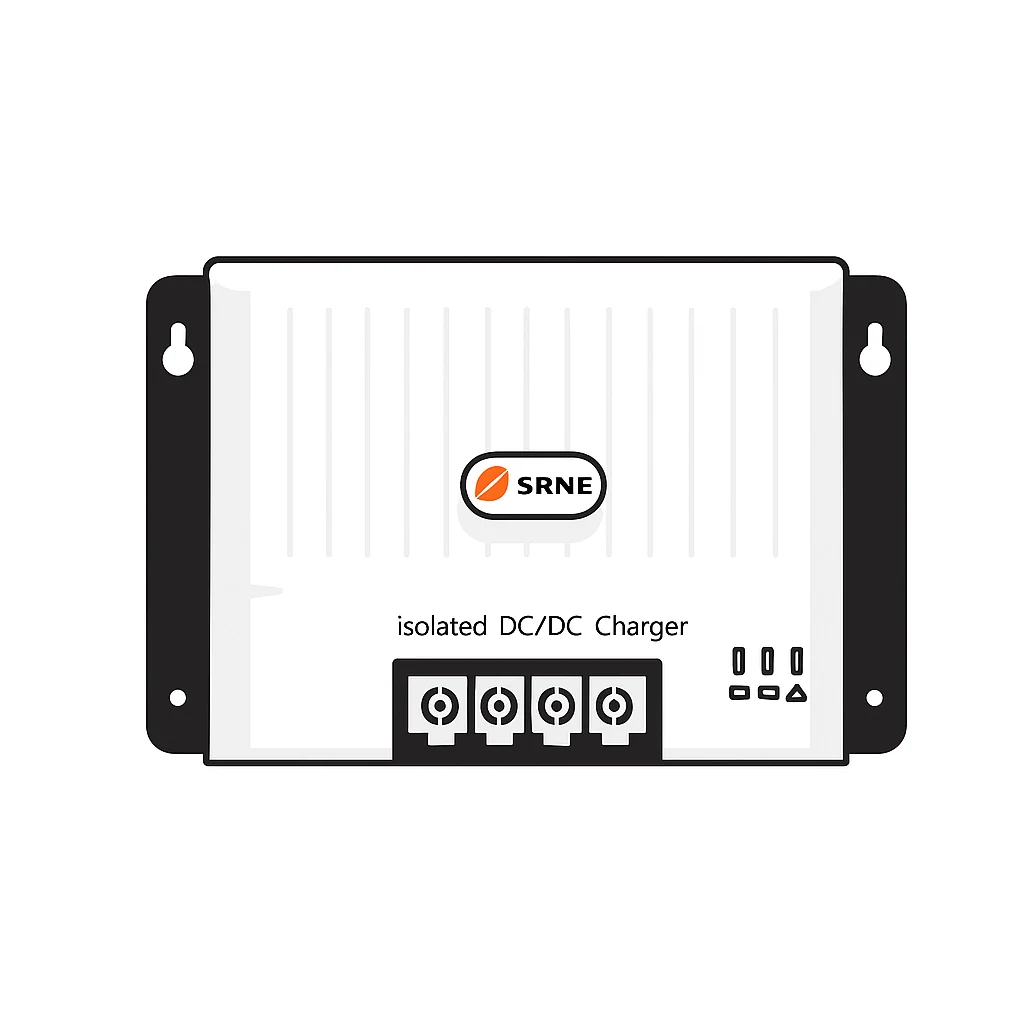
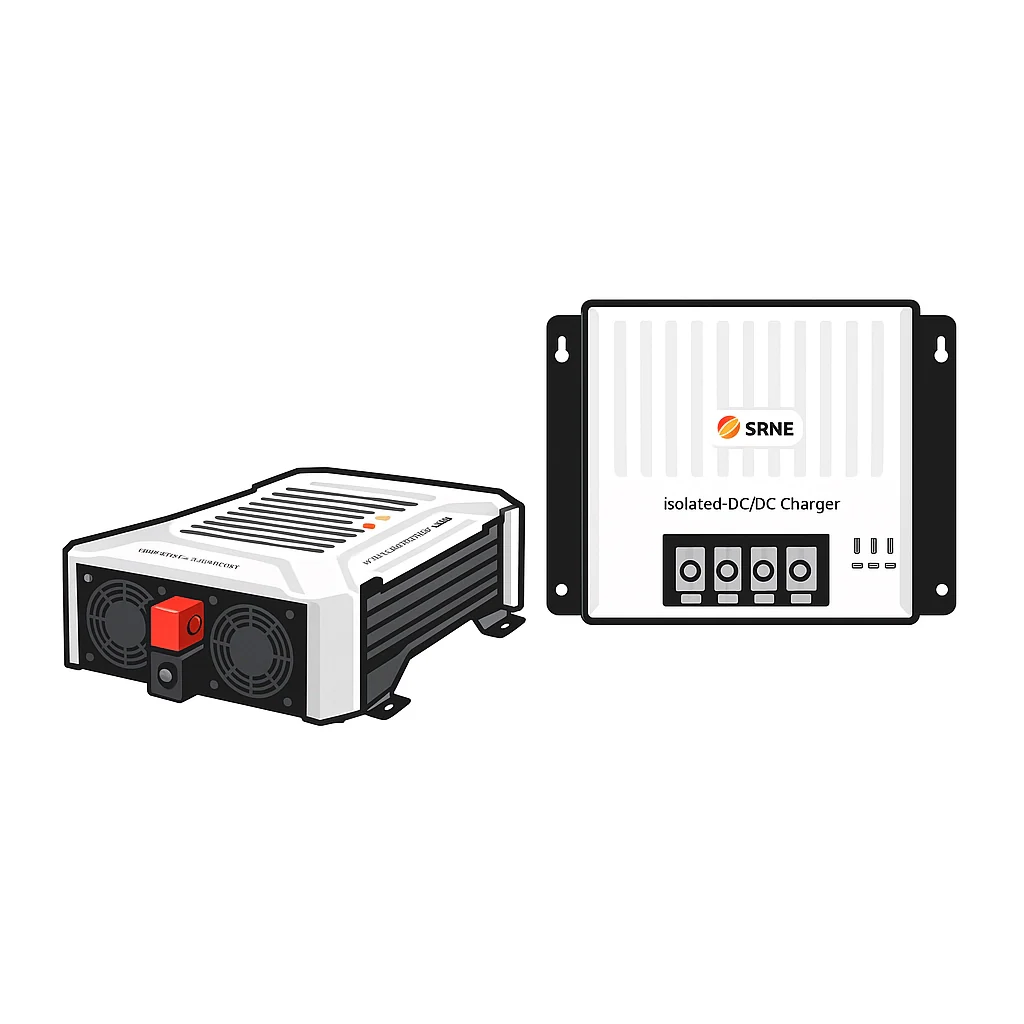
DC-to-DC battery charging tops up your leisure battery from the vehicle alternator while you drive, the closest thing to a free charge, since the engine is running anyway.
Choosing the Best MPPT Solar Charge Controller for Vans
The best MPPT solar charge controller for vans is one rated above your panel's maximum current and matched to your battery's chemistry. MPPT controllers track the panel's peak power point and convert excess voltage into usable current, which matters most in weak light.
When sizing, check three figures:
200W Semi-Flexi Solar Panel Black Rear →
- Panel open circuit voltage (Voc) must stay under the controller's maximum input
- Panel short circuit current (Isc) must stay under the controller's rated output
- Controller must support your battery's charge profile, including lithium
Installation, Storage and Security for Non-Fixed Setups
Storage and security are the two problems nobody warns you about with portable gear. A folding panel left on the ground is an easy target, and a wet panel stuffed into a locker grows mould.
Storage and Deployment Logistics
Measure before you buy. A 200W folding panel in its carry case is bulky, typically 60-70 cm long, 50-60 cm wide and several centimetres thick folded, and has to live somewhere in the van.
The realistic storage spots are:
- Under-bed storage. Usually the best option: long, flat and out of the way. Check the height clearance against the folded panel plus its bag.
- Side locker or garage. Good for quick access, but check the door opening, a panel that fits the locker may not fit through the hatch.
- Roof box. Keeps the interior clear but adds weight up high, which works against the low centre of gravity you get from storing gear low.
- Behind the rear seat. Fine for slim blanket-style panels, less so for thick folding kits.
Security and Theft Prevention
Portable panels attract thieves precisely because they are portable. A few simple measures make yours a much less appealing target:
- Security cable and padlock. Most folding panels have a frame or handle you can thread a vinyl-coated steel cable through. Lock it to a wheel, a tow eye or a fixed point on the van.
- Mark it. A UV pen or a discreet engraving on the frame makes the panel identifiable and harder to resell. Photograph the serial number and keep the image on your phone.
- Do not leave it deployed overnight. If you are not using it, pack it away. A panel on the ground at 2am is a gift.
- Use a quick-disconnect at the van. If the panel is plugged into a fixed socket rather than trailing a loose lead, there is less cable to snag and less to steal.
- Insure it. Check whether your campervan or motorhome policy covers portable equipment left outside the vehicle. Many do not, or cap the cover.
Wiring: DIY vs Plug-and-Play
Wiring splits cleanly into two routes.
Plug-and-play kits come with pre-fitted connectors, usually MC4 at the panel end and a matching plug for the controller or battery. No soldering, crimping or cable sizing needed. For most owners this is the right choice and the fastest way to get charging.
Weight Distribution and Aerodynamics
Weight distribution deserves more than a passing mention. Carrying a folding panel and power bank low and forward keeps the van balanced and the centre of gravity where the manufacturer intended. Heavy rigid panels on the roof do the opposite: they raise the centre of gravity and add aerodynamic drag, showing up as slightly worse fuel economy at motorway speeds.
Frequently Asked Questions
What is the best alternative to fixed solar panels for a campervan?
The best alternative depends on your needs. Semi-flexible panels are ideal for curved roofs and low-profile setups. Portable solar panels for campervans offer flexibility for parking in the shade. DC-to-DC chargers are perfect for generating power while driving, especially in poor weather. Many owners combine these methods for a reliable off-grid system.
Can I use a DC-to-DC charger instead of solar panels?
Yes, a DC-to-DC charger is a viable alternative to solar panels for charging your leisure battery. It charges your battery from the vehicle's alternator while you drive, providing a consistent power source regardless of weather. For many, it is an essential part of a campervan electrical system, often used alongside solar to ensure power even on cloudy days.
Are portable solar panels for campervans as effective as fixed ones?
Portable solar panels for campervans can be highly effective. Their main advantage is the ability to be positioned in direct sunlight, even when your van is parked in the shade. While they require manual setup and are more susceptible to theft, their flexibility and multi-purpose use make them a popular choice for many campers.
Do I need an MPPT controller for a portable solar setup?
Using an MPPT solar charge controller is highly recommended for any solar setup, including portable ones. An MPPT controller is more efficient than a PWM controller, especially in cooler conditions or when the panel's voltage is higher than the battery's. This means you get more power from your panels, which is crucial when relying on portable solar.
How do I secure portable solar panels on a campervan?
Security is a key concern with portable panels. When in use, you can secure them with a heavy-duty cable lock or chain attached to your van's chassis. When not in use, always store them inside the vehicle. Some owners also use motion-sensor alarms or park in well-lit, secure locations to deter theft.
Prev post

What Is a BMS in a Lithium Battery: A Guide
Updated on 20 September 2026
Next post

7 Steps to Install a Battery to Battery Charger
Updated on 17 September 2026


