





Renogy vs EcoTree Lithium: 2026 Campervan Battery Review
Renogy vs EcoTree lithium review for campervans. Compare BMS quality, cold weather performance, cycle life and pricing to find the right battery.
Table of Contents
- Renogy vs EcoTree Lithium: How the Two Brands Compare
- Side-by-Side Specification Comparison
- BMS Quality and Cycle Life: Where Budget Batteries Diverge
- Cold Weather Performance and Capacity Retention Over Time
- Choosing the Best Lithium Leisure Battery for Motorhomes
- SRNE MPPT Controller Benefits in a Lithium System
- Lithium Battery Installation Best Practices
- Frequently Asked Questions
Last Updated: September 25, 2026
Renogy vs EcoTree Lithium: How the Two Brands Compare
The global lithium-ion battery market is projected to grow from $174.9 billion in 2026 to $405.4 billion by 2033, a 12.8% compound annual growth rate, according to Grand View Research's lithium-ion battery market analysis. That growth is visible in campervan and motorhome circles, where the renogy vs ecotree lithium review debate has become a regular fixture in owner forums. At Skyenergi, we supply lithium leisure batteries and complete 12V power systems, so we see how these two brands actually perform once they are installed in a van rather than sitting on a spec sheet.
Renogy: Scale and Ecosystem
Renogy is the bigger operation. It offers an extensive DIY accessory ecosystem and competitive pricing, with its 12V 100Ah LiFePO4 batteries often priced at roughly half the cost of premium competitors, though typically backed by shorter warranty terms of 3 to 5 years, according to Portlandia Electric Supply's battery comparison. That low entry price is genuinely attractive if you are building a first system on a tight budget.
The trade-off shows up later. Users have reported dissatisfaction with Renogy's customer service responsiveness compared with other market options, according to DIY Solar Forum discussion threads. When you are mid-trip and something fails, that matters more than the saving you made at checkout.
EcoTree: Focused on Leisure and Marine
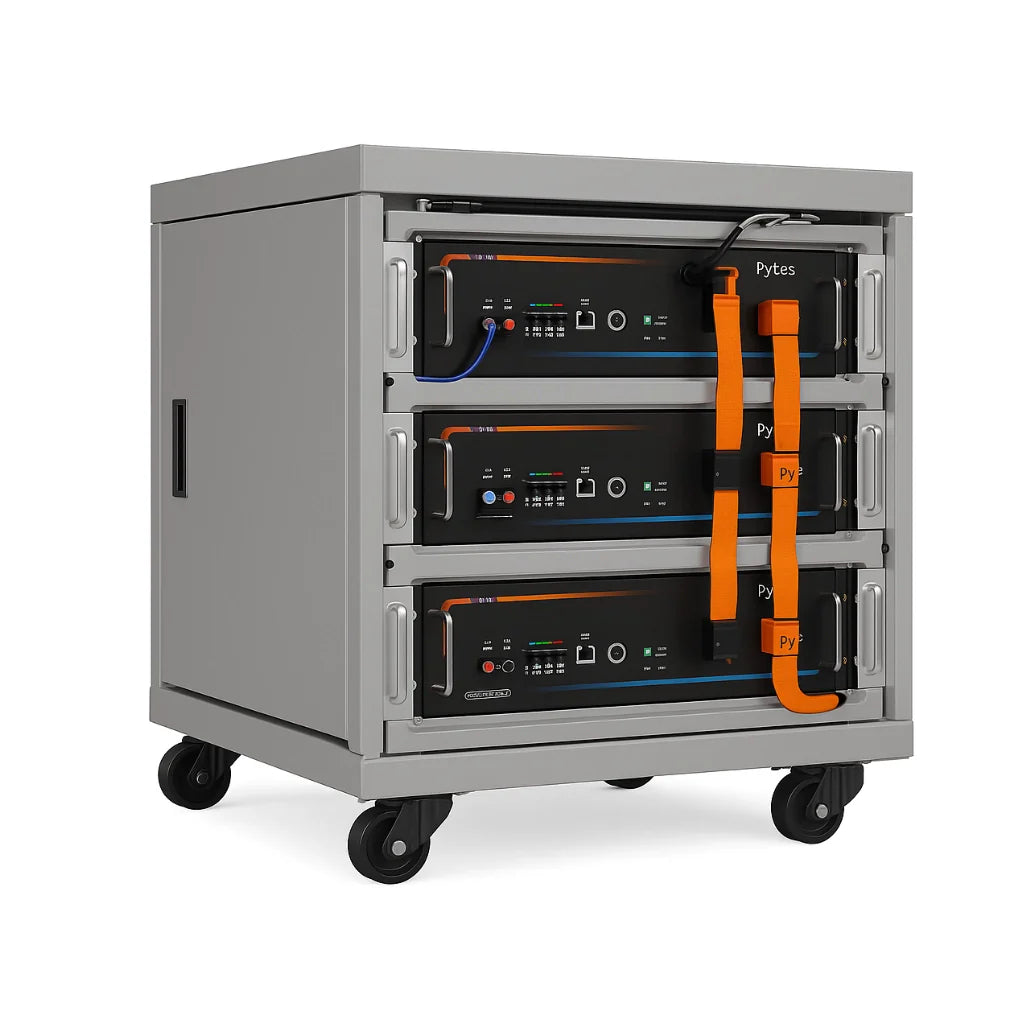
EcoTree takes the opposite approach. The brand is positioned as a provider of straightforward LiFePO4 batteries specifically targeted at leisure and marine users who want maintenance-free power, according to SkyEnergi's campervan battery comparison. EcoTree batteries are noted for combining LiFePO4 chemistry with a 10-year warranty and integrated battery management systems, balancing safety and longevity.
That focus is a strength. EcoTree has maintained a 4-star rating across 65 verified customer reviews on Trustpilot, which suggests consistent delivery rather than spectacular highs and lows. For a buyer who wants one battery, one warranty and no accessories rabbit hole, the narrow range is a feature, not a limitation.
Side-by-Side Specification Comparison
The table below focuses on the technical differentiators that matter for leisure and off-grid systems, with a specific focus on SRNE and Skyenergi products.
| Factor | Typical budget lithium | Skyenergi Edge | Skyenergi Elite | Skyenergi Core2 |
|---|---|---|---|---|
| Chemistry | LiFePO4 | LiFePO4 | LiFePO4 | LiFePO4 |
| Nominal capacity | 100Ah | 100Ah | 100Ah-200Ah | 100Ah-300Ah |
| Continuous discharge | Often 50-80A | 100A | 100A-150A | 150A-300A |
| Peak discharge (10 sec) | Rarely specified | 200A | 200A-300A | 300A-600A |
| BMS | Basic, non-programmable | JBD 100A | JBD 100A-150A | JBD 150A-300A |
| Low-temperature cut-off | Often absent | Yes | Yes | Yes |
| Integrated heat pad | No | No | Yes | Yes |
| Bluetooth monitoring | No | No | Yes | Yes |
| Cycle life at 80% DoD | 1,500-3,000 cycles | 3,000+ cycles | 5,000+ cycles | Up to 7,000 cycles |
| Warranty | 1-3 years | 3 years | 5 years | 10 years |
| Dimensions (typical 100Ah) | Varies | 260 × 168 × 211 mm | 260 × 168 × 211 mm | 305 × 173 × 225 mm |
| Weight (typical 100Ah) | 9-11 kg | 10.5 kg | 10.5 kg | 11.8 kg |
What the Specs Do Not Tell You
Spec sheets rarely capture the two things that decide whether you are happy two years in: how the BMS behaves under real load, and how the cells hold up through repeated deep discharge. A 100Ah rating means little if the BMS throttles output when your inverter pulls a peak load. The peak discharge figure is the one to check against your inverter's surge rating, a 2,000W inverter can momentarily draw over 200A at 12V, which will trip a budget BMS even if the continuous rating looks adequate.

The other gap is support. A battery is a long-term purchase, and the quality of the warranty conversation when something goes wrong is not listed anywhere on a product page.
BMS Quality and Cycle Life: Where Budget Batteries Diverge
Budget-tier lithium batteries often cut corners on the battery management system. Some lack advanced features such as integrated Bluetooth monitoring or built-in heating elements, according to Motorhomer Forum discussions. The BMS is what protects your cells from overcharge, over-discharge and temperature extremes, so it is the component you least want compromised.
The Mechanisms That Drive Degradation
Three BMS behaviours separate a battery that lasts from one that fades:
- Charge current limiting at high state of charge. A good BMS tapers current as the battery approaches full, preventing lithium plating.
- Cell balancing. Without consistent balancing, the weakest cell drags the whole pack down.
- Temperature-compensated charging. A BMS with low-temperature cut-off simply refuses to accept charge below 0°C, while one with a heat pad brings the cells up to a safe temperature first.
What to Check Before You Buy
Ask three questions that most product pages do not answer:
- What is the continuous and peak discharge rating, and does it exceed your inverter's surge draw?
- Does the BMS have low-temperature charge cut-off, or does it rely on you to disconnect manually?
- Is the cycle life figure quoted at 80% depth of discharge, or at a shallower 50% that flatters the number?
Cold Weather Performance and Capacity Retention Over Time
LiFePO4 cells should not be charged below freezing, and a battery without a heat pad or low-temperature protection will either refuse to charge or, worse, accept a charge it should not.
Choosing the Best Lithium Leisure Battery for Motorhomes
Use this decision framework:
- Tight budget, summer use only: a lower-cost 100Ah pack will cover basic lighting, fridge and phone charging.
- Year-round use, no hook-up: prioritise heat pad technology and a high continuous discharge rating.
- Inverter-heavy setup: check the BMS continuous rating against your inverter size before buying.
- Victron-based system: choose a battery with native CAN-bus integration to avoid manual monitoring.
For most owners we speak to, the practical answer is a battery sized to the load, paired with a charge controller that can actually refill it.
SRNE MPPT Controller Benefits in a Lithium System
An MPPT solar charge controller is the component that converts your panels' output into the voltage your lithium battery needs. SRNE MPPT controllers track the panel's maximum power point continuously, which matters most on overcast days and in partial shade.
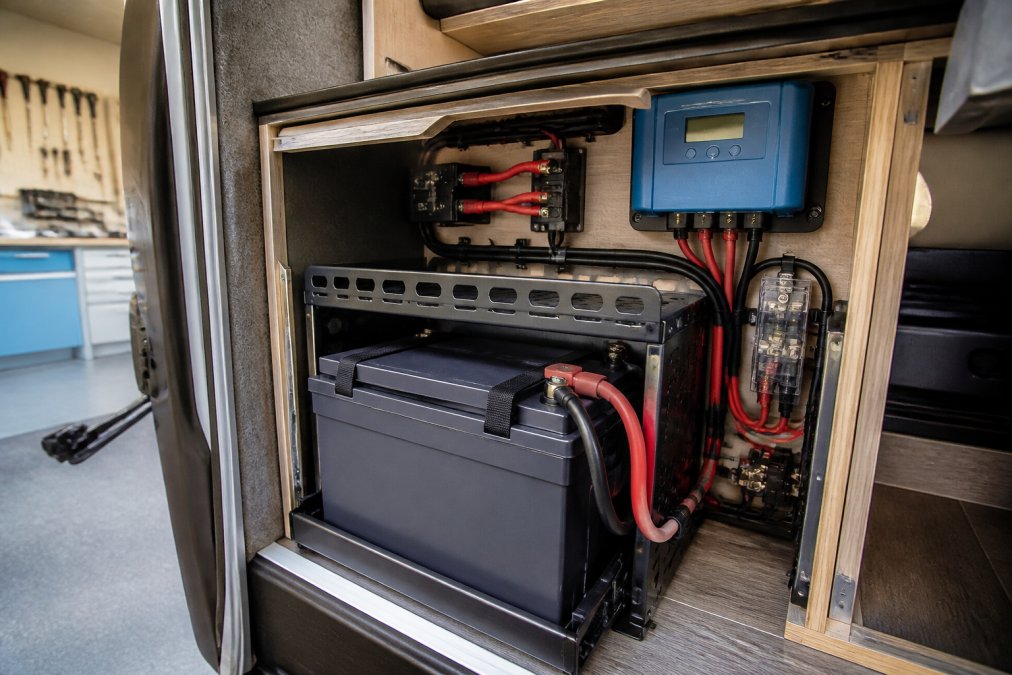
Lithium Battery Installation Best Practices
Work through this checklist before you power anything up:
- Confirm the BMS continuous discharge rating exceeds your peak load
- Size wiring gauge to the round-trip cable length, not just the current
- Fit a fuse within 30cm of the battery positive terminal
- Torque terminal bolts to the manufacturer's specification
- Verify the charge controller profile matches your battery chemistry
- Run a load test and check for voltage drop under full draw
- Check series and parallel connections are balanced before combining
Photograph your wiring before you close up the compartment. When you add a second battery or swap a controller later, having a reference image saves an hour of tracing cables.
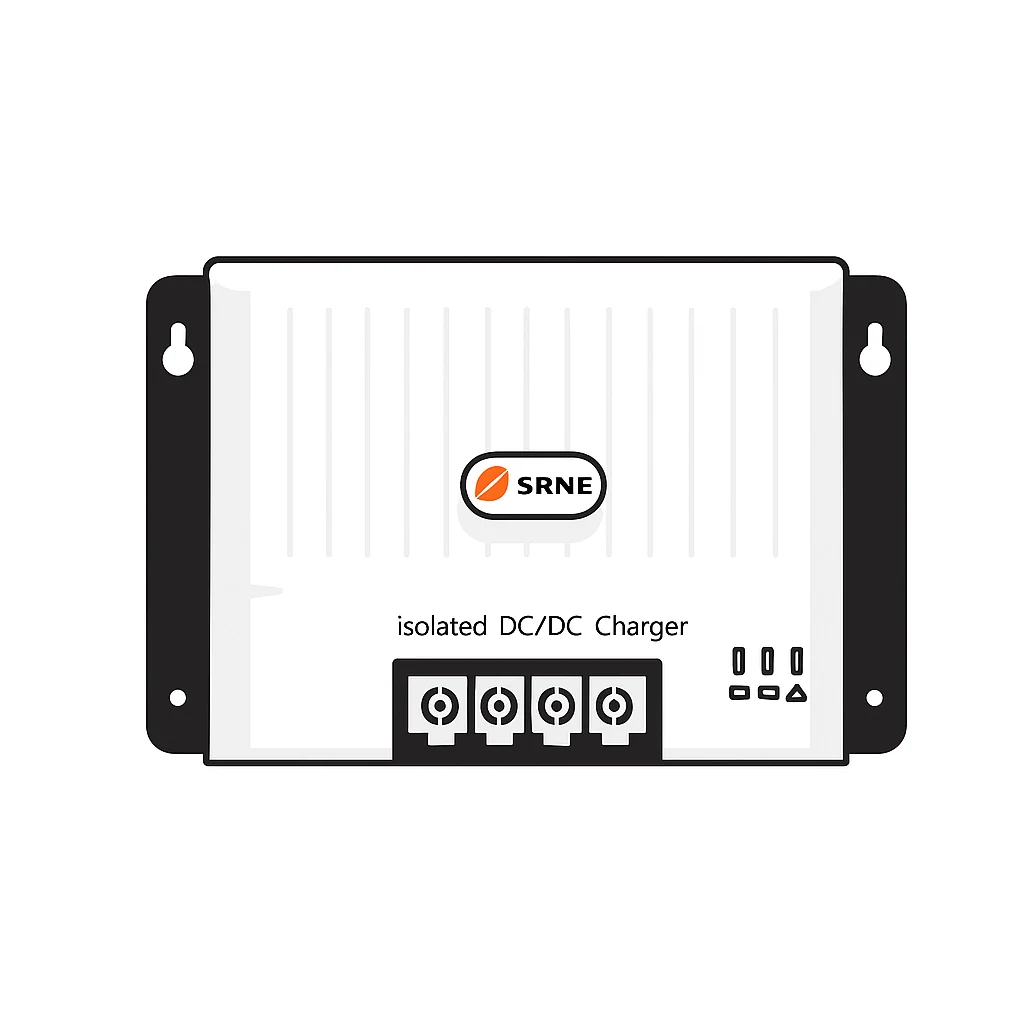
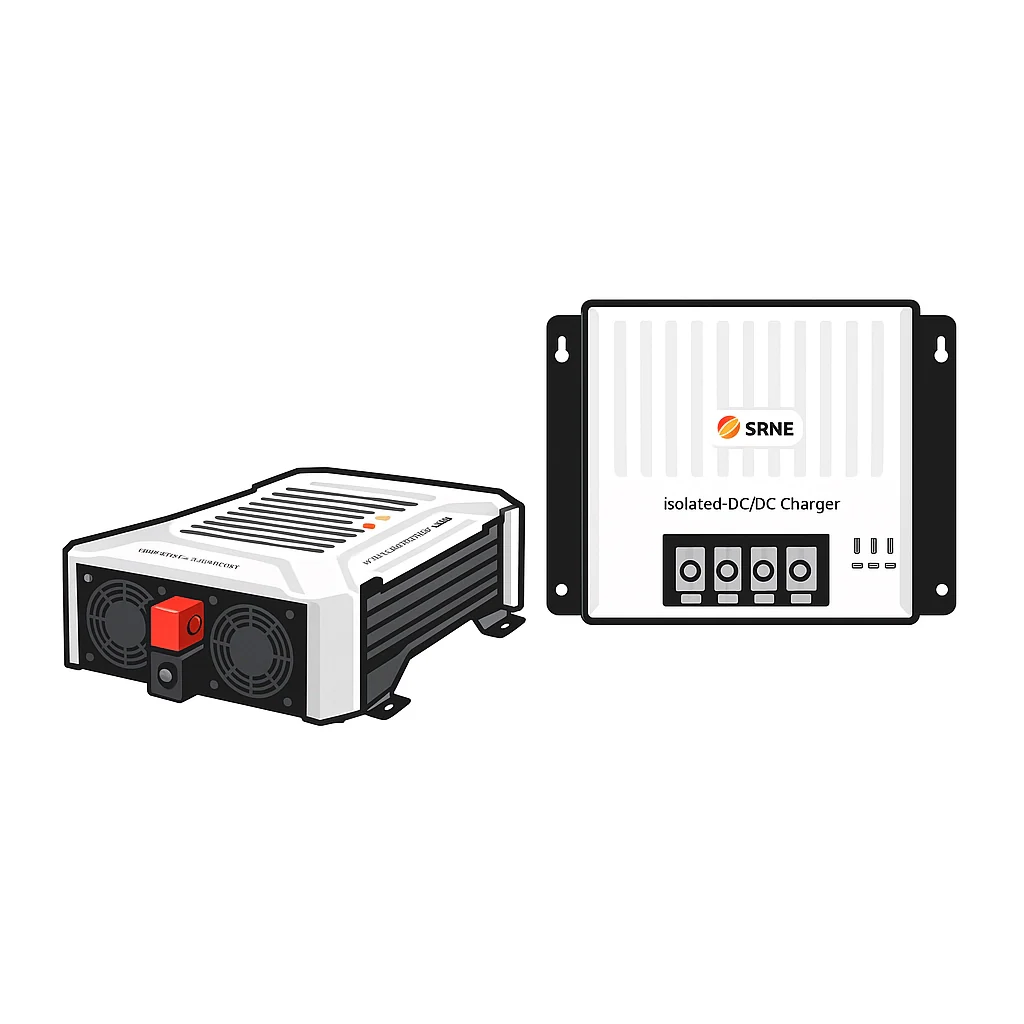
Skyenergi supplies the batteries, SRNE MPPT controllers, DC-to-DC chargers and accessories as a matched system, with fast UK delivery and UK-based support if something needs troubleshooting.
Frequently Asked Questions
Is Renogy a good lithium battery brand?
If support and long-term cover matter more than the lowest upfront price, factor that into your decision.
What should I look for when buying a lithium leisure battery for a campervan?
Check four things: BMS rating (a 100A JBD unit suits modest loads, while 250A to 300A units handle inverters up to 3000W), cycle life at 80% depth of discharge, whether heat pad technology is included for winter charging, and warranty length. Also confirm the battery fits your installation footprint and that your charger or DC-to-DC unit has a lithium profile. Bluetooth monitoring is useful but not essential; a Victron SmartShunt can add that data to batteries without it.
Are budget lithium batteries reliable for long-term off-grid use?
It depends on the cells and BMS inside. Some use premium components anyway: the Skyenergi Edge range pairs Grade A EVE lithium cells with a JBD BMS and an IP65 or IP67 housing, but omits Bluetooth and heat pads to keep the price down. For year-round off-grid use in cold conditions, a heat pad model protects charging performance.
Do I need a specific charger for my lithium leisure battery?
Yes. LiFePO4 batteries need a charging profile that matches their absorption and float voltages, so a lead-acid charger will undercharge or stress them. Use an MPPT solar charge controller with a lithium setting, a DC-to-DC charger for alternator charging, or an inverter charger with a LiFePO4 mode. Check compatibility before you buy, not after.
How does battery management system quality affect battery lifespan?
The BMS controls overcharge, over-discharge, over-current and temperature protection, so it directly affects how many cycles you get. A 300A JBD unit monitoring individual cell voltages will catch imbalances early; a weak BMS lets cells drift, which cuts capacity retention over time. Skyenergi's Core2 680Ah quotes up to 7,000 cycles at 80% depth of discharge, a lifespan of over 10 years, which reflects both cell grade and BMS quality working together.
The real challenge with any lithium upgrade is not picking a brand, it is building a system where the battery, controller and charging sources all agree with each other. Skyenergi designs and supplies complete 12V power systems around its Edge, Elite and Core2 lithium batteries, SRNE MPPT controllers and DC-to-DC chargers, backed by UK-based technical support. Get started with Skyenergi and build a leisure power system that keeps your appliances running, whatever the season.
Next post

5 Ways to Wire Campervan Solar Panels: 2026 Guide
Updated on 24 September 2026


