





Best Lithium Leisure Battery 2026
Lithium leisure battery: Compare top lithium leisure batteries for campervans and off-grid use. Find the best 12V LiFePO4 battery for your needs with.
Table of Contents
- What Makes the Best Lithium Leisure Battery
- Lithium Battery vs AGM for Campervan: Key Differences
-
Top Lithium Leisure Batteries: Feature Comparison
- Skyenergi Core2 680Ah: Maximum Capacity and Power
- Skyenergi Core2 340Ah: Balanced Performance for Extended Trips
- Skyenergi Core2 230Ah: Versatile Mid-Range Option
- Skyenergi Edge 280Ah: Budget-Conscious Reliability
- Skyenergi Core2 172Ah DIN Fit: Direct Lead-Acid Replacement
- Skyenergi Elite 304Ah: Advanced Victron Integration
- How to Install Lithium Leisure Battery Systems
- Best Solar Charge Controller for Lithium Batteries
- Cold Weather Performance and Internal Heating
- Real-World Performance: Cycle Life and Longevity
- Which Lithium Leisure Battery Should You Choose?
Last Updated: August 24, 2026
What Makes the Best Lithium Leisure Battery
A lithium leisure battery is a rechargeable energy storage system designed specifically for off-grid and mobile applications, using lithium iron phosphate (LiFePO₄) chemistry to deliver reliable, long-lasting power for campervans, motorhomes, caravans, and off-grid homes. Unlike traditional lead-acid alternatives, lithium leisure batteries offer significantly deeper usable capacity, faster charging, and cycle lives measured in thousands of charge-discharge cycles rather than hundreds.
The market for these systems is expanding rapidly. According to Mordor Intelligence's UK Battery Market Analysis, the UK battery market was valued at £6.45 billion in 2024 and is projected to reach £15.24 billion by 2032, growing at a compound annual rate of 11.42%. What's driving this growth? Campervan and motorhome owners are increasingly recognising that lithium technology solves real problems: weight savings, maintenance-free operation, and the ability to run modern appliances reliably for days without mains power.
At Skyenergi, we work with campervan converters, motorhome owners, professional installers and DIY enthusiasts across the UK. The question we hear most often isn't whether to switch to lithium, it's which model, capacity, and feature set actually delivers value for your specific setup. This guide cuts through the marketing noise and focuses on what matters: real-world performance, genuine capacity, cold-weather reliability, and honest tradeoffs.
Lithium Battery vs AGM for Campervan: Key Differences
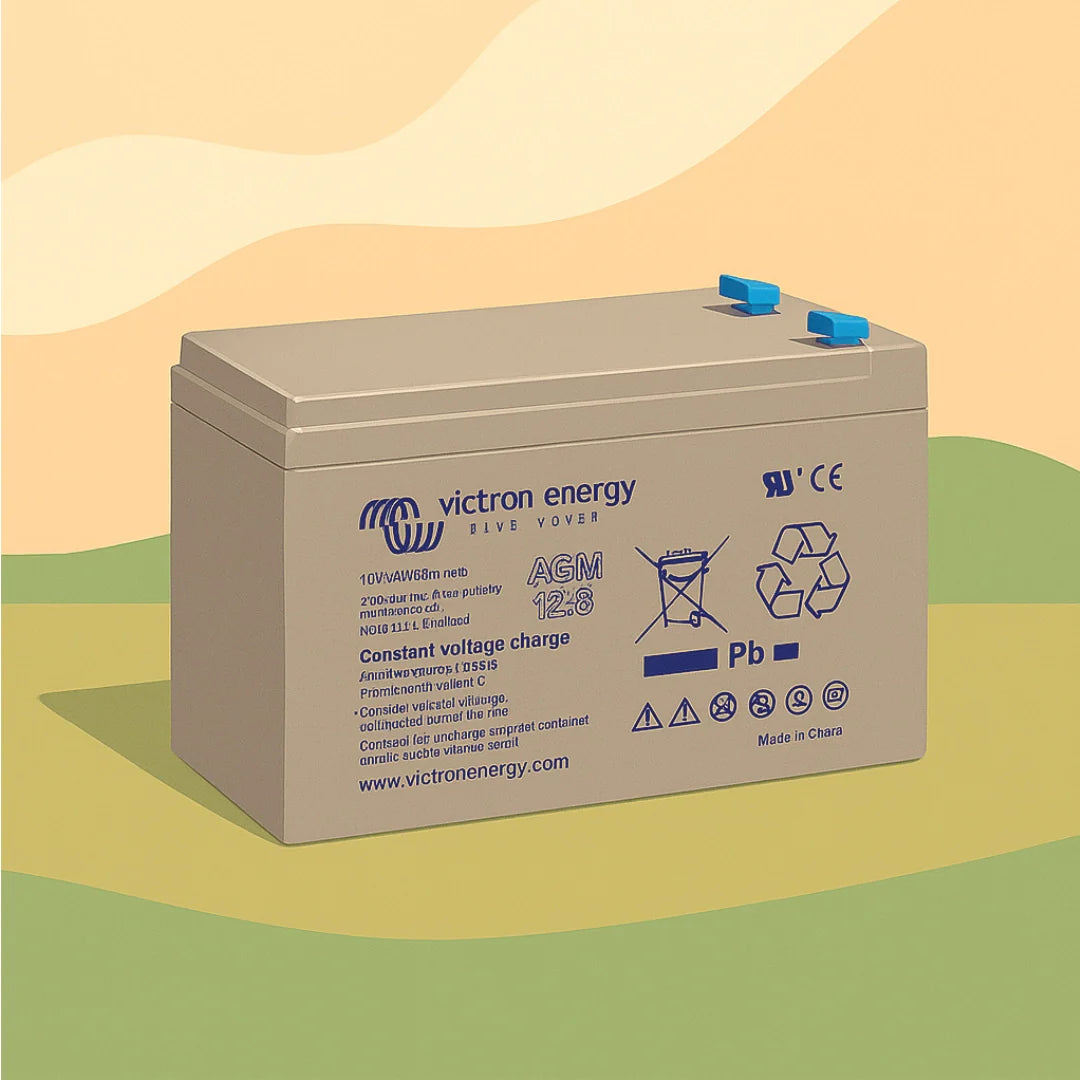
When you're upgrading from a traditional lead-acid battery, the comparison that matters most is lithium versus AGM (absorbed glass mat), not lithium versus wet-cell lead-acid. AGM batteries are sealed, maintenance-free, and common in many leisure vehicles, but they have fundamental limitations that lithium eliminates.
The first difference is usable capacity. An AGM battery rated at 100Ah typically delivers only 50Ah of usable energy before the voltage drops too low to safely power your appliances. A 100Ah lithium battery, by contrast, offers 80-100Ah of genuinely usable capacity. This means a 230Ah lithium battery delivers more real power than a 460Ah AGM system, and weighs significantly less.
Cycle life tells the story of long-term value. According to Grand View Research's lithium battery analysis, LiFePO₄ is the fastest-growing segment within the UK lithium-ion battery market, offering inherent thermal stability, longer cycle life, and superior cold-weather charging compared to AGM. A quality lithium leisure battery achieves 2,000 to 8,000 cycles at 80% depth of discharge (DOD), depending on the model. An AGM battery typically manages 300-500 cycles before degradation becomes noticeable. In practical terms: a lithium battery lasts 10+ years; an AGM lasts 3-5 years.
Charging speed matters when you're relying on solar. Lithium batteries accept charge at much higher rates, up to 300A continuous in premium models, which means your solar panels actually deliver the power they're rated for. AGM batteries slow down as they charge, wasting potential solar generation on days when your system could be harvesting more.
The weight difference is dramatic. A 230Ah lithium battery weighs approximately 25-30kg. An equivalent AGM system weighs 80-100kg. For motorhome owners concerned about payload and handling, this is transformative.
| Specification | Lithium (LiFePO₄) | AGM |
|---|---|---|
| Usable Capacity | 80-100% | 50% |
| Cycle Life (at 80% DOD) | 2,000-8,000+ | 300-500 |
| Weight (per 100Ah usable) | ~13kg | ~40kg |
| Charging Rate | Up to 300A | 20-40A typical |
| Self-Discharge | <2% per month | 10-15% per month |
| Cold Weather Performance | Excellent with heat pad | Poor below 0°C |
| Maintenance | None | Minimal (venting) |
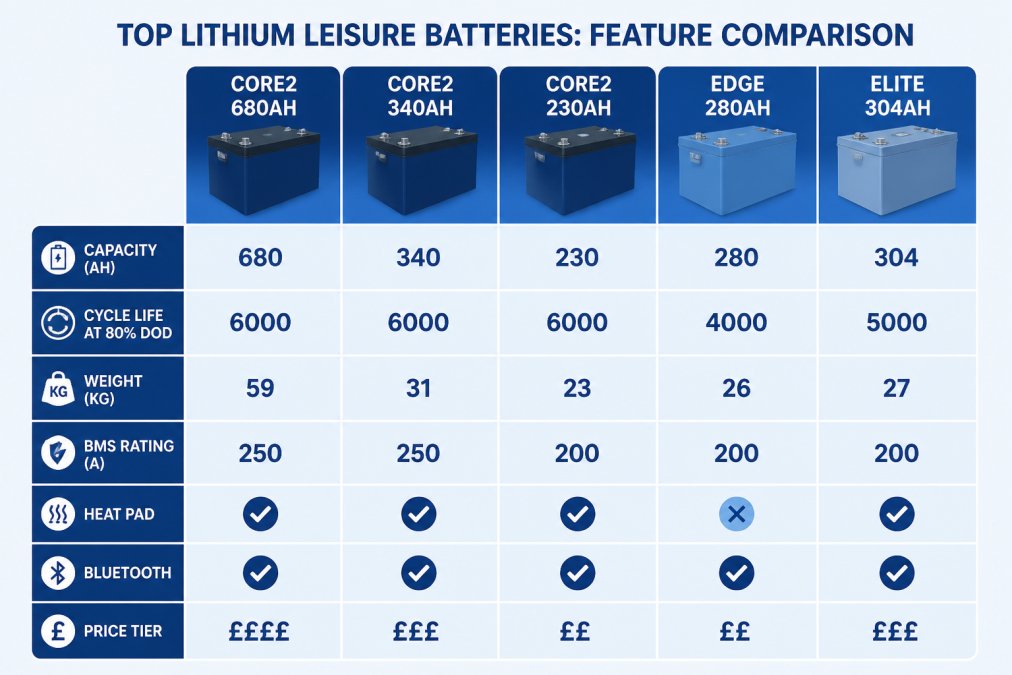
Top Lithium Leisure Batteries: Feature Comparison
The Skyenergi range covers the full spectrum of leisure battery needs, from compact under-seat installations to high-capacity systems for extended off-grid living. Each model represents a genuine choice based on your space, budget, and feature requirements, not marketing tiers.
Skyenergi Core2 680Ah: Maximum Capacity and Power
The Core2 680Ah is the flagship model, designed for serious off-grid users who demand maximum usable energy without compromise. At 680Ah, this battery stores approximately 8,704Wh of usable energy, enough to run a full caravan setup (fridge, heating, water pump, inverter, entertainment) for 5-7 days in moderate use without solar input.
The 300A JBD Battery Management System (BMS) is the most advanced in the Skyenergi range, offering real-time monitoring of individual cell voltages, continuous protection against overcharge and over-discharge, and intelligent thermal management. The integrated heat pad allows safe charging and discharging even in freezing conditions, critical for winter touring in Scotland or extended off-grid use.
Bluetooth monitoring via the Skyenergi App gives you real-time visibility: state of charge, voltage, current draw, temperature, and historical performance graphs. You can control the charge/discharge switch remotely and monitor multiple batteries if you've configured a series or parallel setup.
The Core2 680Ah supports inverters up to 3kW, making it suitable for brief high-power demands (kettle, microwave, power tools). Cycle life reaches 7,000 cycles at 80% DOD, translating to 10+ years of reliable service. This model is priced at £1,129.00 and represents a strong choice for full-time off-grid living or extended touring where energy independence is non-negotiable.
Skyenergi Core2 340Ah: Balanced Performance for Extended Trips
The Core2 340Ah hits the sweet spot for most leisure users: enough capacity for 3-4 days of comfortable off-grid use, Bluetooth monitoring, heat-pad technology, and a competitive price point.
With 4,352Wh of usable energy, this battery reliably powers a fridge, heating, water pump, and moderate inverter load for a weekend trip without depleting below 20% state of charge. The 250A JBD BMS is the same advanced system used in the 680Ah, ensuring identical protection and monitoring capabilities.
Cycle life reaches 8,000 cycles at 80% DOD, the highest in the Skyenergi range. This translates to exceptional longevity: 10+ years is realistic even for heavy users.
The Core2 340Ah is priced at £685.00 and works with inverters up to 3kW. It's a model that balances genuine capacity, advanced features, and cost-effectiveness. For campervan owners upgrading from AGM or lead-acid, this is a model that can alleviate concerns about capacity.
Skyenergi Core2 230Ah: Versatile Mid-Range Option
The Core2 230Ah delivers 2,944Wh of usable energy, enough for 2-3 days of off-grid use or indefinite operation paired with even modest solar (200W). The 200A JBD BMS provides identical protection to larger models, and Bluetooth monitoring is included as standard.
This model comes in two form factors: standard (£527.00) and seat-base (£619.00). The seat-base version is specifically designed to replace the captain's seat in popular van conversions (Ducato, Relay, Boxer, VW T6.1, T7, Mercedes Sprinter). It keeps weight low and central, improves handling, and eliminates the need for an external battery box, a genuine advantage for tidy, professional-looking installations.
Cycle life reaches 4,000 cycles at 80% DOD, giving 10+ years of service. The Core2 230Ah supports inverters up to 2kW, sufficient for most leisure appliances except simultaneous high-load demands.
Skyenergi Edge 280Ah: Budget-Conscious Reliability
The Edge 280Ah is a reliable option: premium components (280A JBD BMS, Grade-A EVE lithium cells), proven reliability, and a price that doesn't include features you might not need. At £445.00, it offers 3,584Wh of usable energy.
The trade-off is straightforward. The Edge range omits Bluetooth monitoring and integrated heat-pad technology. If you're installing the battery in a heated garage or motorhome habitation space, the lack of a heat pad is irrelevant. If you're touring in winter or need remote monitoring, the Core2 range is worth the additional investment.
The Edge 280Ah pairs well with a Victron SmartShunt for monitoring if you want real-time data without the integrated Bluetooth. Cycle life reaches 2,000-3,000 cycles at 80% DOD, still delivering 5-7 years of reliable service, solid for budget-conscious installers or users upgrading from AGM for the first time.
Skyenergi Core2 172Ah DIN Fit: Direct Lead-Acid Replacement
The Core2 172Ah is built in standard DIN case format, physically replacing traditional lead-acid leisure batteries in many installations. At 2,204Wh usable, it delivers genuine capacity upgrade from lead-acid while fitting existing battery boxes and mounting points.
The 250A JBD BMS, Bluetooth monitoring, and integrated heat pad are identical to larger Core2 models. The DIN form factor makes installation straightforward for retrofit upgrades. Cycle life reaches 2,000 cycles at 80% DOD. Priced at £482.00, it's an affordable entry point to Skyenergi's advanced feature set.
The main limitation: DIN-fit batteries are constrained by the physical case dimensions, so you're trading some capacity for form-factor compatibility. If you have space for a larger battery, the Core2 230Ah or 340Ah deliver better value.
Skyenergi Elite 304Ah: Advanced Victron Integration
The Elite 304Ah is purpose-built for users running Victron energy management systems (Cerbo GX, MultiPlus inverters, MPPT charge controllers). With plug-and-play CAN-Bus integration, it communicates directly with your Victron ecosystem, eliminating the need for external monitoring devices.
At 3,891Wh usable, the Elite 304Ah sits between the 230Ah and 340Ah in capacity. The 250A JBD BMS includes heat-pad technology and integrated on/off switching. The standout feature is seamless integration: your Victron system sees the battery's state of charge, voltage, current, and temperature in real time, and can automatically adjust charging and inverter behaviour based on battery status.
Priced at £745.00, the Elite 304Ah costs more than equivalent Core2 models, but for installers already committed to Victron architecture, it eliminates integration complexity and ensures optimal system performance. Cycle life reaches 4,000 cycles at 80% DOD.
How to Install Lithium Leisure Battery Systems
Lithium battery installation is straightforward if you follow one critical rule: your charging infrastructure must be lithium-compatible. Many existing solar controllers and chargers are designed for lead-acid or AGM batteries and will not work correctly with lithium. This is the single most common installation mistake, and it can trigger false BMS protection events, undercharge your battery, or prevent charging entirely.
Pre-Installation Compatibility Checklist
Before purchasing a lithium leisure battery, audit your existing charging infrastructure. Most leisure vehicles have three charging sources, and each requires verification:
Solar Charge Controller Identify your current controller model and type. PWM (Pulse Width Modulation) controllers work with lithium but operate at lower efficiency. MPPT (Maximum Power Point Tracking) controllers are superior and are lithium-compatible if they support programmable charge profiles.
Check your controller's manual or specifications for "lithium" or "LiFePO₄" settings. Common MPPT controllers from Victron (SmartSolar), Epever, and Renogy often include lithium profiles, but older models do not. If your controller lacks lithium support, you have two options: reprogram it manually if the interface allows user-configurable charge curves (typically 14.4V absorption, 13.5V float for LiFePO₄), or upgrade to an SRNE MPPT controller specifically configured for lithium batteries.
SRNE controllers are pre-programmed with LiFePO₄ profiles and include CAN-Bus compatibility for advanced BMS communication, eliminating guesswork. If you're uncertain whether your existing controller supports lithium, contact the manufacturer or consult the manual's charge-profile section.
DC-DC Charger (Alternator-to-Leisure-Battery) Most modern DC-DC chargers are lithium-rated, but verify before installation. Check the charger's specifications for "lithium" or "LiFePO₄" support. An incompatible charger will either undercharge your battery (delivering only 50-70% of rated current) or trigger false protection events from the BMS because the charging curve doesn't match lithium's requirements.
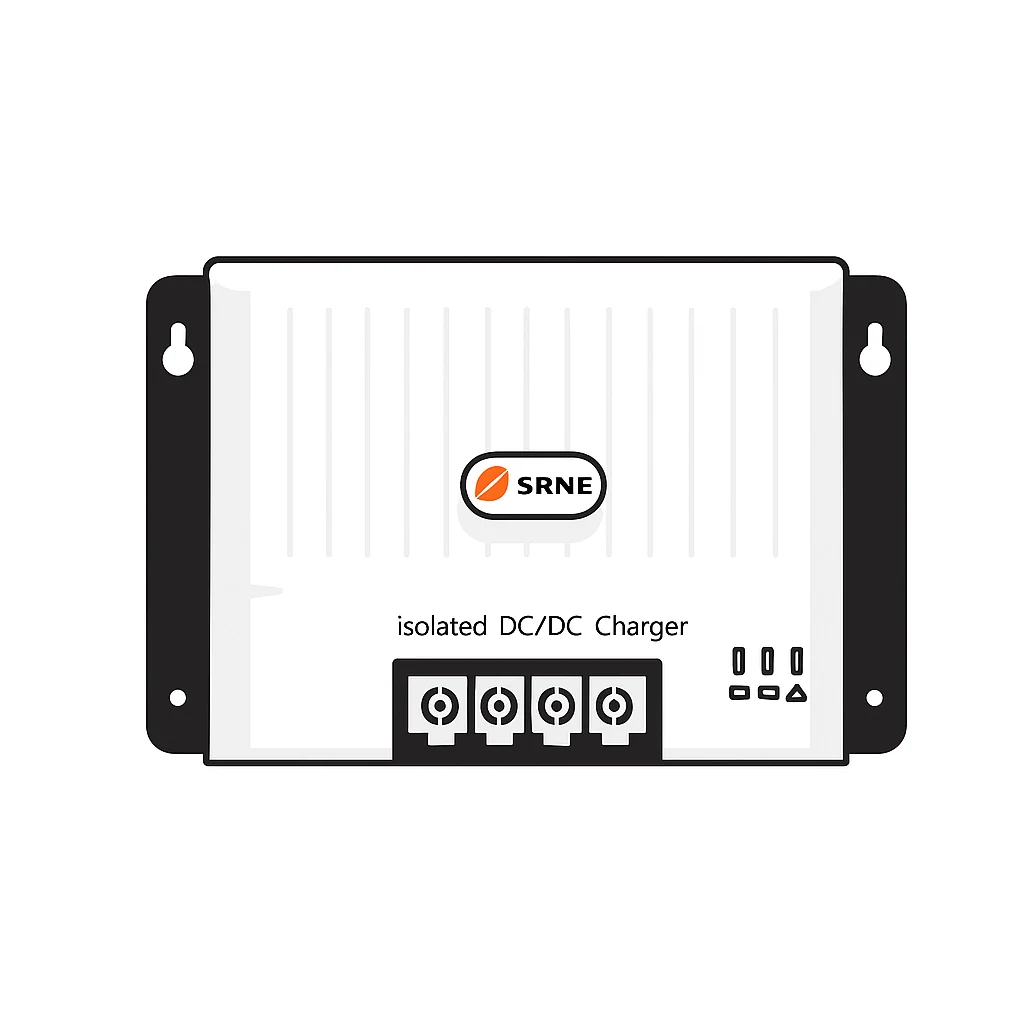
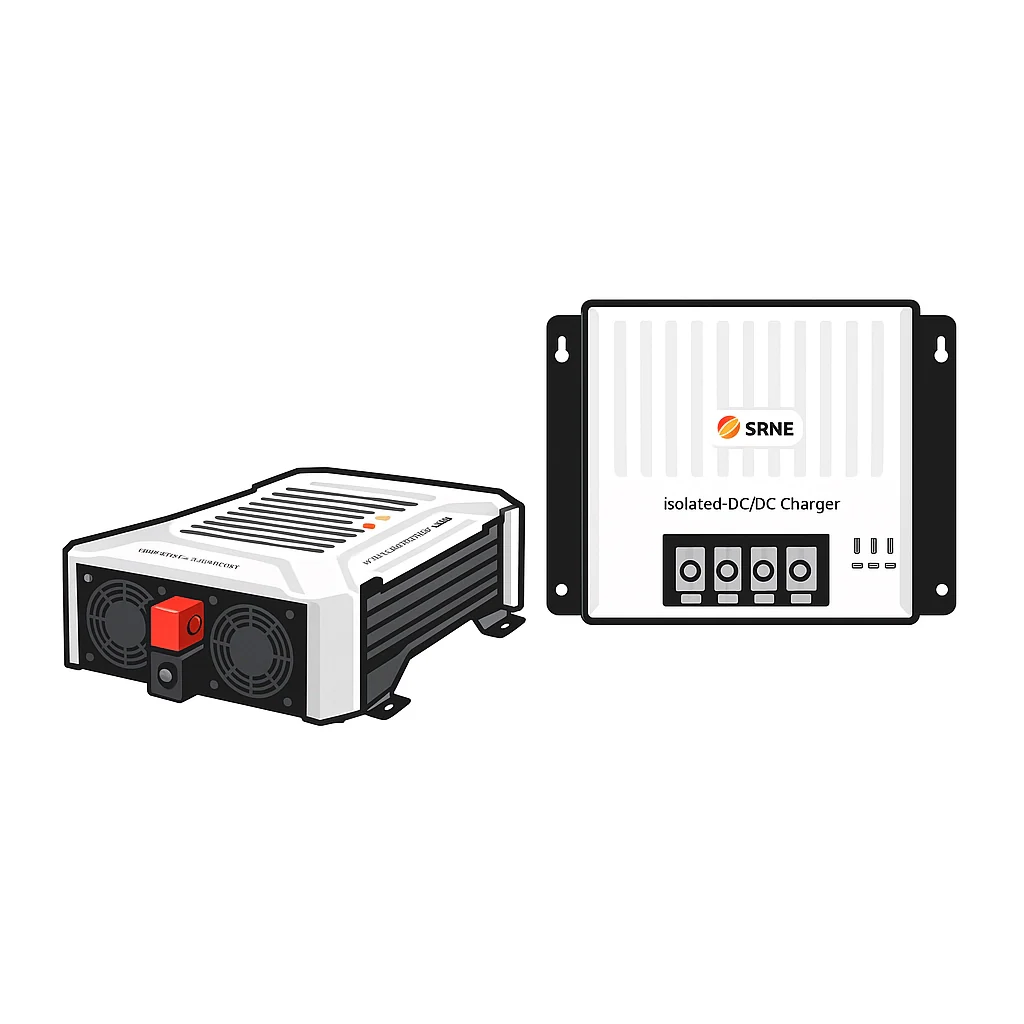
If your existing charger isn't lithium-compatible, upgrading is essential. A Skyenergi-compatible DC-DC charger (such as SRNE models) ensures the alternator delivers full charging current to your lithium battery without BMS conflicts.
Mains Charger or Inverter-Charger If you have a dedicated mains charger or an inverter-charger unit, verify it supports lithium profiles. Many modern units do, but older models are lead-acid-only. Check the specifications or contact the manufacturer.
If your existing charger isn't lithium-compatible, upgrading to a Skyenergi inverter-charger gives you integrated mains charging, inverter functionality, and optional Victron compatibility in one unit, eliminating the need for separate devices.
Cabling and Connector Sizing
Lithium batteries discharge at higher rates than lead-acid, which means your cabling must be appropriately rated. A 300A lithium battery requires heavier cabling than a 100A AGM system.
Use this rule: cable gauge should be sized for 3× the battery's continuous discharge rating. A 300A battery requires cabling rated for 900A peak (typically 16-25mm² copper for runs under 3 metres). Undersized cabling causes voltage drop, reduces usable power, generates heat, and can trigger low-voltage protection from the BMS.
Connectors should be M8 or M10 bolts (depending on battery model) with marine-grade terminals. Ensure connections are tight and corrosion-free. Loose connections cause voltage drop and poor performance, particularly under high-load conditions (inverter use).
Installation Steps and Safety Considerations
Step 1: Disconnect existing battery Turn off all loads and disconnect the old battery completely. Remove it from its location before installing the new lithium battery. This prevents accidental short circuits during installation.
Step 2: Inspect cabling and connections Check that all cables are appropriately rated for the new battery's discharge current. Replace any undersized or corroded cabling before proceeding.
Step 3: Install battery in location Position the lithium battery in its permanent location (under seat, battery box, or dedicated cabinet). Ensure adequate ventilation around the battery to allow heat dissipation. The integrated BMS manages thermal protection, but airflow improves efficiency and longevity. Avoid enclosed spaces without ventilation, as this can cause the BMS to throttle charging in warm conditions.
Step 4: Connect positive and negative terminals Use appropriately rated connectors and ensure connections are tight and corrosion-free. Loose connections cause voltage drop and poor performance. Double-check polarity before tightening: positive (red) to positive, negative (black) to negative. Reversed polarity will trigger immediate BMS protection shutdown and may damage connected equipment.
Step 5: Connect BMS to charging equipment If your charge controller or charger has a remote BMS input or CAN-Bus port, connect it now. This allows the charging equipment to communicate with the battery's protection system and adjust charging behaviour based on battery status, temperature, and state of charge. This step is optional but highly recommended for optimal performance.
Step 6: Configure charge controller for lithium Set the controller to lithium (LiFePO₄) profile if available in the menu. If your controller doesn't support lithium profiles, you may need to manually configure the charge curve: absorption voltage 14.4V, float voltage 13.5V, and current limit set to 80% of the battery's rated charge current. Consult your controller's manual for the configuration menu.
For SRNE controllers, lithium profiles are pre-loaded; simply select "LiFePO₄" from the battery-type menu.
Step 7: Test the system Turn on the battery and verify that all monitoring systems (Bluetooth app, Victron display, or external shunt) show correct data. The BMS should display state of charge, voltage, current, and temperature. Perform a test charge from solar or mains to confirm the BMS communicates correctly with your charging equipment. Monitor the charge current: it should ramp up smoothly to the configured limit without fluctuating or dropping unexpectedly.
If the charge current is lower than expected, check that the charge controller is set to lithium profile and that the BMS isn't throttling due to temperature or cell imbalance. Most BMS protection events are temporary and resolve once the battery stabilises.
Step 8: Connect loads Once charging is confirmed working, connect your leisure loads (fridge, lights, inverter) one at a time and verify normal operation. Monitor the battery voltage under load: it should remain stable above 12V (or 24V for 24V systems) without significant sag. Voltage sag below 11V under moderate load indicates undersized cabling or a weak connection.
Troubleshooting Common Installation Issues
Battery won't charge or charges very slowly Verify the charge controller is set to lithium profile. Check that the BMS isn't in protection mode (consult the Bluetooth app or LED indicators). Confirm cabling is appropriately sized and connections are tight. If the issue persists, the charge controller may not be lithium-compatible; upgrade to an SRNE controller configured for lithium batteries.
Voltage sag under load Undersized cabling is the most common cause. Measure the voltage at the battery terminals while running a high-load device (inverter or water pump). If voltage drops more than 0.5V, upgrade to heavier cabling. Alternatively, the battery connection may be loose; retighten all terminals.
BMS protection faults or error codes Consult the battery's manual for error-code meanings. Common causes are incorrect charge-controller settings, temperature extremes, or cell imbalance. Most protection events are temporary; allow the battery to stabilise for 30 minutes before retrying. If faults persist, contact Skyenergi technical support with the error code and system configuration.
Bluetooth app shows incorrect state of charge The BMS calibrates its state-of-charge algorithm during the first 2-3 charge cycles. Allow the battery to complete at least one full charge-discharge cycle before relying on the app's accuracy. If the issue persists after calibration, the BMS may need a factory reset; contact Skyenergi support for guidance.
Best Solar Charge Controller for Lithium Batteries
A solar charge controller is the critical link between your solar panels and your lithium battery. The wrong controller wastes solar generation and can trigger battery protection faults. The right controller maximises energy harvest and communicates intelligently with your battery's BMS.
MPPT (Maximum Power Point Tracking) controllers are superior to PWM for lithium systems because they adjust the voltage and current from your solar panels to match the battery's optimal charging curve. This maximises power extraction from your panels, especially in low-light conditions.
The best solar charge controller for lithium leisure batteries must support LiFePO₄ charge profiles. This means it understands the correct charging curve (constant current at lower voltage, then constant voltage at higher voltage) and can communicate with the battery's BMS to adjust charging based on battery state and temperature.
Skyenergi supplies SRNE MPPT controllers specifically configured for lithium batteries. These controllers include programmable lithium profiles, CAN-Bus compatibility for advanced monitoring, and the ability to integrate with Victron systems if required. An SRNE controller paired with a Skyenergi lithium battery eliminates integration guesswork and ensures optimal performance.
For users with existing solar setups, verify your current controller supports lithium profiles. If not, upgrading to an SRNE MPPT controller is a worthwhile investment that can improve charging efficiency.
Cold Weather Performance and Internal Heating
Winter touring is where lithium's advantages become obvious, and where battery choice becomes critical. Lithium chemistry performs better in cold conditions than lead-acid or AGM, but there are important limits and practical considerations that directly affect your ability to charge and use the battery reliably in freezing conditions.
The Science: Why Lithium Can't Charge Below Freezing
Lithium-ion chemistry relies on the movement of lithium ions through an electrolyte inside the battery cells. In cold conditions, the electrolyte becomes viscous (thick), and ion movement slows dramatically. When you attempt to charge a cold lithium battery, the ions move so slowly that they accumulate on the cell's surface rather than inserting into the electrode material. This process, called "lithium plating," causes permanent damage: the accumulated lithium forms a metallic layer that reduces the cell's capacity and can create internal short circuits.
For LiFePO₄ chemistry specifically, safe charging is generally not possible below 0°C. Most manufacturers recommend not charging below 5°C to provide a safety margin. Discharging, however, works fine down to -20°C or lower because discharge doesn't require ion insertion; the ions are already in the electrode material and simply move through the electrolyte to deliver current.
This creates a practical problem for winter touring: if your battery is cold and depleted after a night of heating and appliance use, you cannot charge it from solar panels or mains until it warms up. In a Scottish winter with limited daylight and freezing temperatures, this can mean a dead battery for days.
Heat-Pad Technology: How It Works
The solution is an integrated heat pad. Skyenergi Core2 and Elite models include heat-pad technology that warms the battery internally during charging in cold conditions. The BMS monitors battery temperature continuously and activates the heat pad when charging is attempted below safe thresholds (typically 5°C).
The heat pad is a resistive heating element integrated into the battery case. When activated, it draws current from the battery itself to generate warmth, raising the internal temperature to a safe charging level (typically 10-15°C) before the BMS allows the charge controller to deliver current. This process takes 30-60 minutes depending on ambient temperature and the battery's initial state.
In practice, the heat pad draws approximately 5-10% of the battery's stored energy to warm itself. So if your battery is at 20% state of charge and you attempt to charge in freezing conditions, the heat pad will consume 1-2% of the battery's capacity to warm up, leaving you with 18-19% usable energy after the heating cycle. This is a worthwhile trade-off: you preserve the battery's health and enable charging, rather than risking permanent damage or waiting for warmer weather.
The Skyenergi Edge range omits heat pads, making it less suitable for winter touring or cold-climate off-grid use. If you're planning winter trips to Scotland, Northern England, Wales, or other cold regions, or if you're living off-grid in a cold climate, the Core2 or Elite range is essential.
Real-World Winter Scenarios
Scenario 1: Weekend Winter Touring in Scotland You're parked in a Scottish glen in February. Overnight temperature drops to -5°C. Your battery powered heating, water pump, and fridge overnight, and is now at 30% state of charge. Solar panels are covered in frost and generating minimal power. Mains charging isn't available.
With a Core2 340Ah (heat pad included): You connect the solar controller. The BMS detects the cold temperature and activates the heat pad. Over 45 minutes, the battery warms to 10°C. Once warm, the solar controller begins charging at full rate, even though ambient temperature remains below freezing. By midday, the battery is at 80% state of charge. You have enough power for another night of heating and appliances.

With an Edge 280Ah (no heat pad): The solar controller attempts to charge, but the BMS refuses to accept current because the battery is below 5°C. The battery remains at 30% state of charge. You cannot charge until the battery warms naturally (which may take days in freezing conditions) or you move to a heated location. You're forced to ration power or find mains charging.
Scenario 2: Full-Time Off-Grid Living in Winter You're living in a caravan in the Lake District with a 200W solar array and a Core2 340Ah battery. December and January are challenging: daylight is limited (8-9 hours), and temperatures frequently drop below freezing.
On a typical winter day: Solar generation is 400-600Wh (vs 1,500Wh in summer). Your heating, water pump, and appliances consume 800-1,000Wh overnight and during the day. You're in a deficit: consuming more than you generate.
The heat pad allows you to charge during the brief sunny periods, even in freezing conditions. Without it, you'd be unable to charge on cold days and would rapidly deplete the battery. The heat pad's energy cost (5-10% per cold-weather charge cycle) is offset by the ability to charge at all.
Scenario 3: Alternator Charging in Winter You're driving your campervan in winter and relying on the alternator to charge the battery while moving. The DC-DC charger delivers 50A to the battery.
With a Core2 battery (heat pad): If the battery is cold when you start driving, the heat pad activates and warms the battery over 30-45 minutes. Once warm, the DC-DC charger delivers full current. By the time you've driven for an hour, the battery is warm and charging at full rate.
Without a heat pad: The DC-DC charger may refuse to deliver current if the battery is below 5°C, or it may deliver reduced current (20-30A instead of 50A). You waste charging opportunity during the drive.
Practical Winter-Use Guidance
Allow warm-up time before rapid charging If you're using a Core2 or Elite battery in winter and the battery is cold, allow 30-60 minutes of heat-pad warm-up before expecting full charge current. The first charge cycle will be slower as the heat pad warms the battery. This is normal and protects the cells from damage. Plan your charging schedule accordingly: if you need a full charge by evening, start charging in the morning to allow time for warm-up.
Minimise battery depletion in cold weather Don't discharge the battery below 20% state of charge in freezing conditions. A deeply depleted, cold battery takes longer to warm and consumes more heat-pad energy. If you're touring in winter, aim to keep the battery above 30% state of charge to minimise warm-up time and energy cost.
Use mains charging when available If you're parked at a site with mains power, use a Skyenergi inverter-charger or dedicated mains charger to charge the battery indoors or in a heated space. This eliminates the need for the heat pad and charges the battery faster. Mains charging is often the fastest and most efficient way to charge in winter.
Insulate the battery if possible If your battery is installed in an unheated external box, consider adding insulation (foam or bubble wrap) around it. This slows heat loss and reduces the warm-up time required. Avoid completely sealing the battery; it needs ventilation to dissipate charging heat.
Monitor battery temperature via the app Skyenergi Core2 and Elite batteries include Bluetooth monitoring. Check the app regularly during winter to see the battery's internal temperature. If it's below 5°C and you're attempting to charge, the heat pad is active. Once temperature rises above 10°C, full charging resumes.
:::tip In extreme cold (below -10°C), the heat pad may take 60-90 minutes to warm the battery sufficiently for charging. Plan accordingly and don't expect rapid charging in severe winter conditions. If you're stationary for several days in extreme cold, consider moving to a heated location (indoor garage, heated storage facility) or using mains charging exclusively.
Comparison: Lithium vs AGM in Winter
AGM batteries perform poorly in cold weather. Discharge capacity drops significantly below 0°C (a 100Ah AGM delivers only 50-60Ah at -10°C), and charging is extremely slow or impossible in freezing conditions. Lead-acid chemistry is even worse.
Lithium with heat-pad technology outperforms both. You can discharge fully in freezing conditions and charge reliably once the heat pad warms the battery. This is a genuine advantage for winter touring and cold-climate off-grid use.
Long-Term Cold-Weather Durability
Lithium batteries are more durable in cold conditions than lead-acid or AGM. Repeated freeze-thaw cycles don't damage lithium cells the way they damage lead-acid plates. A Skyenergi Core2 battery used in winter will retain high capacity after years of cold-weather use, whereas an AGM battery would be unreliable after a shorter period in the same conditions.
The heat pad adds to this durability by preventing lithium-plating damage during cold-weather charging. This is why the Core2 and Elite ranges are specifically recommended for UK winter touring and cold-climate off-grid living.
Real-World Performance: Cycle Life and Longevity
Cycle life is where lithium's long-term value becomes apparent. A cycle is one complete charge from empty to full and back to empty. Most manufacturers rate cycle life at 80% depth of discharge (DOD), meaning the battery is charged to 100% and discharged to 20% remaining, then recharged. This is a realistic leisure-use pattern.
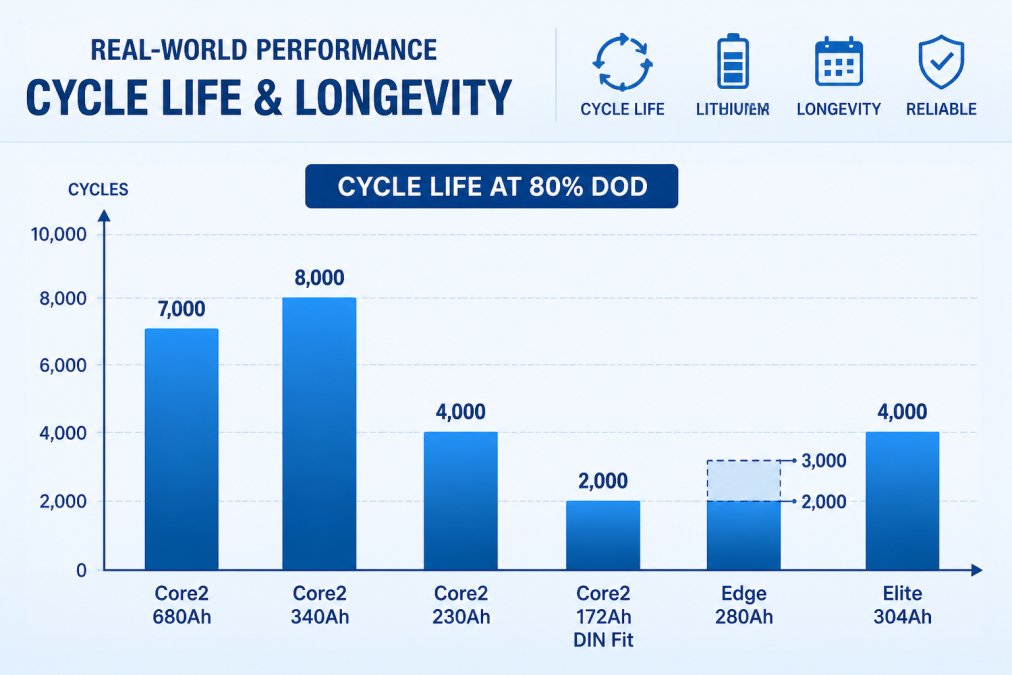
The Core2 340Ah achieves 8,000 cycles at 80% DOD, the highest in the Skyenergi range. This translates to approximately 10+ years of daily use before the battery degrades to 80% of original capacity. In leisure use (3-4 charge cycles per week), this represents significant years of realistic service.
Cycle life depends on several factors beyond the battery's chemistry. Depth of discharge is critical: if you regularly discharge below 20% (i.e., deeper than 80% DOD), cycle life decreases. Operating temperature matters: batteries perform better between 15°C and 35°C. Charging speed affects longevity: faster charging generates more heat and stress. The BMS protects against all these factors, but understanding them helps you maximise battery life.
In real-world leisure use, most Skyenergi batteries can offer long service. Lead-acid batteries become unreliable after 3-5 years; lithium batteries can still perform at high capacity after 10 years. This longevity justifies the higher upfront cost and explains why serious off-grid users consistently choose lithium.
Which Lithium Leisure Battery Should You Choose?
Choosing the right model depends on three questions: How much usable energy do you need? What's your budget? Do you need advanced monitoring and cold-weather capability?
If you need maximum capacity and cost is secondary: The Core2 680Ah is a strong choice. It delivers the most usable energy, a high cycle life (7,000 cycles), and advanced features including Bluetooth monitoring and heat-pad technology. At £1,129.00, it's a significant investment, but for full-time off-grid users or professional installers building premium systems, it's a top choice.
If you want a strong balance of capacity, features, and value: The Core2 340Ah is a top recommendation. It offers 4,352Wh of usable energy, enough for 3-4 days of comfortable off-grid use, combined with the highest cycle life in the range (8,000 cycles), Bluetooth monitoring, heat-pad technology, and a price of £685.00. This is a model often recommended to leisure users upgrading from lead-acid or AGM.
If space is tight or you're retrofitting an existing installation: The Core2 230Ah in standard form (£527.00) or seat-base form (£619.00) offers genuine capacity in a compact footprint. The seat-base version is particularly valuable for van converters seeking a professional, integrated installation without external battery boxes.
If you're touring in winter or live in a cold climate: Choose a Core2 or Elite model with integrated heat-pad technology. The Edge range lacks heat pads and is less suitable for cold-weather use.
If you're running a Victron energy management system: The Elite 304Ah (£745.00) integrates seamlessly via CAN-Bus, eliminating external monitoring complexity and ensuring optimal system performance.
If budget is the primary constraint: The Edge 280Ah (£445.00) delivers solid performance at a competitive price point. It omits Bluetooth monitoring and heat-pad technology, but the core lithium performance and BMS protection are robust.
For most leisure users, the Core2 340Ah represents a strong choice: it balances capacity, features, longevity, and cost in a single package that can reliably power your campervan or motorhome for many years.
Choosing a lithium leisure battery is a decision that pays dividends for a decade or more. The upfront cost is higher than lead-acid or AGM, but the genuine usable capacity, maintenance-free operation, and exceptional cycle life make lithium a sensible choice for serious off-grid users.
Skyenergi's Core2 and Edge ranges are designed specifically for the UK leisure market. Each model is built with premium components, tested for real-world performance, and backed by UK-based support. Whether you're upgrading a single motorhome or equipping a fleet of campervan conversions, Skyenergi provides the capacity, reliability, and monitoring intelligence you need. Explore our full range of lithium leisure batteries and SRNE solar charge controllers at Skyenergi, and get started on your journey to energy independence with fast UK delivery and expert technical support.
Frequently Asked Questions
How long will a 100Ah lithium leisure battery run a 12V fridge?
A 100Ah lithium battery like the Skyenergi Core2 105Ah provides approximately 1,200 Wh of usable energy. A typical 12V fridge draws 3-5 amps, consuming 36-60 watts per hour. At 50 watts, your battery would run the fridge for roughly 24 hours before needing recharge. Real-world runtime varies based on fridge efficiency, ambient temperature, and depth of discharge. The Skyenergi Core2 105Ah's 100A JBD BMS ensures stable voltage delivery, keeping your fridge running reliably throughout discharge cycles.
What are the key advantages of LiFePO4 batteries over traditional AGM leisure batteries?
LiFePO4 (lithium iron phosphate) batteries deliver 80-100% usable capacity compared to AGM's 50% depth of discharge, meaning you get far more available energy. LiFePO4 batteries charge 3-5 times faster, last 4,000-8,000 cycles (10+ years) versus AGM's 300-400 cycles, and weigh 60-70% less. They maintain stable voltage throughout discharge, preventing appliances from cutting out as battery voltage drops. Skyenergi Core2 and Elite models include integrated BMS protection and heat pads for cold-weather charging, features AGM batteries cannot match. Over a decade, lithium can offer a better cost per cycle despite higher upfront cost.
Are Skyenergi lithium batteries compatible with existing solar charge controllers?
Most existing MPPT solar charge controllers work with Skyenergi lithium batteries, but your charger must support lithium profiles or have adjustable voltage settings. Older PWM controllers and standard lead-acid chargers may overcharge lithium batteries, damaging the BMS. Skyenergi Core2 and Elite models include advanced JBD BMS that communicates voltage requirements to compatible controllers. For seamless integration, pair your Skyenergi battery with a modern MPPT controller rated for lithium, or use the Skyenergi Elite with Victron Can-Bus integration for automatic system communication. This prevents voltage mismatch and maximises charging efficiency.
What is the expected lifespan of a high-quality lithium leisure battery?
Skyenergi lithium leisure batteries are rated for 2,000-8,000 cycles at 80% depth of discharge, translating to 10+ years of reliable service. The Skyenergi Core2 340Ah reaches 8,000 cycles, whilst the Core2 230Ah achieves 4,000 cycles. Actual lifespan depends on usage patterns, charging discipline, and temperature management. The integrated heat pad technology in Core2 and Elite models extends battery life in cold climates by maintaining optimal internal temperature during charging. Regular monitoring via the Skyenergi app helps identify degradation, allowing you to plan replacement.
How do I calculate the correct lithium battery capacity for my campervan?
List all 12V appliances you'll use daily: fridge (50-100W), lights (10-20W each), water pump (20-40W), and inverter loads. Calculate daily watt-hours by multiplying watts by hours of use. For example, a 60W fridge running 20 hours uses 1,200 Wh daily. Add 20% safety margin, then divide by your battery's usable capacity (typically 80% of rated Ah). A 1,500 Wh requirement needs roughly 200Ah usable capacity, suggesting a Skyenergi Core2 230Ah or 340Ah battery. Account for solar charging capability, if you generate 200W daily, you can run smaller batteries. Skyenergi's range from 105Ah to 680Ah covers most campervan setups.
This article was written using GrandRanker
Prev post

Campervan Lithium Battery Installation Guide
Updated on 25 August 2026
Next post

Best Lithium Battery for Off-Grid: 2026 Guide
Updated on 23 August 2026


