





Lithium vs Lead-Acid for Motorhomes: 2026 Guide
Compare lithium and lead-acid batteries for motorhomes. Learn cycle life, usable capacity, charging, cost and lifespan to choose the right leisure battery.
Table of Contents
- Lithium vs Lead-Acid Batteries for Motorhomes: Key Differences
- Usable Capacity of Lithium vs Lead-Acid Batteries
- Cycle Life and Lithium Leisure Battery Lifespan
- Charging Lithium Batteries in a Motorhome
- Motorhome Lithium Battery Upgrade: Cost and ROI
- Cold-Weather Performance and Storage Considerations
- Which Battery Type Suits Your Motorhome
- Frequently Asked Questions
Last Updated: October 15, 2026
Lithium vs Lead-Acid Batteries for Motorhomes: Key Differences
Choosing a leisure battery for your motorhome comes down to real-world performance, cost, and how you use your vehicle, and the decision between lithium vs lead acid for motorhomes has never been clearer. Lithium batteries deliver more usable capacity, charge faster, and last far longer than lead-acid alternatives. Lead-acid costs less upfront but degrades quickly below 50% discharge, limiting your practical power reserves.
At Skyenergi, we've helped hundreds of motorhome owners navigate this choice. Lithium batteries provide 2-3 times the usable capacity of lead-acid while weighing 50-70% less, which matters when managing payload on your motorhome chassis.
Lead-acid works fine for occasional weekend trips plugged into mains power. When comparing lithium vs lead acid for motorhomes, the verdict is clear: for serious off-grid living or extended touring, lithium is the practical choice.
Usable Capacity of Lithium vs Lead-Acid Batteries
Lead-acid batteries have a rated capacity that looks good on paper, but you can only safely use about 50% of it before permanent damage begins.
Lithium batteries can be discharged to near-zero without degradation, so a 100Ah lithium battery delivers close to 100Ah of usable energy. Your fridge, heating, and lighting stay stable for longer on a single charge.
The depth of discharge (DoD) is the technical term for how much of a battery's capacity you can safely use. Lead-acid batteries degrade rapidly when discharged below 50% DoD. Lithium batteries tolerate 80-100% DoD without losing lifespan. According to A1 SolarStore's 2026 motorhome battery guide, this difference alone justifies the higher upfront cost for serious off-grid users.
Practically: a week off-grid without solar recharging needs a 200Ah lead-acid bank for 100Ah of usable energy, but a single 100Ah lithium battery delivers the same.
| Battery Type | Rated Capacity | Usable Capacity | Safe Discharge Limit |
|---|---|---|---|
| Lead-Acid | 100Ah | ~50Ah | 50% DoD |
| Lithium (LiFePO₄) | 100Ah | ~95Ah | 80-100% DoD |
Cycle Life and Lithium Leisure Battery Lifespan
Battery cycle life tells you how many charge-discharge cycles a battery handles before degrading, and lithium pulls decisively ahead.
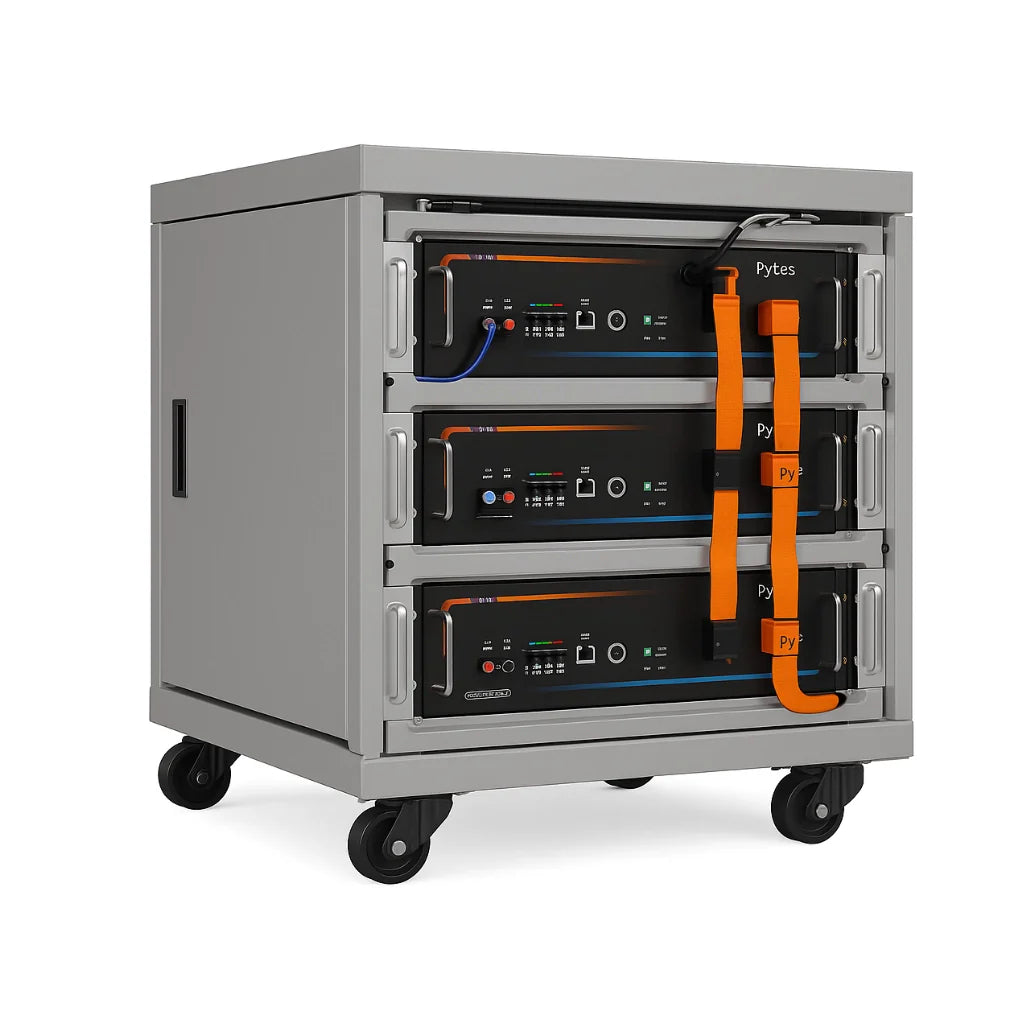
Lead-acid batteries typically deliver 300-500 cycles at 50% depth of discharge. That's roughly 3-5 years of weekend use. Lithium-ion batteries manage 3,000-5,000+ cycles, translating to 10-15 years or more of daily use. The Skyenergi Core2 lithium leisure battery, for example, delivers up to 2,000 cycles at 80% DoD, meaning over 10 years of reliable performance even with heavy daily discharge.
The advantage compounds in real-world use. Lead-acid loses capacity gradually: by year three appliances cut out sooner, and by year five it barely holds a charge. Lithium maintains consistent voltage, so your fridge and lights stay stable until end-of-life.
According to Critical Power Battery Solutions' 2026 lithium comparison, lithium batteries achieve roughly 3,000-5,000+ cycles compared with 300-500 cycles for lead-acid. That's a 6-10x lifespan advantage in real-world motorhome use.
The warranty reflects this difference. Quality lithium batteries like the Skyenergi Edge and Elite ranges are built to last a decade. Most lead-acid leisure batteries carry a 2-3 year warranty because that's realistically how long they perform.

Charging Lithium Batteries in a Motorhome
Charging is where lithium and lead-acid diverge most in a motorhome. It's not just speed; it's how each chemistry interacts with your alternator, solar array, mains hook-up, and battery management system.
Alternator charging. A standard alternator produces a fixed voltage, typically around 14.4V, which lead-acid accepts well.
Solar charging. MPPT controllers are more efficient than PWM, especially in low light, and are preferred for lithium systems because they allow precise charging voltages.
Mains charging. Your mains charger must be lithium-compatible. Many older motorhome chargers use a lead-acid profile that only charges lithium to around 80%. The Skyenergi Elite range features Victron Can-Bus integration, letting the charger read state of charge and adjust output accordingly.

Battery management system (BMS). Every lithium battery has a BMS protecting the cells from overcharge, over-discharge, overcurrent, and extreme temperatures, and balancing cells during charging. Check that its BMS supports your planned charge sources.
Compatibility checks before you upgrade. Before swapping lead-acid for lithium, verify:
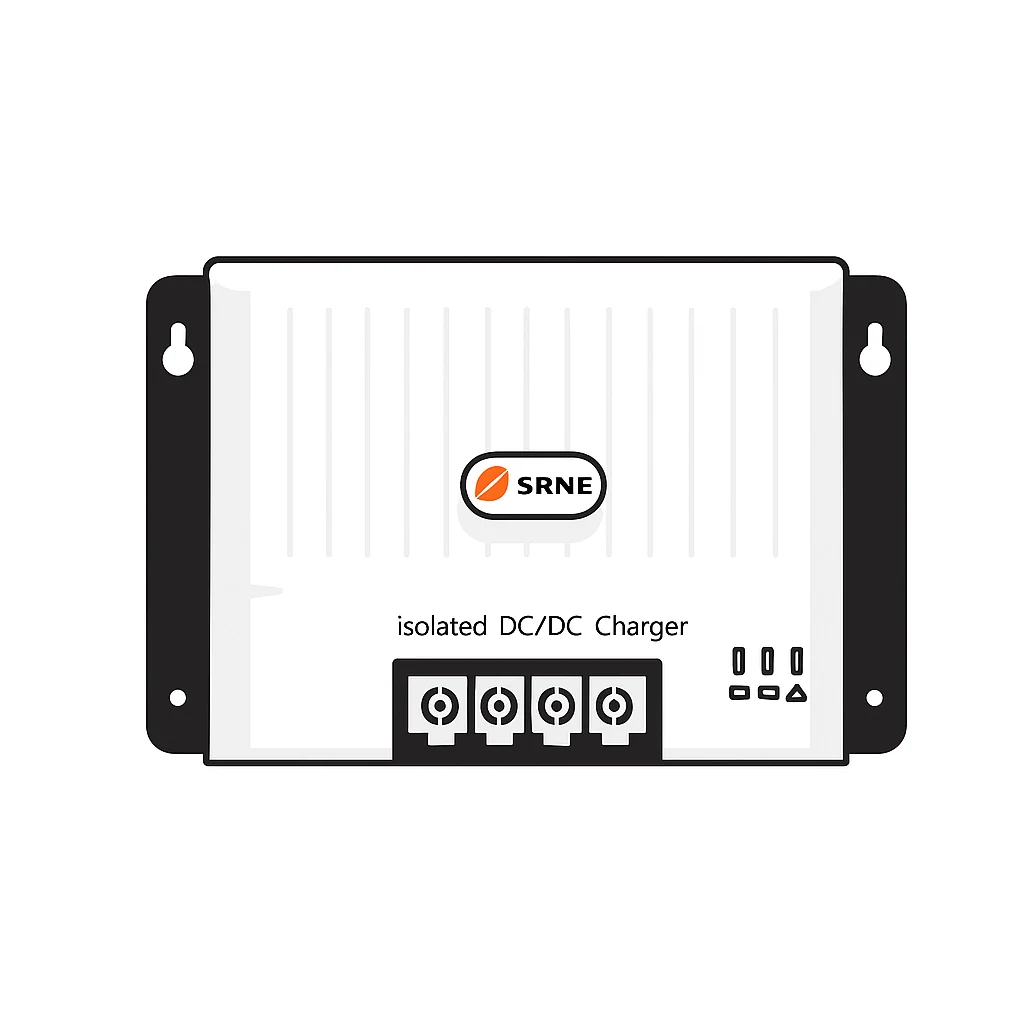
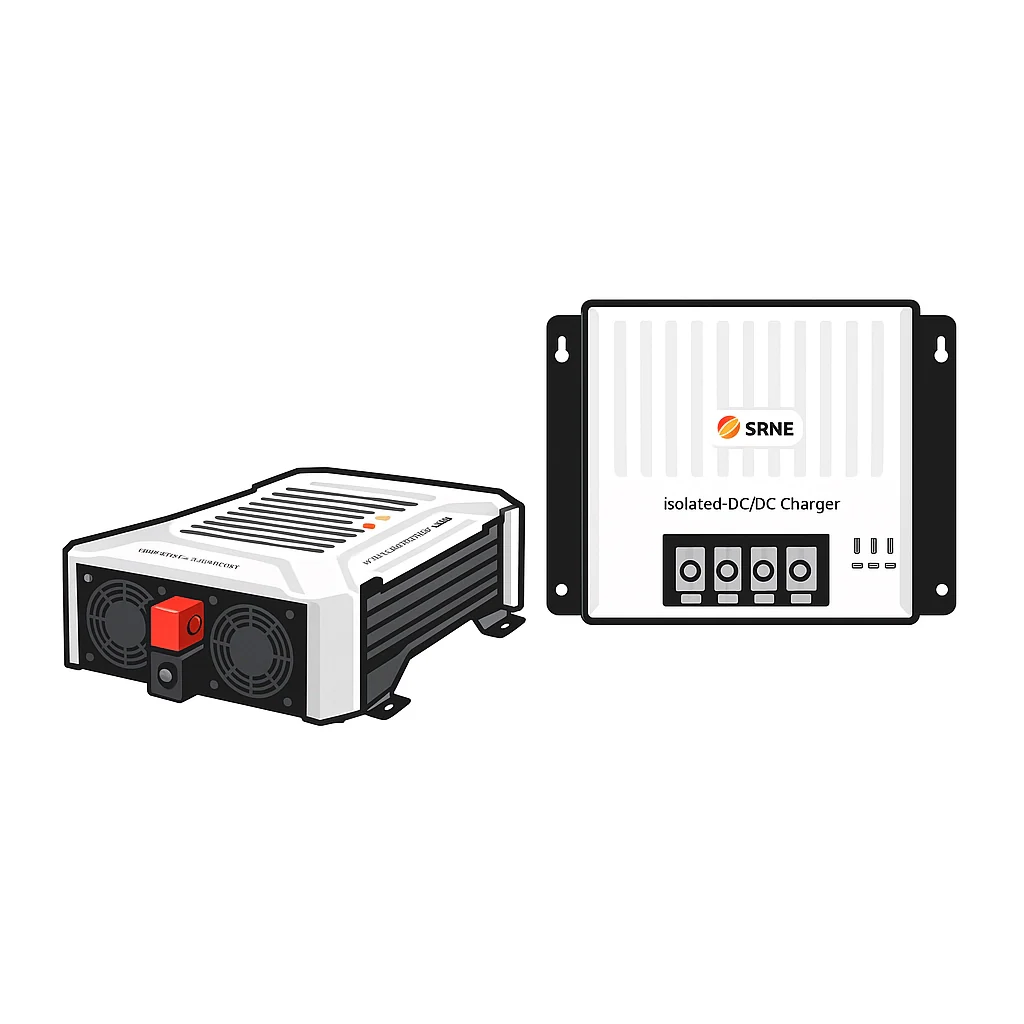
- Your DC-DC charger or alternator charging system can be set to a lithium profile.
- Your solar controller supports lithium charging voltages.
- Your mains charger has a lithium mode or can be manually adjusted.
- Your battery monitor is compatible with lithium's flat voltage curve.
- Your wiring and fuses are rated for lithium's higher continuous current.
If your system lacks these, you may need to upgrade components. Skyenergi offers charging solutions designed to work together, simplifying the upgrade path.
Motorhome Lithium Battery Upgrade: Cost and ROI
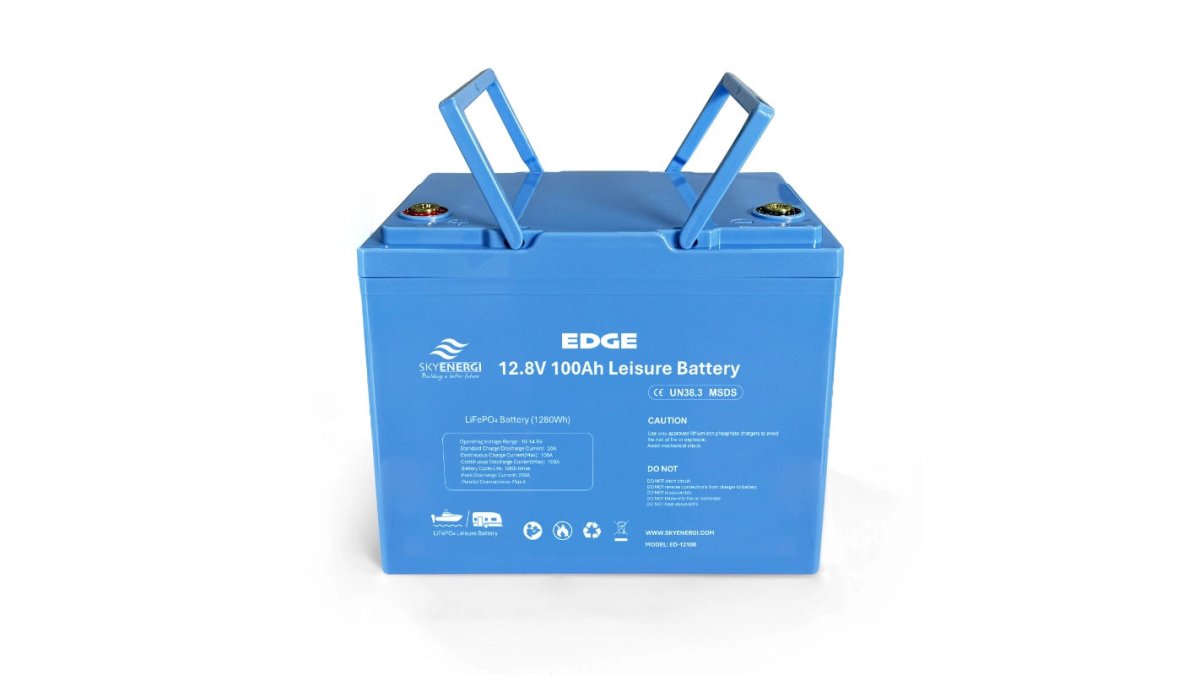
Upfront cost is the first barrier. A quality 100Ah lithium battery costs £219-£266 (Skyenergi Edge and Core2 ranges). A comparable 100Ah lead-acid leisure battery costs £80-£120. Lithium looks expensive.
But total cost of ownership tells a different story. Lead-acid needs replacement every 3-5 years, so over 15 years you'd buy three or four. Lithium lasts 10-15 years, so you buy one.
Here's the real calculation:
Skyenergi Edge 100Ah Lithium Leisure Battery →
Lead-acid over 15 years: Four batteries at £100 each = £400 total. Plus labour for replacement, disposal fees, and the frustration of mid-trip failures.
Lithium over 15 years: One battery at £240 = £240 total. Single installation, no replacements, no emergency roadside swaps.
Secondary benefits matter too. Lithium weighs 50-70% less, freeing payload for gear, water, or provisions, and takes up less space in a tight battery locker.
For serious off-grid users, ROI appears within 5-7 years. For weekend warriors, payback takes longer, but you gain reliability lead-acid can't match.
Skyenergi offers the full range: the Edge batteries (£219-£445) for cost-conscious users who want proven performance, and the Elite batteries (£745-£975) for those who need advanced monitoring and cold-weather charging capability.
Cold-Weather Performance and Storage Considerations
Cold weather affects both chemistries differently, which matters if you tour in winter or store your motorhome in an unheated location.
Lead-acid in the cold. Capacity drops with temperature: at 0°C you might get 80% of rated capacity, and at -10°C, 70% or less. Charging in freezing conditions can freeze the electrolyte and cause permanent damage, so many owners remove lead-acid batteries and store them indoors over winter.
Lithium in the cold. Lithium also loses capacity in the cold, but charging is the bigger issue. Standard lithium cannot be charged below 0°C because lithium plating permanently reduces capacity and can cause internal short circuits. Most have a low-temperature charging cutoff in the BMS (often 0°C or 5°C).
Cold-weather charging solutions. If you need to charge your lithium battery in freezing conditions, you have a few options:
- Heated battery box: An insulated enclosure with a heating pad can keep the battery above 0°C. This is a common DIY solution.
- Integrated heat pads: Some premium lithium batteries, such as the Skyenergi Elite range, include internal heat pads that warm the cells during charging. This allows safe charging even in sub-zero temperatures.
- Charge during the day: If you are off-grid, charge when temperatures are highest, and avoid charging at night when it is coldest. Managing these thermal requirements effectively ensures your power system remains reliable while you integrate other essential off grid camping accessories into your vehicle setup.
Winter storage. Lead-acid self-discharges at 3-5% per month and needs a top-up every few months; lithium self-discharges at under 1% per month. Lithium shouldn't be stored at very low temperatures for long, ideal is around 15°C at roughly 50% state of charge.
Practical tips for winter touring.
- Without internal heating, insulate the battery compartment and consider a heating pad.
- Monitor battery temperature via the BMS app or a battery monitor.
- Avoid charging immediately after starting the engine in freezing conditions; let the battery warm slightly first.
- Clear snow off solar panels to maximise charging during short winter days.
According to SkyEnergi's 2026 campervan battery guide, lithium batteries with heat pad technology maintain performance across temperature extremes, a critical advantage for UK winter touring where temperatures regularly drop below freezing.
Which Battery Type Suits Your Motorhome
The choice depends on your budget, usage pattern, and commitment to off-grid independence.
Choose lead-acid if: You tour weekends only, are always plugged into mains power, and are replacing an existing lead-acid battery. It's reliable for light-duty use and costs less upfront, but expect replacement every 3-5 years.
Choose lithium if: You spend extended periods off-grid, want stable voltage for sensitive appliances, or are installing solar. Lithium delivers the usable capacity, charging speed, and lifespan serious off-grid users need. Upfront cost is higher, but total cost of ownership favours lithium over 10+ years.
For most motorhome owners serious about off-grid touring, lithium is the practical choice. The Skyenergi Edge range offers reliable lithium performance at a reasonable price (starting at £219 for the 100Ah model), while the Skyenergi Elite range (£745-£975) adds Victron Can-Bus integration and heat pad technology for winter touring and complex system integration.
The real question isn't which battery is better, but which matches how you actually use your motorhome. Lead-acid works for light use; lithium works for everything else.
Choosing between lithium and lead-acid comes down to how much off-grid independence you want and how long you plan to keep your motorhome. At Skyenergi, we supply the Edge and Elite lithium leisure batteries designed specifically for motorhomes and campervans, batteries built with premium JBD battery management systems and EVE lithium cells that handle the demands of extended touring.
Frequently Asked Questions
Can I replace my motorhome leisure battery with a lithium battery?
Yes, you can replace a lead-acid leisure battery with lithium, but compatibility matters. A 100Ah lithium battery can be discharged close to zero, while lead-acid batteries degrade rapidly when discharged below 50%, meaning lithium gives you significantly more usable capacity. Check your charging system and battery management setup first, some motorhomes may need a DC-to-DC charger or system checks before switching. Skyenergi's Edge and Elite ranges are designed for motorhome integration with flexible 4S and 4P configurations to match your existing setup.
How long does a lithium leisure battery last in a motorhome?
Lithium leisure batteries typically deliver 2,000-3,000+ cycles, compared with 300-500 cycles for lead-acid. Skyenergi's Core2 105Ah battery, for example, offers up to 2,000 cycles at 80% depth of discharge, ensuring a lifespan of over 10 years with proper use. This extended lifespan is one of the primary reasons for the motorhome lithium battery upgrade trend, as the total cost of ownership becomes more favourable over time despite higher upfront costs.
Do I need a DC-to-DC charger when switching to lithium?
It depends on your motorhome's charging system. Some older systems or specific charging profiles may benefit from a dedicated DC-to-DC charger to optimise charge speed and protect the battery management system. Before upgrading, check your existing charger specifications and consult the battery's integration guide. Skyenergi Elite products integrate with Victron systems, making system compatibility straightforward.
Can I charge a lithium leisure battery in cold weather?
Standard lithium batteries should not be charged below 0°C, as this can damage the cells. However, Skyenergi's Elite range includes integrated heat pad technology, allowing safe charging and discharging even in freezing conditions. The Core2 105Ah also features heat pad protection. If you frequently camp in cold climates or winter conditions, investing in a battery with built-in thermal management prevents damage and maintains reliable performance year-round.
Next post

12V DC-to-DC Charger Benefits Explained
Updated on 15 October 2026


