





Best Lithium Leisure Battery for Motorhomes (2026 UK Guide)
Find the best lithium leisure battery for motorhomes in 2026. Compare Skyenergi LiFePO4 options, costs, and installation tips to power your off-grid trips.
Table of Contents
- Comparing the Best Lithium Leisure Battery Options for 2026
- Why Choose a Lithium Leisure Battery for Your Motorhome?
- Skyenergi Core2 230Ah: The Versatile All-Rounder
- Skyenergi Core2 460Ah: For Extended Off-Grid Power
- Skyenergi Edge 100Ah: The Budget-Friendly Upgrade
- Lithium Battery vs Lead Acid for Motorhomes: Is It Worth the Cost?
- How to Install a Lithium Leisure Battery and Choose the Right Charger
- Conclusion: Power Your Adventures with the Right Lithium Battery
- Frequently Asked Questions
Last Updated: September 9, 2026
Choosing the best lithium leisure battery for motorhomes in 2026 means weighing capacity, cycle life, and charging compatibility against your real travel habits. At Skyenergi, we have analysed the leading UK options to help you match a battery to your power demands without overpaying for capacity you will never use. A lithium leisure battery is a rechargeable deep-cycle power source using Lithium Iron Phosphate (LiFePO4) chemistry, delivering over 80% usable capacity compared to roughly 50% from lead-acid. That difference alone transforms how much off-grid time you get from the same physical footprint, and it is why most 2026 buyer's guides now prioritise LiFePO4 over traditional AGM and gel batteries Renogy UK's 2026 guide to lithium leisure batteries. Below, we compare three Skyenergi ranges and show you exactly how to match one to your motorhome's electrical setup.
Comparing the Best Lithium Leisure Battery Options for 2026
Selecting the right battery comes down to three numbers: capacity in ampere-hours (Ah), usable energy, and the continuous discharge current your appliances demand. The Skyenergi Core2 and Edge ranges cover most motorhome setups.
| Battery | Price | Capacity | Usable Energy | Best For |
|---|---|---|---|---|
| Skyenergi Edge 100Ah | £219.00 | 100Ah | ~1,280Wh | Budget upgrades, small vans |
| Skyenergi Core2 230Ah | £527.00 | 230Ah | ~2,944Wh | Weekend trips, 2kW inverters |
| Skyenergi Core2 460Ah | £889.00 | 460Ah | ~5,888Wh | Extended off-grid, 3kW inverters |
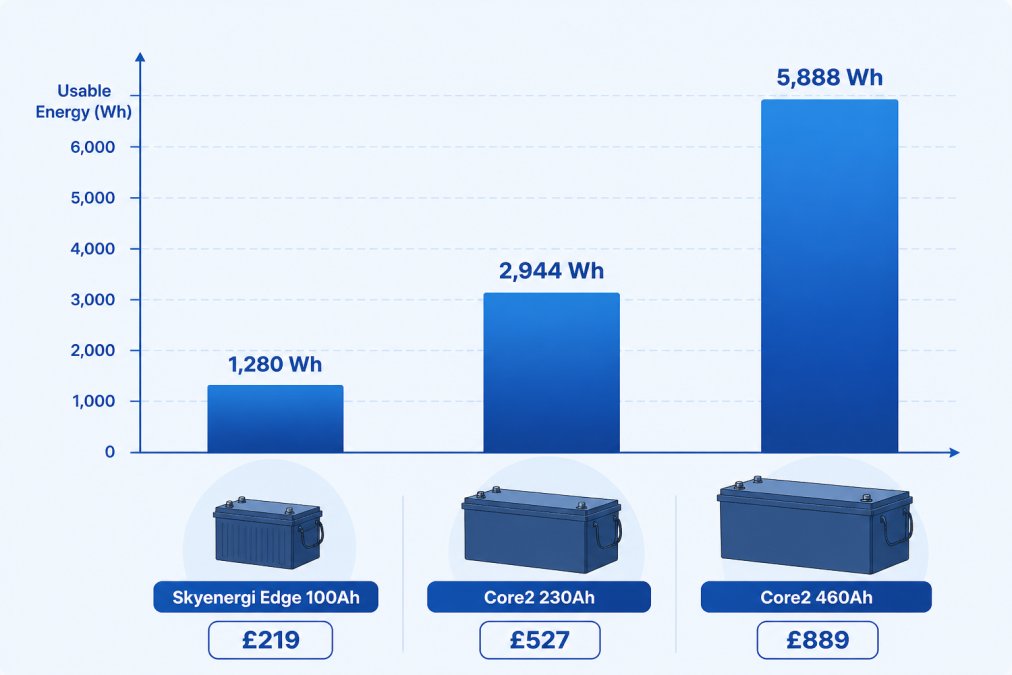
Entry-level Edge batteries omit Bluetooth and heat pads to hit a lower price point, while Core2 models add smart monitoring and cold-weather charging protection. For most owners, the Core2 230Ah represents the sweet spot between cost and usable capacity.

Why Choose a Lithium Leisure Battery for Your Motorhome?
The shift from lead-acid to lithium iron phosphate (LiFePO4) is not just a like-for-like swap; it is a fundamental change in how you manage energy. The real value lies in the technical mechanisms that make the headline benefits possible.
Usable Capacity and the Flat Discharge Curve
A lead-acid battery's voltage steadily drops as it discharges, which is why inverters and appliances can struggle as the battery depletes. A LiFePO4 cell, by contrast, maintains a near-constant voltage of around 13.2V for the vast majority of its discharge cycle, so your 12V fridge, water pump, and LED lighting receive a stable voltage until the battery is nearly empty.
Weight, Payload, and a Unique Angle: Weight Distribution
Most guides mention that lithium batteries are lighter, but they rarely discuss the practical impact on your motorhome's handling. A typical 100Ah lead-acid leisure battery weighs around 23kg, whereas a Skyenergi Edge 100Ah weighs only 10.5kg.
More importantly, consider where that weight sits. Most motorhome leisure batteries are installed in an external locker or under a seat, often on one side of the vehicle. Removing 12kg from that location can subtly alter your vehicle's roll centre and axle weight distribution. For owners close to their payload limit, this saving can be the difference between legal compliance and being overweight. The Skyenergi Core2 230Ah Seat-base variant is specifically designed to mount low and central under captain's seats.
Cycle Life and the Chemistry of Longevity
A lead-acid battery's lifespan is measured in partial cycles, as each discharge to 50% depth of discharge (DoD) causes physical sulphation on the plates, permanently reducing capacity. LiFePO4 chemistry does not suffer from this degradation mechanism, which is why a Skyenergi Core2 battery can sustain over 4,000 cycles at 80% DoD. Over a 10-year ownership period, a single lithium battery will outlast multiple lead-acid units, making the cost-per-cycle significantly lower.
Charging Efficiency: The Overlooked Advantage
Lithium batteries also accept charge far more efficiently than lead-acid. A lead-acid battery's internal resistance increases as it approaches full charge, meaning the final 20% of charging is slow and inefficient, often wasting energy as heat. LiFePO4 cells have extremely low internal resistance, allowing them to accept a high charge current right up to 100% state of charge.
Skyenergi Core2 230Ah: The Versatile All-Rounder
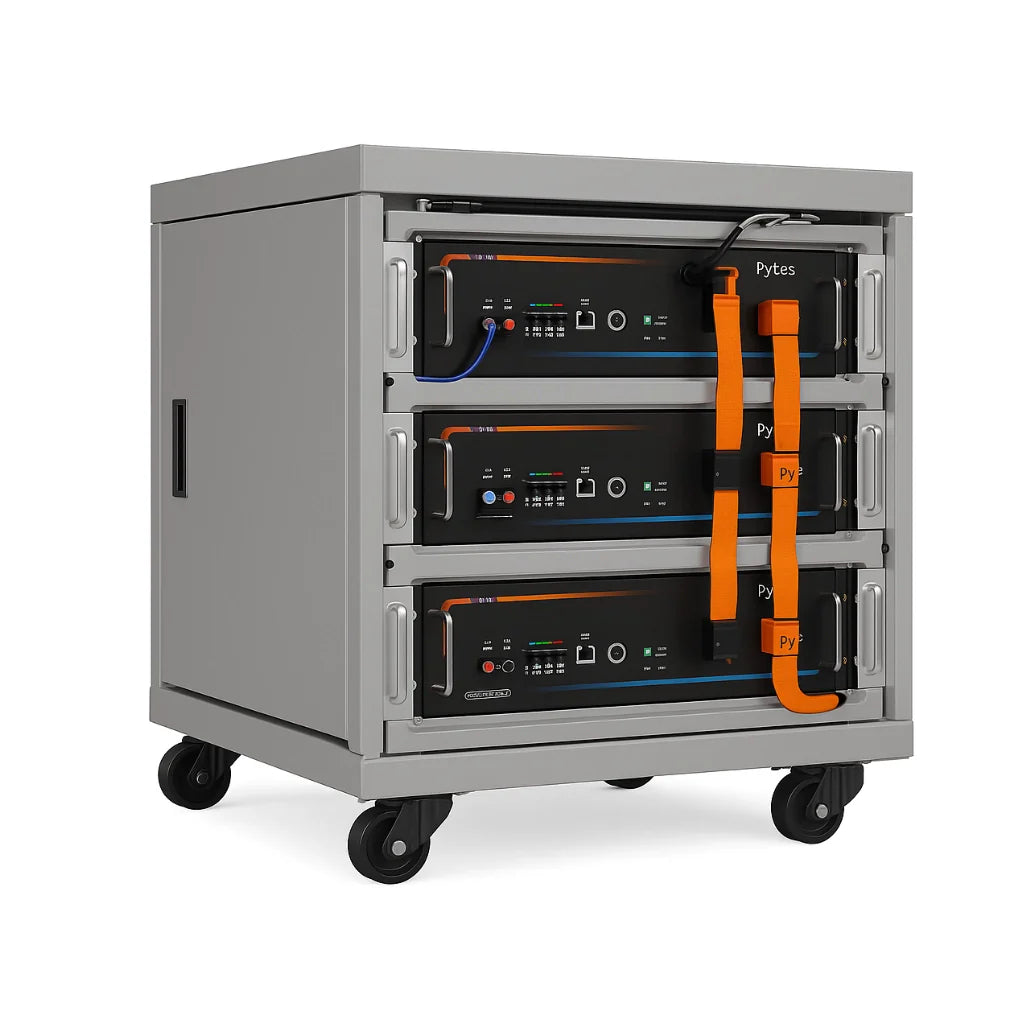
The Skyenergi Core2 230Ah balances price, capacity, and smart features in one package. Priced at £527.00, it pairs a 200A JBD Battery Management System with integrated heat pad technology, so you can charge safely even in freezing conditions. An IP65-rated housing protects against dust and water ingress, while Bluetooth monitoring through the SkyEnergi App shows real-time state of charge and individual cell voltages.
With roughly 2,944Wh of usable energy, this battery runs a 12V fridge, LED lighting, water pump, and even a 2kW inverter for weekend trips off-grid. The 200A BMS handles peak current from most domestic appliances without tripping, and you can link multiple units in parallel for larger systems. The Core2 range uses Grade-A matched cells.
Skyenergi Core2 460Ah: For Extended Off-Grid Power
For full-time van lifers and owners with high-draw appliances, the Skyenergi Core2 460Ah at £889.00 is available. This unit carries a 300A JBD BMS and roughly 5,888Wh of usable energy, enough to run a 3kW inverter, induction hob, or electric heating for extended periods without mains hook-up.
The 460Ah model retains the same Bluetooth monitoring and heat pad technology as its smaller sibling. For owners running solar arrays or DC-to-DC charging, this capacity pairs well with a 300W-plus solar setup. essential camping gear.
Skyenergi Edge 100Ah: The Budget-Friendly Upgrade
If cost is a primary consideration, the Skyenergi Edge 100Ah at £219.00 offers lithium performance without premium features. The Edge range strips out Bluetooth and heat pads to focus on dependable power from a 100A JBD BMS and Grade-A EVE cells in a rugged IP65-rated housing.
For owners who want monitoring without paying for built-in Bluetooth, pair the Edge with a Victron SmartShunt to track state of charge and voltage through a separate display. The Edge 100Ah suits small campervans, boats, or as a starter battery upgrade where space is tight and budget is the deciding factor.
Lithium Battery vs Lead Acid for Motorhomes: Is It Worth the Cost?
The upfront cost of lithium is higher, but the total cost of ownership tells a different story. Lithium batteries can last up to four times longer than lead-acid equivalents Bluetti Power's 2024 battery longevity comparison, and they deliver over 80% usable capacity versus roughly 50% from lead-acid. A 230Ah lithium battery therefore provides the same usable energy as a 460Ah lead-acid unit, often at a lower weight and in a smaller physical footprint.
Consider the replacement cycle: a lead-acid battery lasting three to four years may need replacing twice within the lifespan of a single lithium unit rated for 4,000 cycles. Add the weight saving that increases payload capacity, faster charging from solar or alternator, and zero maintenance requirements, and the payback period typically falls within the first battery's service life. AGM batteries remain viable for specific setups, but for owners who tour regularly or spend time off-grid, the performance gap has narrowed considerably CamperPals' 2026 battery comparison.
How to Install a Lithium Leisure Battery and Choose the Right Charger
Installing a lithium battery is mechanically simple, but the electrical integration demands more thought than most guides suggest. An incompatible charging source can cause premature lithium battery failure. Here is what you need to check before you connect anything.
The Alternator Charging Problem
A standard motorhome alternator is designed to charge a lead-acid battery. It typically outputs around 14.4V, which is fine for lead-acid but can be problematic for LiFePO4. When you connect a lithium battery directly to a vehicle alternator, the battery's low internal resistance will draw as much current as the alternator can supply, potentially overheating the alternator and damaging the vehicle's voltage regulator.
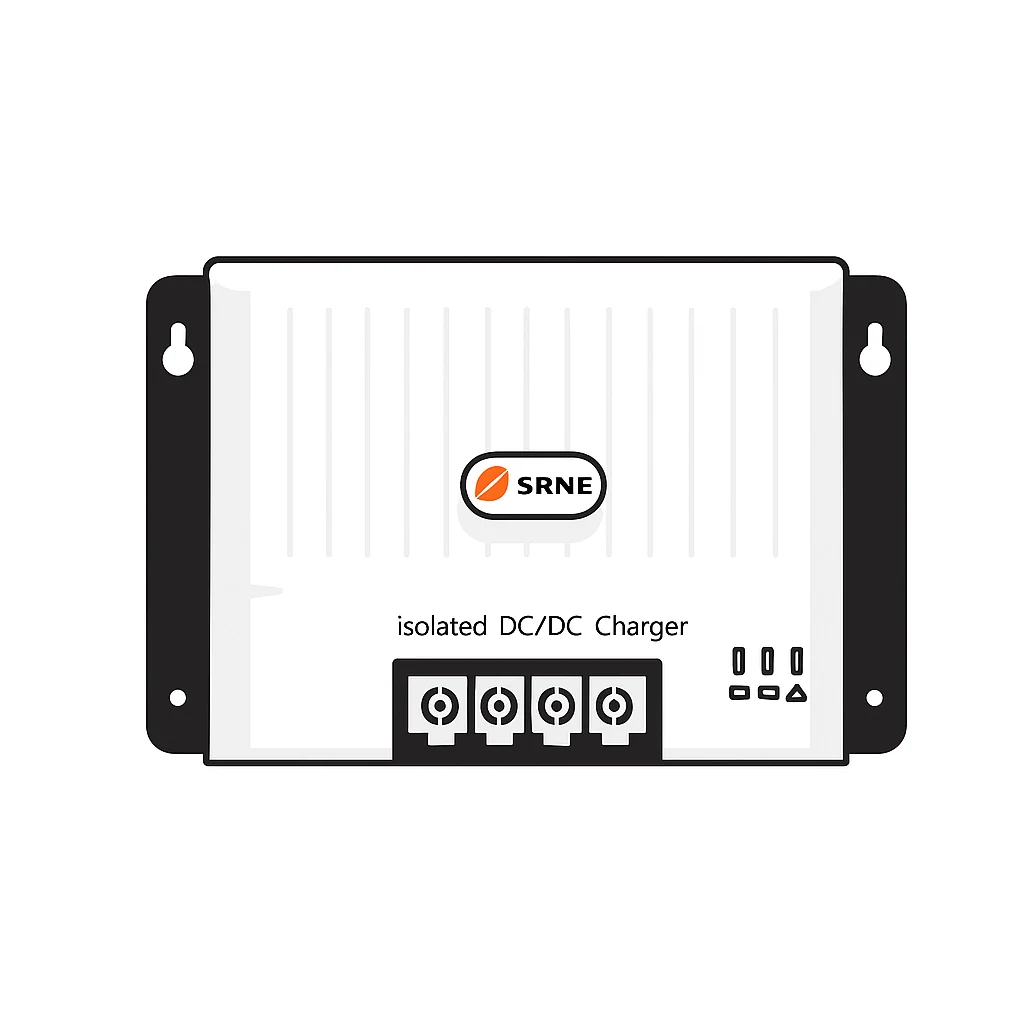
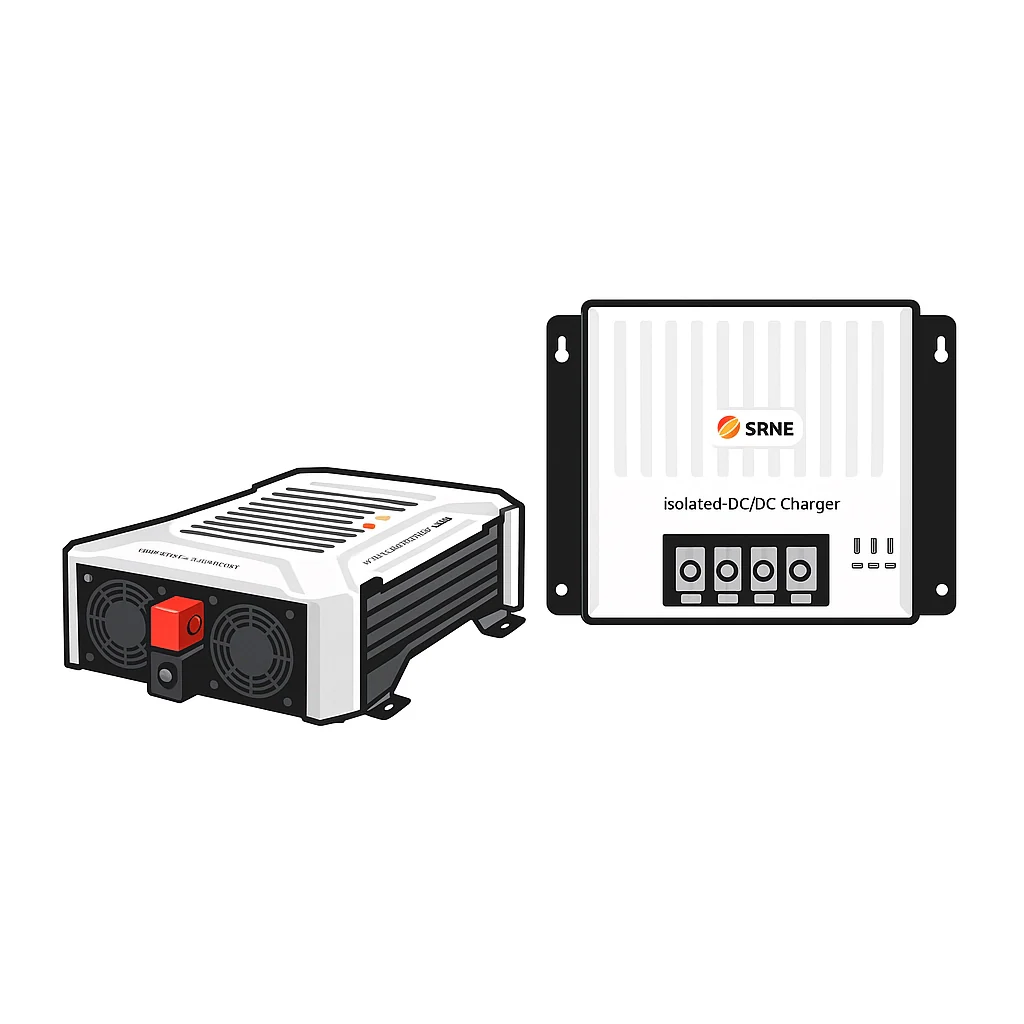
The correct solution is a DC-to-DC charger, such as the Skyenergi DC-to-DC range. These units sit between the alternator and the leisure battery, providing a dedicated multi-stage charging profile (Bulk, Absorption, Float) specifically calibrated for LiFePO4 chemistry. They also isolate the starter battery from the leisure battery. When selecting a DC-to-DC charger, match its output current to your alternator's rating, a common pattern is a 20A unit for standard alternators and a 30A or 40A unit for high-output alternators or larger battery banks.
Solar Charge Controller Compatibility
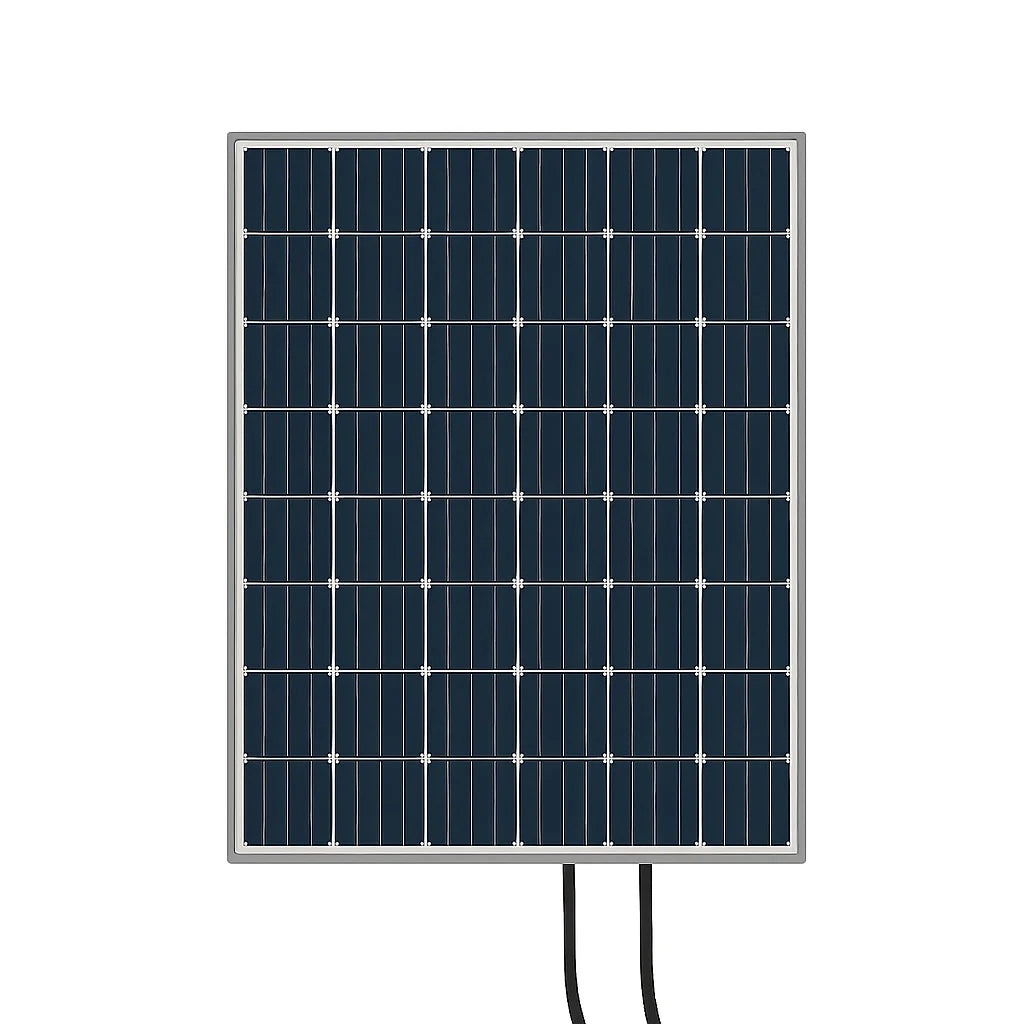
If you have solar panels, your MPPT charge controller must have a user-selectable lithium profile or a custom voltage setting. A lead-acid profile will typically float at around 13.8V, which is too low to fully charge a LiFePO4 battery (which needs to reach approximately 14.4V to 14.6V for a full charge). Conversely, a lead-acid absorption voltage of 14.7V is too high and can trigger the battery's BMS over-voltage protection.
Skyenergi's MPPT charge controllers come with a dedicated LiFePO4 mode that sets the correct absorption and float voltages. If you are keeping an existing controller, check the manual for a 'Custom' or 'User' setting. You will need to set the absorption voltage to 14.4V and the float voltage to 13.6V.
The Role of the BMS in Installation
Skyenergi Core2 batteries feature a JBD Battery Management System (BMS) that actively manages the cells. During installation, the BMS is in a sleep state. When you connect the battery, there may be a small spark as the BMS's capacitors charge. This is normal, but you should connect the positive terminal first, then the negative. If the BMS detects an over-current or short circuit during connection, it will lock out. To reset it, disconnect both terminals, wait 30 seconds, and reconnect in the correct order.
Cold Weather Charging and the Heat Pad Advantage
LiFePO4 cells cannot be charged below 0°C without risking permanent lithium plating on the anode, which reduces capacity and can create a safety hazard. Most quality batteries have a BMS with a low-temperature cutoff that simply stops charging. The Skyenergi Core2 range goes a step further with an integrated heat pad: when the BMS detects a cell temperature below 5°C, it draws a small current from the charging source to warm the cells before allowing the charge current to flow.
Step-by-Step Installation with Technical Checks
- Isolate and Disconnect: Disconnect the mains hook-up and isolate the vehicle's electrical system. Disconnect the negative terminal first, then the positive.
- Verify Charging Sources: Before connecting the new battery, confirm your solar controller has a LiFePO4 profile and that any alternator charging goes through a DC-to-DC charger. If not, install these components first.
- Mount the Battery: Secure the battery in a dry, ventilated location. For the Core2 Seat-base variant, ensure the mounting bracket is bolted to the vehicle floor, not just the seat frame.
- Connect Cables: Connect the positive cable first, then the negative. Torque the terminals to the manufacturer's specification (typically 9-11 Nm) to ensure a solid connection.
- Configure the System: Set your MPPT controller to the LiFePO4 profile. If using a Skyenergi DC-to-DC charger, it will automatically detect the lithium profile.
- Power On and Verify: Reconnect the mains or start the engine. Use the SkyEnergi App to verify the battery is accepting charge and that the BMS reports no errors. Check that the individual cell voltages are balanced (within 0.05V of each other).
Choosing the Right Charger
The best charger for a lithium leisure battery is not the one with the highest current rating, but the one with the correct charge algorithm. A dedicated LiFePO4 charger or a smart charger with a lithium mode is essential. Look for a charger that provides a constant current/constant voltage (CC/CV) profile with an absorption voltage of 14.4V and a float voltage of 13.6V. Skyenergi offers mains chargers designed for this purpose.
Conclusion: Power Your Adventures with the Right Lithium Battery
Matching the right battery to your motorhome comes down to honest assessment of your power use, inverter demands, and how many days you spend away from hook-up. The Skyenergi range covers every scenario: the Edge 100Ah for budget upgrades, the Core2 230Ah for balanced weekend touring, and the Core2 460Ah for full off-grid independence. All models pair with Skyenergi's solar panels, MPPT charge controllers, and DC-to-DC chargers for a complete 12V system.
Frequently Asked Questions
What is the best lithium battery for a motorhome?
The best lithium leisure battery for your motorhome depends on your energy needs. For most, the Skyenergi Core2 230Ah offers a strong balance of capacity and price at £527.00. If you run high-draw appliances like a 2kW inverter, the 460Ah model provides more headroom. For smaller setups or a budget-conscious upgrade, the Edge 100Ah is a solid entry point. Consider your fridge, lighting, and typical off-grid duration to choose the right capacity.
How long will a 100Ah lithium battery run a 12V fridge?
A 100Ah lithium battery provides roughly 80-100Ah of usable capacity. Most modern 12V compressor fridges consume between 1-2 amps per hour when running. This means a 100Ah battery could run a fridge for approximately 40-80 hours before needing a recharge. However, this estimate varies based on ambient temperature, fridge efficiency, and how often the compressor cycles. Lithium's stable voltage discharge also prevents the voltage drops that can cause fridges to cut out.
Are lithium batteries worth it in a motorhome?
Yes, for most motorhome owners, the upfront cost is justified by the long-term benefits. Lithium batteries offer over 80% usable capacity compared to around 50% for lead-acid, meaning you get more power from the same rated capacity. They also last significantly longer. This longevity, combined with faster charging and significant weight savings, lowers the cost per usable amp-hour over the battery's lifetime.
Do I need a special charger for a lithium leisure battery?
Yes, you need a charger with a lithium-specific charging profile. Standard chargers designed for lead-acid batteries may not reach the correct absorption voltage or could perform an equalisation stage that is harmful to LiFePO4 cells. The best lithium battery charger for motorhomes will have a dedicated LiFePO4 mode. Additionally, if your motorhome has a smart alternator, you will need a DC-to-DC charger to safely charge your lithium leisure battery from the vehicle's engine.
Prev post

How to Calculate Campervan Power Needs: 2026 Guide
Updated on 10 September 2026
Next post

Efficient Energy Management with Solar and MPPT Integration
Updated on 08 September 2026


