






12V DC-to-DC Charger Benefits Explained
Discover how 12V DC-to-DC chargers deliver faster charging, battery protection, and multi-stage control for campervans and off-grid systems.
Table of Contents
- How a DC-to-DC Charger Works
- Key Benefits of 12V DC-to-DC Chargers
- DC-to-DC Charger vs Split-Charge Relay
- DC-to-DC Charger for Lithium Battery Systems
- DC-to-DC Charger Disadvantages and Limitations
- Choosing the Right DC-to-DC Charger for Your System
- Frequently Asked Questions
Last Updated: October 14, 2026
How a DC-to-DC Charger Works
A DC-to-DC charger is a device that takes power from your vehicle's alternator and delivers it safely to an auxiliary battery, and understanding DC-to-DC charger benefits helps you choose the right charging solution. It sits between your starter battery and leisure battery, controlling the flow of electrical current to prevent damage.

When you drive, your alternator produces electricity. Without a DC-to-DC charger, that power flows directly into your leisure battery, often at uncontrolled voltage levels. This can harm battery chemistry and shorten lifespan. A DC-to-DC charger regulates this power, delivering the right voltage and current at each stage of charging.
The device monitors your vehicle's electrical system continuously. When engine voltage drops below a safe threshold, the charger stops working. This protects your starter battery from draining. When voltage rises again, the charger resumes charging your leisure battery.
Modern DC-to-DC chargers like the Victron Orion XS with 98.5% efficiency use intelligent algorithms to adapt their output based on what your battery needs right now. This adaptive approach is what separates a basic charger from a smart one.
Key Benefits of 12V DC-to-DC Chargers
The DC-to-DC charger benefits include four core advantages: controlled charging, voltage protection, speed, and battery compatibility. Each one addresses a specific problem that direct alternator charging creates.
Controlled Multi-Stage Charging
A DC-to-DC charger delivers power in stages, not all at once. The first stage applies a bulk charge to quickly raise battery voltage. The second stage holds voltage steady as current tapers. The final stage applies a trickle charge to top up fully without overcharging.
This multi-stage approach charges your battery faster while keeping it healthier. Each stage is optimized for where your battery sits in its charge cycle. Lead-acid batteries respond well to this method. Lithium batteries depend on it.
Protection Against Voltage Drop
When you run heavy appliances, your vehicle's electrical voltage can sag. A fridge, water pump, and heater running together might pull voltage down from 13.5V to 11V. At this point, your leisure battery stops charging.
A DC-to-DC charger maintains its output voltage even when vehicle voltage drops. It isolates your leisure battery from these voltage fluctuations, keeping charge flowing steadily. This means your battery charges even when you're using power-hungry equipment.
Faster Charging Speed
Direct alternator charging is slow. Voltage drops and current limits mean your leisure battery might charge at just 10-20 amps. A dedicated DC-to-DC charger can deliver 30-50 amps, cutting charge time in half.
This matters on short drives. If you're doing daily commutes or weekend trips, faster charging means your battery reaches full capacity before you park. You arrive with more usable power.
Battery Chemistry Compatibility
Different battery types need different charging profiles. Lead-acid batteries need one voltage curve. Lithium batteries need another. AGM batteries sit somewhere in between.
A basic charger treats all batteries the same. A smart DC-to-DC charger adapts its output to match your specific battery chemistry. This compatibility is essential if you're upgrading to lithium. Without it, you risk damaging an expensive battery investment.

DC-to-DC Charger vs Split-Charge Relay
A split-charge relay (also called a voltage-sensitive relay) is a simpler alternative. It's a switch that connects your leisure battery to the alternator when voltage rises above a threshold, then disconnects when voltage drops below a threshold.
A relay costs less upfront. It has no electronics to fail. But it offers no control over charging. When the relay closes, alternator voltage flows directly to your leisure battery at whatever level the alternator produces. This uncontrolled charging can stress batteries and reduce lifespan.
A DC-to-DC charger actively manages current and voltage. It charges faster, protects batteries better, and adapts to different battery types. The trade-off is cost and complexity. For a leisure battery system you depend on, the DC-to-DC charger is the stronger choice.
DC-to-DC Charger for Lithium Battery Systems
Lithium batteries are sensitive to charging conditions. They need precise voltage and current control. A relay won't provide this. A DC-to-DC charger will.
When charging lithium, the charger must hold voltage within a tight window, usually 14.2V to 14.6V depending on the battery. It must also limit current based on battery temperature. Too much current in cold weather can damage cells. A smart charger adjusts for temperature automatically.
12V Battery To Battery Charger Kit - Includes Victron Orion XS 12/12-50A DC-DC →
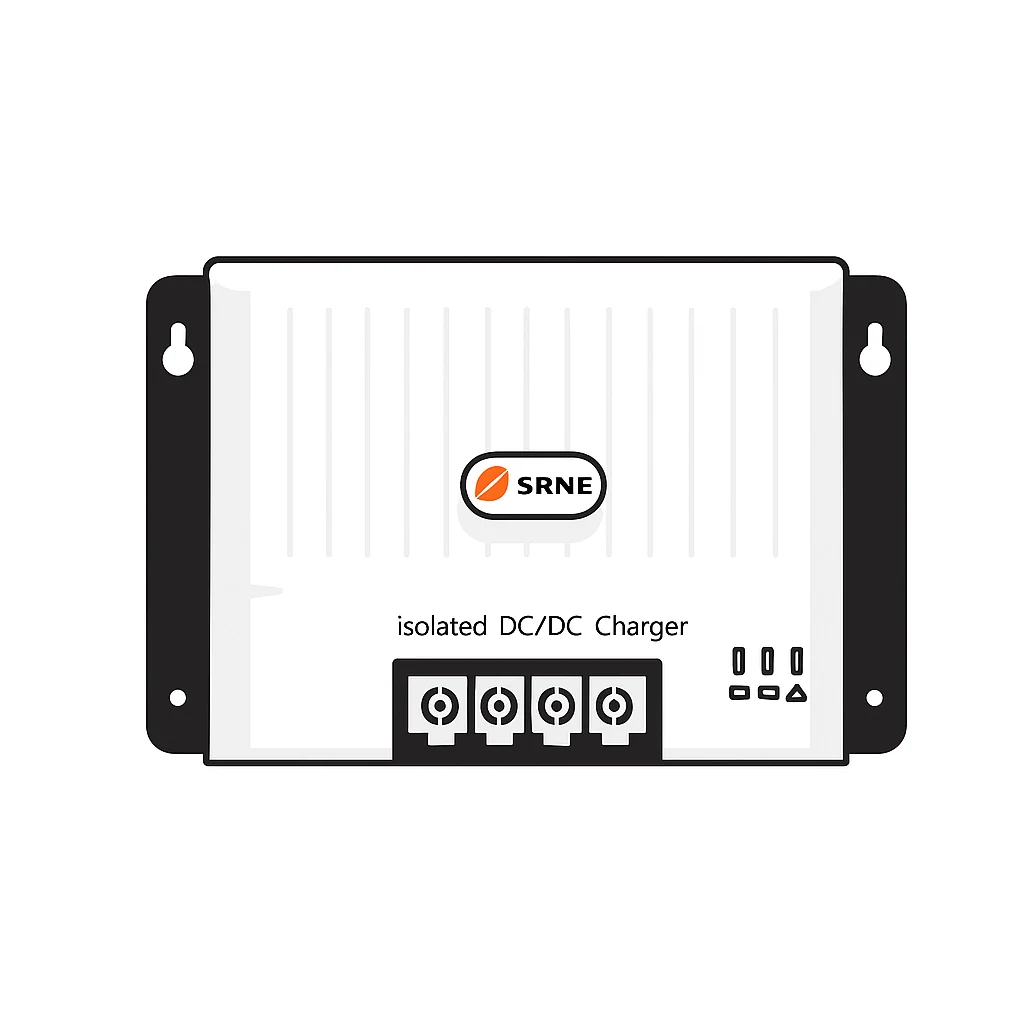
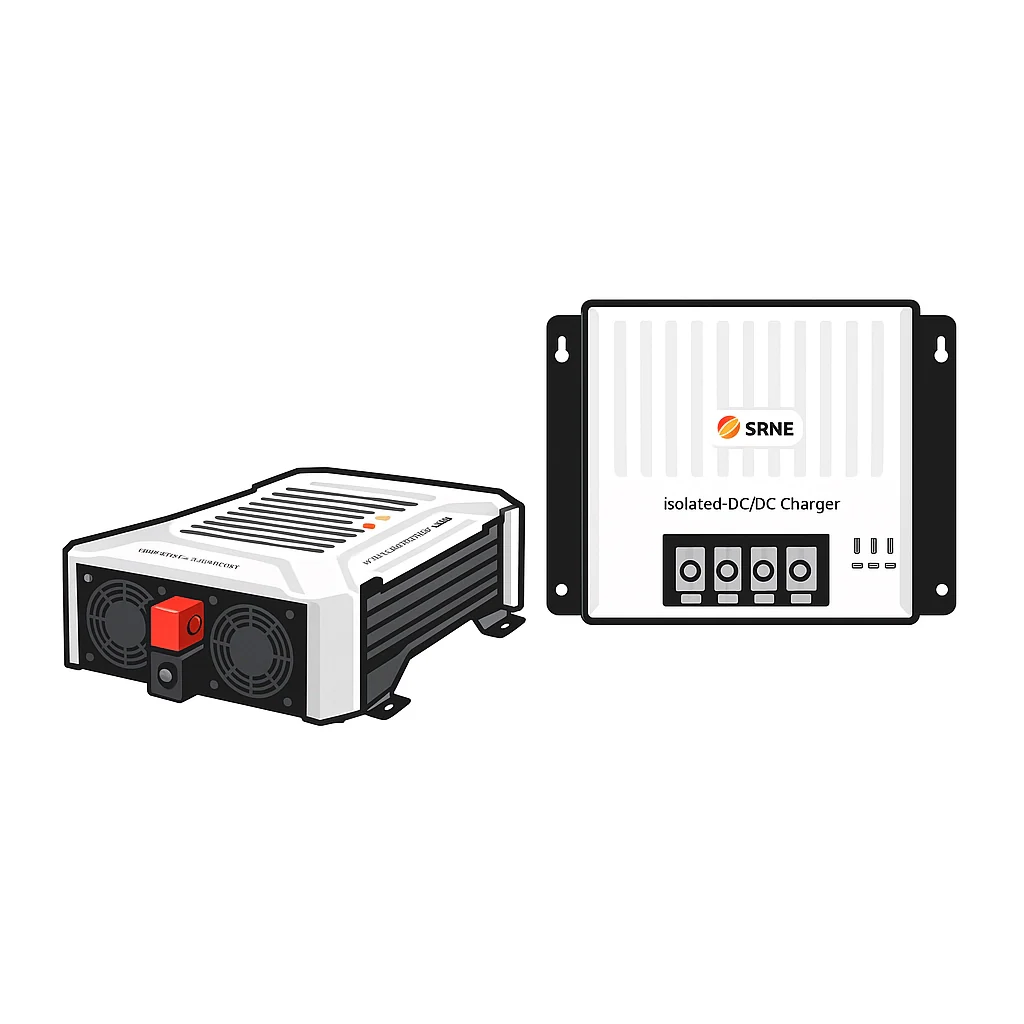
The SRNE DCI12-1230 DC-to-DC charger supports lithium batteries with selectable output voltage from 10-16V. This flexibility means you can match the charger to your specific lithium battery's requirements. Skyenergi supplies this charger as part of a complete kit with all cables and fuses included, making installation straightforward for DIY converters and professional installers.
DC-to-DC Charger Disadvantages and Limitations
A DC-to-DC charger isn't a universal fix. It has real limitations, but most can be managed with proper planning.
Cost is the first barrier. Cost is the first barrier. However, a relay can't charge lithium batteries safely and may shorten lead-acid battery life. If you're upgrading to lithium or rely on your leisure battery for daily power, the charger's cost is offset by better performance and longer battery life.
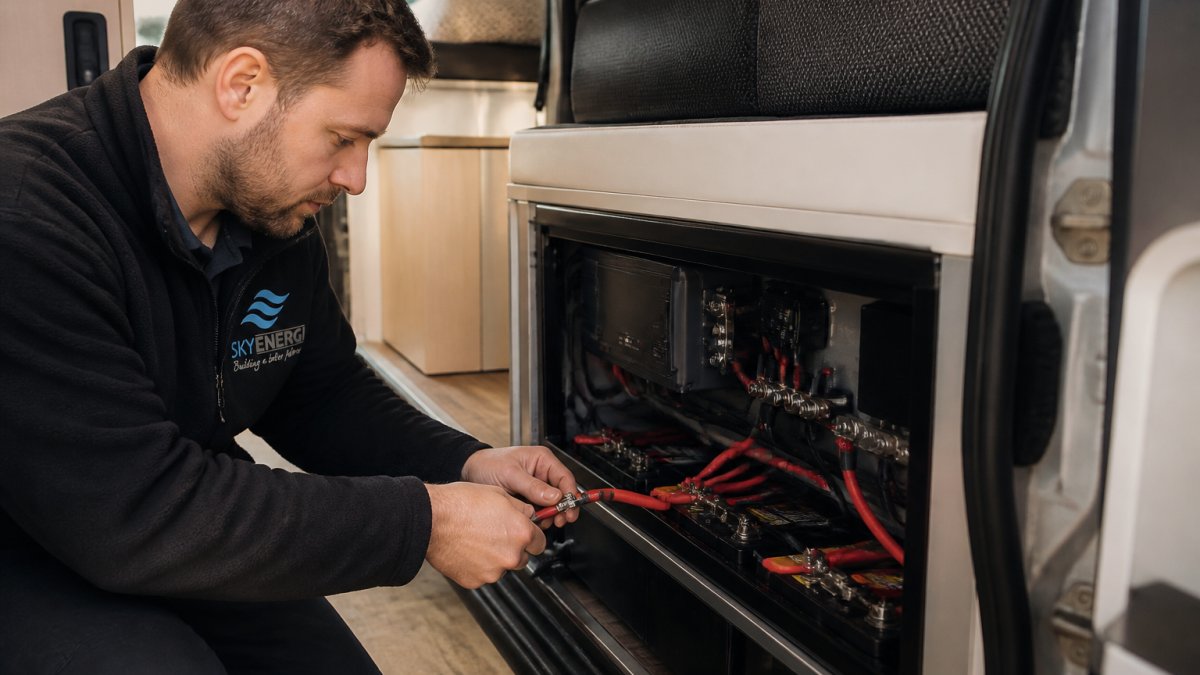
Installation requires planning. You need to run heavy-gauge cable from your starter battery to the charger, then to your leisure battery. This means removing panels, routing cable safely, and adding fuses at both ends. A relay requires less wiring. But the installation is a one-time task, and Skyenergi provides complete kits with all necessary cables and fuses, plus UK-based support to guide you.
Power loss through conversion. Even a highly efficient charger loses some energy as heat. The SRNE DCI12-1230 achieves over 90% efficiency, but that remaining loss is still power you don't get into your battery. A direct connection has no conversion loss, but it also can't regulate voltage or current, risking battery damage.
Vehicle compatibility matters. Modern vehicles with smart alternators (Euro 5 and Euro 6 engines) work well with DC-to-DC chargers. Older vehicles with simple alternators also work. But some aftermarket alternator upgrades may not play well with certain chargers. Check compatibility before buying, Skyenergi's team can advise.
Sizing matters. A charger rated for 30A won't help if your alternator only produces 40A total and your starter battery needs 10A. You need enough alternator output to charge both batteries at useful speed. Use the sizing guide above to match charger to alternator.
Troubleshooting common issues. If your charger isn't charging, check the fuses first. A blown fuse at either end will stop charging. Next, verify that the charger's input voltage is above its threshold, some chargers need 13.2V to start. If voltage is low, your alternator may be failing. Overheating can occur if the charger is mounted in a hot engine bay; ensure adequate ventilation. Voltage drop across undersized cable can also reduce charging current, upgrade cable if needed.
By understanding these limitations, you can design a system that avoids pitfalls and delivers reliable charging.
Choosing the Right DC-to-DC Charger for Your System
Selecting the right charger starts with two numbers: your alternator's spare capacity and your leisure battery's capacity. Most modern alternators produce between 80A and 150A, but the vehicle's own electrical load (lights, ECU, pumps) consumes 20-40A. The remaining output is what's available for charging your leisure battery. As a rule of thumb, aim for a charger that draws no more than 70% of your alternator's spare capacity to avoid overloading it.
Next, match charger output to battery size. For a 100Ah lead-acid or AGM battery, a 30A charger will recharge from 50% depth of discharge in roughly 2-3 hours of driving. For a 200Ah lithium battery, a 50A charger cuts that to about 2 hours. If you typically drive short distances, a higher-output charger is worth the investment because it delivers more energy per mile.
Cable sizing is critical. Voltage drop across the cable run reduces charging efficiency. For a 30A charger mounted 5 metres from the starter battery, use at least 10mm² cable; for a 50A charger, 16mm² is safer. Always fuse both ends: a 40A fuse at the starter battery and a 40A fuse at the charger for a 30A unit. For a 50A charger, use 60A fuses. This protects against short circuits and fire.
Grounding matters too. Connect the charger's negative input to a solid chassis ground near the starter battery, and the negative output to the leisure battery's negative terminal. Avoid daisy-chaining grounds.
If you plan to add solar later, choose a charger with a dedicated solar input or a built-in MPPT controller. The SRNE DCI12-1230 offers a 30A output, making it a good fit for smaller systems. Skyenergi supplies this charger with a complete wiring kit, including fuses and cable, so you don't have to source parts separately.
Finally, consider monitoring. Bluetooth connectivity lets you check charge status and adjust profiles from your phone. The SRNE DCI12-1230 includes Bluetooth and CAN/RS485 interfaces for integration with larger systems. Skyenergi's technical team can help you size the charger based on your vehicle and battery bank, just share your alternator rating and battery capacity.
| Charger Model | Output Amps | Recommended Battery Size | Cable Size (5m run) | Fuse Rating |
|---|---|---|---|---|
| SRNE DCI12-1230 | 30A | 100-200Ah | 10mm² | 40A |
| SRNE DCI12-1250 | 50A | 200-400Ah | 16mm² | 60A |
Frequently Asked Questions
How does a DC-to-DC charger charge a leisure battery while driving?
A DC-to-DC charger monitors your vehicle's alternator output and regulates the charge to your leisure battery using multi-stage charging. As you drive, the charger draws power from the starter battery and converts it to the correct voltage and current for your auxiliary battery. This happens automatically, the charger detects when the engine is running and activates charging, then stops when you turn the engine off. Unlike direct alternator connections, this prevents voltage spikes and ensures your leisure battery receives controlled, safe charging regardless of alternator type.
Can a DC-to-DC charger charge a lithium battery?
Yes. Modern DC-to-DC chargers are specifically designed to support lithium batteries alongside lead-acid and AGM types. The charger delivers the correct voltage profile and charge current that lithium cells require, typically 14.4V with precision current limiting. This is crucial for lithium longevity; without proper regulation, lithium batteries can degrade rapidly. Many units, including the SRNE DCI12-1230, feature selectable output voltage (10-16V) and adaptive charging algorithms that automatically detect your battery chemistry and apply the appropriate profile.
Will a DC-to-DC charger drain my starter battery?
No. A quality DC-to-DC charger includes isolation and protection circuits that prevent backfeed and over-discharge of your starter battery. The charger only draws power when the engine is running (when alternator output is available) and automatically disconnects when voltage drops below a safe threshold. This protects your starter battery from being drained by the leisure battery. The built-in isolation also means your leisure battery cannot discharge back through the charger to the starter battery when the engine is off.
What are the disadvantages of using a DC-to-DC charger?
The main limitations are upfront cost and installation complexity compared to a simple split-charge relay. DC-to-DC chargers also require more wiring and fuse protection, which adds labour time. In some setups, charging speed is limited by the charger's maximum output current, if your charger is 30A and your alternator can supply 80A, you won't use that full alternator capacity. Additionally, if the charger fails, you lose intelligent charging control until it's replaced, though this is rare with quality units.
Next post

Calculating Battery Lifespan for Off Grid Campervan Living
Updated on 13 October 2026


