




How to Claim Solar Panel Grants and Tax Relief in the UK
Solar panel grants are limited, so check eligibility first. Learn which UK incentives apply to homeowners, how VAT relief works and how to claim.
Quick Summary
Homeowners in the UK can claim solar panel grants and tax relief through three main routes: VAT relief on qualifying residential installations, government and local authority grant schemes that open and close over time, and the Smart Export Guarantee, which pays for surplus electricity sent back to the grid. Capital allowances apply mainly to landlords and businesses.
- VAT on qualifying residential solar installations may be zero-rated, so ask your installer to apply it on the invoice.
- Grant schemes change often, so confirm a scheme is open before committing to a project.
- Do not start installation before receiving written confirmation of grant funding.
- Compare Smart Export Guarantee rates from several suppliers, since some pay nothing.
- Landlords and businesses should speak to an accountant before claiming capital allowances.
Table of Contents
- Which Solar Energy Tax Incentives Apply to UK Homeowners
- VAT Relief on Solar Panels: Who Qualifies and How to Claim It
- Solar Panel Grants and Funding in the UK: What Is Open Now
- Getting Paid for Exported Electricity Through the Smart Export Guarantee
- Capital Allowances for Solar Panels: Rules for Landlords and Businesses
- Stacking Incentives: A Worked Example and Payback Period
- Checking Your Eligibility and Next Steps for Your Home Solar Array
- Frequently Asked Questions
Which Solar Energy Tax Incentives Apply to UK Homeowners
Last Updated: November 6, 2026
Solar energy tax incentives for homeowners in the UK work differently from many other countries. The support you can get depends on your situation. The main routes are VAT relief, government grants and the Smart Export Guarantee, with capital allowances for landlords and businesses. If you are comparing solar panel grants alongside these tax reliefs, it helps to map each option to your property before committing. Integrating these solar incentives with other energy grants requires careful coordination, particularly when considering the requirements for the Boiler Upgrade Scheme.
Here is how the main options fit together:
- VAT relief: Installations on qualifying residential property can be zero-rated for VAT, depending on the property and the work being done
- Government grants: Funding schemes open and close over time, so check what is live
- Smart Export Guarantee: Suppliers pay for surplus electricity you send back to the grid
- Capital allowances: Relevant for landlords and businesses rather than most homeowners
Policy changes often. Always confirm current rules on GOV.UK guidance on solar panels and VAT before you commit to a project.
VAT Relief on Solar Panels: Who Qualifies and How to Claim It
VAT relief can cut the cost of a home solar installation. Installations on qualifying residential property may be zero-rated, which can mean no VAT is charged on the installed equipment. Eligibility depends on the type of property and the work being done.
Check these points before you book:
- The property must be a qualifying residential building
- The installer must apply the zero rate on the invoice
- Keep your invoice and any written confirmation for your records
Your installer normally applies the relief at the point of sale, so ask them to confirm this in writing. For the full conditions, see HMRC VAT Notice on energy-saving materials.
Solar Panel Grants and Funding in the UK: What Is Open Now
Grant schemes for home solar change frequently, and many are time-limited or region-specific. Unlike a standing tax relief, grants require an application and often have strict eligibility criteria. The key is to verify what is live before you commit to a project.
Current schemes and how they work
The main grant routes for homeowners have included:
- Local authority schemes: Many councils run their own solar grant or loan programmes. Search your local council’s energy efficiency pages.
These schemes open and close, and funding is often capped. A common pattern is that schemes pause when the budget is exhausted, so early application is advisable.
Eligibility and application steps
Before applying, check:
- Your household income and benefits status (for means-tested schemes).
- The property’s Energy Performance Certificate (EPC) rating - some schemes require a minimum rating.
- Whether you rent - landlord permission is usually needed.
- Check whether the installer is certified under a recognised scheme for the work involved.
Application typically involves:
- Contacting your local authority or energy supplier to confirm the scheme is open.
- Completing an eligibility check and providing proof of income or benefits.
- Arranging a survey with an approved installer.
- Receiving a quote and grant offer before work begins.
Watch out: Do not start installation before receiving written confirmation of grant funding, as retrospective claims are rarely accepted.
For the most current list, see GOV.UK energy grants and schemes. Do not assume a grant that existed last year is still available.
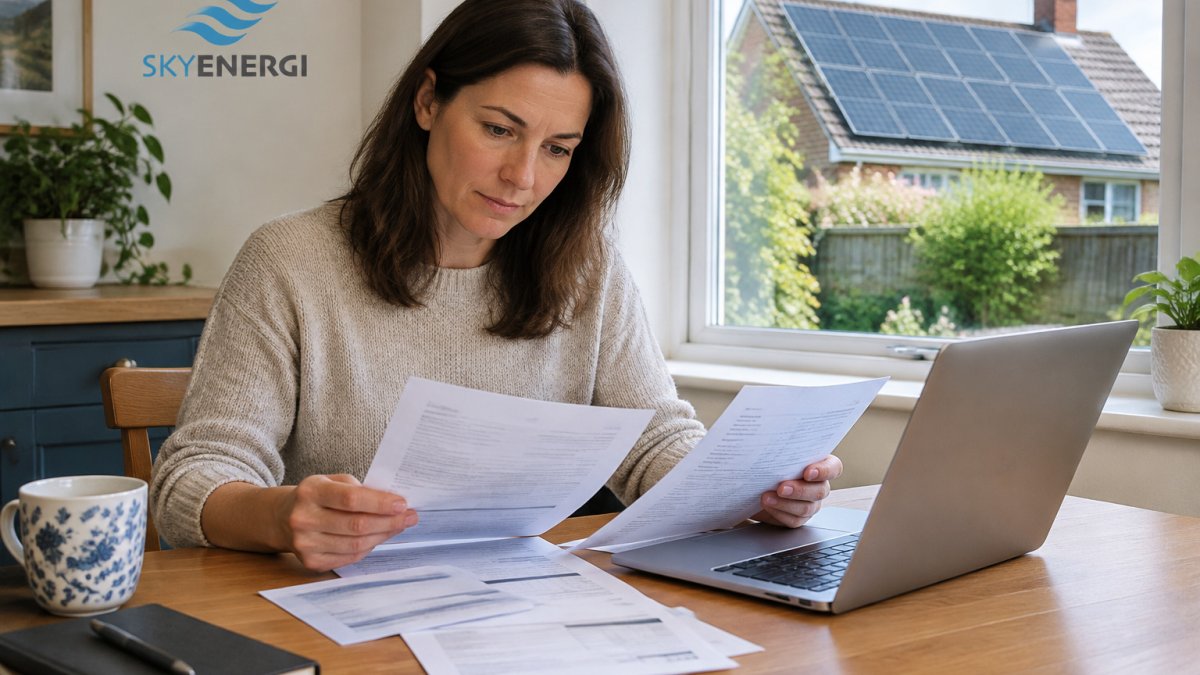
!A homeowner in a UK back garden reviewing paperwork at a kitchen table beside a laptop, with a rooftop solar array visible through the window
Getting Paid for Exported Electricity Through the Smart Export Guarantee
The Smart Export Guarantee (SEG) pays you for electricity your panels send back to the grid. It is not a grant, and the rate depends on your supplier. Some suppliers pay more than others, and some pay nothing, so compare offers before you sign up.
To make the most of it:
- Ask suppliers for their export rate per kWh in writing
- Check whether the tariff requires a smart meter
- Compare the export rate with what you would pay to import the same electricity
Look up the scheme rules on Ofgem Smart Export Guarantee guidance. Export income may be taxable in some situations, so confirm your position with an adviser if the amounts are large.
Capital Allowances for Solar Panels: Rules for Landlords and Businesses
Capital allowances can let some landlords and businesses deduct the cost of qualifying equipment from taxable profits. Whether solar panels qualify depends on the specific rules, which are not summarised here.
Key points to check:
- Whether the panels are fixed to the building or to your business premises
- How the cost is split between plant and machinery and building fabric
- Whether you should claim the relief in the year of purchase or spread it
Capital allowances are complex, so speak to an accountant before you claim. Background on the rules is available from HMRC capital allowances manual.
The article lists the key points to check before claiming capital allowances on solar panels.
| Check | What to confirm | Why it matters |
|---|---|---|
| Fixing | Are the panels fixed to the building or business premises? | Affects whether the equipment qualifies |
| Cost split | How the cost is divided between plant and machinery and building fabric | Changes the allowance treatment |
| Timing | Claim in the year of purchase, or spread the relief | Affects taxable profit in each year |
| Adviser | Speak to an accountant before claiming | Capital allowances are complex |
Stacking Incentives: A Worked Example and Payback Period
Incentives can be combined, but not all are stackable. Here is an illustrative worked example for a UK homeowner.
Worked example: 4 kWp system in England
Calculate your own figures using quoted installed cost, your import price, the export rate offered by your supplier and any grant you qualify for. Pricing depends on system size, quantity, dates and delivery, so request a current quote.
How incentives interact
- VAT relief is applied by the installer and cannot be claimed separately.
- Grants usually reduce the upfront cost but may have conditions, such as using an approved installer.
- SEG payments may be taxable depending on your circumstances. Check with an adviser.
Watch out: Do not assume you can claim a grant and also receive a loan from the same scheme; check the terms.
Using SRNE and Skyenergi products to improve payback
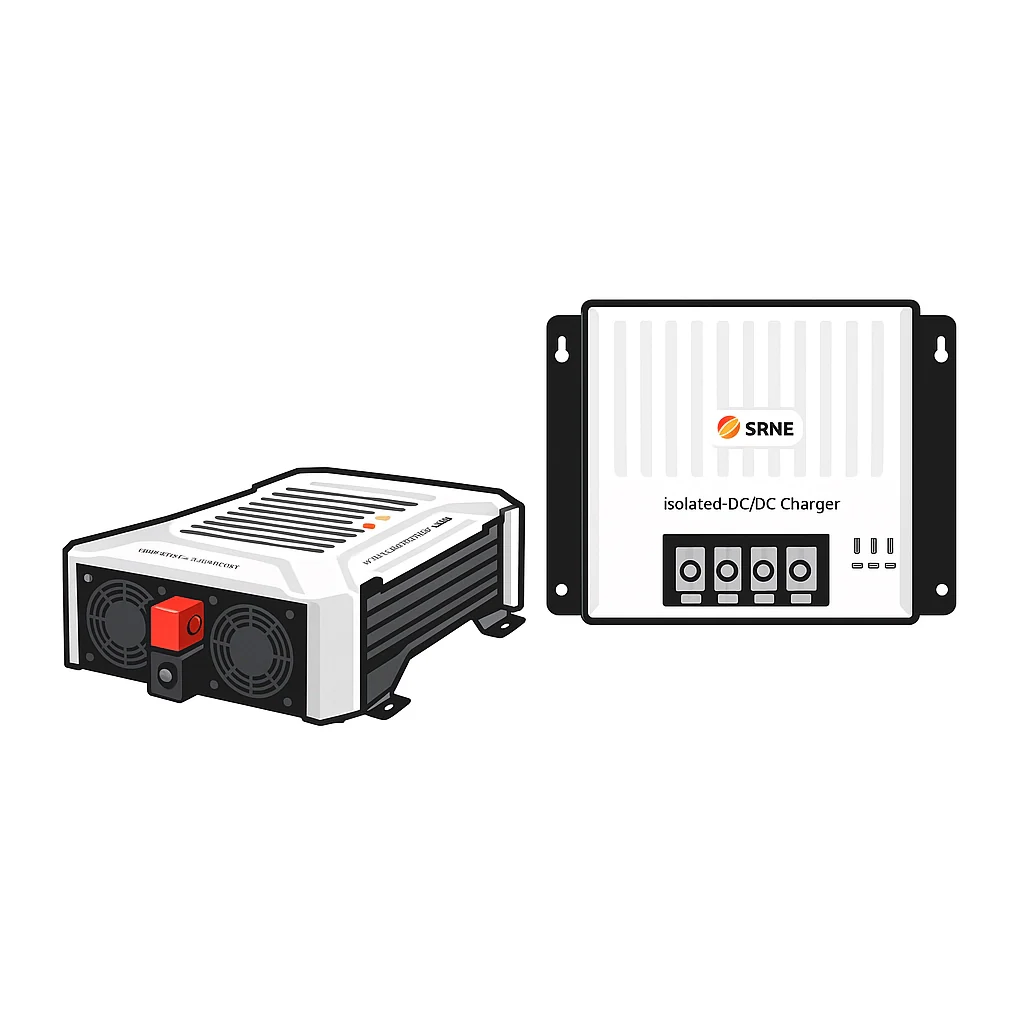
Choosing efficient hardware can increase self-consumption and reduce payback. SRNE and Skyenergi products are designed for reliability and performance. For example, the Srne Saa All In One Dual Dc To Dc Mppt Ac Charger 475w Aiko Neostar Solar Panel combines MPPT charging with AC charging, and the Srne Ma2440n15 Mppt 475w Aiko Neostar Solar Panel offers a concrete charge controller specification. These can help you size a system that maximises self-use.
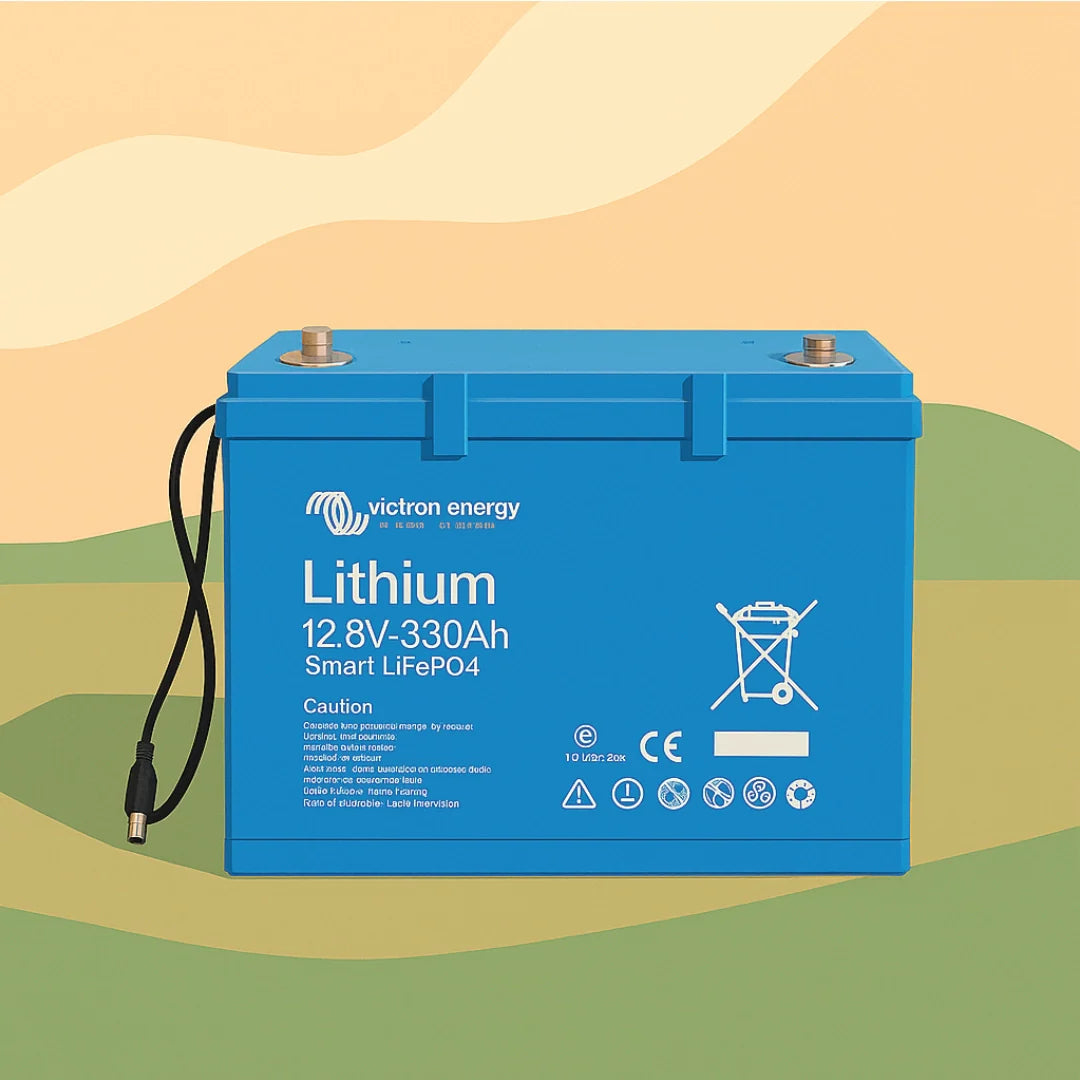
For battery storage, the Lithium Leisure Battery Skyenergi Elite 304ah Smart Victron Can Bus is an option to consider, and the Victron Energy Blue Smart Ip22 Charger 12 30 Bpc123047022 can be used for battery charging. Always match components to your system design.

Calculating your own payback
Use this method:
- Subtract VAT saving and any grant from the quoted installed cost.
- Estimate annual self-consumption savings (kWh self-used × import price).
- Add expected annual export income (kWh exported × SEG rate).
- Divide net cost by total annual benefit.
Adjust for battery costs if added, and consider that SEG rates vary by supplier. For current SEG rates, see Ofgem Smart Export Guarantee guidance.
Checking Your Eligibility and Next Steps for Your Home Solar Array
Start by listing what applies to you: whether the property is residential, whether you own or rent it, your income level, and whether you export surplus power. Then match each point to the schemes above and confirm the details in writing before you commit money.
Next steps:
- Confirm VAT relief with your installer
- Check which grants are open today
- Compare SEG export rates from several suppliers
- Ask an accountant about capital allowances if you are a landlord or business
If you are planning a battery upgrade, the Victron Energy Blue Smart Ip22 Charger 12 30 Bpc123047022 can help you size a charger for the battery bank you have in mind. For a battery option to compare, see the Lithium Leisure Battery Skyenergi Elite 304ah Smart Victron Can Bus.
Ready to plan your system? Speak to Skyenergi about the batteries, chargers and solar components that suit your home or off-grid setup.
Frequently Asked Questions
Are there tax incentives for homeowners who install solar panels in the UK?
UK homeowners generally do not receive a direct income tax credit for installing solar panels on a home. The main financial supports are the zero rate of VAT on qualifying installations, the Smart Export Guarantee, which pays suppliers' export tariffs for surplus electricity, and any government grant or funding scheme open at the time of installation. Eligibility depends on property type, installer certification and the date of installation, so check current rules on GOV.UK before you commit to a quote. Your supplier or installer should confirm which supports apply to your project.
Do solar panels qualify for VAT relief?
Installations of solar panels on residential properties in the UK are generally zero-rated for VAT, which means no VAT is charged on the supply and installation. The relief applies to qualifying energy-saving materials fitted in a home, and your installer should state on the invoice that the work is zero-rated. VAT relief is applied at the point of sale, so you do not need to reclaim it afterwards. Confirm the current treatment with HMRC or your installer before signing, as the rules can change.
What is the Smart Export Guarantee?
The Smart Export Guarantee, usually shortened to SEG, requires larger licensed electricity suppliers to offer a payment for low-carbon electricity that you export to the grid. Payment rates vary between suppliers, and not every supplier offers the scheme, so compare tariffs before you choose one. Payments depend on how much electricity your system exports, which a smart meter or generation meter can record. Check whether your supplier is part of the scheme and what rate it pays before you assume export income in your savings figures.
Can landlords claim capital allowances for solar panels?
Landlords and businesses may be able to claim capital allowances on solar panels that are installed for business purposes, but the position for residential rental property is more restricted than for commercial premises. Whether allowances apply depends on how the equipment is used, who owns it and how the expenditure is treated for tax. Keep full records of the installation cost, invoices and the date the system came into use. Speak to a qualified accountant, because the rules and claim process are specific and errors can be costly.

Next post

Mounting Solar Panels for UK Weather: 7 Steps
Updated on 06 November 2026


